

Note: This article contains affiliate links. If you click on these links and make a purchase, I may earn a small commission at no extra cost to you. This helps support my research and content. Read my full affiliate disclosure here.
If you drive a 2003-2007 Honda Accord, choosing the right brake pads affects safety, comfort, and long-term cost. Worn or inappropriate pads can cause noise, reduced stopping power, uneven wear, and increased rotor damage. This guide covers seven shortlisted brake pad options chosen for everyday and spirited street use on the Accord, with attention to fitment, material choice, and real-world durability.We evaluate candidates by how they affect braking performance and pad life, along with noise, dust generation, and compatibility with the Accord's front and rear calipers. Read on for concise guidance that helps you pick pads matched to your driving style and maintenance priorities.
Looking for other parts? See all Honda Accord parts & accessories.
Top Picks at a Glance
| Best Overall The best all-around choice for most situations | Detroit Axle 2003–2007 Honda Accord Front & Rear Drilled/Slotted Brake Kit with Ceramic Pads |  |
| Best Quality Built to a higher standard if you want something more solid | Bosch QuietCast BC914 Premium Ceramic Front Brake Pad Set |  |
| Best Value The sweet spot between price and what you get | TRQ Front and Rear Ceramic Brake Pad Set (Vehicle-Specific Fit) |  |
| Best Budget The cheapest option that still gets the job done reliably | PowerStop Z16 Evolution Front Ceramic Brake Pads (16-914) |  |
| Highest Rated A top-rated pick with lots of positive feedback | Bendix Priority1 CFC1506 Ceramic Front Brake Pads (front) |  |
| Most Popular A crowd favorite that many people choose with confidence | Detroit Axle Front and Rear Brake Kit for 2003–2007 Honda Accord 2.4L (4-Wheel Disc) |  |
| Best Seller A high-volume bestseller chosen again and again | Detroit Axle Front Brake Kit with Ceramic Pads and 11.10 inch Rotors |  |
1. Detroit Axle 2003–2007 Honda Accord Front & Rear Drilled/Slotted Brake Kit with Ceramic Pads

| Fitment | 2003–2007 Honda Accord 2.4L with 4-wheel disc brakes |
|---|---|
| Front rotor size | 11.10 inch (282mm) |
| Rear rotor size | 10.24 inch (260mm) |
| Pad type | Ceramic |
| Includes | Front and rear rotors, front and rear pads, brake cleaner, brake fluid |
This Detroit Axle kit supplies both front and rear drilled and slotted rotors plus matching ceramic pads and basic consumables so you can replace the whole braking surface in one job. It is built for 2.4L Accords with 11.10 inch front and 10.24 inch rear rotors and includes brake cleaner, a small bottle of DOT3 fluid and hardware packets to help installation. The drilled and slotted rotors aid heat dissipation and the zinc plating resists corrosion, while the ceramic pads are tuned for quiet, low-dust operation. Buyers with the right vehicle and moderate DIY skill will find it convenient and cost effective compared with buying parts separately. Expect a straightforward fit when the page fitment matches your car, but plan for a standard bedding procedure and basic tools; the kit does not include step-by-step installation instructions and some small hardware pieces have been reported inconsistent in rare cases. For most owners this kit delivers OEM-style fit, improved cooling from the rotor design, and a nearly complete parts package for a single brake service.
Best for: Buyers who want an all-in-one replacement that restores braking components front-to-rear and value predictable fitment and quieter, low-dust ceramic pads; ideal for DIYers comfortable following online installation guides and performing a proper bedding procedure.
Less Ideal for: Drivers who need professional installation guidance included, those without basic brake service tools, or anyone using DX or Value Package Accords or non-4-wheel-disc configurations that are outside the stated fitment.
- Complete kit includes front and rear drilled/slotted rotors, ceramic pads, brake cleaner and a small bottle of brake fluid
- Drilled and slotted rotor design helps dissipate heat and shed moisture during heavy use
- Zinc plating reduces visible corrosion and wheel-dust buildup
- Vehicle-specific fitment for 2.4L Accord models simplifies installation and reduces the need for modifications
- No detailed printed installation instructions included with the kit
- Some customers reported occasional mismatched or poor-fitting small hardware pieces
Verdict: If you need a complete front-and-rear brake refresh for a 2.4L 2003–2007 Accord, this kit bundles rotors, ceramic pads and basic consumables into a single, vehicle-specific package.
2. Bosch QuietCast BC914 Premium Ceramic Front Brake Pad Set

| Material | Ceramic |
|---|---|
| Auto Part Position | Front |
| Specification Met | OEM |
| Manufacturer | Bosch Automotive |
The Bosch QuietCast BC914 is a ceramic front brake pad set aimed at delivering quiet, OEM-quality stopping for compatible Honda and Acura vehicles from the early 2000s through mid 2010s. It is typically used as a direct replacement when front pads are worn and is supplied as a ready-to-install axle kit that may include a hardware pack and lubricant. Key features include Bosch Molded Shim Technology with pre-attached multilayer rubber-core shims to reduce squeal, powder-coated backing plates for corrosion resistance, and engineered ceramic friction material for strong stopping power with low dust. In real-world driving the pads provide smooth, predictable bite during everyday and highway braking and tend to stay quiet if installed with proper hardware. Some buyers report the included metal clips or hardware can be mismatched on specific model years, so you may need to reuse OEM clips or double-check fitment before installation. These pads suit drivers who want a near-factory feel, quiet operation, and reduced rotor dust without stepping up to aggressive performance compounds.
Best for: Drivers rebuilding or maintaining a 2003–2007 Honda Accord who prioritize quiet, factory-like braking and low-dust operation over aggressive track-focused bite.
Less Ideal for: Drivers seeking high-temperature track performance or aggressive friction for heavy towing should consider purpose-built performance pads instead.
- Ceramic compound gives strong, consistent stopping with low brake dust
- Pre-attached multilayer rubber-core shims reduce noise and improve vibration control
- Powder-coated backing plates resist rust for longer component life
- Includes lubricant and where applicable hardware to make installation straightforward
- Included hardware and clips have inconsistent fit for some model years and may require reusing OEM pieces
Verdict: Choose these Bosch QuietCast pads if you want quiet, low-dust, factory-quality front braking for a 2003–2007 Honda Accord.
3. TRQ Front and Rear Ceramic Brake Pad Set (Vehicle-Specific Fit)

| Brand Name | TRQ |
|---|---|
| Auto Part Position | Front, Rear |
| Material Type | Ceramic |
| Specification Met | OEM |
This TRQ kit supplies one front and one rear ceramic brake pad set engineered as a vehicle-specific direct replacement for compatible Honda Accord years in the listed fitment. Ceramic material and thermal scorching are highlighted to reduce dust, lower noise, and improve stopping feel compared with many semi-metallic options. The pads come pre-shaped for a plug-and-play install and TRQ provides DIY installation videos to simplify a home job. Buyers report quick improvements in pedal feel and reduced squeal, and the product listing notes OEM-equivalent fit numbers so the pads match factory mounting points without modifications. Expect quieter, cleaner wheels and predictable daily braking performance, but be aware ceramic pads can wear a little differently than heavy-duty metallic pads and are not targeted at aggressive track or heavy towing use. A few reviews mention fitment issues with hardware clips on some vehicles so verify the vehicle compatibility chart before ordering and keep the original clips if you must reuse them.
Best for: Buyers who want a practical, low-maintenance replacement that restores quiet, cleaner daily braking without upgrading to performance-focused materials; ideal for DIYers who value straightforward installation and predictable on-road behavior.
Less Ideal for: Drivers who frequently tow heavy loads, do aggressive driving or track events should choose heavy-duty or performance-oriented pads instead of a ceramic street-focused kit.
- Ceramic compound reduces brake dust and keeps wheels cleaner
- Pre-shaped, vehicle-specific design for straightforward direct-fit installation
- Thermal scorched surface for improved initial stopping performance
- Includes both front and rear pad sets so all four corners are refreshed at once
- Some users reported hardware or clip fitment issues requiring reuse or adjustment of existing clips
Verdict: A practical, low-dust ceramic front-and-rear kit that delivers quieter, straightforward, factory-style braking for Accord owners doing routine street driving.
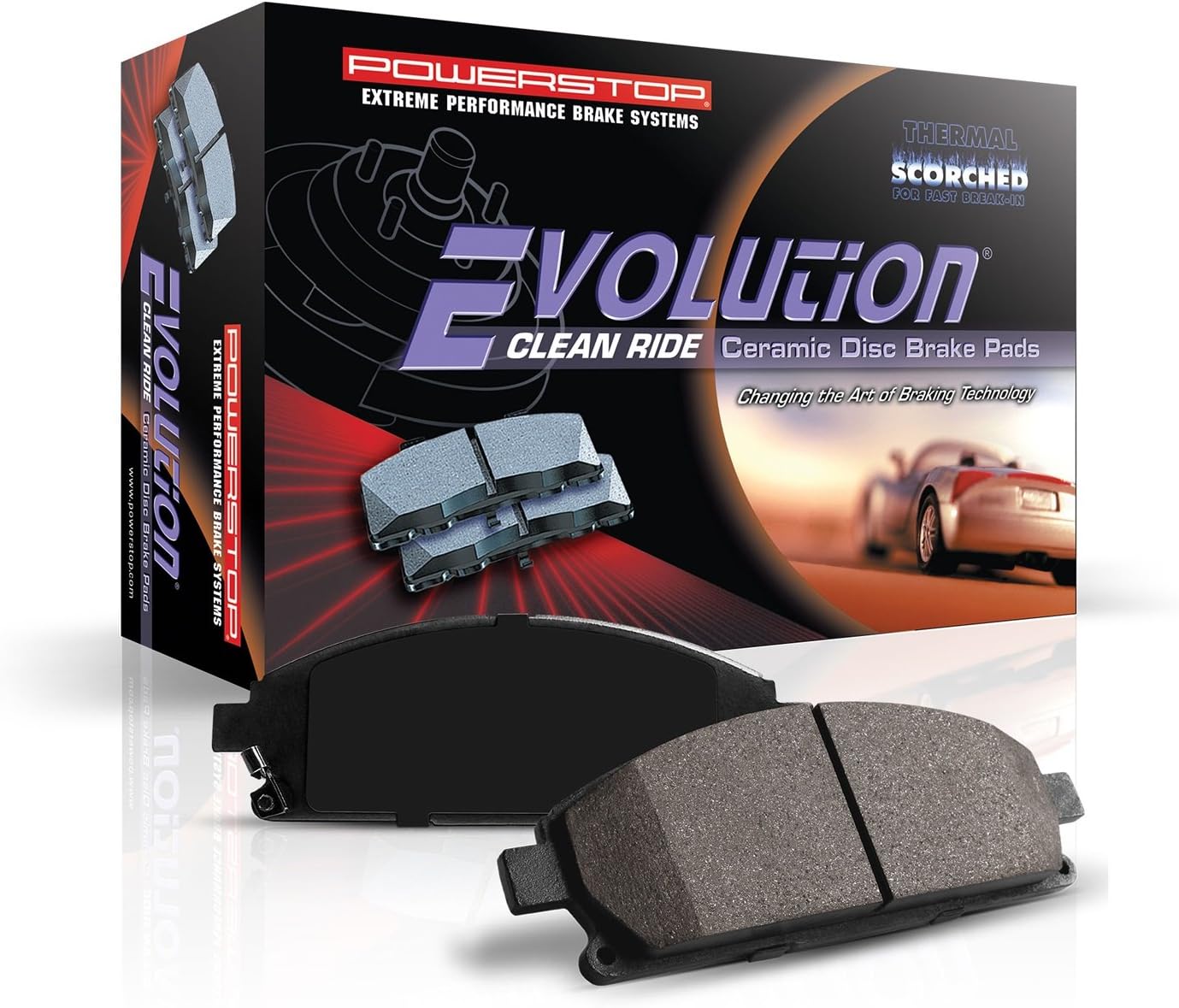
4. PowerStop Z16 Evolution Front Ceramic Brake Pads (16-914)
| Brand | PowerStop |
|---|---|
| Position | Front |
| Material Type | Ceramic |
| Automotive Fit Type | Vehicle Specific Fit |
The PowerStop Z16 Evolution front ceramic pads are a budget-friendly, vehicle-specific replacement designed for everyday driving on compatible Accords. They use a low-dust ceramic compound with chamfered and slotted faces and rubberized dual-layer shims to reduce noise, vibration, and wheel soiling. Installation is bolt-on and intended to match factory fitment without modifications, though hardware is not included. In use the pads break in quickly thanks to thermal scorching and deliver smooth, consistent stopping suitable for commuting and light city driving. Practical benefits include noticeably cleaner wheels compared with semi-metallic pads, minimal squeal in normal conditions, and a price point that undercuts many factory replacements. The main limitations are that these are tuned for daily driving rather than heavy towing or aggressive performance braking, and you will need to source installation hardware separately if your vehicle requires it.
Best for: Drivers looking for an affordable, quiet, low-dust front brake replacement for daily commuting and routine use on compatible Honda Accord model years.
Less Ideal for: Drivers who regularly perform hard braking, track sessions, or tow frequently should choose a higher-performance pad compound designed for elevated heat and fade resistance.
- Low-dust ceramic formulation keeps wheels cleaner over time
- Dual-layer rubberized shims and chamfered/slotted design minimize noise and vibration
- Thermally scorched surface for faster break-in and consistent initial performance
- Vehicle-specific fit for a direct bolt-on installation on listed Accords
- Not intended for aggressive driving, track use, or heavy towing where higher friction compounds are preferred
- Installation hardware is not included with the pad set
Verdict: A cost-conscious, low-dust, quiet ceramic front brake pad set that provides reliable daily-driving stopping performance for the specified Honda Accord models.
5. Bendix Priority1 CFC1506 Ceramic Front Brake Pads (front)

| Auto Part Position | Front |
|---|---|
| Material Type | Ceramic |
| Model Number | CFC1506 |
| Included Components | Brake pad set with installation hardware |
| Automotive Fit Type | Vehicle Specific Fit |
The Bendix Priority1 CFC1506 set is a vehicle-specific ceramic front brake pad kit supplied with installation hardware and shims to reproduce factory fit. It is intended as a direct replacement for the listed Acura and Honda front applications and is commonly used during routine brake service or rotor-and-pad replacement. Bendix describes the compound as advanced ceramic friction material that resists fade at higher temperatures, and the pads include slots, chamfers, and shims to reduce noise and improve bedding behavior. For a reliability-minded buyer this translates to predictable pedal feel, quieter operation than many semi-metallic options, and OEM-style fit that simplifies installation. Limitations are that these are designed for the exact vehicle and trim fitments shown so you must confirm fit before buying, and ceramic pads typically produce less initial bite than performance-oriented metallic compounds which may matter if you prefer very aggressive stop feel. The kit comes with hardware to help install correctly and meets factory specifications for fit, form, and function.
Best for: Buyers who prioritize consistent, factory-like braking and low-noise daily driving performance and want a reliable, trouble-free replacement for scheduled brake service.
Less Ideal for: Drivers who need maximum initial bite or track/performance braking; those users should consider performance-oriented metallic compounds instead.
- Vehicle-specific design for factory-style fit and easier installation
- Ceramic friction material offers quiet operation and reduced brake dust
- Includes installation hardware and shims for a complete front pad replacement
- Fitment is limited to the exact models and trims listed so confirmation is required before purchase
Verdict: Choose these Bendix ceramic front pads if you want a quiet, factory-quality replacement that delivers consistent, reliability-focused braking for the specified Accords.
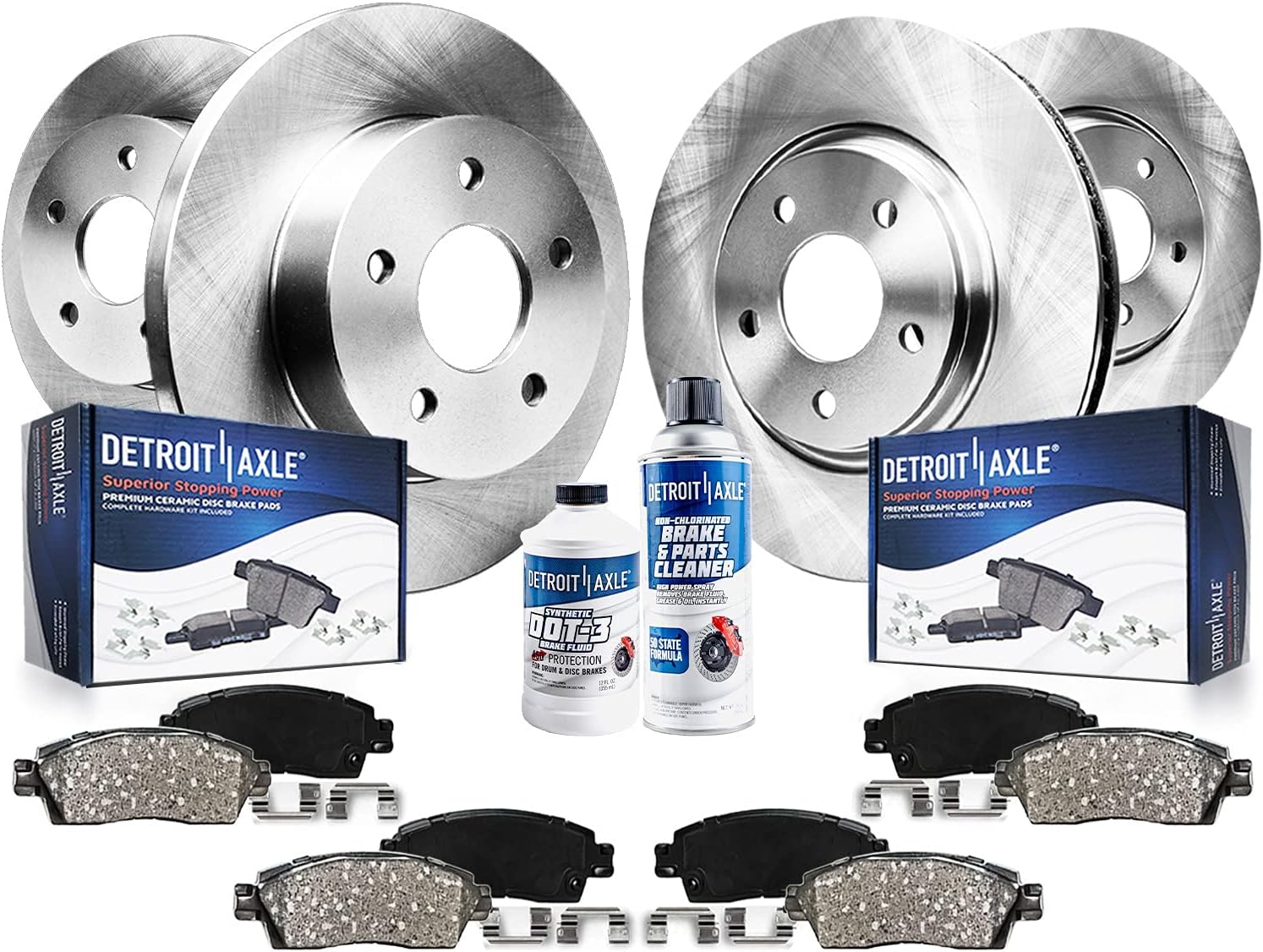
6. Detroit Axle Front and Rear Brake Kit for 2003–2007 Honda Accord 2.4L (4-Wheel Disc)
| Fitment | 2003–2007 Honda Accord 2.4L with 4-wheel disc brakes |
|---|---|
| Front Rotor Size | 11.10 inch (282mm) |
| Rear Rotor Size | 10.24 inch (260mm) |
| Pad Type | Ceramic |
| Kit Contents | Front & rear rotors, front & rear pads, hardware, brake cleaner, brake fluid |
This Detroit Axle kit supplies everything needed to refresh the braking system on 2.4L Accords equipped with 4-wheel disc brakes. The package includes two front and two rear rotors plus front and rear ceramic pads, basic hardware, a brake cleaner spray and a small bottle of brake fluid, so it is set up for a single DIY service. The rotors are vented and zinc plated to help cooling and corrosion resistance, and the pads are ceramic for quieter operation and reduced dust compared with semi-metallic compounds. Fitment is vehicle-specific for models using the 11.10 inch front and 10.24 inch rear rotors, and the locating holes are machined for direct installation without extra modification. Expect a straightforward installation for someone comfortable with a brake job; the kit simplifies parts sourcing and includes consumables. Limitations are the fitment restriction to certain 2.4L trim levels and that performance drivers seeking track-capable pads or slotted/drilled rotors should look elsewhere.
Best for: Buyers who want a single, vehicle-specific kit to replace both rotors and pads at once and who prioritize a quiet, low-dust ceramic pad setup with proven customer feedback.
Less Ideal for: Drivers who need track-grade braking components, owners of Accord trims that do not use the specified rotor sizes, or those who prefer aftermarket performance rotors and aggressive pad compounds.
- Complete kit includes front and rear rotors and ceramic pads plus basic hardware and brake cleaner for a one-stop service.
- Vented, zinc-plated rotors resist corrosion and aid heat dissipation for consistent braking under normal driving.
- Machined locating holes and vehicle-specific fit reduce the need for modifications during installation.
- Only fits 2.4L Accord configurations that use 11.10" front and 10.24" rear rotors, so not universal across all trims.
- Not targeted to high-performance or track use where specialty pads or drilled/slotted rotors are preferred.
Verdict: Choose this kit when you want a complete, vehicle-specific rotor-and-pad replacement that simplifies a DIY brake service on 2.4L Accords with 4-wheel disc brakes.
7. Detroit Axle Front Brake Kit with Ceramic Pads and 11.10 inch Rotors

| Fitment | 2003-2007 Honda Accord (11.10 inch front rotor) |
|---|---|
| Kit contents | 2 front rotors, 2 front ceramic pads, hardware |
| Rotor type | Vented, zinc plated |
| Orientation | Front |
| Manufacturer warranty | 10-Year |
This Detroit Axle front brake kit supplies both front rotors and ceramic pads plus the installation hardware, intended as a factory-style replacement for 2003–2007 Honda Accord with 11.10 inch front rotors. The rotors are vented for faster cooling and zinc plated to resist corrosion and visible wheel dust. Ceramic pads deliver quiet operation and predictable bite during normal driving, and the kit’s machined locating holes aim to make installation fit without modifications. Practical benefits include reduced brake noise, resistance to warping under normal use, and a full kit that covers clips and hardware so you do not need to source extras. Limitations to note are that some buyers report occasional fitment issues with the pad hardware clips on certain vehicles, and ceramic pads can generate typical dust and may wear faster under heavy towing or aggressive driving compared with heavy-duty materials. This kit is best used as a straightforward, value-focused replacement during routine maintenance when you want an OEM-style feel without upgrading to performance rotors or specialty compounds.
Best for: Buyers seeking a reliable, factory-style front brake replacement for routine maintenance who prioritize quiet operation and straightforward fitment over performance upgrades.
Less Ideal for: Drivers who frequently tow, carry heavy loads, or want high-performance braking components should consider heavy-duty or performance-grade rotor and pad options instead.
- Complete kit includes both front rotors, ceramic pads, and installation hardware for a single purchase
- Vented rotors and zinc plating improve cooling and resist corrosion and visible wheel dust
- Ceramic pads are engineered for low noise and a smooth, predictable pedal feel
- Machined locating holes and direct-fit design reduce need for modifications during installation
- Some customers report incorrect or ill-fitting retention clips on a minority of kits
Verdict: A straightforward, value-oriented front brake kit that restores quiet, OEM-style stopping for 2003–2007 Honda Accord owners during routine brake service.
Choosing the Right 2003-2007 Honda Accord Brake Pads: Key Factors to Consider
Pad Material and Compound
Pad material influences bite, dust, noise, and longevity. Organic and semi-metallic compounds often provide predictable initial bite but can produce more dust, while ceramic formulations tend to run cleaner and quieter with a milder initial bite.
For a 2003-2007 Honda Accord, consider how you drive daily. If most driving is city and highway commuting, ceramic-style compounds usually offer a good balance of low dust and quiet operation. If you do frequent hard stops or tow small loads, a higher-friction compound with stronger heat tolerance may be appropriate. Also note that different compounds bed to rotors differently; some require a brief break-in period to reach optimal performance and even wear.
Stopping Performance and Modulation
Stopping performance is more than peak force. Modulation, or how progressively the pads apply braking, affects control and feel during everyday driving. A pad with abrupt bite can feel grabby and make smooth stops harder, while a very smooth pad may lack confidence under heavier braking.
On the 2003-2007 Accord, expect a balance: pads should deliver firm, consistent deceleration without sudden grabs. Consider pads tested or rated for repeatability during multiple stops, since fade resistance and thermal stability impact real-world stopping ability over time.
Noise and Vibration
Brake noise is a common complaint on Accords of this era. Material composition, backing plate stiffness, and included hardware influence squeal and vibration. Features such as chamfered edges, slots, and anti-squeal shims reduce the chance of audible squeal.
If you prioritize a quiet cabin, look for pads that advertise noise control measures or include premium shims. Proper installation, including clean mounting surfaces and anti-seize where appropriate, also reduces noise risks. Expect that very high-friction pads may be noisier, so weigh noise performance against stopping requirements.
Dust and Rotor Impact
Pad dust affects wheel appearance and indicates how aggressive the compound is on rotors. Ceramic-style pads generally produce lighter, powdery dust that is easier to clean, while metallic compounds can leave darker, more adherent residue.
For a 2003-2007 Accord with alloy wheels, lower-dust pads help maintain wheel finish and reduce cleaning frequency. Consider whether the pad formulation is known to be rotor-friendly; some aggressive compounds accelerate rotor wear and scoring. Proper bedding-in of new pads also reduces uneven deposits and minimizes issues with rotor surface condition.
Fitment and Hardware Compatibility
Correct fitment for both front and rear calipers is critical. The 2003-2007 Accord has specific pad shapes and hardware needs; mismatched pads can cause poor engagement, uneven wear, or braking noise. Choose pads with explicit fitment listings for the Accord's years and trim variants.
Check whether the pads include necessary hardware such as clips, pins, or anti-rattle devices. If hardware is not included, budget time to source OEM-equivalent pieces. Backing plate quality matters too; a warped or poorly finished backing plate contributes to vibration and premature failure.
Longevity and Maintenance Interval
Brake pad lifespan depends on compound, driving style, and typical routes. Expect varying service intervals based on whether most miles are city stop-and-go or highway cruising. Longer-lasting pads reduce maintenance frequency but may trade off slightly less initial bite or more noise.
For the 2003-2007 Accord, consider manufacturer wear thickness specs and typical replacement mileage. Also factor in inspection intervals, whether pads are used on front or rear positions more heavily, and whether rotors will be resurfaced or replaced when pads are changed. Choosing a pad with predictable wear characteristics simplifies planning and budgeting for future service.
Front Versus Rear Brake Pad Roles on the Accord
On the 2003-2007 Honda Accord the front pads handle the majority of braking force, so they commonly wear faster than rear pads. Front pads are typically larger and experience higher temperatures and forces during hard stops.
Rear pads still matter for balance and stability. A mismatch in material or wear between the front and rear can change pedal feel and could increase stopping distances in certain conditions. For best results, choose pads with compatible friction characteristics front to rear and follow recommended installation procedures.
- Front pads: primary braking force, higher wear rate.
- Rear pads: contribution to balance, less heat but important for modulation.
- Maintain even pad thickness and replace in matching pairs where possible.
Bedding-In New Pads for Best Performance
Proper bedding-in helps the new pad transfer a thin, even layer to the rotor surface, improving initial stopping performance and reducing noise and uneven wear. A controlled bedding procedure gradually heats the pads and rotors with a series of moderate stops rather than repeated hard stops from high speed.
Afterinstallation, avoid full-throttle or emergency stops for the first few hundred miles and follow any manufacturer-recommended bedding steps. Check for unusual noise or vibration after the first few drives and re-torque caliper hardware if needed.
- Perform 8 to 10 moderate stops from city speeds during break-in.
- Avoid heavy towing or mountain runs immediately after installation.
Signs You Need Brake Pads Replacement
Several symptoms indicate it is time to replace pads on the 2003-2007 Accord. Common signs include a consistent squeal when braking, reduced braking power, a longer pedal travel, or visible thinning of the pad material at a visual inspection. Some models may have wear indicators that produce an audible chirp when pads reach minimum thickness.
If you notice grinding noises, that often means the pad material is gone and backing plate contact with the rotor is occurring. Address grinding promptly to avoid rotor damage and more expensive repairs.
- Squealing or chirping during light braking.
- Grinding noise indicating severe wear.
- Brake pedal feels low or requires more travel.
- Visible pad thickness below recommended minimum.
Rotor Considerations When Changing Pads
Rotors should be inspected whenever pads are changed. If rotors are scored, warped, or below thickness specs, new pads will not perform optimally. Light surface machining can restore a smooth contact area, but excessive machining can reduce rotor life and may push the rotor below the minimum thickness spec.
When rotors are within spec but show only light glazing or deposits, a thorough cleaning and correct bedding-in often restore acceptable performance. If you are unsure about rotor condition, consult service documentation for the 2003-2007 Accord rotor thickness spec and replacement criteria.
- Inspect rotors for scoring, warping, and thickness.
- Resurface only within manufacturer limits; otherwise replace.
- Clean rotor contact surfaces before installing new pads.
Installation Tips to Reduce Noise and Ensure Longevity
Clean the caliper abutment surfaces and lubricate sliding points with a high-temperature brake lubricant to prevent binding and uneven wear. Replace mounting clips and hardware if they are corroded or worn, and torque caliper bolts to factory specifications to avoid movement that causes noise.
Apply anti-squeal shims where provided, and verify pad alignment in the caliper. After installation, test-drive with progressive stops to confirm normal operation and listen for any abnormal noises that may indicate installation issues.
- Use high-temperature lubricant on sliding rails.
- Replace worn clips and hardware.
- Torque bolts to spec and verify pad seating before driving.
Material Tradeoffs for Daily Driving Versus Occasional Aggressive Use
If most driving consists of commuting and light highway travel, prioritize low-dust, quiet ceramic-style pads for comfort and cleaner wheels. For drivers who do occasional spirited driving or confront steep descents, consider a pad with enhanced heat tolerance and fade resistance even if it produces more dust or noise.
Think about your maintenance preferences. A pad that lasts longer reduces replacement frequency but may require a sacrifice in initial bite or smoothness. Balance these tradeoffs based on how you use your Accord and how often you perform brake inspections.
- Daily commuting favors quiet, low-dust compounds.
- Occasional aggressive use benefits from higher friction, better fade resistance.
- Match material choice to driving patterns for best overall value.
Still looking for the perfect fit?
Select your Honda Accord configuration to see the most relevant Brake Pads recommendations
How We Chose the Best 2003-2007 Honda Accord Brake Pads
We focused on criteria that matter to owners of a 2003-2007 Honda Accord and applied practical filters to narrow the field to dependable choices. Primary evaluation criteria included stopping performance under typical street conditions and sustained braking, and pad material and formulation because material determines noise, dust, and bite. We measured expected pad life using manufacturer wear specifications and reported mileage patterns, favoring options that balance longevity with consistent performance. Heat management and fade resistance were considered for drivers who do occasional heavier braking or hill traffic. Fitment accuracy for both front and rear positions on the 2003-2007 Accord was required; any option lacking clear, vehicle-specific fitment data was excluded. Additional filters included backing plate quality and hardware compatibility to minimize installation issues, and noise mitigation features such as chamfers and shims.We excluded candidates without clear compatibility information for the 2003-2007 Accord, pads intended solely for racing, and any option that required significant caliper modification. The result is a curated list focused on real-world durability, consistent stopping feel, low nuisance noise, and correct fitment for the Accord.
Our full evaluation process is outlined in our review methodology.
FAQ
How often should I check or replace brake pads on a 2003-2007 Honda Accord?
Inspection frequency depends on driving habits, but visually inspect pads every 6,000 to 10,000 miles. Many pads last between 30,000 and 60,000 miles under mixed driving, though aggressive stop-and-go driving shortens that interval.
What does a grinding noise mean when I apply the brakes?
Grinding usually indicates the pad material is worn through and the backing plate is contacting the rotor. Address grinding immediately to prevent rotor damage and higher repair costs.
Can I replace only the front or only the rear pads if the other side is still thick?
It is acceptable to replace only the pair that is worn, but maintain balanced friction characteristics front to rear. If front and rear materials differ substantially, pedal feel and braking balance can change. Replace in matched pairs when possible.
Are ceramic brake pads a good choice for everyday Accord driving?
Ceramic-style pads are often a good choice for daily driving on the Accord because they tend to be quieter and produce less dust. They provide consistent performance for commuting and highway use, though they may offer slightly less initial bite under extreme conditions.
How can I tell if my rotors need resurfacing when I change pads?
Inspect for deep scoring, visible heat spots, or warping. If the rotor thickness is below the manufacturer minimum or the surface damage is severe, replacement is recommended. Light glazing or surface deposits can often be cleaned or lightly machined.
Will upgrading to a higher-friction pad increase brake noise?
Often, higher-friction compounds can be noisier and produce more dust. Noise depends on compound, pad construction, and installation quality. Using proper hardware and shims reduces the chance of squeal.
Final Verdict
Prioritize pads that match your driving patterns and the Accord's braking demands. For most daily driving, quiet, low-dust ceramic-style pads provide a comfortable balance of performance and longevity, while those who do heavier braking should favor compounds with greater heat resistance and consistent modulation. Always confirm precise fitment for front and rear positions, include proper hardware, and follow bedding and installation practices to avoid noise and uneven wear.Choose pads that offer the right tradeoff between stopping feel, dust, noise, and service interval for your 2003-2007 Honda Accord to ensure safe, predictable braking and minimal unexpected maintenance.
Explore More:
- Check out all Honda Accord parts & accessories
- Explore Brake Pads Maintenance & Repair Guides
- Explore Brake System
- Browse all Auto Parts
