

Note: This article contains affiliate links. If you click on these links and make a purchase, I may earn a small commission at no extra cost to you. This helps support my research and content. Read my full affiliate disclosure here.
If you drive a 1998-2002 Honda Accord, choosing the right brake pads matters for safety, pedal feel, and everyday drivability. Worn or inappropriate pads can increase stopping distance, cause noise, or accelerate rotor wear. This guide narrows the options to seven well-suited brake pad choices that match the Accord's braking system and typical driving habits.Each shortlisted option was evaluated for stopping performance, longevity, rotor friendliness, and noise control so you can pick a pad that balances comfort and safety. Below you will find concise guidance on what to expect from each style and which factors to prioritize for your Accord's usual use cases.
Looking for other parts? See all Honda Accord parts & accessories.
Top Picks at a Glance
| Best Overall The best all-around choice for most situations | Bendix Priority1 CFC503 Ceramic Front Brake Pads (front) |  |
| Best Value The sweet spot between price and what you get | AUTOMUTO Front Ceramic Disc Brake Pads Set D465 (front) |  |
| Best Budget The cheapest option that still gets the job done reliably | Auto Shack Front Ceramic Brake Pad Set (Front) |  |
| Highest Rated A top-rated pick with lots of positive feedback | Bendix Priority1 CFC465AK1 Ceramic Front Brake Pads |  |
| Most Popular A crowd favorite that many people choose with confidence | Detroit Axle Front Brake Kit for 1998–2002 Honda Accord (2.3L Sedan, 4‑lug) |  |
| Best Seller A high-volume bestseller chosen again and again | HUSCH D537 Rear Ceramic Brake Pads Kit (4 pcs) |  |
1. Bendix Priority1 CFC503 Ceramic Front Brake Pads (front)

| Auto Part Position | Front |
|---|---|
| Compatible with Vehicle Type | Cars, SUV, Truck |
| Model Number | CFC503 |
| Material Type | Ceramic |
| Included Components | Brake pad set with installation hardware |
The Bendix Priority1 CFC503 front ceramic pads are a vehicle-specific replacement designed to match factory fit, form, and function for Accord-era Hondas and related Acura models. They use ceramic friction material with slots, chamfers, and shims to reduce noise and fade while keeping pedal feel predictable during daily driving. The set ships with basic installation hardware so it can be swapped into a standard brake job without extra parts. In practice these pads suit commuting and mixed driving where low dust, quieter stops, and consistent performance are priorities rather than aggressive track braking. Because they are engineered to OEM specification you should get straightforward fitment and a braking feel similar to factory pads, but expect slightly reduced bite compared with high-performance semi-metallic compounds under repeated heavy use. If you plan routine street driving or want a quieter, cleaner pad that still stops reliably, these are a practical choice; for heavy towing or track use choose a pad formulated explicitly for those demands.
Best for: Buyers wanting a quiet, low-dust, factory-matching front pad for everyday driving on 1998–2002 Accord-era Hondas who prioritize comfort and predictable braking over track-level performance.
Less Ideal for: Drivers who frequently tow heavy loads or run the car on a track and need maximum high-temperature stopping power should choose a heavy-duty or performance-oriented pad instead.
- Factory-quality vehicle-specific fit for compatible Honda and Acura models
- Ceramic compound delivers lower dust and quieter operation than many semi-metallic pads
- Includes installation hardware for a complete front pad swap
- Shims, slots, and chamfers reduce noise and help even wear
- Ceramic material provides less initial bite than some high-performance semi-metallic pads under extreme repeated braking
Verdict: A quiet, low-dust, factory-matching ceramic front pad that delivers reliable everyday stopping for 1998–2002 Accord-era Hondas.
2. AUTOMUTO Front Ceramic Disc Brake Pads Set D465 (front)
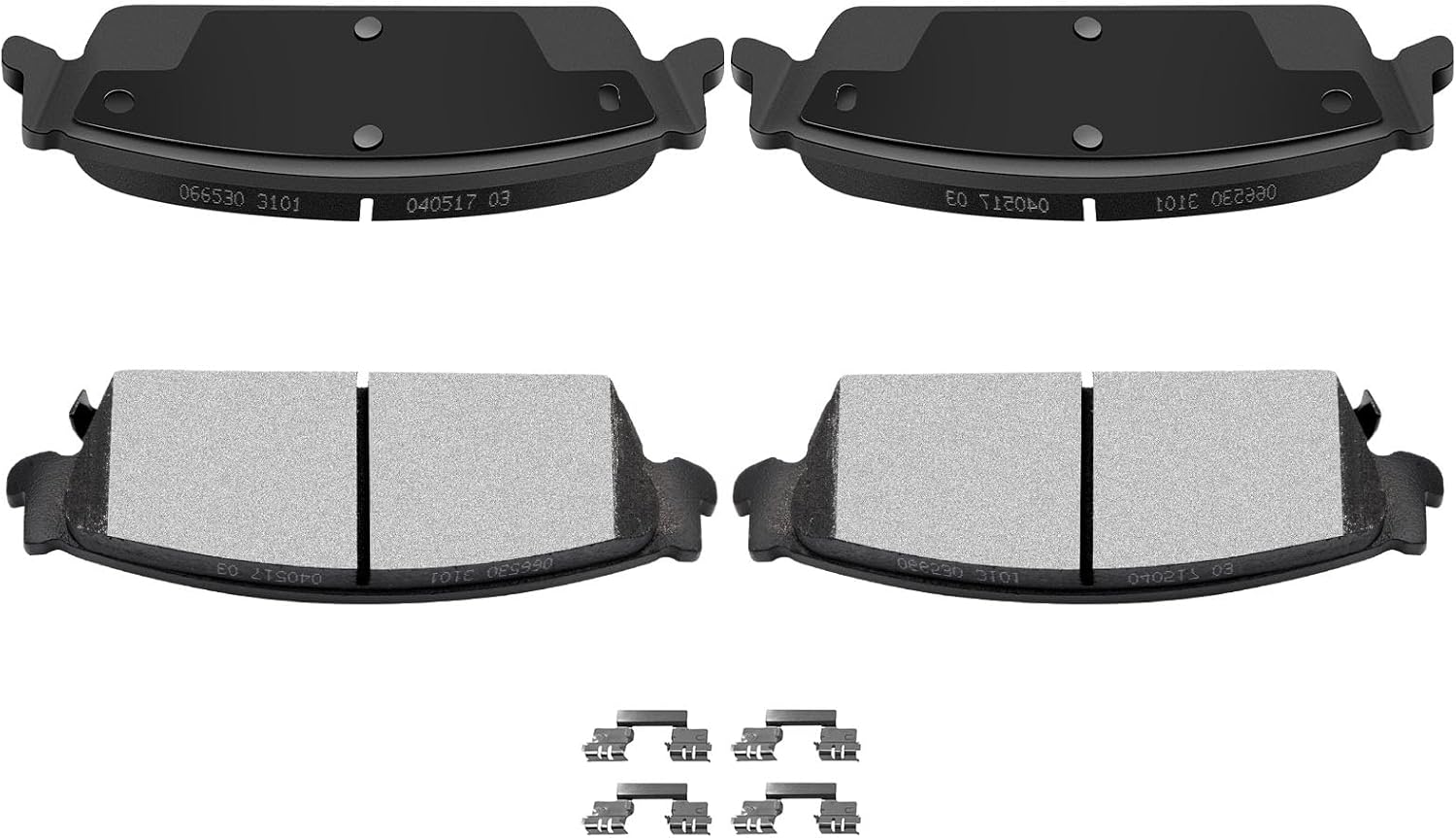
| Fitment code | D465 Front |
|---|---|
| Pad type | Ceramic |
| Vehicle fitment note | Acura EL 1997-2005; Honda Civic 1996-2011; Honda Accord 1998-2002 |
| Pieces included | 4 |
These AUTOMUTO front ceramic pads are a factory-style replacement designed to restore front braking performance on compatible Hondas and Acuras. Intended as a direct-fit D465 front pad set, they replicate the original pad shape and include slotting to help dissipate heat and channel debris. The manufacturer says the pads are thermally scorched and molded to reduce break-in time, which can make initial bedding quicker and deliver consistent feel sooner after installation. In everyday use they offer quieter operation compared with semi-metallic pads and are tuned for smooth, progressive braking in street driving. The main limitations are that ceramic formulations trade some ultimate high-heat fade resistance and initial bite for quieter, cleaner operation, so they are best for daily drivers rather than heavy towing or track use. Fitment must be confirmed for your exact year and submodel before purchase because compatibility is specific to the D465 front pad application.
Best for: Buyers who prioritize a quiet, low-dust factory-style replacement for everyday driving and want a quick, hassle-free swap that restores stock braking feel.
Less Ideal for: Not the best choice for drivers who frequently tow, carry heavy loads, or use the car on a race track where high-temperature fade resistance and aggressive initial bite are required.
- Made to match factory pad shape for direct-fit replacement
- Ceramic compound offers quieter operation and less brake dust than semi-metallic pads
- Slotted design improves heat dissipation and helps keep the contact surface clean
- Thermal scorching and molding process reduces break-in time for quicker consistent performance
- Ceramic material can be less resistant to extreme heat under sustained heavy loads compared with performance or semi-metallic pads
Verdict: A quiet, low-dust ceramic front pad set made to factory fit that restores everyday braking feel on 1998–2002 Honda Accord sedans.
3. Auto Shack Front Ceramic Brake Pad Set (Front)

| Compatible Models | Honda & Acura Civic 1996-2011, Accord 1998-2002, Insight 2010-2014, EL 1997-2005 |
|---|---|
| Position | Front |
| Material Type | Ceramic |
| Unit Count | 4.0 Count |
These Auto Shack front ceramic brake pads are a direct replacement set intended for older Honda and Acura front brakes. They install like a standard factory-style pad and are marketed to reduce dust and noise while helping preserve rotor life. Typical use is everyday driving and light commuting where smooth, quiet stops are the priority rather than aggressive performance. The ceramic material delivers consistent friction and lower dust than semi-metallic pads, so wheels stay cleaner and routine brake maintenance is easier. The set includes four pads sized for the listed fitments and carries ISO/TS 16949 specification compliance. Important limitations are that these are aimed at stock driving conditions rather than towing or heavy-load use, and they do not include hardware clips in the package, so you may need to reuse or buy separate mounting hardware. Also the warranty covers only the part for six months and does not include labor or installation costs.
Best for: Buyers looking for an affordable, low-dust replacement that restores everyday braking feel on older Hondas and Acuras and prioritizes quiet, maintenance-friendly performance.
Less Ideal for: People who regularly tow heavy loads, drive aggressively, or need high-temperature track-capable pads should choose a performance or heavy-duty pad designed for those demands.
- Ceramic compound for quieter stops and reduced wheel dust
- Designed to extend rotor life through consistent friction stability
- Vehicle-specific fit for listed Honda and Acura front applications
- Matches factory-style replacement form for straightforward installation
- Does not include installation hardware or clips
- Not intended for heavy towing, racing, or high-load braking scenarios
Verdict: A budget-friendly ceramic front pad set that brings quiet, low-dust, factory-style braking back to older Honda and Acura daily drivers.
4. Bendix Priority1 CFC465AK1 Ceramic Front Brake Pads
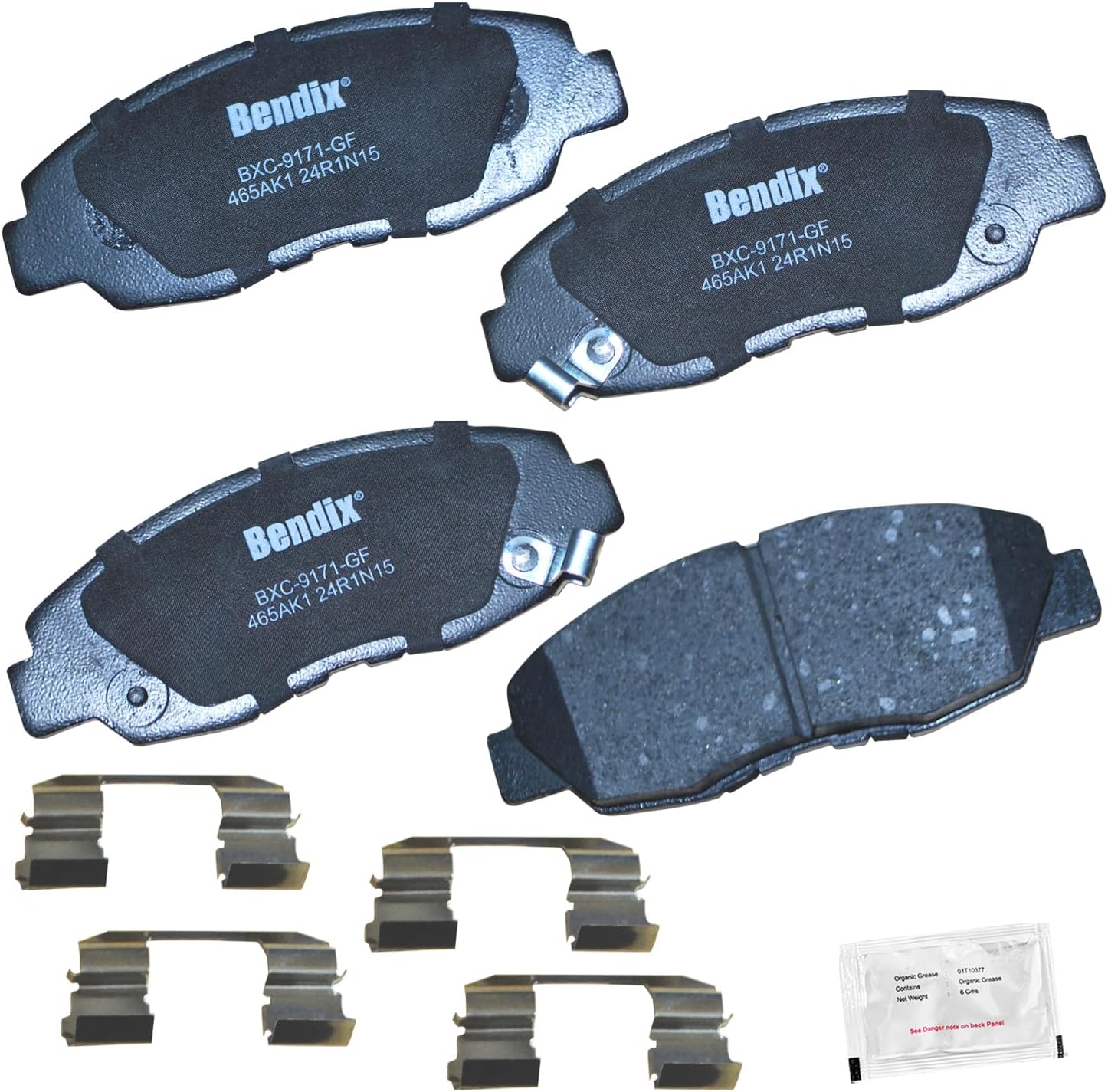
| Auto Part Position | Front |
|---|---|
| Compatible with Vehicle Type | Car, SUV, Truck |
| Material Type | Ceramic |
| Included Components | Brake pad set with installation hardware |
| Specification Met | OEM |
Bendix Priority1 CFC465AK1 ceramic front pads are a vehicle-specific replacement designed to meet factory fit, form, and function for 1998–2002 Honda Accord front brakes. They include installation hardware and feature shims, slots, and chamfers intended to reduce noise and improve pad seating. In everyday use these pads deliver steady, predictable stopping power with reduced dust compared with many semi-metallic options, and users report quiet operation when installed with proper rotor prep. The kit arrives with grease for slide pins and the included hardware simplifies a direct swap. Because they use ceramic friction material they tend to be progressive in bite rather than aggressive, which suits daily driving and commuting but is not targeted at heavy towing or track use. Expect typical ceramic wear characteristics and the need to re-bed pads if rotors are glazed. For drivers who prioritize reliable, quiet braking in a stock Accord, these pads are a practical factory-quality replacement.
Best for: Drivers who want a dependable, low-noise, factory-quality front pad replacement for daily driving on a 1998–2002 Honda Accord and prioritize reliability and consistent braking feel.
Less Ideal for: Drivers seeking aggressive track-level performance or heavy-duty towing pads should consider performance- or semi-metallic-specific options instead.
- Vehicle-specific design for direct fit to 1998–2002 Honda Accord front brakes
- Ceramic friction material reduces dust and gives quieter braking than many semi-metallic pads
- Includes installation hardware and grease for an easier, more complete replacement
- Shims, slots, and chamfers help minimize noise and improve initial pad seating
- Ceramic formulation provides a more progressive bite and is not optimized for heavy towing or aggressive driving
Verdict: A reliable, factory‑quality ceramic front pad set that delivers quiet, consistent stopping for daily-driven 1998–2002 Honda Accords.
5. Detroit Axle Front Brake Kit for 1998–2002 Honda Accord (2.3L Sedan, 4‑lug)

| Fitment | 1998–2002 Honda Accord Sedan 2.3L (4 lug) |
|---|---|
| Includes | 2 front rotors, 2 front ceramic pads, pad clips |
| Rotor type | Vented |
| Orientation | Front |
This Detroit Axle front brake kit supplies two vented front rotors and a pair of ceramic front pads sized for the 1998–2002 Honda Accord 2.3L sedan with four lugs. It is intended as a direct replacement so the rotors and pads install with no modification and include locating holes machined to factory-style tolerances. The rotors are vented for quicker cooling and zinc plated to resist surface corrosion, while the ceramic pads favor quiet, smooth stopping and longer pad life compared with basic metallic pads. Buyers will appreciate the included pad hardware and that the set covers both rotors and pads for a complete front service. Expect mostly OEM-equivalent fit and solid everyday braking for commuting and light-duty driving; some customers report occasional warped rotors from shipping and varied pad wear patterns, so inspect components at delivery and bed the pads properly. Installation is straightforward for a DIYer but may require a caliper piston tool to compress the pistons during reassembly.
Best for: Buyers seeking a budget-friendly, full front brake replacement that closely matches factory fit and delivers quiet, reliable stopping for daily driving and commuting; ideal for shoppers who value lots of owner feedback when choosing parts.
Less Ideal for: Not the best choice for high-performance or heavy towing use where specialty rotors and pads are required; also avoid if you need guaranteed long-term wear coverage from a parts-store lifetime program.
- Complete front kit includes both vented rotors and ceramic pads for one-stop replacement
- Vented rotors aid heat dissipation for more consistent stopping under repeated use
- Zinc plating reduces visible corrosion and wheel-dust staining on rotor faces
- Ceramic pads deliver quieter, smoother stops and generally longer pad life than generic metallic pads
- Some buyers report occasional warped rotors or shipping damage on arrival
- Pad wear and longevity appears variable across users, so lifespan may differ from OEM expectations
Verdict: A budget-conscious, full front brake replacement that offers factory-style fit and quieter ceramic stopping for everyday driving, backed by broad customer feedback.
6. HUSCH D537 Rear Ceramic Brake Pads Kit (4 pcs)

| Auto Part Position | Rear |
|---|---|
| Material Type | Ceramic |
| Number of Items | 4 |
| Automotive Fit Type | Vehicle Specific Fit |
| Manufacturer Warranty Description | 2 Year Manufacturer |
These HUSCH rear ceramic pads are a vehicle-specific replacement kit intended to restore rear braking performance with a quiet, low-dust ceramic compound. Designed with a multi-layer ceramic structure and chamfered edges, they aim to reduce noise and provide consistent friction during repeated stops; the listing states a friction coefficient around 0.405 which suggests confident bite and short stopping distances even under heavier braking. The kit includes four pads and installation hardware in many orders, which simplifies a DIY rear pad change for a mechanically comfortable owner. Ceramic material also tends to keep wheels cleaner compared with semi-metallic options. On the downside some users reported occasional squeal after heat buildup, so you may need proper bedding-in, shims, or anti-squeal compound to prevent noise. Longevity and dust performance will depend on driving style and rotor condition, and if you regularly tow or use the car for hard driving a heavier-duty formulation might be preferable.
Best for: Buyers seeking a quiet, factory-quality rear pad replacement for routine driving who prioritize low noise and cleaner wheels and want a kit they can install themselves.
Less Ideal for: Drivers who regularly tow, carry heavy loads, or do aggressive braking frequently should consider heavy-duty or performance-oriented brake compounds instead.
- Ceramic compound offers quiet operation and lower wheel dust compared with metallic pads
- Multi-layer high-density construction for consistent friction under repeated braking
- Vehicle-specific fit and included hardware simplify DIY rear pad replacement
- Manufacturer states high friction coefficient for short stopping distances
- Some users reported squeal after the pads heat up, so additional anti-squeal measures may be needed
Verdict: A quiet, low-dust ceramic rear pad kit that restores reliable stopping for drivers who want a factory-style replacement and easy DIY installation.
Choosing the Right 1998-2002 Honda Accord Brake Pads: Key Factors to Consider
Material Composition and Performance
Brake pad material determines initial bite, heat tolerance, and dust generation. Organic compounds offer quiet operation but tend to wear faster under spirited driving, while semi-metallic pads provide stronger initial bite and better fade resistance at the cost of more rotor wear and dust. Ceramic-style formulations usually produce less dust and quieter operation with stable performance for everyday driving but can cost more.
For the 1998-2002 Accord, think about your typical driving: if you mostly commute in town and value low dust and quiet stops, ceramic-style pads are often sensible. If you frequently tow a trailer, carry heavy loads, or drive aggressive roads, a higher-metal-content pad that resists fade will better sustain performance under heat.
Rotor Compatibility and Wear
Pad compounds interact with rotors and influence how quickly the rotor surfaces degrade. Some higher-metal-content pads can accelerate rotor scoring or thinning, leading to earlier rotor resurfacing or replacement. Conversely, very soft pads may glaze or leave uneven deposits that cause judder or pulsing under braking.
On a 1998-2002 Accord, which typically uses cast iron rotors, choosing pads that balance bite with rotor friendliness helps minimize maintenance costs. Check for pads designed to be rotor-friendly and consider whether the rotors will be resurfaced during pad changes, as mating new pads to a fresh rotor surface improves longevity and noise performance.
Noise, Vibration, and Harshness (NVH) Characteristics
Brake noise and vibration affect daily comfort and perceived quality. Some compounds produce squeal, chirp, or growl, particularly when cold or at light pedal pressures. Pad construction features such as chamfers, slots, and shims help reduce noise by altering contact mechanics and damping vibrations.
For Accord owners aiming for quiet operation, look for pads with multiple anti-squeal features and proper shims. Proper installation and torqueing of caliper hardware also influence NVH. If you experience persistent noise after installing pads, inspect mounting hardware and consider adding or replacing shims and anti-rattle clips.
Fitment and Backing Plate Design
Correct fitment ensures the pad sits securely in the caliper and actuates evenly across the rotor. Backing plate shape, chamfer placement, and the presence of locating tabs or clips must match the Accord's caliper geometry. Poor fitment can lead to uneven wear, reduced braking effectiveness, and hardware rattles.
When selecting pads for a 1998-2002 Accord, verify that the pad set explicitly lists compatibility with the specified year range and whether it covers front or rear position. Pay attention to included hardware; kits that supply shims, clips, or anti-rattle hardware simplify installation and improve long-term fitment.
Service Life and Maintenance Interval
Expected pad life depends on material, driving style, and environment. Commuters in stop-and-go traffic will see faster wear than highway drivers. Thicker initial pad material gives longer service life, but compound efficiency also matters: some formulations maintain stopping power longer while wearing more slowly.
Plan replacement intervals around measured pad thickness rather than arbitrary mileages. Inspect pads visually when possible and track thickness against manufacturer or widely accepted thickness specs for the Accord. Replacing pads before they reach critical thinness protects rotors and preserves braking consistency.
Installation Ease and Hardware Included
Ease of installation affects whether you can do the job yourself or need professional help. Pad sets that include new shims, anti-rattle clips, and detailed fitment information reduce installation time and the risk of NVH issues. Some pads require minor caliper service like piston retraction or lubrication of guide pins; others may need specific tools.
For the 1998-2002 Accord, owners performing DIY replacements should look for kits that include necessary hardware and clear instructions. If the kit omits clips or shims, factor in the cost and availability of separate hardware during installation planning.
Front Vs Rear Brake Pad Roles on the Accord
The front and rear pads on the 1998-2002 Accord share braking duties differently. The front pads handle the majority of braking force and therefore typically wear faster. Rear pads stabilize braking balance and contribute to parking brake function in some configurations.
- Front pads take roughly 60 to 70 percent of braking effort in normal stops.
- Rear pads contribute to pedal modulation and vehicle stability during repeated stops.
- When replacing pads, assess both axles so you do not create imbalance between new and worn material.
Interpreting Brake Pad Thickness and When To Replace
Measure pad thickness to determine replacement timing rather than relying solely on mileage. For many Accord drivers, pads are nearing replacement when friction material approaches commonly cited thinness thresholds. Inspect pads through the caliper inspection hole or remove the wheel for a direct measurement.
- New pad material varies by manufacturer, but track remaining friction material rather than backing plate exposure.
- If thickness is near the minimum spec or you hear consistent grinding, plan immediate replacement.
- During replacement, check rotor thickness and surface condition; machining or replacement may be necessary if rotors are below spec.
Common Brake Pad Wear Symptoms and What They Mean
Unusual noises, decreased pedal feel, or visible glazing all indicate different wear or installation issues. Grinding usually means the pad is worn down to the backing plate and requires immediate attention. Squeal at light braking can indicate glazing or missing shims, while pulsation often points to rotor runout or uneven pad transfer.
- Grinding typically indicates severely worn pads or missing friction material.
- Squeal can arise from glazing, loose hardware, or incompatible compound.
- Vibration or pulsing suggests rotor thickness variation or improper bedding of new pads.
Ceramic Vs Semi-Metallic Choices for Everyday Use
Ceramic-style pads are generally quieter and produce less dust, which suits drivers who prioritize low maintenance and cleaner wheels. Semi-metallic pads offer stronger initial bite and better heat resistance, beneficial for drivers who encounter steeper descents or frequent hard stops.Consider your driving style and environment for the 1998-2002 Accord. For moderate commuting and city driving, ceramic-oriented pads often strike the best balance of cleanliness, quiet, and sufficient bite.
- Ceramic-style pads: lower dust, quieter, good for daily driving.
- Semi-metallic pads: better heat tolerance and bite, may increase dust and rotor wear.
Preparing for a Brake Pad Replacement Job
Before starting a replacement, gather necessary tools, a torque wrench, and any recommended hardware. Safely lift and support the vehicle, remove wheels, and inspect calipers, guide pins, and hoses for wear. Clean mating surfaces and apply appropriate brake lubricant where specified.Careful pre-checks reduce rework and NVH problems after installation. If you plan to reuse rotors, check for runout and thickness; resurface or replace if out of spec.
- Have replacement shims or anti-rattle clips on hand if not included in the kit.
- Verify torque values for caliper mounting bolts and wheel lug nuts.
- Bleed brakes if the system was opened or if pedal feel is soft after installation.
Still looking for the perfect fit?
Select your Honda Accord configuration to see the most relevant Brake Pads recommendations
How We Chose the Best 1998-2002 Honda Accord Brake Pads
We focused on criteria that directly affect real-world performance and vehicle compatibility for 1998-2002 Honda Accord owners. Key evaluation points included stopping performance under normal and repeated stops, measured by reported pedal feel and fade resistance; pad longevity and wear characteristics to estimate service intervals; rotor compatibility to limit uneven wear and scoring; and noise and dust characteristics relevant to daily driving and garage cleanliness.We also considered fitment reliability for the Accord's front and rear calipers, ensuring backing plate dimensions and shim provisions align with the vehicle's hardware. Installation practicality and the availability of quality hardware or shim kits were factored in as well. We excluded options that require caliper modification or do not list explicit fitment for the 1998-2002 Accord. The result is a curated list of pads that balance safety, comfort, and durability for this specific Honda model.
Our full evaluation process is outlined in our review methodology.
FAQ
How often should I replace brake pads on a 1998-2002 Honda Accord?
It depends on driving habits. Many drivers replace pads between 30,000 and 70,000 miles, but frequent city driving or heavy braking shortens that interval. Inspect pad thickness regularly and replace before the friction material reaches dangerously low levels.
Can I replace only the front pads and leave the rears on my Accord?
You can replace only the front pads if the rears still have sufficient material, but replacing both axles at different wear levels can change pedal feel. Inspect rear thickness and condition to avoid imbalance and consider matching pad types front and rear.
What causes brake pad noise like squeal or grinding?
Squeal often results from glazing, missing or worn shims, or vibrational resonance between pad and caliper. Grinding usually indicates the pad is worn to the backing plate and requires immediate replacement to avoid rotor damage.
Is ceramic better than semi-metallic for my Accord?
Ceramic pads are typically quieter and cleaner for everyday commuting, while semi-metallic pads offer stronger initial bite and better fade resistance under heavy use. Choose based on your driving style and tolerance for dust versus heat performance.
Should I resurface rotors when replacing pads on this Accord?
Resurfacing depends on rotor thickness and surface condition. If rotors show scoring, uneven wear, or are below thickness specifications, have them machined or replaced. Installing new pads on rough rotors often causes noise and uneven pad transfer.
How can I check pad fitment for the 1998-2002 Accord before buying?
Confirm that the pad set explicitly lists compatibility with the 1998-2002 Honda Accord and specifies front or rear application. Review backing plate shape and included hardware to ensure it matches your calipers and mounting clips.
Final Verdict
Prioritize stopping performance, rotor compatibility, and NVH when selecting brake pads for a 1998-2002 Honda Accord. Balance material choice against your driving conditions: choose quieter, lower-dust ceramic-style pads for daily commuting and consider higher-metal-content compounds if you need greater fade resistance for demanding driving. Ensure correct fitment, include proper hardware, and monitor pad thickness to protect rotors.When you focus on these criteria, you can confidently select brake pads that restore safe braking feel and prolong other braking system components, helping you maintain reliable stopping performance over time.
Explore More:
- Check out all Honda Accord parts & accessories
- Explore Brake Pads Maintenance & Repair Guides
- Explore Brake System
- Browse all Auto Parts
