

Note: This article contains affiliate links. If you click on these links and make a purchase, I may earn a small commission at no extra cost to you. This helps support my research and content. Read my full affiliate disclosure here.
Picking the right engine oil for a Honda Accord Sport makes a measurable difference in drivability, fuel efficiency, and long-term engine health. Your Sport trim often sees a mix of daily commuting and more dynamic driving, so oil choice should balance cold-start flow, wear protection under load, and compatibility with the vehicle's service interval.This guide shortlists the top seven engine oils suited to the Honda Accord Sport. We evaluated options across viscosity grades, synthetic formulations, and high-mileage treatments to highlight choices that match common Sport driving patterns. Read on for the factors that matter and quick guidance to help you pick an oil that fits your Accord Sport and how you drive.
Looking for other parts? See all Honda Accord parts & accessories.
Top Picks at a Glance
| Best Overall Engine Oil The top all-around choice balancing performance, protection, and price | Castrol EDGE 0W-20 Full Synthetic Motor Oil, 5 Quart Jug |  |
| Best Budget Engine Oil Lowest-cost option that still meets key protection standards | Valvoline High Mileage MaxLife 5W-20 Synthetic Blend Motor Oil 5 qt |  |
| Best Premium Engine Oil A higher-end formula focused on maximum longevity and protection | Royal Purple SAE 0W-20 High Performance Synthetic Motor Oil, 5 qt |  |
| Best Full-Synthetic Engine Oil 100% synthetic formulas for maximum protection and high-temperature stability | Castrol GTX Full Synthetic 0W-20 Motor Oil, 5 Quart Jug |  |
| Best Synthetic-Blend Engine Oil Blended oils that balance synthetic benefits with lower cost | Honda Genuine Synthetic Blend Motor Oil 5W-20 (29.6 oz) |  |
| Best High-Mileage Engine Oil Formulated additives to condition seals and reduce wear in older engines | Valvoline MaxLife Full Synthetic High Mileage 5W-20 Motor Oil, 5 qt |  |
| Best 5W-20 Engine Oil Specific viscosity grade commonly recommended for modern gasoline engines | Castrol GTX Full Synthetic 5W-20 Motor Oil, 5 Quart Bottle |  |
1. Castrol EDGE 0W-20 Full Synthetic Motor Oil, 5 Quart Jug
Best Overall Engine Oil

| Viscosity Grade | 0W-20 |
|---|---|
| Volume | 5 Quarts |
| Certifications | API SQ/SP/SN PLUS/SN | ILSAC GF-7 |
| Manufacturer Approvals | Meets GM, Chrysler, Ford test requirements |
Castrol EDGE 0W-20 is a full synthetic motor oil designed to protect modern gasoline engines while helping maintain fuel economy. For a Honda Accord Sport that calls for 0W-20, this oil provides low-temperature flow for easy cold starts and stable viscosity at operating temperatures, which helps reduce engine wear and sludge. Castrol highlights longer oil life and resistance to high-temperature breakdown, so it suits regular commuting and occasional spirited driving without losing protection. The product is sold in a 5 quart jug that covers a single oil change plus extra for top-offs. Certifications listed include API SQ/SP and ILSAC GF-7 and the formula meets multiple manufacturer test requirements, supporting broad compatibility with current Honda engine needs. Limitations to consider are packaging variability reported by some buyers and that extended drain intervals depend on driving conditions and Honda service recommendations, so follow the vehicle manual rather than stretching intervals solely because of marketing claims.
Best for: Drivers of a Honda Accord Sport who want a factory-quality 0W-20 synthetic that balances wear protection, thermal stability, and everyday fuel efficiency for routine maintenance and occasional spirited driving.
Less Ideal for: Drivers planning to use extended drain intervals beyond Honda's recommended service schedule or those who require a different viscosity for modified engines should choose a product matched to those specific needs.
- Suitable viscosity for modern Honda 0W-20 engines, aiding cold starts and fuel economy
- Full synthetic formulation designed for high-temperature stability and reduced sludge
- Meets industry and manufacturer specifications for broad compatibility
- 5 quart jug provides enough oil for an Accord oil change with a small extra for topping up
- Packaging and outer box quality has varied in customer reports which can risk leaks during shipping
Verdict: The best all-around engine oil that balances wear protection, fuel efficiency, compatibility with many engines, and value for everyday automotive use.
2. Valvoline High Mileage MaxLife 5W-20 Synthetic Blend Motor Oil 5 qt
Best Budget Engine Oil

| SAE Viscosity Grade | 5W-20 |
|---|---|
| Compatible with Vehicle Type | Car, Truck |
| Liquid Volume | 5 Quarts |
| Flash Point | 390 Degrees Fahrenheit |
Valvoline High Mileage MaxLife 5W-20 is a synthetic blend motor oil aimed at vehicles with higher mileage that need extra protection against wear, deposits, and leaks. It is used like any conventional oil for drain-and-fill service and is formulated to meet ILSAC GF-6A and API SP specifications, so it satisfies modern engine requirements while offering added detergents, anti-wear agents, and seal conditioners to refresh aging seals and reduce leaks. In real-world use this oil helps control sludge and deposits, fights corrosion, and resists thermal breakdown during stop-and-go driving and cold starts. It is a practical choice for budget-minded buyers who want factory-quality spec compliance and better protection than basic conventional oils without stepping up to a full synthetic. Limitations are that it is a synthetic blend rather than a full synthetic, so top-end fuel economy and the absolute longevity benefits of premium full synthetics may be lower for some drivers.
Best for: Buyers who want a dependable, spec-compliant oil for higher-mileage Accord Sport engines that balances protection and cost without upgrading to a premium full synthetic.
Less Ideal for: Drivers seeking the absolute longest oil-change intervals or maximum fuel-economy gains should consider a true full synthetic instead.
- Formulated to meet ILSAC GF-6A and API SP standards for modern engines
- Contains detergents and anti-wear additives to reduce sludge and engine wear
- Seal conditioners help reduce leaks in aging engines
- Synthetic blend offers improved thermal stability over standard conventional oils
- Not a full synthetic so it may not deliver the maximum longevity or fuel-economy gains of premium full synthetic oils
Verdict: The best low-cost engine oil for buyers who want acceptable wear protection and spec compliance without paying for premium additives or branding.
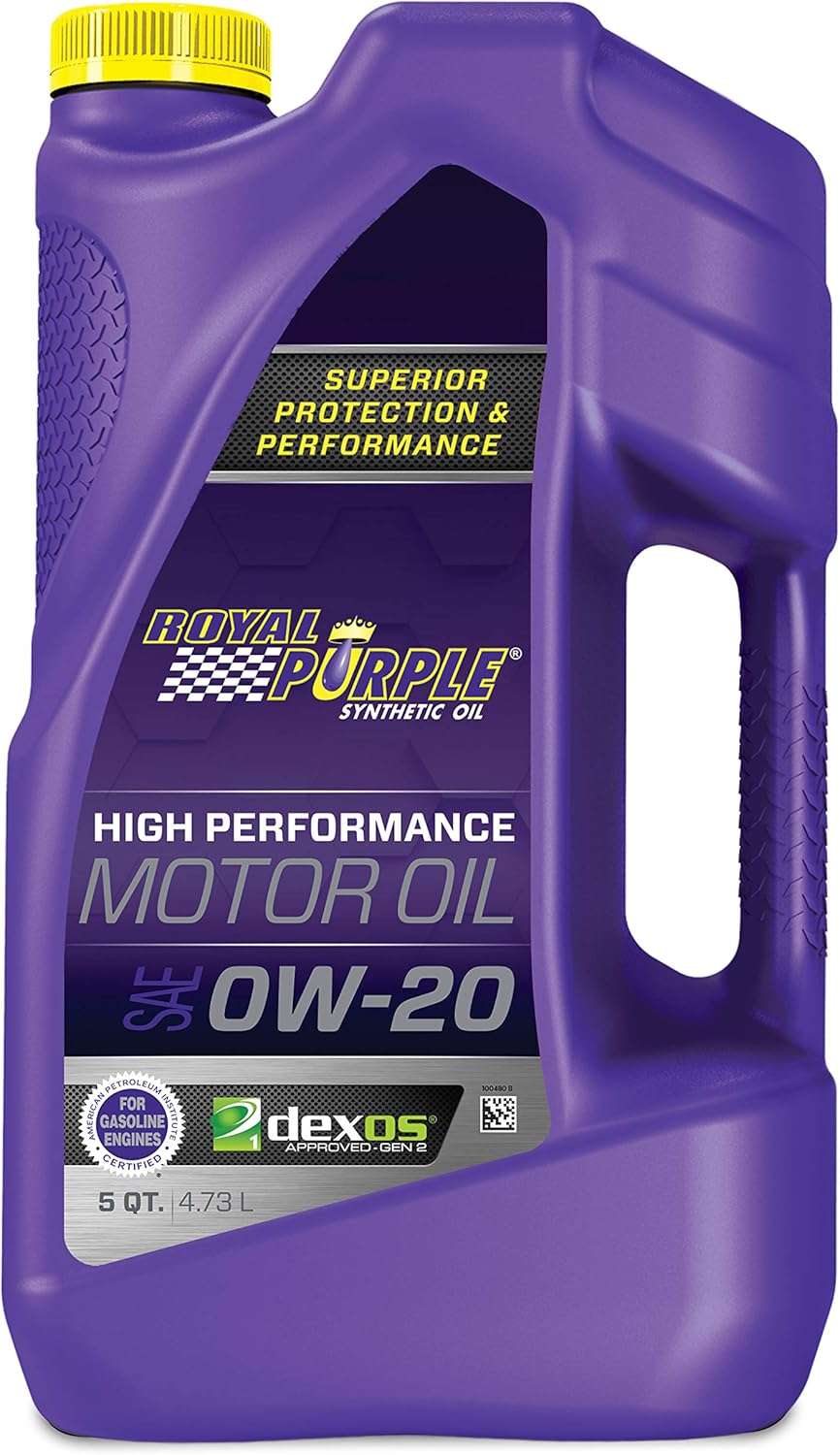
3. Royal Purple SAE 0W-20 High Performance Synthetic Motor Oil, 5 qt
Best Premium Engine Oil
| Viscosity | SAE 0W-20 |
|---|---|
| Liquid Volume | 4.73 Liters |
| Compatible with Vehicle Type | Truck |
| Automotive Fit Type | Vehicle Specific Fit |
Royal Purple 0W-20 is a full synthetic motor oil blended to deliver high-performance protection for modern gasoline engines. It is used like any factory-spec 0W-20: pour into the crankcase at oil change intervals recommended by your vehicle or adjusted for longer drains if you monitor condition. The formula combines premium base stocks with Royal Purple’s patented additive chemistry to reduce friction, protect valve train components, and resist sludge and corrosion. Notable features include API licensing with ILSAC GF-5 and Dexos1-compatibility claims along with additives targeted at reducing low-speed pre-ignition in turbocharged GDI engines. In practice this oil helps keep internals clean, can support slightly improved fuel economy, and tolerates extended drain intervals for drivers who prefer longer service spans. The main trade-offs are higher cost versus mainstream brands and that very thin 0W-20 viscosity can show slightly higher consumption on some older engines; pouring from the jug also requires care to avoid splashes with the current container design.
Best for: Drivers who prioritize maximum engine protection and are willing to pay more for a synthetic 0W-20 that supports longer drain intervals and improved thermal stability for daily-driven performance sedans.
Less Ideal for: Budget-minded drivers who change oil frequently or owners of older, high-consumption engines seeking a thicker viscosity grade rather than a modern low-viscosity oil.
- Full synthetic blend with advanced additives for wear reduction and engine cleanliness
- Formulated to meet API SN, ILSAC GF-5 and Dexos1 performance targets
- Low-viscosity 0W-20 aids cold starts and can improve fuel economy
- Designed to reduce LSPI risk in modern turbocharged GDI engines
- Premium price compared with mainstream 0W-20 oils
Verdict: The best premium engine oil for drivers willing to pay more for extended protection, superior thermal stability, and longer drain intervals.
4. Castrol GTX Full Synthetic 0W-20 Motor Oil, 5 Quart Jug
Best Full-Synthetic Engine Oil

| SAE J300 Viscosity Grade | 0W-20 |
|---|---|
| Liquid Volume | 5 Quarts |
| Automotive Fit Type | Universal Fit |
| Compatible with Vehicle Type | Car, Truck |
| Item Type Name | Full Synthetic Motor Oil |
Castrol GTX Full Synthetic 0W-20 is a factory-quality motor oil designed to protect modern engines through a combination of wear-reducing additives and thermal stability. As a 0W-20 grade it pours easily at low temperatures, so cold starts in a Honda Accord Sport feel smoother and oil pressure builds quickly. The formulation advertises stronger sludge protection and resistance to viscosity breakdown, which helps keep the engine cleaner between service intervals and maintain steady film strength under heat and load. The 5-quart jug is convenient for a full DIY oil change. Compatibility notes list universal fit for cars and trucks and the oil meets API SP and ILSAC GF-6 standards plus dexos1 Gen 3 and relevant Ford specs, which aligns with many modern Honda engine requirements for fuel economy and emissions. Limitations are that this single-viscosity offering is specific to engines calling for 0W-20 and will not be appropriate where a different viscosity is required by the manufacturer or for older engines with higher oil consumption.
Best for: Buyers who prioritize maximum engine protection and reliable cold-start performance for a modern vehicle and want a full synthetic that meets current industry and manufacturer specs.
Less Ideal for: Drivers who need a different viscosity than 0W-20 for their vehicle, owners of older engines that require thicker oils, or those following a manufacturer recommendation that excludes 0W-20.
- 0W-20 viscosity for improved cold-start flow and quick oil circulation
- Formulated to reduce engine wear and protect critical components
- Claims enhanced sludge protection to keep engines cleaner between changes
- Meets modern industry specs including API SP, ILSAC GF-6 and dexos1 Gen 3
- Only available in 0W-20 grade so not suitable where a different viscosity is specified
Verdict: The best full-synthetic engine oil for those who prioritize maximum engine protection, improved cold starts, and consistent performance under heat and stress.
5. Honda Genuine Synthetic Blend Motor Oil 5W-20 (29.6 oz)
Best Synthetic-Blend Engine Oil

| SAE J300 Viscosity Grade | 5W-20 |
|---|---|
| Container Type | Bottle |
| Compatible with Vehicle Type | Car |
| Liquid Volume | 5000 Milliliters |
This is Honda branded synthetic-blend 5W-20 motor oil intended as a direct factory replacement for vehicles that call for that viscosity. It is typically used at scheduled oil changes in Honda cars where a 5W-20 grade is specified and comes in a pourable bottle sized for a single service. The synthetic-blend formulation gives improved oxidation resistance and thermal stability compared with conventional oil while keeping cost lower than a full synthetic. As a genuine Honda part it matches the manufacturer part number and removes guesswork about compatibility for Honda models that require 5W-20. Practical benefits include straightforward fitment for owners wanting factory-quality fluid and a familiar viscosity for everyday driving and commuting. Limitations are that it is a synthetic blend rather than full synthetic, so it will not provide the absolute high-temperature performance or the longest drain intervals of premium full synthetics, and the single-bottle size may require multiple bottles for larger crankcases.
Best for: Drivers who want a factory-quality, cost-conscious lubricant that delivers many benefits of synthetics without paying full-synthetic prices for routine daily driving and scheduled maintenance.
Less Ideal for: People looking for maximum high-temperature protection, extended drain intervals, or the highest-performance full-synthetic formulations should consider full synthetics instead.
- Factory-branded fluid matching Honda part number for confident compatibility
- Synthetic-blend formulation improves oxidation resistance over conventional oils
- 5W-20 viscosity suited for Honda engines that require that grade
- Convenient single-bottle packaging for a typical oil change
- Not a full synthetic so it offers less extreme-temperature protection and shorter recommended drain intervals than premium full synthetics
Verdict: The best synthetic-blend engine oil for drivers who want many advantages of synthetics—like better oxidation resistance—at a lower price than full synthetics.
6. Valvoline MaxLife Full Synthetic High Mileage 5W-20 Motor Oil, 5 qt
Best High-Mileage Engine Oil

| SAE Viscosity Grade | 5W-20 |
|---|---|
| Liquid Volume | 5 Quarts |
| Compatible Vehicle Type | Car, Truck |
| Viscosity Level | Low to Medium |
| Flash Point | 390 Degrees Fahrenheit |
Valvoline MaxLife Full Synthetic 5W-20 is a high-mileage motor oil designed to protect engines with significant mileage by combining a full synthetic base with targeted additives. It is typically used as a routine replacement oil for cars and light trucks, especially when owners want to slow wear and address age-related issues like seal hardening and oil leaks. Notable features include anti-wear additives, seal conditioners that help rejuvenate shrinking gaskets, and a formula that claims stronger heat and sludge protection versus industry standards. In practice this translates to smoother cold starts, reduced oil consumption in older engines, and cleaner internals compared with conventional oils. The universal fit and common 5-quart container make it convenient for do-it-yourself changes. Limitations: it is a single SAE grade (5W-20) so confirm your Accord Sport’s required viscosity before switching, and benefits are most noticeable in higher-mileage powertrains rather than newer or heavily modified engines.
Best for: Buyers who want to extend the life of an older, everyday car by addressing seal wear, oil consumption, and internal deposits with a modern full synthetic oil.
Less Ideal for: Drivers of newer low-mileage vehicles or those who need a different viscosity grade or specialized oil for performance-modified engines should consider other options.
- Formulated specifically for high-mileage engines with seal conditioners to help reduce leaks
- Full synthetic base offers improved wear protection and heat resistance over conventional oils
- Designed to reduce sludge and deposits for cleaner engine internals
- Common 5-quart packaging and universal fit make DIY oil changes straightforward
- Only available in SAE 5W-20 for this ASIN so not suitable if your engine requires a different viscosity
Verdict: The best high-mileage engine oil for vehicles with higher miles that benefit from seal conditioners, reduced oil burn, and extra anti-wear additives.
7. Castrol GTX Full Synthetic 5W-20 Motor Oil, 5 Quart Bottle
Best 5W-20 Engine Oil

| Viscosity | 5W-20 |
|---|---|
| Size | 5 Quarts |
| Vehicle Service Type | Car, Truck |
| SAE J300 Viscosity Grade | 5W-20 |
Castrol GTX Full Synthetic 5W-20 is a full synthetic engine oil designed to protect modern gasoline engines through cold starts and extended operating periods. In use it provides the low-viscosity flow needed at startup and a stable protective film at operating temperature, which helps reduce wear on pistons, rings, and cylinder walls while resisting sludge build-up. Notable features called out by the manufacturer include enhanced high-temperature performance, additive chemistry to extend oil life, and claims of protection for up to 10,000 miles between changes under certain conditions. For a Honda Accord Sport that specifies 5W-20, this oil delivers the correct viscosity behavior and strong cleanliness properties that support engine efficiency and longevity. The main trade-off is that extended drain intervals depend on driving style and manufacturer recommendations, so owners should follow Honda service intervals rather than relying solely on marketing claims. Overall the oil is a practical choice for routine maintenance when you need factory-quality 5W-20 performance and robust wear protection.
Best for: Buyers who need a full synthetic 5W-20 that flows easily at cold start and maintains protective film strength at operating temperature for regular street driving and highway use in a Honda Accord Sport.
Less Ideal for: Drivers who follow an aggressive track schedule or who require oils specified for diesel or high-performance modified engines should choose a product matched to those specialized demands.
- Correct 5W-20 viscosity for cold starts and operating temperature suited to engines specifying 5W-20
- Full synthetic formulation that resists high-temperature breakdown and helps reduce sludge
- Manufacturer claims of enhanced wear protection to protect critical engine components
- Formulation aimed at improving fuel economy and maintaining engine cleanliness
- Extended 10,000-mile drain claims depend on driving conditions and should be validated against Honda’s maintenance schedule
Verdict: The best 5W-20 engine oil for buyers seeking the correct viscosity grade that ensures proper flow at cold start and appropriate film strength at operating temperature.
Choosing the Right Honda Accord Sport Engine Oil: Key Factors to Consider
Viscosity Grade and Cold-Start Performance
Viscosity grade directly affects oil flow at startup and protection at operating temperature. For the Accord Sport, choose a grade that the manufacturer recommends or that matches your climate to ensure adequate lubrication at cold startup while maintaining film strength at higher temperatures.
Cold-start pumpability matters because most engine wear happens at startup. Lower winter-grade numbers improve flow in low temperatures, while the high-temperature rating preserves protection during extended highway runs or hotter ambient conditions. Consider daily driving patterns and local winter lows when selecting between common grades.
Synthetic Versus Conventional Base Stocks
Synthetic oils typically offer better high-temperature stability, reduced volatility, and improved shear resistance compared with conventional oils. That translates to more consistent viscosity over long service intervals and stronger film strength under the higher load events an Accord Sport might see during spirited driving.
Conventional oils can be adequate for infrequent, low-stress driving and might be chosen where budgets or very short drain intervals apply. For owners who keep their vehicles longer or drive more aggressively, synthetic formulations usually yield better long-term protection and cleaner internals.
Additive Chemistry and Engine Cleanliness
Detergents, dispersants, and deposit-control additives help keep pistons, rings, and oil passages clean. A Sport trim can experience more aggressive throttle inputs that increase combustion byproducts; a robust additive package reduces the risk of varnish and sludge buildup.
Look for oils with proven detergent and dispersant levels and industry performance ratings that indicate good oxidation control. Clean oil helps maintain fuel economy and reduces the chance that deposits will interfere with variable valve timing or other engine controls.
Wear Protection and Anti-Wear Additives
Anti-wear additives are a frontline defense for critical contact areas like cam lobes and bearings. Modern additive systems balance zinc/phosphorus content for protecting flat tappets and high-pressure contacts while minimizing catalyst impact.
For a Honda Accord Sport, prioritize oils with documented anti-wear performance and good boundary lubrication characteristics. This becomes more important if the vehicle sees spirited driving, towing of small loads, or extended periods at high engine speeds.
Compatibility With Emission Systems
Oils interact with emission-control hardware and oxygen sensors over time. Low-ash formulations help preserve particulate filters and catalytic converters. While the Accord Sport uses gasoline-specific aftertreatment, choosing oils that meet current API and ILSAC standards reduces the risk of ash-related fouling.
Avoid oils formulated for heavy-duty diesel applications, as their additive package and ash levels can be inappropriate for gasoline emission systems. Using the correct oil specification supports long-term emissions component function.
Service Interval and Oil Life
Decide whether you prefer more frequent conventional changes or extended intervals with synthetic oils. Longer drain intervals are appealing for convenience, but they require oils with superior oxidation stability and additive longevity.
Consider your actual driving patterns: many owners with mostly highway miles can safely extend intervals on the right synthetic oil, while frequent short trips or stop-start city driving benefit from more conservative change intervals to control contaminant buildup.
Recommended Viscosity Options for Different Climates
Choosing the right viscosity grade for a Honda Accord Sport depends primarily on ambient temperature and driving style. In colder climates, a lower cold-cranking viscosity helps the oil circulate quickly at startup and reduce wear. In moderate to warm climates, a grade with a robust high-temperature viscosity rating maintains film strength during long highway runs and spirited acceleration.
- 0W-20 or 5W-20 favors cold-start flow and is common for modern gasoline engines in temperate to cold regions.
- 5W-30 or 10W-30 provide a thicker high-temperature film that can benefit sustained high-load driving in warmer areas.
- If you frequently switch between city commuting and highway driving, select an oil whose multi-grade range balances both cold-start pumpability and hot running protection.
When to Consider High-Mileage Formulations
High-mileage engine oils include conditioners that can reduce oil consumption and help seal minor leaks in engines with higher miles. For Accord Sport owners with vehicles past the warranty period or with noticeable oil consumption, these formulations can improve compression and reduce visible leaks without additional mechanical work in the short term.
- High-mileage oils often contain seal swell agents and extra detergents to manage deposits.
- They may be a good choice when factory compression is still acceptable but oil consumption or minor seepage becomes evident.
- If the car has no oil consumption issues, high-mileage formulations are optional rather than required.
Choosing Between Synthetic Blend and Full Synthetic
Synthetic blends offer a middle ground between conventional oils and full synthetics. They can deliver some of the thermal stability and shear resistance benefits of synthetics at a lower cost. Full synthetic oils provide the best oxidation resistance and consistent viscosity retention over long intervals, which benefits engines subjected to higher stress or extended oil-change schedules.
- Full synthetic is preferred for extended intervals and spirited driving that raises oil temperatures.
- Synthetic blends can be acceptable for mixed-use drivers who still change oil relatively frequently.
- Check that the chosen formulation meets the vehicle's recommended specifications regardless of base stock type.
Oil Change Intervals and Practical Maintenance Tips
Establish an oil-change schedule based on your driving habits and the oil type. Short trips and heavy city traffic accelerate fuel dilution and contamination, suggesting shorter intervals. Highway-focused drivers with stable RPMs and lower contaminant intake can safely extend intervals with a high-quality synthetic oil.When changing oil, always replace the oil filter with the correct specification and use the proper oil capacity for the Sport configuration. Keep records of intervals and monitor oil level and condition between services.
- Check oil level monthly and before long trips.
- Follow the owner manual for capacity and recommended specifications.
- Use OEM or equivalent filters sized for the Accord Sport to maintain proper flow and filtration.
Environmental and Fuel Economy Considerations
Lower-viscosity oils can reduce internal friction and slightly improve fuel economy. The Accord Sport's balance of performance and efficiency means choosing an oil that minimizes drag without sacrificing protective film strength.Consider oils with credentials indicating fuel-economy benefits, keeping in mind that measured gains are typically modest. Proper maintenance and timely oil changes have a greater cumulative effect on real-world fuel consumption than marginal differences between similar high-quality oils.
- 0W-20 and 5W-20 grades often show the best potential for small fuel-economy gains.
- Ensure any fuel-economy-focused oil still meets anti-wear and deposit-control requirements for the engine.
Still looking for the perfect fit?
Select your Honda Accord configuration to see the most relevant Engine Oils recommendations
How We Chose the Best Honda Accord Sport Engine Oil
We focused on formulation and fitment criteria that matter specifically for the Honda Accord Sport. Our selection filters prioritized oils with clearly documented viscosity grades recommended for the vehicle, robust additive packages for wear control, and base oil technology suited to modern gasoline engines. We also considered shear stability, cold-start pumpability, and compatibility with emission-control components.Evaluation criteria included viscosity range and grade relevance to the Sport trim, detergent and dispersant chemistry for combustion cleanliness, anti-wear additives such as zinc dialkyldithiophosphate equivalents, and synthetic base stocks where applicable. We checked manufacturer-specified API and ILSAC performance claims and looked for oils designed for standard or extended drain intervals depending on owner use.Exclusions: we did not include motor oils lacking clear performance specifications, ambiguous viscosity labeling, or formulations intended solely for diesel engines. We also excluded specialty racing fluids not suitable for regular street use. The final list favors balanced options that address cold starts, routine highway cruising, and occasional spirited driving common to Accord Sport ownership.
Our full evaluation process is outlined in our review methodology.
FAQ
What viscosity oil should I use in my Honda Accord Sport?
It depends on climate and the owner's manual recommendations. Commonly recommended grades for modern Accords include lower-winter grades like 0W-20 or 5W-20 for cold regions and 5W-30 where higher operating temperatures are common. Always check the vehicle's service specifications first.
Can I switch from conventional to full synthetic oil in my Sport trim?
Yes. Switching to full synthetic is generally safe and often beneficial, especially if you plan longer change intervals. Drain the old oil and replace the filter during the change. There is no need for a special flush in most cases unless the engine has significant deposits.
How often should I change oil in the Accord Sport?
Frequency depends on oil type and driving conditions. For conventional oil, follow conservative intervals recommended in the manual. With full synthetic and mostly highway driving, longer intervals are typically acceptable. Check oil condition and level regularly and adjust intervals if you do many short trips or heavy stop-and-go driving.
Are high-mileage oils necessary for an Accord Sport with over 100,000 miles?
They are not strictly necessary but can help if you observe oil consumption or minor leaks. High-mileage formulations include seal conditioners and targeted detergents that can improve sealing and reduce leaks in older engines. If the engine runs well without consumption, the benefit is less clear.
Will using a lower-viscosity oil improve fuel economy?
Lower-viscosity oils can reduce internal friction and provide modest fuel-economy gains, especially during cold starts and low-load cruising. However, the difference is usually small compared with the benefits of regular maintenance and correct tire pressures.
What should I check after an oil change on the Sport trim?
Verify the oil level with the dipstick after the engine has idled briefly and then cooled slightly. Inspect for any visible leaks around the drain plug and filter. Reset any maintenance indicator if applicable and keep a record of the service date and mileage.
Final Verdict
Prioritize a viscosity and formulation that align with your local climate and driving habits for the Honda Accord Sport. Full synthetic oils offer the best protection for extended intervals and more demanding driving, while synthetic blends or conventional oils remain acceptable for drivers who change oil frequently and experience low stress conditions.Balance cold-start performance, anti-wear chemistry, and compatibility with emission controls when making your choice. Focus on regular monitoring and proper service intervals to maximize engine life and maintain the Sport trim's performance characteristics.
Explore More:
- Check out all Honda Accord parts & accessories
- Explore Fluids & Chemicals
- Browse all Accessories
