

Note: This article contains affiliate links. If you click on these links and make a purchase, I may earn a small commission at no extra cost to you. This helps support my research and content. Read my full affiliate disclosure here.
If you own a 1998-2002 Honda Accord you already know the importance of routine oil maintenance for long-term engine health. Picking the right engine oil affects cold starts, operating temperatures, oil consumption, and how the engine wears as mileage climbs. This guide focuses on the specific needs of 1998-2002 Accords and presents a shortlist of the top-performing engine oils suited to that generation.We evaluated options that address viscosity needs, wear protection, and compatibility with higher-mileage engines so you can make a practical choice for everyday driving or for Accords with significant miles. Below are the top picks and the criteria we used to assess them, followed by buying guidance and answers to common owner questions.
Looking for other parts? See all Honda Accord parts & accessories.
Top Picks at a Glance
| Best Overall Engine Oil The best all-around oil balancing protection, efficiency, and compatibility | Valvoline Advanced Protection Full Synthetic 0W-20 Motor Oil, 5 qt |  |
| Best Budget Engine Oil A low-cost oil that provides basic protection for routine service | Honda Genuine Synthetic Blend Motor Oil 5W-20, 1 qt |  |
| Best Premium Engine Oil A top-tier oil offering superior additives and long-term protection | Honda Genuine Full Synthetic SAE 0W-20 Motor Oil (1 Quart, 4-pack) |  |
| Best High-Mileage Engine Oil Formulated for engines with many miles to reduce leaks and wear | Valvoline High Mileage 150K MaxLife Plus Technology 5W-20 Synthetic Blend Motor Oil, 5 Quart |  |
| Best Full Synthetic Engine Oil 100% synthetic formulation for maximum performance and temperature stability | Honda Ultimate Full Synthetic Motor Oil SAE 0W-20 (1 Quart, 6-Quart Pack) |  |
| Best Synthetic Blend Engine Oil A mix of synthetic and conventional oils for balanced performance | Honda Genuine Synthetic Blend Motor Oil 5W-30 (1 quart) |  |
1. Valvoline Advanced Protection Full Synthetic 0W-20 Motor Oil, 5 qt
Best Overall Engine Oil

| Viscosity | 0W-20 SAE Grade |
|---|---|
| Size | 5 QT |
| Meets | ILSAC GF-7A, API SQ, API SP, API SN with SN PLUS |
| Manufacturer specifications | Ford WSS-M2C962-A1, Chrysler MS-13340, GM dexos1 Gen 3 |
Valvoline Advanced Protection 0W-20 is a full synthetic motor oil engineered to reduce wear, control deposits, and maintain stable viscosity across operating temperatures. You use it like any conventional engine oil at oil change intervals recommended for your car; it pours cleanly and flows well on cold starts so the engine gets lubrication fast. The formula claims stronger wear protection, improved deposit defense, and enhanced heat resistance versus industry baselines, which translates to smoother startups, steadier idling, and potentially better fuel economy in everyday driving. It meets modern API and ILSAC specifications and several manufacturer requirements, making it suitable for routine maintenance. On the downside, 0W-20 is a modern light-viscosity grade that may not be optimal for all older engines or high-mileage Hondas built 1998 to 2002 without checking the factory viscosity recommendation; some older engines call for 5W-30 or 10W-30. Also, perceived "restore" benefits often appear over multiple oil changes rather than immediately. For a DIY change this oil is straightforward to use and offers broad protection when the vehicle calls for 0W-20.
Best for: Drivers who prioritize an all-around, modern full synthetic that boosts cold-start protection, engine cleanliness over time, and modest fuel economy gains while doing routine DIY oil changes on compatible vehicles.
Less Ideal for: Owners of 1998–2002 Honda Accords that require a thicker factory-recommended viscosity or vehicles with severe oil consumption issues that need a high-mileage specific formulation.
- Full synthetic base oils for improved low-temperature flow and cold-start protection
- Claims stronger wear protection and better deposit defense than industry standards
- Meets current API and ILSAC specifications and several manufacturer requirements
- Flows easily during cold starts which helps reduce startup wear
- Provided viscosity is 0W-20 which may not match the factory recommendation for some 1998–2002 Honda Accord engine variants
Verdict: The best all-around engine oil that balances wear protection, fuel economy, viscosity stability, and broad compatibility for most DIY maintenance needs.
2. Honda Genuine Synthetic Blend Motor Oil 5W-20, 1 qt
Best Budget Engine Oil

| Brand Name | Honda |
|---|---|
| Automotive Fit Type | Vehicle Specific Fit |
| SAE J300 Viscosity Grade | 5W-20 |
| Liquid Volume | 5000 Milliliters |
This is Honda's genuine synthetic blend 5W-20 motor oil packaged as a one-quart bottle for regular maintenance. It is intended as a direct-fit, factory-quality oil that meets SAE J300 5W-20 viscosity requirements and is typically used for routine oil and filter changes in compatible Honda cars. Being a manufacturer-branded blend, it offers the peace of mind of a product formulated to match Honda recommendations and provides basic wear protection, reliable cold starts, and stable viscosity during normal driving. The product is simple to use at home or in a shop and comes in single-quart units that make topping off or small-capacity drains convenient. Limitations are that it is a synthetic blend rather than a full synthetic, so it may not deliver the extended high-temperature protection or longer change intervals of premium full-synthetic oils, and purchasing single quarts can be less cost-effective than buying larger multi-quart containers or bulk alternatives.
Best for: Buyers who prioritize a low-cost, reliable factory-brand oil for routine maintenance on a 1998–2002 Honda Accord and want straightforward compatibility with factory recommendations.
Less Ideal for: Drivers seeking maximum high-temperature protection or extended oil-change intervals who prefer full-synthetic oils or larger economy containers for frequent DIY maintenance.
- Factory-branded formulation matched to Honda specifications
- 5W-20 viscosity suitable for cold starts and typical driving conditions
- Single-quart bottle is convenient for topping off or small oil changes
- Available as a genuine manufacturer part for straightforward vehicle-specific fit
- Synthetic blend rather than full synthetic so change intervals and high-temperature protection are more limited than premium oils
Verdict: The best budget engine oil for buyers who want reliable, basic wear protection and acceptable performance at a low price for regular oil changes.
3. Honda Genuine Full Synthetic SAE 0W-20 Motor Oil (1 Quart, 4-pack)
Best Premium Engine Oil

| SAE J300 Viscosity Grade | 0W-20 |
|---|---|
| Compatible with Vehicle Type | Car |
| Liquid Volume | 4 Quarts |
| Included Components | Four 1-quart bottles |
This Honda Genuine Full Synthetic SAE 0W-20 is a factory-formulated engine oil intended to protect Honda engines and help maintain fuel economy. Sold as four 1-quart bottles, it circulates quickly at cold starts and is engineered to resist viscosity breakdown and deposit formation at high temperatures. The formulation is claimed to meet GF-7 and HTO 06 standards and was tested and approved by Honda R&D, which suggests compatibility and consistent performance in Honda applications. For a DIYer this oil is straightforward to use at oil changes and reduces volatility to limit oil consumption between services. Practical benefits include improved cold-start protection, strong thermal stability during highway driving, and fewer engine deposits over time. Limitations are that the product is a vehicle-specific factory fluid with a single SAE grade 0W-20, so it is best matched to engines that call for that viscosity and does not cover vehicles requiring different grades or specialty performance oils.
Best for: DIYers who want a factory-quality synthetic oil that focuses on keeping internals clean and maintaining thermal stability between service intervals, especially for routine oil-and-filter changes.
Less Ideal for: Drivers who need a different viscosity grade or who run heavily modified engines requiring specialty high-performance lubricants should look elsewhere.
- Factory-formulated for Honda engines and tested by Honda R&D for compatibility
- Full synthetic 0W-20 provides rapid circulation at cold starts for wear protection
- Formulation resists high-temperature viscosity breakdown and helps control deposits
- Lower volatility formulation helps reduce oil consumption between services
- Available only in a single SAE grade 0W-20 which limits use to engines specifying that viscosity
Verdict: The best premium engine oil for DIYers who prioritize maximum deposit control, superior thermal stability, and extended protection between services.
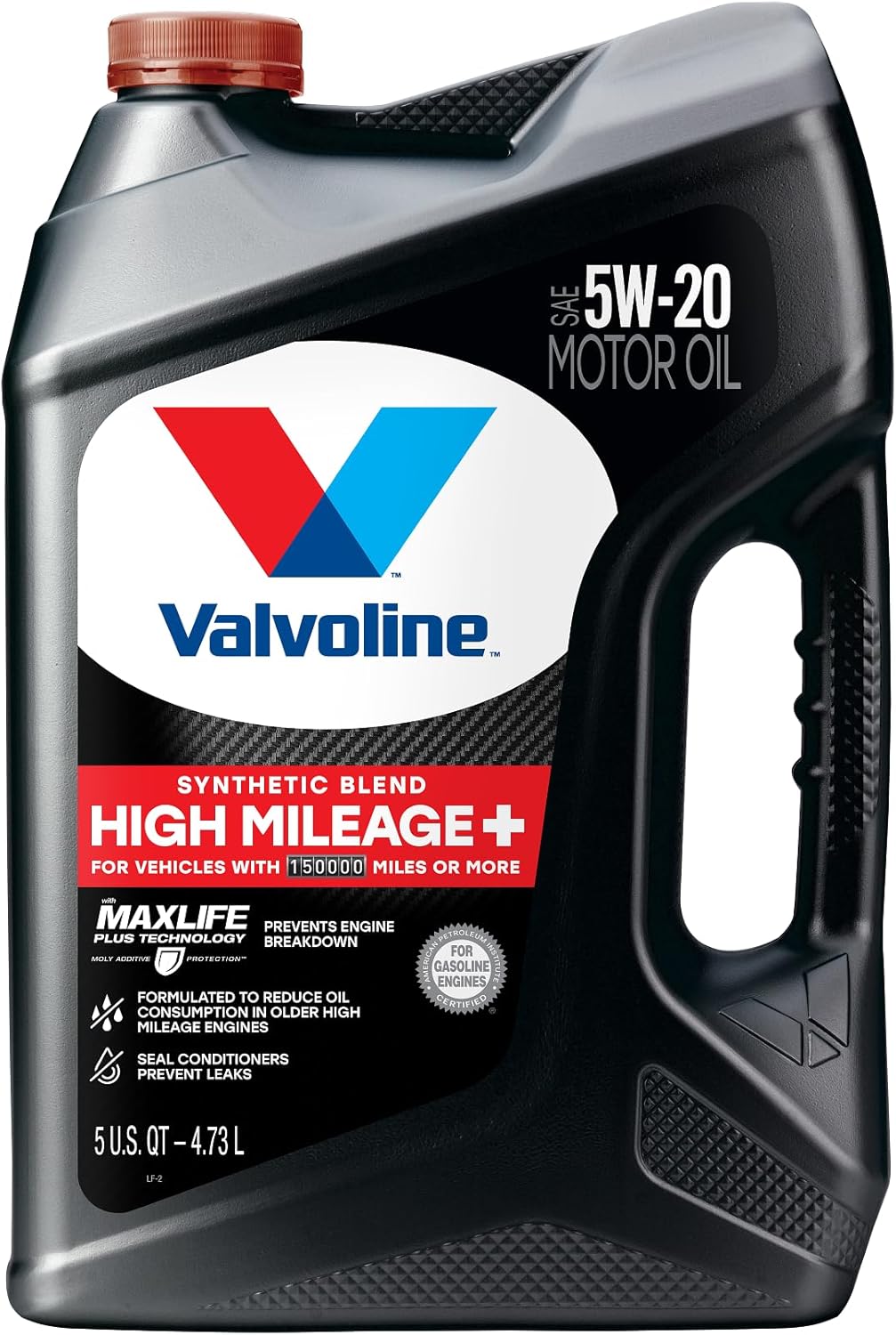
4. Valvoline High Mileage 150K MaxLife Plus Technology 5W-20 Synthetic Blend Motor Oil, 5 Quart
Best High-Mileage Engine Oil
| Liquid Volume | 5 Quarts |
|---|---|
| Compatible with Vehicle Type | Car, Truck |
| Flash Point | 394 Degrees Fahrenheit |
| Automotive Fit Type | Universal Fit |
Valvoline High Mileage 150K MaxLife Plus is a synthetic blend motor oil aimed at older engines that need extra protection and seal conditioning. It is typically used at routine oil changes to slow wear, reduce oil consumption, and help rejuvenate aging seals. Key features called out by the formula include a molybdenum-based antiwear additive that forms a protective film on metal surfaces, a boosted detergent package to fight sludge and deposits, and seal conditioners that can reduce small leaks. In practice this means smoother running, lower operating temperatures from reduced friction, and potential reductions in visible oil drips or top-offs in engines that have begun to consume oil. The product meets contemporary industry specifications including ILSAC GF-6A and API SP, so it fits modern service requirements while focusing on high-mileage benefits. Limitations are that it is a synthetic blend rather than full synthetic and results for seal conditioning and oil consumption will vary by engine condition and history rather than being guaranteed for every vehicle.
Best for: Owners of older 1998–2002 Honda Accord engines who prioritize conditioning seals, lowering oil consumption, and extending engine life through targeted additives and regular maintenance.
Less Ideal for: Drivers seeking the absolute highest shear and thermal protection available should consider a premium full synthetic oil instead of a synthetic blend.
- Formulated specifically for engines with 150,000+ miles to address leaks and oil consumption
- Moly-based antiwear additive that rapidly forms a protective film to reduce friction and wear
- Seal conditioners and detergents that help reduce small leaks and clean deposits and sludge
- Meets ILSAC GF-6A and API SP service categories so it satisfies modern engine requirements
- Synthetic blend formulation is not full synthetic, so it may offer less shear stability than premium full synthetics
Verdict: The best high-mileage engine oil for owners looking to condition seals, reduce oil consumption, and protect older engines showing typical wear.
5. Honda Ultimate Full Synthetic Motor Oil SAE 0W-20 (1 Quart, 6-Quart Pack)
Best Full Synthetic Engine Oil

| SAE J300 Viscosity Grade | 0W-20 |
|---|---|
| Viscosity Level | Low to Medium |
| Container Type | Bottle |
| Liquid Volume | 6 Quarts |
This Honda Ultimate Full Synthetic SAE 0W-20 is a factory-formulated motor oil intended to give strong all-around protection in Honda engines. It is used the same as any engine oil for routine drain-and-fill or top-up service and is particularly suited where a 0W-20 viscosity is recommended. Notable features include low-temperature flow for faster circulation at cold starts, resistance to viscosity breakdown at high temperatures, and additives formulated to reduce deposits, varnish, and oil consumption. The product is marketed as meeting GF-7 and HTO 06 standards and was tested and approved by Honda R&D, which suggests compatibility and tuning for Honda valve trains and engine materials. For a DIY mechanic this oil offers confidence in thermal and shear stability during spirited or highway driving while improving fuel efficiency compared with heavier grades. Limitations are that it is a vehicle-specific Honda-branded formulation so buyers should confirm 0W-20 is correct for their 1998-2002 Accord variant and note that consumable fluids are not covered by manufacturer warranty.
Best for: DIY mechanics who prioritize top-tier thermal stability, fast low-temperature flow, and proven compatibility with Honda engines when servicing 1998–2002 Accords.
Less Ideal for: Drivers who need a different viscosity than 0W-20 or who prefer a generic or aftermarket oil with specific aftermarket performance additives not targeted to factory specifications.
- Designed and tested by Honda R&D for compatibility with Honda engines
- 0W-20 viscosity circulates quickly at cold starts for immediate protection
- Formulation resists viscosity breakdown and helps limit deposit formation
- Claims reduced oil consumption through lower volatility, aiding fuel efficiency
- Sold as a Honda-branded fluid which may be unnecessary if any equivalent full synthetic 0W-20 is acceptable
Verdict: The best full synthetic engine oil for DIY mechanics who want the highest thermal stability, flow at low temperatures, and top-level wear protection.
6. Honda Genuine Synthetic Blend Motor Oil 5W-30 (1 quart)
Best Synthetic Blend Engine Oil

| Viscosity | 5W-30 |
|---|---|
| Volume | 1.8 Liters |
| Brand | Honda |
| Fit Type | Vehicle Specific Fit |
This is Honda-branded synthetic blend 5W-30 offered in a one-quart bottle designed as a factory-quality replacement oil. It supplies the thicker cold-start protection of a 5W-30 grade while using a synthetic blend formula that improves shear stability and keeps viscosity more consistent between changes than many conventional oils. Typical use is top-ups or full oil changes where buyers prefer Honda-specified fluids for fitment confidence and compatibility with Honda engines. Practical benefits include Honda quality control and labeling that matches dealer service specifications, plus easier sourcing when you want the same fluid the manufacturer recommends. Limitations are the small single-quart packaging if you need four quarts for a full change and the premium versus some national-brand synthetic blends; several reviewers also noted occasional shipping or labeling mix-ups. For owners prioritizing factory-matched fluid and better protection than straight conventional oil, this delivers predictable performance, but budget-conscious buyers may find comparable protection from other reputable blend formulas sold in multi-quart packs.
Best for: Buyers who want improved engine protection and the reassurance of using a Honda-specified fluid without paying full-synthetic prices, especially for routine maintenance on Honda vehicles in the 1998–2002 Accord range.
Less Ideal for: Those looking to save money by buying in multi-quart value packs or buyers who insist on full synthetic oils for maximum long-interval protection should consider other options.
- Factory-formulated to Honda specifications for compatibility with Honda engines
- Synthetic blend improves viscosity stability and protection over conventional oil
- Sold in a single-quart bottle convenient for top-offs or mixing with existing oil
- Recognizable brand and consistent formulation reduce uncertainty when matching dealer service fluids
- Single-quart packaging means you must buy multiple bottles for a full oil change
- Higher per-quart cost compared with many store-brand synthetic blends
Verdict: The best synthetic blend engine oil for buyers seeking improved protection and performance over conventional oil without the full premium cost of full synthetics.
Choosing the Right 1998-2002 Honda Accord Engine Oil: Key Factors to Consider
Viscosity Rating and Cold-Start Performance
Viscosity determines how easily the oil circulates at startup and how well it lubricates at operating temperature. For a 1998-2002 Honda Accord you need oil that flows quickly on cold mornings yet maintains a protective film under load. Choosing the correct SAE grade helps minimize wear during the most vulnerable moments while starting and warm-up.
Colder climates call for lower first numbers to improve pumpability at low temperatures, while a higher second number offers stability when the engine is hot. Consider seasonal variations and typical local temperatures when selecting the viscosity to preserve engine bearings, cam lobes, and piston rings.
Synthetic Versus Conventional Base Stocks
Synthetic oils provide better low-temperature flow and higher thermal stability than conventional oils. For Accords with higher mileage or engines that run hotter due to heavier loads, synthetics often maintain viscosity and resist breakdown longer, reducing the risk of sludge and varnish.
However, conventional oils can still be suitable for low-mileage engines or owners who follow frequent change intervals. Weigh the benefits of longer drain intervals and improved protection with synthetics against budget and maintenance habits.
Wear Protection and Additive Chemistry
Additives such as anti-wear agents, detergents, and dispersants are critical for keeping metal surfaces separated and contaminants suspended. For the 1998-2002 Accord, look for oils formulated to reduce cam and lifter wear and to protect bearings under sustained highway speeds.
Additive packages also influence sludge control and deposit prevention. Oils with robust detergent and dispersant chemistry help maintain clean oil passages and extend the life of oil pumps and filters, especially in engines with longer service histories.
High-Mileage Formulations and Seal Compatibility
If your Accord has high mileage, oils labeled or formulated for high-mileage engines can offer benefits like seal conditioners and reduced volatility. These features can help mitigate oil leaks and reduce consumption by rejuvenating slightly hardened seals and gaskets.
Keep in mind that some additives may alter leak characteristics temporarily. Verify that the formulation is compatible with older rubber components and avoid products known to cause swelling if you have recently replaced seals or gaskets.
Heat Resistance and Oxidation Stability
Heat resistance determines how long the oil maintains its protective properties during extended driving or when operating in hot climates. Oxidation stability slows the formation of acids and sludge that degrade oil and harm engine components.
Oils with strong thermal and oxidative stability extend effective drain intervals and keep engine passages cleaner. This is particularly important if you do a lot of highway miles or drive in stop-and-go traffic where operating temperatures fluctuate frequently.
Manufacturer Recommendations and Service Interval Compatibility
Honda published guidance for the Accord generation on recommended viscosity ranges and change intervals. Matching the oil to those recommendations ensures you preserve engine clearances and component performance as designed.
Also consider how the oil's suggested service interval aligns with your maintenance habits. If you prefer longer intervals, choose oils with proven longevity and monitor oil condition more frequently to confirm suitability.
Which Viscosity Works Best for 1998-2002 Accords
For the 1998-2002 Honda Accord the correct viscosity depends on ambient temperature and engine condition. Many owners find a 5W-30 grade offers a good balance across a wide range of climates, providing reliable cold-start flow and engine protection at operating temperature.
In warmer regions or for engines with tight tolerances, a 10W-30 can be acceptable, while colder climates may benefit from a 5W-20 or 0W-20 if recommended by service guidance for certain engine variants. Always confirm your choice against Honda guidance and adjust for local climate and mileage.
- 5W-30: Versatile, good for mixed climates and varying engine wear.
- 5W-20 or 0W-20: Better low-temperature flow for very cold winters.
- 10W-30: Useful in consistently warm climates or older engines that consume oil.
Benefits and Tradeoffs of Switching to Full Synthetic
Switching to full synthetic oils offers cleaner operation, improved cold-start performance, and better shear stability over time. For higher-mileage Accords the extra protection can reduce sludge formation and help control oil consumption by maintaining viscosity under stress.
The tradeoffs include a potential change in leak behavior on older seals and a higher upfront cost. If you switch, monitor for leaks for the first few thousand miles and verify oil consumption to ensure the new formulation suits your engine.
- Improved thermal stability and longer effective drain life.
- Better protection under high-temperature or towing conditions.
- Possible alteration of seal leaks on very old engines—inspect after switching.
High-Mileage Considerations for Older Accords
High-mileage formulations include conditioners designed to rejuvenate aging seals and reduce minor leaks. They often contain additives targeted at cleaning deposits and preventing further deterioration of engine internals.
If your Accord has extensive mileage, prioritize oils with balanced additive packages and strong detergency. Regular oil analysis or closer oil-level checks can help you determine whether a change in formulation is helping or if mechanical attention is needed.
- Look for oils that advertise seal conditioning and reduced volatility.
- Monitor oil level and consumption after switching to high-mileage formulations.
Oil Change Intervals and Practical Maintenance Tips
Follow Honda's recommended intervals as a baseline, but account for driving conditions. Towing, frequent short trips, and heavy urban traffic can accelerate oil degradation and warrant shorter change intervals.
When changing oil, always use a quality filter and drain the oil at normal operating temperature for better flow. Record changes and monitor oil condition, color, and level between services to catch early signs of consumption or contamination.
- Use a high-quality filter rated for your chosen oil type.
- Check oil level monthly and after long trips.
- Use OEM-recommended oil capacity and torque specs when servicing.
How Ambient Climate Affects Your Oil Choice
Climate plays a major role in viscosity selection and oil performance. In cold regions, oils with lower cold-cranking viscosities are critical to ensure fast lubrication at startup. In hot areas, oils with stronger high-temperature film strength and oxidation resistance help maintain protection.
If you experience wide seasonal temperature swings, consider seasonal swaps or choose a multigrade viscosity that covers your extreme temperatures while maintaining protection during summer operating conditions.
- Cold climates: favor lower W ratings for better pumpability.
- Hot climates: prioritize thermal stability and higher HTHS numbers.
- Moderate climates: a balanced 5W-30 often suffices.
Still looking for the perfect fit?
Select your Honda Accord configuration to see the most relevant Engine Oils recommendations
How We Chose the Best 1998-2002 Honda Accord Engine Oil
We selected the seven engine oils by applying practical, vehicle-specific filters that reflect real-world needs of 1998-2002 Honda Accord owners. Key evaluation criteria included recommended viscosity ranges and cold-start flow characteristics to match the Accord's tolerances and ambient driving conditions. We prioritized oils with demonstrated wear protection, based on industry test methods for film strength and anti-wear additives that help preserve valvetrain and bearing life. Compatibility with engines that have higher miles was assessed by looking at formulations with detergents, seal conditioners, and oxidation resistance to reduce sludge and control oil consumption.Thermal stability and shear resistance were considered to ensure the oil maintains viscosity under prolonged highway driving and city stop-and-go conditions. We also evaluated compatibility with Honda-recommended service intervals and compatibility with existing seals and gaskets common to this Accord generation. Finally, we excluded specialized racing or break-in oils and any formulations intended exclusively for modern gasoline direct-injection engines not represented in this model range. The result is a curated set of practical, road-focused oils that balance protection, drivability, and longevity for this Accord family.
Our full evaluation process is outlined in our review methodology.
FAQ
Can I switch from conventional oil to full synthetic in my 1998-2002 Accord?
Yes, you can usually switch to full synthetic without engine work. Full synthetics offer better flow and thermal stability, but monitor for minor leaks after switching since older seals may respond differently to different base stocks.
How often should I change the oil in a 1998-2002 Accord?
Follow Honda's baseline intervals, but adjust based on driving conditions. Many owners use a 3,000 to 7,500 mile window depending on oil type, driving habits, and whether the engine is high mileage.
Is a high-mileage oil necessary for an Accord with 150,000 miles?
High-mileage oils can help by offering seal conditioners and additives that manage leaks and consumption. They are useful for engines showing increased oil consumption or minor leaks, but they are not a substitute for mechanical repairs if issues persist.
Which oil viscosity is best for cold-weather starts?
Lower cold-start viscosities such as 0W-20 or 5W-20 improve pumpability and reduce wear at startup in cold climates. Choose a grade that suits your local winter temperatures while still protecting at operating temperature.
Will switching oils change my Accord's fuel economy?
Different viscosities and lower-friction synthetic formulations can influence fuel economy slightly. The effect is usually modest and depends on driving style and the specific oil's friction modifiers.
How can I tell if my engine is burning or leaking oil?
Watch for dropping oil levels between checks, blue-white exhaust smoke, and oil spots where you park. Increased consumption can also manifest as a need to add oil more frequently than usual.
Final Verdict
Prioritize viscosity and protection when choosing engine oil for your 1998-2002 Honda Accord. Match the oil grade to your climate and consider synthetic options for better thermal stability and wear resistance, especially if your Accord has high mileage. If leaks or high consumption are present, high-mileage formulations can help temporarily, but persistent issues warrant mechanical inspection.Ultimately, choose an oil that aligns with Honda guidance, offers the right additive balance for your engine condition, and fits your maintenance routine. That approach will keep your Accord running smoothly and extend engine life with practical, predictable results.
Explore More:
- Check out all Honda Accord parts & accessories
- Explore Fluids & Chemicals
- Browse all Accessories
