

Note: This article contains affiliate links. If you click on these links and make a purchase, I may earn a small commission at no extra cost to you. This helps support my research and content. Read my full affiliate disclosure here.
Picking the right engine oil for a 2008-2012 Honda Accord matters because these model years span different engine types and mileage conditions that change lubrication needs. Using an oil with the appropriate viscosity and additive balance helps reduce wear, control deposits, and keep fuel economy stable under daily driving and highway use.This guide highlights seven shortlisted engine oils chosen for compatibility with the 2008-2012 Accord range. We focus on the performance characteristics that matter most to Accord owners, including viscosity suitability, high-mileage formulations, and protection against sludge and wear. Read on to understand the evaluation criteria and which oil properties to prioritize during your next oil change.
Looking for other parts? See all Honda Accord parts & accessories.
Top Picks at a Glance
| Best Overall Engine Oil A balanced, top-performing full‑synthetic with broad compatibility and protection | Valvoline Extended Protection Full Synthetic SAE 0W-20, 5 qt |  |
| Best Budget Engine Oil Affordable option that covers basic protection and standard change intervals | Castrol GTX High Mileage 5W-30 Synthetic Blend Motor Oil, 5 qt |  |
| Best 0W-20 Engine Oil Low‑temperature, fuel‑saving 0W‑20 formulations for modern light‑weight engines | Castrol EDGE 0W-20 Full Synthetic Motor Oil, 5 qt |  |
| Best High‑Mileage Engine Oil Formulated for older engines with conditioners to reduce leaks and wear | Castrol EDGE High Mileage 5W-20 Full Synthetic Motor Oil, 5 Quart |  |
| Best OEM Honda Engine Oil Genuine or factory-formulated oil matched to manufacturer viscosity and specs | Honda Genuine Full Synthetic Engine Oil (08798-9137) |  |
| Best Extended‑Change Engine Oil Full‑synthetic blends designed for longer service intervals and durability | Castrol EDGE Extended Performance 0W-20 Full Synthetic Motor Oil, 5 Quart |  |
| Best Value Pack Engine Oil Multi‑quart or bundled packs that lower per‑quart cost for routine maintenance | Castrol GTX High Mileage 5W-30 Synthetic Blend Motor Oil — 5 qt (Pack of 3) |  |
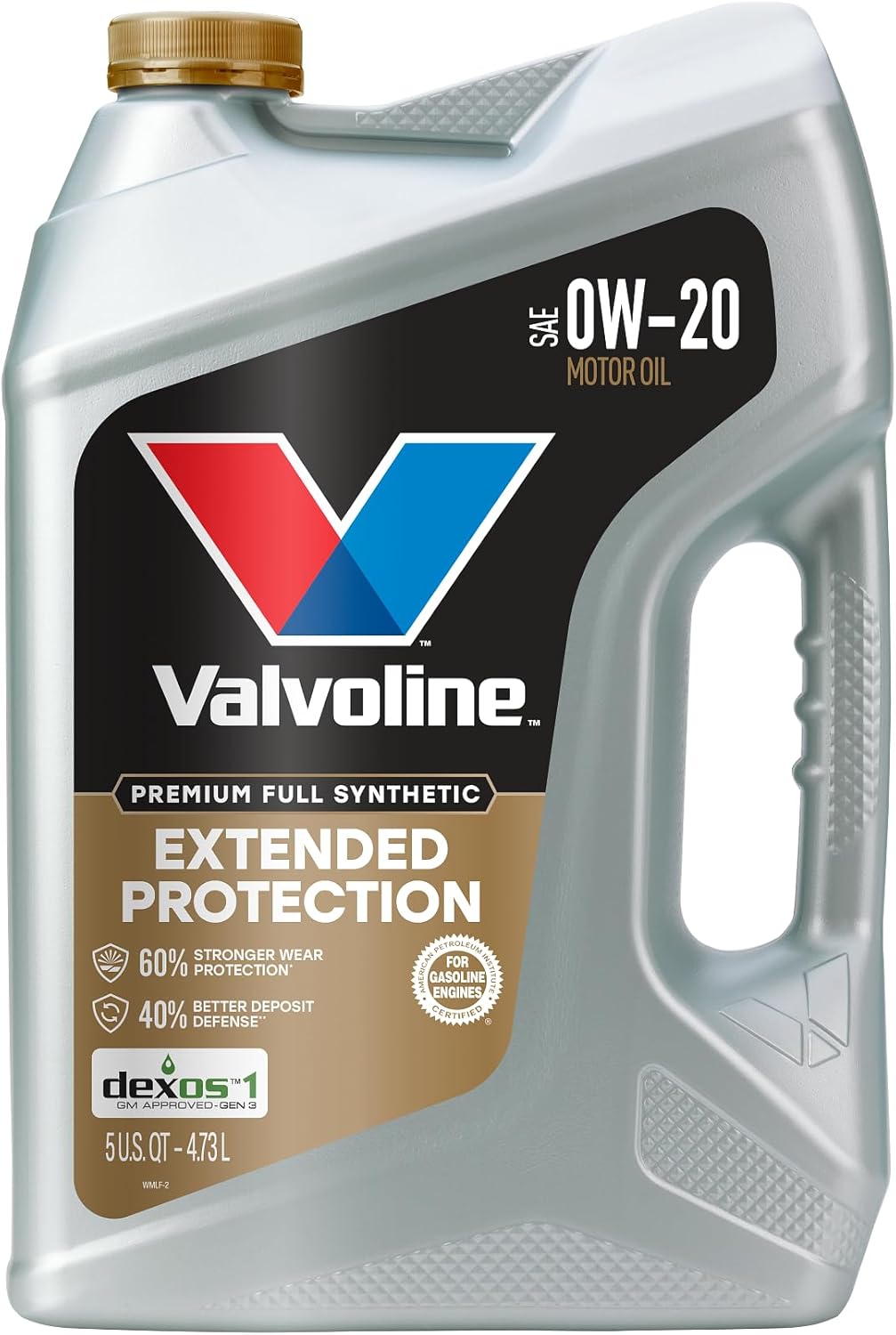
1. Valvoline Extended Protection Full Synthetic SAE 0W-20, 5 qt
Best Overall Engine Oil
| SAE J300 Viscosity Grade | 0W-20 |
|---|---|
| Compatible with Vehicle Type | Car, Truck |
| Automotive Fit Type | Universal Fit |
| Liquid Volume | 5 Quarts |
Valvoline Extended Protection 0W-20 is a full synthetic motor oil formulated to protect modern gasoline engines under everyday and spirited driving. It is typically used for oil changes in vehicles specifying 0W-20 and meets ILSAC and API standards relevant to modern engines. Notable features include a Dual Defense Additive Technology that the brand says boosts wear protection, improves deposit control, and increases heat resistance compared with industry baselines. In practice that translates to better protection for bearings, valvetrain components, and pistons during high-temperature or stop-and-go driving and cleaner internals between services. The 5 quart bottle covers a standard drain and refill without needing multiple containers. Limitations to consider are adherence to the manufacturer recommended viscosity and service specs for your specific Accord model year and engine; using 0W-20 only fits Accords that call for that grade, and warranty guidance should be followed. For drivers who want a step up from basic synthetics, this oil delivers broad protection and is well suited to regular and more demanding driving conditions.
Best for: Drivers who want a well-rounded, high-performance 0W-20 oil that protects engine components during both daily commuting and occasional spirited driving while following manufacturer viscosity requirements.
Less Ideal for: Owners whose 2008–2012 Accord engine calls for a different viscosity or those who prefer specialty formulations such as high-mileage blends or diesel-specific oils.
- Formulated to meet ILSAC and modern API specifications for gasoline engines
- Additive package aimed at stronger wear protection and improved deposit control
- High heat resistance claimed to protect under heavier loads and high temperatures
- Available in a 5 quart bottle to cover a typical oil change without extra containers
- Only appropriate where the vehicle manufacturer specifies 0W-20 viscosity
Verdict: The pick for readers who want a well-rounded, high-performance oil that meets modern API/ILSAC specs and protects the engine under normal and spirited driving.
2. Castrol GTX High Mileage 5W-30 Synthetic Blend Motor Oil, 5 qt
Best Budget Engine Oil

| Compatible with Vehicle Type | For use in vehicles with over 75,000 miles, Passenger cars, trucks, and SUVs |
|---|---|
| SAE J300 Viscosity Grade | 5W-30 |
| Container Type | Bottle |
| Liquid Volume | 160 Fluid Ounces |
Castrol GTX High Mileage 5W-30 is designed as a synthetic blend for older engines and is typically used during routine oil changes to help protect aging components. It contains a stronger detergent package and dispersants to fight sludge and deposits, plus additives aimed at reducing wear on pistons, rings, and timing components. The formula includes a phosphorus replacement technology to lower phosphorus levels that can harm catalytic converters, making it friendlier to the emission system than some high-phosphorus oils. In practice this oil offers cleaner-running performance for high-mileage engines and may reduce the frequency of deposit-related issues compared with conventional oils. As a synthetic blend, it is more affordable than full synthetics but still gives improved volatility and burn-off resistance versus lower-tier oils. Limitations are that it is targeted at high-mileage engines rather than new or performance-tuned motors, and users seeking maximum fuel economy or the highest thermal stability may prefer a full synthetic alternative.
Best for: Buyers who want a reliable, cost-conscious oil for a higher-mileage 2008–2012 Accord that reduces sludge and protects worn engine components without paying for full synthetic grades.
Less Ideal for: Drivers seeking the highest possible thermal protection, maximum fuel economy gains, or the best option for a brand-new or modified engine should consider a full synthetic alternative.
- Formulated specifically for engines with over 75,000 miles to address common high-mileage issues
- Detergents and dispersants help reduce sludge and keep engines cleaner
- Phosphorus Replacement Technology reduces risk to the catalytic converter
- Synthetic blend balances improved volatility and burn-off protection with a lower cost than full synthetics
- Not a full synthetic so it offers less peak thermal and shear stability than top-tier full synthetic oils
Verdict: Choose this slot if you need a dependable, low-cost oil that meets minimum API specs and keeps routine maintenance affordable.
3. Castrol EDGE 0W-20 Full Synthetic Motor Oil, 5 qt
Best 0W-20 Engine Oil

| Viscosity Level | Low to Medium |
|---|---|
| Compatible with Vehicle Type | Car, Hybrids, Truck |
| Container Type | Jug |
| Liquid Volume | 5 Quarts |
Castrol EDGE 0W-20 is a full synthetic engine oil designed for drivers who want the cold-start flow and fuel-economy advantages of a 0W-20 grade while keeping engines clean and protected. In practical use you would choose this oil for routine oil changes in vehicles specifying 0W-20; it is marketed to resist thermal breakdown, limit sludge buildup, and reduce metal-to-metal wear so the engine maintains efficiency and driveability over time. Notable points include factory-quality formulation, industry licenses and approvals, and a 5-quart jug that covers most single-service changes for mid-size cars. The oil claims extended performance properties to support longer drain intervals, but owners should follow Honda's recommended change intervals for a 2008-2012 Accord rather than extending service solely on marketing claims. Some packaging and multi-pack formats reported handling issues, so inspect containers on delivery. Overall this oil balances fuel economy and protective performance for drivers who prioritize 0W-20 specifications.
Best for: Buyers who need a factory-quality 0W-20 oil to maximize cold-start protection and fuel economy for routine oil changes on a 2008–2012 Accord and value proven synthetic performance.
Less Ideal for: Drivers looking to extend oil change intervals beyond manufacturer guidance or those requiring a different viscosity grade for modified engines should consider alternatives.
- 0W-20 viscosity for improved cold-start flow and potential fuel-economy gains
- Full synthetic formulation aimed at thermal stability and sludge control
- Licensed to meet modern engine oil specifications relevant to many gasoline engines
- 5-quart jug size suitable for a full oil change on most mid-size sedans
- Widely reviewed with consistent user reports of good performance
- Claims of extended drain intervals should not replace following Honda service recommendations
Verdict: This slot is for buyers prioritizing the 0W‑20 viscosity grade to maximize cold-start flow and fuel economy while meeting required specifications.
4. Castrol EDGE High Mileage 5W-20 Full Synthetic Motor Oil, 5 Quart
Best High‑Mileage Engine Oil

| Viscosity grade | 5W-20 |
|---|---|
| Compatible vehicle type | For vehicles with over 75,000 miles |
| Container type | Bottle |
| Liquid volume | 160 Fluid Ounces |
Castrol EDGE High Mileage 5W-20 is designed for older engines and is used like any conventional oil during routine oil changes. It combines a full synthetic base with a high‑mileage additive package that aims to reduce wear, control sludge and deposits, and help limit leaks and oil burnoff. Notable features include a phosphorus replacement technology intended to lower phosphorus levels that can harm catalytic converters and a formulation that claims extended drain intervals up to 15,000 miles or one year under specified conditions. In real use this oil offers strong film strength and dispersancy to keep rings and valve trains cleaner and to protect timing components in worn engines. Expect improved long‑term protection compared with standard conventional oils, particularly for engines showing mild wear or minor seepage. Limitations are that extended drain claims depend on driving conditions and manufacturer recommendations, and some users report varied results on deposit control, so follow the Accord factory service intervals and confirm 5W‑20 is the correct grade for your engine before switching.
Best for: Drivers looking to protect a higher‑mileage 2008–2012 Honda Accord who prioritize wear protection, deposit control, and emission system care over lowest cost per quart.
Less Ideal for: Drivers who strictly follow shorter factory oil change intervals or who need a different viscosity than 5W‑20 should choose an oil that matches their maintenance schedule and owner's manual specifications.
- Formulated specifically for engines with over 75,000 miles to address high‑mileage concerns
- Full synthetic base provides strong film strength and reduced volatility
- Additive package targets sludge control and timing chain wear
- Phosphorus replacement technology to help protect the catalytic converter
- Extended 15,000‑mile drain interval is conditional and may not apply to all driving habits or manufacturer recommendations
- Some users report mixed results on deposit or varnish reduction in specific engines
Verdict: Pick this when you want oil with additives aimed at sealing, deposit control, and wear protection for higher‑mileage engines.
5. Honda Genuine Full Synthetic Engine Oil (08798-9137)
Best OEM Honda Engine Oil

| Compatible with Vehicle Type | Honda |
|---|---|
| Automotive Fit Type | Universal Fit |
| Liquid Volume | 70.86 Milliliters |
| Container Type | Bottle |
This genuine Honda full synthetic oil is a factory-labeled motor oil meant to match Honda specifications for service. It comes in a single bottle and is intended for use as a fill or top-up in Honda engines where Honda-formulated synthetic oil is preferred. Typical use is straightforward: pour at oil change or add as directed to meet the recommended level. The product emphasizes authenticity and specification alignment rather than volume — the listing shows a small unit volume so buyers should expect it as a specialty or refill bottle rather than a full multi-quart pack. The practical benefits are confidence in meeting manufacturer recommendations and simple compatibility with Honda vehicles. The main limitation is the small liquid volume per unit, which means multiple bottles are required for a full oil change on most passenger engines and it is less cost-efficient than multi-quart packages from other brands.
Best for: DIYers who prioritize using factory-formulated, Honda-labeled oil for specification compliance and peace of mind when servicing a 2008–2012 Honda Accord.
Less Ideal for: People looking to do a full oil change with a single purchase or shoppers seeking the best price per quart should consider larger multi-quart synthetic oil packages instead.
- Factory-labeled Honda formulation gives confidence in meeting Honda specifications
- Full synthetic base provides modern protection and performance typical of synthetic oils
- Single-bottle packaging is convenient for topping off or carrying a spare in the garage
- Listed unit holds only 70.86 milliliters, far below the volume needed for a full oil change
Verdict: This choice is for DIYers who prefer factory-formulated or OEM-labeled oil to ensure exact spec compliance and peace of mind.
6. Castrol EDGE Extended Performance 0W-20 Full Synthetic Motor Oil, 5 Quart
Best Extended‑Change Engine Oil

| SAE J300 Viscosity Grade | 0W-20 |
|---|---|
| Compatible with Vehicle Type | Car, Gasoline and Light Duty Diesel, Hybrids, Truck |
| Container Type | Jug |
| Liquid Volume | 160 Fluid Ounces |
Castrol EDGE Extended Performance 0W-20 is a hyper-premium full synthetic motor oil designed to protect modern engines during long drain intervals. It is typically used as a factory-replacement viscosity in gasoline and light-duty diesel cars and hybrids that call for 0W-20, and is intended for drivers who want extended protection between oil changes. The formula is boosted with proprietary additives to resist thermal and viscosity breakdown, improve high-temperature performance, and reduce wear and deposits. Castrol advertises extended drain capability up to 25,000 miles under ideal conditions, and the oil meets a range of industry and manufacturer specifications including GM dexos1 Gen 3 and ILSAC GF-7. In practice this oil offers strong high-temperature stability and good engine cleanliness, which helps maintain engine efficiency and reduce sludge buildup on long drives or in hot climates. Limitations are that extended drain claims depend on vehicle, driving habits, and filter quality, and many owners will still prefer routine yearly or manufacturer-recommended change intervals for peace of mind.
Best for: Buyers who prioritize longer oil life and strong high-temperature wear protection and who plan to follow manufacturer guidance and use a high-quality filter when extending intervals.
Less Ideal for: Drivers who prefer strict adherence to short, manufacturer-recommended change intervals or who operate older engines with unclear service histories should choose standard-interval oils instead.
- Full synthetic formulation engineered for high-temperature stability and reduced deposits
- Meets multiple specifications including GM dexos1 Gen 3 and ILSAC GF-7
- Advertised extended drain capability for less frequent changes under appropriate conditions
- 0W-20 viscosity suitable for modern engines that require low-viscosity oil
- Extended 25,000 mile drain interval is conditional and may not apply to all driving patterns or older engines
Verdict: Use this slot when you want oils marketed for extended protection between changes and increased resistance to thermal and shear breakdown.
7. Castrol GTX High Mileage 5W-30 Synthetic Blend Motor Oil — 5 qt (Pack of 3)
Best Value Pack Engine Oil

| Compatible with Vehicle Type | For use in vehicles with over 75,000 miles, Passenger cars, trucks, and SUVs |
|---|---|
| Automotive Fit Type | Universal Fit |
| SAE J300 Viscosity Grade | 5W-30 |
| Liquid Volume | 160 Fluid Ounces |
Castrol GTX High Mileage 5W-30 is a synthetic blend aimed at older engines and sold here in a three‑bottle pack that covers several oil changes. It is formulated to reduce sludge, protect against corrosion and timing-chain wear, and includes additives the brand says help protect emission systems by reducing phosphorus. For someone maintaining a higher-mileage 2008–2012 Honda Accord this oil offers the convenience of multiple 5‑quart bottles for back‑to‑back services and the detergent and dispersant chemistry to help clean deposits common in aging engines. The viscosity of 5W-30 suits typical Accord engines that call for that grade, and the pack size improves per‑quart economics when stocking up. Limitations: it is a synthetic blend rather than a full synthetic, so absolute high‑temperature shear resistance and maximum fuel economy gains will be modest compared with full synthetic oils. Also the formulation targets high‑mileage engines, so benefits like seal conditioners are focused on older vehicles rather than new engines.
Best for: Buyers planning multiple oil changes who prioritize per‑quart value and want an oil formulated to help clean and protect aging engines during routine maintenance.
Less Ideal for: Drivers seeking the highest heat and shear protection or maximum fuel economy improvements should consider full synthetic motor oils instead.
- Pack of three 5‑quart bottles provides strong per‑quart value for multiple oil changes
- Formulated for vehicles with over 75,000 miles to help reduce sludge and protect worn parts
- Phosphorus replacement technology designed to limit catalytic converter damage and protect emission systems
- Synthetic blend rather than full synthetic, so it offers less extreme-temperature protection and smaller fuel economy gains than full synthetics
Verdict: Select this slot if you’re stocking up or planning multiple oil changes and want the best per‑quart value from multi‑pack offerings.
Choosing the Right 2008-2012 Honda Accord Engine Oil: Key Factors to Consider
Viscosity Grade and Manufacturer Recommendations
Viscosity grade is the single most important factor for selecting oil for a 2008-2012 Honda Accord. These model years commonly call for specific grades such as 5W-30 or 0W-20 depending on the engine and year. Choosing the correct cold-start and operating temperature behavior ensures adequate film strength at startup and stable oil pressure at operating temperatures.
Using the recommended viscosity helps preserve oil pressure, reduce wear during cold starts, and maintain fuel economy. Deviating from the manufacturer guidance can increase engine wear or reduce efficiency, so confirm the factory specification before selecting an oil.
Synthetic Vs Conventional Formulations
Synthetic motor oil offers better high-temperature stability and cleaner operation than conventional oil, which is why many Accord owners prefer synthetic blends or full synthetics. Synthetics resist thermal breakdown, reduce sludge formation, and often provide superior oxidation resistance, useful for engines with heavier loads or aggressive driving.
Conventional oils may be acceptable for low-mileage, infrequent drivers, but for prolonged drain intervals, high-temperature driving, or to maximize protection in the 2008-2012 Accord, synthetic options generally outperform conventional fluids.
High-Mileage Considerations
If your 2008-2012 Accord has significant mileage, choose a high-mileage formulation designed to address common age-related issues. High-mileage oils typically include seal conditioners to help reduce minor oil leaks and additives to condition older seals, which can slow external oil loss.
They also often include detergents and dispersants tailored to clean varnish and sludge that accumulate over many miles. For cars with 100,000 miles or more, a high-mileage oil can improve compression retention, reduce oil consumption, and extend engine life when used along with proper maintenance.
Deposit Control and Engine Cleanliness
Deposit control is critical for maintaining performance and preventing sticky valves or blocked oil passages in the Accord engine. Oils with stronger detergent and dispersant packages help keep combustion byproducts and varnish in suspension so they are removed during oil changes.
Regular use of oils proven for sludge control minimizes buildup on critical surfaces and prolongs component life. Consider an oil that specifies deposit control properties if the vehicle has a history of short trips or extended oil change intervals.
Friction Modifiers and Fuel Economy
Some oils include friction modifiers formulated to reduce internal engine friction and improve fuel economy. For the 2008-2012 Accord, modest gains in MPG can result from selecting an oil with low-viscosity performance and friction-reducing additives, particularly in city driving.
While oil choice alone will not dramatically change fuel consumption, selecting an oil that balances protection with low friction can contribute to slightly better efficiency over time without compromising engine safety.
Compatibility With Oil Change Intervals
Your chosen oil should align with your planned oil change interval. Full synthetics often permit longer intervals between changes due to better oxidation resistance, but interval extension should follow the vehicle maintenance schedule and driving conditions.
Severe driving—frequent short trips, towing, or dusty environments—warrants shorter intervals regardless of oil type. Always match the oil's durability claims with realistic usage patterns to avoid accelerated wear or reduced protection.
Which Viscosity Is Right for Your Accord Engine
The 2008-2012 Honda Accord covers multiple engine variants that may call for different viscosity grades. Checking the owner’s manual or the engine filler cap is the first step to confirm whether a 0W-20 or a 5W-30 grade is specified for your specific year and engine configuration. Weather and climate also influence the choice; lower first numbers improve cold-start flow, while the second number indicates protection at operating temperature.
- 0W-20: Better cold-start performance and can aid fuel economy in many climates.
- 5W-30: Broader high-temperature protection, often recommended for certain engines in this range.
When to Use High-Mileage Oil
High-mileage oil is beneficial for Accords with elevated mileage or engines showing signs of oil consumption or minor leaks. These formulas include additives that condition seals and reduce permeability, which helps preserve oil levels between changes and limits seepage from valve cover gaskets and rear main seals. Use high-mileage oil when the vehicle has noticeable leaks, increased oil consumption, or persistent sludge concerns.
- Look for seal conditioners and enhanced detergency.
- Consider switching gradually at the next scheduled oil change.
Cold-Start Performance and Seasonal Choices
If you live in an area with cold winters, choose an oil with strong low-temperature flow properties to reduce wear during start-up. Oils rated 0W-20 or 0W-30 reach critical engine components faster on cold mornings and maintain protective film during the first minutes of operation. In milder climates, a 5W-30 may be preferable for its thicker operating viscosity where specified.
- Confirm cold temperature pour point ratings for extreme climates.
- Follow manufacturer guidance for seasonal adjustments.
Oil Change Best Practices for the Accord
Follow the factory-recommended service interval as the baseline, then adjust for driving conditions. Always replace the oil filter at each oil change to avoid reintroducing contaminants. Use the correct oil capacity and torque the drain plug and filter per the service manual to avoid leaks or overtightening.
- Record mileage and oil type at each change.
- Inspect for leaks and check oil level after the first few trips following a change.
Additives and When to Avoid Them
Most modern engine oils are formulated to provide the necessary additive balance and do not require aftermarket additives. Using additives that change friction characteristics or alter detergent balances can interfere with an oil's designed performance. For the 2008-2012 Accord, prioritize oils with documented performance levels rather than relying on bolt-on additives unless addressing a specific, diagnosed issue.
- Avoid unnecessary friction modifiers if your oil already lists fuel-economy benefits.
- Consult a technician before using seal swell agents for serious leaks.
Still looking for the perfect fit?
Select your Honda Accord configuration to see the most relevant Engine Oils recommendations
How We Chose the Best 2008-2012 Honda Accord Engine Oil
Our selection process focused on factors that directly affect longevity and daily drivability for 2008-2012 Honda Accord engines. We prioritized oils with manufacturer-recommended viscosities and API or ILSAC performance levels appropriate for these years. Cold-start protection, measured by low-temperature flow and start-up film strength, was a key filter because many owners encounter varied seasonal climates.We also evaluated high-mileage formulations for cars with over 100,000 miles, looking for seal conditioners and anti-wear additives that help reduce leaks and extend engine life. Deposit control and sludge prevention were assessed by reviewing formulation claims and specifications tied to engine cleanliness. Fuel-economy and friction-reduction benefits were considered where viscosity grades and additive packages support improved efficiency.Excluded were oils formulated solely for diesel engines, motorcycle-specific lubricants, or products lacking clear industry performance ratings. The final list balances everyday drivability, protection, and suitability across the Accord engines produced between 2008 and 2012.
Our full evaluation process is outlined in our review methodology.
FAQ
What oil viscosity should I use if my Accord is a 2010 with high mileage?
It depends on the original manufacturer recommendation for that engine. Many 2010 Accords specify either 5W-30 or 0W-20. For high-mileage engines, choose the recommended viscosity but consider a high-mileage formulation that includes seal conditioners and detergents to address leaks and deposits.
Can I switch from conventional to full synthetic in my 2008-2012 Accord?
Yes. Switching to full synthetic is generally safe and can improve thermal stability and protection. Change the oil and filter and monitor for leaks or changes in oil consumption, especially in very old engines, but most owners see benefits from synthetic formulations.
How often should I check the oil level after an oil change?
Check the oil level after the first few driving cycles following a change, then as part of your regular maintenance routine. For new oil types or high-mileage engines, check more frequently for the first 500 miles to ensure there is no increased consumption or leaks.
Is a lower-viscosity oil better for fuel economy in these Accords?
Lower-viscosity oils can reduce internal friction and offer modest fuel-economy improvements, especially in stop-and-go driving. However, only use lower-viscosity grades if they match the manufacturer specification for your Accord engine.
Should I use high-mileage oil if my Accord has no visible leaks?
High-mileage oil can still be helpful for engines with many miles because it contains detergents and seal conditioners that improve overall engine health. If the engine runs well and shows no leaks or oil consumption, high-mileage oil is optional but may provide preventive benefits.
Final Verdict
Focus first on the viscosity grade specified for your 2008-2012 Honda Accord and then weigh synthetic versus conventional and high-mileage formulations based on mileage and driving conditions. Prioritize oils with strong deposit control and adequate low-temperature flow for your climate. Balance fuel-economy benefits against ensuring sufficient film strength at operating temperature. With those tradeoffs in mind, choose the oil that matches the factory recommendation and the vehicle’s mileage profile to achieve reliable protection and consistent performance.
Explore More:
- Check out all Honda Accord parts & accessories
- Explore Fluids & Chemicals
- Browse all Accessories
