

Note: This article contains affiliate links. If you click on these links and make a purchase, I may earn a small commission at no extra cost to you. This helps support my research and content. Read my full affiliate disclosure here.
Picking the right 5W-20 engine oil for a Honda Accord matters for day-to-day reliability and long-term engine health. The correct oil affects cold starts, wear protection, and fuel efficiency, and it must meet the manufacturer viscosity and specification recommendations for the Accord.This guide shortlists the top 5W-20 engine oils suitable for the Honda Accord and explains the evaluation criteria we used, so you can pick an oil that balances protection, longevity, and operating temperature performance. Below are the best options for this vehicle, followed by practical buying guidance and maintenance tips.
Looking for other parts? See all Honda Accord parts & accessories.
Top Picks at a Glance
| Best Overall Engine Oil A well-rounded 5W-20 that balances protection and value | Castrol EDGE 5W-20 Full Synthetic Motor Oil, 5 Quart Jug |  |
| Best Budget Engine Oil A low-cost 5W-20 that covers basic protection needs | HAVOLINE 5W-20 Conventional Motor Oil, 1 qt. |  |
| Best Full-Synthetic Engine Oil A fully synthetic 5W-20 for maximum protection and longevity | Mobil 1 High Mileage Full Synthetic Motor Oil 5W-20, 5 Quart |  |
| Best Synthetic-Blend Engine Oil A blend that boosts protection without the full synthetic price | Valvoline High Mileage with MaxLife Technology SAE 5W-20 Synthetic Blend Motor Oil, 5 qt |  |
| Best High-Mileage Engine Oil Formulated 5W-20 with conditioners for aging engines and seals | Valvoline MaxLife Full Synthetic High Mileage 5W-20 Motor Oil, 5 qt |  |
| Best Fuel-Economy Engine Oil A low-friction 5W-20 designed to improve miles per gallon | Pennzoil Platinum Full Synthetic 5W-20 Motor Oil (5-Quart) |  |
| Best Cold-Start Engine Oil A 5W-20 with excellent low-temperature flow for cold climates | Liqui Moly Special Tec AA SAE 5W-20 Fully Synthetic Engine Oil, 5 L |  |
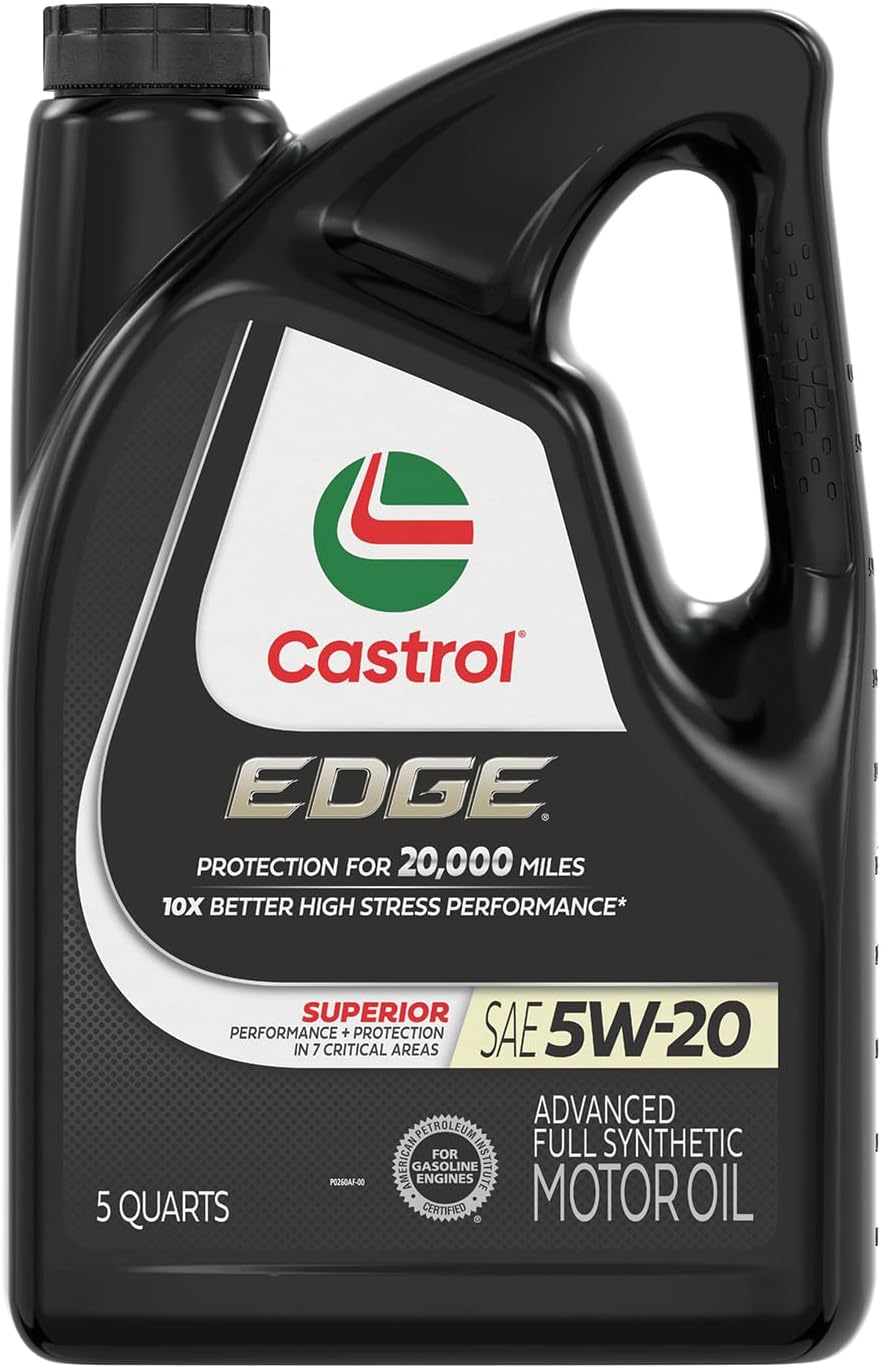
1. Castrol EDGE 5W-20 Full Synthetic Motor Oil, 5 Quart Jug
Best Overall Engine Oil
| SAE Viscosity Grade | 5W-20 |
|---|---|
| Container Type | Jug |
| Liquid Volume | 5 Quarts |
| Compatible with Vehicle Type | Car, Truck |
Castrol EDGE 5W-20 is a full synthetic engine oil designed to protect and stabilize modern gasoline engines during everyday driving and higher-stress conditions. It is typically used as a direct replacement for factory-recommended 5W-20 oil and is suitable for DIY oil changes. Key features called out by the manufacturer include strong high-temperature performance to resist breakdown, additives aimed at reducing sludge and deposits, and formulations that reduce friction for improved efficiency. In practice that means smoother idling, steady oil pressure under load, and reduced engine wear risk over time. The product comes in a five-quart jug that makes a single full oil change straightforward for most four-cylinder and V6 engines that accept 5W-20. Limitations to note are that extended change interval claims should be balanced against manufacturer service schedules and that the premium full synthetic formula costs more than conventional oils. For Honda Accord owners following the recommended 5W-20 spec, this oil offers a strong balance of protection and thermal stability for daily driving and occasional spirited use.
Best for: A practical DIYer who wants a factory-replacement 5W-20 that prioritizes engine protection and stable performance for everyday driving and occasional spirited use.
Less Ideal for: Drivers who plan to follow extended, nonstandard oil change intervals beyond manufacturer recommendations or those who need a budget conventional oil for infrequent use.
- Full synthetic formula offers enhanced thermal stability and breakdown resistance
- Formulated to reduce sludge and deposits for cleaner engine internals
- Lower friction chemistry can help maintain fuel efficiency and responsive throttle feel
- Higher cost compared with conventional motor oils
Verdict: The best overall engine oil is a 5W-20 formulation that balances wear protection, thermal stability, and cost so most DIYers get reliable performance without overspending.
2. HAVOLINE 5W-20 Conventional Motor Oil, 1 qt.
Best Budget Engine Oil

| Viscosity Grade | 5W-20 |
|---|---|
| Compatible Vehicle Type | Car |
| Container Type | Bottle |
| Liquid Volume | 32 Fluid Ounces |
Havoline 5W-20 is a conventional motor oil intended for routine oil changes and basic engine protection. It is used like any standard quart of motor oil: pour into the crankcase at service intervals specified by the vehicle manufacturer. The formulation includes a Deposit Shield to reduce sludge and deposit formation and additives for anti-wear protection and resistance to thermal breakdown. For drivers following regular maintenance schedules, this oil keeps running engines clean enough and protects critical components under normal driving and stop-and-go conditions. As a conventional oil, it fits budget-minded owners and is appropriate for typical daily driving and small engines such as lawn mowers. The main limitation is longevity and cold-flow performance compared with modern full synthetics, so it requires more frequent changes and may not perform as well in very cold climates or under extended high-stress use. Still, for routine service on vehicles that call for 5W-20, it is a straightforward, economical choice.
Best for: Drivers who prioritize low upfront cost and follow regular oil change schedules, wanting an acceptable 5W-20 that protects under normal daily driving.
Less Ideal for: Owners seeking extended oil change intervals, maximum high-temperature stability, or best cold-start performance should consider synthetic alternatives.
- Meets SAE 5W-20 viscosity for engines requiring that grade
- Deposit Shield formulation helps limit sludge and keep PCV systems cleaner
- Provides basic anti-wear protection for everyday driving
- Sold in convenient 1 quart bottles for single-fill use or topping off
- Conventional base limits service interval compared with synthetic oils
- Less effective cold-flow performance in subzero temperatures
Verdict: The best budget engine oil is an affordable 5W-20 that provides acceptable wear protection and engine cleanliness for routine maintenance without premium additives.
3. Mobil 1 High Mileage Full Synthetic Motor Oil 5W-20, 5 Quart
Best Full-Synthetic Engine Oil

| SAE J300 Viscosity Grade | 5W-20 |
|---|---|
| Compatible with Vehicle Type | Car |
| Liquid Volume | 160 Fluid Ounces |
| Automotive Fit Type | Universal Fit |
Mobil 1 High Mileage 5W-20 is a full-synthetic motor oil designed for engines with significant mileage and for owners who want longer drain intervals and stronger protection under heat and wear. In typical use it replaces conventional or lower-grade synthetics at each oil change and is suitable for regular DIY maintenance on a Honda Accord that specifies 5W-20. The formula emphasizes oxidation control and deposit prevention to keep intake and valvetrain areas cleaner and to slow oil breakdown so the manufacturer states it can protect up to 10,000 miles between services. Notable features include a low-temperature flow rating for easier cold starts and robust high-temperature stability to help control engine temps. Practical benefits for an Accord include reduced friction, quieter operation on older valve trains, and potentially steadier fuel economy. Limitations are that extended drain intervals depend on driving conditions and following the vehicle manufacturer’s maintenance recommendations, and some buyers may prefer shorter, more frequent changes for severe-service use or to preserve warranty coverage.
Best for: Owners who perform proactive DIY maintenance on a Honda Accord and want a factory-quality 5W-20 synthetic that prioritizes cleaner internals and longer drain intervals.
Less Ideal for: Drivers who follow severe-service schedules, frequently tow or operate in dusty or extreme conditions and those who prefer shorter oil change intervals to monitor engine condition closely.
- Full-synthetic 5W-20 formulation for improved thermal stability and low-temperature flow
- Formulated for high-mileage engines with additives to reduce deposits and leaks
- Manufacturer claims protection for up to 10,000 miles between oil changes under normal service
- Meets ILSAC GF-6 specifications for modern engine protection and LSPI control
- Extended drain interval claim depends on usage patterns and may not suit severe-service conditions
- Not all bottles show production markings in some reported cases, which can complicate authenticity checks
Verdict: The best full-synthetic engine oil is a 5W-20 fully synthetic formula that offers superior high-temperature stability, reduced wear, and longer drain intervals for proactive DIY maintenance.
4. Valvoline High Mileage with MaxLife Technology SAE 5W-20 Synthetic Blend Motor Oil, 5 qt
Best Synthetic-Blend Engine Oil

| SAE J300 Viscosity Grade | 5W-20 |
|---|---|
| Compatible with Vehicle Type | Car, Truck |
| Liquid Volume | 5 Quarts |
| Flash Point | 390 Degrees Fahrenheit |
Valvoline High Mileage 5W-20 is a synthetic-blend motor oil designed to help older engines run cleaner and use less oil. It is typically used during routine oil changes in cars and light trucks, especially vehicles with higher mileage where seals and gaskets may be drying out. The formula includes extra anti-wear additives and seal conditioners to reduce leaks and oil consumption, and detergents to control sludge and deposits. Practical benefits include improved wear protection over conventional oils, clearer engine internals after repeated use, and a viscosity suited to modern 5W-20 service requirements. Because it is a synthetic blend rather than a full synthetic, it balances performance with a lower cost than premium full synthetics, making it a sensible choice for owners who want added protection without a large price jump. Important limitations are that it is not a full synthetic, so it will not deliver the same high-temperature stability or longest possible drain intervals as top-tier full synthetic 5W-20 oils, and its benefits are aimed primarily at higher-mileage engines rather than brand-new powertrains.
Best for: Buyers who want better wear protection and seal conditioning for a high-mileage 5W-20 Honda without paying for a full synthetic; good for routine DIY oil changes and value-conscious maintainers.
Less Ideal for: If you prioritize maximum high-temperature protection or extended oil-change intervals for a low-mileage or heavily stressed engine, consider a premium full synthetic alternative.
- Formulated with MaxLife additives and seal conditioners to reduce leaks in aging engines
- Synthetic-blend base offers better wear protection and oxidation resistance than conventional oil
- Detergents and anti-deposit additives help keep internal engine surfaces cleaner
- 5W-20 viscosity meets modern manufacturer specifications for cold-start protection
- Not a full synthetic so high-temperature stability and maximum drain intervals are lower than premium full synthetics
Verdict: The best synthetic-blend engine oil is a 5W-20 semi-synthetic that improves oxidation resistance and wear protection over conventional oil while keeping costs moderate.
5. Valvoline MaxLife Full Synthetic High Mileage 5W-20 Motor Oil, 5 qt
Best High-Mileage Engine Oil

| SAE Viscosity Grade | 5W-20 |
|---|---|
| Liquid Volume | 5 Quarts |
| Compatible Vehicle Type | Car, Truck |
| Viscosity Level | Low to Medium |
| Flash Point | 390 Degrees Fahrenheit |
Valvoline MaxLife Full Synthetic 5W-20 is a high-mileage motor oil formulated to help extend the life of engines with significant mileage. It is used like any engine oil during routine oil changes and is intended for vehicles with older engines where seal hardening, oil consumption, and wear become concerns. Notable features include a full synthetic base, MaxLife seal conditioners to help reduce and treat leaks, and extra anti-wear additives for improved protection against friction and wear. In practical terms this means quieter cold starts, reduced oil consumption for engines that had been burning oil, and stronger resistance to sludge and heat compared with conventional oils. It meets modern ILSAC and API gasoline specifications and carries additional manufacturer specifications used by mainstream auto brands. The trade-offs are typical for premium full synthetics: you get better protection and stability but at a higher cost than conventional oils, and benefits are most noticeable on higher-mileage engines rather than brand-new powertrains. For a 5W-20 option focused on longevity and leak management, this is a solid pick for older Accords.
Best for: Buyers who prioritize preserving and reducing wear in older Honda Accord engines and want a 5W-20 oil that helps treat seals and lower oil consumption to extend engine life.
Less Ideal for: Drivers of newer or low-mileage Accords focused solely on maximum upfront savings should consider standard synthetic or manufacturer-recommended oils instead.
- Formulated specifically for high-mileage engines with seal conditioners to address leaks
- Full synthetic base provides improved wear, sludge, and heat protection over conventional oils
- Meets ILSAC GF-7A and API SP/SN specifications for modern gasoline engines
- 5W-20 viscosity suitable for Honda Accord engines that require this grade
- Widely reviewed with strong user reports of reduced oil consumption and quieter operation
- Higher cost than conventional or blend oils so savings depend on realized longevity benefits
Verdict: The best high-mileage engine oil is a 5W-20 formulation with seal conditioners and anti-wear additives designed to reduce leaks, quiet older engines, and help preserve longevity.
6. Pennzoil Platinum Full Synthetic 5W-20 Motor Oil (5-Quart)
Best Fuel-Economy Engine Oil

| SAE Viscosity Grade | 5W-20 |
|---|---|
| Liquid Volume | 5 Quarts |
| Compatible with Vehicle Type | Car |
| Viscosity Level | Low to Medium |
Pennzoil Platinum 5W-20 is a full synthetic motor oil formulated to lower internal friction and keep pistons cleaner, which helps protect engine components and support modest fuel-economy gains in daily driving. For a Honda Accord, this oil is used the same way as any factory-recommended 5W-20: pour four to five quarts when doing an oil change, pair with a quality filter, and follow the manufacturer’s service interval or oil life monitor. Notable features include a gas-to-liquid base stock, industry approvals including ILSAC GF-7A and GM dexos1 Gen 3, and claims of cleaner pistons and better fuel economy versus conventional oils. In practice that means smoother cold starts, reliable protection in higher-running temperatures, and potential small improvements in mpg over older or dirtier oils. The product is backed by a long-standing brand reputation and a 15,000-mile protection program under specific conditions. Limitations are that measurable fuel-economy gains will be modest and depend on the vehicle’s condition and driving habits, and any extended-interval use should follow Honda’s guidance and filter recommendations to avoid warranty or maintenance issues.
Best for: Drivers who prioritize small, real-world fuel-economy gains and strong engine protection in daily Honda Accord use and who follow the manufacturer’s recommended oil grade and service intervals.
Less Ideal for: Owners looking for dramatic mileage improvements or those who need oils formulated for high-mileage engines over 125,000 miles without consulting Honda-specific recommendations.
- Full synthetic 5W-20 formulation designed for low friction and improved cold-start flow
- Gas-to-liquid base oil that promotes cleaner pistons compared with industry minimums
- Meets ILSAC GF-7A and many OEM requirements so it fits factory 5W-20 specifications
- Claims improved fuel economy and protection across extreme temperature ranges
- Fuel-economy improvements are incremental and vary by vehicle condition and driving style
Verdict: The best fuel-economy engine oil is a 5W-20 low-friction formulation focused on reducing internal drag to help marginally improve fuel efficiency for everyday driving.
7. Liqui Moly Special Tec AA SAE 5W-20 Fully Synthetic Engine Oil, 5 L
Best Cold-Start Engine Oil

| Viscosity | 5W-20 SAE Grade |
|---|---|
| Vehicle Service Type | Car |
| Manufacturer | Liqui Moly |
| Model | 2259 |
| SAE J300 Viscosity Grade | 5W-20 |
Liqui Moly Special Tec AA 5W-20 is a fully synthetic engine oil designed to flow quickly at low temperatures while still protecting under heat and load. In daily use it serves as a fill-for-life replacement for cars that call for 5W-20, reducing friction and helping maintain engine cleanliness thanks to its modern additive package. Notable features include low-temperature fluidity for fast oiling on cold starts, compatibility with turbochargers and catalytic converters, and a formulation aimed at lowering fuel and oil consumption. For short trips and frequent cold starts the oil’s quick circulation helps reduce initial wear and keeps valvetrain noise down. The practical trade-off is that this grade targets vehicles specified for 5W-20, so it must match the Accord model year and factory recommendation to deliver the intended benefits; it is not a substitute where a different viscosity is required. Overall it is a dependable synthetic option for drivers prioritizing cold-start protection and fuel economy in cars that require 5W-20.
Best for: Drivers who prioritize reliable cold-start protection and quicker oil flow on short trips, and who need a factory-recommended 5W-20 for their Accord.
Less Ideal for: Drivers whose Accord model requires a different viscosity grade or who prefer oils tuned specifically for very high-mileage engines with thicker viscosities.
- Fully synthetic formulation for stable viscosity and fast cold circulation
- Engine-cleaning additives that help reduce deposits and maintain smooth operation
- Formulated to reduce oil and fuel consumption for better efficiency
- Compatible with turbochargers and catalytic converters
- Specified only as 5W-20 so it must match the vehicle manufacturer viscosity requirement
Verdict: The best cold-start engine oil is a 5W-20 that maintains low-temperature fluidity and fast circulation to minimize wear during cold starts and short trips in chilly conditions.
Choosing the Right Honda Accord 5W-20 Engine Oil: Key Factors to Consider
Viscosity and Cold-Start Performance
Viscosity determines how easily oil flows at various temperatures and directly affects engine wear during start-up. For a 5W-20 oil, the 5W rating indicates winter cold-flow performance; it must reach oil passages quickly on cold mornings to prevent metal-to-metal contact.
Cold-start behavior also influences drivability and fuel economy until engine temperature stabilizes. Choose a 5W-20 formulation with reliable low-temperature pumpability and fast film formation to protect bearings, camshaft lobes, and valvetrain components in both short trips and colder climates.
Wear Protection and Additive Chemistry
Additives create the protective film and neutralize corrosive byproducts that form during combustion. Anti-wear additives and zinc dialkyldithiophosphate equivalents help reduce scuffing and scoring on critical components like pistons and camshafts.
An oil's additive package also influences how it handles oxidation and acid neutralization, which matters for longevity. For Accord engines, prioritize oils with balanced detergent, dispersant, and anti-wear chemistry to manage deposits and protect moving parts over the recommended service interval.
Oxidation Stability and Thermal Durability
Oxidation causes oil thickening, deposit formation, and loss of protective properties as mileage accumulates. Engines that run at sustained highway speeds or experience heavy city traffic generate heat that accelerates oil breakdown.
A 5W-20 oil with strong oxidation resistance maintains viscosity and keeps engines cleaner longer, reducing sludge risk. Thermal durability is especially important if you regularly tow light loads, drive in hot weather, or take extended highway trips with the Accord.
Compatibility With Manufacturer Specifications
Honda publishes viscosity and performance specifications to ensure engine longevity and warranty compliance. Choosing a 5W-20 oil that meets or exceeds those specifications helps preserve engine seals and avoids compatibility issues with sensor systems.
Always verify that the oil matches the required certifications listed in the owner's manual. Oils formulated for passenger gasoline engines and marked for the correct API and ILSAC performance levels are typically the right fit for an Accord.
Shear Stability and Viscosity Retention
Mechanical shear from pump and bearing clearances can thin oil over time, reducing its rated viscosity and protective capacity. Shear-stable 5W-20 formulations retain their viscosity under mechanical stress, ensuring continued film strength between oil changes.
For Accord owners who drive frequently or carry moderate loads, shear stability helps maintain consistent engine protection and predictable oil-change intervals.
Oil Change Interval and Maintenance Practicalities
Service interval expectations affect total cost of ownership and engine cleanliness. Some 5W-20 oils are formulated for extended drain intervals when paired with proper driving habits, while others are optimized for standard service schedules.
Consider oil availability, recommended change intervals, and whether you plan to follow manufacturer intervals or a more conservative schedule. Ease of sourcing and compatibility with routine maintenance practices matters for long-term ownership.
How 5W-20 Viscosity Benefits the Accord's Engine
The 5W-20 grade is chosen for its balance between cold-start flow and operating viscosity at normal engine temperatures. Honda designs many Accord engines with clearances and oil passages that rely on thinner multi-grade oils to reduce friction and improve fuel economy without sacrificing protection. For drivers, that means predictable oil pressure, smoother idling, and marginal fuel savings compared with thicker grades when the engine is operating at rated temperature.
- Improved low-temperature circulation for quicker lubrication at start-up
- Lower dynamic viscosity at operating temperature to reduce parasitic losses
- Adequate film strength for everyday driving and light load conditions
Synthetic Vs Conventional Options
Synthetic 5W-20 oils typically offer superior oxidation resistance, better cold-flow properties, and more consistent viscosity retention than conventional mineral oils. For Accord owners who prioritize long-term engine cleanliness and extended performance between changes, synthetic formulations are often preferable. Conventional oils may still be acceptable for low-mileage, infrequent drivers, but they generally require closer attention to oil condition and may show faster degradation in high-heat or high-mileage scenarios.
- Synthetic: better thermal stability and shear resistance
- Conventional: adequate for basic, low-stress use but less durable
Maintaining Oil Health Between Changes
Regular oil analysis or basic inspection practices help you determine the right change interval for your driving patterns. Check oil level monthly and look for darkening, a strong fuel smell, or metal particulates as signs to change oil sooner. For routine care, follow the owner's guidance but adjust intervals if you do frequent short trips, heavy stop-and-go driving, or inline idling in hot weather.
- Check level with the dipstick and top to the correct mark
- Inspect for unusual color or odor
- Consider periodic lab testing if you want data-driven intervals
Best Practices for Oil Top-Up and Capacity Checks
When topping up, use the same viscosity and specification as the oil already in the engine to avoid mixing dissimilar chemistries that may affect additive performance. Always allow the engine to cool slightly before checking level and add small amounts at a time, rechecking the dipstick to avoid overfilling. Overfilling can increase crankcase pressure and lead to leaks or foaming, which degrades protective film strength.
- Match viscosity and spec when topping up
- Add small increments and recheck level
- Avoid overfilling to prevent foaming and pressure issues
Climate and Driving Pattern Considerations
Climate plays a role in how quickly oil circulates and how hard it is pushed to work. In colder regions, a 5W-20 with excellent low-temperature fluidity helps reduce start-up wear. In hotter climates, focus on oxidation stability and thermal protection to avoid thinning and deposit formation.Your typical driving patterns matter too. Short trips dominated by cold engine operation accelerate additive depletion. Frequent highway driving produces steady thermal conditions that favor oils with strong long-term stability.
- Choose low-temperature optimized 5W-20 for cold climates
- Prioritize oxidation resistance in hot or high-mileage use
Still looking for the perfect fit?
Select your Honda Accord configuration to see the most relevant Engine Oils recommendations
How We Chose the Best Honda Accord 5W-20 Engine Oil
Our selection process focused on properties that matter specifically to Honda Accord engines running 5W-20 oil. We prioritized oils with documented wear-reduction performance in laboratory tests, robust oxidation and thermal stability to resist breakdown under highway and city driving, and low-temperature flow characteristics to ensure proper lubrication at cold starts. Viscosity control and shear stability were emphasized so the oil maintains protective film thickness over time. Compatibility with Honda specifications and common seal materials was another filter to reduce leak and seal-hardening risk. We also considered oil change interval performance by looking for formulations whose additives support sustained protection between recommended service intervals. Finally, we excluded oils intended only for racing, heavy-duty diesel engines, or applications outside standard passenger-car service. The resulting list balances protection, drivability, and serviceability for Accord owners.
Our full evaluation process is outlined in our review methodology.
FAQ
How often should I change 5W-20 oil in my Honda Accord?
It depends on driving habits and the oil formulation. Many owners follow the manufacturer interval as a baseline, but if you do frequent short trips, heavy traffic, or towing, consider shorter intervals. Synthetic 5W-20 often supports longer intervals when used under normal driving conditions.
Can I switch from 0W-20 to 5W-20 in my Accord?
Switching affects cold-start flow and operating viscosity slightly. If Honda recommends 5W-20 or allows either grade in the manual, switching is acceptable, but ensure the oil meets the same performance specifications and monitor for any differences in cold-start behavior.
Will a high-mileage formula help if my Accord has many miles?
High-mileage formulas often include seal conditioners and detergents to manage leaks and deposits. They can be beneficial for older engines, but choose one compatible with the required 5W-20 viscosity and the Accord's material compatibility to avoid unintended seal softening or incompatibility.
Is synthetic motor oil necessary for an Accord?
Synthetic oil is not strictly necessary, but it offers advantages in oxidation resistance, low-temperature performance, and shear stability that improve protection and may extend intervals. For many Accord owners, a synthetic 5W-20 is a practical choice for consistent protection.
How do I verify the oil meets Honda specifications?
Check the product label for the required API and ILSAC ratings and any manufacturer endorsements relevant to passenger gasoline engines. The owner's manual lists the specifications to look for, and using an oil that matches those specs ensures compatibility with engine design and warranty considerations.
Can mixing different 5W-20 oils cause problems?
Mixing oils with similar viscosity and specifications is generally safe for short-term topping up, but it can dilute additive concentrations and alter performance. For best results, top up with the same formulation or complete a full oil change when switching brands or formulations.
Final Verdict
For Honda Accord owners, prioritize a 5W-20 oil that matches factory specifications, offers strong wear protection, and maintains viscosity under thermal and mechanical stress. Consider synthetic options for better cold-start flow, oxidation resistance, and shear stability, especially if you drive frequently or in extreme temperatures. Balance oil-change intervals and additive needs based on your driving pattern to protect the engine long-term and choose the oil that best aligns with those priorities.
Explore More:
- Check out all Honda Accord parts & accessories
- Explore Fluids & Chemicals
- Browse all Accessories
