

Note: This article contains affiliate links. If you click on these links and make a purchase, I may earn a small commission at no extra cost to you. This helps support my research and content. Read my full affiliate disclosure here.
If you own a 2018-2022 Honda Accord you know that the right engine oil directly affects longevity, fuel economy, and how the engine feels in everyday driving. Using a recommended viscosity and suitable additive package helps maintain proper oil pressure, reduce wear on critical parts, and control deposits that develop over time. This guide presents six shortlisted engine oils selected for the Accord's engines in that model range, covering common viscosities and formulations owners are most likely to choose.Below we summarize how each type performs for highway commuting, city driving, and higher-mileage engines, and explain the evaluation criteria used to narrow the list.
Looking for other parts? See all Honda Accord parts & accessories.
Top Picks at a Glance
| Best Overall Engine Oil A well-balanced, all-around oil that suits most users' needs | Mobil 1 Advanced Fuel Economy Full Synthetic Motor Oil 0W-20, 5 Quart |  |
| Best Budget Engine Oil Low-cost oil that still meets key service specifications and protection | Castrol EDGE 0W-20 Full Synthetic Motor Oil, 5 Quart Jug |  |
| Best 0W-20 Engine Oil Low-viscosity oil optimized for cold starts and modern engines | Valvoline Extended Protection Full Synthetic Motor Oil SAE 0W-20, 5 qt |  |
| Best High-Mileage Engine Oil Formulation with conditioners and additives for older engines | Castrol EDGE High Mileage 0W-20 Full Synthetic Motor Oil, 5 Qt |  |
| Best Premium Engine Oil Top-tier formulation focused on maximum protection and longevity | Royal Purple SAE 0W-20 High Performance Full Synthetic Motor Oil, 5 qt. |  |
1. Mobil 1 Advanced Fuel Economy Full Synthetic Motor Oil 0W-20, 5 Quart
Best Overall Engine Oil

| Viscosity | 0W-20 |
|---|---|
| Brand | Mobil |
| Size | 5 Quart |
| Model | Extended Performance |
| SAE J300 Viscosity Grade | 0W-20 |
Mobil 1 Advanced Fuel Economy 0W-20 is a low-viscosity full-synthetic motor oil designed for modern passenger cars and light trucks. In everyday use it serves as a drop-in factory-quality replacement for vehicles that call for 0W-20, offering quick low-temperature circulation for easier cold starts and reduced friction for modest fuel-economy gains. The formula highlights Mobil 1’s Triple Action chemistry and claims protection for up to 10,000 miles between oil changes, plus resistance to oxidation and deposit formation that helps keep engines clean. It also meets ILSAC GF-6 specifications for LSPI and timing chain wear protection, which matters for turbocharged small-displacement engines. Practical benefits include consistent availability, wide acceptance by mechanics, and proven performance across many vehicle types. The main trade-offs are higher cost compared with conventional or value-brand synthetics and that some users prefer shorter change intervals than the stated 10,000 miles depending on driving conditions or manufacturer recommendations.
Best for: Someone looking for a reliable, factory-quality full-synthetic that balances protection, fuel economy, and cold-start performance for routine maintenance on a daily-driven vehicle.
Less Ideal for: Drivers who prioritize the lowest possible upfront cost or who follow manufacturer guidance to use a different viscosity or oil spec should consider alternatives.
- Low-viscosity 0W-20 improves cold-start flow and can help fuel economy compared with higher-viscosity oils
- Full-synthetic formula resists oxidation and deposit buildup for longer oil life
- Meets ILSAC GF-6 for LSPI and timing chain wear protection relevant to modern engines
- Treated to provide thermal protection up to 500°F and usable to -40°F, covering a wide temperature range
- Priced higher than conventional or store-brand synthetic oils
Verdict: The best all-around engine oil that balances protection, fuel economy, winter startup performance, and longevity for general automotive maintenance.
2. Castrol EDGE 0W-20 Full Synthetic Motor Oil, 5 Quart Jug
Best Budget Engine Oil

| Viscosity Level | 0W-20 |
|---|---|
| Liquid Volume | 5 Quarts |
| Compatible with Vehicle Type | Car, Hybrids, Truck |
| Manufacturer Warranty Description | 12 Months |
Castrol EDGE 0W-20 is a full synthetic motor oil designed to protect engines under everyday driving and higher stress conditions. Use it as the engine lubricant for routine DIY oil changes in 2018–2022 Honda Accord gasoline engines that specify 0W-20; it pours from a 5 quart jug and covers a standard oil change plus a little left over. The formula emphasizes thermal stability and reduced sludge, so it helps keep the top end cleaner during long drives and highway commuting. Castrol lists several manufacturer test approvals and industry specs, which supports its use where factory-quality protection is a priority while keeping costs lower than some premium boutique oils. Practical benefits include good wear protection, consistent viscosity at cold starts, and potential fuel economy gains from its low-viscosity rating. Limitations are few for this use case but include the single viscosity grade choice of 0W-20, so it is only suitable where that grade is required, and some buyers report occasional packaging or shipping issues with containers rather than the oil itself.
Best for: DIY owners looking for a reliable, factory-quality full synthetic 0W-20 oil for regular maintenance on late-model Accords who prioritize protection and value over boutique branding.
Less Ideal for: Drivers who need a different viscosity grade, run specialty high-mileage formulations, or require oils specified for diesel or heavily modified engines should choose a different product.
- Full synthetic formulation aimed at wear protection and thermal stability
- Meets several industry and manufacturer specifications suitable for modern gasoline engines
- Low-viscosity 0W-20 supports easier cold starts and can aid fuel economy
- 5 quart jug covers most DIY oil changes with a small spare amount
- Only available in a single 0W-20 viscosity so not suitable for engines requiring different grades
Verdict: The best budget engine oil for DIYers who want dependable warranty-grade protection and acceptable performance at a lower price point.
3. Valvoline Extended Protection Full Synthetic Motor Oil SAE 0W-20, 5 qt
Best 0W-20 Engine Oil
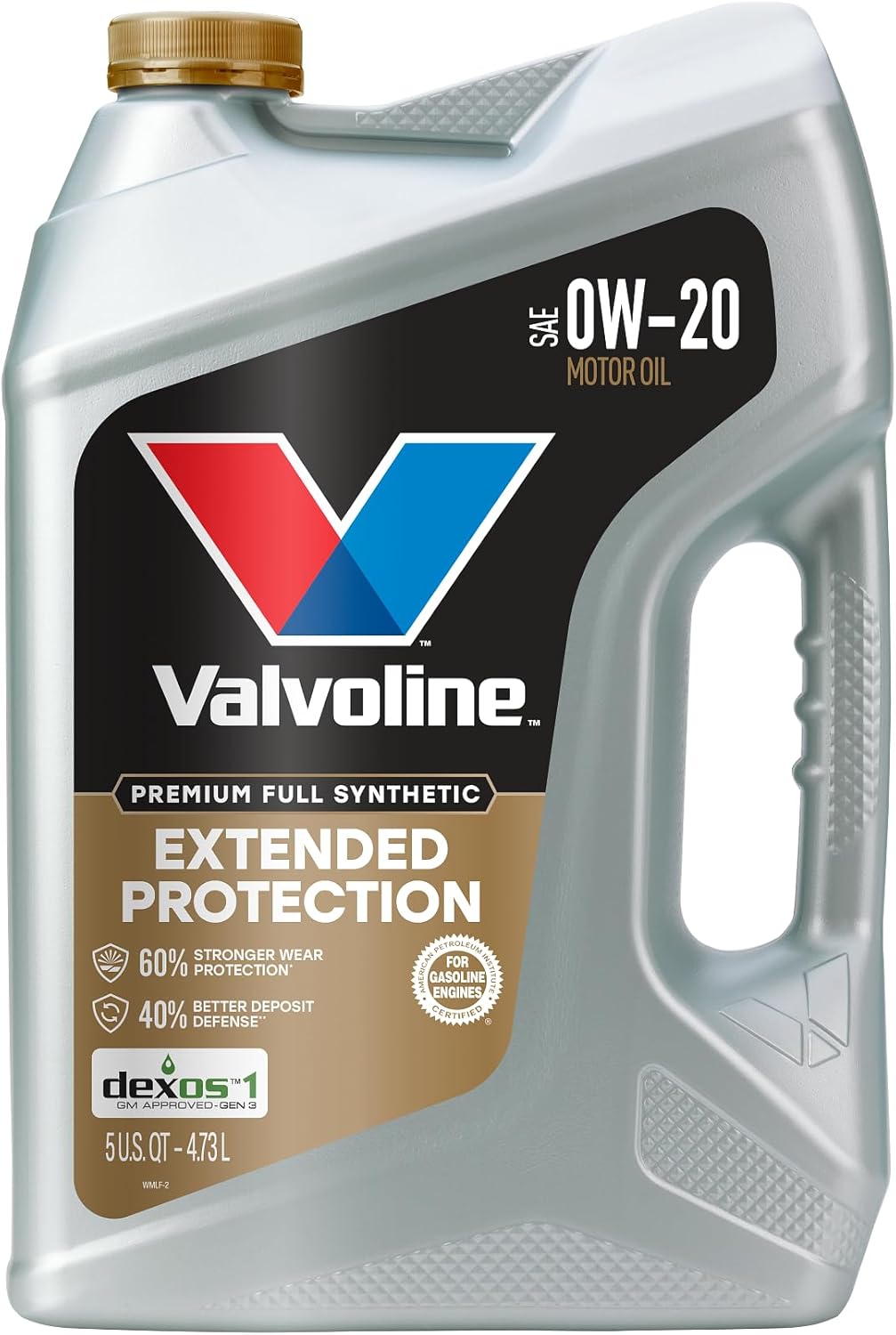
| SAE J300 Viscosity Grade | 0W-20 |
|---|---|
| Compatible with Vehicle Type | Car, Truck |
| Liquid Volume | 5 Quarts |
| Viscosity Level | Low to Medium |
Valvoline Extended Protection 0W-20 is a premium full synthetic motor oil designed for modern, fuel-efficient engines that demand low-viscosity protection. It is used the same way as any engine oil during routine oil changes for vehicles specifying 0W-20, supplying quicker oil flow at cold starts and designed to help improve fuel economy. Notable features include Valvoline’s Dual Defense Additive Technology, claimed stronger wear protection, enhanced deposit control, and improved heat resistance versus industry norms. In practical terms that means better protection for valve trains and timing components during heavy use and reduced sludge buildup in variable-temperature driving. The oil meets current API and ILSAC specifications and several OEM Fiat/Chrysler/GM Ford designations, which supports compatibility with factory recommendations. Limitations are that claimed percentage improvements are manufacturer comparisons to industry baselines rather than independent test results, and drivers should still follow the Accord’s manufacturer service intervals and spec sheet when choosing oil. For 2018–2022 Accord engines calling for 0W-20, this product provides a strong factory-quality replacement option focused on protection and cold-start performance.
Best for: Drivers who need a factory-quality 0W-20 oil for regular maintenance on late-model Accords and prioritize cold-start performance and engine protection.
Less Ideal for: Owners who prefer oils with independent third-party test verification or who require a different viscosity grade should consider other formulations.
- Low-viscosity 0W-20 formula for improved cold-start flow and potential fuel economy gains
- Claims enhanced wear protection and deposit control compared with industry standards
- Meets ILSAC and API specifications relevant to modern gasoline engines
- 5 quart bottle provides the typical quantity needed for most oil changes
- Universal fit for cars and trucks that specify 0W-20
- Performance claims are manufacturer-stated comparisons rather than independent lab results
Verdict: The best 0W-20 engine oil for users who need the specified low-viscosity grade to improve cold-start flow, fuel efficiency, and recommended OEM compatibility.
4. Castrol EDGE High Mileage 0W-20 Full Synthetic Motor Oil, 5 Qt
Best High-Mileage Engine Oil
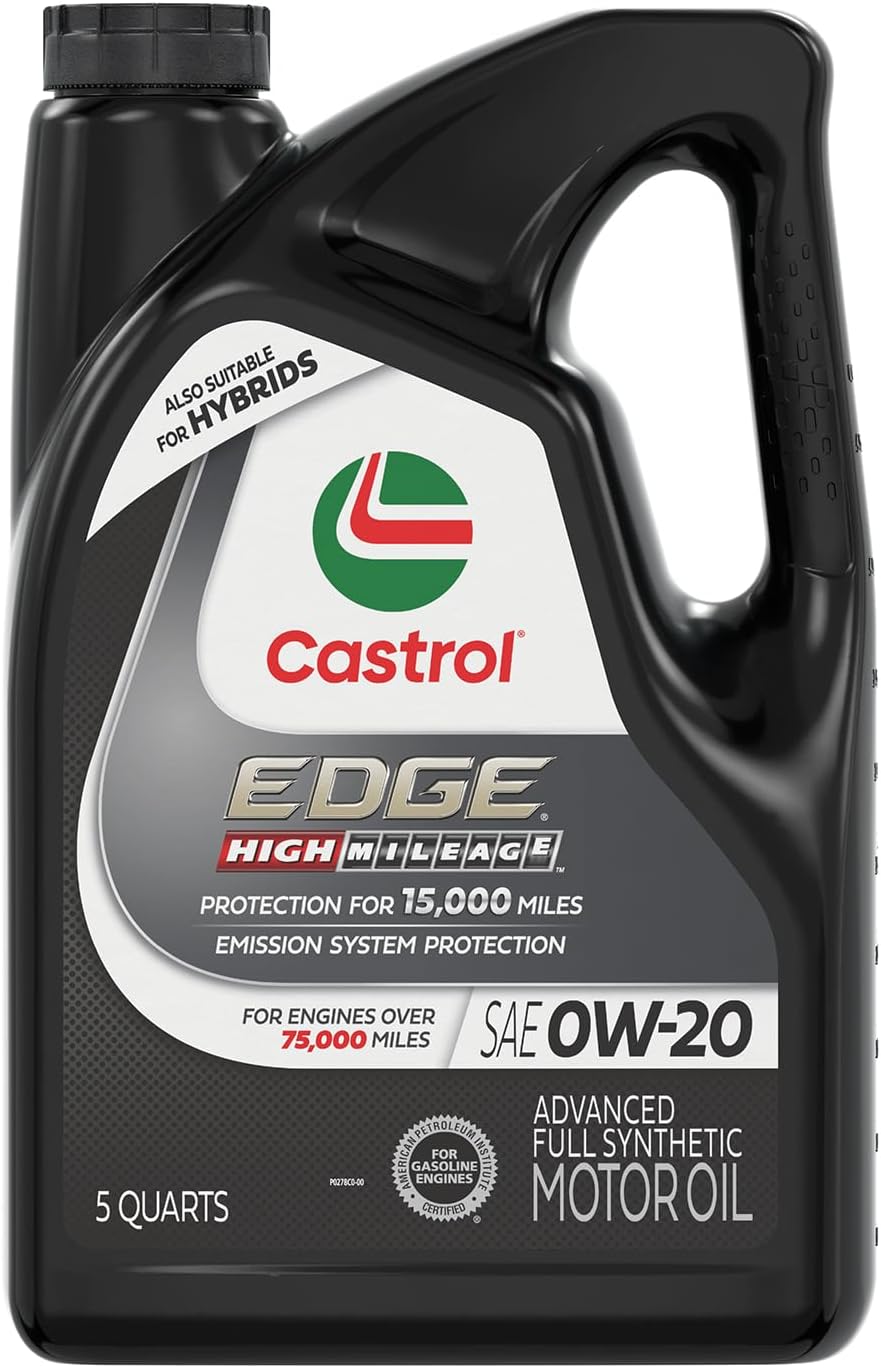
| Compatible with Vehicle Type | For vehicles with over 75,000 miles |
|---|---|
| SAE J300 Viscosity Grade | 0W-20 |
| Viscosity Level | Low to Medium |
| Liquid Volume | 5 Quarts |
Castrol EDGE High Mileage 0W-20 is a full synthetic motor oil formulated specifically for higher-mileage engines. It is used like any engine oil but targets older vehicles by adding a proprietary additive package that conditions seals, reduces oil burnoff, and lowers phosphorus to protect the catalytic converter. Castrol advertises extended drain capability up to 15,000 miles or one year with modern specifications such as API SP and ILSAC GF-6, so it suits drivers who prefer longer service intervals when compatible with their vehicle. In real-world use the oil’s low-viscosity 0W-20 grade helps cold starts and steady fuel economy while the high-mileage formula can quiet older engines and reduce minor leaks. Trade-offs are that 0W-20 is a relatively thin grade so it is important to confirm manufacturer recommendations for a 2018–2022 Honda Accord before switching, and drivers who do very heavy towing or extreme conditions may prefer a different viscosity. The product comes in a 5 quart bottle sized for most single oil changes on four-cylinder Accords.
Best for: Buyers looking to maintain a 2018–2022 Honda Accord with higher miles who prioritize seal conditioning, lower oil consumption, and emission-system protection.
Less Ideal for: Drivers who perform heavy towing, frequent high-load driving, or who need a different viscosity than 0W-20 per manufacturer guidance should consider alternative grades.
- Formulated for vehicles with over 75,000 miles with seal-conditioning additives to help reduce leaks
- Full synthetic 0W-20 supports easier cold starts and steady fuel economy
- Phosphorus Replacement Technology to reduce catalytic converter wear from additives
- Meets modern industry specs including API SP and ILSAC GF-6 for broad compatibility
- 0W-20 viscosity may be too thin for high-load or heavy-towing conditions
Verdict: The best high-mileage engine oil for vehicles with higher miles that benefit from seal conditioners, reduced oil consumption, and targeted wear protection.
5. Royal Purple SAE 0W-20 High Performance Full Synthetic Motor Oil, 5 qt.
Best Premium Engine Oil
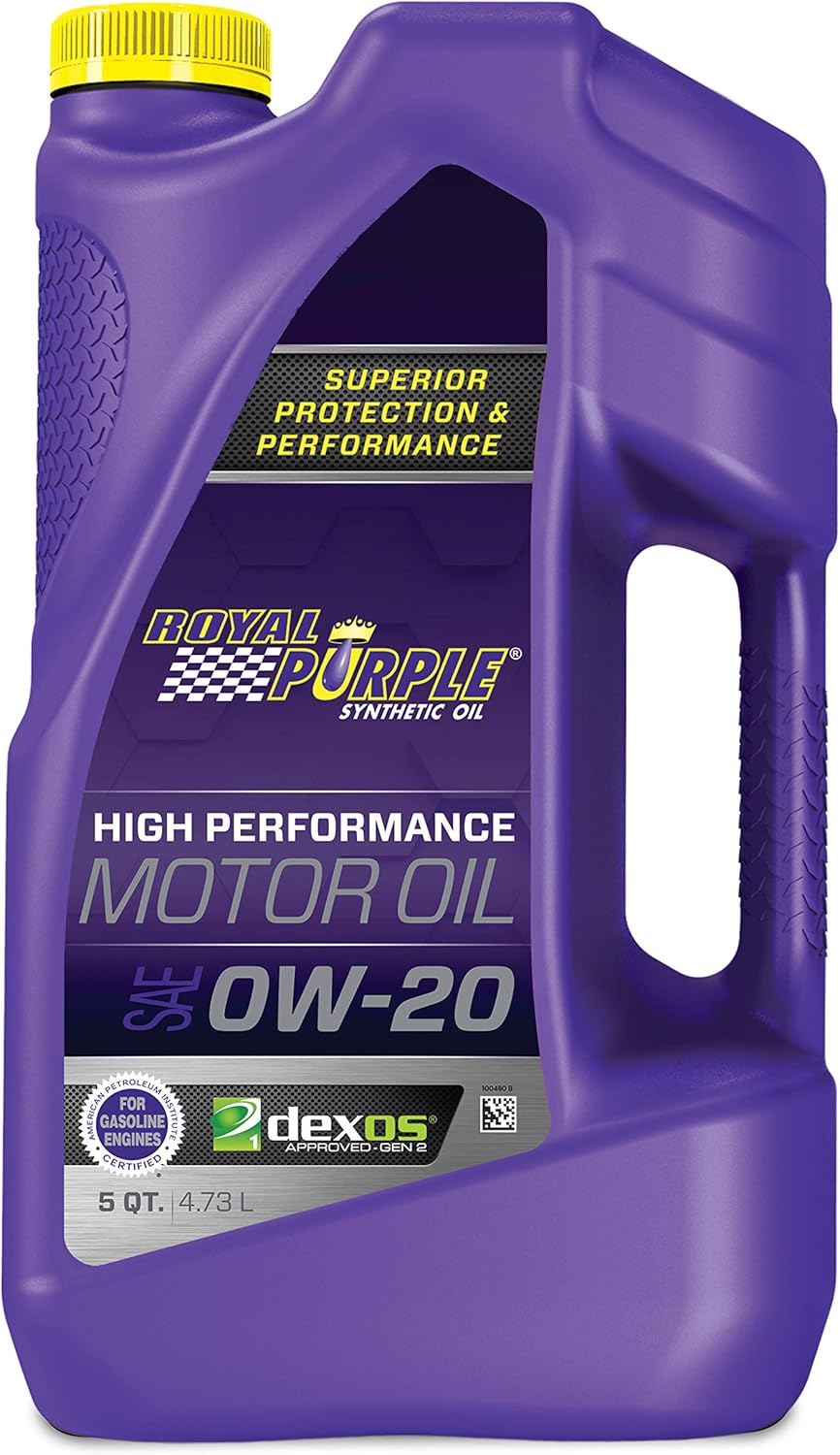
| Viscosity | SAE 0W-20 |
|---|---|
| Volume | 5 qt (4.73 L) |
| API rating | API SN |
| Approvals | ILSAC GF-5, Dexos1 1 |
This 5‑quart jug of Royal Purple 0W‑20 is a premium synthetic designed to replace factory 0W‑20 oils and deliver stronger detergency and anti‑wear chemistry. It is used like any conventional oil during routine DIY oil changes and is fully compatible with other synthetics or mineral oils, so you can switch at a normal service interval. Notable features include Royal Purple’s proprietary additive package that aims to reduce metal‑to‑metal contact, minimize low‑speed pre‑ignition in modern turbo engines, and resist sludge and corrosion. In practice that translates to cleaner internals, steady viscosity under load, and potential fuel‑economy benefits thanks to a low friction formulation. The product is vehicle‑specific fit type and meets API SN, ILSAC GF‑5 and Dexos1 1 performance requirements. The main trade‑off is cost since this is positioned above mainstream brands, but for DIYers who prioritize extended drain capability and top‑tier additive protection it offers a compelling step up from standard synthetics.
Best for: DIY owners who value top‑tier detergency and anti‑wear additives and are willing to pay more to extend drain intervals and protect the engine over long service periods.
Less Ideal for: Buyers on a strict budget or those who plan to follow only short OEM service intervals and prefer the lowest possible upfront cost.
- High‑performance additive chemistry targets wear reduction and engine cleanliness
- Formulated to meet API SN, ILSAC GF‑5 and Dexos1 1 specifications
- Low friction formulation can support improved fuel efficiency
- Fully compatible with mineral and other synthetic oils for straightforward upgrades
- Priced higher than mainstream synthetic motor oils
Verdict: The best premium engine oil for DIYers willing to pay more for elite detergency, extended-drain capability, and the highest-level additive chemistry.
Choosing the Right 2018-2022 Honda Accord Engine Oil: Key Factors to Consider
Viscosity Matching
Choosing the correct viscosity grade is the first practical decision for an Accord owner. Viscosity affects cold-start flow and high-temperature film strength. For many engines in this 2018-2022 range, manufacturers specify lighter grades for fuel economy and warranty compliance, while other applications call for thicker oils to control oil pressure as engines age.
Selecting the right grade means matching ambient climate and driving style. Colder climates often benefit from lower cold-cranking viscosity so oil circulates quickly at startup. Conversely, high-load or high-temperature driving needs an oil that maintains oil film at operating temperature to protect bearings and cam lobes. Using an incorrect viscosity can increase wear or reduce fuel economy, so always balance these tradeoffs when choosing a product.
Synthetic Vs Conventional Formulation
Formulation type determines how the oil resists breakdown and protects moving parts. Full synthetic oils generally offer superior oxidation resistance, better low-temperature flow, and more stable viscosity over extended drain intervals than conventional oils. For Accord engines in the 2018-2022 window, synthetics can reduce engine wear during cold starts and provide more consistent oil pressure under heat.
However, conventional or synthetic blend options can be acceptable for lower-mileage vehicles or owners who follow frequent change intervals. The decision often comes down to desired drain interval, driving severity, and whether the owner prioritizes maximum wear protection and fuel economy gains over upfront fluid cost.
Additive Package and Detergency
A balanced additive package keeps pistons, rings, and valve train components clean while preventing sludge and varnish formation. Detergents and dispersants help suspend combustion byproducts and soot so they do not form deposits. For Accords, especially those used for short trips or stop-and-go traffic, strong detergency minimizes deposit buildup that can affect performance and emissions equipment over time.
Anti-wear additives protect metal surfaces under boundary lubrication conditions, while friction modifiers influence fuel economy and shift feel in some transmissions when shared fluids are used. Evaluating additive chemistry is important because it affects long-term engine cleanliness and how well the oil maintains protective properties between changes.
High-Mileage Considerations
Engines with higher miles have different needs: seals may harden or leak slightly, clearances can widen, and oil consumption patterns can change. High-mileage formulations often include seal conditioners that swell aging seals to reduce leaks, and higher levels of detergents to manage accumulated deposits.
For a 2018-2022 Accord that already has substantial mileage, choosing an oil marketed for high-mileage engines can reduce oil consumption and address minor leaks. Owners should weigh these benefits against any potential interaction with emissions controls and confirm compatibility with service recommendations.
Thermal Stability and Oxidation Resistance
How well an oil resists thermal breakdown matters for engine life and recommended drain intervals. Oils that oxidize form varnish and sludge and lose viscosity control, which can harm bearings and reduce oil pressure. Accord owners who drive in hot climates or tow loads should prioritize oils with proven oxidative stability.
Stable oils maintain protective films longer under high temperatures, which supports longer drain intervals and consistent engine performance. This factor also ties into the selection of synthetic versus conventional formulations and the quality of the additive package.
Manufacturer Approvals and Industry Certifications
Certifications such as API and ILSAC reflect that the oil meets baseline performance tests relevant to modern engines. Some manufacturer approvals or recommended specifications indicate that a product is formulated to meet specific engine needs or warranty considerations. For the 2018-2022 Accord, confirming that the oil meets applicable API and ILSAC categories helps ensure compatibility with emissions systems and engine tolerances.
Using an oil without the right approvals can risk poor performance or increased wear. Always check the product labeling or technical datasheet to confirm it meets the categories appropriate for your Accord engine and follow local service recommendations.
Recommended Viscosities for Different Climates and Driving
Most Accord engines from 2018 to 2022 are compatible with a couple of commonly recommended viscosity grades depending on ambient temperature and driving demands. In moderate climates, a lighter 0W-20 grade can improve cold-start protection and marginally boost fuel economy, while 5W-30 is often chosen where slightly higher high-temperature film strength is desired.
If you do frequent short trips that never allow the engine to fully warm, pick a viscosity that provides fast cold-flow characteristics. For hot climates or sustained highway speeds with heavy loads, a higher hot-viscosity index helps maintain oil pressure and film strength.
- 0W-20: better cold-start flow, common for fuel economy-focused setups
- 5W-30: increased high-temp film strength for hotter conditions or older engines
- Follow the vehicle's service manual when unsure about exceptions
When to Consider High-Mileage Formulations
High-mileage oils are worth considering once an Accord accumulates significant miles and starts showing oil consumption or minor leaks. These formulations include seal conditioners and additional detergents to manage accumulated deposits and reduce seepage from aging seals.
If the engine runs clean and does not consume oil excessively, a high-quality synthetic may suffice. But when you notice increased consumption, blue smoke at startup, or small drips after parking, a high-mileage product can address those symptoms without engine work in many cases.
- Look for seal-conditioning additives if leaks are present
- Monitor consumption after switching to assess effectiveness
Drain Intervals: Balancing Longevity and Maintenance
Drain interval decisions depend on the oil formulation, driving conditions, and maintenance philosophy. Full synthetics typically allow longer intervals due to better oxidation resistance, but actual interval choices should reflect driving in stop-and-go traffic, short-trip frequency, and towing behavior.
For routine commuting and preventive maintenance, follow the service schedule but consider slightly extended intervals if using a high-quality synthetic and monitoring oil condition. Always verify compatibility with warranty or service guidance before extending intervals.
- Short trips and heavy idling shorten useful oil life
- Highway driving is less stressful on oil and can support longer intervals
Oil Filters and Their Role
A quality oil filter complements the oil by removing contaminants and protecting flow passages. Using the correct filter media and bypass valve settings for the Accord ensures consistent oil pressure and helps the oil maintain cleanliness between changes.
Pay attention to filter change intervals and choose filters rated for extended drains if you plan to lengthen intervals. A poor filter can negate the benefits of a premium oil by allowing abrasive particles to circulate.
- OEM or equivalent filters match bypass and anti-drainback specs
- Consider higher-capacity media for longer service intervals
Environmental and Operational Considerations
Your driving environment affects choice: dusty conditions, frequent short trips, and extreme temperatures each favor different formulations or service approaches. Dusty or high-contaminant environments increase the burden on both oil and filter, pushing towards shorter intervals or more robust filtration.
Engine start-stop cycles seen in urban driving increase the importance of low-temperature viscosity and detergency. Evaluate how you use the vehicle across seasons and choose an oil that aligns with that real-world profile.
- Seasonal viscosity switches can be appropriate in extreme climates
- For predominantly city driving, prioritize detergency and cold-flow properties
Still looking for the perfect fit?
Select your Honda Accord configuration to see the most relevant Engine Oils recommendations
How We Chose the Best 2018-2022 Honda Accord Engine Oil
We shortlisted oils by focusing on attributes that matter specifically for the 2018-2022 Honda Accord powertrains. Evaluation prioritized the correct viscosity grades that match Honda service recommendations and real-world temperature ranges for typical drivers. We judged formulation type, favoring full synthetics where they provide measurable wear protection and stability, and considered high-mileage formulations when addressing engines with greater than 75,000 miles. Additive balance was assessed for detergency, anti-wear (zinc/phosphorus levels), and friction modifiers to weigh longevity against fuel economy. Stability under thermal stress and resistance to oxidation were included to estimate drain intervals and deposit control. Finally, we considered manufacturer approvals and industry certifications that indicate suitability for modern turbocharged and naturally aspirated Accord engines.Exclusions: we excluded multi-vehicle crossover recommendations and any oil not meeting the basic viscosity or certification needs for the specified model years. Oils that rely solely on outdated additive packages or that lack appropriate viscosity options for the Accord engines were not considered. The result is a focused set of choices tuned to common driving patterns and maintenance goals for the 2018-2022 Accord.
Our full evaluation process is outlined in our review methodology.
FAQ
How often should I change engine oil in a 2018-2022 Accord?
It depends on oil type and driving habits. Many owners using full synthetic follow the manufacturer interval in the service manual, while drivers with frequent short trips or severe conditions may shorten intervals. Checking oil condition and level regularly helps determine the right cadence.
Can I switch from conventional to full synthetic in my Accord?
Yes, switching to full synthetic is commonly done and typically offers better cold-start protection and stability. Make sure the chosen viscosity and certifications match Honda recommendations and monitor for any changes in oil consumption.
Is 0W-20 acceptable for all 2018-2022 Accord engines?
0W-20 is often recommended for fuel economy and cold-start performance, but acceptability depends on the specific engine variant and operating climate. Consult the vehicle service specifications before choosing any viscosity grade.
Should I use a high-mileage oil if my Accord has 80,000 miles?
High-mileage oils can help address seal wear and reduce minor leaks or oil consumption in higher-mileage engines. They are useful when the engine shows symptoms like increased consumption or small leaks, but not always necessary if the engine runs clean and uses little oil.
Does synthetic oil affect oil change frequency in the Accord?
Synthetic oils resist oxidation and shear better, which can support longer intervals, but actual frequency should be based on driving conditions and manufacturer guidance. Extended intervals are reasonable if you monitor oil condition and have suitable filtration.
What should I check after an oil change on my Accord?
Confirm the correct viscosity was used, check for leaks at the drain plug and filter, and verify the oil level once the engine reaches operating temperature and is on level ground. Also reset any service reminders per the vehicle procedure if applicable.
Final Verdict
Prioritize matching the correct viscosity and verifying industry approvals when choosing engine oil for a 2018-2022 Honda Accord. For most owners, a high-quality full synthetic that meets the recommended viscosity will deliver the best protection against wear, maintain oil pressure, and support fuel economy. If the vehicle has higher mileage or shows signs of leaks or increased consumption, consider a high-mileage formulation to address those issues.Weigh tradeoffs between longer drain intervals and aggressive driving or short-trip duty, and pair your oil choice with a suitable filter. By focusing on viscosity, formulation, and additive balance you can choose oil that protects the engine and fits your driving needs with confidence.
Explore More:
- Check out all Honda Accord parts & accessories
- Explore Fluids & Chemicals
- Browse all Accessories
