

Note: This article contains affiliate links. If you click on these links and make a purchase, I may earn a small commission at no extra cost to you. This helps support my research and content. Read my full affiliate disclosure here.
If you own a Honda Civic Hatchback, choosing the right air filter matters for engine health, throttle response, and fuel economy. A proper air filter keeps contaminants out of the intake while allowing the airflow your engine needs. This guide covers six shortlisted air filters that suit the Civic Hatchback, focusing on fitment, filtration efficiency, and ease of installation.You will find practical notes on what to look for when replacing the engine air filter, how installation affects performance, and which tradeoffs matter most for everyday driving and long-term maintenance. Next are the top picks followed by the buying guidance that helps you make a confident choice.
Looking for other parts? See all Honda Civic parts & accessories.
Top Picks at a Glance
| Best Overall The best all-around choice for most situations | PHILTOP Engine and Cabin Air Filter Kit (CA12050 + CF11182) |  |
| Best Quality Built to a higher standard if you want something more solid | K&N 33-5045 High-Flow Lifetime Engine Air Filter |  |
| Best Value The sweet spot between price and what you get | ECOGARD XA10498 Premium Engine Air Filter |  |
| Best Budget The cheapest option that still gets the job done reliably | Carory AF151 Engine Air Filter (replacement for Honda 17220-5BA-A00) |  |
| Highest Rated A top-rated pick with lots of positive feedback | EPAuto CP182 Cabin Air Filter (compatible with select Honda/Acura models) |  |
| Best Seller A high-volume bestseller chosen again and again | Puroma Cabin Air Filter (replacement for CP182 / CF11182) |  |
1. PHILTOP Engine and Cabin Air Filter Kit (CA12050 + CF11182)

| Included Components | Engine & Cabin Air Filter Kit |
|---|---|
| Fit Type | Vehicle Specific Fit |
| Model Number | CA12050+CF11182 |
| Unit Count | 2.0 Count |
This PHILTOP kit bundles an engine air filter (CA12050) and a cabin air filter (CF11182) sold as a vehicle-specific replacement for Honda Civic 2016–2021 1.5T and CR-V 2017–2022 1.5T. The engine filter traps dust and debris that can reduce airflow and engine efficiency, while the cabin filter captures pollen, dust and light odors to improve in-cabin air. The kit is aimed at DIY maintenance: both pieces are described as direct factory-quality fit replacements and installation is straightforward — the cabin filter is replaced behind the glovebox and the engine filter under the hood. PHILTOP recommends replacing both filters together every 12 months or 12,000 miles to keep breathing air and engine intake working in sync. The main positives are the convenience of a matched two-filter kit and compatibility with the listed Honda turbo 1.5T applications. Limitations are minimal but include the generic nature of aftermarket filtration where exact filtration efficiency or media specifications are not published, so buyers who require certified high-efficiency or specialty particulate removal may want a product with documented filtration ratings.
Best for: Buyers who want a simple, practical way to refresh both engine intake and cabin air on the listed Honda 1.5T models without hunting for separate parts, prioritizing ease of installation and matched replacements.
Less Ideal for: Drivers who need filters with verified high-efficiency ratings for heavy allergy or specialized filtration needs should consider products with published test data instead.
- Two-piece kit matches engine and cabin needs in one purchase for convenience.
- Vehicle-specific fit for the listed Honda Civic and CR-V 1.5T model years simplifies DIY installation.
- Clear replacement interval recommendation (12 months / 12,000 miles) helps routine maintenance planning.
- Described as direct factory-quality replacements for straightforward swap-in without modification.
- Manufacturer does not publish specific filtration efficiency or particulate capture ratings for this kit.
Verdict: A convenient matched engine and cabin filter kit that makes routine filter replacement quick and easy for the specified Honda 1.5T models.
2. K&N 33-5045 High-Flow Lifetime Engine Air Filter

| Brand | K&N |
|---|---|
| Model Number | 33-5045 |
| Included Components | Air filter, warranty card, decals |
| Fit Type | Vehicle Specific Fit |
| Manufacturer Warranty Description | 1,000,000 Miles |
The K&N 33-5045 is a washable, lifetime replacement engine air filter engineered to boost airflow and real-world performance in compatible Civic hatchbacks. Its multilayer cotton gauze media and oiled treatment are intended to increase horsepower and throttle response by allowing more air into the intake compared with typical paper filters. Installation is straightforward since the unit is designed to drop into the factory air box, and normal maintenance is infrequent — K&N recommends cleaning only every 75,000 miles under typical highway driving. The durable construction and reusable design reduce waste and long-term replacement costs, and the filter is backed by K&N’s limited long-term warranty. Be aware the filter is oiled, so extra care is needed during cleaning to avoid over-oiling and to protect sensitive mass airflow sensors; some drivers report that gains depend on vehicle tuning and driving conditions. For a driver focused on incremental performance and lower ownership cost over time, this filter provides a practical, long-lasting option for the Civic hatchback platform.
Best for: Drivers who prioritize measurable performance gains and lower long-term running costs for their Civic hatchback and are comfortable performing periodic maintenance.
Less Ideal for: Drivers who prefer true no-maintenance disposable filters or who want a strictly maintenance-free, guaranteed stock-equivalent filtration solution.
- Washable, reusable design cuts long-term replacement waste and cost
- Multilayer cotton gauze media engineered to increase airflow and potential horsepower
- Vehicle-specific fit that installs into the factory air box with minimal effort
- Long service interval under normal driving conditions reduces maintenance frequency
- Oiled filter media requires careful cleaning and re-oiling to avoid sensor issues
Verdict: Choose this K&N filter to gain improved airflow and lasting, reusable filtration that supports modest performance improvements for a Civic hatchback.
3. ECOGARD XA10498 Premium Engine Air Filter

| Compatible engines | Honda 1.5L (specified models) |
|---|---|
| Included components | Engine Air Filter |
| Fit type | Vehicle Specific Fit |
The ECOGARD XA10498 is a direct replacement engine air filter made to fit Honda 1.5L turbo applications and supply clean, efficient airflow to the intake. It installs the same way as the factory part and is commonly swapped during routine maintenance to restore throttle response and engine breathing. The filter is built to match factory form and uses pleated media to trap dirt while allowing airflow for acceleration. Buyers will appreciate the simple, tool-light installation and the fact it is sold as a single ready-to-install unit. Practical benefits include maintaining engine performance between scheduled services and avoiding the dealer for a basic consumable. Limitations are that it is vehicle-specific so make sure your Civic Hatchback uses the 1.5L turbo fitment, and like all paper-style filters it requires regular replacement rather than cleaning or reuse.
Best for: Buyers who prioritize straightforward, cost-effective maintenance and want a reliable factory-quality replacement to keep their Honda 1.5L engine running as designed.
Less Ideal for: Drivers looking for a washable or high-flow performance filter or those whose Civic uses a different engine variant should consider other options.
- Factory-style fit and form for compatible Honda 1.5L engines
- Pleated filter media that balances airflow and particle capture
- Easy, quick installation requiring few or no tools
- Widely reported consistent fit and build quality by other buyers
- Not reusable — requires periodic replacement rather than cleaning
Verdict: A practical, factory-fit replacement that restores clean airflow and keeps maintenance simple for Honda 1.5L owners.
4. Carory AF151 Engine Air Filter (replacement for Honda 17220-5BA-A00)

| Fit Type | Vehicle Specific Fit |
|---|---|
| Product Grade | Replacement Part |
| Manufacturer Part Number | AF151 |
| OEM Equivalent Part Number | AF151 |
The Carory AF151 is a direct replacement engine air filter made to fit Honda Civic gas models (2016–2025) and HR-V (2023–2025) that use part number 17220-5BA-A00. It installs the same way as a factory unit and is intended to maintain steady airflow to support efficient combustion and smooth engine operation. Buyers will appreciate the straightforward vehicle-specific fit and the product grade marked as a replacement part, which makes swapping the filter a quick DIY job with no special tools. The filter arrives protected in simple packaging and customers report consistent, OEM-like dimensions and sealing. Expect practical benefits like maintained engine responsiveness and fuel efficiency between service intervals. Limitations are typical of non-branded aftermarket filters: long-term longevity and filtration efficiency compared with higher-end or manufacturer-branded filters are not documented here, and this unit is not labeled for turbo or hybrid applications so confirm compatibility before ordering for those variants.
Best for: Buyers who want a low-cost, straightforward replacement that fits listed Honda Civic and HR-V models and lets them perform a quick DIY air-filter swap to keep routine maintenance on schedule.
Less Ideal for: Drivers seeking premium filtration performance or documented long-term durability should consider higher-end branded filters or dealer-sourced replacements.
- Vehicle-specific fit for listed Honda Civic and HR-V years simplifies installation
- Marketed as a direct replacement for Honda part 17220-5BA-A00 so it matches factory mounting and seal
- Affordable option that offers OEM-like fit and quick, tool-free installation
- Designed to maintain steady airflow to support fuel combustion and engine efficiency
- No independent filtration efficiency or longevity data provided compared with higher-end filters
- Marked as not for hybrid or turbo models so not suitable for those powertrains
Verdict: A budget-friendly, vehicle-specific replacement that provides OEM-style fit and quick DIY installation for the listed Honda Civic and HR-V models.
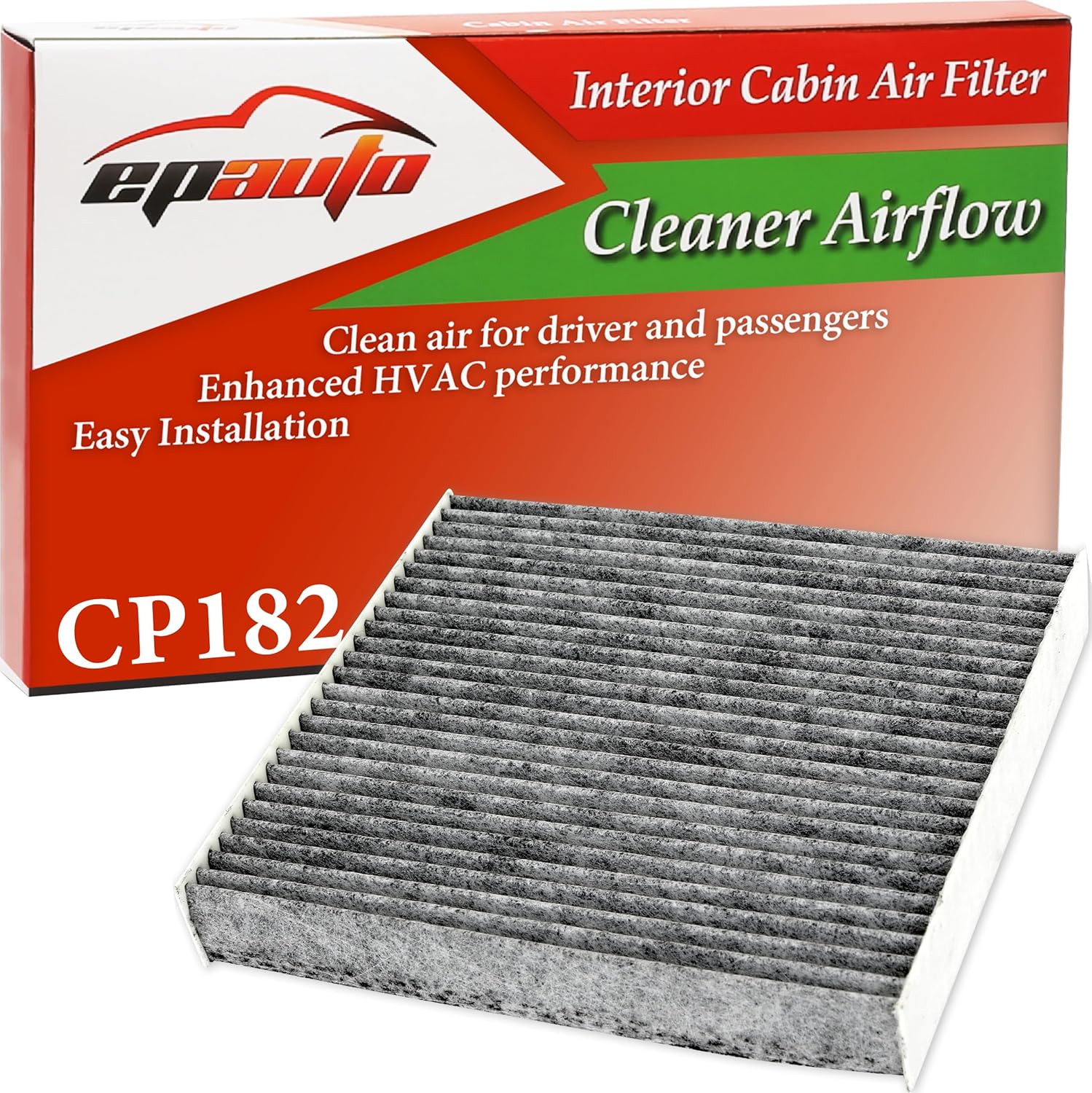
5. EPAuto CP182 Cabin Air Filter (compatible with select Honda/Acura models)
| Compatible models | Select Honda and Acura models (see fitment list to confirm years) |
|---|---|
| Filter type | Carbon-treated cabin air filter |
| Recommended replacement | Every 12 months or 12,000 miles |
| Manufacturer | EPAuto |
The EPAuto CP182 is a cabin air filter intended as a direct replacement for select Honda and Acura models; it uses a carbon-treated media to help block dust, smog and common cabin odors. Installation is simple for a DIYer—the glove box drops and the filter slides out and the new unit slides in—so routine annual changes are quick and low-cost. The filter lists replacements for several Honda/Acura genuine part numbers and customers report mostly reliable fit and filtration comparable to factory units. Practical benefits include improved HVAC airflow versus a clogged old filter and reduced cabin smells after installation. A few users noted tight fits on some newer models and rare trimming may be needed, so confirm the fit for your hatchback year before installing. The product is aimed at straightforward maintenance rather than performance filtration, and the manufacturer recommends replacing it every 12 months or 12,000 miles.
Best for: Buyers who prioritize a dependable, factory-style replacement to keep their cabin air fresh and HVAC working normally and who prefer simple DIY maintenance.
Less Ideal for: Drivers seeking high-efficiency or allergen-grade filtration beyond standard carbon-treated cabin filters should consider premium or HEPA-style alternatives.
- Carbon-treated media helps reduce odors in the cabin.
- Compatible with many Honda and Acura part numbers so it matches factory fitment for most listed years.
- Easy DIY installation behind the glove box with no special tools.
- Affordable replacement that restores HVAC airflow and cabin air quality.
- Some reported slight size variances on specific newer models that required trimming for a perfect fit.
Verdict: A practical, carbon-treated cabin filter that delivers reliable, factory-style replacement filtration and easy DIY installation for Honda Civic hatchback owners focused on dependable maintenance.
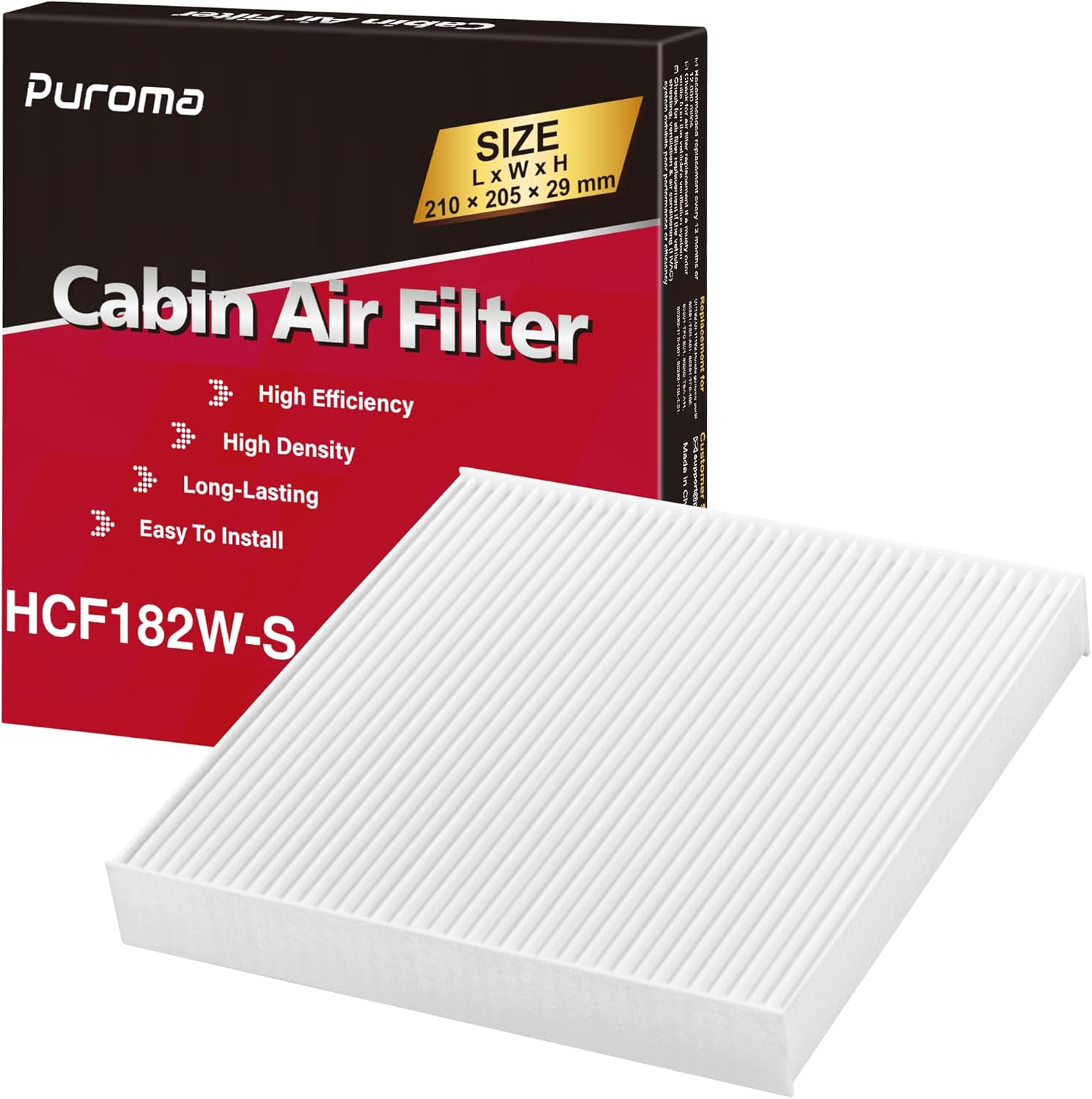
6. Puroma Cabin Air Filter (replacement for CP182 / CF11182)
| Material Type | Fiberglass, Paper |
|---|---|
| Air Filter Construction | Pleated |
| Unit Count | 1.0 Count |
| Compatible Devices | Honda Civic, Clarity, CR-V, CR-Z, Fit, HR-V, Insight, Odyssey, Accord; Acura RDX, TLX, INTEGRA, MDX |
This Puroma cabin air filter is a direct-replacement style filter built from multiple fiber layers and pleated construction to trap dust, pollen, and odors while maintaining airflow for the HVAC system. It is intended for routine cabin maintenance and installs in about 5 to 10 minutes using the airflow arrow on the frame. In use it should freshen the cabin air and help the heating and cooling system run efficiently; the listing recommends yearly or 12,000-mile replacement intervals and more frequent changes for very dusty or polluted conditions. Reviewers report consistent fit and easy installation on Honda Civics and CR-Vs, and the material mix of fiberglass and paper indicates basic filtration performance similar to many aftermarket replacements. Limitations are typical for economy cabin filters: it does not advertise advanced HEPA-level filtration or extended service life, and it may need replacement more often in heavy-pollution environments.
Best for: Buyers who prioritize a reliable, low-risk factory-style replacement to keep cabin air clean and HVAC performance steady without spending on premium filters.
Less Ideal for: Drivers seeking medical-grade allergy protection or extended-life/high-performance filters should consider higher-spec options instead.
- Pleated multi-layer construction captures common cabin particulates and reduces odors.
- Simple, quick installation with an airflow arrow for correct orientation.
- Compatible list includes many Honda and Acura models so fit is likely for listed vehicles.
- Lightweight, economy option that maintains HVAC airflow while filtering air.
- No claim of HEPA-grade filtration or pollutant-specific certifications.
- Made from fiberglass and paper which may not last as long as higher-end synthetic or activated-carbon filters.
Verdict: A straightforward, easy-to-install cabin filter that delivers reliable, factory-style air filtration for risk-averse Honda and Acura owners.
Choosing the Right Honda Civic Hatchback Air Filter: Key Factors to Consider
Filtration Efficiency
Filtration efficiency determines how well a filter traps harmful particles before they reach the engine. Higher efficiency reduces abrasive dust and road grit ingestion, which helps preserve cylinder and valve surfaces over time.
For the Civic Hatchback, consider media construction and reported particle capture ratings. A denser media often captures finer particles but can restrict airflow. You need a balance that protects the engine while not overly choking intake flow, which can affect throttle response and fuel economy.
Airflow and Engine Response
Airflow characteristics influence how freely the engine breathes, which in turn affects throttle response and small gains or losses in fuel economy. Filters with very restrictive media may marginally reduce performance, while overly permissive options can let contaminants through.
Assess expected airflow under normal driving conditions for the Civic Hatchback. Look for filters designed to maintain OEM-like flow or improve it slightly without sacrificing necessary filtration. Consider that any perceived performance change is usually modest on a naturally aspirated Civic engine.
Fitment and Seal Integrity
Proper fit ensures the filter seals against the housing so all intake air passes through the media. A poor fit can allow unfiltered air to bypass the filter, negating its purpose and introducing contaminants into the engine.
When selecting a filter for the Hatchback, verify exact dimensions and whether the product is manufactured to the vehicle's intake box tolerances. Check for features such as molded rubber lips or compression gaskets that promote a consistent seal over repeated install cycles.
Material Type and Maintenance
Filter media comes in several types, including pleated paper, oiled cotton, and foam. Each has different maintenance needs and longevity. Pleated paper is typically disposable and low maintenance, while oiled or washable media require cleaning and re-oiling on a schedule.
Consider how often you are willing to perform maintenance. For owners who prefer set-and-forget replacements, disposable paper elements are practical. If you want a reusable option, be prepared to follow the cleaning process to maintain filtration performance and prevent media damage.
Service Life and Replacement Interval
Service life affects total ownership cost and convenience. Replacement intervals vary by media type and driving conditions. Urban and dusty environments shorten service life, requiring more frequent checks and changes.
Plan replacements around mileage milestones appropriate for the Hatchback and your local conditions. Filters with longer advertised life may reduce maintenance frequency, but confirm that longevity does not come at the expense of filtration quality.
Compatibility With Stock Intake Components
Some filters are designed to integrate seamlessly with the stock intake box, while others may require adapters or small trim adjustments. Compatibility affects installation time and the risk of introducing leaks or fitment issues.
Prioritize filters that match the Honda Civic Hatchback intake geometry without modification. If a filter requires trimming or an adapter, ensure you are comfortable performing those steps and understand how they might affect warranty or serviceability.
When to Replace Your Engine Air Filter
Most Civic Hatchback owners should inspect the engine air filter during routine oil changes or at least every 12,000 to 15,000 miles, adjusting for driving conditions. If you often drive on gravel roads or in heavy dust, check the filter more frequently because contaminants build up faster.
Signs you need replacement include reduced throttle response, unusual engine hesitation, or a visibly dark and clogged filter element. Regular visual checks are a simple way to avoid long-term engine wear and keep the intake flowing as intended.
- Inspect every 12,000 miles under normal conditions
- Inspect every 6,000–8,000 miles in dusty environments
- Replace if media appears torn, excessively dark, or compressed
Installation Tips for the Civic Hatchback
Replacing the engine air filter on the Civic Hatchback is generally straightforward. Park on level ground, open the hood, and locate the intake box. Unclip or unscrew the housing carefully and remove the old element without letting debris fall into the intake.
Before installing the new filter, clean the housing and inspect the intake snorkel for debris. Ensure the new element seats fully and that the housing clips or fasteners secure firmly. A proper seal prevents unfiltered air from bypassing the media.
- Clean the housing with a vacuum or lint-free cloth before fitting the new filter
- Check the lip or gasket for pliability to ensure a good seal
- Tighten clips evenly to avoid deforming the filter element
Troubleshooting Common Intake Issues
If you notice a drop in performance after a filter change, recheck the seal and orientation of the element. An upside-down or misaligned filter can cause poor airflow or allow unfiltered air to enter the engine. Also verify there are no missing clips or broken tabs on the housing.
Persistent engine codes or poor idle after replacing the filter may indicate other intake issues such as MAF sensor contamination. When cleaning near sensors, avoid touching them directly. If problems continue, have a technician inspect the intake and related systems.
- Re-seat the filter if performance worsens after installation
- Inspect the mass air flow sensor before accusing the new filter
- Look for cracks or gaps in the intake housing that could bypass the filter
How Filter Choice Affects Fuel Economy
Filter selection can have a modest impact on fuel economy through changes in airflow resistance. Filters that maintain OEM airflow characteristics are least likely to alter fuel consumption. Significant deviations from expected flow are what produce noticeable economy differences.
Most drivers will see small variations only. Prioritize adequate filtration first; a slightly denser filter that protects the engine can be a better long-term value than chasing minimal gains in miles per gallon.
- OEM-flow-equivalent filters preserve factory fuel economy
- Excessive restriction can reduce efficiency under load
- Small, short-term MPG differences are common and often negligible
Matching Filter Size and Specifications
The Civic Hatchback requires a specific air filter size and shape to fit the stock housing. Check the part dimensions against the vehicle's intake box before purchasing. Filters made to exact OEM dimensions avoid trimming and reduce the risk of leaks.
Pay attention to the filter thickness and gasket style. Even small differences in height or sealing flange geometry can alter how well the filter seats. If measurements are provided, compare them to your current filter or the service manual specifications.
- Confirm length, width, and height match the stock element
- Verify seal type: molded rubber lip versus flat gasket
- Avoid filters that require cutting to fit unless you are experienced
Still looking for the perfect fit?
Select your Honda Civic configuration to see the most relevant Air Filters recommendations
How We Chose the Best Honda Civic Hatchback Air Filter
We prioritized criteria that directly affect performance, reliability, and ownership experience for Honda Civic Hatchback drivers. Primary evaluation points included filtration efficiency measured by particle capture capability, actual fitment and seal reliability for the Hatchback intake box, and the impact on airflow and engine response. Durability and service life were assessed to estimate replacement intervals under urban and dusty conditions. Ease of installation and whether the filter requires trimming or adapter pieces were considered to minimize owner effort.We also examined material type and serviceability, including washable versus disposable construction, because maintenance frequency matters for Civic owners who do their own upkeep. Exclusions included any filters that did not match the Civic Hatchback filter dimensions or required permanent intake modifications. Filters that compromised fit or introduced potential for unfiltered bypass were removed from consideration. The final list balances protection, airflow, and practical ownership factors specific to the Honda Civic Hatchback.
Our full evaluation process is outlined in our review methodology.
FAQ
How often should I replace the engine air filter in my Honda Civic Hatchback?
It depends on driving conditions. Under normal city and highway use, inspect every 12,000 to 15,000 miles and replace as needed. In dusty or rural environments, check and likely replace every 6,000 to 8,000 miles.
Can I clean and reuse a washable filter in the Civic Hatchback?
Some washable filters are suitable if they match the Hatchback dimensions and are maintained per the manufacturer procedure. Washing and re-oiling requires care to avoid saturating the media or leaving residue that can harm sensors.
Will a higher-flow air filter cause engine problems in my Civic Hatchback?
Higher-flow filters designed to preserve filtration and fit are usually fine. Problems arise when a filter sacrifices filtration for flow or fails to seal properly, allowing contaminants into the engine. Choose options that balance flow and particle capture.
How can I tell if my air filter is the wrong size for the intake box?
A wrong-size filter may sit loosely, require force to close the housing, or leave visible gaps. Compare dimensions to the old filter and the housing, and never force the cover closed. If the element does not sit flush, do not drive until corrected.
Does changing the engine air filter affect tire wear or other systems?
No. Replacing the engine air filter impacts intake performance and engine protection but does not affect tire wear or unrelated vehicle systems. However, poor intake sealing can lead to engine issues that may indirectly affect drivability.
Should I replace the air filter more often if I use the car for short trips?
Short trips do not necessarily require more frequent filter changes, but city driving with frequent stops can introduce more particulates from stop-and-go traffic. Monitor the filter visually and replace when it shows significant contamination.
Final Verdict
For the Honda Civic Hatchback, prioritize a filter that offers solid filtration efficiency and reliable fitment to the stock intake. Good sealing and correct dimensions are more important than marginal gains in airflow. Balance maintenance preferences with media type: disposable paper for low-effort replacement, or reusable media if you plan scheduled cleaning.Weigh the tradeoffs between longevity, ease of service, and protection. Focus on options that minimize the risk of unfiltered air entering the engine and match the Hatchback intake geometry so you can maintain reliable performance and engine longevity.
Explore More:
- Check out all Honda Civic parts & accessories
- Explore Air Filters Maintenance & Repair Guides
- Explore Engine
- Browse all Auto Parts
