

Note: This article contains affiliate links. If you click on these links and make a purchase, I may earn a small commission at no extra cost to you. This helps support my research and content. Read my full affiliate disclosure here.
Picking the right air filter for a Honda Civic EX matters more than many owners realize. A correctly sized, well-sealing engine air filter keeps dirt and debris out of the intake, preserves throttle response, and helps the engine run efficiently under everyday driving conditions.This guide covers the shortlisted top options specifically for the Civic EX, focusing on how each choice addresses filtration efficiency, fitment and sealing, and durability. Read on to understand the practical tradeoffs so you can pick an air filter that matches your driving habits and maintenance plan.
Looking for other parts? See all Honda Civic parts & accessories.
Top Picks at a Glance
| Best Overall The best all-around choice for most situations | ITESIER Engine and Cabin Air Filter Kit for Honda Civic 2.0L (2016–2025) and HR-V 2.0L (2023–2025) |  |
| Best Quality Built to a higher standard if you want something more solid | K&N High-Flow Lifetime Replacement Engine Air Filter (33-5045) |  |
| Best Value The sweet spot between price and what you get | ECOGARD XA10496 Premium Engine Air Filter |  |
| Best Budget The cheapest option that still gets the job done reliably | Carory AF151 Engine Air Filter (Replacement for Honda Civic L4-2.0L 2016–2025) |  |
| Highest Rated A top-rated pick with lots of positive feedback | EPAuto GP050 Engine Air Filter (replacement for Honda Civic 1.5L 2016–2021) |  |
| Most Popular A crowd favorite that many people choose with confidence | EPAuto CP182 Cabin Air Filter (replacement for Honda CF11182) |  |
| Best Seller A high-volume bestseller chosen again and again | Puroma Cabin Air Filter Replacement (CP182 / CF11182) |  |
1. ITESIER Engine and Cabin Air Filter Kit for Honda Civic 2.0L (2016–2025) and HR-V 2.0L (2023–2025)

| Fit Type | Vehicle Specific Fit |
|---|---|
| OEM Equivalent Part Number | 17220-5BA-A00, CA12051, 80292TF0G01 |
| Product Grade | Replacement Part |
This ITESIER kit bundles an engine air filter and a cabin air filter designed to fit 2.0L naturally aspirated Honda Civic (2016–2025) and HR-V (2023–2025). It is intended for straightforward DIY replacement: the engine filter drops into the engine intake housing while the cabin filter installs behind the glove box, so typical installation takes under 20 minutes for someone comfortable with basic car maintenance. The listing highlights OEM-equivalent part numbers, which suggests the filters match factory fit and location. Buyers will appreciate getting both filters in one purchase to cover engine protection and in-cabin air quality at once. Practical benefits include saving a trip to the dealer and replacement parts that reviewers report fit precisely. Limitations are that this kit is only for naturally aspirated 2.0L models and explicitly not compatible with Type R, turbo, or hybrid variants, so confirming year and engine before ordering is important.
Best for: Buyers who want a practical, do-it-yourself replacement that restores factory-style filtration for both the engine and cabin without paying dealer prices.
Less Ideal for: Do not choose this kit if you have a turbocharged, Type R, or hybrid Honda model or if you need filters for a different engine displacement or model year outside the stated fitment.
- Includes both engine and cabin filters so you can replace both systems in one purchase
- Fits vehicle-specific mounting and lists OEM-equivalent part numbers for factory-style fit
- Multiple reviewers report easy, quick installation with a precise fit
- Saves time compared with dealer replacement and supports DIY maintenance
- Compatible only with 2.0L naturally aspirated engines and not for Type R, turbo, or hybrid models
Verdict: If you own a naturally aspirated 2.0L Civic or HR-V and want a convenient, factory-fit pair of engine and cabin filters for DIY replacement, this kit delivers solid fit and value.
2. K&N High-Flow Lifetime Replacement Engine Air Filter (33-5045)

| Brand | K&N |
|---|---|
| Model Number | 33-5045 |
| Fit Type | Vehicle Specific Fit |
| Included Components | Air filter, warranty card, decals |
This K&N high-flow air filter replaces the factory paper element with multilayer cotton gauze that is pre-oiled and washable for lifetime use. It is installed directly into the factory air box and is intended to increase airflow, which can improve throttle response and modestly boost horsepower and acceleration in everyday driving. Notable features include four layers of filter media for particle capture, durable construction meant to last the life of the vehicle, and a long recommended cleaning interval under normal highway use. The filter is marketed to be cleaned roughly every 75,000 miles in typical conditions, and K&N backs it with an extended limited warranty. Practical benefits are lower long-term consumable cost and reduced waste compared with disposable filters, plus quick, tool-free replacement. Important limitations are that performance gains are generally small on stock Civic engines and the pre-oiled media requires careful handling during installation to avoid contaminating MAF sensors on some vehicles.
Best for: Drivers focused on improving throttle response and long-term value who want a low-maintenance, performance-minded replacement filter for regular street use.
Less Ideal for: Drivers seeking large power gains from a simple intake swap or those who prefer maintenance-free disposable filters that require no cleaning.
- Washable and reusable design reduces recurring replacement purchases and waste.
- Multi-layer cotton gauze media increases airflow compared with many paper filters.
- Long cleaning interval under normal highway driving reduces maintenance frequency.
- Direct fit vehicle-specific design for straightforward installation into the factory air box.
- Pre-oiled filter requires careful installation to avoid contaminating mass airflow sensors.
- Actual horsepower gains on a stock Civic are typically modest rather than dramatic.
Verdict: Choose this K&N washable high-flow filter if you want a low-maintenance, reusable upgrade that can slightly improve airflow and throttle response on a Honda Civic EX.
3. ECOGARD XA10496 Premium Engine Air Filter
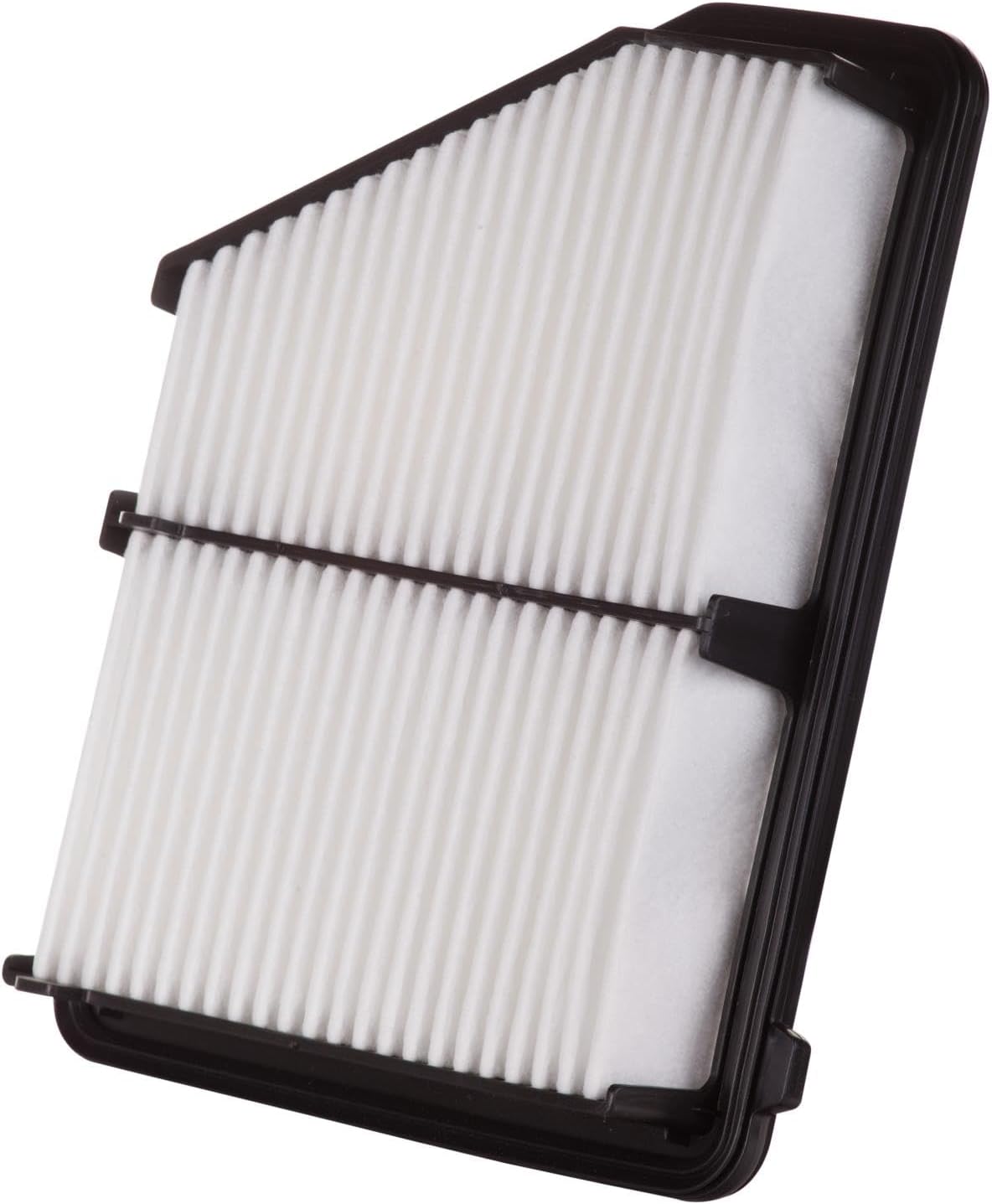
| Model Number | XA10496 |
|---|---|
| OEM Equivalent Part Number | 17220-5BA-A00 |
| Included Components | Engine Air Filter |
| Product Grade | Performance Part |
| Fit Type | Vehicle Specific Fit |
The ECOGARD XA10496 is a direct-fit replacement engine air filter made to capture dust, pollen and road debris before it reaches the intake system. It installs in minutes with minimal tools and the pentagonal, vehicle-specific shape ensures a snug fit in the Civic airbox. The filter media is described as high-capacity and heavy-duty, which helps maintain steady airflow and can support consistent engine response and fuel efficiency between service intervals. Routine service is simple: remove the old filter, vacuum the housing, and drop this one in; the manufacturer recommends replacing it every 12,000 miles. Users report a solid fit and straightforward self-installation. Downsides are typical for disposable filters — it must be replaced regularly rather than cleaned long-term, and performance gains like improved fuel economy are incremental rather than dramatic. Overall this is a practical, affordable option for keeping intake air clean and protecting the engine in everyday driving.
Best for: Buyers who prioritize reliable, low-effort maintenance and want an affordable, factory-style replacement that restores clean intake airflow for everyday driving.
Less Ideal for: Drivers seeking a reusable or performance-oriented washable filter or those wanting noticeable horsepower gains should consider other specialized options.
- Vehicle-specific fit for a secure installation in compatible Honda Civic models
- High-capacity filter media captures dust, dirt and pollen before engine intake
- Easy to install for DIY maintenance with minimal tools
- Designed to support steady airflow which can help maintain engine response and efficiency
- Disposable design requires regular replacement rather than long-term cleaning or reuse
Verdict: A simple, affordable, vehicle-specific replacement that restores clean intake airflow and keeps a Honda Civic running efficiently between service intervals.
4. Carory AF151 Engine Air Filter (Replacement for Honda Civic L4-2.0L 2016–2025)

| Fits | Honda Civic L4-2.0L (2016–2025), HRV (2023–2025) |
|---|---|
| Replaces | Honda 17220-5BA-A00 |
| Model Number | AF151 |
| Product Grade | Replacement Part |
| Fit Type | Vehicle Specific Fit |
The Carory AF151 is a direct-fit replacement engine air filter intended to replace Honda part 17220-5BA-A00 on Civic 2.0L models from 2016 through 2025 and select HR-V years. Installation is simple since it is a drop-in, vehicle-specific design that seals like the factory element and requires no modification or special tools. The filter media is built to maintain steady airflow for proper air-to-fuel balance, which helps combustion efficiency and everyday drivability. Buyers report a factory-like fit and sturdy construction, and the filter ships protected in a box so it arrives ready to install. Limitations are typical of economy replacement filters: long-term durability and filtration efficiency versus higher-end OEM or premium multi-layer filters are not documented, so if you need extended service intervals or maximum dust-holding performance consider a branded premium option. For routine maintenance and seasonal replacements the AF151 offers a low-cost, practical alternative that keeps the intake clean and the engine running as expected.
Best for: Buyers who prioritize low cost and easy, no-fuss maintenance for routine air filter changes on compatible Honda Civic 2.0L models, and who replace the filter on a regular service schedule.
Less Ideal for: Drivers looking for extended service intervals, maximum dust-holding capacity, or verified premium filtration performance should consider higher-end branded filters or factory replacements.
- Vehicle-specific fit for Honda Civic 2.0L (2016–2025) and select HR-V years for straightforward installation
- Designed to match Honda part number 17220-5BA-A00 for compatible sealing and fit
- Helps maintain steady airflow to support normal engine combustion and drivability
- Low-cost replacement option that arrives well packaged and ready to install
- Manufacturer does not provide independent filtration efficiency or longevity data compared with premium or OEM filters
Verdict: A budget-friendly, direct-fit replacement that makes routine air filter changes quick and inexpensive for Civic 2.0L owners.
5. EPAuto GP050 Engine Air Filter (replacement for Honda Civic 1.5L 2016–2021)

| Compatible models | Honda Civic 1.5L (2016-2021), CR-V 1.5L (2017-2022) |
|---|---|
| Replacement for | Honda part 17220-5AA-A00 |
| Item model number | FP-046-1 |
| Suggested replacement interval | Every 12,000 miles |
The EPAuto GP050 is a drop-in replacement engine air filter made to fit Honda Civic 1.5L (2016–2021) and similar Honda applications. It installs in minutes by opening the airbox and dropping the filter into place, so routine maintenance is quick for DIYers. The unit uses a rigid rectangular frame and pleated filter media to block dirt and debris while preserving airflow, which helps the engine run smoothly and can support factory fuel economy between changes. EPAuto positions this as a direct-fit substitute for the Honda part number listed, so it is a practical, lower-cost option compared with dealership replacements. Expect reliable day-to-day filtration for normal driving when replaced at recommended intervals, though buyers who drive in extreme dusty conditions may need to change it more often. This filter focuses on fit and straightforward protection rather than performance gains, so it is best used as a maintenance item to keep the intake clean and the engine operating as intended.
Best for: Buyers who prioritize dependable, factory-quality replacement parts and want an easy DIY maintenance item to keep their Civic running reliably.
Less Ideal for: Drivers seeking performance filters that increase airflow or horsepower, or those who routinely operate in heavy dust without frequent maintenance.
- Vehicle-specific design for direct, tool-light installation
- Sturdy frame and pleated media that balance filtration with airflow
- Compatible replacement for the listed Honda part number
- Affordable alternative to dealer or OEM filters
- Not designed for improved performance over factory filter; meant for maintenance replacement
- May require more frequent replacement if used in very dusty or off-road conditions
Verdict: A dependable, direct-fit replacement that delivers factory-style protection and easy DIY installation to keep a Honda Civic running reliably.
6. EPAuto CP182 Cabin Air Filter (replacement for Honda CF11182)
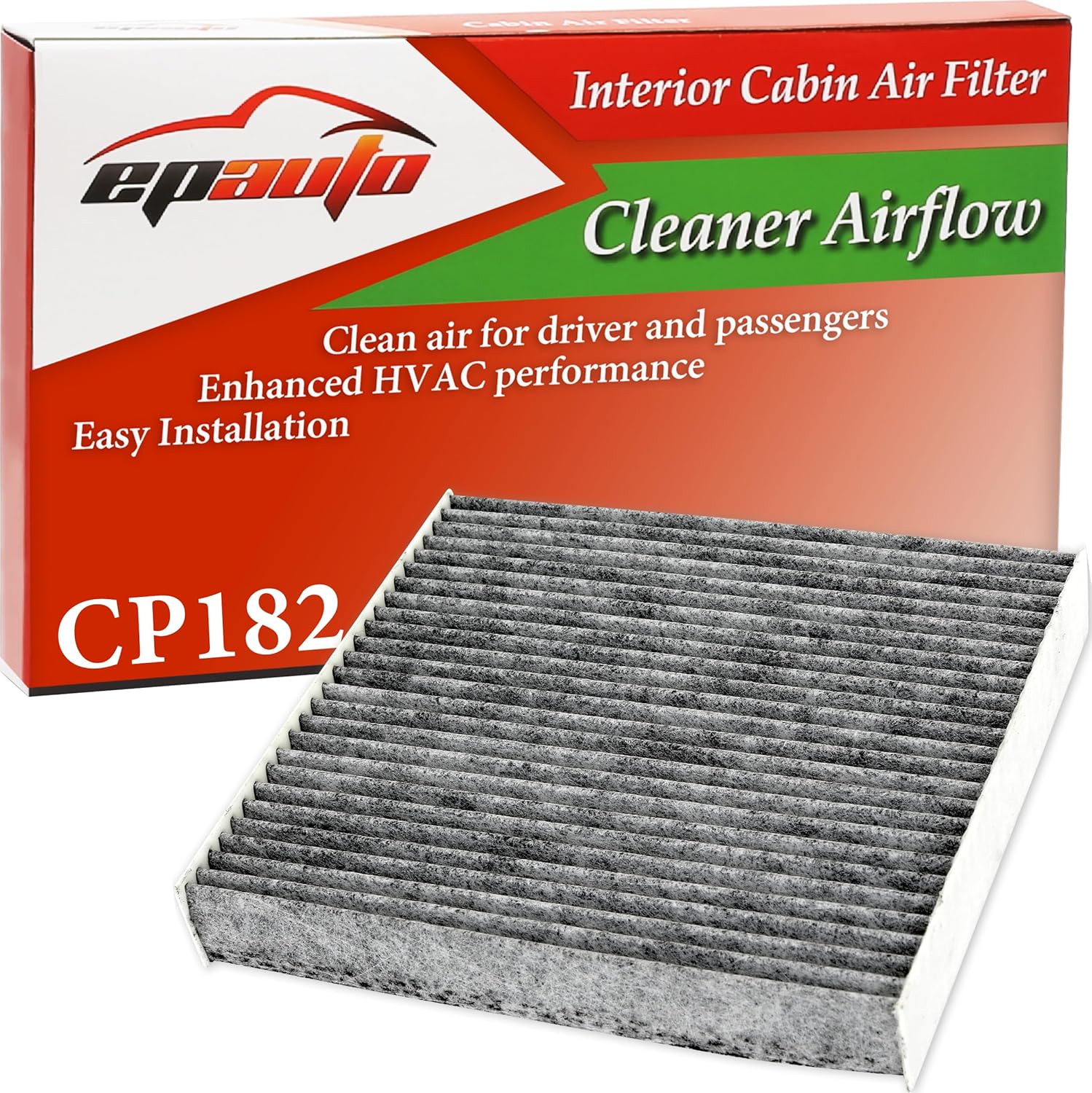
| Compatible models | Select Honda and Acura models 2009-2025 (see list) |
|---|---|
| Replacement for | FRAM CF11182 / Honda part 80292-TBA-A11 |
| Replacement interval | Every 12 months or 12,000 miles |
The EPAuto CP182 cabin air filter is a direct replacement-style filter for select Honda and Acura vehicles and is meant to be changed about once a year or every 12,000 miles. It installs behind the glove box and slides into the factory filter housing, so most users can swap it themselves in a few minutes. The filter combines pleated media with activated carbon to block dust, pollen, smog and cabin odors, which can noticeably reduce musty or polluted smells inside the car. Buyers report it fits well on many Civic and CR-V model years and delivers HVAC performance similar to factory parts at a lower cost. A small number of users needed to trim or reseat the filter for an exact fit on certain newer models, so double-check fitment for your specific year and inspect the housing before closing. For routine maintenance and frequent city driving where cabin air quality matters, this filter offers an inexpensive, effective option versus dealer parts.
Best for: Drivers who prioritize clean cabin air and want an affordable, ready-to-install replacement that most Civic owners can fit themselves without professional help.
Less Ideal for: Those who want guaranteed perfect fit with no trimming on every model year should consider buying directly from the vehicle manufacturer or checking exact OEM part cross-reference before purchasing.
- Activated carbon layer helps reduce odors and smog particles
- Designed to slide into the factory cabin filter housing for simple DIY replacement
- Compatible with a wide range of Honda and Acura model years listed by the manufacturer
- Lower-cost alternative to factory replacement while retaining comparable filtration performance
- Occasional reports of minor fitment adjustments needed on some model years
Verdict: A budget-friendly, activated-carbon cabin filter that delivers factory-style filtration and easy DIY installation for Civic drivers focused on cleaner cabin air and proven user satisfaction.
7. Puroma Cabin Air Filter Replacement (CP182 / CF11182)
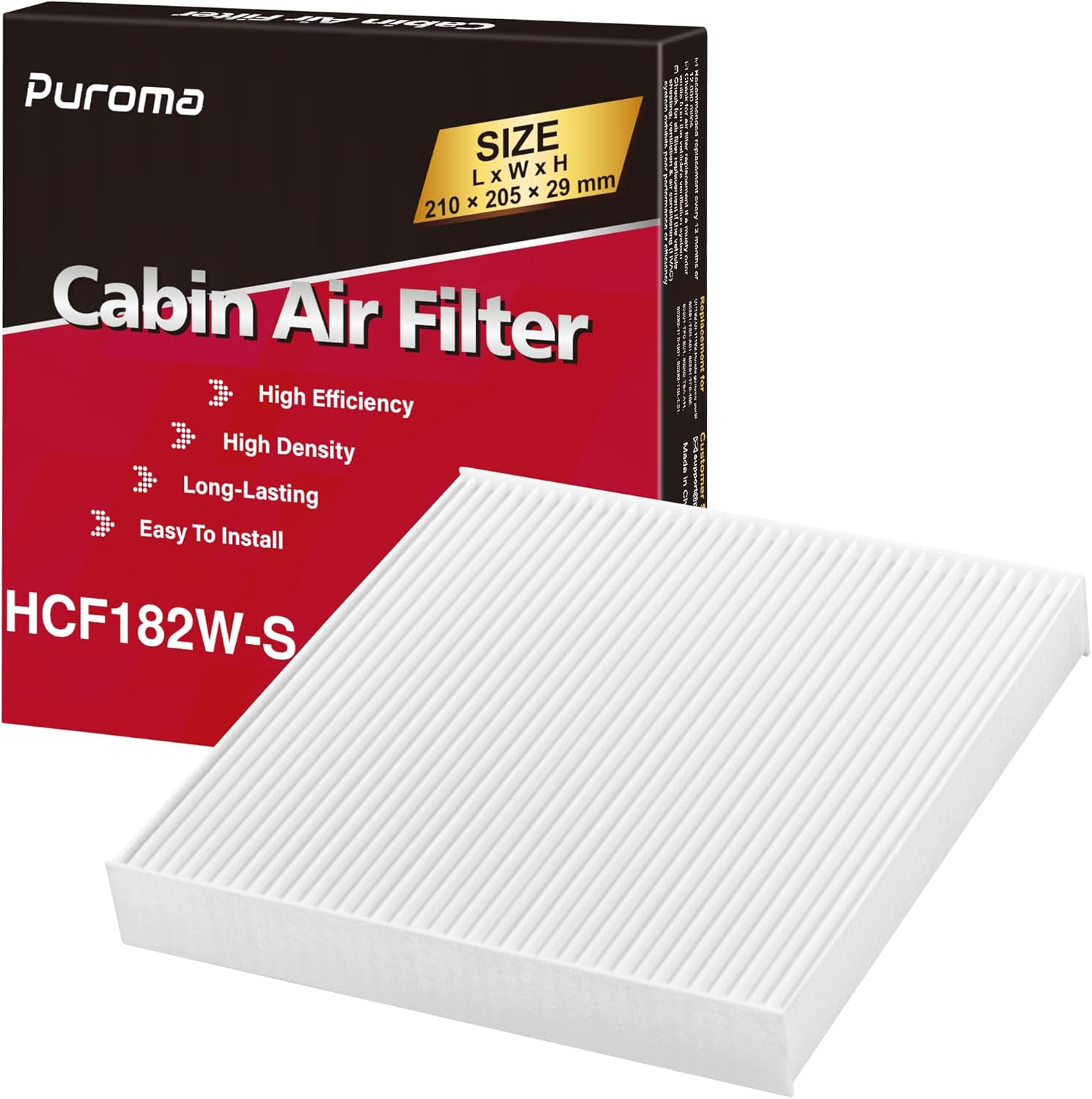
| Material Type | Fiberglass, Paper |
|---|---|
| Air Filter Construction | Pleated |
| Compatible Devices | Honda Civic, Clarity, CR-V, CR-Z, Fit, HR-V, Insight, Odyssey, Accord; Acura RDX, TLX, INTEGRA, MDX |
| Unit Count | 1.0 Count |
The Puroma cabin air filter is a direct-replacement pleated filter intended to keep pollen, dust, and odors out of the passenger compartment while maintaining HVAC airflow. Installed in minutes using the printed airflow arrow, it fits the CP182 / CF11182 application list and is suitable for routine owner maintenance. The filter uses multiple fiber layers and a close-meshed non-woven layer to capture particles and reduce stale smells, which helps the climate control system run efficiently. For typical drivers this means cleaner interior air and less strain on vents compared with a clogged filter. Replacement is recommended annually or every 12,000 miles under normal use and sooner in dusty or polluted conditions. The construction is paper and fiberglass-based pleats, so it performs like a standard disposable cabin filter but does not offer washable or long-life media. Buyers who prioritize simple, budget-friendly upkeep will appreciate the straightforward fit and easy swap, while those wanting high-end HEPA-level filtration or reusable filters should consider specialty alternatives.
Best for: Drivers who want a reliable, low-cost cabin filter that restores factory-level air filtration and is easy to install as part of regular maintenance.
Less Ideal for: Buyers seeking high-efficiency HEPA-level filtration or a reusable washable cabin filter should look at specialty or premium options instead.
- Multiple fiber layers and pleated construction help trap dust, pollen, and larger particles
- Designed for quick, tool-free replacement with an airflow arrow for correct installation
- Listed compatibility with many Honda and Acura models ensures a factory-fit replacement
- Helps maintain HVAC airflow and reduce stale odors to improve cabin comfort
- Filter media is disposable paper/fiberglass so it is not washable or reusable
Verdict: A straightforward, budget-friendly replacement that restores clean cabin airflow and is ideal for risk-averse owners who prefer a reliable factory-style filter.
Choosing the Right Honda Civic EX Air Filter: Key Factors to Consider
Fitment and Sealing
Correct fitment is essential for the Honda Civic EX because gaps or mismatched dimensions let unfiltered air bypass the media and reach the engine. A filter that is the right shape and size for the Civic EX airbox and includes a robust gasket or flange will form a tight seal and prevent leaks.
When inspecting a candidate, consider whether the pleat frame and outer flange align with the airbox seat and whether the filter requires any adapter or modification. Ease of installation matters as well; a filter that drops in cleanly reduces the chance of improper seating during routine replacement.
Filtration Efficiency
Filtration efficiency determines how well the media captures dust, pollen, and road grime before contaminants reach the intake tract. For the Civic EX, prioritize filters that specify particulate capture performance or use high-quality multi-layer media.
Better efficiency reduces abrasive wear on valves and cylinders and helps maintain sensor cleanliness. However, ultra-fine media can sometimes restrict airflow, so balance efficiency with acceptable flow characteristics for street driving.
Airflow and Engine Response
Airflow characteristics affect throttle responsiveness and fuel metering. A Civic EX that breathes more freely can feel peppier at low RPMs, but a filter that is too restrictive may reduce power and economy.
Look for filters that report low flow resistance or are designed to preserve stock airflow. For most Civic EX owners who drive primarily on streets and highways, the goal is to maintain near-stock intake flow while improving particulate capture.
Durability and Environmental Resistance
Durability influences how long the filter performs reliably between services. Civic EX owners in dusty or coastal areas should favor media and frames that resist moisture, collapse, and degradation.
Consider whether the filter material stands up to repeated exposure to contaminants and whether the frame is corrosion-resistant. Longer-lasting filters reduce the frequency of replacements but be mindful of cleaning requirements if the filter is reusable.
Maintenance and Serviceability
How easy the filter is to check, remove, and replace matters for routine maintenance. Civic EX airboxes should allow quick access without specialized tools; filters with clear orientation markers and simple gaskets simplify servicing.
Also consider whether the filter is disposable or washable and how that fits your maintenance schedule. Washable filters reduce recurring purchases but require correct cleaning and re-oiling procedures to avoid performance issues.
Regulatory and Warranty Considerations
Some filter types or installation methods can affect emissions or be restricted by vehicle warranty terms if they alter intake behavior. For Civic EX owners who are concerned about compliance, choose filters that maintain stock filtration function and do not require intake modifications.
Documented compatibility with Civic EX and clear installation instructions help ensure the change is reversible and does not inadvertently affect other systems.
When to Replace Your Engine Air Filter
Replacement intervals vary with driving conditions, but regular checks at routine service intervals help prevent heavy buildup. If you frequently drive in dusty or unpaved areas, inspect the filter more often and replace it when you see visible clogging or significant airflow restriction.
Symptoms of a clogged filter on a Civic EX include reduced throttle response, rough idle, or a drop in fuel economy. Replacing the engine air filter as part of scheduled maintenance restores proper airflow and can avoid downstream issues with sensors and the intake system.
- Inspect visually every 6 months or at every oil change in normal conditions.
- Check more often after extended drives on dirt roads or in construction zones.
- Replace immediately if the media is torn, oil-soaked, or visibly collapsed.
Engine Air Filter Vs Cabin Filter on the Civic EX
The engine air filter protects the intake and combustion chambers, while the cabin filter shields occupants from pollen and dust in the HVAC system. Both are important, but they serve distinct purposes and sit in different parts of the vehicle.
Maintaining both filters improves engine longevity and in-cabin air quality independently. The engine filter affects performance and engine wear, whereas the cabin filter primarily impacts occupant comfort and HVAC efficiency.
- Engine filter: focus on particulate capture and airflow for the intake.
- Cabin filter: focus on allergen and odor control for passenger comfort.
Choosing Between Disposable and Reusable Filters
Disposable pleated filters are simple and predictable: they are installed and replaced at intervals without special maintenance. Reusable filters reduce recurring purchases but require correct cleaning, drying, and re-oiling where applicable. For Civic EX owners, the decision often comes down to convenience versus long-term cost.
If you prefer low-maintenance care and straightforward replacement, choose a disposable option sized for the Civic EX airbox. If you are comfortable with service steps and want to reduce waste, a well-made reusable filter can be appropriate, provided you follow the manufacturer cleaning guidelines to avoid damaging the media.
- Disposable: minimal maintenance, predictable performance.
- Reusable: lower long-term cost potential, requires proper servicing.
How Filter Choice Affects Fuel Economy
A clean, correctly fitting engine air filter helps maintain optimal airflow and fuel metering, which supports steady fuel economy. Extremely restrictive filters or heavily clogged media can cause the engine to work harder, leading to measurable fuel consumption increases over time.
For Civic EX drivers prioritizing economy, favor filters that balance high filtration efficiency with low flow restriction and replace them on a schedule suited to local conditions.
- Maintain recommended replacement intervals to preserve economy.
- Avoid heavily restrictive media if fuel efficiency is a top priority.
Installation Tips for the Civic EX Airbox
Before installing a new filter, clean the airbox seating area to remove any loose debris. Ensure the filter is oriented correctly and the flange sits flush in the airbox to prevent bypass. Tighten any clips or latches evenly to maintain a consistent seal.
If the filter is reusable and requires oil, apply the correct amount and let it set per instructions before reinstalling. Over-oiling can contaminate the intake sensor and cause drivability issues, so follow the service guidance closely.
- Inspect the airbox for cracks or missing seals before installing a new filter.
- Fit the filter gently and confirm all clips engage fully to secure the lid.
Still looking for the perfect fit?
Select your Honda Civic configuration to see the most relevant Air Filters recommendations
How We Chose the Best Honda Civic EX Air Filter
We prioritized filters that meet the real-world needs of Honda Civic EX owners by applying practical, vehicle-specific criteria. First, fitment and sealing were mandatory filters: we favored designs that match the Civic EX airbox dimensions and include proper gaskets or pleat patterns to prevent bypass. Second, filtration efficiency and particle capture were key, focusing on media specifications or lab-grade MERV-equivalent claims where available. Third, airflow impact and engine breathing were evaluated to ensure the filter does not excessively restrict intake under normal driving conditions. Fourth, durability and environmental resistance were considered, including performance over typical service intervals and resistance to moisture and dust load. Fifth, maintenance and replacement ease factored into selection, favoring filters that are simple to access and install without special tools.We excluded any candidate that lacked clear fitment data for the Civic EX, showed poor sealing design, or relied on unsupported performance claims. The resulting list reflects parts that best balance protection, longevity, and maintenance convenience for this vehicle.
Our full evaluation process is outlined in our review methodology.
FAQ
How often should I change the engine air filter on a Honda Civic EX?
It depends on driving conditions. For normal city and highway use, inspect the filter every 6 months and replace it roughly every 12,000 to 15,000 miles. In dusty or off-road conditions, check and possibly replace it much sooner.
Can I install a reusable air filter in my Civic EX?
Yes, reusable filters can be used if they match the Civic EX airbox dimensions and sealing method. Be prepared to clean and service the filter correctly to avoid reduced performance or contamination of intake sensors.
Will a higher-efficiency filter hurt engine performance?
A higher-efficiency filter can slightly affect airflow if it is more restrictive, but many filters are engineered to maintain near-stock flow while improving particle capture. Choose an option that balances filtration with low restriction for best overall performance.
Does the cabin filter affect engine performance on the Civic EX?
No, the cabin filter only affects the HVAC system and occupant air quality. It does not influence engine breathing or performance because it is located in the ventilation path, not the intake tract.
How can I tell if the engine air filter is clogged?
Visible discoloration and compacted dust on the media indicate clogging. You may also notice reduced throttle response, rough idle, or a drop in fuel economy. If in doubt, remove and visually inspect the filter for heavy buildup.
Is it important to use an OEM-spec air filter for the Civic EX?
OEM-spec filters are engineered to the original dimensions and sealing standards, which provides consistent fit and performance. Aftermarket filters that match those specifications and demonstrate adequate filtration can also be suitable if they provide the same sealing and airflow characteristics.
Final Verdict
When selecting an air filter for a Honda Civic EX, prioritize correct fitment and a reliable seal to prevent unfiltered air from entering the engine. Balance filtration efficiency with airflow needs so the engine breathes properly while keeping contaminants out.Consider local driving conditions and maintenance preferences when choosing between disposable and reusable options. Focus on filters that clearly document fitment for the Civic EX and that match the service rhythm you prefer to maintain consistent performance and long-term engine protection.
Explore More:
- Check out all Honda Civic parts & accessories
- Explore Air Filters Maintenance & Repair Guides
- Explore Engine
- Browse all Auto Parts
