

Note: This article contains affiliate links. If you click on these links and make a purchase, I may earn a small commission at no extra cost to you. This helps support my research and content. Read my full affiliate disclosure here.
If you own a Honda Civic LX, the engine air filter is a small part that has a big effect on performance, fuel economy, and long-term engine health. Selecting the right Honda Civic LX air filter ensures proper airflow to the intake while trapping dust and contaminants that would otherwise accelerate wear. This guide covers the top shortlisted air filters specifically for the Civic LX, highlighting how they perform on filtration, fitment, and maintenance needs for everyday driving.Below you will find our top picks with clear notes on the attributes that matter most, plus guidance on sizing, replacement intervals, and installation considerations to help you pick the right filter for your Civic LX.
Looking for other parts? See all Honda Civic parts & accessories.
Top Picks at a Glance
| Best Overall The best all-around choice for most situations | PHILTOP CA12051 Engine Air Filter (vehicle-specific fit) |  |
| Best Quality Built to a higher standard if you want something more solid | K&N High-Flow Replacement Engine Air Filter (33-5045) |  |
| Best Value The sweet spot between price and what you get | Carory AF151 Engine Air Filter (Replacement for Honda 17220-5BA-A00) |  |
| Best Budget The cheapest option that still gets the job done reliably | BDFHYK CA12051 Engine Air Filter (replacement for 17220-5BA-A00) |  |
| Highest Rated A top-rated pick with lots of positive feedback | ECOGARD XA10496 Premium Engine Air Filter |  |
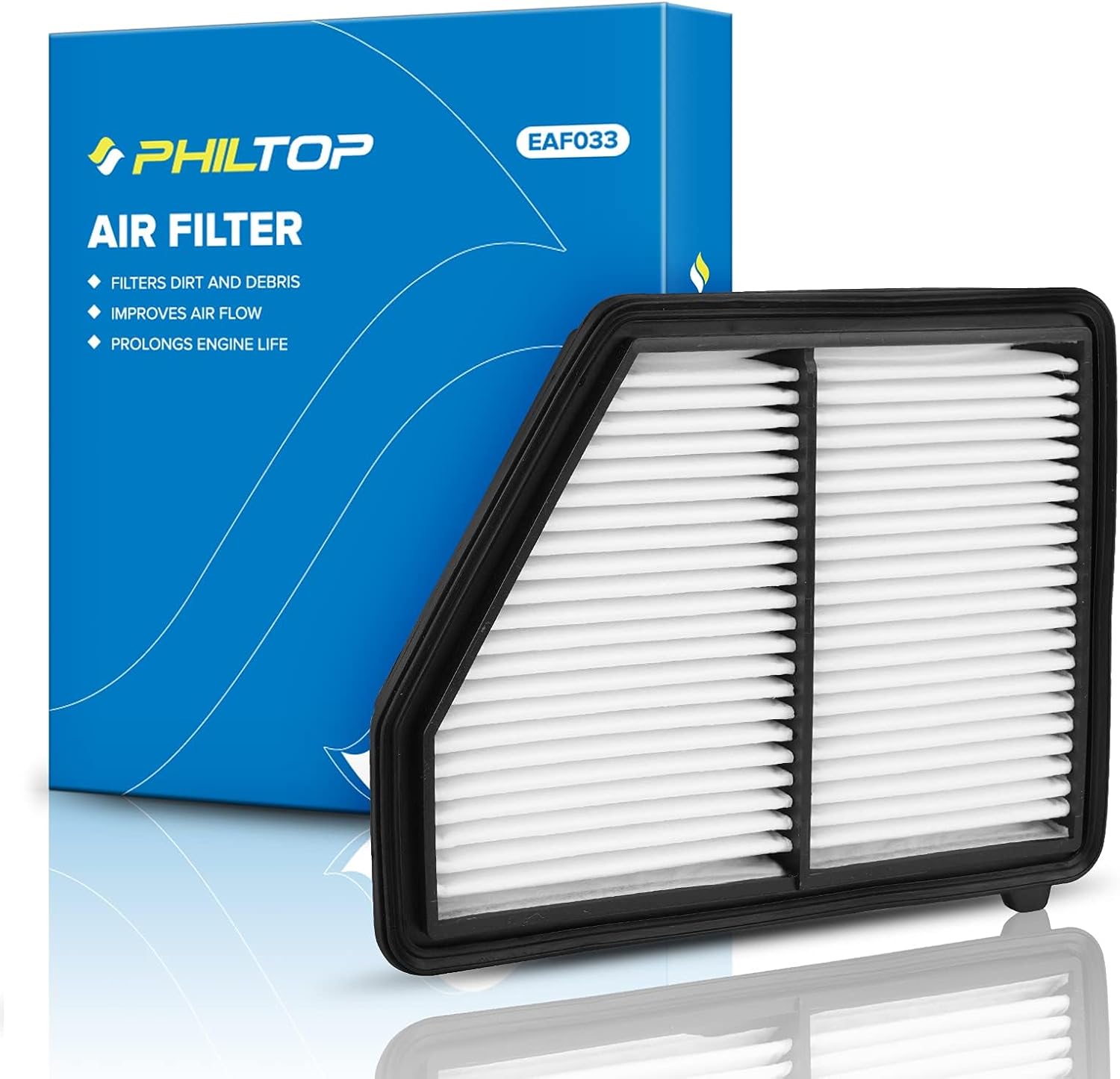
1. PHILTOP CA12051 Engine Air Filter (vehicle-specific fit)
| Fitment | Honda Civic 2016-2026 2.0L; HR-V 2023-2025 |
|---|---|
| Model Number | CA12051 |
| Included Components | 1x Engine Air Filter, 1x Product Manual |
| Manufacturer Warranty Description | 1 YEAR |
This PHILTOP CA12051 is a direct-fit replacement air filter designed for Honda Civic 2016–2026 2.0L and HR-V 2023–2025 applications. It uses a three-stage progressive density media with an outer layer for large debris, a middle layer for fine dust, and an inner nanofiber layer to capture ultrafine particles, which helps keep intake air clean. Installation follows factory-style dimensions so it snaps into the stock airbox without tools and can be changed in about five minutes. Cleaner intake air supports steadier combustion and can modestly improve fuel economy and throttle response compared with a clogged filter. The unit comes as a single filter with a product manual and a one-year warranty. Limitations are typical of paper-and-fiber replacement filters: it is disposable rather than washable and requires regular replacement—Philtop recommends yearly or every 12,000 miles, with shorter intervals in dusty conditions.
Best for: Drivers who want a straightforward, factory-style replacement that prioritizes reliable filtration and easy self-installation for routine Civic maintenance.
Less Ideal for: Buyers seeking a reusable or performance-oriented washable filter or those who want aftermarket airflow gains should consider other filter types.
- Multi-stage media with nanofiber inner layer for improved fine particle capture
- Vehicle-specific fit for direct, tool-free installation
- May help maintain combustion efficiency and modestly improve fuel economy
- Includes product manual and backed by a one-year manufacturer warranty
- Disposable design requires periodic replacement and is not washable
Verdict: A simple, vehicle-specific replacement that delivers reliable multi-stage filtration and easy tool-free installation for routine Civic maintenance.
2. K&N High-Flow Replacement Engine Air Filter (33-5045)

| Model Number | 33-5045 |
|---|---|
| Included Components | Air filter, Warranty card, Decal(2) |
| Manufacturer | K&N Engineering |
| Manufacturer Part Number | 33-5045 |
This K&N high-flow replacement air filter is a washable, lifetime filter engineered to boost intake airflow and support modest gains in horsepower and throttle response on compatible Honda Civics. It drops into the factory air box and is pre-oiled, so installation typically takes only minutes with basic hand tools. The filter uses multilayer cotton gauze media treated with a tackifier to trap contaminants while allowing greater airflow than many paper filters, and K&N rates cleaning intervals at roughly every 75,000 miles under normal highway driving. Because it is reusable, it reduces disposable-filter waste and can lower long-term ownership cost despite a higher upfront price. Practical considerations include the need to follow K&N cleaning and re-oiling procedures to maintain filtration performance, and some users report that high-flow filters can slightly change intake sound or affect MAF readings on vehicles with very sensitive sensors. The product comes with a long limited warranty and is built for repeated service rather than one-time replacement.
Best for: Buyers focused on gaining a bit more engine responsiveness and airflow without complicated modifications, who prefer a reusable component and lower long-term operating cost.
Less Ideal for: Drivers who want a totally maintenance-free disposable filter or who prefer guaranteed zero impact on sensor calibration should consider alternatives.
- Washable and reusable design reduces recurring filter purchases and landfill waste
- Multilayer cotton gauze media engineered to allow increased airflow for improved throttle response
- Pre-oiled, vehicle-specific fit for quick installation into the factory air box
- Long cleaning interval under normal highway use reduces maintenance frequency
- Requires periodic cleaning and re-oiling per manufacturer instructions to retain filtration performance
Verdict: Choose this K&N filter if you want a washable, vehicle-specific upgrade that improves airflow and throttle response while cutting long-term filter costs.
3. Carory AF151 Engine Air Filter (Replacement for Honda 17220-5BA-A00)

| Fit Type | Vehicle Specific Fit |
|---|---|
| Product Grade | Replacement Part |
| OEM Equivalent Part Number | 17220-5BA-A00 |
The Carory AF151 is a direct-fit replacement engine air filter made to match the factory-style element used on many Honda Civics (gas) and HR-V models. It installs in minutes with no tools: remove the airbox cover, swap the old element for this one and reseal. The pleated media aims to keep dust and debris out of the intake while preserving airflow for steady combustion, which helps maintain throttle response and fuel economy between service intervals. Packaging and build appear similar to the original with a consistent seal around the frame, so fitment is usually straightforward. This unit is vehicle-specific, so it avoids trimming or modifications that universal filters require. Limitations are typical for paper-style replacements: it is a disposable filter that must be changed on schedule and offers no performance gains over factory parts. If you need higher filtration life or a washable performance element, look at specialty options instead.
Best for: Buyers who prioritize dependable, low-effort maintenance and want a low-cost replacement that fits like the factory part for routine air filter changes.
Less Ideal for: Shoppers seeking washable, long-life, or performance-oriented air filters should consider reusable or high-flow aftermarket elements instead.
- Vehicle-specific fit for Honda Civic (gas) and HR-V models simplifies installation
- Pleated filter media balances filtration and airflow to support engine efficiency
- Frame and seal mimic factory shape to reduce fitment gaps and air bypass
- Affordable replacement that matches OEM form and function
- Disposable paper-style element with no washable or reusable option
Verdict: Choose this Carory AF151 when you want an inexpensive, factory-style replacement that fits Honda Civic gas models and restores factory airflow quickly.
4. BDFHYK CA12051 Engine Air Filter (replacement for 17220-5BA-A00)

| Model Number | CA12051 |
|---|---|
| Replaces Part Numbers | 17220-5BA-A00, AF5264, SA12051, PA99117 |
| Fit Type | Vehicle Specific Fit |
| Included Components | Engine Air Filter |
The BDFHYK CA12051 is a direct-fit replacement engine air filter made for 2.0L Honda Civic and select HR‑V model years. It uses pleated microporous filter media to capture dust and particles before they reach the intake, helping maintain combustion efficiency and protecting the engine over time. Installation is straightforward and several buyers report a perfect fit and quick swap in minutes, making it a simple DIY maintenance item. As a budget-focused alternative to dealer parts, this filter delivers factory-style fit and function at a lower cost while matching several OEM part numbers. The package is a single filter with a short manufacturer warranty period. If you need extended guarantees or branded aftermarket filtration with long-term testing data, this option may feel basic, but for routine annual or 12,000‑mile replacements it offers a cost-effective balance of fit, filtration, and ease of installation.
Best for: Buyers who prioritize an affordable, reliable replacement filter that fits Honda Civic LX 2.0L engines and want an easy DIY swap to keep routine maintenance costs low.
Less Ideal for: Drivers seeking premium branded filters with extended warranties or specialized high‑performance filtration should consider higher-end alternatives.
- Vehicle-specific fit for Honda Civic 2016–2024 2.0L and HR‑V 2023–2024 2.0L, simplifying installation
- Pleated microporous media traps common intake particles to protect the engine and help maintain performance
- Consistently reported good fit and easy, minutes‑long installation for DIY maintenance
- Lower cost than dealer replacement filters while matching multiple OEM part numbers
- Manufacturer warranty period is short at three months
Verdict: A budget-friendly, vehicle-specific replacement that delivers factory-quality fit and reliable filtration for Honda Civic LX 2.0L routine maintenance.
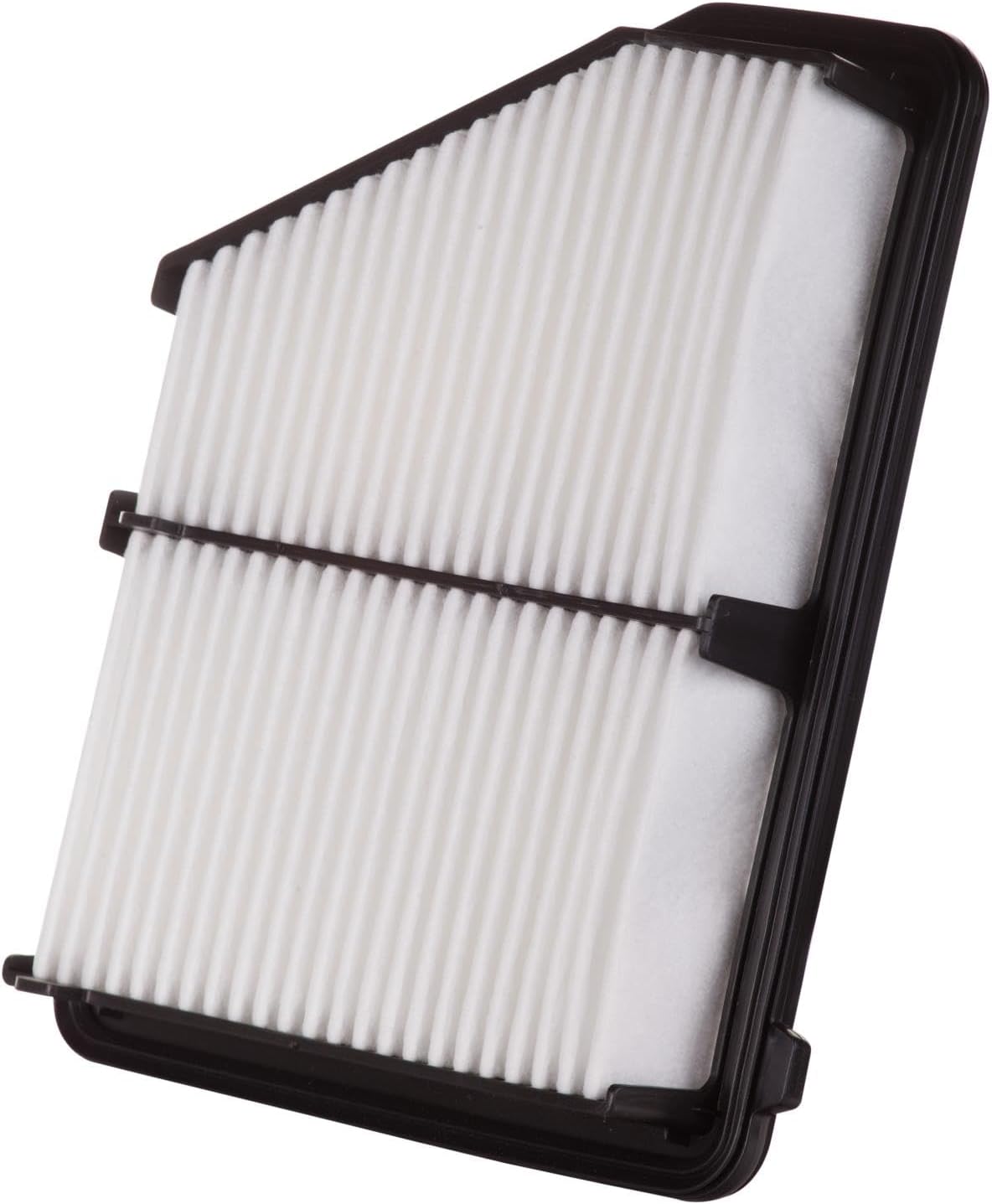
5. ECOGARD XA10496 Premium Engine Air Filter
| Fit Type | Vehicle Specific Fit |
|---|---|
| Product Grade | Performance Part |
| Recommended Service Interval | 12,000 miles |
| Included Components | Engine Air Filter |
The ECOGARD XA10496 is a replacement engine air filter made to fit certain Honda Civics and similar vehicles; it captures dust, pollen, and road debris before air reaches the intake. Installation is straightforward for basic DIY maintenance — the filter slips into the factory airbox and usually requires only a few clips or screws to secure. The design uses high-capacity filter media intended to maintain steady airflow and protect the engine between service intervals, and the manufacturer recommends replacement about every 12,000 miles. Practical benefits include easy fitment for compatible Civics, reliable filtration that helps preserve throttle response and fuel economy, and a low-cost way to avoid dealer visits. The filter is a disposable performance-grade part, so it is meant to be replaced rather than cleaned and reused, and longevity will depend on driving conditions and maintenance frequency. Buyers who prioritize long service life or washable filters should consider other options.
Best for: A practical buyer who wants a reliable, factory-style replacement to keep a Honda Civic running cleanly with minimal fuss and routine DIY maintenance.
Less Ideal for: Drivers who prefer long-life washable filters or who want a high-end performance upgrade beyond factory-level filtration should look at other filter types.
- Vehicle-specific fit for compatible Honda Civic models for straightforward installation
- High-capacity media captures common road particles to protect the intake
- Helps maintain consistent engine response and fuel efficiency between services
- Easy DIY replacement that typically takes only a few minutes
- Designed as a replaceable performance-grade filter rather than a washable or reusable element
Verdict: Choose this filter if you want an affordable, vehicle-specific replacement that restores factory-quality filtration and keeps a Civic running reliably between service intervals.
Choosing the Right Honda Civic LX Air Filter: Key Factors to Consider
Filtration Efficiency
Filtration efficiency describes how well an air filter captures airborne particles before they reach the intake. Higher efficiency reduces abrasive dust and soot entering the engine, which helps preserve internal components like cylinders and valves and can reduce long-term wear.
For a Honda Civic LX used mainly on paved roads, choose a filter rated to trap fine particulates while still allowing adequate airflow. Extremely restrictive media can starve the engine of air, while overly porous media offers little protection. Look for published particle capture metrics or standardized test references to compare options.
Fitment and Seal
Correct fitment is critical for the Civic LX because any gaps or poor sealing allow unfiltered air bypass. A filter that matches the OEM dimensions and sealing surface prevents dirt from entering around the edges and ensures consistent airflow through the filter media.
Inspect the filter flange and gasket design when deciding. Filters with a robust rubber sealing lip and confirmed dimensional specs reduce the chance of installation problems or air leaks. Good fitment also simplifies DIY replacement without modification.
Airflow and Performance Tradeoff
Airflow is about how easily air moves through the filter media into the intake. For everyday driving in a Civic LX, you want a balance: sufficient airflow to maintain throttle response and fuel efficiency, paired with effective filtration.
Some high-filtration media can be more restrictive and slightly affect fuel economy or throttle feel. Conversely, very high-flow designs may compromise filtration. Consider what matters most for your driving—economy and smooth response, or maximum filtration for dusty conditions.
Durability and Service Life
Durability affects how often you will need to replace the air filter. Disposable paper elements are inexpensive but may require more frequent changes. Higher-grade media or washable filters often last longer between services but can require cleaning procedures and careful re-oiling where applicable.
Assess your typical driving environment and maintenance willingness. If you drive in dusty or gravel-heavy areas, prioritize longer-lasting media or shorter service intervals. For mostly urban, paved driving, standard replacement schedules are often sufficient.
Maintenance and Ease of Installation
Ease of installation matters for owners who want to perform the replacement themselves. The Civic LX usually allows simple access to the airbox, so choose a filter that installs cleanly without trimming or modification. Clear instructions or simple form-factor replacements reduce the likelihood of improper installation.
Maintenance also includes whether the filter requires special cleaning or re-oiling. Reusable filters that need re-oiling introduce an additional step and risk of over-oiling, which can affect sensors. Disposable filters reduce that risk but increase recurring replacement needs.
Material and Construction Quality
Material quality influences both filtration performance and how the product ages. Look for consistent media density, a firm frame that resists deformation, and a sealing surface that maintains integrity through heat cycles and vibration.
Inferior construction can lead to media collapse, torn seals, or quick degradation under engine bay conditions. For the Civic LX, materials that stand up to humidity and regular temperature swings will provide more reliable protection over the service life.
Sizing and Confirming Fit for the Civic LX
Before buying an air filter, confirm the exact size and shape needed for the Honda Civic LX air filter location. The Civic LX intake volume and airbox geometry require a filter that matches the OEM outline to ensure a proper seal and unobstructed airflow. Check the part reference or the airbox lid to confirm physical dimensions and orientation.
If a replacement lists multiple fitments, verify it specifically includes the Civic LX configuration. When in doubt, measure the current element and compare gasket contact surfaces to the replacement to avoid mismatches.
- Measure length, width, and flange depth of the existing element.
- Compare gasket contact area and corner radius to the replacement.
- Confirm airbox orientation so pleats align with airflow direction.
When to Replace Your Civic LX Air Filter
Replacement frequency varies with driving conditions. Under typical city and highway use, many Civic owners replace the engine air filter every 12,000 to 30,000 miles, but dusty or off-road conditions shorten that interval. Visual inspection is the best immediate indicator: a dark, clogged element needs replacement regardless of mileage.
Also consider fuel economy and throttle response. If you notice diminished acceleration or reduced fuel efficiency, inspect the air filter as part of basic troubleshooting.
- Check the filter at each oil change or every 6 months.
- Replace immediately after heavy dusty use or visible contamination.
- Follow manufacturer guidance for reusable filter cleaning schedules.
DIY Replacement Tips for the Honda Civic LX
Replacing the air filter in a Civic LX is usually straightforward and can be completed with basic hand tools. Work on a cool engine and keep the work area clean to avoid introducing extra dirt into the intake. Remove the airbox cover carefully and note the orientation of the old element so you install the replacement correctly.
When installing, ensure the gasket seats evenly around the perimeter and that any clips or screws are tightened to prevent movement. After installation, run the engine briefly and listen for unusual intake noises that could indicate an improper seal.
- Keep the edge of the airbox clean before seating the new filter.
- Do not force a filter that appears oversized; verify dimensions first.
- Retighten clips evenly to maintain a uniform seal.
Effect of Filter Choice on Fuel Economy
Filter media can influence airflow resistance and therefore marginally affect fuel economy. In the Civic LX, small changes in intake restriction may show up as slight differences in efficiency, more noticeable under steady highway cruising or hard acceleration.
Choose a filter that balances low restriction with good particulate capture to avoid trading long-term engine health for a small short-term economy gain. For owners focused on maximizing miles per gallon, prioritize moderate restriction with proven filtration metrics.
- High-flow, low-filtration media can slightly increase airflow but may sacrifice protection.
- Well-designed stock-replacement media often offers the best overall economy/filtration compromise.
Understanding Reusable Vs Disposable Filters
Reusable filters can reduce waste and may offer longer service intervals if cleaned properly, but they typically require a specific cleaning and, in some cases, re-oiling process. Over-oiling a reusable filter can contaminate intake sensors, so follow maintenance instructions precisely.
Disposable paper and synthetic filters require no cleaning and have predictable replacement intervals. They are often the safest option for owners who prefer minimal maintenance and consistent performance without the risk of improper servicing.
- Reusable: potential long-term savings, requires cleaning and care.
- Disposable: consistent performance, replace more frequently but maintenance-free.
Common Installation Mistakes to Avoid
Forgetting to seat the gasket fully is a frequent cause of unfiltered air entering the intake. Always inspect the sealing surface after installation and press around the perimeter to confirm even contact. Another common error is improper pleat orientation; pleats should align with the airflow path and not be folded or compressed.
Avoid over-tightening clips or screws that can warp the airbox or damage the filter frame. If the filter seems loose, recheck fitment dimensions rather than forcing adjustments.
- Do not leave the airbox cover unsecured after replacing the element.
- Avoid using non-compatible adapters or cutting filters to fit.
Still looking for the perfect fit?
Select your Honda Civic configuration to see the most relevant Air Filters recommendations
How We Chose the Best Honda Civic LX Air Filter
We applied a focused set of editorial filters to shortlist the seven air filters featured for the Honda Civic LX. Primary evaluation criteria included filtration efficiency and particle capture ratings, since effective contaminant removal directly impacts engine longevity. Fitment and dimensional accuracy were checked against official Civic LX intake specifications to avoid clearance and sealing problems. Airflow characteristics and any reported impact on throttle response or fuel economy were considered to balance protection with performance. Durability and material quality were assessed for expected service life, plus ease of installation for owners performing DIY replacements. We also evaluated maintenance needs, such as whether the element is reusable or disposable, and the availability of clear replacement guidance.Excluded items included filters that do not list explicit compatibility with the Civic LX configuration, products lacking basic filtration spec information, and options with recurrent reports of poor sealing or fit issues. The final picks prioritize documented fitment, measurable filtration performance, and reliable construction suited to daily driving and typical road conditions.
Our full evaluation process is outlined in our review methodology.
FAQ
How often should I change the Honda Civic LX air filter?
It depends on driving conditions. For typical city and highway use, inspect the filter every 12,000 miles and consider replacement between 12,000 and 30,000 miles. Replace sooner if you drive frequently on dusty roads or notice reduced performance.
Can I install a reusable filter in my Civic LX?
Yes, reusable filters can be installed if they are sized and shaped for the Civic LX airbox. Keep in mind they require proper cleaning and, if applicable, careful re-oiling to avoid contaminating intake sensors. Follow the manufacturer cleaning intervals closely.
Will a different air filter affect fuel economy?
Filters that change airflow restriction can have a small impact on fuel economy. A well-matched replacement that balances filtration and airflow typically produces no noticeable change for everyday driving, while extreme high-flow or very restrictive options may alter efficiency slightly.
How can I tell if my air filter is clogged?
Visual inspection is the simplest test: a dark, packed pleat pattern or visible dirt indicates clogging. You may also notice reduced throttle response, rough idle, or decreased fuel economy. If unsure, compare airflow through the filter area or replace it and observe any performance changes.
Should I choose OEM or aftermarket filters for the Civic LX?
Both OEM-equivalent and aftermarket filters can be suitable if they meet the Civic LX fitment and filtration standards. Prioritize filters with documented dimensions, proper sealing design, and clear filtration metrics rather than relying solely on label claims.
Does the engine air filter affect cabin air quality?
The engine air filter and cabin air filter serve different systems. The engine filter protects the intake and engine internals, so its condition does not directly filter cabin air. Maintain both filters on their recommended schedules for overall vehicle air quality.
Final Verdict
Choosing the right Honda Civic LX air filter comes down to balancing filtration efficiency, proper fitment, and maintenance convenience. Prioritize a filter that seals correctly in the Civic LX airbox and offers proven particle capture without excessive airflow restriction. For most daily drivers, a reliable OEM-style replacement provides the best compromise between protection and ease of service. If you face dusty conditions or prefer fewer replacements, consider higher-durability media while keeping cleaning and maintenance requirements in mind.
Explore More:
- Check out all Honda Civic parts & accessories
- Explore Air Filters Maintenance & Repair Guides
- Explore Engine
- Browse all Auto Parts
