

Note: This article contains affiliate links. If you click on these links and make a purchase, I may earn a small commission at no extra cost to you. This helps support my research and content. Read my full affiliate disclosure here.
When you own a 2022-present Honda Civic, keeping the intake clean is one of the simplest ways to protect the engine and maintain performance. The right air filter reduces contaminant ingestion while preserving airflow for fuel efficiency and drivability. This guide zeroes in on the top options specifically suited for the Civic's 2022-present chassis (FE and FL) and explains the tradeoffs that matter for daily driving and light performance needs.Below you will find a curated shortlist of the best air filters for this Civic generation along with the evaluation criteria we used. Read on to see which filter type fits your maintenance priorities and driving habits.
Looking for other parts? See all Honda Civic parts & accessories.
Top Picks at a Glance
| Best Overall The best all-around choice for most situations | Forccord Cabin and Engine Air Filter Kit for Honda Civic 2.0L (2016–2026) and HR-V 2.0L (2023–2026) |  |
| Best Quality Built to a higher standard if you want something more solid | K&N 33-5045 High-Flow Washable Engine Air Filter |  |
| Best Value The sweet spot between price and what you get | KAX Premium Engine Air Filter CA12051 (replacement for Honda Civic 2016–2026, HR-V 2023–2026) |  |
| Best Budget The cheapest option that still gets the job done reliably | Carory AF151 Engine Air Filter (replacement for Honda 17220-5BA-A00) |  |
| Highest Rated A top-rated pick with lots of positive feedback | PHILTOP CA12051 Engine Air Filter (compatible with Honda Civic 2016–2026, HR-V 2023–2025) |  |
| Most Popular A crowd favorite that many people choose with confidence | EPAuto CP182 Cabin Air Filter (Fits select Honda/Acura models) |  |
| Best Seller A high-volume bestseller chosen again and again | RVgolf Engine and Cabin Air Filter Kit for Honda 1.5L (Civic 2022-2026, Accord/CR-V/Integra 2023-2026) |  |
1. Forccord Cabin and Engine Air Filter Kit for Honda Civic 2.0L (2016–2026) and HR-V 2.0L (2023–2026)

| Compatible models | Honda Civic 2016–2026 2.0L; Honda HR‑V 2023–2026 2.0L |
|---|---|
| Cabin filter replacement part | CF11182, 80292‑TGL‑E01, 80292‑TF0‑G01 |
| Engine filter replacement part | 17220‑5BA‑A00, CA12051, WA10416 |
| Unit count | 2.0 Count |
| Manufacturer warranty | 1 Year |
This Forccord combo supplies both the cabin and engine intake filters matched to Honda Civic 2.0L naturally aspirated models and recent HR‑V 2.0L trims. The cabin filter uses a multilayer design with activated carbon and melt‑blown layers to cut odors, pollen, and fine particles, while the engine filter uses high‑precision HV filter paper intended to trap dust and debris and extend service life. Installation is straightforward for a DIYer — cabin filters are accessible behind the glove box and the engine element drops into the airbox — and the listing includes reference OEM part numbers to confirm fit. The maker claims longer life than standard replacements and many user reports note improved cabin air quality and fitment at a lower cost than dealer parts. Watch for occasional fitment inconsistencies reported on nonlisted models and rare quality control complaints about damaged elements on arrival. If you value an affordable, vehicle‑specific filter pair that refreshes interior air and protects the engine, this kit covers those basics well for the specified Civic models.
Best for: Drivers who want an affordable, vehicle‑matched replacement pair to improve cabin air quality and protect the engine while doing the work themselves.
Less Ideal for: Anyone who needs filters for turbocharged, hybrid, or Type R Civic variants or who prefers factory dealer parts and warranty-backed service replacements.
- Includes both cabin and engine filters in one vehicle‑specific kit for convenience
- Activated carbon and multilayer cabin media reduce odors, pollen, and fine particles
- Engine filter uses higher‑precision HV filter paper for improved filtration and claimed longer life
- Easy DIY installation with common access points and OEM reference numbers for verification
- Not compatible with Civic 1.5L, Type R, hybrid, or turbocharged engines and specific trims
- Some buyers reported occasional fitment issues or damaged filters on delivery
Verdict: A cost‑effective, vehicle‑specific cabin and engine filter kit that improves interior air and engine protection for naturally aspirated Civic 2.0L models while being easy for owners to install themselves.
2. K&N 33-5045 High-Flow Washable Engine Air Filter

| Brand | K&N |
|---|---|
| Model Number | 33-5045 |
| Fit Type | Vehicle Specific Fit |
| Item Type Name | Replacement Air Filter |
| Manufacturer Warranty Description | 1,000,000 Miles |
The K&N 33-5045 is a vehicle-specific, washable engine air filter built to increase intake airflow and support modest horsepower and throttle response gains in daily-driven Hondas. It replaces the factory paper element and drops into the stock air box, so installation takes only a few minutes with basic hand tools. The filter uses multilayer cotton gauze with a tackifying treatment to trap contaminants while allowing higher flow than many disposable filters, and K&N says cleaning is only needed about every 75,000 miles under normal highway use. Because it is reusable, the filter reduces landfill waste and can save money over time compared with repeated paper filter purchases. Buyers should note this is a performance-oriented replacement rather than a cold-air intake; gains are typically incremental and depend on the engine and tune. Also, washable filters require periodic servicing and correct re-oiling to keep filtration working as intended.
Best for: Buyers who prioritize incremental intake flow and longevity over disposable filters and want a quick, factory-box upgrade to sharpen throttle response on daily-driven Civic models.
Less Ideal for: Drivers seeking large horsepower gains from intake modifications or those who prefer maintenance-free disposable filters should consider other options.
- Vehicle-specific fit for easy drop-in installation
- Washable and reusable design reduces waste and long-term replacement cost
- Multilayer cotton gauze media balances airflow improvement with particle trapping
- Long recommended service interval under normal highway driving
- Backed by a long limited warranty for durability
- Performance gains are incremental and depend on vehicle setup rather than dramatic power increases
- Requires periodic cleaning and proper re-oiling to maintain filtration performance
Verdict: Choose this washable K&N filter when you want a simple, factory-fit upgrade that boosts airflow and lasts for the life of the vehicle.
3. KAX Premium Engine Air Filter CA12051 (replacement for Honda Civic 2016–2026, HR-V 2023–2026)

| Model Number | CA12051 |
|---|---|
| Fit Type | Vehicle Specific Fit |
| Included Components | 1x CA12051 Engine Air Filter |
| Manufacturer Warranty Description | 1 year |
The KAX CA12051 is a direct-fit replacement engine air filter built to match the factory size and sealing surface for select Honda Civics and HR-Vs. It uses layered filter media and high-density electrostatic cotton fibers to capture fine dust and particles while maintaining airflow, which the brand says improves acceleration and fuel efficiency. Typical use is straightforward: remove the old panel filter and drop in the KAX unit—no modification required. Notable features include a claimed 99.9% filtration efficiency, increased dust-holding capacity compared with standard paper filters, and an advertised service interval up to about 20,000 miles. The practical benefits are cleaner intake air, better engine protection, and potentially steadier performance between scheduled changes. Limitations are that it is not washable or reusable and longevity claims are manufacturer-stated rather than independently verified, so routine inspection is still recommended. The product comes as a single filter with a one-year manufacturer warranty.
Best for: Buyers who prioritize straightforward, cost-effective maintenance and want a higher-filtration, longer-life replacement that installs like a factory part to protect engine health between services.
Less Ideal for: Drivers seeking a reusable or wash-and-reuse performance filter or those who prefer filters validated by independent third-party lab data should consider other options.
- Vehicle-specific fit and frame sized to match factory sealing surface for easy drop-in replacement
- Multi-layer filter media and electrostatic fibers for high particle capture and increased dust-holding capacity
- Designed to preserve airflow to the engine to help maintain acceleration and fuel efficiency
- Single-unit packaging with clear part references for straightforward parts matching
- Not washable or reusable, so it must be replaced at service intervals
- Longevity and performance claims are manufacturer-provided and may vary by driving conditions
Verdict: A practical, direct-fit replacement that boosts filtration and dust capacity for Honda Civic owners who want better engine protection with easy installation.
4. Carory AF151 Engine Air Filter (replacement for Honda 17220-5BA-A00)

| Fit Type | Vehicle Specific Fit |
|---|---|
| Replacement For | Honda 17220-5BA-A00 |
| Product Grade | Replacement Part |
| Applicable Models | Civic (2016-2025), HR-V (2023-2025) |
The Carory AF151 is a direct-fit replacement engine air filter built to mirror the factory unit for Honda Civic gas models (2016–2025) and HR-V (2023–2025). It installs quickly in the airbox with no tools and provides the same pleated filtration area and sealing profile as the original, so you can expect straightforward swap-in maintenance. The listing references the OEM number 17220-5BA-A00 and multiple cross-reference part numbers, which simplifies matching to your vehicle. In use the filter is intended to keep consistent airflow to support fuel combustion and engine responsiveness while trapping dirt and debris. Practical benefits are easy, fast installation, economy compared with dealer parts, and a fit that reviewers report matches factory shape and seal. Limitations are that this is a replacement-grade aftermarket part rather than a performance or long-life specialty filter, so interval and longevity depend on driving conditions and routine service schedules.
Best for: Buyers who want a low-cost, no-fuss replacement that fits like the factory filter and restores proper airflow for regular driving and scheduled maintenance.
Less Ideal for: Drivers seeking performance upgrades, reusable filters, or extended service intervals should consider specialty or premium filter options instead.
- Vehicle-specific fit matched to Honda OEM part number for simple install and reliable sealing
- Quick, tool-free installation that most owners can do in minutes
- Affordable replacement option compared with dealer-sourced filters
- Designed to maintain steady airflow for normal engine efficiency
- Not a high-performance or washable long-life filter; intended as a standard replacement part
Verdict: A budget-friendly, factory-fit replacement that restores correct airflow and seal for 2022-present Honda Civic maintenance needs.
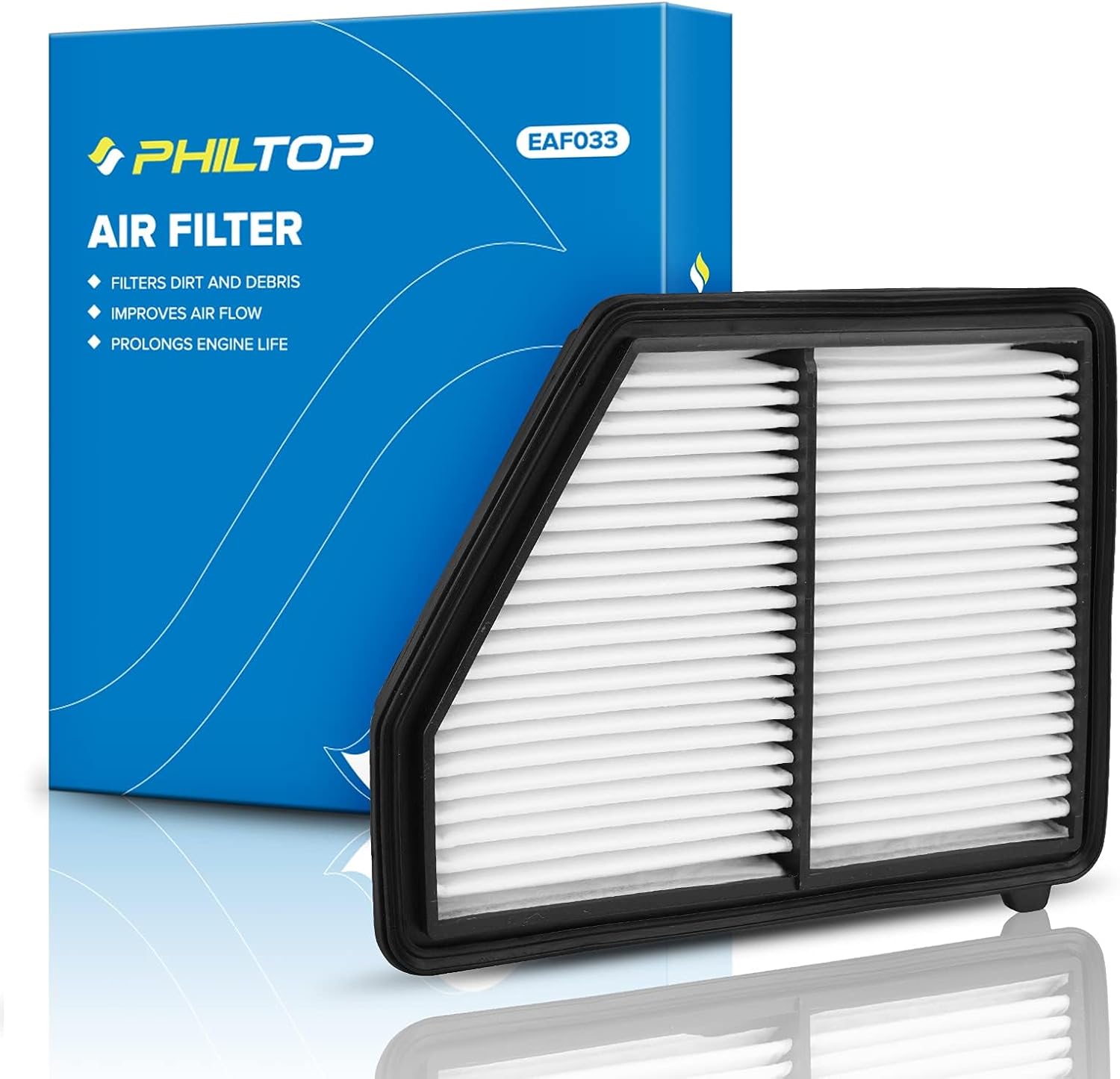
5. PHILTOP CA12051 Engine Air Filter (compatible with Honda Civic 2016–2026, HR-V 2023–2025)
| Model Number | CA12051 |
|---|---|
| Manufacturer Part Number | 3010EAF033JUS |
| Included Components | 1* CA12051 Engine Air Filter, 1x Product Manual |
| Product Grade | Replacement Part |
| Fit Type | Vehicle Specific Fit |
The PHILTOP CA12051 is a direct-fit replacement engine air filter made for Civic 2.0L models (2016–2026) and HR-V 2023–2025 applications and installs in about five minutes with no special tools. Its three-stage progressive density media combines an outer layer for large particles, a middle layer for finer dust, and an inner safety layer that blocks very fine contaminants. In practice that means cleaner intake air, better protection for the throttle body and mass airflow sensor, and potentially steadier combustion that can help fuel efficiency. The filter is sold as a single unit with an included manual and is intended to be replaced roughly every 12 months or 12,000 miles under normal use. Because it is a vehicle-specific replacement part, installation is straightforward on compatible cars, but buyers should follow the recommended service interval in harsher conditions. The product is designed as a practical, no-frills alternative to factory replacements rather than a high-flow performance upgrade.
Best for: Buyers who prioritize dependable, factory-quality replacement parts to protect engine components and maintain consistent day-to-day drivability for Civic 2.0L vehicles from 2016 onward.
Less Ideal for: Drivers seeking reusable filters or measurable horsepower gains from an intake upgrade should consider performance-oriented alternatives instead of this OEM-style replacement.
- Vehicle-specific fit for a simple, tool-free swap into compatible Honda models
- Three-stage nanofiber hybrid media that targets large debris, fine dust, and ultra-fine particles
- Installs quickly in about five minutes with a factory-style design
- Includes one filter and a product manual for straightforward replacement guidance
- Not marketed as a high-flow performance or reusable filter option
Verdict: Choose this CA12051 filter if you want an easy, vehicle-specific replacement that restores factory-level filtration and protects your Civic's intake system.
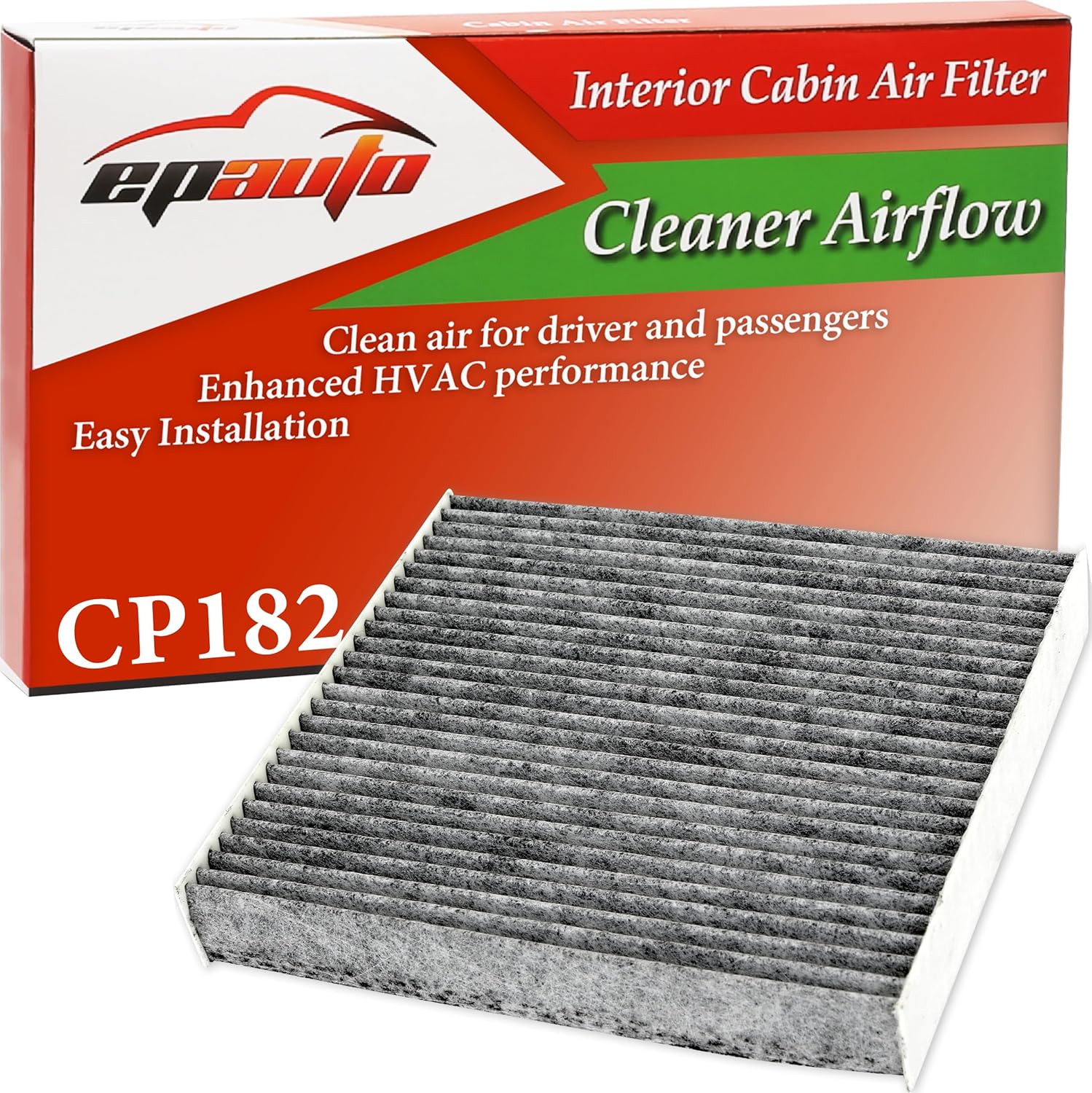
6. EPAuto CP182 Cabin Air Filter (Fits select Honda/Acura models)
| Compatible models | Select Honda and Acura models (see list) 2016-2025 Civic included |
|---|---|
| Filter type | Cabin air filter with activated carbon |
| Replacement interval | Every 12 months or 12,000 miles |
| Cross reference | Made for FRAM CF11182; replaces multiple Honda part numbers |
The EPAuto CP182 is a replacement cabin air filter intended for many Honda and Acura models from recent years. It installs behind the glove box using the same drop-and-slide access most Hondas use, so replacing it is a quick DIY job that does not require tools for most owners. The filter uses activated carbon to help reduce dust, pollen and light odors, and the manufacturer recommends changing it every 12 months or 12,000 miles to maintain HVAC performance. Buyers report a snug fit in most compatible models and say the filter noticeably reduces mildew and cabin dust when swapped regularly. A few users noted small fitment differences on specific years that can require minor trimming or extra pressure to seat, so check fit before forcing the cover closed. For Civic owners shopping for a value-conscious replacement, this unit offers near-factory filtration and easy installation, but confirm the exact model fit for 2022-and-newer Civics before ordering.
Best for: Drivers who prioritize proven, budget-friendly cabin filtration with easy self-service and want reassurance from widespread positive user experience.
Less Ideal for: People who need a guaranteed exact factory match for a specific model year without any chance of minor fit adjustment should consider a direct factory replacement.
- Compatible with many Honda and Acura cabin filter part numbers and common cross-references
- Activated carbon layer reduces dust, pollen and light odors for cleaner cabin air
- Simple glove-box access makes DIY replacement quick and tool-free
- Recommended maintenance interval provided for predictable service scheduling
- Some users report slight size or fit differences on certain model years that may need trimming or extra effort to seat
Verdict: A cost-effective, carbon-equipped cabin filter with wide positive user feedback that makes a reliable DIY replacement for recent Civics when fit is confirmed.
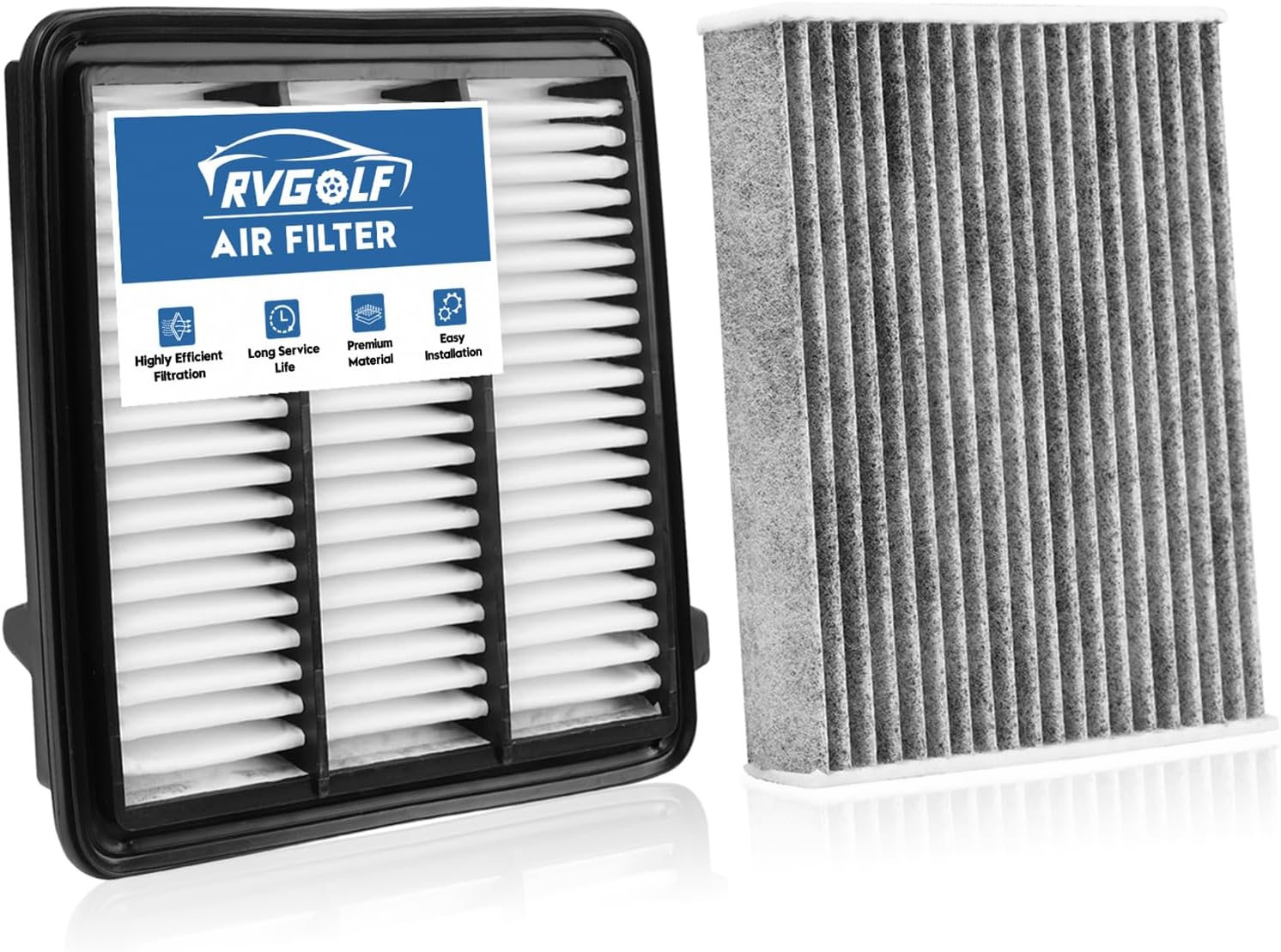
7. RVgolf Engine and Cabin Air Filter Kit for Honda 1.5L (Civic 2022-2026, Accord/CR-V/Integra 2023-2026)
| Applicable models | Civic 1.5L 2022-2026; Accord/CR-V/Integra 1.5L 2023-2026 |
|---|---|
| Includes | 1 engine air filter and 1 cabin air filter |
| Engine filter reference | 17220-64A-A00, PA99892 |
| Cabin filter reference | CF11182, CP182 |
| Recommended service interval | Every 12,000 miles or 12 months |
This RVgolf kit bundles an engine intake filter and a cabin air filter sized for Honda 1.5L models (Civic 2022-2026, Accord/CR-V/Integra 2023-2026) and is meant as a direct replacement for the listed OEM part numbers. The engine filter uses a high-fiber structure to trap a high percentage of airborne impurities while aiming to maintain low intake resistance for steady airflow and reduced engine noise. The cabin filter is multi-layer and positioned to reduce particulates and help keep the HVAC system clear and windows from fogging. Installation is straightforward for a DIYer following the glove box access steps, and the listing recommends a 12,000-mile or 12-month change interval. The practical benefits are cleaner engine intake air, protection for engine components, and improved in-cabin air quality. Limitations are that fitment is strictly for the specified 1.5L non-hybrid Honda models and the listing does not provide detailed lab filtration numbers or a formal warranty statement, so buyers seeking certified performance data may prefer branded OE replacements with published test results.
Best for: Drivers who prioritize straightforward, vehicle-specific replacement parts that restore factory-style filtration and who prefer an easy DIY swap to keep engine and cabin air clean.
Less Ideal for: Buyers who need certified filtration performance data, specialized allergen or activated-carbon cabin filters, or parts that cover multiple engine sizes and hybrid variants.
- Vehicle-specific fit for Honda 1.5L models simplifies installation and reduces fitment errors
- Engine filter claims high-fiber construction for efficient particle capture while keeping intake resistance low
- Cabin filter uses multi-layer media to reduce particulates and help prevent window fogging
- Includes both engine and cabin filters in one kit so both systems can be serviced at once
- Compatibility limited to non-hybrid 1.5L Honda models and will not fit 2.0L hybrid variants
- No independent filtration efficiency figures or third-party certifications provided
Verdict: A convenient, vehicle-specific twin filter kit that restores factory-style airflow and in-cabin filtration for Honda 1.5L models with an easy DIY installation.
Choosing the Right 2022-Present Honda Civic Air Filter: Key Factors to Consider
Filtration Efficiency
Filtration efficiency determines how well an air filter captures dust, pollen, and fine particulates before they reach the intake. For the 2022-present Civic, high efficiency reduces abrasive wear on intake components and combustion chamber surfaces, which helps preserve compression and long-term engine health.
Filters with denser multi-layer media typically trap more small particles, but extremely dense media can restrict airflow. For everyday commuting and periodic highway use common to many Civic owners, a balance that blocks harmful particulates while preserving sufficient flow is ideal. Check published particle retention figures or independent test data when available, and prefer filters that list micron ratings or percent-capture metrics.
Airflow and Performance Impact
Airflow affects engine breathing, throttle response, and fuel metering. A restrictive filter can slightly reduce power and hurt fuel economy, while an overly permissive filter can allow damaging debris through. For the Civic's modern intake design, a filter that maintains near-OE airflow characteristics will preserve factory drivability and emissions behavior.
If you plan mild performance tuning later, prioritize filters engineered to increase usable flow without sacrificing too much filtration. Owners who want the original drive feel should choose a filter specified to meet or closely match OE flow rates for the 2022-present (FE and FL) intake system.
Fitment and Seal Integrity
Proper fit is critical because air always takes the path of least resistance. A filter that does not fit the Civic's airbox precisely can allow unfiltered air to bypass the media, negating any filtration advantage. For the 2022-present Civic, confirm the filter matches the exact footprint, flange type, and thickness used by the factory part.
Seal integrity under vibration and temperature cycles matters as well. Look for filters with molded rubber gaskets or reinforced frames that resist warping. A secure, consistent seal prevents gaps and avoids the need for additional clamps or shimming during installation.
Service Life and Maintenance
Service life depends on media type, ambient driving conditions, and maintenance strategy. Disposable paper filters are simple to replace at routine intervals, while high-flow oiled or dry reusable filters can extend service intervals but require periodic cleaning and re-oiling if specified.
Consider how often you are willing to inspect or service the filter. If you frequently drive on dusty roads, choose a filter with a shorter recommended replacement interval or one that is easy to swap. For low-maintenance owners, long-life disposable options that offer reliable protection between scheduled services are often preferable.
Material Quality and Construction
Material choice influences both filtration performance and durability. Multi-layer synthetic media resists moisture and collapses less than some organic papers. Oiled cotton blends offer good flow and can be cleaned, but they require correct re-oiling to avoid excessive oil in the intake.
Frame construction is also important. Rigid, well-molded frames maintain shape and sealing over time, while flimsy frames risk distortion. For the Civic's compact engine bay, a robust filter that resists bending during installation reduces the chance of improper seating.
Compatibility With Emissions and Warranty Considerations
Some filter types alter intake characteristics and may affect emissions monitoring on modern engines. For Civic owners concerned about maintaining factory emissions behavior, selecting filters that closely match OE airflow and restrictiveness helps avoid triggering sensors or altering fuel trims.
If warranty considerations matter, prefer filters that are explicitly described as non-invasive replacements that do not require intake modifications. While aftermarket filters are widely used, picking one that maintains stock fit and function reduces the likelihood of secondary issues that could complicate warranty questions.
Engine Air Filter Replacement: Timing and Signs
Regular inspection makes it easier to replace the engine air filter before contaminants degrade performance. Typical indicators include visible dirt accumulation on the media, reduced throttle responsiveness, or a noticeable drop in fuel economy. For many Civic owners, a visual check at each oil change is a practical routine.
How often to change air filter depends on driving conditions. City drivers in clean environments may go longer between changes, while those in dusty or rural areas should inspect and replace more often. Follow the recommended intervals for your driving type and make adjustments when you see symptoms of restriction.
- Check the filter during scheduled maintenance or every 6 months.
- Replace earlier if you drive regularly on unpaved roads or in heavy dust.
- Look for uneven discoloration or holes in the media as signs of replacement.
Choosing Between Disposable and Reusable Filters
Disposable paper filters offer low cost and simple replacement with predictable performance. They are ideal if you prefer not to handle cleaning or re-oiling. Reusable filters, often made from synthetic or oiled cotton media, can reduce waste and provide longer service intervals when maintained properly.
When considering a reusable option, factor in correct servicing procedures. Some reusable filters require specific cleaning solutions and re-oiling steps. If you are comfortable with periodic maintenance, a reusable filter can be economical; otherwise, a high-quality disposable filter is a reliable choice for many Civic owners.
- Disposable: consistent performance, minimal maintenance.
- Reusable: lower long-term cost potential, requires proper cleaning and re-oiling.
- Choose based on willingness to perform periodic maintenance and local driving conditions.
Cabin Vs Engine Air Filter: Knowing the Difference
While both filters improve air quality, cabin and engine filters serve distinct functions. The engine air filter protects internal engine components from particulates, while the cabin filter cleans air entering the passenger compartment. Maintaining both is important for overall vehicle health and comfort, but they are serviced separately.
For Civic owners, scheduling cabin filter replacement alongside engine air filter checks is efficient. Dusty conditions affect both filters, and replacing them together keeps the engine protected while improving in-cabin air quality.
- Engine filter protects engine internals and combustion quality.
- Cabin filter improves air inside the vehicle and reduces allergens.
- Inspect both filters during routine maintenance for comprehensive care.
Fitment Checklist for the 2022-Present (FE and FL) Civic
Before you buy, confirm the filter matches the Civic's 2022-present (FE and FL) airbox footprint and mounting features. Necessary fit details include overall length and width, flange profile, and expected thickness so the filter seats flat without flexing. Also ensure the sealing surface is compatible with the factory airbox gasket area.
If a filter lists compatibility generationally, verify the product specifies 2022-present Civic models or the FE and FL chassis code. Avoid filters that recommend trimming or adapters; a direct-fit part reduces installation time and the risk of unfiltered air bypassing the media.
- Confirm exact dimensions and flange style before purchase.
- Prefer filters that reference 2022-present Civic or FE and FL compatibility.
- Avoid parts that require modification to fit the factory airbox.
Impact on Fuel Economy and Emissions
A well-designed air filter helps maintain the Civic's intended air-fuel balance, which supports stable fuel economy and consistent emissions readings. Slight restrictions can increase fuel consumption under load, but excessive flow can also disturb sensor readings. For owners focused on fuel economy, prioritize filters tested or specified to match OE flow characteristics.
Monitoring fuel economy after a filter change is a good practice. If you notice an unexpected drop in mileage, recheck installation and consider trying a different media type that better aligns with the Civic's intake tuning.
- Matching OE flow helps preserve factory fuel economy.
- Excessive restriction or extreme unrestricted flow can both negatively affect emissions behavior.
- Track fuel consumption after replacement to verify expected results.
Sizing and Replacement Notes
Use an air filter size guide or the Civic's parts reference to confirm the correct element dimensions. Even small differences in thickness or outer seal diameter can cause improper seating. If you cannot locate the original part number, measure the existing filter and compare key dimensions before buying.
When installing a new filter, clean the airbox sealing surface of debris and ensure the flange sits evenly. A proper installation ensures the filter performs as intended and avoids accelerated media wear due to edge leaks.
- Measure length, width, and thickness if part numbers are unavailable.
- Clean the airbox mating surface before installing the new filter.
- Verify the filter sits flush and the airbox closes without pinching the media.
Still looking for the perfect fit?
Select your Honda Civic configuration to see the most relevant Air Filters recommendations
How We Chose the Best 2022-Present Honda Civic Air Filter
We focused on selection criteria that directly impact longevity, engine health, and day-to-day performance for the 2022-present Honda Civic (FE and FL). Primary factors included filtration efficiency measured by particle capture, fitment accuracy to the Civic's airbox, and flow characteristics that affect throttle response and fuel economy. Durability and service life were weighed to reflect typical maintenance intervals and the Civic owner's desire for low hassle. We also considered material quality such as multi-layer media or oiled versus dry media construction, and whether the filter maintains sealing integrity under normal engine bay temperatures.To keep the list relevant, we prioritized filters that match OE footprint and mounting features so installation is straightforward without modification. Filters that required vehicle-specific adapters or substantial trimming were excluded. We also filtered out products lacking clear material specifications, filtration performance claims, or basic durability information. Finally, products were evaluated on real-world usability factors like ease of inspection, cleaning potential for reusable options, and replacement frequency expectations based on media type.
Our full evaluation process is outlined in our review methodology.
FAQ
How often should I perform engine air filter replacement on my 2022-present Civic?
It depends on driving conditions. For average city and highway use inspect every 12 months or 12,000 miles. If you drive in dusty or rural areas, check and replace more frequently, perhaps every 6,000 to 8,000 miles.
Can I use a reusable air filter in my Civic and skip regular replacements?
Reusable filters can extend service intervals but require scheduled cleaning and, if applicable, re-oiling. They do not eliminate maintenance; following the manufacturer's cleaning schedule is necessary to maintain filtration and flow.
Will changing the engine air filter affect my Civic's fuel economy?
A properly chosen and installed filter that matches OE flow characteristics should not noticeably harm fuel economy and can restore performance if the old filter was clogged. Significant deviations in filter flow may change engine tuning slightly and could affect mileage.
Is there a difference between cabin vs engine air filter on the Civic?
Yes. The engine air filter protects the engine intake, while the cabin filter cleans the air entering the passenger compartment. Both should be checked regularly because both collect dust and debris that impact function and comfort.
How do I confirm the right air filter size for my 2022-present Civic?
Confirm fit by checking the Civic's service manual or measuring the existing element's length, width, and thickness. Also verify that the filter's flange and sealing surface match the factory airbox to ensure a proper seal.
Should I choose OEM vs aftermarket air filter options for this Civic?
OEM-style filters are made to match factory specifications and fitment precisely, which reduces installation issues. Many aftermarket filters also fit well but vary in media and construction. Prioritize clear fitment information and documented filtration performance when choosing aftermarket options.
Final Verdict
Prioritize a filter that balances filtration efficiency and airflow while matching the 2022-present Civic (FE and FL) airbox footprint. Consider your driving environment and how much routine maintenance you are willing to perform when choosing between disposable and reusable media. For most owners, a direct-fit filter that closely matches OE flow and sealing characteristics offers the best compromise between engine protection and consistent fuel economy.Focus on measured filtration, reliable sealing, and a service schedule you will follow. Use those priorities to narrow choices, and you will end up with an air filter that protects the engine and supports the Civic's everyday performance.
Explore More:
- Check out all Honda Civic parts & accessories
- Explore Air Filters Maintenance & Repair Guides
- Explore Engine
- Browse all Auto Parts
