

Note: This article contains affiliate links. If you click on these links and make a purchase, I may earn a small commission at no extra cost to you. This helps support my research and content. Read my full affiliate disclosure here.
If your Civic is showing electrical quirks or the battery keeps running down, swapping to the right alternator matters more than you might think. The Honda Civic 1.8L alternator is central to charging system health, affecting everything from starting reliability to headlamp brightness and accessory performance. Choosing an alternator built to meet the Civic 1.8L's output and fitment needs reduces installation headaches and lowers the chance of premature failure.This guide shortlists the seven top options for the Honda Civic 1.8L and explains the evaluation criteria used, including output capacity, build quality, and warranty support. Read on to find alternators suited to daily drivers, high-usage vehicles, and owners wanting straightforward replacements that match factory expectations.
Looking for other parts? See all Honda Civic parts & accessories.
Top Picks at a Glance
| Best Overall The best all-around choice for most situations | YINAVAGAD High-Output Replacement Alternator 31100-RNA-A01 for Honda Civic 1.8L |  |
| Best Quality Built to a higher standard if you want something more solid | DENSO Replacement Alternator for Honda Civic 1.8L (2006–2011) |  |
| Best Value The sweet spot between price and what you get | Farrme 11176 12V 80A Replacement Alternator for Honda Civic 1.8L (7-Groove Pulley) |  |
| Best Budget The cheapest option that still gets the job done reliably | UOE Replacement Alternator for Honda Civic 1.8L (2006–2011), 12V 80A, 7-Groove Pulley |  |
| Highest Rated A top-rated pick with lots of positive feedback | BDELI Alternator 11176N Replacement for 1.8L Honda Civic (2006–2011), 80A, 7-Groove Pulley |  |
| Most Popular A crowd favorite that many people choose with confidence | DB Electrical 400-48050 12V Alternator for Honda Civic 1.8L (2006–2011) |  |
| Best Seller A high-volume bestseller chosen again and again | PAROD 12V 105A Alternator with 7-Groove Clutch Pulley |  |
1. YINAVAGAD High-Output Replacement Alternator 31100-RNA-A01 for Honda Civic 1.8L

| Manufacturer | YINAVAGAD |
|---|---|
| Model | 11176N 31100-RNA-A01 |
| OEM Part Number | 31100RNAA01, 31100-RNA-A01 |
| Warranty | 12-Month warranty |
This YINAVAGAD alternator replaces factory units for Honda Civic 1.8L model years around 2006–2011 and is designed to deliver steadier electrical power under load. It uses a high-power hairpin winding design and CNC-machined components to boost conversion efficiency, so accessories and charging stay stable during highway driving or when extra electrical demand is present. The unit includes OEM-grade bearings and copper windings intended to resist heat and improve longevity compared with lower-grade replacements. Installation follows the same bolt pattern as the original and is suitable for routine DIY swap or shop installation. Practical benefits include better voltage stability for electronics and reduced risk of charging-related stalling or erratic behavior. Limitations are typical of aftermarket alternators: fitment must match the listed OEM numbers exactly and buyer support depends on the seller rather than a vehicle maker; the included 12-month warranty is helpful but not an extended factory warranty.
Best for: Buyers who want a durable, higher-output factory-replacement alternator for a Civic 1.8L to improve charging stability under normal driving and moderate electrical loads.
Less Ideal for: If you need a manufacturer-backed extended warranty or a direct dealer-sourced part, consider looking at factory replacement options through the vehicle maker or authorized dealers.
- High-output hairpin winding design for improved current delivery under electrical load
- CNC-machined construction aimed at consistent fit and stable power output
- OEM-grade bearings and pure copper windings for better heat resistance and durability
- Aftermarket unit requires confirming exact OEM part compatibility before purchase
Verdict: Choose this alternator when you want a more robust, high-output aftermarket replacement for a Honda Civic 1.8L to improve charging performance and reliability.
2. DENSO Replacement Alternator for Honda Civic 1.8L (2006–2011)

| Compatibility | Honda Civic 2006–2011 1.8L L4 R18A1 |
|---|---|
| Output | 90 Amp |
| Manufacturer | DENSO |
| Manufacturer Part Number | 4056698310 |
This DENSO replacement alternator is a direct-fit 90 amp unit for Honda Civic 1.8L models from 2006 through 2011. Installed as a factory-quality replacement, it supplies charging power to the battery and electrical systems and is intended to bolt into the stock mounting points without modification. The alternator includes original-style packaging and hardware and mirrors the OEM electrical output, so it can reliably support accessories, ignition, and charging for daily driving and light accessory loads. For performance-focused buyers the stable 90 amp output means predictable voltage under load and compatibility with the Civic's factory charging system, but it is not a high-output performance unit for heavily modified electrical systems. Expect straightforward installation for a competent DIYer or shop and consistent charging comparable to a factory replacement. If you need upgraded amperage for aftermarket audio or high-demand electronics, plan to choose a high-output alternator instead.
Best for: A buyer wanting a reliable, factory-spec replacement alternator that restores factory charging performance on a Civic 1.8L without modification; suited to owners prioritizing dependable daily driving and stock electrical behavior.
Less Ideal for: Not a good fit for enthusiasts who need high-output charging for upgraded stereos, multiple amplifiers, or extensive auxiliary electronics; those users should consider purpose-built high-amperage units.
- Direct replacement designed to fit Honda Civic 1.8L 2006–2011 mounting and connectors
- Factory-equivalent 90 amp output suitable for stock electrical loads
- Includes original-style hardware and packaging for easier swap-in
- Produced by a recognized OEM supplier for predictable charging behavior
- 90 amp rating is standard capacity and may be insufficient for heavy aftermarket electrical upgrades
Verdict: Choose this DENSO 90 amp alternator when you want a dependable factory-equivalent replacement that restores stock charging performance to a 2006–2011 Civic 1.8L.
3. Farrme 11176 12V 80A Replacement Alternator for Honda Civic 1.8L (7-Groove Pulley)

| Amperage | 80A |
|---|---|
| Voltage | 12V |
| Rotation | CW (Clockwise) |
| Number of Grooves | 7-Groove Pulley |
| Regulator Type | Internal |
This Farrme 11176 alternator is a direct-fit replacement for Honda Civic 1.8L applications and is built to restore the vehicle charging system with a 12V, 80A output and a 7-groove pulley. It installs like a factory-replacement unit, with an internal regulator and internal fan to simplify hookup and reduce external clutter. The alternator uses copper windings, die-cast aluminum housing, and sealed bearings intended to reduce noise and withstand heat and corrosion. In practice it supplies steady charging even at low RPMs and is suitable for Civics that need reliable battery charging and to run stock electrical loads. Important limitations are that it requires correct wiring and belt tension to function and that appearance or small mounting details can differ from the original part, so checking part numbers and verifying fit before installation is important. Professional installation or a quick system check of battery and connections helps avoid common installation-related failures.
Best for: Buyers who want a practical, cost-effective replacement that restores charging reliability on a Civic 1.8L and prefer a ready-to-install unit over rebuilding or troubleshooting the existing alternator.
Less Ideal for: Do not pick this if you need a high-output alternator for heavy aftermarket electrical loads or if you prefer a remanufactured unit with a long component-level warranty.
- Direct-fit replacement designed for Honda Civic 1.8L applications
- Integrated internal regulator and fan for simpler installation and cleaner packaging
- Sealed bearing design reduces vibration and operating noise
- Copper windings and die-cast aluminum housing for improved heat dissipation and corrosion resistance
- Requires correct wiring, belt tension, and battery condition to operate as intended
Verdict: A straightforward, factory-style 12V/80A replacement that gets a Civic 1.8L charging system back to reliable operation with minimal fuss.
4. UOE Replacement Alternator for Honda Civic 1.8L (2006–2011), 12V 80A, 7-Groove Pulley

| Vehicle fitment | Honda Civic L4 1.8L 2006-2011 |
|---|---|
| Output | 12V 80A |
| Pulley | 7-groove S7 pulley |
| Rotation | Clockwise (CW) |
This UOE alternator is a direct-fit aftermarket replacement for the Honda Civic 1.8L (2006–2011). It supplies 12 volts at 80 amps and comes with a clockwise rotation and a factory-style 7-groove S7 pulley so it installs like a stock unit on vehicles that use that pulley configuration. Typical use is straightforward: swap the failed alternator, reconnect wiring and belt, and restore charging for lights, ignition, and accessories. The unit lists multiple OEM cross-reference numbers, which helps confirm compatibility with common Civic partings. Practical benefits include a ready-to-install pulley, a rated amperage that handles normal and moderate accessory load, and the convenience of a direct replacement without modification. Limitations are that it is an aftermarket component rather than a factory-branded part and professional installation is recommended to ensure correct wiring and grounding. Buyers should also confirm pulley type and rotation before purchase to avoid fitment issues.
Best for: Buyers looking to restore charging performance on a Honda Civic 1.8L from 2006–2011 while keeping parts cost low and avoiding modifications.
Less Ideal for: If you prioritize factory-branded parts or need higher-than-stock amperage for heavy electrical upgrades, look at premium or high-output options instead.
- Direct replacement designed for Honda Civic L4 1.8L (2006–2011) for a straightforward swap
- Provides a stable 12V/80A output suitable for typical driving and accessory loads
- Includes a clockwise rotation and a 7-groove S7 pulley for correct belt engagement
- Cross-references multiple OEM part numbers to simplify compatibility checks
- Aftermarket unit rather than original factory-branded alternator
Verdict: A cost-conscious, direct-fit replacement that restores factory charging on 2006–2011 Honda Civic 1.8L models with minimal fuss.
5. BDELI Alternator 11176N Replacement for 1.8L Honda Civic (2006–2011), 80A, 7-Groove Pulley

| Fitment | Honda Civic 2006–2011 1.8L L4 |
|---|---|
| Amperage | 80 A |
| Voltage | 12 V |
| Rotation | Clockwise |
| Pulley | 7-Groove |
This BDELI alternator is a direct-fit replacement engineered for Honda Civic 1.8L models from 2006 through 2011. It supplies 12 volts at up to 80 amps and uses a 7-groove pulley with clockwise rotation, so installation is a straightforward swap for matching Civic engines. The listing emphasizes factory-style construction, ISO 9001 and IATF 16949 production standards, and bench testing, which indicates attention to quality control. In real-world use it restores charging system function and electrical reliability for accessories and the charging battery. Buyers report generally easy installation and consistent charging performance, though a small number of units have needed replacement under warranty. The manufacturer offers one-year replacement coverage and support for troubleshooting and installation guidance, which helps if issues arise. If you need a durable, affordable replacement that mirrors factory fitment and output, this alternator covers the essentials; however expect to follow proper installation and testing steps to verify charging voltage after fitment.
Best for: Buyers prioritizing a reliable, factory-style replacement to restore charging performance on a 2006–2011 Honda Civic 1.8L, and who want manufacturer-backed support if problems occur.
Less Ideal for: Those who need a higher-output or performance alternator for heavy electrical upgrades should consider purpose-built high-amperage units instead.
- Direct-fit design for 2006–2011 Honda Civic 1.8L for straightforward replacement
- Factory-style output of 12V and 80A suitable for stock electrical loads
- 7-groove pulley and clockwise rotation match common Civic belt setups
- Manufacturer quality controls and certifications cited (ISO 9001 and IATF 16949)
- One-year manufacturer replacement and seller support for troubleshooting
- A few buyers reported receiving a defective unit that required replacement despite arriving new
Verdict: A straightforward, factory-style 80A replacement that restores stock charging reliability for 2006–2011 Honda Civic 1.8L owners.
6. DB Electrical 400-48050 12V Alternator for Honda Civic 1.8L (2006–2011)

| Voltage | 12V |
|---|---|
| Amperage | 80A |
| Rotation | CW |
| Regulator | Internal (IR) |
| Pulley class | S7 |
This DB Electrical alternator is a direct-fit replacement for Honda Civic 1.8L (2006–2011) applications, delivering 12 volts and an 80 amp output with clockwise rotation and an internal regulator. Installation is straightforward for anyone comfortable with basic mechanical work since the unit uses the factory mounting points and pulley class S7, so you only need to swap brackets and wiring in most cases. The alternator is marketed as machined and built with durable components and several buyers report clean fit and quiet operation out of the box. Practical benefits include restoring charging to a dead battery quickly and avoiding a trip to a parts store for a reman unit. Keep in mind user reports vary: many owners experienced reliable performance but some saw premature failures after a few thousand miles or received units with shipping damage to the pulley, so longevity and packaging quality appear inconsistent. If you value low cost and easy installation, this unit is a useful option, but expect that long-term reliability may not match a factory-quality remanufactured alternator.
Best for: Buyers who prioritize a low-cost, direct replacement to get a Civic 1.8L back on the road quickly and who rely on peer reviews when assessing value.
Less Ideal for: Drivers seeking the longest-term durability or factory-grade remanufacture should consider dealer or premium reman alternatives instead.
- Direct-fit design that uses factory mounting points for straightforward installation
- Compact 12V 80A output with internal regulator suitable for restoring charging on Civic 1.8L
- Many buyers report quiet operation and good initial fitment
- Machined exterior and parts intended for durability
- Mixed longevity reports with some units failing after a few thousand miles
- Occasional shipping damage to the pulley reported, requiring pulley swap
Verdict: A cost-effective, direct-fit alternator for Honda Civic 1.8L owners who want an easy replacement backed by many positive user experiences.
7. PAROD 12V 105A Alternator with 7-Groove Clutch Pulley
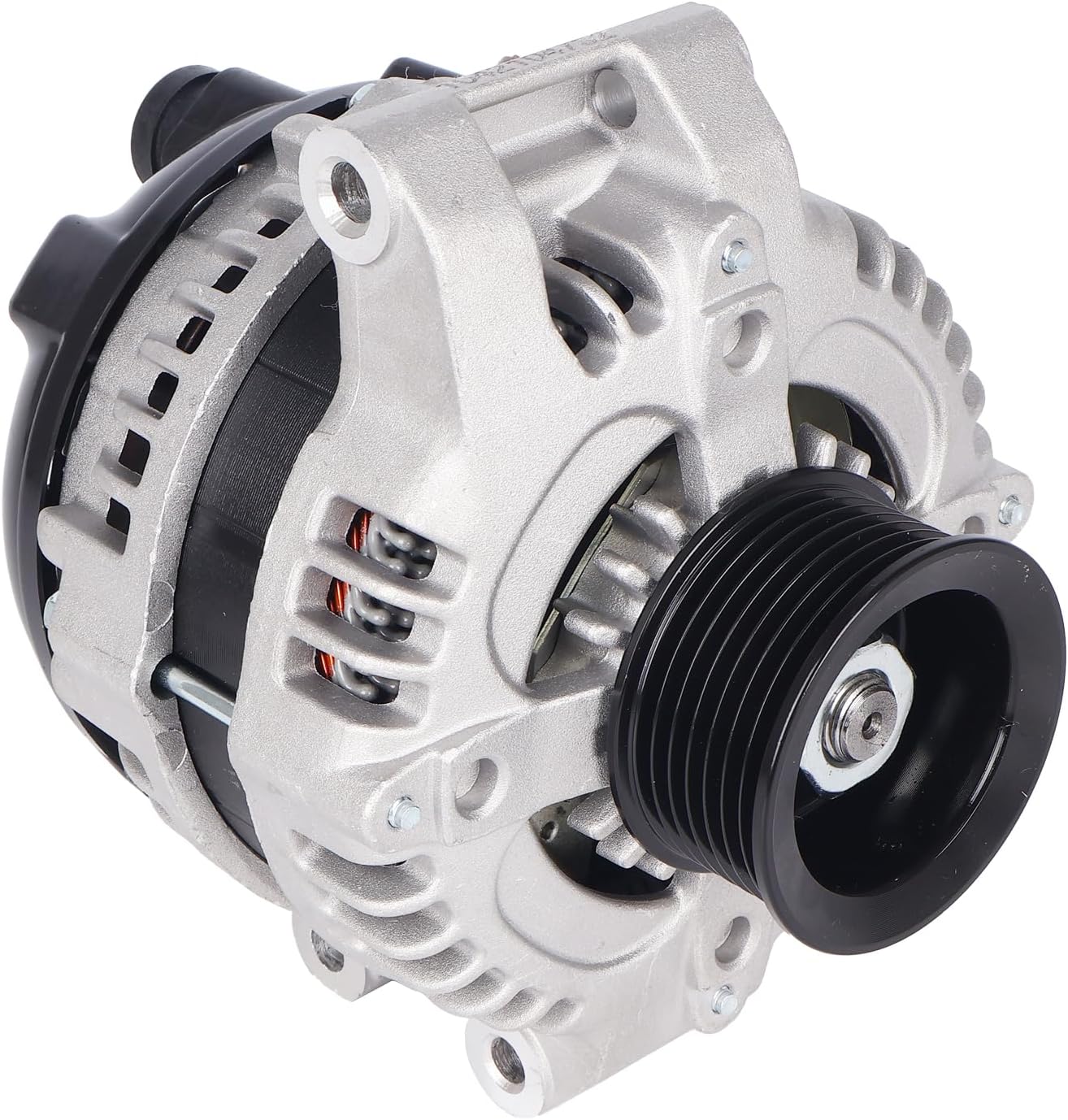
| Voltage | 12V |
|---|---|
| Output | 105 Amp |
| Pulley | CW 7-Groove Clutch Pulley |
This PAROD alternator is a direct replacement unit built for specific Honda and Acura 4-cylinder applications and is intended to restore charging performance. It supplies 105 amps at 12 volts and uses a clockwise 7-groove clutch pulley so it matches vehicles that use that pulley configuration. The unit is factory-style in layout with tested rotors and brushes that the brand says extend service life compared with many aftermarket units. Installation is the same as a typical alternator swap: disconnect battery, remove belt and mounting bolts, swap the electrical connections and pulley orientation as needed, then reinstall and test charging voltage. Practical benefits include a tested fit for the listed models, a common amperage for stock electrical systems, and a three-year protection from the seller. Limitations to note are that fit depends on matching the exact pulley direction and groove count and that buyers should confirm vehicle year and engine before ordering; this is not a universal alternator and may require a mechanic if you are not comfortable with electrical work.
Best for: Buyers seeking a straightforward replacement alternator that restores factory charging behavior and prefer parts that are tested and backed by a seller protection plan.
Less Ideal for: If you need a higher-output alternator for heavy electrical accessories or a universal unit for multiple vehicles, this exact-fit replacement is not the best choice.
- Designed to match specific Honda/Acura 4-cylinder applications with a 7-groove clockwise clutch pulley
- Rated 105 amps which suits typical stock electrical loads on Civic 1.8L setups
- Manufacturer testing for no-load and load performance claimed to ensure proper charging
- Includes a three-year protection period provided by the seller
- Fitment requires confirming pulley direction and groove count so it may not fit vehicles with different pulley configurations
Verdict: A tested, vehicle-specific 105A replacement alternator that reliably restores factory charging for compatible Honda Civic and similar 4-cylinder models.
Choosing the Right Honda Civic 1.8L Alternator: Key Factors to Consider
Electrical Output and Amperage Rating
Alternator output determines how well the charging system keeps the battery topped under normal and high-load conditions. For a Honda Civic 1.8L, you need an alternator that supplies sufficient amperage at idle and during accessory use so headlights, HVAC blowers, infotainment systems, and charging ports do not drain the battery. Output curves and rated amperage indicate how the unit performs across engine speeds.
A higher short-term peak output can help when additional electrical accessories are installed, but steady-state output and voltage regulation are more important for day-to-day reliability. Confirm that the alternator maintains near 13.8 to 14.6 volts under load to avoid undercharging or overcharging the battery, both of which shorten battery life.
Fitment and Mounting Compatibility
Correct physical fitment ensures the alternator lines up with the Civic 1.8L mounting points and belt routing so installation is straightforward. Mismatched mounting ears, incorrect pulley offsets, or nonstandard connector locations can require modifications that increase labor and risk of errors. Choose alternators specified for the Honda Civic 1.8L configuration to minimize these issues.
Connector type and terminal placement matter because incorrect electrical interfaces can introduce additional adapters or rewiring. Also verify pulley diameter and style match the factory accessory drive so belt tension and charging performance remain within expected parameters.
Build Quality and Internal Components
Internal component quality affects long-term reliability. Bearings, brushes, slip rings, voltage regulators, and diodes are wear items or failure points. Higher-quality bearings and thicker brushes typically last longer, while robust voltage regulators and diodes resist heat-related failures. Units with improved cooling designs, such as additional venting or optimized fan geometry, help preserve internal components under sustained loads.
Pay attention to stated materials and any serviceable design elements that let you service the unit instead of replacing it. A sturdier housing and corrosion-resistant finishes are helpful for Civic owners who drive in wet or salted-road environments.
Voltage Regulation and Electrical Stability
Consistent voltage regulation prevents overcharging or undercharging the battery and protects sensitive electronics. A good alternator will hold voltage within a narrow range while adapting to changing engine speeds and electrical loads. Poor regulation can cause dimming lights, reduced accessory performance, or battery damage.
Some alternators include built-in regulators with thermal protection. Verify the regulation behavior across idle and higher RPMs, and consider how the regulator responds to rapid load changes such as when headlights and rear defroster are engaged simultaneously.
Warranty and Support
Warranty length and coverage indicate manufacturer confidence and provide practical protection for owners. A longer warranty can mitigate the risk of a premature failure and reduce ownership cost if a unit develops issues. Warranty terms that cover electrical failures and internal components are more valuable than limited-case-only coverage.
Also look for transparent support policies such as clear RMA procedures or exchange programs. Local parts-store return policies and easy access to technical documentation or installation guides make ownership simpler for Civic owners who prefer DIY installation.
Serviceability and Maintenance Options
Some alternators are easier to service or rebuild than others, offering access to replaceable brushes, bearings, or rectifier modules. For owners considering long-term cost savings, a unit that supports rebuild kits can be beneficial. Rebuildable designs require a careful look at how accessible the internal components are and whether replacement parts are commonly available.
Consider whether you or your local shop can handle common repair tasks. If you intend to reuse cores or perform bench testing, choose an alternator with straightforward disassembly and documented rebuild procedures.
Common Alternator Symptoms on the Civic 1.8L
Recognizing alternator symptoms early helps avoid getting stranded. Typical signs on a Honda Civic 1.8L include intermittent dimming of headlights, dashboard warning lights, battery drain after short trips, or a battery that repeatedly tests low despite being relatively new. Electrical accessories that lose power when the engine is idling are another indicator.
Not all electrical issues stem from the alternator. Corroded battery terminals, damaged wiring, or a failing battery can show similar effects. Use symptoms as a diagnostic starting point and confirm alternator health with testing before replacing it.
- Dim or flickering headlights at idle
- Battery warning or charging system light on the dash
- Slow cranking or repeated dead battery incidents
- Unusual noises from the front of the engine that change with engine speed
How to Test the Alternator on a Honda Civic 1.8L
Basic alternator testing can be done with a multimeter. Measure battery voltage with the engine off and with the engine running. A healthy alternator typically raises system voltage to the 13.8 to 14.6 volt range once the engine is running. Voltage that remains at battery-rest levels or climbs above the safe range suggests regulator or alternator problems.
Load testing while the engine is running gives more insight. Turn on headlights, rear defroster, and HVAC blower, then observe voltage stability. Sudden voltage drops or large fluctuations under these loads point to output or regulation issues. When in doubt, a shop bench test or automotive diagnostic tool will provide more detailed readings like ripple voltage and diode performance.
- Measure open-circuit battery voltage with engine off
- Measure charging voltage with engine running at idle and at 2,000 RPM
- Perform a loaded test with multiple accessories on to observe voltage stability
Installation Considerations and Typical Labor
Alternator replacement on the Civic 1.8L is a moderate DIY task for those comfortable working under the hood. Basic steps include disconnecting the battery, releasing belt tension, removing mounting bolts, swapping electrical connectors, and reinstalling with proper torque. Pay attention to pulley alignment and belt routing to avoid premature belt wear.
If you are not comfortable with hand tools or working near the battery and accessory belt, professional installation reduces risk. Always follow torque specifications for mounting bolts and ensure electrical connectors are clean and secure. After installation, recheck charging voltage and belt tension during a short test drive.
- Disconnect negative battery terminal before starting
- Note belt routing or photograph before removal
- Inspect drive belt and tensioner while alternator is out
Rebuild Kits and When to Consider Them
Rebuild kits can be a cost-effective option if the alternator housing and pulley are in good condition and internal components like brushes or diodes are the only faults. For the Civic 1.8L, evaluate the condition of the housing, bearing play, and slip rings before deciding to rebuild. Rebuilding is most sensible when parts are readily available and the cost of labor plus parts remains lower than a reliable replacement.
Keep in mind that rebuilding requires mechanical skill and the right tools. If the core has suffered heat damage or the housing is corroded, a rebuild may not restore long-term reliability. Document compatibility of the rebuild kit with the Civic 1.8L unit to ensure correct fitment and function.
- Inspect bearings and slip rings for wear before rebuilding
- Confirm rebuild kit includes regulator and rectifier if needed
- Consider total labor time when comparing to a direct replacement
Voltage Regulation and Modern Vehicle Electronics
Modern Civics rely on stable electrical systems to keep engine management and safety systems functioning. Voltage spikes or dropped voltage can confuse sensors and cause electronic modules to set fault codes. Choosing an alternator with reliable regulation helps maintain proper voltages and protects onboard electronics.
Some alternators include more advanced internal regulators or additional filtering to reduce electrical noise. While these features are not always strictly necessary, they can be beneficial if your Civic 1.8L has multiple aftermarket accessories or sensitive electronics.
- Stable voltage reduces sensor errors and false fault codes
- Filtered alternators help protect audio and infotainment systems
- Verify regulator behavior under quick load changes
Preparing Your Civic for Alternator Service
Before installing a replacement alternator, inspect the battery and terminal connections. Weak or corroded battery contacts can mimic alternator failures and compromise a new unit. Charging system health depends on both a good alternator and a healthy battery and wiring harness.
Also inspect serpentine belts, tensioners, and accessory pulleys for wear. A worn belt or stuck tensioner reduces alternator efficiency and can lead to premature bearing wear. Replace related drive components as needed to ensure long-term serviceability after the alternator swap.
- Load-test or bench-test the battery before installation
- Clean and tighten battery terminals and ground straps
- Replace worn belts or tensioners during the alternator job
Still looking for the perfect fit?
Select your Honda Civic configuration to see the most relevant Alternators recommendations
How We Chose the Best Honda Civic 1.8L Alternator
We focused on alternators that match the electrical and mounting requirements of the Honda Civic 1.8L while offering dependable performance in everyday driving conditions. Our evaluation prioritized electrical output and voltage regulation to ensure charging is stable under varied loads. Build quality was assessed through expected materials and construction details that affect bearing life, brush and slip-ring durability, and cooling efficiency.Fitment and ease of installation were key filters, favoring units designed for direct swap into the Civic 1.8L without extensive modifications. Long-term reliability considerations included warranty length and the accessibility of replacement components such as brushes or rectifier diodes. We also weighed aftermarket support and the availability of core/exchange programs where applicable.Excluded from consideration were units with unclear fitment specifications, incomplete electrical performance data, or minimal warranty coverage. Our picks emphasize units that balance correct electrical performance, robust construction, and practical ownership considerations like serviceability and support.
Our full evaluation process is outlined in our review methodology.
FAQ
What are the most common bad alternator signs on a Civic 1.8L?
Common signs include dimming or flickering lights, a battery warning light, frequent dead batteries, and unusual front-end noises that change with engine speed. These symptoms often indicate output or bearing issues but can also come from battery or wiring faults.
Can I test my Civic 1.8L alternator at home with a multimeter?
Yes. Measure battery voltage with the engine off, then with it running. Charging voltage should rise into the 13.8 to 14.6 volt range. Performing a loaded test with accessories on gives better insight into regulation and output stability.
Is it worth rebuilding an alternator on the Civic 1.8L?
Rebuilding can be cost-effective if the housing and pulley are in good condition and replacement parts like brushes and diodes are available. However, extensive heat or housing damage often makes replacement the more reliable choice.
How long does alternator installation usually take on a Civic 1.8L?
A competent DIYer or professional technician can typically complete the job in one to two hours, depending on access and whether the belt or related components also need replacement. Complications like seized bolts can lengthen the job.
Will a weak battery cause alternator-like symptoms on my Civic?
Yes. A weak or failing battery can cause similar symptoms such as slow cranking and dim lights. It is important to test the battery and connections before replacing the alternator to avoid unnecessary work.
What should I check after installing a new alternator on the Civic 1.8L?
After installation, verify proper charging voltage at idle and higher RPMs, recheck belt tension and pulley alignment, and confirm there are no unusual noises. Inspect electrical connections for tightness and corrosion to ensure reliable performance.
Final Verdict
When replacing an alternator on a Honda Civic 1.8L, prioritize correct electrical output, reliable voltage regulation, and proper fitment to avoid installation headaches and repeated failures. Consider warranty length and serviceability when weighing long-term ownership costs, and address related components such as the battery, belts, and tensioner at the same time.Balancing output capacity with build quality and support will help you pick a unit that keeps your Civic charging reliably for years. Focus on matching rated amperage, confirming mounting compatibility, and choosing a unit with clear warranty terms so you can drive confidently.
Explore More:
- Check out all Honda Civic parts & accessories
- Explore Alternators Maintenance & Repair Guides
- Explore Electrical System
- Browse all Auto Parts
