

Note: This article contains affiliate links. If you click on these links and make a purchase, I may earn a small commission at no extra cost to you. This helps support my research and content. Read my full affiliate disclosure here.
A failing alternator can strand you or cause intermittent electrical issues in a Honda Civic Coupe, so choosing the right replacement matters. This guide looks at the top alternators shortlisted for Civic Coupe owners, focusing on reliability, correct fit, and how they affect the vehicle's electrical system and battery life.You will find options chosen for compatibility and performance along with clear evaluation criteria like output ratings and installation friendliness. Read on for practical advice to help you pick the best alternator for your Coupe and a quick transition into maintenance and installation considerations.
Looking for other parts? See all Honda Civic parts & accessories.
Top Picks at a Glance
| Best Overall The best all-around choice for most situations | MINPART 12V 135A Replacement Alternator for Honda Civic 2.0L (Automatic) with 7-Groove Pulley |  |
| Best Quality Built to a higher standard if you want something more solid | Bosch AL1313N 100% New Alternator, 90 Amp |  |
| Best Value The sweet spot between price and what you get | SHICHU Alternator Compatible with 2006–2011 Honda Civic 1.8L |  |
| Best Budget The cheapest option that still gets the job done reliably | Alpaspare Alternator Compatible with Honda Civic 1.8L (2006–2011) |  |
| Highest Rated A top-rated pick with lots of positive feedback | BDELI Alternator 11176N Replacement 80A 12V 7-Groove Pulley for 1.8L Honda Civic (2006–2011) |  |
| Most Popular A crowd favorite that many people choose with confidence | SZKAIDAG Upgraded Alternator 12V 80A for Honda Civic 1.8L (31100-RNA-A01) |  |
| Best Seller A high-volume bestseller chosen again and again | A-Premium 80A 12V Alternator for Honda Civic 1.8L (2006–2011) |  |
1. MINPART 12V 135A Replacement Alternator for Honda Civic 2.0L (Automatic) with 7-Groove Pulley

| Voltage | 12 Volts |
|---|---|
| Amperage | 135 Amps |
| Rotation | CW (Clockwise) |
| Grooves | 7-Groove Pulley |
| Regulator | Internal (IR) |
This MINPART alternator replaces the factory charging unit on Honda Civic 2.0L models with automatic transmission and a clockwise 7-groove pulley. It supplies up to 135 amps at 12 volts and uses an internal regulator and fan, so installation is the same basic process as swapping a standard alternator. Built with die-cast aluminum and copper windings, the unit aims to restore charging performance and stop issues like battery drain, dashboard warning lights, or engine stalling caused by a failing alternator. The design targets factory-fit dimensions and includes quality control steps claimed to meet ISO and IATF standards, which should give confidence in consistent output. Keep in mind this is specified for automatic transmissions only and for vehicles matching the listed fitment; it will not fit manual-transmission variants or Civics with different pulley or rotation specs. For a balanced buyer who wants a straightforward factory-style replacement, this alternator offers high output and familiar installation with clear fitment constraints.
Best for: Buyers who need a reliable, factory-style replacement alternator for a Honda Civic 2.0L automatic and prioritize restoring original charging performance with minimal fuss.
Less Ideal for: Drivers with manual-transmission Civics or vehicles that use a different pulley rotation or groove count should look for a model specifically matched to their configuration.
- Direct-fit design for Honda Civic 2.0L automatic models with matching pulley rotation and groove count
- High 135A output suitable for modern accessory loads and battery charging
- Internal regulator and fan simplify installation by mirroring factory configuration
- Die-cast aluminum housing and copper windings intended for durable, stable electrical performance
- Not compatible with manual-transmission Civics or vehicles with different pulley rotation/groove configurations
Verdict: A high-output, factory-style replacement alternator built to restore reliable charging on Civic 2.0L automatic models with a 7-groove clockwise pulley.
2. Bosch AL1313N 100% New Alternator, 90 Amp

| Manufacturer | BOSCH |
|---|---|
| Model | New Alternator |
| Item model number | AL1313N |
| OEM Part Number | 31100R1AA01 |
| Exterior | Machined |
This Bosch AL1313N is a completely new replacement alternator designed to restore reliable charging on compatible late-model Civics and similar vehicles. It replaces the factory unit with all-new, not remanufactured, components and is 100% tested to Bosch standards. Typical use is direct replacement for a failing alternator to keep the battery topped and the electrical system running, including lights, electronics, and charging under higher electrical loads. Notable features include welded critical electrical connections for improved durability, longer-lasting precision-ground bearings for extended service life, and factory-quality fit and function with updated engineering to handle high-heat, high-demand environments. In practice this means quieter operation, more consistent output under load, and a longer interval before failure compared with cheaper remanufactured units. The main limitation is this unit is intended to maintain a charged battery rather than recharge a dead battery, so proper battery condition is required before installation. Also confirm exact vehicle fitment for your Civic coupe before purchasing.
Best for: Buyers who prioritize sustained charging performance and durability for a Honda Civic coupe and want a direct, factory-quality replacement that stands up to high-heat or high electrical demand driving.
Less Ideal for: Drivers looking for a budget remanufactured option or those who need an alternator to revive a discharged battery should consider other solutions.
- All-new components and 100% testing for factory-quality reliability
- Welded electrical connections that resist heat-related failure
- Precision-ground bearings claimed to last up to 30% longer
- Direct-fit design for identical fit and function to the factory part
- Requires a healthy battery for installation because it is not intended to recharge a dead battery
Verdict: Choose this Bosch new 90 amp alternator when you want a durable, factory-quality charging upgrade that holds up under high heat and electrical demand for your Civic coupe.
3. SHICHU Alternator Compatible with 2006–2011 Honda Civic 1.8L

| Amperage Rating | 80 Amp |
|---|---|
| Voltage | 12.0 Volt |
| Rotation Direction | Clockwise |
| Pulley Groove Quantity | 7 |
This SHICHU alternator is a budget-focused replacement intended to restore charging to Civic 1.8L engines from the 2006–2011 era. It supplies 12 volts at an 80 amp rating with clockwise rotation and a seven-groove pulley, so it matches common charging and belt-drive layouts used on these Civics. In practice the unit installs like a standard swap and reviewers report quick, straightforward fits on compatible engines. The practical benefits are clear: it offers a low-cost way to get a dead charging system back to life and arrives with the pulley and electrical connections you need for installation. Construction appears mixed; some buyers note reinforced plastic pulley parts and louder operation compared with factory units. Fitment and long-term reliability vary by vehicle and some buyers experienced short service life, so confirm exact interchange numbers before buying and consider a bench or shop test if you need a long-term repair. The seller provides a one-year, unlimited-mileage guarantee and responsive support if issues appear.
Best for: Buyers who need an affordable, immediate replacement to restore charging on a 2006–2011 Civic 1.8L and prioritize cost and quick fitment over long-term OEM parity.
Less Ideal for: Drivers seeking a long-term factory-equivalent rebuild or who cannot tolerate risk of early failure should opt for a remanufactured or dealer-sourced alternator instead.
- Spec-matched electrical output: 12V and 80 amp rating suited to Civic 1.8L charging loads.
- Includes compatible pulley and rotation direction to simplify direct replacement installs.
- Low-cost alternative to remanufactured or dealer parts for budget repairs.
- Seller offers a one-year unlimited-mileage quality guarantee and responsive support.
- Build quality varies between units and some buyers reported early failures or noisy operation.
- Pulley material is not fully metal on some units which may affect long-term durability.
Verdict: If you want a low-cost, drop-in charging replacement for a 2006–2011 Civic 1.8L to get the car running again quickly, this SHICHU alternator is a practical choice.
4. Alpaspare Alternator Compatible with Honda Civic 1.8L (2006–2011)

| Compatible models | Honda Civic 1.8L 2006-2011 |
|---|---|
| Manufacturer | Alpaspare |
| Model number | AG-10006R |
| Reference numbers | 11176, 31100RNAA01, A002TC1391, AHGA67 |
This Alpaspare alternator is a direct-fit replacement for Honda Civic 1.8L models from 2006 to 2011 and is intended as a budget-friendly way to restore charging performance. It installs without vehicle modifications and includes an internal regulator and cooling fan to help maintain output under load. The unit emphasizes durability with larger bearings, premium brushes, and pure copper windings in the rotor and stator for reliable conductivity. In real-world use it should handle daily driving and typical accessory loads while offering better cooling and slightly higher output than many low-end remanufactured alternators. Expect a straightforward swap for a DIYer or independent shop, but know this is a replacement part rather than a performance upgrade; it matches factory function rather than increasing charging capacity significantly. Fitment depends on matching the listed reference numbers, so confirm those against your car before ordering. For owners prioritizing a low-cost, factory-style fix, this alternator delivers solid value and easier installation compared with more involved alternatives.
Best for: Buyers seeking an affordable, factory-style replacement to restore normal charging on a 2006–2011 Civic 1.8L who prioritize straightforward installation and reliable day-to-day performance.
Less Ideal for: Drivers looking for higher-output or performance charging solutions for heavy accessory or audio setups should consider purpose-built high-output alternators instead.
- Direct-fit design for easy installation without vehicle modifications
- Larger bearings and premium brushes intended to improve durability
- Internal regulator and cooling fan to help maintain output under load
- Rotor and stator use pure copper windings for efficient conductivity
- Offered as a replacement part so it does not significantly increase charging capacity over factory unit
Verdict: A cost-conscious, direct-fit alternator that restores factory-style charging for 2006–2011 Honda Civic 1.8L vehicles with easier installation and improved internal components.
5. BDELI Alternator 11176N Replacement 80A 12V 7-Groove Pulley for 1.8L Honda Civic (2006–2011)

| Amperage | 80 A |
|---|---|
| Voltage | 12 V |
| Rotation | CW |
| Number of Grooves | 7-Groove Pulley |
This BDELI alternator is a direct-replacement unit intended to restore charging function on 2006–2011 Honda Civic 1.8L engines. It installs like a factory-style alternator and is used to charge the battery and power vehicle electrical systems while the engine runs. Notable features include an 80 amp output, 12 volt rating, clockwise rotation, and a 7-groove pulley that matches the factory belt setup. The listing and many user reports emphasize fitment accuracy and straightforward installation for technicians, and the seller offers a one-year replacement policy. Practical benefits are predictable charging performance and compatibility with the Civic pulley and wiring, which makes it a convenient option when replacing a failing alternator. Limitations to consider are the occasional out-of-box failure reported by a small number of buyers and the recommendation to have a professional handle installation if you are not experienced. For buyers prioritizing dependable charging and an OEM-style swap, this unit is positioned as a budget-friendly, factory-compatible option.
Best for: Buyers who want a straightforward, factory-compatible replacement to restore charging reliability on a 2006–2011 Civic 1.8L with minimal fuss and focus on matching original fitment.
Less Ideal for: If you want a high-output performance upgrade or an alternator with extended warranty coverage beyond one year, consider aftermarket performance or dealer-sourced alternatives.
- Direct fit for 2006–2011 1.8L Honda Civic with matching 7-groove pulley
- Factory-style electrical specs: 80A output and 12V system compatibility
- Many users report straightforward installation and correct fit
- Manufactured in ISO 9001 and IATF 16949 certified facilities and factory testing cited
- A small number of buyers reported receiving a nonfunctional unit requiring replacement
- Seller recommends professional installation and does not include detailed DIY instructions by default
Verdict: A budget-minded, direct-fit alternator built to match factory charging specs and get a 2006–2011 Civic 1.8L back to reliable operation.
6. SZKAIDAG Upgraded Alternator 12V 80A for Honda Civic 1.8L (31100-RNA-A01)
| Voltage | 12V |
|---|---|
| Amperage | 80A |
| Rotation | Clockwise |
| Pulley | 7-Groove |
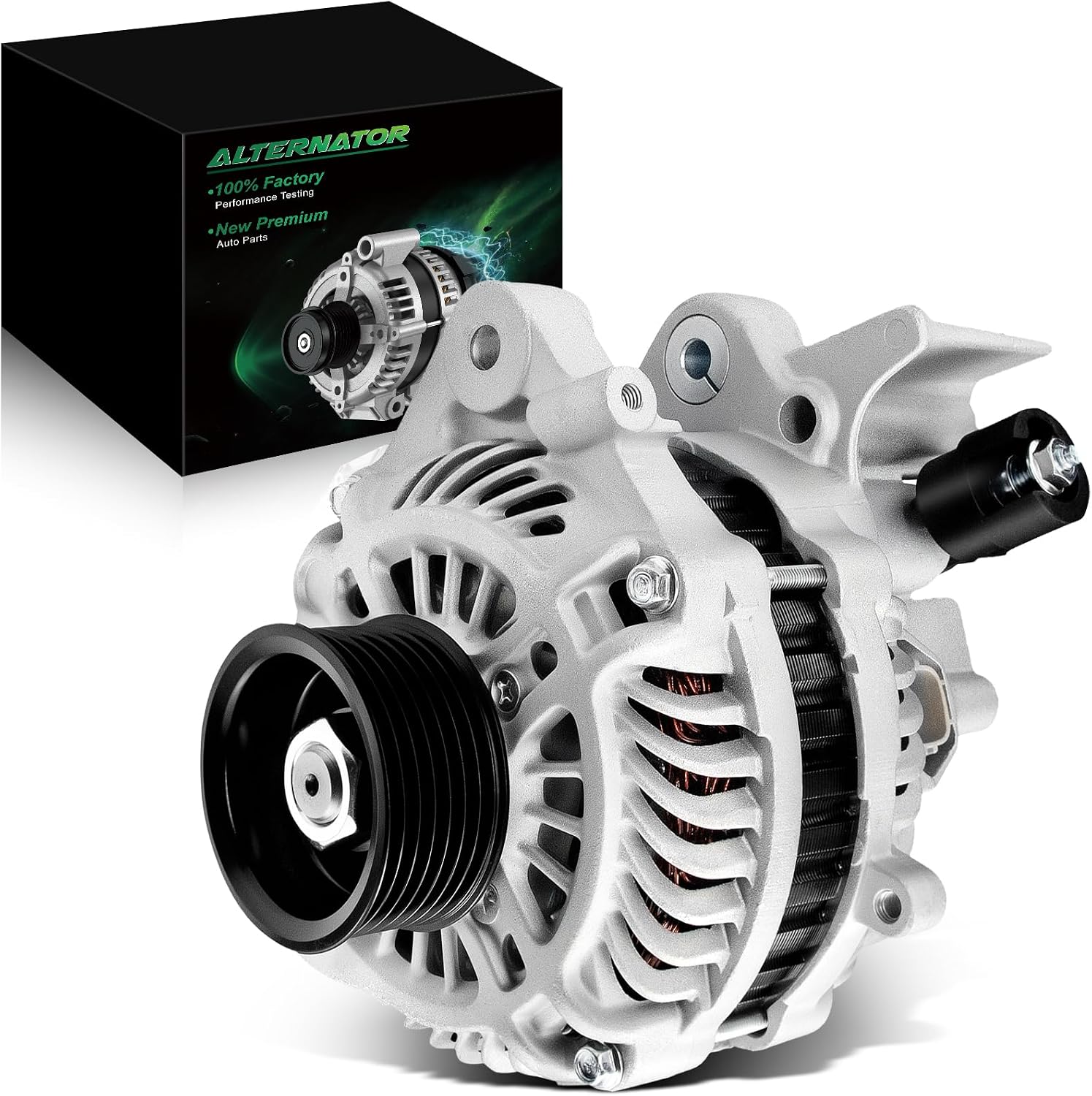
This SZKAIDAG alternator is a bolt-in replacement for 1.8L Honda Civic applications and supplies 12 volts at up to 80 amps through a 7-groove, clockwise pulley. It is typically used to replace a failing factory alternator to restore charging, eliminate battery warning lights, and support electrical loads while driving. Notable features listed include corrosion-resistant alloy exterior, noise reduction measures, and built-in protections for overload, short circuits, and temperature. In practice buyers report straightforward fitment and charging near factory levels after installation; installers should still follow basic precautions like disconnecting the battery and checking belt alignment. The unit aims for quiet operation and accessible service points for routine checks, which helps reduce shop time. Limitations to consider are that long-term durability varies between users and a small number of reviews report early failures, so keep the vehicle monitored after installation and verify electrical readings before concluding the repair was successful.
Best for: Buyers who want a ready-to-install replacement that matches the Civic 1.8L charging spec and value real-world feedback before committing should find this a practical choice.
Less Ideal for: If you prefer a long-proven OEM-brand alternator or need a unit for extensive high-current aftermarket electrical setups, consider alternatives tailored for heavy accessory loads.
- Direct-fit replacement for 2006–2011 Honda Civic 1.8L applications, simplifying installation
- Built to reduce operating noise for a quieter cabin
- Includes overload, short-circuit, and temperature protection for safer operation
- Corrosion-resistant exterior material intended to resist engine-bay conditions
- Some customers report premature failures so long-term reliability is not guaranteed
- Designed specifically for clockwise rotation and a 7-groove pulley which limits interchangeability
Verdict: If you need a drop-in alternator for a 2006–2011 Honda Civic 1.8L that balances factory-style fitment and quiet operation with strong user-reported fit and function, this unit is a solid value.
7. A-Premium 80A 12V Alternator for Honda Civic 1.8L (2006–2011)
| Voltage | 12 Volts |
|---|---|
| Amperage | 80 Amps |
| Rotation | CW (Clockwise) |
| Pulley | 7-Groove |
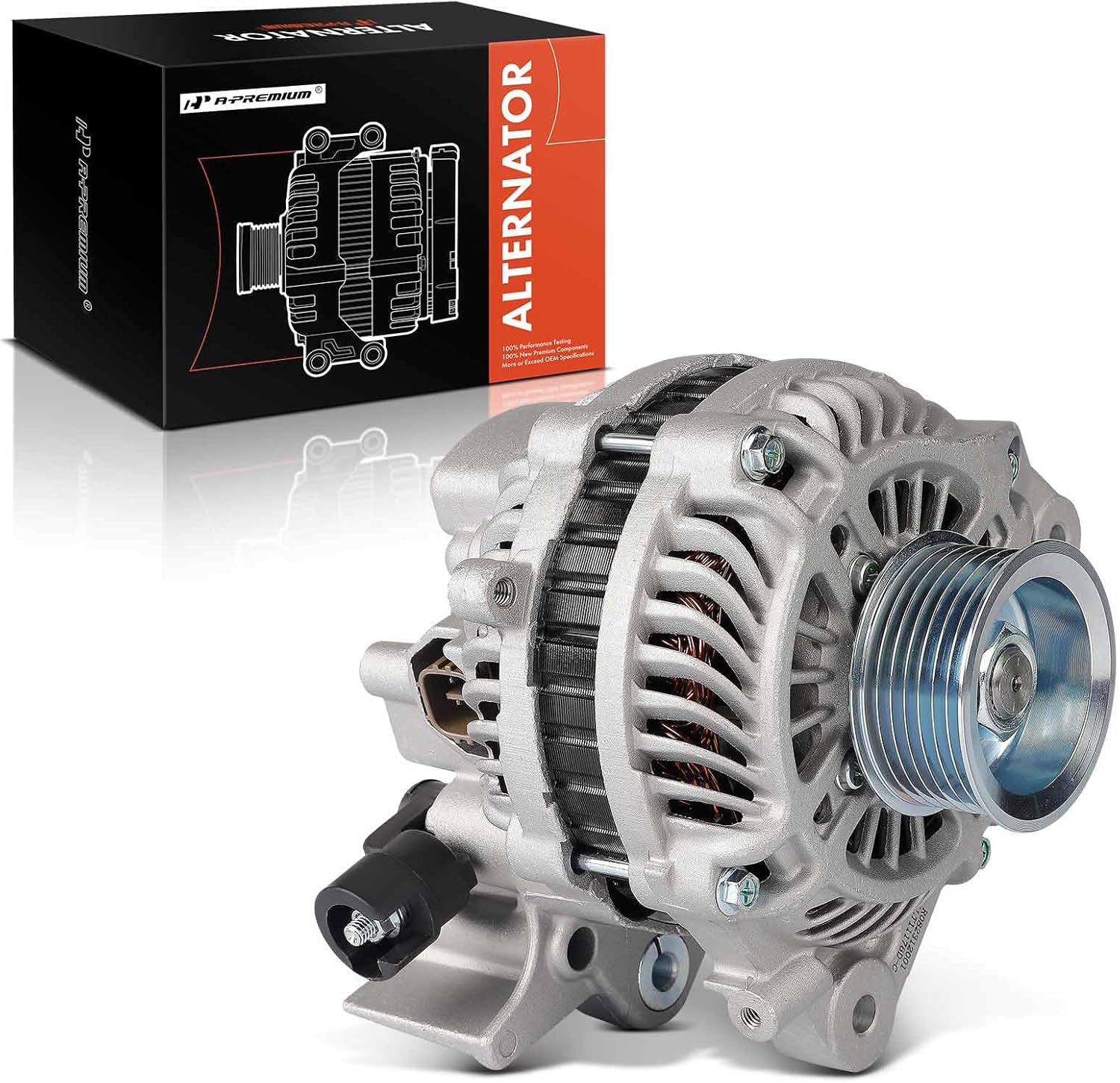
This alternator is a direct-style replacement for 2006–2011 Honda Civic 1.8L models and supplies up to 80 amps at 12 volts to recharge the battery and run vehicle electrical systems. It uses a clockwise rotation and a 7-groove pulley to match factory drive components, and the seller states it is assembled from 100 percent new parts rather than rebuilt cores. In practice that means it installs and bolts in like the factory unit and should restore charging performance for an older Civic with a failing alternator. Buyers will appreciate the clear vehicle fitment, typical aftermarket value compared with dealer parts, and the included one-year unlimited-mileage guarantee. Expect a straightforward swap if you or a mechanic follow standard alternator replacement steps, though fitting can require the correct belt tensioner tool and some mechanical experience. This is a budget-conscious replacement with good user reports of fit and function, but long-term durability will depend on installation and local conditions.
Best for: Buyers who want a close-to-factory replacement that restores charging performance without paying dealer prices and who prefer a product with clear fitment and a short warranty for peace of mind.
Less Ideal for: Drivers seeking a long-term, high-end OEM alternator or extended warranty coverage should consider dealer or premium branded replacements instead.
- Designed for 2006–2011 Honda Civic 1.8L fitment so bolt pattern and pulley match factory layout
- Constructed from new components instead of reman parts, reducing unknown wear
- 80A output meets charging needs for stock electrical loads
- Clear rotation and pulley spec (CW, 7-groove) simplifies compatibility checks
- One-year unlimited-mileage guarantee provides short-term protection
- Not a brand-name OEM unit, so long-term reliability may vary between batches
Verdict: A cost-effective, all-new 80A alternator that provides factory-style fit and charging for 2006–2011 Honda Civic 1.8L owners who want a reliable, budget replacement.
Choosing the Right Honda Civic Coupe Alternator: Key Factors to Consider
Electrical Output and Amperage
The alternator must supply enough current to handle the Civic Coupe's electrical load under various driving conditions. That includes the charging requirement for the battery plus accessories such as lights, HVAC, and audio systems. Undersized output can cause battery drain during heavy accessory use or idle, while correctly rated amperage ensures steady voltage and reduces stress on the charging system.
Look for specified continuous output and peak capacity numbers, and consider whether you have aftermarket accessories that increase load. A slightly higher rated alternator can provide headroom but must match the vehicle's voltage regulator strategy to avoid overcharging.
Fitment and Mounting
Proper mounting alignment, pulley type, and connector compatibility are essential to avoid installation headaches on the Civic Coupe. Differences in pulley diameter or rib count can change belt tension and affect accessory drive performance. Connector pinouts and harness shapes must match the factory wiring to maintain sensor and warning lamp function.
Choosing an alternator with exact OEM-style mounting points and hardware reduces labor time and the risk of improper installation. Verify physical dimensions and clearance in the engine bay to prevent interference with nearby components.
Regulator and Voltage Control
The internal voltage regulator manages output to protect the battery and electronics. A regulator tuned to the Civic Coupe's charging profile prevents overcharging, undercharging, and erratic voltage swings that can produce electrical gremlins. Look for alternators with reliable regulator components and clear specifications on voltage tolerance.
Integrated regulator robustness matters because a failing regulator is a common source of alternator-related issues. Confirm whether the alternator uses an internal or external regulator and ensure it matches the vehicle's original design.
Build Quality and Thermal Management
Alternators operate in hot, confined spaces, so heat dissipation and durable internal components are important for longevity. Quality bearings, robust windings, and corrosion-resistant housings resist premature failure from vibration and road conditions. Heat management features such as improved ventilation or better-grade insulation increase service life.
Consider construction details that affect durability under stop-and-go city driving or prolonged high-RPM highway use. A well-built unit lowers the chance of intermittent failures and reduces the need for repeated replacements.
Warranty and Parts Support
Warranty length and terms reflect both manufacturer confidence and the level of post-purchase support available. A clear warranty that covers core failures, bearings, and regulators gives peace of mind and may reduce ownership cost through replacements or repairs. Check what is required to keep the warranty valid, such as professional installation or retained proof of purchase.
Access to replacement parts or rebuild options matters for long-term maintenance. Understand warranty exclusions and whether coverage is transferable if you sell the vehicle.
Installation Complexity and Tools Required
Some alternators are straightforward swaps while others require belt tensioner adjustments, special sockets, or temporary repositioning of engine components. Installation complexity affects whether you can do the job yourself or should plan for professional labor. Consider the availability of clear instructions and whether mounting hardware or terminals are included to avoid extra trips to the parts store.
Factor in common service steps such as battery disconnection, belt removal, and torque specifications. If you are tracking labor time or cost, a simpler installation can be a decisive factor when selecting among otherwise similar units.
Common Alternator Symptoms in the Civic Coupe
Recognizing signs of charging system trouble helps you avoid being stranded. Dim or flickering headlights, especially at idle, suggest reduced alternator output. Similarly, warning lights on the dash or a battery charge indicator that illuminates intermittently often point to inconsistent voltage production.
Additional symptoms include a whining or grinding noise from the front of the engine that changes with RPM, which can indicate bearing wear or internal damage. Electrical accessories that behave erratically, such as flickering dash lights or power windows operating slowly, are also typical warning signals.
- Dim or flickering lights at idle
- Intermittent battery/charging warning lamp
- Unusual noises from alternator area
- Slow or inconsistent accessory operation
How Alternator Testing Works
Basic on-vehicle testing starts with a multimeter check of battery voltage with the engine off and with the engine running. A properly working alternator should raise system voltage above the battery resting voltage when the engine is running, typically around the mid 13 to 14 volt range, reflecting charging activity.
Load testing and ripple checks reveal issues that a simple voltage test might miss. A load test simulates accessory draw and shows whether the alternator maintains output under demand. A scope or diode tester can measure electrical ripple to detect failed diodes or rectifier issues that lead to erratic charging.
- Measure resting battery voltage, then charging voltage with engine running
- Perform a load test under accessory draw
- Check for excessive AC ripple to find diode faults
Alternator Maintenance and Rebuild Options
Regular inspection of mounting bolts, belt condition, and electrical connections can prevent many alternator-related failures. Tight, corrosion-free terminals and a properly tensioned belt reduce stress on bearings and maintain efficient charging.
When an alternator fails, owners can weigh replacement against rebuild options. A rebuild kit lets you replace wear-prone components like brushes, bearings, and diodes if the housing and core are in good condition. Rebuilding can be cost-effective but requires mechanical skill and access to correct parts.
- Inspect belts and terminals during routine servicing
- Rebuild kits replace brushes, bearings, and diodes when feasible
- Assess core condition before committing to a rebuild
Installation Tips for Civic Coupe Owners
Before starting, disconnect the battery and note the routing of the accessory belt. Loosen the tensioner to remove the belt and keep track of fasteners and spacers. Confirm the replacement alternator has the same pulley type and groove count to avoid belt misalignment.
Torque mounting bolts to factory specifications and recheck electrical connectors for tight fit and corrosion-free contacts. After installation, verify charging voltage and listen for abnormal noises. If you are unfamiliar with these steps, plan ahead for either help from an experienced friend or a professional installer.
- Disconnect battery and document belt routing
- Use correct pulley and belt groove count
- Torque bolts to spec and verify electrical connections
When to Consider an Alternator Rebuild Versus Replacement
Deciding to rebuild depends on the alternator core condition and the availability of quality rebuild parts. If the housing, stator, and rotor are undamaged and the failure is due to brushes, bearings, or diodes, a rebuild kit can restore function cost-effectively. However, if internal damage or corrosion is present, a full replacement is often more reliable.
Consider labor and turnaround time too. Rebuilding requires more hands-on time and possibly specialized tools. For owners who need quick restoration of charging reliability, a direct replacement that fits without modification is usually the faster option.
- Rebuild when core parts are intact and rebuild parts are available
- Replace when internal damage or corrosion is present
- Factor in labour time and urgency when choosing
Still looking for the perfect fit?
Select your Honda Civic configuration to see the most relevant Alternators recommendations
How We Chose the Best Honda Civic Coupe Alternator
We prioritized alternators that match the Civic Coupe's factory electrical specifications and mounting configuration, ensuring correct output voltage and amperage for typical engine and accessory loads. Compatibility and fitment were crucial: we filtered for correct pulley type, connector layout, and physical dimensions to avoid modifications during installation.Durability and thermal performance were evaluated because Civic Coupes often operate in mixed urban and highway conditions where heat and vibration affect long-term reliability. Electrical output stability and low ripple were considered to protect sensitive electronics and extend battery life. Ease of installation and availability of mounting hardware or clear instructions were included since many owners perform repairs themselves or use independent shops.We also looked at warranty coverage and replacement part support as indicators of manufacturer confidence. Excluded were alternators that required undocumented modifications, ambiguous fitment claims, or lacked basic technical specifications. Final selections balanced technical fit, durability, and owner-friendly installation features.
Our full evaluation process is outlined in our review methodology.
FAQ
How do I know if the alternator is the problem and not the battery?
Often the easiest check is a voltage test: a weak battery will show low voltage with the engine off, but a functioning alternator raises system voltage to the mid 13 to 14 volt range when running. If voltage remains low with the engine running or drops under load, the alternator is likely at fault. Additional checks like ripple testing can confirm alternator-specific faults.
Can I replace the alternator on a Civic Coupe myself?
Many owners with basic mechanical skills can perform the swap by disconnecting the battery, removing the belt, and unbolting the alternator. Ensure you have the correct tools, observe torque specs, and verify pulley compatibility. Plan for about an hour or more depending on experience and access to the mounting bolts.
Are rebuild kits a reliable option for alternator failures?
Rebuild kits can be reliable if the alternator core is in good condition and only wear items like brushes, diodes, or bearings have failed. Success depends on correct parts and careful assembly. If the core shows damage or heavy corrosion, a full replacement is usually a safer long-term choice.
What maintenance helps extend alternator life in the Civic Coupe?
Regularly inspect and maintain the accessory belt, keep electrical terminals clean and tight, and address cooling or oil leaks that can contaminate the alternator. Promptly replacing a worn belt and ensuring proper belt tension reduces bearing stress and helps prevent premature failure.
Will a higher-amperage alternator cause problems?
Using a higher-amperage alternator generally provides more headroom for accessories but must match the vehicle's voltage regulation approach. If the alternator is significantly different in design or requires changes to wiring or the regulator, it may introduce compatibility issues. Choose units designed to be compatible with the Civic Coupe's electrical system.
How long should a replacement alternator last in this vehicle?
Alternator lifespan varies with driving conditions, heat exposure, and maintenance but typically ranges from several years to over a decade. Regular inspections and keeping belts and connections in good condition extend service life. Warranty terms can also indicate expected durability.
Final Verdict
Prioritize correct electrical output and fitment when choosing an alternator for a Honda Civic Coupe, since those factors most directly affect charging reliability and installation ease. Balance build quality and warranty against installation complexity to match your needs, whether you plan to install the unit yourself or use a shop.If you need straightforward reliability, favor alternators that match OEM mounting and electrical specifications and offer solid post-purchase support. For owners with higher accessory loads or who prefer rebuild options, ensure the chosen path preserves charging stability and long-term durability.
Explore More:
- Check out all Honda Civic parts & accessories
- Explore Alternators Maintenance & Repair Guides
- Explore Electrical System
- Browse all Auto Parts
