

Note: This article contains affiliate links. If you click on these links and make a purchase, I may earn a small commission at no extra cost to you. This helps support my research and content. Read my full affiliate disclosure here.
If your Civic is from the 2016-2021 FC and FK run and shows dimming lights or warning indicators, the alternator is a likely culprit. A properly functioning alternator keeps the battery charged and powers the vehicle electrical system under load, so choosing the right replacement matters for daily reliability and long-term durability.This guide covers the top shortlisted alternators suitable for the 2016-2021 Honda Civic scope. We evaluated candidates for electrical output stability, mechanical fitment, and serviceability to help you pick an option that matches how you drive and maintain your Civic. Read on to see the key evaluation points and practical considerations before installation.
Looking for other parts? See all Honda Civic parts & accessories.
Top Picks at a Glance


1. KAX 135A Replacement Alternator 11931N for 2016–2024 Honda Civic and 2023–2025 HR-V

| Amperage | 135 Amps |
|---|---|
| Voltage | 12 Volts (AC) |
| Pulley class | SD7 |
| Rotation | Clockwise |
This KAX alternator is a direct-replacement 135A unit intended for late‑model Honda Civics and HR‑V models. It installs like a factory replacement and is built with copper windings, silicon steel laminations, and a heat‑dissipation design to deliver steady current for demanding electrical loads. The unit is tested for vibration resistance, insulation performance, salt spray, and wide temperature tolerance, which helps it hold up in daily driving and harsher climates. It uses a 7‑groove SD7 pulley and clockwise rotation matching the factory setup to simplify swap‑in installation without modifications. Practical benefits include higher amperage to support accessories or batteries that have aged and construction meant to reduce noise and extend service life. Important limitations are that fitment is specific to the listed Civic and HR‑V models and the product listing does not include vehicle‑specific harnesses or installation hardware, so plan for potential reuse of factory parts or basic shop supplies.
Best for: Buyers seeking a balanced, reliable replacement alternator that matches factory charging capacity and holds up to daily driving and moderate environmental exposure.
Less Ideal for: Drivers who need a universal alternator for multiple vehicle makes or those wanting a plug‑and‑play kit with new harnesses and mounting hardware included.
- Factory‑style 135A output supports modern electrical loads and accessories.
- Premium copper windings and silicon steel laminations for stable current and improved durability.
- Tested for vibration, temperature range, and salt spray for longer service life in real driving conditions.
- Designed with SD7 7‑groove pulley and clockwise rotation for direct replacement fitment.
- Does not include installation hardware or vehicle‑specific connectors, so extra parts may be needed.
- Fitment limited to the listed Honda Civic and HR‑V model years and engine configurations only.
Verdict: A practical, factory‑style 135A replacement built for reliable charging on compatible 2016–2024 Civic and 2023–2025 HR‑V models.
2. Oktiger Upgraded 2.0L Alternator for Honda Civic (Automatic) 12V 135A, 7-Groove Pulley
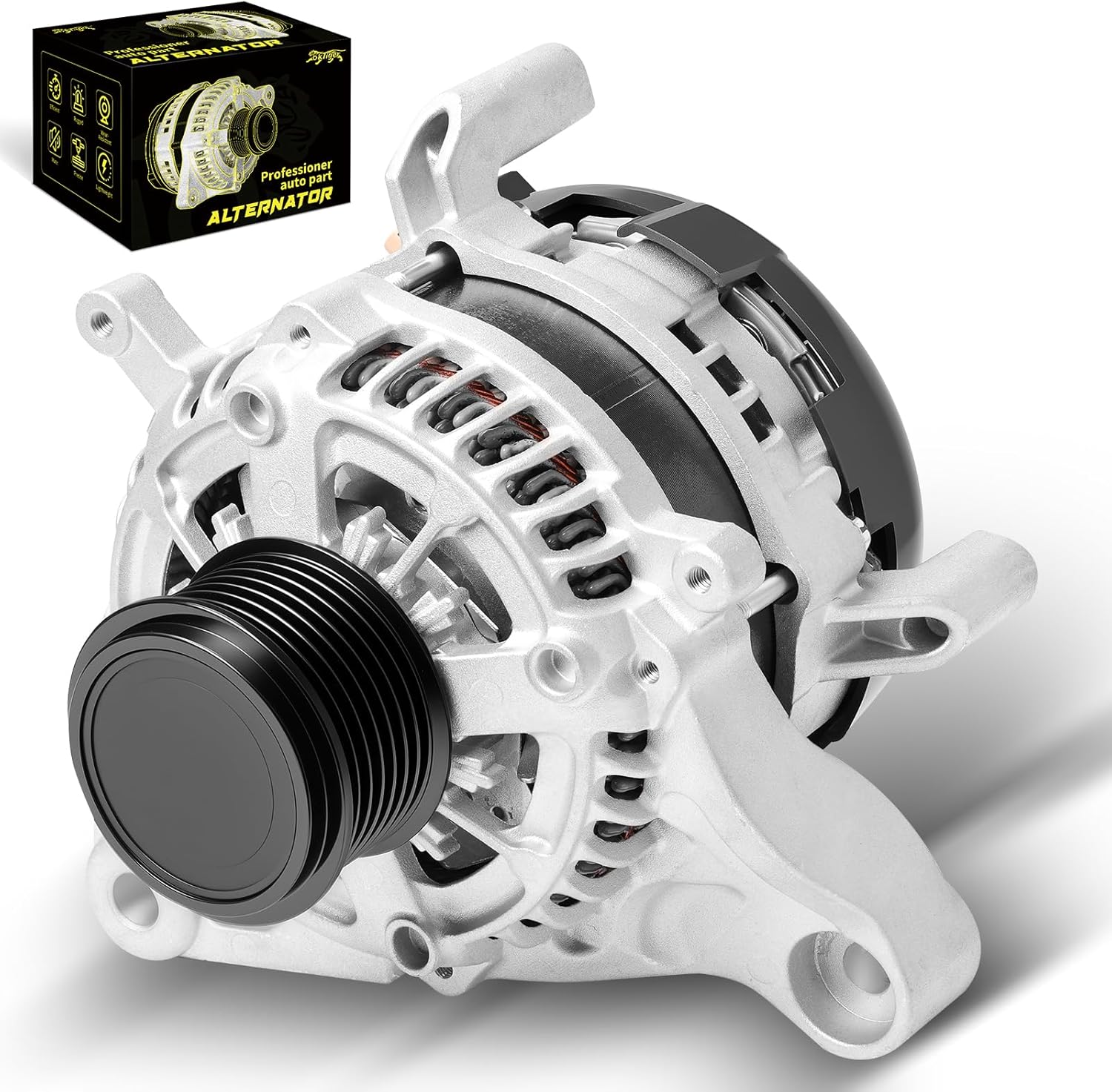
| Fitment | Honda Civic 2.0L automatic (2016–2022 variants listed) |
|---|---|
| Voltage | 12V |
| Amperage | 135A |
| Rotation | CW (Clockwise) |
This Oktiger upgraded alternator is a direct-replacement unit built for 2.0L Honda Civic models with automatic transmissions. It provides a 135 amp, 12V output and uses a clockwise 7-groove pulley so it matches the factory drive setup. The unit is advertised as fully new with precision CNC castings, a die-cast aluminum housing, and pure copper windings for improved heat resistance and long life. In everyday use it keeps the battery charged while running accessories and can support higher electrical loads that performance drivers might add. Oktiger highlights factory-style voltage regulation, upgraded bearings and seals for quieter operation, and endurance testing to validate durability. A practical benefit is the 100% factory testing that helps avoid early failures after installation. Limitations are fitment specificity and the need to confirm your Civic’s transmission and pulley orientation before buying since this only fits automatic models with the listed pulley type; installation still may require a professional for proper belt tension and wiring. For performance-minded drivers this alternator offers a robust, high-output factory-style replacement without major tuning changes.
Best for: Buyers who want a higher-output, factory-style replacement to support added electrical loads and reliable daily performance in 2016–2021 Civic 2.0L automatic models.
Less Ideal for: Drivers who need a unit for manual-transmission Civics, a different pulley rotation/groove count, or those seeking custom high-performance alternators beyond factory-spec upgrades.
- High 135A output suitable for additional electrical accessories or heavy accessory loads
- Built with pure copper windings and die-cast aluminum housing for improved heat and corrosion resistance
- Factory-tested units with upgraded bearings and seals for quieter, longer operation
- Only compatible with automatic-transmission Civics that use a clockwise 7-groove pulley, so fitment is narrow
Verdict: Choose this Oktiger alternator if you want a factory-style, higher-output replacement built and tested to handle added electrical demand on 2.0L Civic automatic models.
3. SCITOO 12V 135A Alternator for Honda Civic 2.0L (2016–2022)

| Voltage | 12 Volts |
|---|---|
| Amperage | 135 Amps |
| Rotation | CW (Clockwise) |
| Regulator | IR (Internal Regulator) |
This SCITOO alternator is a direct replacement option for 2.0L Honda Civic models from 2016–2022. It provides 135 amps at 12 volts with a clockwise rotation and internal regulator and fan, so it plugs into the vehicle electrical system like a factory replacement. Typical use is to restore charging performance after a failing factory alternator; installers report it fits the Civic mounting and pulley class and can deliver noticeably stronger charging output versus older low‑output units. The internal regulator and fan simplify installation because there are no external components to route, and the SC7 pulley class matches common belt profiles on these Civics. Buyers should expect standard installation steps such as disconnecting the battery and checking belt tension; fit can be tight on CVT-equipped cars and some users have noted occasional early failures, so careful handling and correct torque on fasteners matter. In short, it is a practical, higher‑output replacement that balances ease of swap with a few reliability caveats reported by some owners.
Best for: Buyers who want a practical, high‑output factory‑style replacement to restore reliable charging on a 2.0L Civic and prefer a straightforward swap that matches factory mounting and pulley type.
Less Ideal for: Shoppers seeking guaranteed long‑term warranty support or the absolute highest durability for heavy accessory loads should consider premium OEM or upgraded high‑output options sold with extended backing.
- Direct OEM reference fit for Honda Civic 2.0L 2016–2022 matching OE part numbers
- Higher output at 135 amps for stronger charging and accessory support
- Internal regulator and fan reduce extra wiring and simplify swap compared with externalized designs
- SC7 pulley class and clockwise rotation match common Civic belt and pulley setups
- Some customers report early failures in a minority of units, indicating variable long‑term reliability
- Tight fit on CVT models can make installation more difficult and may require extra disassembly
Verdict: A practical, higher‑output factory‑style replacement alternator for 2016–2022 Civic 2.0L owners who want stronger charging with a straightforward bolt‑in swap.
4. MISIOEK 12V 135A Alternator with 7-Groove Pulley for 2016-2022 Honda Civic 2.0L

| Voltage | 12V |
|---|---|
| Amperage | 135A |
| Rotation | Clockwise |
| Pulley | 7-groove |
This MISIOEK alternator is a direct-fit replacement intended for 2016–2022 Honda Civic 2.0L four-cylinder engines. It delivers 12 volts at 135 amps and uses a clockwise rotation with a seven-groove pulley, so installation should match stock belt and mounting arrangements on compatible Civics. The unit is factory-tested for mechanical reliability and comes with a one-year unlimited-mileage quality guarantee, which gives basic protection after installation. In real-world use it restores charging capacity for a vehicle with a failing alternator and supports typical electrical loads like lights, infotainment, and battery charging without needing upgrades. Expect straightforward swap-in fitment for the specified Civic models, but buyers should verify pulley and connector compatibility with their specific production date and accessory layout before ordering. The product emphasizes tested components and durability but does not include extended warranty coverage or dealer-level support, so long-term reliability will depend on proper installation and maintenance.
Best for: Buyers looking to replace a failed alternator on a 2016–2022 Civic 2.0L who prioritize an affordable, ready-to-install unit that mirrors factory fit and function.
Less Ideal for: Drivers planning heavy electrical upgrades, performance modifications, or who want long-term dealer-backed coverage should consider higher-tier or OEM-backed alternatives.
- Direct-fit design for 2016–2022 Honda Civic L4 2.0L reduces installation time and complexity
- 135A output supports standard electrical loads and charging for daily driving
- 7-groove pulley and clockwise rotation match factory belt systems on compatible Civics
- Mechanically tested before leaving the factory for baseline reliability
- One-year unlimited-mileage quality guarantee provides short-term protection
- No extended warranty or manufacturer-backed long-term support beyond one year
- Product listing lacks detailed connector and harness diagrams, requiring buyer verification for some model years
Verdict: A budget-friendly, mechanically tested 135A replacement that restores factory charging performance for 2016–2022 Honda Civic 2.0L owners.
5. A-Premium 12V 135A Alternator for Honda Civic 2.0L (2016–2023) with 7-Groove Decoupler Pulley, Clockwise

| Voltage | 12V |
|---|---|
| Amperage | 135A |
| Rotation | Clockwise |
| Number of Grooves | 7-Groove Pulley |
This A-Premium alternator is a direct-fit replacement for the 2.0L Honda Civic automatic from 2016 through 2023 and is built from all-new components to restore charging performance. It provides 12 volts at a 135 amp output, which covers factory electrical loads and battery charging for standard trim levels. The unit uses a clockwise rotation and a 7-groove decoupler pulley to match belt drivetrains on compatible Civics, and the seller includes a one-year unlimited-mileage guarantee. In real-world use this alternator is intended for bolt-in swaps during roadside repairs or routine drivetrain maintenance and should bring weak or failing charging systems back to factory-level output. Expect straightforward installation if your vehicle matches the listed fitment and pulley orientation. Limitations are that it only fits automatic-transmission models and the listing does not include extensive dyno or thermal testing data, so installers who need verified endurance numbers may prefer a shop-tested remanufactured or OEM unit.
Best for: Buyers who need a reliable, direct-replacement alternator to restore factory charging on a 2016–2023 Civic 2.0L automatic and prioritize a straightforward bolt-in repair and long-term component freshness.
Less Ideal for: Drivers looking for alternators for manual-transmission Civics or those who require documented performance testing for heavy aftermarket electrical builds should look elsewhere.
- Direct-fit design for 2016–2023 Honda Civic 2.0L automatic models simplifies installation
- 135 amp output suitable for factory electrical loads and battery charging
- Comes with a 7-groove clockwise decoupler pulley to match common belt setups
- Built from 100% new components rather than reman parts
- Compatible only with automatic-transmission 2.0L Civics, not manual models
Verdict: A-Premium’s all-new 12V/135A alternator is a dependable bolt-in option to restore factory charging on 2016–2023 Honda Civic 2.0L automatic models.
6. PHILTOP 11931N 12V 135A Alternator Replacement for Honda Civic / HR-V

| Amperage | 135 Amps |
|---|---|
| Voltage | 12 Volts |
| Rotation | CW |
| Pulley type | SD7 |
| Position | Front |
This PHILTOP 11931N alternator is a direct-fit replacement built to deliver factory-style charging for compatible Honda Civic and HR-V models. It supplies 135 amps at 12 volts with a clockwise SD7 pulley and is intended for front-position installations. The unit is designed and tested to withstand wide temperatures, salt spray and vibration, and includes protective features such as overload and low-oil shutoff to protect vehicle electronics. Buyers will appreciate that the rotor, stator and core are factory-matched and impregnated for stable high-speed operation and long service life. Installation generally uses existing mounting bolts and hardware but may require basic professional tools and a mechanic for safe, correct wiring. The alternator does not typically include extra bolts or accessories, so plan to reuse original fasteners. For buyers focused on proven reliability, this alternator offers a well-tested, OEM-style charging solution though professional installation is recommended to ensure correct fit and electrical connections.
Best for: A buyer who prioritizes a reliable, factory-quality charging system and wants a replacement alternator with documented testing and protective features for daily driving and long-term ownership.
Less Ideal for: Not suited for someone seeking a plug-and-play unit with included hardware or for DIYers without basic mechanical and electrical experience who cannot follow installation guidance.
- Factory-matched core, rotor and stator for stable, OEM-style electrical output
- Rated 135 amps to support modern Civic electrical loads
- Designed for wide temperature range and vibration resistance for durability
- Includes overload protection and low-oil shutoff to protect vehicle electrical system
- Does not include mounting bolts or accessory hardware, so original fasteners must be reused or sourced separately
Verdict: Choose this PHILTOP alternator when you want a factory-matched, tested 135A replacement to restore reliable charging on supported Honda Civic and HR-V models.
7. MINPART 12V 135A Replacement Alternator for 2016–2023 Honda Civic 2.0L (Automatic)

| Voltage | 12 Volts |
|---|---|
| Amperage | 135 Amps |
| Rotation | CW (Clockwise) |
| Pulley | 7-Groove |
| Regulator | Internal (IR) |
This MINPART alternator is a direct-replacement unit that restores charging performance for affected Honda Civic 2.0L automatic-transmission cars. It provides a 12V output at 135 amps through a 7-groove pulley and clockwise rotation, and includes an internal regulator and fan for straightforward installation and operation. The die-cast aluminum housing and copper windings aim to deliver stable output and resist shorting, and the product is built and tested under ISO/IATF processes to match factory-style performance. In practice it replaces a failed factory alternator to stop battery drain, prevent dashboard warning lights, and restore reliable electrical function. The package appears aimed at bolt-in fits for the listed Civic years, but it only fits automatic transmissions and the specific pulley/rotation must match the vehicle. Buyers should confirm OEM reference numbers and connector layout before purchase because fitment differences between trim levels or manual-transmission models will prevent installation without modification.
Best for: Buyers who want a dependable, factory-style replacement alternator to restore charging performance on a 2016–2023 Civic 2.0L with automatic transmission and prioritize minimizing risk and downtime.
Less Ideal for: Drivers with manual-transmission Civics, non-2.0L engines, or those who need a universal or modified high-output alternator for performance applications should look elsewhere.
- Direct-fit replacement for 2016–2023 Civic 2.0L automatic models with OEM reference numbers listed
- Rated 135A output suitable for modern electrical loads and battery charging
- Internal regulator and fan simplify installation and reduce need for external components
- Die-cast aluminum body and copper windings for factory-style durability and heat dissipation
- Only compatible with automatic-transmission configurations and the specified clockwise 7-groove pulley, limiting fitment
- No vehicle-specific wiring adapter included, so connector differences may require splicing or an adapter
Verdict: A factory-style 12V/135A direct-replacement alternator for 2016–2023 Civic 2.0L automatic models that restores reliable charging with minimal fuss.
Choosing the Right 2016-2021 Honda Civic Alternator: Key Factors to Consider
Electrical Output and Amperage Rating
Alternator output must meet or exceed the electrical demand of your 2016-2021 Honda Civic. Modern Civics can have higher accessory loads from HVAC blowers, infotainment, and safety systems, so selecting an alternator with adequate amperage prevents battery drain during heavy use.
Look for models with steady-rated output at normal engine idle and higher RPM. Overstated peak ratings are less useful than consistent continuous output values. Matching the correct amperage avoids overworking the unit and reduces the chance of premature failure.
Voltage Regulation and Electrical Stability
A good regulator maintains voltage within a narrow band to protect electronics and ensure reliable starts. Erratic voltage leads to dimming lights, flickering gauges, or overcharging the battery, which shortens battery life on a Civic.
Consider alternators with proven regulator designs and low ripple characteristics. On-vehicle testing or documented specifications for voltage tolerance give confidence the alternator will behave predictably under variable loads and temperature ranges.
Mechanical Fitment and Pulley Type
Correct bolt pattern, housing orientation, and pulley type are essential for straightforward installation on a 2016-2021 Civic. Misfit housings or wrong pulley designs can require custom work or lead to belt alignment problems that stress bearings and belts.
Confirm pulley diameter and whether the unit uses a standard serpentine pulley or a specific clutch pulley. Ensuring the alternator matches factory mounting points reduces installation time and the risk of premature belt wear.
Bearing and Cooling Design
Bearings and cooling determine how well an alternator handles continuous duty and heat. Civic owners who do a lot of city driving or towing-equivalent loads need units with robust bearings and adequate ventilation to avoid overheating.
Sealed, high-quality bearings and thoughtful cooling fins or venting prolong service life. Consider build features like double-sealed bearings or improved airflow paths that resist contamination and reduce thermal stress.
Serviceability and Repair Options
Ease of repair matters if you plan to keep the Civic long term. Alternators that allow replacement of regulators, brushes, or bearings extend the unit's service life and reduce lifetime ownership cost.
Availability of rebuild kits, clear service documentation, and standard fasteners makes it easier for DIYers or independent shops to maintain the alternator. Prioritizing serviceable designs helps avoid full-unit replacement for common failures.
Warranty and Manufacturer Support
Warranty duration and what it covers indicate confidence in build quality. A longer, clear warranty that covers core components such as the regulator and bearings gives added protection for Civic owners.
Consider how warranty terms are upheld and whether documentation and support resources are readily available. A strong warranty reduces risk for owners who drive frequently or operate the vehicle in varied climates.
Common Alternator Symptoms on the 2016-2021 Civic
Alternator issues often present as electrical symptoms before a complete failure. On the 2016-2021 Civic FC and FK, common signs include dimming headlights at idle, dashboard warning lights, and slow cranking during startup. These symptoms indicate the charging system may not be keeping the battery topped off under load.
Other symptoms to watch for are intermittent electrical accessory failures or a battery that discharges overnight. Observing when symptoms occur, such as only while idling or under heavy accessory load, helps pinpoint whether the alternator or another part of the charging system is at fault.
- Dimming or flickering lights at idle or low RPM
- Battery warning light or other dashboard alerts
- Slow or sluggish engine crank
- Unexplained battery discharge between drives
- Unusual noises from the engine bay that change with RPM
Quick Alternator Testing Steps You Can Do
A few simple checks can help determine if the alternator is the issue before replacing it. Start by measuring battery voltage with the engine off and then with the engine running. A properly working charging system will show higher voltage with the engine running, typically in the 13.5 to 14.8 volt range under normal operating conditions.
Also inspect the belt condition and tension, as a slipping belt can mimic alternator failure by reducing charging output. For owners comfortable with basic tools, a clamp amp meter at the alternator output can confirm current delivery under load. If you are unsure, record the observed values to share with a technician for a quicker diagnosis.
- Measure battery voltage before and after starting
- Check belt condition and tension for slippage
- Look for loose or corroded electrical connections at the alternator
- Use a clamp amp meter to check output if available
- Note when symptoms occur to help isolate the problem
Installation Considerations for the Civic FC and FK
Installation on the 2016-2021 Civic FC and FK tends to be straightforward when the replacement alternator matches factory mounting and connectors. Ensure you have the correct torque specs for mounting bolts and confirm belt routing before removing the old unit. Disconnect the battery negative terminal to avoid shorts while working.
Some alternators may require brief accessory removal for access. Prepare basic hand tools and, if needed, a jack and stands to safely raise the vehicle for better access. After installation, verify charging voltage at idle and under light load, and recheck belt alignment after a short test drive.
- Disconnect battery negative before beginning work
- Confirm bolt pattern and connector compatibility
- Follow factory torque specs for mounting bolts
- Recheck belt alignment and tension after installation
- Test charging voltage after the first start and a short drive
When to Consider a Rebuild Kit Versus Full Replacement
Deciding between a rebuild kit and a full replacement depends on the alternator's failure mode and your long-term plans for the Civic. If the housing and stator are in good condition and the failure is limited to wear items such as brushes, bearings, or the regulator, a rebuild kit can be a cost-effective option that restores function while preserving the original unit.
However, if the alternator shows signs of internal damage, burnt windings, or severe corrosion, a full replacement is usually more reliable. Evaluate the availability of parts, your comfort level with disassembly, and whether the alternator design for the FC and FK is commonly serviced before choosing the rebuild route.
- Rebuild kits are suitable for wear-related failures
- Full replacement is better for internal electrical damage
- Check availability of specific rebuild parts for FC and FK alternators
- Consider labor time and tools required for a rebuild
- Factor in expected remaining service life when deciding
Protecting Your Charging System for Longer Service Life
Routine maintenance helps extend alternator life on a 2016-2021 Civic. Regularly inspect belts and pulleys, keep electrical connections clean and tight, and avoid prolonged low-RPM idling when practical. These habits reduce mechanical and thermal stress on the alternator.
Also, address battery health early because a weak battery forces the alternator to work harder. Replacing a failing battery promptly and ensuring proper terminal cleanliness will reduce cycling stress and help the alternator last longer.
- Inspect and replace worn belts promptly
- Keep battery terminals clean and tight
- Avoid frequent long idling periods
- Monitor accessory loads and avoid excessive aftermarket draws
- Schedule periodic charging system checks during routine service
Still looking for the perfect fit?
Select your Honda Civic configuration to see the most relevant Alternators recommendations
How We Chose the Best 2016-2021 Honda Civic Alternator
We prioritized alternators that match the 2016-2021 Honda Civic electrical and mounting specifications, focusing on units that deliver consistent voltage and current under typical driving loads. Our selection criteria emphasized real-world durability indicators such as bearing quality, regulator design, and cooling provisions because these directly affect service life on a Civic used for commutes or longer trips.We tested for output stability by comparing rated amperage to expected on-vehicle loads and looked for low voltage ripple and reliable voltage regulation. Fitment reliability was judged by bolt pattern compatibility, pulley type, and plug/connector match to minimize installation friction. We also considered serviceability factors like availability of rebuild kits or replaceable regulators and common failure points to simplify future repairs.Exclusions: units with unclear electrical specs, non-OEM-style mounting that requires custom brackets, or those lacking clear quality documentation were excluded. Final picks balanced electrical performance, mechanical compatibility, and long-term maintenance considerations specific to the 2016-2021 Civic FC and FK scope.
Our full evaluation process is outlined in our review methodology.
FAQ
How can I tell if the alternator or the battery is bad on my Civic?
Often the pattern of symptoms helps. If voltage measurements show low voltage with the engine running, that points to the alternator. If voltage is normal while driving but the car struggles to start after sitting, the battery may be weak. Both can cause similar symptoms so checking voltages before and after starting is a useful first step.
What are the typical repair options for alternator failures?
Common repair paths include replacing wear items like brushes, bearings, or the voltage regulator using a rebuild kit, or installing a full replacement unit if the stator or rotor is damaged. The best option depends on the failure cause, parts availability, and how long you plan to keep the vehicle.
Is alternator testing something I can do at home?
Yes, basic testing such as measuring battery voltage before and after starting or inspecting belt condition can be done with basic tools. More detailed tests that measure output current or voltage ripple require a multimeter or clamp meter and some familiarity with safety precautions.
How long should an alternator last on a 2016-2021 Civic?
Alternator life varies with driving conditions and maintenance but typically ranges from several years to well over a hundred thousand miles. Frequent short trips, heavy accessory use, or poor belt maintenance can shorten life, while clean electrical connections and proper cooling extend it.
Will replacing the alternator fix dimming headlights?
If dimming headlights are caused by inadequate charging voltage, replacing or repairing the alternator will typically resolve the issue. However, dimming can also result from weak batteries, poor grounding, or wiring problems, so confirm charging voltage and check connections before assuming the alternator is the sole cause.
Do alternator rebuild kits work for the Civic FC and FK units?
Rebuild kits can restore function when failures are limited to replaceable components like brushes, bearings, or regulators. Make sure the kit matches the specific alternator design used on your 2016-2021 Civic FC and FK and that parts are available; otherwise a full replacement may be the more reliable choice.
Final Verdict
When replacing an alternator on a 2016-2021 Honda Civic FC and FK, prioritize units that provide steady amperage, reliable voltage regulation, and proper mechanical fit. Consider serviceability and warranty terms if you plan to keep the car long term, and weigh rebuild options when the failure is limited to wear parts.Focus on matching electrical specs and mounting details to avoid installation hassles and premature wear. Choosing an alternator that balances output, durability, and repairability will give the most reliable charging performance for your Civic.
Explore More:
- Check out all Honda Civic parts & accessories
- Explore Alternators Maintenance & Repair Guides
- Explore Electrical System
- Browse all Auto Parts
