

Note: This article contains affiliate links. If you click on these links and make a purchase, I may earn a small commission at no extra cost to you. This helps support my research and content. Read my full affiliate disclosure here.
If you own a 2002-2006 Honda CR-V you know dependable braking is essential for everyday driving and safety. Replacing both pads and rotors at once can restore pedal feel, shorten stopping distances, and eliminate vibration or squeal that often develops as components wear.This guide covers the top shortlisted brake pad and rotor kits for the 2002-2006 CR-V (commonly identified by its second-generation chassis), explains why each option made the list, and walks through the key evaluation points like pad compound, rotor specs, and fitment. Read on to compare the practical tradeoffs so you can pick the kit that best matches your driving style and maintenance goals.
Looking for other parts? See all Honda CR-V parts & accessories.
Top Picks at a Glance


1. Detroit Axle Brake Kit for 2005–2006 Honda CR-V — Drilled & Slotted Rotors with Ceramic Pads

| Fitment years | 2005-2006 Honda CR-V |
|---|---|
| Rotor type | Drilled & slotted |
| Pad material | 100% ceramic |
| Rotor protection | Zinc dichromate plating |
| Includes | Front+rear rotors, front+rear pads, cleaner & fluid |
This Detroit Axle kit supplies both front and rear drilled-and-slotted rotors plus ceramic brake pads and basic hardware, so it replaces the whole stopping system in one purchase for 2005–2006 CR-Vs. The rotors are zinc-plated to resist surface rust and the drilled and slotted surface is intended to help initial bite and venting under repeated stops. The ceramic pads are metal-free, which reduces dust and gives a quieter street-oriented feel compared with semi-metallic pads. The kit also bundles brake cleaner and fluid, which is handy for a DIY install. Buyers should note this is an aftermarket replacement kit aimed at everyday driving rather than track use; ceramic pads trade ultimate fade resistance for lower noise and dust. A few reviewers reported missing small hardware pieces in some packages, so check the box before you start and have clips on hand if needed. For routine highway and city driving, this kit gives a complete, cost-effective refresh of braking components on the specified CR-V model years.
Best for: Buyers who want a balanced, all-in-one replacement for a 2005–2006 CR-V that prioritizes low dust, quiet operation, and a straightforward DIY install over extreme performance.
Less Ideal for: Drivers who do frequent high-speed track sessions or heavy towing and need pads optimized for extreme fade resistance should choose a performance-oriented brake package instead.
- Complete front and rear kit replaces rotors and pads in one purchase
- Zinc plating on rotors provides corrosion resistance
- Drilled and slotted rotor design helps heat dissipation and initial bite
- 100% ceramic pads reduce brake dust and tend to be quieter than metallic pads
- Includes brake cleaner and fluid for installation prep
- Some packages have arrived missing small hardware components requiring an extra trip to buy clips
Verdict: A convenient, factory-quality full brake replacement for 2005–2006 CR-V owners who want quieter, low-dust ceramic pads and corrosion-resistant drilled rotors in one kit.
2. PowerStop Z23 Front and Rear Brake Kit for Honda CR-V (2005–2006) — Drilled & Slotted Rotors with Z23 Carbon-Fiber Ceramic Pads

| Fitment | 2005-2006 Honda CR-V Front and Rear |
|---|---|
| Pad Type | Z23 Carbon-Fiber Ceramic |
| Rotor Type | Drilled & Slotted, Zinc-Plated |
| Included Components | Pads, 4 rotors, installation hardware, brake lube |
| Warranty | 60-day/36,000-mile |
This PowerStop Z23 kit is a complete bolt-on brake upgrade for 2005–2006 Honda CR-Vs, supplying both front and rear Z23 carbon-fiber ceramic pads, drilled and slotted rotors, and stainless-steel hardware. The Z23 pad compound is formulated for low dust, quiet operation and stronger stopping power than typical factory replacements, so it suits daily driving and spirited commutes without filling wheels with brake residue. The drilled and slotted rotors help evacuate gas and heat to reduce fade during repeated braking and are zinc plated to resist surface rust. Installation is straightforward since the kit is vehicle specific and includes the required hardware and lubricants. Expect improved pedal feel and cooler operating temperatures under heavier use, but keep in mind drilled rotors can require careful break-in and may not be necessary for strictly low-demand city driving. The kit offers a clear, factory-quality upgrade path for CR-V owners wanting more consistent performance than stock pads and rotors provide.
Best for: Buyers who want a straightforward, vehicle-specific upgrade that improves everyday braking performance and reduces dust and noise while preserving easy installation and reliability.
Less Ideal for: Drivers who only do low-speed, light commuting and prefer the lowest-cost stock replacements or who plan prolonged track sessions that demand race-focused, non-drilled rotors.
- Complete kit includes front and rear pads, rotors, and stainless-steel installation hardware for a single purchase
- Carbon-fiber infused ceramic pads deliver lower dust and quieter operation than standard semi-metallic pads
- Drilled and slotted, zinc-plated rotors improve cooling and resist surface corrosion under regular use
- Drilled rotors can be more susceptible to cracking than plain rotors under extreme track abuse
- Designed specifically for 2005–2006 CR-Vs so not applicable to other model years or vehicles
Verdict: A ready-to-install, vehicle-specific upgrade that boosts stopping power, reduces dust and heat, and replaces both pads and rotors in one purchase for 2005–2006 CR-Vs.
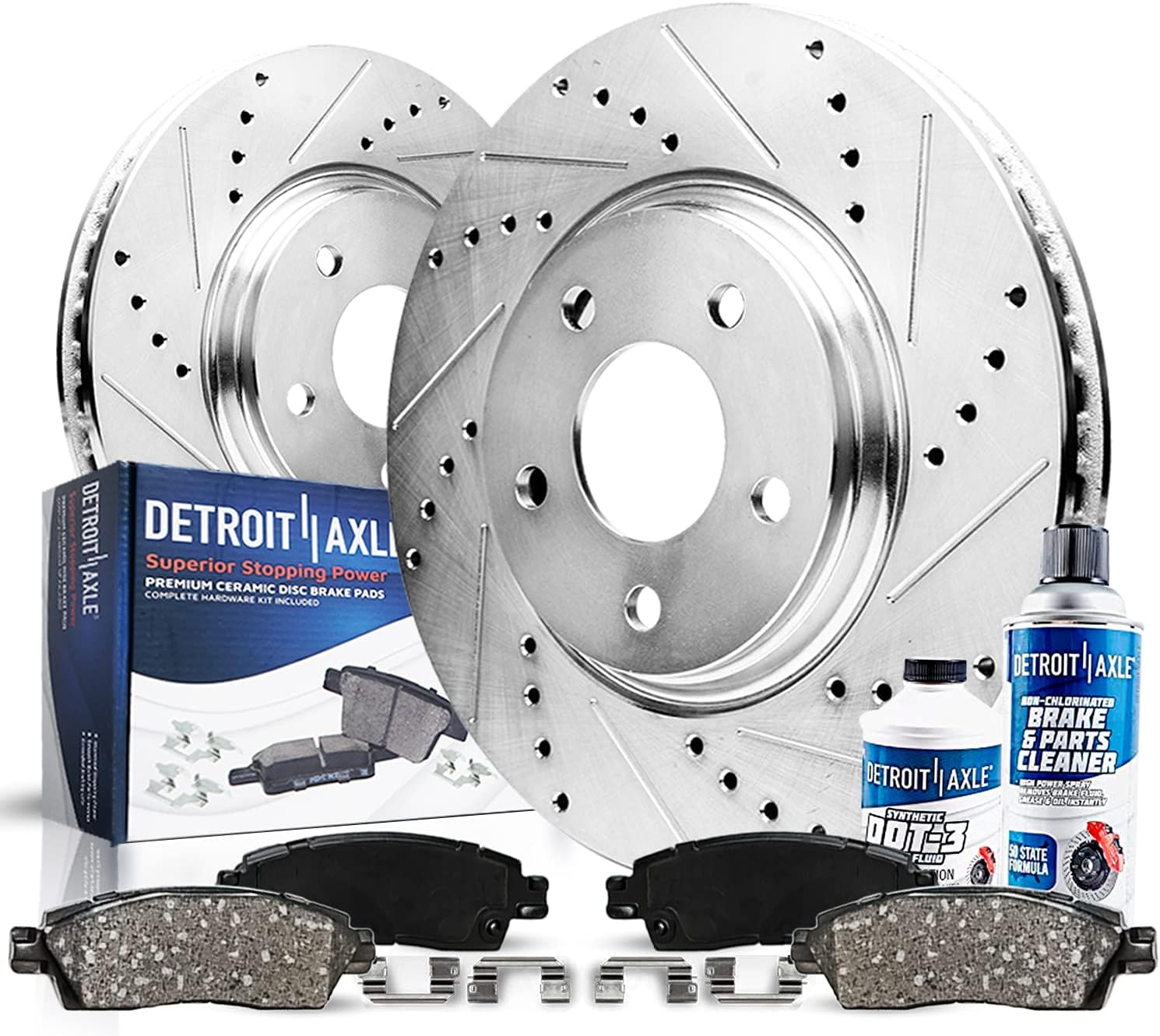
3. Detroit Axle Front Drilled & Slotted Brake Kit for 2002–2004 Honda CR-V
| Fitment | 2002–2004 Honda CR-V front (282mm rotor variant) |
|---|---|
| Rotors | Drilled and slotted, vented |
| Brake pads | Ceramic with hardware |
| Corrosion protection | Zinc dichromate plating |
This Detroit Axle front brake kit provides a complete, vehicle-specific replacement for the 2002–2004 Honda CR-V front brakes. It includes two drilled and slotted rotors, two ceramic brake pads with hardware, a 10 oz brake cleaner, and a 12 oz bottle of brake fluid so you can complete a routine brake job without sourcing extra parts. The drilled and slotted rotors help dissipate heat and resist fade during repeated stops, while the zinc plating helps limit corrosion and visible wheel dust. Ceramic pads offer quieter operation and lower dust than semi-metallic pads, which makes them well suited for daily driving. Fitment is machine-located to match factory mounting so installation is straightforward for a DIYer or a shop. The kit focuses on refresh and drivability rather than performance race use, and drilled rotors can be less durable under extreme track stress compared with heavier-duty designs. Buyers should also confirm the rotor diameter match to their CR-V variant before ordering.
Best for: Buyers who want a practical, ready-to-install front brake refresh for an early-2000s CR-V and prioritize quiet operation, lower dust, and straightforward fitment over high-performance track capability.
Less Ideal for: Drivers who need heavy towing, track-focused braking, or extreme fade resistance should consider performance-grade rotors and pads designed for those conditions instead.
- Complete kit with rotors, pads, hardware, brake cleaner and fluid so no extra purchases needed
- Drilled and slotted rotors improve heat dissipation and help reduce brake fade under repeated stops
- Ceramic pads run quieter and produce less dust than semi-metallic options
- Zinc dichromate plating provides corrosion resistance and cleaner-looking wheels
- Vehicle-specific fitment for straightforward installation without modifications
- Drilled rotors and ceramic pads are optimized for street use and are not intended for aggressive track or heavy towing duty
Verdict: A practical, all-in-one front brake refresh for 2002–2004 CR-Vs that delivers quieter, lower-dust stopping and easy installation.
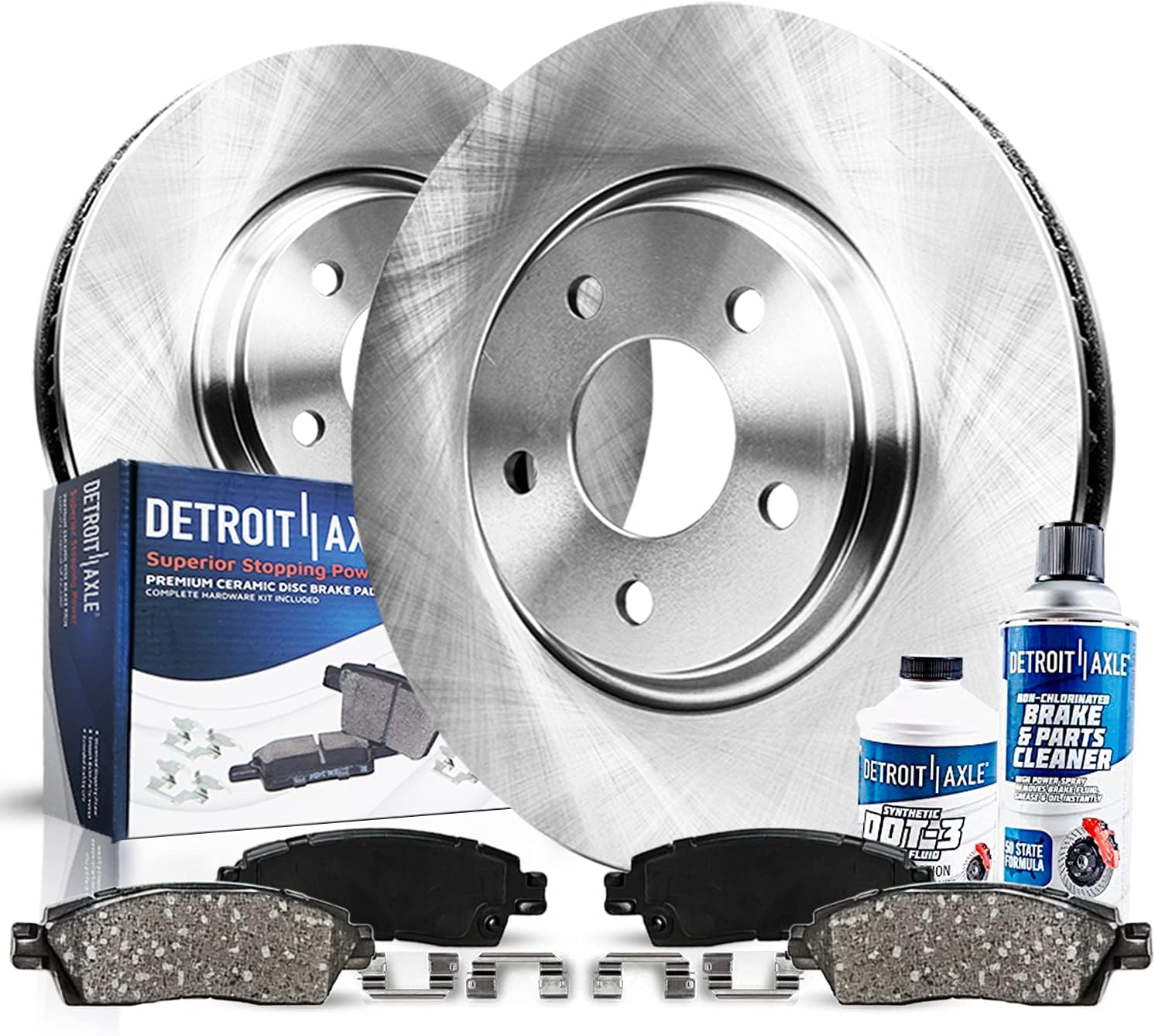
4. Detroit Axle Front Brake Kit for 2002–2004 Honda CR-V (11.10" Rotors)
| Fitment | 2002–2004 Honda CR-V (11.10 inch front rotor) |
|---|---|
| Rotors | Slotted, vented with zinc plating |
| Brake pads | Ceramic with hardware included |
| Kit contents | 2 rotors, 2 pads, brake cleaner, brake fluid |
This Detroit Axle kit supplies everything needed to replace the front rotors and pads on 2002–2004 Honda CR-V models that use 11.10 inch rotors. The package includes two vented, slotted rotors, a set of ceramic pads with hardware, a brake cleaner spray, and a bottle of brake fluid which makes it convenient for a DIY job or a single-shop visit. The slotted rotors are zinc plated to resist corrosion and are machined with locating holes to align with factory mounting for a straightforward fit. Ceramic pads run quietly and are less prone to dust than organic alternatives, though some users report slightly reduced initial bite compared with heavy-duty or towing-focused pads. The kit is well suited to routine street driving and brake jobs where value matters, but drivers who frequently tow heavy loads or need aggressive fade resistance may prefer performance rotors or heavy-duty pad compounds. Fit appears accurate for the listed years when matched to the 11.10" rotor variant, and the included consumables help finish the job without extra trips to the parts store.
Best for: Buyers replacing worn front rotors and pads on a 2002–2004 CR-V who prioritize getting a full, kit-based replacement at a lower cost and want the convenience of included consumables.
Less Ideal for: Drivers who tow heavy trailers frequently or need track-level stopping performance should consider high-performance rotors and heavy-duty pad compounds instead.
- Complete kit includes rotors, ceramic pads, mounting hardware, brake cleaner, and brake fluid for a single front-axle job
- Slotted, vented rotors with zinc plating for improved cooling and corrosion resistance
- Machined locating holes for direct fitment to factory mounting points
- Ceramic pads are low-dust and tend to run quietly, improving everyday drivability
- Ceramic pad compound may feel less aggressive for heavy towing or very frequent hard stops
- Some isolated reviews report fitment or durability problems, so quality can vary between units
Verdict: A budget-friendly, all-in-one front brake kit that delivers easy fitment and low-dust ceramic pads for routine street use on 2002–2004 CR-Vs.
5. Motorevo Front Brake Kit for 2002–2004 CR-V — Geomet Coated Drilled & Slotted Rotors with Ceramic Pads

| Compatible Vehicle Type | 2002-2004 CR-V SUV |
|---|---|
| Included Components | 2 rotors and 4 ceramic brake pads with hardware |
| Orientation | Front |
| OEM Equivalent Part Number | 31305 & D914-7795 |
This Motorevo front brake kit replaces both front rotors and pads on 2002–2004 CR-V models and is aimed at reliable, long-lasting stopping performance. The rotors are high-carbon alloy, drilled, slotted, and vented to speed heat dissipation and reduce fade during repeated stops, while a Geomet anti-corrosion coating protects non-friction surfaces from rust. The included ceramic pads are formulated for low dust and quiet engagement and come with hardware for a straightforward swap. In use this kit behaves like a factory replacement: the precision-machined rotors match mounting points and the pads bed in with little noise. Expect easier cleaning thanks to lighter pad dust and a modest improvement in resistance to fade compared with basic aftermarket parts. Limitations are that drilled rotors can be more prone to cracking under extreme track abuse and ceramic pads may not offer the same initial bite as aggressive semi-metallic compounds, so this kit is best for daily driving and confident highway braking rather than heavy track use.
Best for: Drivers who prioritize long-term, reliable street braking and low-maintenance operation for a 2002–2004 CR-V, and who want a near-factory replacement that reduces dust and corrosion.
Less Ideal for: Drivers who regularly do high-heat track sessions or need maximum initial bite for towing or heavy-duty braking should consider competition or heavy-duty brake options instead.
- Complete front kit includes rotors and pads for matched fit and easier installation.
- Geomet protective coating reduces rust on non-friction rotor surfaces.
- Drilled, slotted, and vented rotor design improves heat dissipation and helps prevent brake fade.
- Ceramic pads produce low dust and operate with reduced noise.
- Includes installation hardware and claims direct fit for 2002–2004 CR-V front brakes.
- Drilled rotors can be less durable than solid rotors under extreme high-heat track conditions.
- Ceramic pads trade some initial bite for quieter operation compared with aggressive semi-metallic pads.
Verdict: Choose this kit for a durable, low-dust, factory-style front brake replacement that improves corrosion resistance and reduces fade for daily-driven 2002–2004 CR-Vs.
6. Detroit Axle Front & Rear Drilled and Slotted Brake Kit with Ceramic Pads for 2002-2004 Honda CR-V
| Fitment | 2002-2004 Honda CR-V (11.10 in front/rear rotors) |
|---|---|
| Rotors | Drilled and slotted, zinc plated |
| Brake pads | 100% ceramic front and rear |
| Included extras | Brake cleaner and brake fluid |
| Warranty | 10 Year |
This Detroit Axle brake kit supplies everything needed to refresh both front and rear braking on a 2002–2004 Honda CR-V: drilled and slotted rotors for front and rear axles, ceramic front and rear pads, hardware, plus a small bottle of brake fluid and brake cleaner. The drilled and slotted rotors help dissipate heat and shed moisture for more consistent stopping during repeated braking and the zinc plating reduces visible surface corrosion over time. Ceramic pads deliver quieter operation and low dust compared with semi-metallic compounds, making them a good fit for daily driving. The kit is clearly aimed at DIY installers since it does not include detailed printed install instructions and rotor boxes are not labeled by axle, so a basic set of tools and some mechanical experience are recommended. A few buyers reported occasional mismatched or damaged hardware in packs, but replacements are available from the brand. For CR-V owners who want a full, factory-quality replacement set in one purchase this kit is a practical, cost-effective solution.
Best for: Buyers who prioritize proven user feedback and want a single, complete replacement kit to restore braking on a 2002–2004 CR-V and are comfortable doing or supervising a DIY installation.
Less Ideal for: Drivers without basic mechanical skills or those who prefer a plug-and-play, fully guided install from a professional service should consider having a shop fit the kit or buying individual components with full support.
- Complete kit includes front and rear drilled and slotted rotors, ceramic pads, installation hardware, brake cleaner, and brake fluid
- Drilled and slotted rotor design improves heat dissipation and helps reduce brake fade under repeated stops
- Zinc plating on rotors resists surface corrosion and keeps wheels cleaner over time
- Ceramic pads produce lower dust and quieter operation than typical metallic pads
- No detailed printed installation instructions and rotor boxes are not marked by axle, which requires installer experience
- Some customers have reported occasional damaged or incorrect hardware in the packaging
Verdict: A convenient, well-reviewed full front-and-rear brake kit that restores stopping performance on 2002–2004 CR-Vs while minimizing dust and corrosion.
7. PowerStop Z17 Front Brake Kit — Rotors and Ceramic Pads (KOE1043)

| Position | Front |
|---|---|
| Pad Type | Z17 Ceramic |
| Fitment Type | Vehicle Specific Fit |
| Exterior | Machined |
| Manufacturer | POWERSTOP |
This PowerStop Z17 front brake kit supplies two ceramic Z17 pads, two mill-balanced replacement rotors, stainless-steel installation hardware, and rubberized shims for a straightforward front brake service. It is intended as a direct bolt-on replacement for compatible Honda applications and is engineered for daily driving with an emphasis on quiet, low-dust operation. The Z17 pads are chamfered, slotted, and thermal scorched for quicker bed-in and reduced noise, while the rotors are precision milled to help maintain a smooth pedal feel. Included hardware and a grease packet simplify the install process for a competent DIYer or a local shop. Limitations to note are occasional fitment inconsistencies reported by some buyers and hardware pieces that may not match factory originals exactly, which could require reusing OEM clips. For a cautious buyer who values predictable, quiet braking and clean wheels, this kit offers a cost-effective, near-factory replacement option for the specified Honda fitments.
Best for: Buyers who want a package that restores front braking to factory-like behavior with quiet, low-dust ceramic pads and prefer a ready-made kit for a DIY install or budget-conscious shop replacement.
Less Ideal for: Drivers seeking high-performance or heavy-duty braking for towing, track use, or aggressive driving should choose a performance-oriented pad and rotor set instead.
- Complete kit with pads, two rotors, stainless hardware, and shims for a single front axle service
- Low-dust ceramic Z17 pads designed for quiet operation and quicker bed-in
- Mill-balanced rotors milled for smooth pedal feel and reduced vibration during braking
- Some users report mismatched hardware or occasional incorrect fitment on certain model years
Verdict: A convenient, quiet ceramic pad and rotor bundle that gives risk-averse buyers a straightforward, near-factory front brake replacement for supported Honda models.
Choosing the Right 2002-2006 Honda CR-V Brake Pad & Rotor Kit: Key Factors to Consider
Pad Material and Compound
Pad material determines bite, longevity, and noise characteristics. Ceramic-style compounds usually offer quieter operation and less dust, which can be beneficial for daily-driven CR-Vs used in town and highway commuting. Metallic or semi-metallic compounds provide stronger initial bite and better heat resistance, which helps under heavier loads or frequent downhill braking.
Consider how you drive the CR-V. If you carry cargo, tow lightly, or frequently drive in hilly areas within the 2002-2006 model's capabilities, a compound with higher heat tolerance will resist fade. If low dust and minimal cabin noise are priorities, choose a compound formulated to reduce NVH. Always verify the compound is specified for passenger-vehicle use and compatible with the vehicle's caliper materials and rotor surfaces.
Rotor Specifications and Heat Management
Rotor diameter, thickness, and material influence braking feel and fade resistance. Rotors that match the factory diameter and meet or exceed the original minimum thickness help maintain pedal firmness and avoid premature warping. Vented rotors aid heat dissipation on the front axle where braking demand is highest.
For the 2002-2006 CR-V, pay attention to whether rotors are cast iron with consistent machining tolerances and whether any coatings are applied to the hat area to resist corrosion. If you do a lot of stop-and-go driving, rotor surface treatments and vent design will affect long-term resistance to glazing and heat-related distortion. Ensure the kit provides measured rotor thickness and runout tolerances so an installer can confirm correct installation.
Fitment and Installation Readiness
A correct fit is essential to avoid additional machining or parts swapping. Kits that include all necessary hardware such as anti-rattle clips, shims, and correct pad backing shape reduce installation time and the risk of uneven wear. Confirm that rotor hat dimensions, bolt pattern, and pad backing plate shape are specified for the 2002-2006 CR-V.
Installation readiness also means clear instructions and attention to torque specifications and bedding procedures. Kits that leave out mounting hardware or require reuse of worn components can compromise braking performance. When in doubt, choose a kit that supplies the common replacement hardware and clear fitment notes for the second-generation CR-V chassis.
Noise, Vibration, and Harshness (NVH) Control
Brake noise after replacement is a common concern for CR-V owners. NVH control depends on pad compound, the presence and quality of shims, and rotor finish. Good kits include anti-squeal shims, chamfered pad edges, and a surface finish that mates cleanly with the pad face to reduce vibration.
If quiet operation is a priority, look for pads with noise-damping features and rotors with a smooth, even finish. Proper bedding-in following installation also reduces noise risk. Remember that poor NVH performance can indicate improper installation, incompatible bedding procedures, or mismatched hardware, so factor in the total kit contents and installation guidance.
Durability and Maintenance Needs
Longevity matters for total cost of ownership. Durable pads and rotors cut down on replacement frequency. Consider the expected pad thickness, rotor minimum thickness, and whether the kit uses higher-grade materials or surface treatments to slow corrosion.
Maintenance needs also include how easy it is to service the parts on the CR-V. Kits that simplify future rotor replacement by using standard fasteners and that avoid proprietary hardware will make brake service easier. Also evaluate whether the kit's rotor finish requires special break-in or cleaning steps before bedding.
Performance Tradeoffs and Intended Use
Decide whether you prioritize everyday comfort, occasional spirited driving, or heavier-duty use like towing small loads. Each use case favors different brake characteristics. Comfort and commuting favor low-dust, quiet compounds; occasional spirited driving benefits from higher friction materials and rotors that manage heat; heavier-duty use requires robust rotor thickness and pads with strong fade resistance.
Understanding how you use the CR-V helps select a kit that balances pad life, rotor wear, and NVH. Pick a kit whose stated application and material choices align with your driving profile to minimize compromises between stopping power and durability.
Front Vs Rear Kit Considerations
Front and rear brake assemblies have different roles and wear patterns on the 2002-2006 Honda CR-V. The front brakes handle the majority of stopping force and therefore typically need thicker rotors and pads rated for higher thermal loads. Rear brake kit replacement should focus on correct pad backing shape and rotor thickness that match the parking and low-speed braking demands.
- Always verify which axle a kit covers; many listings sell front and rear kits separately.
- Front rotors are usually vented and require attention to runout and thickness specifications.
- Rear rotors and pads wear differently; check whether the kit includes hardware for the parking brake linkage if applicable.
Bedding-In New Pads and Rotors
Proper bedding-in helps mate pad material to rotor surfaces and reduces early glazing, uneven wear, and noise. A typical bedding procedure involves a series of progressive stops from moderate speeds to heat the components evenly, followed by a cool-down period. Follow the kit manufacturer's recommended bedding steps and avoid repeated hard stops during the initial miles.
- Start with 8 to 10 moderate decelerations to build heat gradually.
- Allow a cool-down period after bedding before heavy use.
- Avoid hard braking when rotors and pads are cold to prevent uneven material transfer.
When to Resurface Rotors Versus Replace
Deciding whether to resurface or replace rotors depends on remaining thickness, runout, and the extent of surface damage. If measurable thickness is above the minimum specified limit and runout is within tolerance, resurfacing can restore a smooth mating surface. However, rotors thinner than the minimum or those with deep grooves, cracks, or severe warpage should be replaced for safety.
Replace rotors if their minimum thickness is exceeded by prior machining needs, or if resurfacing would reduce thickness below the safe limit. Also consider that resurfaced rotors may not have the same heat-management characteristics as new ones if they were originally designed with specific vent profiles.
- Measure rotor thickness at multiple points before deciding to resurface.
- Check rotor runout with a dial indicator to detect warpage.
- Do not resurface rotors with hairline cracks or severe heat spots.
Ceramic Versus Metallic Pad Choices
Ceramic compounds offer quieter operation and lower dust but usually trade some initial bite and extreme temperature fade resistance. Metallic and semi-metallic pads provide stronger initial response and better heat handling, at the cost of more dust and potentially increased rotor wear. For most CR-V drivers who prioritize quiet, low-dust daily driving, ceramic-style pads are a common choice; for heavier use or spirited driving, metallic compounds may be preferable.
- Ceramic: quieter, less dust, gentler on rotors.
- Metallic: better heat tolerance and initial bite, more dust, potentially higher rotor wear.
- Choose based on driving patterns and tolerance for dust and noise.
Hardware and Shim Importance
Small hardware items have an outsized effect on final performance. Anti-rattle clips, quality caliper pins, and correct shims help maintain pad alignment, reduce noise, and prevent uneven wear. Kits that omit these items often require you to reuse old hardware, which can lead to squeal and inconsistent braking feel once new pads are installed.
Always inspect mounting hardware during service and replace worn pins or clips. Proper lubrication of slider pins and correct torque on caliper bolts are essential to maintain consistent pad contact and avoid premature wear.
- Replace worn anti-rattle clips and pad shims when installing new pads.
- Use high-temperature brake grease on slider pins and contact points only as specified.
- Confirm torque specs for caliper mounting bolts during reassembly.
Still looking for the perfect fit?
Select your Honda CR-V configuration to see the most relevant Brake Pad & Rotor Kits recommendations
How We Chose the Best 2002-2006 Honda CR-V Brake Pad & Rotor Kit
Our selection process focused on criteria that directly affect safety, fitment, and long-term ownership for the 2002-2006 Honda CR-V. We prioritized kits that: include correctly sized front or rear rotors and pads specific to the vehicle's factory suspension and caliper setup; use pad compounds with a documented balance between wear life and consistent friction; specify rotor dimensions and minimum thickness so installers can verify serviceability; offer clear installation guidance or compatibility notes for this chassis; and show evidence of reasonable NVH control to limit squeal and vibration.We excluded kits that lacked complete fitment data for the 2002-2006 CR-V, did not list material composition, or required additional machining without clear instructions. Our evaluation emphasized material durability, rotor heat management, braking consistency across temperatures, and the presence of hardware or shims that affect final performance. Kits were judged on practical service-focused specs rather than marketing claims alone.
Our full evaluation process is outlined in our review methodology.
FAQ
How often should I replace pads and rotors on a 2002-2006 CR-V?
It depends on driving style and conditions. Pads often last 30,000 to 60,000 miles, while rotors may last longer if not warped or deeply scored. Inspect thickness and surface condition at each pad change to decide whether resurfacing or replacement is needed.
Will ceramic pads reduce brake noise on my CR-V?
Ceramic pads generally produce less noise and dust than metallic compounds, so they often reduce squeal. Proper installation, quality shims, and correct bedding-in are also important to minimize noise after replacement.
Can I resurface rotors instead of replacing them?
Resurfacing is acceptable when rotor thickness remains above the manufacturer minimum and runout is within tolerance. Avoid resurfacing rotors with deep grooves, cracks, or severe heat damage, since that can compromise safety.
What causes brake vibration after installing new pads and rotors?
Vibration often results from rotor runout, uneven pad transfer, or improper bedding. It can also be caused by improperly torqued wheel lugs or caliper hardware. Measuring runout and following proper installation and bedding procedures usually resolves the issue.
Do I need new hardware when replacing pads and rotors?
Replacing hardware like anti-rattle clips and caliper slide pins is recommended when originals are corroded or worn. New hardware ensures consistent pad alignment and reduces the risk of noise and uneven wear.
How long does bedding-in typically take for new brake kits?
Bedding-in is usually completed within the first 50 to 100 miles using progressive moderate stops to heat the components. Follow the kit-specific procedure, and avoid heavy braking until the bedding sequence and a cool-down period are complete.
Final Verdict
When choosing a brake pad and rotor kit for a 2002-2006 Honda CR-V, prioritize correct fitment, appropriate pad compound, and rotor specifications that match your driving conditions. Balance NVH control against thermal requirements based on whether you favor quiet daily driving or need stronger fade resistance for heavier use. Replace worn hardware and follow a proper bedding procedure to maximize performance and minimize noise.Focus on those tradeoffs rather than marketing claims: select the kit that matches your driving profile and ensures the rotors meet thickness and runout standards for safe, reliable braking.
Explore More:
- Check out all Honda CR-V parts & accessories
- Explore Brake Pad & Rotor Kits Maintenance & Repair Guides
- Explore Brake System
- Browse all Auto Parts
