

Note: This article contains affiliate links. If you click on these links and make a purchase, I may earn a small commission at no extra cost to you. This helps support my research and content. Read my full affiliate disclosure here.
When your 2012-2016 Honda CR-V needs a brake pad and rotor kit, choosing the right combination matters for safety, NVH, and longevity. Worn pads or warped rotors can increase stopping distance, cause vibration, and make everyday driving less confident. This guide focuses specifically on front and rear kits that are designed to fit the 2012 through 2016 CR-V platform and helps you weigh real-world tradeoffs between braking feel, noise, and part life.We shortlisted seven top-performing kits that fit the CR-V and evaluated them across stopping performance, rotor durability, and noise control. Below you will find practical guidance on fitment, installation considerations, and maintenance to help you pick the right kit for your driving style and service expectations.
Looking for other parts? See all Honda CR-V parts & accessories.
Top Picks at a Glance


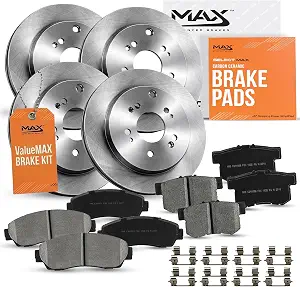


1. MAX Advanced Brakes StyleMAX Carbon Ceramic Brake and Rotor Kit — Front and Rear (2007–2016 CR-V fitment)

| Compatible vehicle fitment | 2007–2011 Honda CR‑V, 2012–2016 Honda CR‑V (AWD), 2010–2012 Acura RDX (FWD) |
|---|---|
| Included components | Front and rear rotors, brake pads, installation hardware |
| Pad material | Carbon infused ceramic |
| Rotor style | Cross‑drilled |
| Automotive fit type | Vehicle specific fit |
This StyleMAX kit from MAX Advanced Brakes supplies everything needed to replace both front and rear brake rotors and pads on the listed Honda CR‑V and compatible Acura RDX application. It pairs cross-drilled rotors with carbon‑infused ceramic pads and includes installation hardware for a direct bolt‑on replacement. In everyday use the drilled rotors help dissipate heat during repeated stops and the carbon ceramic pads are formulated to cut dust and low‑speed noise, so wheels stay cleaner and cabin NVH is reduced. The kit aims at refined pedal feel and consistent performance for city commutes and highway driving rather than track use. Practical benefits include fewer trips to clean wheels and a complete set in one purchase, which simplifies servicing both axles at once. Buyers should note cross‑drilled rotors can be more prone to cracking under extreme track cycling compared with solid or slotted designs, and ceramic pads typically require a bedding period to achieve best stopping feel. Fitment is vehicle specific so confirm compatibility before installation.
Best for: Buyers seeking a balanced, ready‑to‑install replacement that improves everyday braking feel, reduces dust, and cleans up wheel appearance for daily city and highway driving.
Less Ideal for: Do not choose this kit if you prioritize track performance or aggressive repeated high‑temperature braking where slotted or solid performance rotors and track pads are preferred.
- Complete front and rear kit includes rotors, pads, and hardware for a one‑purchase service.
- Cross‑drilled rotors improve heat dissipation for repeated stop-and-go braking.
- Carbon‑infused ceramic pads reduce brake dust and lower low‑speed noise.
- Designed for direct vehicle‑specific bolt‑on fitment to listed CR‑V/RDX applications.
- Cross‑drilled rotors are less suitable for aggressive track use and can crack under severe thermal stress.
Verdict: This all‑in‑one kit is a convenient upgrade for CR‑V drivers who want cleaner wheels, quieter stops, and consistent daily‑driving braking performance.
2. R1 Concepts eLINE Front and Rear Drilled & Slotted Brake Kit for 2012–2016 Honda CR-V

| Compatibility | 2012-2016 Honda CR-V FWD |
|---|---|
| Rotor type | Drilled and slotted |
| Brake pad material | Ceramic |
| Includes | Front and rear rotors, pads, hardware |
This R1 Concepts eLINE kit supplies a complete front and rear brake refresh for 2012–2016 Honda CR-V FWD vehicles, combining cross-drilled, diamond-slotted rotors with ceramic pads and included hardware. In everyday use it provides stronger initial bite and improved heat dissipation from the drilled and slotted rotor pattern, which can help reduce fade during repeated stops compared with plain rotors. The ceramic pads are formulated for lower dust and quieter operation, so wheels stay cleaner and cabin noise is reduced during normal driving. Installation is straightforward as a direct-fit replacement with the supplied mounting hardware and factory-quality rotor dimensions. Expect sensible benefits for street-driven CR-Vs that see occasional spirited driving, but the drilled pattern can be more prone to visual corrosion over long term and ceramics trade some ultimate high-temperature friction compared with aggressive street/track compounds. Some buyers have reported missing hardware on delivery, so confirm the package contents before starting work.
Best for: Drivers who want a noticeable step up in street braking performance and cleaner wheels while keeping a factory-style installation process and longevity in daily use.
Less Ideal for: Drivers who prioritize track-level stopping power or extremely heavy towing and repeated high-temperature braking should choose track-grade pads and rotors instead.
- Complete front and rear kit so you get rotors, pads, and mounting hardware together.
- Drilled and slotted rotors improve heat dissipation and help reduce brake fade under repeated stops.
- Ceramic pads produce less wheel dust and generally quieter operation for daily driving.
- Direct-fit design built to factory replacement specifications simplifies installation.
- Drilled rotor design can show corrosion and cosmetic wear sooner than plain rotors.
- Ceramic pads prioritize low dust and quietness over maximum track-oriented friction for aggressive use.
Verdict: A ready-to-install front-and-rear kit that boosts street braking performance and reduces wheel dust while keeping a factory-style fit for 2012–2016 Honda CR-V owners.
3. Max Advanced Brakes Front and Rear Brake Pads and Rotors Kit (Carbon Ceramic Pads)
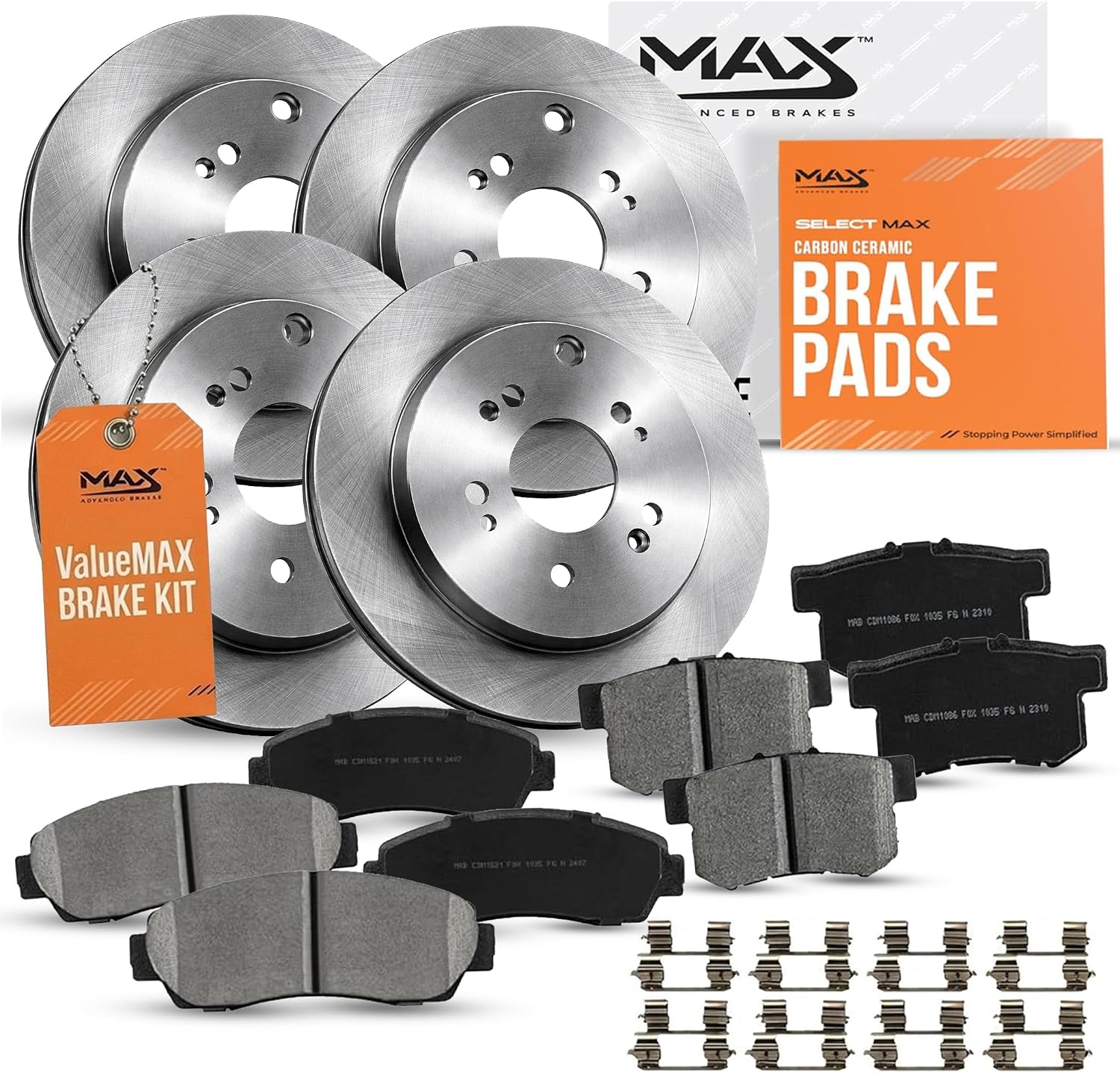
| Compatible vehicles | 2007-2011 Honda CR-V, 2012-2016 Honda CR-V AWD, 2010-2012 Acura RDX FWD |
|---|---|
| Included components | Front rotors, rear rotors, brake pads, hardware |
| Pad material | Carbon ceramic-style |
| Rotor material | Precision-machined cast iron |
| Fit type | Vehicle Specific Fit |
This Max Advanced Brakes kit supplies both front and rear rotors, pads, and necessary hardware for a complete brake job on compatible CR-Vs. The kit pairs precision-machined cast iron rotors with low-dust carbon ceramic-style pads to deliver smooth, quiet stops during everyday driving. Installation is bolt-on and intended to match factory fitment, so it is practical for DIY mechanics or shops doing a routine rotor-and-pad replacement. Notable features include a non-directional rotor finish for faster bedding, a low-dust pad compound for cleaner wheels, and included hardware to simplify the swap. Customer feedback shows generally good fit and reliable braking with occasional packaging or missing-part issues that the seller has resolved. Expect sound and vibration levels similar to factory parts and decent pad life for commuter use, though longevity can vary with driving style. If you need heavy-duty or track-capable braking you will want performance-specific parts instead, since this kit targets everyday street driving rather than aggressive use.
Best for: Buyers who prioritize a cost-effective, factory-style replacement that restores everyday braking performance and reduces wheel dust, and who prefer a complete kit that simplifies a DIY brake job.
Less Ideal for: Drivers who need performance or track-capable braking hardware or who demand extended life under heavy towing and aggressive driving should consider upgraded performance parts instead.
- Complete front-and-rear kit includes rotors, pads, and hardware for a single purchase and install.
- Carbon ceramic-style pads reduce wheel dust and tend to run quieter than semi-metallic pads.
- Precision-machined rotors with non-directional finish promote consistent bedding and reduced vibration.
- Vehicle-specific fitment for direct bolt-on installation on the listed CR-V models.
- Not intended for heavy track use or extreme heat cycling compared with performance rotors and pads.
Verdict: A practical, all-in-one factory‑replacement brake kit that restores quiet, low-dust everyday braking for 2012–2016 CR‑V owners.
4. VEVOR Front & Rear Ceramic Brake Kit for 2012–2016 Honda CR-V (AWD)

| Compatible models | 2012–2016 Honda CR-V (AWD) |
|---|---|
| Rotor material | HT250 cast iron |
| Pad composition | Ceramic |
| Front rotor type | Hollow structure |
| Rear rotor type | Solid structure |
This VEVOR kit supplies both front and rear rotors plus matching ceramic pads and the small hardware needed for a complete brake refresh on compatible CR-V AWD models. The rotors are HT250 cast iron with a galvanized finish for corrosion resistance and the fronts use a hollow design to help cooling while the rears are solid. The ceramic pads are formulated for lower dust, reduced noise, and higher heat resistance than basic organic pads. Buyers will appreciate that rotors are dynamically balanced at the factory and the kit includes clips and springs so you receive everything needed for a straightforward DIY swap. Expect a quieter, cleaner finish and improved initial bite compared with worn stock pads. Limitations to note are mixed user reports about premature rotor warping under heavy use and occasional fitment mixups, so verify rotor diameter and parking-brake type before installation and follow the recommended mounting-surface cleaning procedure.
Best for: Buyers who want a budget-friendly full brake replacement they can install themselves and who prioritize lower dust, quieter ceramic pads and a complete parts package for a CR-V AWD refresh.
Less Ideal for: Those who regularly tow heavy loads, perform aggressive driving, or demand high-end performance braking should consider heavier-duty or premium rotors and pads instead.
- Complete front-and-rear kit includes rotors, ceramic pads and installation clips for a single replacement job
- Galvanized rotor surface improves corrosion resistance and appearance
- Factory dynamic balancing on rotors reduces vibration and helps smoother braking
- Ceramic pads produce less dust and are quieter than many non-ceramic replacement pads
- Some customers report rotor warping after weeks of use under heavy loads or towing
- Fitment errors have occurred when wrong kit variant was shipped, so fitment checks are necessary
Verdict: A cost-conscious, all-in-one ceramic pad and rotor kit that gives a quieter, lower-dust replacement and simple DIY installation for 2012–2016 CR-V AWD owners.
5. Detroit Axle Front & Rear Drilled and Slotted Brake Kit with Ceramic Pads for 2012–2016 Honda CR-V (AWD)
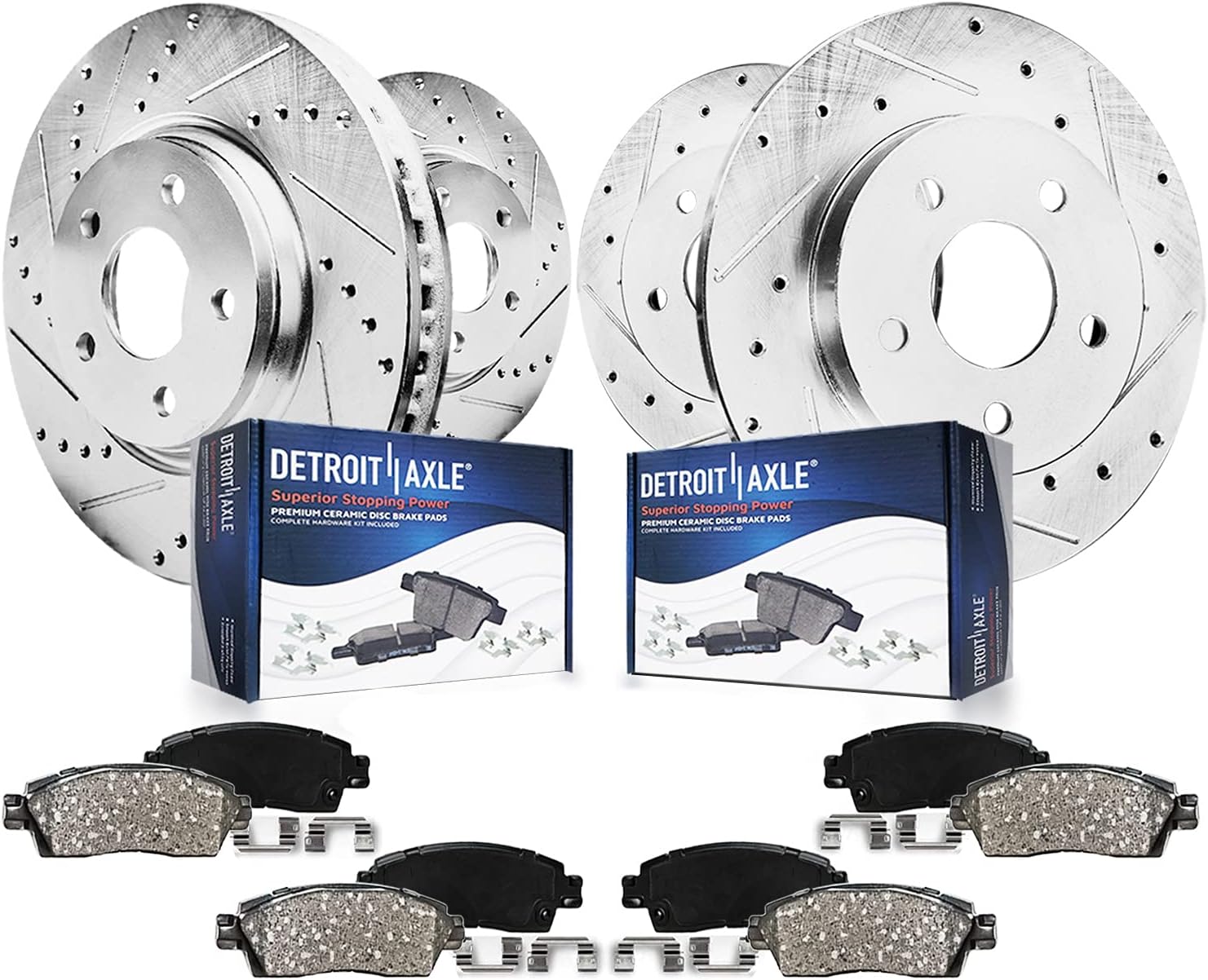
| Fitment | 2012–2016 Honda CR-V (AWD) |
|---|---|
| Rotor type | Drilled and slotted |
| Pad material | Ceramic |
| Includes | Front and rear rotors, front and rear pads, hardware |
This Detroit Axle kit supplies both front and rear drilled-and-slotted rotors plus matching ceramic pads and hardware as a one-stop replacement for 2012–2016 Honda CR-V AWD models. The drilled and slotted rotors help dissipate heat and shed water for more consistent stopping when you drive in traffic or tow occasionally, while the zinc plating reduces surface corrosion and visible wheel dust. Ceramic pads deliver quieter, smoother stopping compared with basic metallic pads and are paired with clips and hardware for a straightforward swap. Fit is machined to factory locating holes so installation should be direct without modifications on the specified CR-V AWD fitment. The kit is built and tested to meet aftermarket quality standards and comes with a long warranty backing. Keep in mind this is a vehicle-specific aftermarket kit so buyers should verify exact fitment for AWD CR-Vs and accept that drilled-and-slotted rotors may wear faster under aggressive track use compared with plain rotors.
Best for: Buyers who prioritize reliable, direct-fit replacement parts for routine driving and want quieter, low-dust braking without modifying their CR-V.
Less Ideal for: Not a great choice for drivers who plan frequent high-speed track sessions or aggressive braking where plain heavy-duty rotors and performance pads are preferable.
- Complete front and rear kit includes rotors, ceramic pads, clips and hardware for a full axle refresh
- Drilled and slotted rotor design improves cooling and helps evacuate water and gas for more consistent braking
- Zinc plating on rotors reduces surface corrosion and visible wheel dust
- Ceramic brake pads provide quieter, smoother stops compared with standard metallic pads
- Drilled and slotted rotors can show faster wear under aggressive or track driving compared with plain rotors
Verdict: A convenient, factory-fit replacement kit that upgrades to drilled-and-slotted rotors and ceramic pads for quieter, more consistent braking on 2012–2016 Honda CR-V AWD models.
6. Detroit Axle Front Brake Kit with Ceramic Pads and Rotors
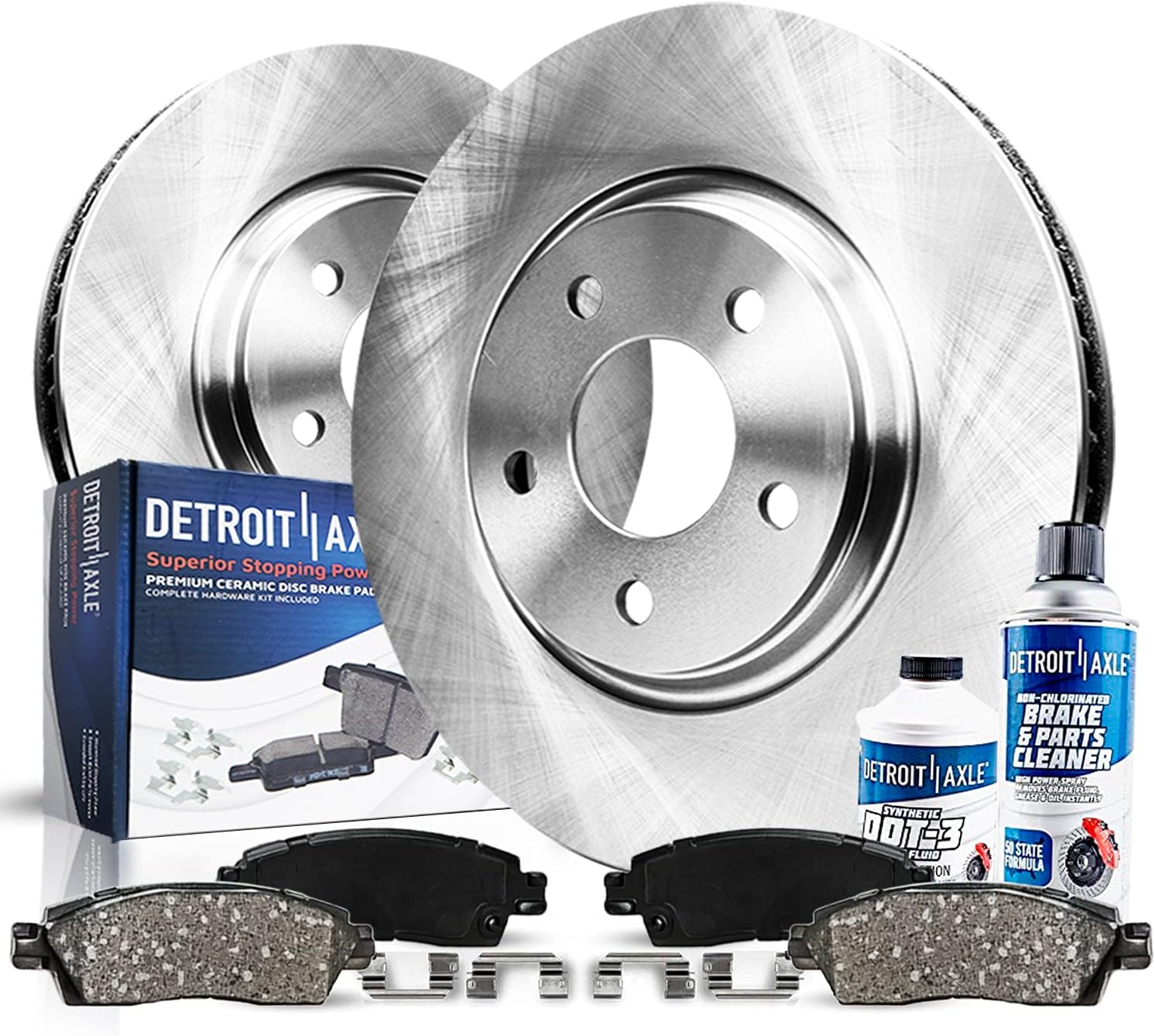
| Compatible with Vehicle Type | Car |
|---|---|
| Automotive Fit Type | Vehicle Specific Fit |
| Orientation | Front |
This Detroit Axle front brake kit supplies both front disc rotors and ceramic pads plus installation hardware, a bottle of brake fluid, and brake cleaner for a direct replacement on the specified Honda front fitments. The rotors are vented and zinc plated to resist corrosion and help cooling under repeated stops, while the full-ceramic pads are aimed at quieter operation and low dust. The kit is packaged for a complete front brake service, which makes it convenient for DIY mechanics or shops doing a single-axle replacement. Expect factory-style fitment from the machined locating holes so no modification should be needed, and the included cleaner and fluid reduce the number of separate purchases. Limitations to consider are that the rotors are a specific 11.65 inch diameter so this kit only fits the listed Honda front applications, and drivers wanting high-performance stopping for track use should choose performance-grade rotors and pads instead of this OE-style replacement.
Best for: Buyers who want a single, car-specific front brake service kit that replaces rotors and pads with quiet, low-dust ceramic components and includes consumables to finish the job in one visit.
Less Ideal for: Drivers who need track-capable or heavy-duty braking upgrades or those who require multi-vehicle, universal fitment should look at dedicated performance or universal brake options.
- Complete front service kit including two rotors, two ceramic pads, hardware, brake cleaner and brake fluid
- Vented rotors with zinc plating to aid cooling and resist corrosion
- Ceramic pads designed for low noise and reduced wheel dust
- Machined locating holes for direct fitment without modifications
- Designed for specified Honda front rotor diameter only so not universal fit
Verdict: A convenient, vehicle-specific front brake service kit that replaces rotors and pads with quiet ceramic pads and corrosion-resistant vented rotors for straightforward, factory-style replacement.
7. Acinoparts Front and Rear Drilled & Slotted Brake Kit with Ceramic Pads for Honda CR-V and Acura RDX

| Fitment | Honda CR-V 2007-2011; CR-V AWD 2012-2016; Acura RDX FWD 2010-2012 |
|---|---|
| Includes | Front and rear drilled & slotted rotors, front and rear ceramic pads, hardware |
| Rotors | Drilled and slotted with ground friction surface |
| Finish | Antiox full coating |
This Acinoparts kit supplies both front and rear drilled and slotted rotors plus matching ceramic brake pads and hardware for a direct vehicle-specific replacement. It is intended for routine service or an appearance-minded rotor upgrade on compatible Honda CR-V AWD and Acura RDX FWD models listed in the fitment. The drilled and slotted rotors improve heat dissipation and help clear pad debris, while the ceramic pads are formulated to reduce dust and noise compared with semi-metallic alternatives. The rotors come with an antiox full coating to limit surface corrosion before installation and a ground friction surface that shortens the initial bed-in period. In practice the kit offers stronger, cooler braking under normal street and light towing use and a cleaner wheel appearance. Limitations to note are that drilled rotors can be less durable than plain rotors under extreme repeated track or heavy towing duty, and ceramic pads typically trade slightly reduced high-temperature bite for lower dust and noise.
Best for: A buyer who wants a complete, vehicle-specific replacement kit that improves everyday braking performance and wheel appearance while minimizing dust and noise.
Less Ideal for: Drivers who frequently do high-heat track sessions or heavy, repeated towing should consider heavy-duty or track-focused rotors and more aggressive pad compounds instead.
- Complete front and rear kit includes rotors, ceramic pads, and hardware for a single install package
- Drilled and slotted rotors improve heat dissipation and help evacuate pad debris
- Antiox full coating resists surface rust before installation
- Ceramic pads produce lower dust and reduced braking noise compared with many semi-metallic pads
- Drilled rotors are less suited to extreme repeated high-heat track use compared with solid or heavy-duty rotors
- Ceramic pads can deliver slightly less initial high-temperature bite than aggressive pad compounds
Verdict: Choose this complete, vehicle-specific kit if you want a ready-to-install upgrade that reduces dust and noise while improving everyday braking and rotor appearance.
Choosing the Right 2012-2016 Honda CR-V Brake Pad & Rotor Kit: Key Factors to Consider
Fitment and Compatibility
Exact fitment to the 2012-2016 Honda CR-V is the baseline requirement. Rotors must match the hub diameter, bolt pattern, and thickness specifications for the CR-V; pads must sit correctly in the caliper and engage the rotor surface uniformly. Mismatched fitment can cause uneven wear, vibration, or braking loss.
Beyond basic dimensions, check whether the kit includes required hardware such as new caliper guide pins, shims, or wheel hub-compatible mounting features. Some kits are explicitly labeled for front or rear axle fitment; ensure you select the correct axle-specific kit for your CR-V to avoid installation issues.
Pad Material and Friction Characteristics
Pad material determines initial bite, fade resistance, and noise. Ceramic compounds typically offer quieter operation and moderate dust, while metallic or semi-metallic formulations provide stronger initial bite and higher heat tolerance at the expense of more dust and potential rotor wear. For a CR-V used mainly for commuting, ceramic-style compounds often balance NVH and longevity; for heavier loads or frequent high-speed stops, a higher-friction material may be preferable.
Also consider how the pads bed to new rotors. Some compounds require a specific bedding-in procedure to reach rated performance. Pay attention to manufacturer guidance on bedding and expected friction coefficient ranges to match stopping feel expectations.
Rotor Construction and Heat Management
Rotor design impacts thermal capacity, resistance to warping, and noise. Solid rotors may be adequate for the rear of a CR-V with lighter braking demands, while vented or cross-drilled/slotted designs for the front can aid cooling under sustained use. However, drilled or slotted patterns can accelerate pad wear and noise if paired with certain pad compounds.
Check rotor metallurgy and balance tolerances; cast iron rotors with strict runout specifications reduce the chance of pulsation under braking. Also assess rotor thickness and the minimum service limit to understand how many resurface cycles you can expect before replacement is necessary.
Included Hardware and Accessories
A kit that includes hardware such as anti-rattle clips, shims, guide pins, and replacement sensor elements simplifies installation and helps ensure the braking system functions quietly and reliably. Missing hardware can require sourcing separate parts and add time and potential fitment mismatches.
Consider whether the kit supplies higher-quality components for wear items like pad backing plates and clip materials. Corrosion-resistant treatments on hardware can extend service life in climates where road salt or moisture is common.
Noise, Vibration, and Harshness (NVH)
Brake noise after replacement is a common concern for CR-V owners. Pad compound, shim quality, rotor surface finish, and proper bedding all influence NVH. Some materials transmit more high-frequency vibration leading to squeal, while others damp vibrations better.
Look for kits that advertise noise-reducing features such as chamfered edges, bonded or integrated shims, and anti-squeal coatings. Proper installation torque and lubrication of contact points also play a role in reducing squeal and vibration on this vehicle.
Longevity and Maintenance Considerations
Think beyond initial performance to how long pads and rotors will last under your driving pattern. A CR-V used primarily for city commuting will see different wear patterns than one used for mountain roads or towing. Rotor thickness, pad wear rate, and dust production all affect maintenance intervals.
Evaluate whether the kit supports rotor resurfacing or is intended as a one-time replacement. Some rotors are designed with minimal margin for resurfacing and should be replaced rather than machined. Consider the availability of replacement pads that match the original compound if you plan to reuse rotors.
Front Vs Rear Brake Kit Differences for the CR-V
Front brake kits on the 2012-2016 Honda CR-V handle a larger portion of braking load and therefore require rotors and pads with greater heat tolerance and structural rigidity. Front rotors are typically vented and thicker to manage repeated heavy stops without excessive warp.
Rear kits often see lighter loads and can use simpler rotor designs. However, proper balance between front and rear bite is critical to maintain predictable pedal feel and ABS performance on the CR-V. When replacing one axle, consider the condition of the other to maintain consistent braking characteristics.
- Front kits need better heat dissipation; consider vented rotors.
- Rear kits can prioritize quiet operation and lower dust.
- Matching friction characteristics front-to-rear helps maintain braking balance.
Installation and Torque Tips Specific to the 2012-2016 CR-V
Follow factory torque specs for caliper bolts, wheel lug nuts, and rotor retaining screws to avoid rotor runout. Use a calibrated torque wrench and recheck torque after the first few hundred miles. For the CR-V, pay attention to caliper slide pin lubrication and proper seating of anti-rattle clips.
If you plan to resurface rotors, verify minimum thickness tolerances stamped on the rotor and measure runout after machining. Always clean new rotors with an appropriate solvent to remove protective oils before installation to prevent bedding issues.
- Lubricate slide pins with high-temperature brake grease.
- Torque caliper and lug nuts to factory specs and recheck later.
- Clean rotor faces before bedding-in new pads.
Common Fitment Questions and How to Verify Compatibility
To confirm fitment for the 2012-2016 CR-V, verify rotor diameter, thickness, and any offset specifications against the vehicle service manual or existing parts. Pads should match the caliper mounting and have the correct wear sensor provisions if the vehicle is so equipped.
Use part numbers keyed to the CR-V year range and axle location when shopping. If a kit lists universal compatibility, cross-check dimensions explicitly rather than relying on general claims to avoid installation surprises.
- Measure existing rotor diameter and thickness before ordering.
- Confirm whether the kit is front or rear specific for your CR-V.
- Check for included hardware versus items you must transfer from the old assembly.
Maintaining Brake Performance After Installation
Bedding new pads to rotors helps establish consistent braking performance and reduces noise. A controlled bedding procedure typically involves a series of progressive stops from moderate speed, avoiding full-lock stops until the new surface has mated. Follow the pad manufacturer's bedding recommendations for best results on your CR-V.
Regular visual inspections for pad thickness, rotor scoring, and hardware corrosion will prolong component life. Address any pulsation or pull symptoms early; they often indicate rotor runout or uneven pad deposition that is simpler to correct when caught early.
- Perform bedding-in as recommended after installation.
- Inspect pads and rotors periodically for uneven wear.
- Replace corroded hardware to maintain quiet operation.
When to Resurface Rotors Vs Replace Them
Deciding whether to resurface rotors or replace them depends on remaining thickness, runout, and the extent of surface damage. For 2012-2016 CR-V rotors, measure against the minimum thickness spec; if the rotor is under or very close to the limit, replacement is safer than resurfacing.
Resurfacing can remove minor scoring and restore a smooth contact surface, but it also reduces rotor thickness and future machining options. If rotors have significant heat cracks or warped sections, replacement provides a more reliable long-term outcome.
- Check rotor minimum thickness before resurfacing.
- Replace rotors with heat cracks or excessive runout.
- Resurface only when there is sufficient thickness margin left.
Still looking for the perfect fit?
Select your Honda CR-V configuration to see the most relevant Brake Pad & Rotor Kits recommendations
How We Chose the Best 2012-2016 Honda CR-V Brake Pad & Rotor Kit
We selected kits based on a set of objective, vehicle-specific criteria meant to reflect the needs of 2012-2016 Honda CR-V owners. Key evaluation points included rotor construction and runout tolerance, pad friction material and bedding behavior, exact fitment to the CR-V hub and caliper hardware, and expected service life under typical commuting and light towing loads. We also assessed heat management characteristics such as rotor venting and pad fade resistance, plus NVH performance covering squeal tendency and bedding-in requirements.Our process filtered out any kits that did not provide explicit fitment for the 2012-2016 CR-V or lacked replacement hardware where required. We excluded single-component offerings that forced mixing parts from different manufacturers, and we deprioritized options that relied on ambiguous fitment claims. The final list prioritizes fitment accuracy, clear material specification, and proven durability metrics relevant to the CR-V's weight and typical use patterns.
Our full evaluation process is outlined in our review methodology.
FAQ
How often should I replace brake pads and rotors on a CR-V?
It depends on driving style and conditions. Pads often last between 30,000 and 70,000 miles, while rotors can last longer if not heavily scored or warped. Inspect thickness and rotor condition at regular intervals and replace when pads reach the minimum recommended thickness or rotors are out of spec.
Can I mix new pads with my existing rotors on a 2012-2016 CR-V?
You can in many cases, but matching a new pad to a worn or glazed rotor can cause noise and uneven wear. If rotors are within thickness and runout specs and have a clean surface after machining or cleaning, mixing is acceptable. Otherwise consider replacing or resurfacing the rotors.
Why do my brakes squeal after replacing pads and rotors?
Squeal often arises from high-frequency vibration, improper shims, contaminated rotor surfaces, or mismatched pad compound. Proper bedding, ensuring shims and hardware are correctly installed, and using pads with noise-dampening features typically reduce squeal.
Is it worth choosing a high performance brake kit for daily driving?
High performance kits offer stronger initial bite and better fade resistance but can produce more dust and noise and may shorten rotor life with some pad compounds. For typical commuting in a CR-V, a balanced pad and rotor combination that prioritizes NVH and longevity is often more practical.
Do I need special tools to replace the front brake kit on a CR-V?
Basic tools include a jack and stands, lug wrench, socket set, caliper piston tool or C-clamp, and a torque wrench. Some jobs may require a brake line hanger or spring tool to keep components supported. A dial indicator is helpful if you plan to measure rotor runout.
How should I bed in new brake pads and rotors?
A common bedding sequence involves a series of moderate decelerations from 30 to 50 mph with light to medium pedal pressure, avoiding hard stops that overheat the surface. Allow components to cool between sets and follow any specific steps the pad supplier recommends for best results.
Final Verdict
When selecting a brake pad and rotor kit for the 2012-2016 Honda CR-V, prioritize exact fitment, appropriate pad material for your driving style, and rotor construction that matches your braking demands. Balance NVH concerns against stopping power and consider whether included hardware simplifies installation.Ultimately, choose a kit that meets the CR-V's dimensional requirements and offers the right tradeoff between quiet operation and heat management. That approach will deliver predictable braking performance and the best long-term value for your vehicle.
Explore More:
- Check out all Honda CR-V parts & accessories
- Explore Brake Pad & Rotor Kits Maintenance & Repair Guides
- Explore Brake System
- Browse all Auto Parts
