

Note: This article contains affiliate links. If you click on these links and make a purchase, I may earn a small commission at no extra cost to you. This helps support my research and content. Read my full affiliate disclosure here.
If you own a 1997-2006 Jeep Wrangler and are noticing sloppy steering, uneven tire wear, or clunking over bumps, the lower control arms are often the root cause. Proper lower control arms restore correct wheel alignment geometry, preserve tire life, and keep suspension movement predictable whether you drive on-road or off-road. This guide looks at the top shortlisted options for the 1997-2006 Wrangler (covering the TJ, LJ, and TJU chassis years) and explains the practical differences that matter to owners. We compared candidates based on fitment accuracy, bushing or joint durability, and ease of installation to surface the best choices for common repair and upgrade scenarios. Read on to understand the symptoms that point to worn arms, installation considerations, and how to pick the right part for your driving style and budget.
Looking for other parts? See all Jeep Wrangler parts & accessories.
Top Picks at a Glance
| Best Overall The best all-around choice for most situations | Detroit Axle Front Lower & Upper Control Arms Kit for 1997–2006 Jeep Wrangler (4-piece) | 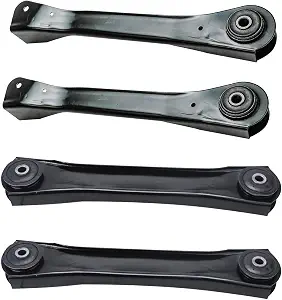 |
| Best Quality Built to a higher standard if you want something more solid | Rancho RS66161B Adjustable Front Lower Control Arm Kit |  |
| Best Budget The cheapest option that still gets the job done reliably | PM Auto Rear Lower Control Arm Pair for 1997–2006 Jeep TJ |  |
| Highest Rated A top-rated pick with lots of positive feedback | MOOG Front Lower Control Arm (Driver Side) for 1997–2006 Jeep Wrangler |  |
| Most Popular A crowd favorite that many people choose with confidence | Detroit Axle Rear Lower Control Arms Kit (2 pcs) for 1997–2006 Jeep Wrangler TJ |  |
| Best Seller A high-volume bestseller chosen again and again | TRQ Front Upper and Lower Control Arm Set (4-piece) |  |
1. Detroit Axle Front Lower & Upper Control Arms Kit for 1997–2006 Jeep Wrangler (4-piece)

| Fitment | 1997-2006 Jeep Wrangler TJ |
|---|---|
| Kit contents | 2x front upper, 2x front lower control arms |
| Position | Front |
| Manufacturer | Detroit Axle |
This Detroit Axle kit supplies two front upper and two front lower control arms intended as direct-fit replacements for 1997–2006 Jeep Wrangler TJ models. The assemblies arrive ready to install and are built from a claimed premium alloy with a high-strength structure to resist impact and corrosion, which should restore steering precision and suspension geometry after worn arms. Typical use is a full front-end refresh when alignment, steering wander, or bushing play appear. Buyers will appreciate the vehicle-specific fit and straightforward swap-in installation that gets the Jeep back on the road quickly. Some owners report long-term durability while others have experienced premature bushing or ball-joint wear, so performance can vary by driving style and environment. Expect improved handling and a stable ride compared with worn originals, but plan for a post-install alignment and inspect bushings and ball joints periodically if you use the vehicle off road. The kit offers a budget-friendly way to replace multiple front arms at once, though results depend on correct installation and follow-up maintenance.
Best for: Buyers who want an affordable, all-in-one front control arm replacement to restore handling and alignment on a 1997–2006 Jeep Wrangler and prefer a vehicle-specific kit that installs with minimal modification.
Less Ideal for: Drivers looking for heavy-duty, off-road performance upgrades or long-term race use should consider reinforced performance parts from specialist brands instead.
- Vehicle-specific direct-fit design simplifies installation and reduces modification needs
- Includes both upper and lower front control arms for a complete front suspension refresh
- Manufactured from premium alloy and reinforced structure for improved rigidity and corrosion resistance
- Helps restore steering accuracy and suspension geometry when replacing worn components
- Some customers report premature bushing or ball-joint wear under certain conditions
- Warranty service may involve shipping costs and could be inconvenient for some buyers
Verdict: A convenient, budget-minded four-piece direct-fit control arm kit to restore steering and suspension geometry on a 1997–2006 Jeep Wrangler TJ.
2. Rancho RS66161B Adjustable Front Lower Control Arm Kit

| Fit Type | Vehicle Specific Fit |
|---|---|
| Auto Part Position | Front Lower |
| Auto Part Orientation | Front |
| Material Type | Alloy Steel |
These Rancho adjustable lower control arms replace the factory front lower arms on 1997–2006 Jeep Wrangler TJ and 1997–2001 Cherokee XJ and are built for drivers who want improved ride quality and alignment control after lifting. The heavy DOM tubing construction with forged ends and a black powder-coat finish gives them durability and corrosion resistance for street and light off-road use. Rancho’s D2 maintenance-free bushings use a PTFE liner to reduce noise, vibration, and harshness while removing the need for greasing. The arms are adjustable so you can correct caster and pinion angles after a lift and the bend closely follows factory geometry to clear larger tires. They arrive preassembled in a two-arm kit to simplify installation. Limitations to know: these are vehicle-specific parts so fitment must match your year and model, and they are aimed at stock to moderate lifts up to 4 inches rather than extreme rock-crawling setups.
Best for: Drivers upgrading a 1997–2006 Wrangler who prioritize ride quality and alignment control after a lift and want a durable, low-maintenance replacement that matches factory geometry.
Less Ideal for: People building extreme off-road or rock-crawling rigs that need heavy-duty long-arm systems or custom-fabricated geometry should look at specialized long-arm kits instead.
- Adjustable design lets you set caster and pinion angles after a lift
- D2 PTFE-lined bushings are maintenance-free and reduce NVH
- Heavy-duty DOM tubing with forged ends improves durability
- Preassembled two-arm kit speeds up installation
- Intended for stock to moderate lifts only, not extreme off-road builds
Verdict: A durable, adjustable front lower arm kit that lowers NVH and lets you dial in caster after a stock or moderate lift on 1997–2006 Wrangler models.
3. PM Auto Rear Lower Control Arm Pair for 1997–2006 Jeep TJ

| Fit Type | Vehicle Specific Fit |
|---|---|
| Material Type | Cast Iron |
| Unit Count | 2.0 Count |
These PM Auto rear lower control arms are a straightforward factory-replacement style pair for 1997–2006 Jeep TJ Wranglers. Made from cast iron and sold as a set of two, they replace the RK640734 part and use rubber bushings to help reduce vibration and noise. Installation is typical for rear lower arm swaps and will be familiar to a home mechanic with basic tools or a professional shop. The heavy cast construction gives strength and durability for street use and light off-road driving, though it also adds weight compared with lighter aftermarket alloys. Because they are vehicle-specific fit parts, you get a direct-fit replacement that keeps suspension geometry correct without modifications. The main compromises are the heavier material and the standard rubber bushings, which may not suit owners who want performance bushings or the lightest possible components for serious rock crawling. For routine repair or budget-minded restoration of an older TJ, these offer a durable, no-frills replacement.
Best for: Buyers wanting an affordable, direct-fit replacement to restore rear suspension function on a 1997–2006 TJ Wrangler who prioritize durability and a straightforward swap over lightweight or upgraded performance parts.
Less Ideal for: Enthusiasts building a lightweight or high-performance suspension or those who need heavy-duty chromoly or polyurethane solutions for aggressive off-road use should consider purpose-built alternatives.
- Direct vehicle-specific fit for 1997–2006 Jeep TJ Wrangler simplifies installation
- Cast iron construction provides strong, durable structure for everyday driving
- Includes rubber bushings that reduce noise and vibration compared with worn metal-on-metal joints
- Sold as a pair so both sides can be replaced at once for balanced handling
- Cast iron design is heavier than aluminum or tubular aftermarket options
- Standard rubber bushings limit high-performance handling and may wear faster under heavy off-road use
Verdict: A budget-friendly, direct-fit pair of cast-iron rear lower control arms that restore factory suspension geometry for 1997–2006 Jeep TJ Wranglers without fuss.
4. MOOG Front Lower Control Arm (Driver Side) for 1997–2006 Jeep Wrangler

| Fit Type | Vehicle Specific Fit |
|---|---|
| Auto Part Position | Front Left Lower |
| Material Type | Alloy Steel |
| Manufacturer Part Number | RK640734 |
This MOOG front lower control arm is a direct-fit replacement engineered to restore proper suspension geometry on 1997–2006 Jeep Wrangler TJ models. Built from alloy steel with corrosion-resistant coatings and factory-style bushings, it replaces a worn or damaged lower arm to reduce steering play, correct tire wear, and eliminate issues like death wobble when combined with a healthy track bar. Installation is straightforward for a mechanically competent DIYer or a shop since it is vehicle-specific and matches factory attachment points. The arm emphasizes structural strength and long-term durability rather than performance tuning, so it keeps handling predictable without changing ride height or alignment specs. One limitation is that this is a single driver-side arm only, so buyers replacing both sides or upgrading to heavy-duty aftermarket arms will need additional parts; also this R-series offering is positioned for reliable daily use rather than extreme off-road reinforcement. Overall this is a practical, factory-quality replacement to bring steering feel and front-end stability back to factory intent.
Best for: Jeep owners who prioritize dependable, factory-quality replacements to restore safe steering and ride stability on a 1997–2006 Wrangler TJ and prefer parts that install like the original.
Less Ideal for: Not ideal for builders seeking heavy-duty or performance lift components for extreme off-road use or those wanting a full front suspension upgrade kit.
- Vehicle-specific direct-fit design for 1997–2006 Jeep Wrangler TJ simplifies installation
- Alloy steel construction with corrosion-resistant coating for long service life
- Engineered to restore suspension geometry and reduce steering play and uneven tire wear
- Factory-style mounting and bushings maintain predictable steering feel
- Sold as a single front left lower arm so replacement of both sides requires purchasing extra units
Verdict: Choose this MOOG front lower control arm when you want a reliable, factory-style replacement to restore steering stability on a 1997–2006 Jeep Wrangler TJ.
5. Detroit Axle Rear Lower Control Arms Kit (2 pcs) for 1997–2006 Jeep Wrangler TJ

| Fit Type | Vehicle Specific Fit |
|---|---|
| Auto Part Position | Rear Lower |
| Manufacturer Part Number | K645377Rx2 |
| Manufacturer Warranty Description | 10-Year |
This Detroit Axle kit includes both driver and passenger rear lower control arms engineered as direct-fit replacements for 1997–2006 Jeep Wrangler TJ models with coil rear springs. The arms are made from a premium alloy and feature a corrosion-resistant coating and reinforced structure intended to resist impact and extend service life. Installation is straightforward for anyone comfortable with basic suspension work and most buyers report bolt-in fitment with no modifications required. In use the assemblies restore rear suspension stability and reduce bushing noise compared with worn originals. The package is a complete pair with factory-style ball joints already pressed in, which saves the extra labor of reusing old components. Limitations: some customers note the ball joints are non-serviceable, so long-term greasing is not possible, and hardware may not always be included so you may need to reuse factory bolts or buy new fasteners. The product is backed by a long warranty but warranty response experiences appear mixed in rare cases.
Best for: Buyers who want a straightforward, reliable replacement to restore rear suspension stability and eliminate worn-arm noise while prioritizing proven fit and strong customer feedback.
Less Ideal for: If you prefer suspension parts with serviceable, greasable joints or need a kit that guarantees included fasteners for a completely bolt-on install, look at alternatives or plan to source hardware separately.
- Direct-fit, vehicle-specific design for 1997–2006 Jeep TJ rear coil setup
- Premium alloy construction with rust-resistant coating for improved durability
- Ships as a pair (driver and passenger) with pressed-in ball joints for quicker replacement
- Reinforced structure intended to handle impact loads and restore rear stability
- Ball joints are non-serviceable so they cannot be greased during routine maintenance
- Some orders may not include mounting bolts so you might need to reuse or purchase hardware separately
Verdict: A dependable, direct-fit pair of rear lower control arms that restore rear suspension performance on 1997–2006 Jeep Wrangler TJs with solid build quality and strong user-reported fitment.
6. TRQ Front Upper and Lower Control Arm Set (4-piece)

| Fitment | 1997-2006 Jeep Wrangler |
|---|---|
| Quantity | 4 Piece |
| Manufacturer | TRQ |
| Exterior | Machined |
This TRQ kit replaces both front upper and lower control arms with pre-assembled, vehicle-specific pieces to restore steering stability and suspension geometry on 1997–2006 Jeep Wrangler vehicles. It is intended for direct replacement use, so installation is usually straightforward and aligns with factory mounting points without modifications. Notable features include machined exterior finish and pre-installed components that reduce bench work during fitting. In practice the set tightens front-end play, helps even out tire wear, and improves ride quality compared with worn arms. TRQ also provides DIY installation videos which can be helpful for owners doing the job themselves. Expect a solid, heavy-duty feel and largely positive long-term value for routine road use, while a minority of users have reported premature ball-joint noise or early failure on different vehicles, so professional installation and post-installation inspection are advisable. You may also need replacement fasteners if the originals are seized or damaged during removal.
Best for: Buyers who prioritize a straightforward, factory-style replacement to restore steering precision and ride comfort on a 1997–2006 Jeep Wrangler and who prefer parts supported by installation guidance.
Less Ideal for: Drivers seeking heavy off-road performance upgrades or extended-duty competition components should consider purpose-built aftermarket suspension parts instead.
- Vehicle-specific direct-fit design reduces need for modifications
- Includes both front upper and lower control arms for a complete front-end refresh
- Pre-assembled components speed up installation and reduce labor
- Machined exterior and heavy-duty construction aimed at improved durability
- Some users have reported early ball-joint noise or failures on certain installs
Verdict: A complete, vehicle-specific front control arm set that makes restoring factory steering feel and ride quality on a 1997–2006 Jeep Wrangler straightforward and DIY-friendly.
Choosing the Right 1997-2006 Jeep Wrangler Lower Control Arm: Key Factors to Consider
Fitment and Chassis Compatibility
Accurate fitment to the 1997-2006 Wrangler is essential because even small deviations in mounting points change alignment geometry and steering response. The Wrangler in this year range aligns with the TJ, LJ, and TJU generation, so confirm bolt patterns, orientation, and whether the arm is intended for front or rear application. Some parts are sold as universal or adjustable solutions, but on-vehicle tolerances can make those choices more difficult to install and tune. Choosing an arm that is explicitly manufactured for the TJ, LJ, and TJU chassis reduces the chance of back-and-forth returns, alignment headaches, and unintended suspension behavior.
Bushing and Joint Type
Bushings and joints control how much compliance the suspension allows. Rubber bushings absorb vibration and are quieter, while polyurethane or elastomer options increase responsiveness at the cost of transmitting more vibration to the cabin. Ball-joint style ends or pressed-in joints change serviceability; replaceable joints can simplify future repairs. For Wranglers that see off-road use, tougher bushing compounds or serviceable joints are often preferable. For primarily street-driven vehicles, softer bushings prioritize comfort and reduce low-speed noise, but they may wear faster under heavy loads.
Material Construction and Corrosion Resistance
Lower control arms are exposed to road salt, water, and debris, so base metal quality and protective coatings matter. Stamped steel arms are common and cost-effective, while tubular or reinforced designs offer improved strength-to-weight ratios for heavier use. Look for arms with adequate surface treatments such as zinc plating or powder coating, and confidence in weld quality at high-stress points. Corrosion-resistant finishes extend service life and reduce the risk of structural failure after years of exposure to harsh conditions.
Ride Quality and Handling Impact
Different arm designs and bushing choices will change steering feel and ride comfort. Arms with firmer bushings tend to sharpen turn-in and reduce flex under load, improving perceived control. Conversely, softer bushings smooth road noise and small bumps at the expense of some steering precision. Consider how you use the vehicle: if you frequently tow, carry heavy loads, or go off-road, prioritize durability and control. If daily comfort and low cabin noise are priorities, choose an arm and bushing combo that favors compliance.
Serviceability and Installation
Some arms are direct-fit replacements that use factory-style pressed-in bushings and require standard tools and an alignment after installation. Others feature replaceable joints or bushings that simplify future maintenance but may be more costly up front. Assess whether the arm can be installed with common hand tools or if it requires specialty presses, and account for the need for an alignment after installation. Parts designed for straightforward bolt-in installation reduce shop time and complexity for owners doing the work themselves.
Load Capacity and Intended Use
Consider the expected loads placed on the control arm. Off-road use, lift kits, or heavier tires increase the forces transmitted through suspension components, so choose an arm rated for higher loads or one with reinforced construction. If you plan modest lifts or heavier accessories, select arms designed to maintain geometry and strength under increased stress. Parts intended for stock-weight applications may still be fine for everyday driving but can show accelerated wear when regularly overloaded.
Symptoms That Indicate Lower Control Arm Problems
Worn lower control arms produce a set of recognizable symptoms that help you diagnose the issue before removing components. Common signs include uneven tire wear, especially on the inner or outer edges, which indicates the wheel is no longer held at the correct camber under load.
Other symptoms are directional instability or wandering down the road, excessive play in the steering, and a loose or vague steering feel. You may also notice clunks, pops, or metallic knocks when going over bumps if joints or bushings are failing.
Specific to the 1997-2006 Wrangler, inspect the arm bushings and ball joints visually for cracking, displacement, or grease leakage during routine maintenance. Catching these issues early can prevent accelerated tire wear and avoid damage to associated suspension parts.
- Uneven tire wear patterns
- Clunking or knocking over bumps
- Steering wander or loose steering feel
- Visible bushing cracks or excessive play
Front Versus Rear Lower Control Arm Roles
On the 1997-2006 Wrangler, front lower control arms handle steering loads and help maintain caster and camber under braking and cornering. They play a key role in directional control and alignment settings, so front-arm wear often leads to more noticeable steering symptoms.
Rear lower control arms maintain axle positioning and help control wheel toe and lateral movement. While rear arms do not directly affect steering input like front arms, worn rear arms can cause instability at speed and contribute to uneven traction and tire wear.
- Front arms: steering geometry and load under cornering
- Rear arms: axle positioning and lateral stability
Installation Considerations and Alignment
Replacing lower control arms typically requires re-torquing suspension fasteners and a professional alignment. Even direct-fit replacements can shift alignment enough to require correction. Allow for alignment time when planning the repair or DIY job.
For owners working on a TJ, LJ, and TJU chassis, pay attention to whether the arm uses pressed-in bushings or serviceable joints. Pressed-in components may require a press or specialized tools to remove and install, while arms with replaceable joints can be easier to service in the future.
- Always perform an alignment after installation
- Confirm whether special tools are needed for bushing removal
- Follow torque specs to avoid premature wear
Upgrading Bushings and Joints
Upgrading to firmer bushings or replaceable joints can change vehicle dynamics. Many TJ, LJ, and TJU owners swap to polyurethane or hardened elastomer bushings for reduced deflection and crisper steering response. Expect some increase in transmitted vibration and NVH with firmer compounds.
If you frequently drive off-road, consider serviceable joints that can be cleaned and greased. This approach extends service life and reduces the need to replace the entire arm assembly if a joint wears out over time.
- Polyurethane for sharper response, rubber for quieter ride
- Serviceable joints help long-term maintenance
- Consider NVH tradeoffs with firmer bushings
Corrosion Protection and Long-Term Durability
Because lower control arms are exposed to moisture, road salt, and debris, corrosion protection is a practical consideration for longevity. Look for arms with robust coatings and welded components designed to withstand repeated exposure without cracking at seams.
Regular underbody inspection and touch-up of any damaged coating will help preserve structural integrity and reduce the chance of failures in areas where welds concentrate stress. Durability matters most for Wranglers used off-road or in coastal regions with corrosive exposure.
- Powder coating or zinc plating extends service life
- Inspect welds and seams for early corrosion
- Touch-up damaged finishes to prevent rust propagation
Common Repair Scenarios and When to Replace
Minor bushing wear may be tolerable for short-term driving, but once play allows visible wheel movement or generates noise, replacement is advised to avoid secondary damage. If ball joints show excessive looseness or visible separation, replace the arm or joint promptly.
Consider replacement when performing related suspension work such as installing shocks or lift components, since access is already available and it is cost-effective to refresh worn arms at the same time.
- Replace if visible play or noise is present
- Service arms when doing other suspension work
- Address uneven tire wear early to avoid extra costs
Still looking for the perfect fit?
Select your Jeep Wrangler configuration to see the most relevant Lower Control Arms recommendations
How We Chose the Best 1997-2006 Jeep Wrangler Lower Control Arm
Our selection process prioritized parts that meet the specific fitment and load demands of the 1997-2006 Jeep Wrangler. We evaluated candidates on measurable, vehicle-specific criteria: accurate bolt-pattern and mounting-point compatibility for the TJ, LJ, and TJU chassis, material and construction quality such as stamped steel versus tubular designs, and the type and durability of bushings or joints used. Installation practicality was a major filter, including whether the arm uses OE-style bushings or serviceable joints and how often special tools or alignment work is required. Durability tests and user reports informed assessments of corrosion resistance and weld integrity for parts exposed to frequent off-road stress. Ride and handling characteristics were judged by how the arm preserves factory steering geometry under load. We excluded any parts that lacked clear TJ, LJ, and TJU-specific fitment information, showed inconsistent build quality reports, or would require major suspension modifications to install. The outcome is a shortlist focused on fit, longevity, and real-world serviceability for the 1997-2006 Wrangler owner.
Our full evaluation process is outlined in our review methodology.
FAQ
What are the most common lower control arm symptoms on a TJ, LJ, and TJU Wrangler?
Common symptoms include uneven tire wear, clunking noises over bumps, and a loose or wandering steering feel. Visual signs include cracked bushings or excessive joint play. These indicators often point to worn bushings or failing joints.
How long does a typical lower control arm last on a 1997-2006 Wrangler?
It depends on use and environment. For mostly street-driven Wranglers, arms can last many years, while frequent off-road use or exposure to salt can shorten service life. Regular inspections help identify wear before failure.
Can I replace just the bushings instead of the whole lower control arm?
Sometimes you can replace bushings if the arm is in good structural condition and the bushings are serviceable. Some arms use pressed-in bushings that require a press to replace, while others offer replaceable joints. Consider the cost and labor before deciding.
Will new lower control arms require an alignment?
Yes. Replacing lower control arms alters suspension geometry enough that a wheel alignment is recommended to restore correct caster, camber, and toe settings and prevent premature tire wear.
Are reinforced or tubular arms necessary if I add a small lift to my Wrangler?
For modest lifts, many stock-style arms may still work, but reinforced or heavier-duty arms provide better geometry retention and strength under increased loads. Evaluate expected use and tire size before deciding.
What maintenance keeps lower control arms performing well?
Regular visual inspections for bushing deterioration, corrosion, and joint play help catch problems early. For serviceable joints, periodic cleaning and greasing extend life. Address any noises or unusual tire wear promptly.
Final Verdict
When choosing lower control arms for a 1997-2006 Jeep Wrangler, prioritize correct TJ, LJ, and TJU chassis fitment, durable bushing or joint design, and corrosion protection. Decide between comfort-focused rubber components and firmer materials based on whether you value ride smoothness or sharper handling. Balance serviceability and long-term durability against the vehicle s intended use. For daily-driven Wranglers, direct-fit arms with compliant bushings often provide the best compromise. For heavier use or off-road duty, favor reinforced construction and serviceable joints to maintain geometry and simplify future repairs.
Explore More:
- Check out all Jeep Wrangler parts & accessories
- Explore Lower Control Arms Maintenance & Repair Guides
- Explore Suspension & Steering
- Browse all Auto Parts
