

Note: This article contains affiliate links. If you click on these links and make a purchase, I may earn a small commission at no extra cost to you. This helps support my research and content. Read my full affiliate disclosure here.
If you own a Jeep Wrangler and you notice clunks, body roll, or a loose feeling in turns, worn rear sway bar links are a common culprit. Choosing the right rear sway bar link matters because the wrong part can leave handling vague, produce persistent noise, or wear out quickly under off-road stress.This guide shortlists six top rear sway bar links that suit the Wrangler's suspension geometry and load conditions. We evaluated options for fitment, build quality, and long-term durability so you can pick a replacement that restores stability and quiets suspension noise. Read on for the evaluation criteria and what to expect when swapping these parts on your Wrangler.
Looking for other parts? See all Jeep Wrangler parts & accessories.
Top Picks at a Glance
| Best Overall The best all-around choice for most situations | Detroit Axle Front and Rear Sway Bar End Link Kit for Jeep Wrangler (2007–2018 JK) |  |
| Best Quality Built to a higher standard if you want something more solid | TeraFlex Rear Sway Bar Link Kit for JK (2.5" Lift) |  |
| Best Value The sweet spot between price and what you get | Rough Country Rear Sway Bar Links for 1997–2006 Jeep Wrangler TJ (4–6" Lift) |  |
| Best Budget The cheapest option that still gets the job done reliably | TALAMOYI Rear Stabilizer Sway Bar End Link Kit (2‑pc) |  |
| Most Popular A crowd favorite that many people choose with confidence | Detroit Axle 4pc Sway Bar End Link Kit for 1997–2006 Jeep TJ Wrangler |  |
| Best Seller A high-volume bestseller chosen again and again | Rough Country Rear Sway Bar Links for 2007–2018 Jeep Wrangler JK (2.5–4" lift) |  |
1. Detroit Axle Front and Rear Sway Bar End Link Kit for Jeep Wrangler (2007–2018 JK)

| Fitment | Jeep Wrangler 2007-2018 JK |
|---|---|
| Kit contents | 4x front and rear sway bar end links |
| Manufacturer | Detroit Axle |
| Manufacturer Part Number | 4S501463 |
This Detroit Axle kit supplies four stabilizer end links to replace front and rear sway bar links on 2007–2018 Jeep Wrangler JK models. Each link is built heavier than many factory replacements and the kit is intended for direct-fit swap-in installation, making it useful when the original links are noisy, loose, or broken. Notable features include thicker components and, on the front pair, grease fittings for re-lubrication; buyers should note that only the front links are serviceable with zircs while the rear links arrive sealed. In practice the beefier construction reduces rattle and flex compared with worn stock parts and reviewers report improved stability and longer life. Installation can require breaking rusted fasteners on older Jeeps and some users found the Allen wrench retention on studs can strip if corroded, so basic tools and some patience are helpful. The kit is a practical, cost-effective way to refresh suspension feel without upgrading to an aftermarket performance bar.
Best for: Buyers who want a reliable, no-frills replacement to restore steering stability and eliminate sway-bar noise while keeping a factory-style repair approach and reasonable cost in mind.
Less Ideal for: Shoppers seeking a performance-oriented sway bar upgrade or fully serviceable links for off-road rebuilds should consider purpose-built aftermarket alternatives.
- Direct-fit replacement for 2007–2018 Wrangler JK front and rear sway bar links
- Heavier, more robust construction than many factory links to reduce rattle and wear
- Front links include grease fittings for periodic lubrication and longer bushing life
- Comes as a full set of four so front and rear can be refreshed at once
- Only the front pair have grease fittings; rear links are sealed and not serviceable
Verdict: A straightforward, beefier replacement link kit that restores stability and removes rattle on 2007–2018 Wrangler JKs without changing ride characteristics.
2. TeraFlex Rear Sway Bar Link Kit for JK (2.5" Lift)

| Auto Part Position | Rear |
|---|---|
| Material | Alloy Steel |
| Included Components | Swaybar links |
| Maximum Lifting Height | 2.5 Inches |
TeraFlex's rear sway bar link kit is built specifically for Jeep Wrangler JKs lifted about 2.5 inches and replaces the factory links with stronger, lift-corrected components. The upper link uses a sealed narrow-shoulder tie-rod style ball socket to maximize tire-to-swaybar clearance while the lower link also uses a sealed ball socket for quick, precise response under sway bar load. It is a vehicle-specific, factory-quality replacement constructed from alloy steel and sold as a pair, so installation restores correct roll control and reduces unwanted play. The sealed joints need no greasing, which simplifies maintenance, and reviewers report straightforward fitment and long-term durability. Limitations: these links are designed for the JK rear and will not work with the rear S/T trail sway bar system, and they are fitment-specific so verify lift height and hardware compatibility before buying.
Best for: Drivers who prioritize sharper handling and correct sway bar geometry after lifting a JK by about 2.5 inches and want a durable, low-maintenance replacement.
Less Ideal for: Owners running the rear S/T trail sway bar system or those with different lift heights who need adjustable or universal links.
- Vehicle-specific geometry for 2.5" lifts improves sway bar alignment and tire clearance
- Sealed ball sockets on both ends provide immediate, precise response with no greasing required
- Alloy steel construction built to factory-quality standards for durability
- Sold as a pair so both sides are refreshed during installation
- Not compatible with the rear S/T trail sway bar system
Verdict: If you need lift-corrected, maintenance-free rear links that restore firm roll control on a 2.5" lifted Jeep JK, this TeraFlex kit is a dependable choice.
3. Rough Country Rear Sway Bar Links for 1997–2006 Jeep Wrangler TJ (4–6" Lift)

| Compatible Vehicle | 1997-2006 4WD Jeep Wrangler |
|---|---|
| Fit Type | Vehicle Specific Fit |
| Material | Steel |
These Rough Country rear sway bar links replace the factory links on lifted Jeep TJ models to restore sway bar geometry and reduce body roll. They are steel links with a black powder coat and come with hardware, so installation is straightforward for someone with basic tools and a floor jack. The links are sized to work with 4 to 6 inch lifts, which keeps the sway bar from overstressing the end links and improves on- and off-road stability and articulation. Reviewers report the included hardware fits and the coated finish resists corrosion, though some installers needed extra washers or to press bushings during assembly. The kit is backed by a limited warranty and Rough Country recommends professional inspection and torque checks after installation. If you want a vehicle-specific, durable replacement that corrects handling on lifted TJs, these links do the job, but expect minor fitting tasks during install and follow-up inspections for long-term safety.
Best for: Buyers who want a practical, vehicle-specific replacement that restores handling on a lifted TJ and prefer a straightforward kit they can install or have installed with minimal fuss.
Less Ideal for: Drivers who need a universal or adjustable link for multiple vehicles or who want a fully assembled, maintenance-free link without any post-install adjustments.
- Vehicle-specific fit for 1997–2006 4WD Jeep Wrangler TJ with 4–6" lifts
- Durable steel construction with corrosion-resistant black powder coat
- Includes hardware for easier installation
- Helps reduce body roll and restore proper sway bar geometry on lifted vehicles
- May require pressing bushings and extra washers not included
- Some users needed to replace or avoid using factory bolts during install
Verdict: A practical, durable replacement designed to restore stability on 1997–2006 Jeep Wrangler TJs lifted 4–6 inches.
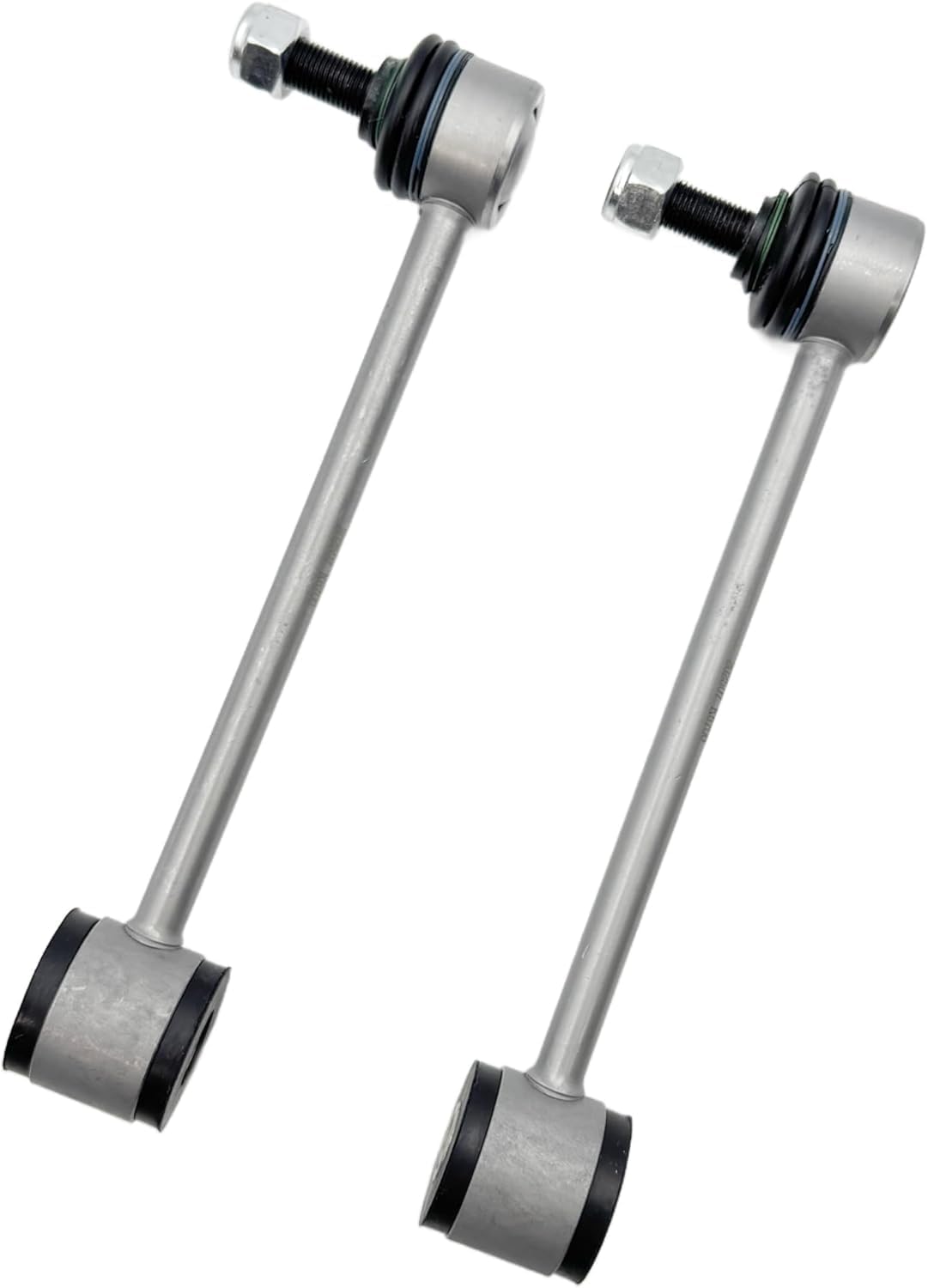
4. TALAMOYI Rear Stabilizer Sway Bar End Link Kit (2‑pc)
| Auto Part Position | Rear |
|---|---|
| Automotive Fit Type | Vehicle Specific Fit |
| Material Type | Metal Alloy |
| Exterior Finish | Machined |
These two rear sway bar end links replace worn links on compatible SUVs and trucks to restore rear roll control and reduce suspension noise. They are metal alloy link assemblies with machined finish intended as direct-fit, vehicle-specific replacements for models listed in the fitment section. Installation is typical for sway bar links — remove the old links and fasten the new units to the sway bar and control arm — and many buyers report an easy fit and OEM-like performance. The metal construction and anti-corrosion coating promise durability for road use, and the kit is sold as a matched pair so both sides are renewed at once. Limitations are the vehicle-specific fit requirement and the need to confirm exact part numbers before ordering; this kit covers many full-size GM SUVs, Hummers, and Jeep Wrangler models but will not fit vehicles outside the listed applications. Expect a straightforward, cost-effective repair that restores stability without performance upgrades beyond factory replacement level.
Best for: Buyers wanting a low-cost, reliable replacement to restore rear stability and eliminate sway bar noise on the listed SUVs and Jeeps; ideal for DIYers and owners prioritizing a budget-friendly factory-style repair.
Less Ideal for: Do not choose this if you need upgraded performance links for aggressive off-road use or if your vehicle is not on the fitment list; professionals seeking heavy-duty aftermarket components should look elsewhere.
- Vehicle-specific design for direct replacement on listed models
- Metal alloy construction with anti-corrosion coating for durability
- Sold as a two-piece kit so both rear links are replaced together
- Machined finish and tested before shipping for consistent fit
- Fitment is limited to the vehicles listed so cross-compatibility is not guaranteed
Verdict: A budget-friendly, vehicle-specific rear sway bar link pair that restores factory-level rear stability and eliminates noise for the listed SUVs and Jeeps.
5. Detroit Axle 4pc Sway Bar End Link Kit for 1997–2006 Jeep TJ Wrangler

| Fitment | 1997–2006 Jeep TJ Wrangler |
|---|---|
| Kit contents | 2 front + 2 rear sway bar end links |
| Material | Premium alloy |
| Manufacturer | Detroit Axle |
| Manufacturer Part Number | 4S3400133 |
This Detroit Axle kit supplies two front and two rear sway bar end links as a direct-fit replacement for 1997–2006 Jeep TJ Wrangler models. Installation is straightforward for a competent DIYer or a shop since the links are made to match factory fitment and use standard mounting hardware. The links are built from premium alloy with a focus on rigidity and corrosion resistance, which helps reduce sway bar noise and looseness that develop as original links age. Buyers report noticeably quieter, firmer handling after installation and generally good fitment across model years. There are occasional reports of shipping damage or early failure on single pieces, so inspect parts on arrival and torque hardware to spec. The kit is a cost-effective way to refresh worn stabilizer components compared with dealer alternatives, but if you need heavy-duty or performance-oriented links for extreme off-road use, consider uprated aftermarket options instead.
Best for: Buyers who want a reliable, factory-replacement style refresh to eliminate sway bar noise and restore handling on a 1997–2006 Jeep TJ Wrangler, preferring proven fitment and value over performance upgrades.
Less Ideal for: Drivers seeking heavy-duty, adjustable, or performance-grade end links for aggressive off-road rigs should look at specialty aftermarket options instead.
- Direct-fit design for 1997–2006 Jeep TJ Wrangler for straightforward installation
- Premium alloy construction aimed at wear resistance and rust protection
- Includes both front and rear links so all four worn link locations can be replaced at once
- Improves suspension quietness and restores firmer handling when original links are worn
- Not designed as a heavy-duty or performance uprated link for aggressive off-road use
Verdict: A cost-effective, direct-fit four-piece end link kit that restores quiet, stable handling for 1997–2006 Jeep TJ Wranglers.
6. Rough Country Rear Sway Bar Links for 2007–2018 Jeep Wrangler JK (2.5–4" lift)

| Automotive Fit Type | Vehicle Specific Fit |
|---|---|
| Set Name | Set of 2 |
| Auto Part Position | Rear |
| Material Type | Steel |
| Maximum Lifting Height | 4 Inches |
These Rough Country rear sway bar links replace the factory links with extended, heavy‑duty steel units meant for lifted Wrangler JKs. They bolt in as a direct, vehicle‑specific fit and are commonly used when a 2.5 to 4 inch lift increases suspension droop and stock links bind or wear. The links have a black powder coat and include hardware so installation can be completed at home with basic hand tools. In use they restore proper sway bar connection, reducing clunking and restoring on‑road handling after a lift, while allowing the suspension to articulate more predictably off‑road. Some users report an excellent fit and long life from the steel construction, but one reviewer noted fitment geometry issues on certain setups, so test‑fitting and checking for binding after installation is important. The product is backed by Rough Country's limited lifetime replacement promise and carries the simple, no‑frills design most owners expect for a replacement link.
Best for: Buyers who want a straightforward, factory‑style replacement that accommodates a mild to moderate lift and prioritize a durable, easy‑to‑install part with predictable on‑road behavior.
Less Ideal for: Drivers planning extreme lifts, custom suspension geometries, or those who require adjustable or quick‑disconnect links should consider alternative link designs.
- Vehicle‑specific design for 2007–2018 Wrangler JK simplifies fitment
- Steel construction for durability under lifted suspension use
- Includes installation hardware and a durable black powder coat finish
- Extended fixed length may not suit every aftermarket lift geometry and can bind on some setups
Verdict: Solid, no‑nonsense rear sway bar links built for lifted JKs that restore handling and durability for the risk‑averse buyer.
Choosing the Right Jeep Wrangler Rear Sway Bar Link: Key Factors to Consider
Fitment and Geometry
Correct fitment ensures the link mounts without forcing the sway bar or control arms out of alignment. Fitment covers stud length, bushing offset, and mounting angle. Incorrect geometry can cause binding when the suspension cycles, which accelerates bushing wear and can transfer loads to related components.
When replacing rear links on the Jeep Wrangler, confirm the part matches the Wrangler's rear sway bar anchor points and clearance envelope. Consider whether you run a lifted suspension because lift height changes the link angle and may require longer or adjustable links. Also check whether the link is intended for stock sway bars or aftermarket, thicker bars since mismatch leads to preloading and premature failure.
Materials and Corrosion Resistance
Sway bar links operate exposed to water, mud, salt, and road debris, so material choice impacts lifespan. Look for plated or powder-coated steel shafts, stainless fasteners, and durable polymer or greasable ball joints to resist rust and seizure.
For Wrangler owners who spend time off-road or in coastal areas, enhanced corrosion protection reduces the chance of seized nuts and stuck joints, which complicate future maintenance. Replaceable end-links or designs with serviceable fittings allow longer component life through periodic maintenance.
Joint Design and NVH
The end joints determine how the link handles movement and isolates noise. Solid rubber bushings generally reduce squeaks on stock ride heights but can transfer harshness. Ball joints or Heim-style ends offer greater articulation for lifted or flexing suspensions but may introduce more noise if not properly sealed.
Consider sealed, greasable, or polyurethane bushings depending on desired tradeoffs between quiet operation and articulation. For a Wrangler used primarily on-road, quieter bushings are preferable. For heavy off-road use, articulated joints maintain handling and reduce stress under extreme articulation.
Durability and Load Capacity
Sway bar links take both shear and bending loads during cornering and when the vehicle articulates off-road. Heavier-gauge shafts, reinforced housings, and robust mounting studs help prevent bending or breakage under strain. Evaluate whether the design uses thicker materials or additional reinforcement at stress points.
Durability also includes how the part handles repeated suspension cycles without loosening. Components with lock-style hardware, crush sleeves, or captured nuts reduce the risk of fastener loosening. For a Wrangler that sees trail use, prioritize links with proven build features that withstand impact and vibration.
Installation and Hardware
Ease of installation matters because some replacements are straightforward while others require additional parts or suspension disassembly. Check whether the link kit includes grade hardware, bushings, and necessary washers or spacers. Included lock nuts or torque-spec guidance speeds a correct installation.
Also consider whether special tools are needed to compress or orient bushings, or if threaded-rod designs require jam nuts or alignment during torqueing. For DIYers, a kit that mirrors factory mounting and includes clear instructions reduces time in the garage and the chance of improper assembly.
Serviceability and Replacement Parts
Some links are fully replaceable assemblies while others offer replaceable joints or bushings. Serviceable designs allow the longest life because worn joints can be replaced without swapping the entire link. This is particularly useful for Jeep Wrangler owners who maintain vehicles over many years.
Availability of replacement bushings, grease fittings, and compatible fasteners is important. Consider whether routine greasing is possible and whether the design permits in-field repairs during trail use.
Signs Your Rear Sway Bar Links Need Replacement
Listen and feel for common indicators that the rear sway bar links are failing. A repeated clunk over bumps, especially from the rear of the vehicle, often points to worn ball joints or loose bushings in the links. Increased body roll or a loose feeling in turns can also signal reduced effectiveness of the stabilizer system.
Visual checks help confirm the diagnosis. Look for cracked or missing bushings, excessive play at the end joints when you try to move them by hand, or rusted studs and nuts that no longer hold tightly. Also check for bent shafts or evidence the link has been overloaded during off-road use.
- Repeated clunking from rear suspension
- Noticeable increase in body roll or loose handling
- Cracked or deteriorated bushings
- Bent link shafts or visibly corroded hardware
Adjustable Vs Fixed-Length Rear Links
Fixed-length links are designed to match stock suspension geometry and are typically easiest to install. They are a good choice for Wranglers kept near factory ride height where angles are predictable. Fixed links are often lighter and simpler, with fewer moving parts to maintain.
Adjustable links provide length tuning to accommodate lifts or altered sway bar positions. They let you set preload and correct alignment when the suspension height changes. For lifted Wranglers or those that use larger sway bars, adjustable links minimize binding and maintain correct roll control through the range of motion.
- Fixed links: simple, factory-oriented, lower maintenance
- Adjustable links: correct for lift, prevent binding, require occasional checking
Installation Tips for a Smooth Swap
Prepare the vehicle safely using jack stands and chock blocks, and relieve any preload on the sway bar by supporting the axle if needed. Loosen mounting hardware before lifting when possible, and apply penetrating lubricant to seized nuts on older links.
When installing new links, torque fasteners to the vehicle manufacturer or kit-specified values and use any supplied lock hardware. If installing adjustable links, set the length so the bushings or joints are not preloaded at ride height. After a short break-in drive, recheck torque and mounting orientation to ensure nothing has shifted.
- Support axle to avoid loading the sway bar during installation
- Apply penetrating oil to stuck fasteners before removal
- Torque to spec and recheck after initial drive
How Lifted Suspensions Change Link Requirements
Even modest lifts alter the angle and effective length of rear sway bar links. Without correcting link length, the increased angle stresses end joints and can cause premature wear or binding. Lifted Wranglers often benefit from adjustable or longer links to restore neutral geometry.
Also consider whether aftermarket sway bars or drop brackets are in use. Those changes shift mounting points and may require specific link lengths or end types. When planning a lift, factor link choice into the suspension upgrade to avoid mismatched components.
- Lifts increase link angle and may need longer links
- Adjustable links help maintain correct geometry across travel
- Check compatibility with aftermarket sway bar hardware
Maintaining Rear Sway Bar Links for Longevity
Regular inspection is the simplest maintenance step: check for play, corrosion, and bushing condition every few oil-change intervals or after off-road trips. Clean mud and debris from joints to prevent abrasive wear and allow visual assessment of seals.
If links have grease fittings, lubricate them per the maintenance interval to prolong joint life. Replace any degraded bushings promptly to prevent accelerated wear of mating components and ensure the stabilizer system continues to function as designed.
- Inspect visually after off-road use
- Keep joints clean and greased when possible
- Replace worn bushings before they damage other components
Still looking for the perfect fit?
Select your Jeep Wrangler configuration to see the most relevant Sway Bar Links recommendations
How We Chose the Best Jeep Wrangler Rear Sway Bar Link
We focused on criteria that matter for Jeep Wrangler rear sway bar links under both street and off-road use. Fitment accuracy was the first filter because correct bushing orientation, stud length, and mounting angles directly affect sway bar performance and prevent binding. Material and corrosion resistance were next, with attention to plated steel, corrosion-resistant coatings, and robust bushings or ball joints that stand up to mud and salt exposure.Durability under load was assessed by looking for features that reduce wear, such as reinforced shafts, heavier-gauge hardware, or replaceable ball joints. Noise and NVH performance were also considered, favoring designs with solid bushings or sealed joints to limit clunking and rattles. Ease of installation was evaluated based on whether hardware is included, whether the design permits reuse of factory brackets, and whether removal requires minimal suspension disassembly. Compatibility with common Wrangler lift heights and aftermarket sway bars was checked to avoid fitment surprises.We excluded options lacking clear fitment data for the Jeep Wrangler or those with unverified construction claims. Products that require vehicle-specific modification or extensive fabrication were not considered. The final list balances practical durability, correct fit, and straightforward installation for typical Wrangler owners.
Our full evaluation process is outlined in our review methodology.
FAQ
How long do rear sway bar links typically last on a Jeep Wrangler?
Lifespan varies with use but often ranges from 30,000 to 70,000 miles. Off-road use, exposure to corrosion, and frequent articulation shorten life, while regular inspections and maintenance can extend it.
Can I drive with a broken rear sway bar link on my Wrangler?
You can usually drive short distances, but handling will be degraded and increased body roll makes driving less safe. It is best to replace a broken link promptly to restore normal stability.
Are adjustable rear links necessary if I lift my Jeep Wrangler?
Adjustable links are recommended for most lifts because they correct the changed angle and length that come with increased ride height. They help avoid binding and premature wear, especially with larger suspension travel.
What causes a sway bar link to make a noisy clunk?
Noisy clunks usually come from worn bushings, seized ball joints, or loose mounting hardware. Dirt and corrosion can accelerate wear and allow play that produces audible impacts over bumps.
Can I replace rear sway bar links myself on a Wrangler?
Many owners can perform the replacement with basic hand tools and a jack and stands. Some situations require penetrating oil for seized nuts or a breaker bar for stubborn fasteners, but the procedure is generally straightforward for DIYers.
Should I reuse factory hardware when installing new links?
Reusing factory hardware is sometimes possible but not ideal if bolts show corrosion or thread damage. New kits that include grade hardware and lock nuts improve long-term reliability.
Final Verdict
Choosing the right rear sway bar link for your Jeep Wrangler comes down to matching fitment and joint design to how you use the vehicle. Prioritize correct geometry and corrosion-resistant materials for dependable handling, and select adjustable links if you run a lift or altered sway bar.Balance quieter bushings against the articulation needs of off-road driving, and favor replaceable or serviceable designs when longevity is important. With the right link, you restore stability, reduce noise, and improve confidence behind the wheel.
Explore More:
- Check out all Jeep Wrangler parts & accessories
- Explore Sway Bar Links Maintenance & Repair Guides
- Explore Suspension & Steering
- Browse all Auto Parts
