

Note: This article contains affiliate links. If you click on these links and make a purchase, I may earn a small commission at no extra cost to you. This helps support my research and content. Read my full affiliate disclosure here.
If you drive a 2007-2018 Jeep Wrangler you know how much suspension components affect ride quality and control, especially after off-road miles or high mileage. Choosing the right lower control arms restores alignment, reduces wandering, and keeps steering geometry within spec for safe, predictable handling. This guide covers the top seven lower control arms shortlisted for Jeep Wrangler JK and JKU model years, with attention to fitment for front and rear mounting locations where applicable. We evaluated options based on durability, bushing and ball joint quality, and ease of installation to help you pick a part that matches your driving style and maintenance ability. Below you will find focused advice on symptoms, installation considerations, and practical tradeoffs before the product list.
Looking for other parts? See all Jeep Wrangler parts & accessories.
Top Picks at a Glance
| Best Overall The best all-around choice for most situations | Rough Country Front Lower X-Flex Adjustable Control Arms |  |
| Best Quality Built to a higher standard if you want something more solid | TeraFlex Sport Front Lower Flexarm Kit for Jeep Wrangler JK |  |
| Best Value The sweet spot between price and what you get | MOOG RK621823 Front Lower Control Arm |  |
| Best Budget The cheapest option that still gets the job done reliably | Detroit Axle Front Lower Control Arm (K621823) for 2007–2018 Jeep Wrangler |  |
| Highest Rated A top-rated pick with lots of positive feedback | Metrix Premium Chassis Parts Front Lower Control Arm Kit (2 pc) |  |
| Most Popular A crowd favorite that many people choose with confidence | Detroit Axle Front Lower Control Arms Kit (2) for 2007–2017 Jeep Wrangler and 2018 Wrangler JK |  |
| Best Seller A high-volume bestseller chosen again and again | Detroit Axle Front Upper & Lower Control Arms 4pc Set for 2007-2018 Jeep Wrangler JK |  |
1. Rough Country Front Lower X-Flex Adjustable Control Arms
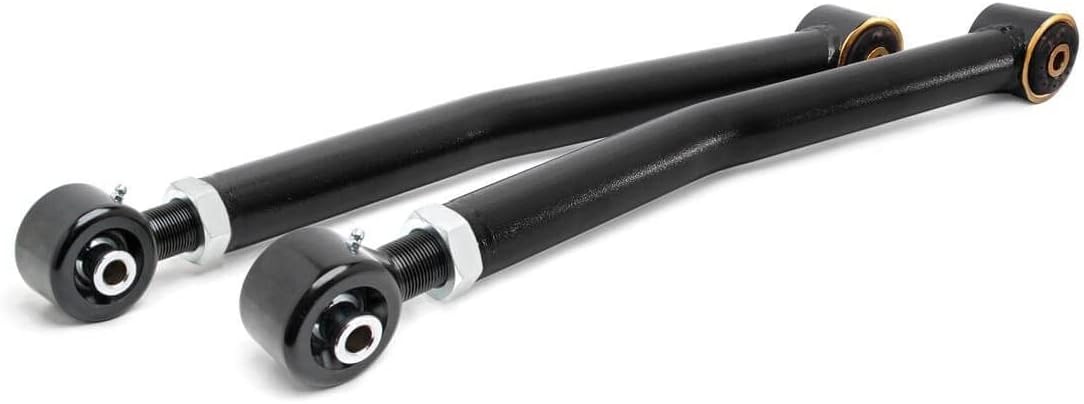
| Fit Type | Vehicle Specific Fit |
|---|---|
| Auto Part Position | Front |
| Material Type | Steel |
| Included Components | Front lower adjustable control arms, Flex joints, Hardware |
These Rough Country front lower X-Flex control arms replace the factory lower links with a beefier, adjustable steel unit built for lifted and off-road JK Wranglers. They use greasable ball-in joints with large-diameter bodies and long threads to allow significant articulation—upper joints pivot up to 20 degrees and lowers up to 35 degrees—so the suspension can travel more without binding. Typical use is correcting alignment or pinion angle after a lift, reducing front-end darting and improving axle articulation on trails. The arms come with flex joints, hardware, and are adjustable for tuning camber and track. Practical benefits include stronger construction than stock, serviceable joints, and improved off-road compliance. Limitations are that the finish and weld quality reported by some users can be uneven and the ball-style joints may need periodic inspection or maintenance; professional installation and regular torque/alignment checks are recommended for safety.
Best for: For Jeep owners who want a durable, adjustable lower arm that improves front-end control and axle articulation after a lift while remaining serviceable and relatively straightforward to install.
Less Ideal for: Not a good choice for buyers seeking a no-maintenance, cosmetic-only upgrade or those who prefer stamped light-weight replacements for strict on-road comfort priorities.
- Beefy steel construction improves strength over factory lower arms
- Adjustable length lets you correct camber and pinion angle after lifting
- Greasable X-Flex ball joints provide large articulation range for off-road travel
- Includes hardware and serviceable joints for easier long-term maintenance
- Some buyers report variable weld or powder-coat quality and cosmetic inconsistencies
Verdict: Choose these if you need a strong, adjustable lower arm that increases articulation and corrects alignment on lifted 2007–2018 Jeep Wrangler JKs.
2. TeraFlex Sport Front Lower Flexarm Kit for Jeep Wrangler JK

| Automotive Fit Type | Vehicle Specific Fit |
|---|---|
| Set Name | Jeep Wrangler JK |
| Auto Part Position | Front Lower |
| Material Type | Metal |
| Maximum Lifting Height | 3 Inches |
TeraFlex Sport fixed-length front lower flexarms are built to correct suspension geometry after a 2.5"–3" lift and deliver a more stable on-road feel. These are installed in place of the factory lower front arms and come pre-adjusted to restore caster and pinion angles without the fuss of measuring and dialing in adjustable arms. Construction uses 1-5/8" DOM tubing and factory-style bushings to keep vibration and NVH under control while remaining maintenance free. Typical use is for lifted JKs where highway tracking became twitchy or steering felt vague; install is straightforward and can be done with the vehicle on the ground using basic hand tools. The arms are noticeably stiffer than stock and give a firmer, more controlled ride, though the tube diameter is slimmer than some heavier-duty aftermarket options so they are a middle ground between stock and beefiest competition. If you want a simple, bolt-in correction for a common lift range these flexarms do the job with clean welds and reliable fitment.
Best for: A buyer looking to fix steering feel and highway tracking after a modest lift who prefers a simple, maintenance-free bolt-on solution rather than fiddly adjustable arms.
Less Ideal for: Drivers who need the heaviest, most reinforced control arms for extreme off-road abuse or custom suspension setups should consider more heavy-duty adjustable options.
- Pre-adjusted length restores caster and pinion angles for 2.5"–3" lifts without alignment guesswork
- Factory-style bushings reduce vibration and require no maintenance
- DOM tube construction and clean welds provide durable, trail-capable strength
- Simple bolt-on installation that can be completed with common tools
- Tube diameter is slimmer than some heavy-duty aftermarket arms, so not the most overbuilt option available
Verdict: If you run a 2.5"–3" lift on a Wrangler JK and want a straightforward, bolt-in way to restore factory-like steering and tracking, these flexarms are an effective choice.
3. MOOG RK621823 Front Lower Control Arm

| Fit Type | Vehicle Specific Fit |
|---|---|
| Auto Part Position | Front Lower |
| Material Type | Alloy Steel |
| Manufacturer Part Number | RK621823 |
The MOOG RK621823 is a front lower control arm engineered as a direct-fit replacement for 2007-2018 Jeep Wrangler models. It reestablishes proper suspension geometry to reduce wandering, restore steering response, and address inner tire wear caused by worn suspension links. Constructed from alloy steel with corrosion-resistant coatings and reinforced areas for structural strength, this arm is intended for everyday driving and typical off-road use. Installation is straightforward since the part is vehicle-specific and matches factory mounting points, which keeps alignment changes minimal. Buyers should note the part is a replacement control arm rather than an upgraded performance unit, so drivers seeking heavy-duty off-road reinforcement or lighter aftermarket materials may prefer alternatives. Several user reports praise fit and quality while a few mention slightly thinner wall sections compared with older factory parts, which could matter for extreme duty applications. For routine repairs and restoring factory handling, this MOOG arm is a practical, proven option.
Best for: Buyers who want a reliable, factory-style replacement to restore ride quality and steering feel on a daily-driven or moderately used Jeep Wrangler without modifying suspension geometry.
Less Ideal for: Drivers planning aggressive off-road builds, heavy-load use, or who want lighter-weight performance components should consider reinforced or aftermarket performance arms instead.
- Vehicle-specific direct-fit design simplifies installation and preserves alignment
- Alloy steel construction with corrosion-resistant coating for durability
- Engineered reinforcement in key areas to handle road impacts and repetitive loads
- Restores steering response and helps correct uneven inner tire wear
- Not a heavy-duty performance upgrade for extreme off-road use
- Some users report slightly thinner wall thickness compared to older factory parts
Verdict: A practical, factory-style front lower control arm that restores handling and steering on 2007–2018 Jeep Wrangler models with straightforward direct-fit installation.
4. Detroit Axle Front Lower Control Arm (K621823) for 2007–2018 Jeep Wrangler

| Fit Type | Vehicle Specific |
|---|---|
| Auto Part Position | Front Lower |
| Material Type | Alloy Steel |
| Manufacturer Part Number | K621823 |
This Detroit Axle front lower control arm is a vehicle-specific replacement meant to restore steering stability and suspension geometry on 2007–2018 Jeep Wranglers. It installs as a direct-fit driver- or passenger-side unit and is typically used when a worn arm or degraded bushing/ball joint causes looseness, uneven tire wear, or poor handling. The part is built from alloy steel with a reinforced structure intended to resist impact and corrosion, and Detroit Axle highlights factory-quality fit and a 10-year warranty. In practice you can expect a straightforward swap-in for most DIYers or techs, though front bolts can be tight to remove and may require penetrating oil or an impact tool. The arm addresses ride stability and steering feel without modifying alignment specs, but it is offered as a single arm rather than a paired kit so consider matching the opposite side if both are aged. Overall it gives a solid, budget-minded replacement option that aims to balance durability and cost for Wrangler owners who want a reliable factory-style fix.
Best for: Buyers seeking an affordable, factory-style replacement to restore handling and remove play from the front suspension without paying for premium aftermarket upgrades.
Less Ideal for: Drivers looking for heavy-duty off-road upgraded arms or a complete matched front suspension overhaul should consider performance kits or multi-piece kits instead.
- Vehicle-specific direct-fit design simplifies installation
- Alloy steel construction and reinforced structure for improved durability
- Designed to restore steering stability and suspension geometry
- Backed by a long 10-year manufacturer warranty
- Sold as a single arm so you may need to buy the opposite side separately to match wear
Verdict: A cost-conscious, direct-fit front lower control arm that restores Wrangler steering feel with factory-style construction and a long warranty.
5. Metrix Premium Chassis Parts Front Lower Control Arm Kit (2 pc)

| Fit Type | Vehicle Specific Fit |
|---|---|
| Auto Part Position | Front Lower |
| Material Type | Alloy Steel |
| Manufacturer Warranty Description | 3 Year / 36,000 miles Limited Warranty |
This Metrix front lower control arm kit replaces the factory lower arms on 2007–2018 Jeep Wrangler models and comes as a pair with pre-greased bushings and ball joints for easier installation. Crafted from alloy steel with corrosion-resistant coating, the arms are built to match factory fit and steering geometry so they restore stability and handling after worn components are removed. The greasable design and pre-greasing help maintenance and can extend service life, while the included ball joint and bushings simplify installation for DIYers and shops alike. Certification to industry management standards and a 3 year/36,000-mile limited warranty add confidence for buyers prioritizing dependable replacements. Expect a straightforward swap-in for worn or noisy lower arms, but note these are direct replacement parts rather than performance upgrades, so they will not change ride height or handling characteristics beyond restoring original behavior.
Best for: Buyers who want a reliable, factory-style replacement to fix worn lower arms and restore original handling and steering feel without modifying the vehicle.
Less Ideal for: Not suitable for owners seeking upgraded suspension performance, lift, or adjustable alignment components; consider performance or adjustable arms instead.
- Vehicle-specific fit for 2007–2018 Jeep Wrangler to restore factory alignment and handling.
- Pre-greased components and greasable design simplify installation and routine maintenance.
- Alloy steel construction with corrosion-resistant coating for longer service life.
- Includes both left and right front lower control arms with ball joints and bushings for a complete front-axle replacement.
- Designed as a direct replacement only and does not offer performance or adjustable features.
Verdict: A dependable, factory-fit front lower control arm pair for 2007–2018 Jeep Wranglers that restores original handling and simplifies maintenance.
6. Detroit Axle Front Lower Control Arms Kit (2) for 2007–2017 Jeep Wrangler and 2018 Wrangler JK

| Fit Type | Vehicle Specific Fit |
|---|---|
| Auto Part Position | Front Lower |
| Manufacturer Part Number | K621823x2 |
| Manufacturer Warranty Description | 10-Year |
These Detroit Axle front lower control arms come as a two-piece kit intended to replace worn front lower arms on 2007–2017 Jeep Wranglers and 2018 Wrangler JK models. They are built from a premium alloy with reinforced structure and factory-style bushings so you can swap the entire arm rather than press out individual bushings or ball joints. In practice this simplifies installation and restores steering geometry and suspension stability after bushing or ball-joint wear. The parts are corrosion-resistant and undergo wear and fatigue testing aimed at matching factory fit and function, and the listing includes a 10-year warranty for added peace of mind. Expect a straightforward bolt-in replacement for most common repairs, but keep in mind correct fit depends on selecting the exact vehicle application and the kit replaces only the lower arms, so additional front-end parts may still be needed if other components are worn. Some buyers have reported shipping damage from rough handling, so inspect packaging on arrival before installation.
Best for: Buyers who want a factory-style, long-lasting replacement that is easy to install and backed by broad user feedback and warranty coverage for a Wrangler repair.
Less Ideal for: Do not buy this if you need a full front suspension overhaul or upgraded performance arms; consider a full kit or heavy-duty aftermarket arms instead.
- Vehicle-specific direct-fit design simplifies installation and restores suspension geometry
- Premium alloy construction with enhanced structural strength for durability
- Includes both driver and passenger lower control arms in one kit
- Factory-style bushings and ball joint integration eliminate separate bushing/ball-joint replacement
- 10-year manufacturer warranty adds long-term reassurance
- Only replaces front lower control arms so other worn front-end parts may still require attention
Verdict: A straightforward, factory-quality replacement lower control arm kit that restores steering and suspension function on 2007–2017 Jeep Wrangler and 2018 Wrangler JK models.
7. Detroit Axle Front Upper & Lower Control Arms 4pc Set for 2007-2018 Jeep Wrangler JK

| Fit Type | Vehicle Specific Fit |
|---|---|
| Auto Part Position | Front Left Upper, Front Right Upper |
| Material Type | Alloy Steel |
| Manufacturer Part Number | 4C48366 |
| Warranty | 10-Year |
This Detroit Axle kit supplies two front upper and two front lower control arms as a vehicle-specific, direct-fit replacement for 2007–2018 Jeep Wrangler JK models. The arms are made from alloy steel with a high-strength structure intended to resist wear and repeated impact, and the listing emphasizes factory-style fit and serviceability so installation is straightforward for a professional or experienced DIY mechanic. Buyers will appreciate the complete four-piece coverage when replacing multiple worn components at once and the stated 10-year warranty offers extra reassurance. Some users report fitment and machining inconsistencies on rare units and a few found durability issues over long-term heavy use, so expect to inspect parts at installation and torque hardware to spec. The kit is a practical option for restoring proper front-end geometry and handling without modifying suspension geometry, but if you need performance-tuned arms or adjustable caster/camber features you will need a different kit.
Best for: A buyer who values low-risk, factory-style replacements and wants a straightforward, full-front-arm refresh for a Wrangler JK without chasing adjustable or performance parts.
Less Ideal for: Not a good choice for owners seeking adjustable control arms for lifted or performance-tuned Wranglers or those who need specialty materials or bespoke fabrication.
- Direct-fit, vehicle-specific design simplifies installation and reduces need for modification
- Alloy steel construction and reinforced structure aim to resist wear and impact
- Complete four-piece kit replaces both upper and lower front arms at once
- Manufacturer backs product with a long 10-year warranty
- Some reported quality control and fitment inconsistencies requiring inspection or returns
- Not adjustable for alignment changes so alignment shop visit is still required after installation
Verdict: A complete, factory-style four-piece front control arm kit that offers a convenient, low-risk replacement path for restoring handling on 2007–2018 Jeep Wrangler JKs.
Choosing the Right 2007-2018 Jeep Wrangler Lower Control Arm: Key Factors to Consider
Fitment and Chassis Compatibility
Correct fitment is the single most important factor for the 2007-2018 Jeep Wrangler lower control arm. The Wrangler generation spans JK and JKU chassis within this year range, and mounting points, arm length, and geometry must match the specific chassis code and model year to retain factory alignment and suspension travel. An incorrect arm can change camber and caster angles, create premature tire wear, and compromise steering returnability. When evaluating parts, confirm front versus rear orientation and any differences for Rubicon or non-Rubicon trim if your Wrangler has factory differences. Also check whether the arm is intended as a direct bolt-in replacement or requires additional brackets, drop-spacers, or alignment shims. Direct-fit arms reduce installation complexity and help maintain factory ride height and articulation characteristics.
Bushing Type and Serviceability
Bushing design affects NVH, articulation, and long-term durability. Many lower control arms use pressed-in rubber bushings that isolate noise and vibration but wear faster under heavy loads or frequent off-road use. Polyurethane bushings last longer and resist deformation but can increase transmitted vibration and create firmer ride characteristics. Serviceable ball joints or replaceable bushing designs are beneficial for owners who prefer to rebuild components instead of replacing the entire arm. Consider whether the arm allows for pressed-in bushing replacement or features bolt-in bushings. For Wrangler owners who trail frequently, prioritize arms with bushings and ball joints rated for repeated articulation and exposure to water and mud.
Ball Joint Quality and Alignment Control
The ball joint connects the control arm to the steering knuckle and directly influences steering precision and safety. A high-quality, sealed ball joint resists contamination and retains grease longer, reducing free play that causes wandering or uneven tire wear. Some aftermarket arms include replaceable or heavy-duty ball joints designed for higher articulation. Check for pre-greased, sealed joints and whether the ball joint can be serviced. Arms with stronger joints help maintain alignment under load and reduce the need for premature replacement. For front lower control arms specifically, the ball joint durability has a notable effect on steering feedback and alignment stability.
Material Strength and Corrosion Resistance
Lower control arms experience bending and tensile loads, so material and fabrication quality are essential. Stamped steel arms are common and offer cost-effective strength when properly reinforced. Tubular or forged arms can be stronger and lighter but are usually reserved for higher-load applications. Pay attention to weld quality, gusseting, and thickness where the arm mounts and where it transitions to the ball joint. Corrosion protection is also important for a Wrangler that sees road salt or wet trail conditions. Look for powder coat, e-coating, or corrosion-resistant plating on surfaces and in welded areas. Better corrosion resistance extends the service life and prevents structural weakening around bolt holes and mounting points.
Installation Complexity and Hardware
Installation effort varies by design. A true direct-fit lower control arm that uses factory-style bushings and includes necessary mounting hardware reduces shop time and cost. Some arms require reusing factory bolts or pressing in bushings, which adds time and may need special tools. Consider whether alignment will be needed after installation and whether the arm has cam bolt provisions or alignment cams built in. Ease of access to fasteners, included instructions, and availability of replacement bushings or ball joints influence the overall ownership experience. For owners working in a home garage, choose parts that minimize the need for specialized presses or welding.
Intended Use and Load Capacity
Think about how you use your Wrangler. Daily-driven examples that see occasional dirt roads have different needs than rigs used for heavy trail duty or with upgraded tires and lift kits. An arm rated for higher loads and articulation will resist bending and keep alignment when the suspension is stressed. If you have a lifted Wrangler, ensure the arm retains correct geometry for your lift height. Some aftermarket arms are designed specifically for lifted applications and include offset or longer lengths to prevent adverse camber changes. Matching the arm to the vehicle's intended load and suspension modifications prevents premature failure and maintains predictable handling.
Common Symptoms That Indicate a Worn Lower Control Arm
Several drivability issues point toward lower control arm wear or failure on a 2007-2018 Jeep Wrangler. Typical signs include uneven tire wear, a drifting or wandering steering feel, and clunking noises over bumps. These symptoms can appear on either front or rear control arms depending on which mount or joint has degraded.
Other indicators include visible play at the ball joint or excessive lateral movement in the arm's bushing. For owners who notice steering shimmy at speed or persistent alignment loss after setting toe and camber, the lower control arm is a likely suspect and should be inspected before other steering components are replaced.
- Uneven tire wear patterns across the tread
- Clunking or knocking over bumps, especially when accelerating or braking
- Steering wandering or reduced straight-line stability
- Excessive free play when rocking the wheel with the vehicle lifted
- Visible cracking, corrosion, or deformation at the arm or mounting points
Front Versus Rear Lower Control Arms: What Differs
Front lower control arms on the Wrangler interface directly with steering knuckles and typically include integrated ball joints. They play a major role in camber and caster control. Rear lower control arms focus more on locating the axle laterally and controlling pinion angle, depending on the suspension layout used in the model year.
Because the front arms carry steering loads and support wheel articulation, their construction and ball joint quality are particularly important for steering feel. Rear arms may prioritize lateral strength and mounting stability. When replacing an arm, identify whether the service is for front or rear so you get the correct orientation and ball joint specification.
- Front arms often include ball joints and experience steering loads
- Rear arms may emphasize lateral axle control and mounting strength
- Different arms may be required for lifted applications or specific trims
Diagnosing Lower Control Arm Problems on JK and JKU Wranglers
The 2007-2018 Wrangler span includes JK and JKU chassis codes. Inspect visually for torn bushings, leaking grease at sealed ball joints, and bent or cracked metal. Use a pry-bar to check for bushing play and test for ball joint looseness by lifting the wheel and feeling for vertical or lateral movement in the hub.
Road testing helps replicate symptoms: a short drive over varied surfaces can reveal clunks, wandering, or alignment loss. Note whether noises occur during turning, when braking, or only over larger impacts; this helps localize whether front or rear arms are at fault and whether bushings or ball joints are the likely source.
- Visual inspection for torn bushings or bent arms
- Check for grease leakage or torn boots at ball joints
- Pry-bar test to detect excessive bushing movement
- Road test to reproduce clunking, wandering, or shimmy
Maintenance Tips to Extend Lower Control Arm Life
Regular inspections after off-road outings and seasonal checks before winter can extend the service life of lower control arms. Clean mud and debris from mounting areas and examine bushings and ball joint boots for cuts or tears. Where possible, address minor bushing play early rather than letting wear accelerate into joint failure.
When performing other suspension or steering work, inspect torque on mounting bolts and check for corrosion at bolt holes. If your Wrangler has greaseable joints, add lubricant at recommended intervals. For vehicles that see moderate trail use, consider protective coatings on the arms to reduce rust and prolong service life.
- Inspect after off-road trips and before seasonal storage
- Clean mounting areas and check for boot damage
- Retorque bolts to factory specs during service intervals
- Grease serviceable joints when available
Installation Considerations and Alignment
Replacing lower control arms often requires a wheel alignment afterwards, especially if the arm affects camber or caster. Some arms include cam bolt slots or alignment cams to simplify returning the vehicle to spec; others may need shims or an alignment shop to adjust toe and camber after installation. Plan for alignment costs and time when scheduling replacement.
Consider hardware quality and whether the arm includes new bushings, ball joints, or mounting bolts. Using fresh torque-to-yield bolts or recommended fasteners improves long-term reliability. For DIY installers, review access to fasteners on the JK and JKU chassis, as some bolt locations may be tight and benefit from lifts or specific tools.
- Expect a post-installation alignment when arms affect caster or camber
- Prefer kits that include necessary mounting hardware
- Use proper torque specs and replace torque-to-yield bolts if needed
- Plan for access and appropriate tools for JK and JKU chassis bolt locations
Upgrades and Modifications That Affect Arm Selection
If your Wrangler has a lift, larger tires, or upgraded axles, select lower control arms designed to maintain correct geometry at the new ride height. Some aftermarket arms offer longer lengths or adjustable designs to compensate for lift-induced alignment changes and to reduce bump steer. Match the arm to your suspension height and any track-width changes to avoid adverse handling.
For owners keeping the Wrangler stock, OE-form replacements that duplicate factory geometry are usually the best choice. For modified vehicles, look for arms rated for the additional stresses from larger tires and rougher terrain, and verify whether they accommodate alignment adjustments without further suspension changes.
- Select adjustable or longer arms for lifted Wranglers
- Stock vehicles benefit from OE-form replacements that retain factory geometry
- Confirm load ratings and articulation capacity for upgraded tires or axles
Still looking for the perfect fit?
Select your Jeep Wrangler configuration to see the most relevant Lower Control Arms recommendations
How We Chose the Best 2007-2018 Jeep Wrangler Lower Control Arm
We focused on criteria that matter specifically for the 2007-2018 Jeep Wrangler platform, including JK and JKU chassis variants covered by the year range. Our selection filters prioritized correct OE-style fitment and robust construction that withstands common Jeep use cases such as light trail work and daily driving. Evaluation criteria included material and build quality, the type and serviceability of bushings and ball joints, fitment accuracy to factory mounting points, and resistance to flex or bending under load. We also considered whether the arm supports factory alignment specs and camber settings after installation, plus the practical aspects of installation such as bolt access and included hardware. Durability testing history and documented longevity in owner forums and technical writeups were factored indirectly as indicators of reliability. We excluded components intended only for extreme competition builds or those that require major suspension re-engineering, since most owners want direct-fit replacements. Final picks balance strength and serviceability while matching the 2007-2018 Wrangler's common use scenarios.
Our full evaluation process is outlined in our review methodology.
FAQ
How do I know if my lower control arm needs replacement?
Look for uneven tire wear, clunking noises over bumps, and wandering steering. Visually inspect for torn bushings, cracked metal, or loose ball joint boots. If you detect play at the joint during a pry-bar check or the alignment fails to hold, replacement is often required.
Can I replace a lower control arm myself on a JK and JKU Wrangler?
Many owners can replace a lower control arm with basic hand tools, jack stands, and an impact or breaker bar. Some arms require pressing out bushings or ball joints, which may need specialized tools. Plan for a follow-up alignment and review access to bolts on the specific chassis code before starting.
Are polyurethane bushings better than rubber for a Wrangler?
Polyurethane bushings last longer and resist deformation under load, which is useful for trail-driven vehicles. They can increase vibration and harshness compared with rubber bushings, so choose based on desired ride comfort versus longevity and control.
Will replacing a lower control arm fix steering wandering?
If wandering is caused by worn bushings or a loose ball joint, replacing the arm will often restore steering precision. However, wandering can also come from alignment, tire issues, or other steering components, so confirm the arm is the root cause before replacing parts.
Do I need an alignment after replacing a lower control arm?
Usually yes. Replacing a lower control arm can change camber and caster settings, so a professional alignment is recommended to ensure proper tire wear and steering behavior. Some arms include alignment provisions that make achieving factory specs easier but alignment verification is still advised.
How long do lower control arms typically last on a Wrangler?
Lifespan varies widely based on driving conditions and use. Daily-driven Wranglers on paved roads may see longer service life, while frequent off-road use, larger tires, and exposure to corrosion shorten lifespan. Regular inspection and maintenance extend service intervals.
Final Verdict
Prioritize correct fitment, bushing and ball joint quality, and material durability when choosing lower control arms for a 2007-2018 Jeep Wrangler. Decide between softer bushings for comfort and firmer or serviceable components for longevity based on how you use the vehicle. Remember that installation typically requires alignment and that addressing symptoms early prevents secondary damage to tires and steering components. Focus on parts that restore factory geometry for stock setups or offer adjustable geometry for lifted rigs. That approach will give you reliable handling and predictable steering behavior for daily driving or moderate trail use.
Explore More:
- Check out all Jeep Wrangler parts & accessories
- Explore Lower Control Arms Maintenance & Repair Guides
- Explore Suspension & Steering
- Browse all Auto Parts
