

Note: This article contains affiliate links. If you click on these links and make a purchase, I may earn a small commission at no extra cost to you. This helps support my research and content. Read my full affiliate disclosure here.
If you own a 2015-2020 Ford F-150 and want to limit oily vapor from the crankcase entering the intake, adding an oil catch can can help preserve engine cleanliness and long-term performance. These model years share similar PCV routing and turbocharging options across several engine choices, so choosing the right catch can and kit for your F-150 matters for fit and function.This guide shortlists the top oil catch cans and catch can kits suited to the 2015-2020 F-150, focusing on fitment, separation efficiency, and ease of installation. We evaluated options that simplify plumbing to the PCV and intake, offer reliable drains, and keep intake ports and intercoolers cleaner. Read on for what to prioritize when selecting a catch can for your truck and practical notes on installation and maintenance.
Looking for other parts? See all Ford F-150 parts & accessories.
Top Picks at a Glance
| Best Overall The best all-around choice for most situations | K&N Air Oil Separator (Catch Can) for 2011–2023 Ford F-150, 81-0800 |  |
| Best Quality Built to a higher standard if you want something more solid | Mishimoto Baffled Dual Oil Catch Can Kit for Ford F-150 2.7L EcoBoost (2015–2017) |  |
| Best Value The sweet spot between price and what you get | EVIL ENERGY 300ml Baffled Aluminum Oil Catch Can with Hose Kit |  |
| Best Budget The cheapest option that still gets the job done reliably | PQY Universal 2-Port Baffled Aluminum Oil Catch Can Kit |  |
| Highest Rated A top-rated pick with lots of positive feedback | JLT Oil Separator Canister, Passenger Side (2011–2019 F-150) |  |
| Most Popular A crowd favorite that many people choose with confidence | EVIL ENERGY 300ml Baffled Oil Catch Can Kit with NBR Hose |  |
| Best Seller A high-volume bestseller chosen again and again | EVIL ENERGY Oil Catch Can for 2011–2025 Ford F-150 5.0L (3 oz) |  |
K&N Air Oil Separator (Catch Can) for 2011–2023 Ford F-150, 81-0800

| Manufacturer | K&N Engineering, Inc. |
|---|---|
| Model | Catch Can |
| Reservoir capacity | 6 ounces |
| Exterior | Machined |
The K&N Air Oil Separator is a bolt-on catch can engineered for Ford F-150 engines to capture oil and contaminants from crankcase blowby before they reach the intake tract. Installation uses factory-style hose connections and basic tools and typically takes about 20 to 30 minutes. The machined reservoir and OEM-quality hoses make it durable and simple to service because the collector is easy to check and empty without tools. A relatively large 6-ounce capacity reduces how often you need to drain it, and the included mount and hardware give a tidy chassis installation in most engine bays. Some users report the supplied hose length or mounting hardware may need slight adjustment depending on model-year engine layout, so expect minor routing or mounting tweaks on certain trucks. Not legal for sale or use in California on pollution-controlled vehicles.
Best for: Buyers who want a straightforward, factory-friendly solution to reduce intake and valve contamination on an F-150 and prefer a durable, low-maintenance install over a DIY-fabricated setup.
Less Ideal for: Drivers who need California-compliant emissions equipment or those seeking a universal, multi-vehicle catch can solution should look elsewhere.
- Vehicle-specific engineering for Ford F-150 fitment which simplifies installation and routing
- Durable machined construction with OEM-style hose connections for reliable service life
- Large 6-ounce reservoir that reduces refill frequency compared with smaller catch cans
- Quick 20–30 minute install using basic tools and snap-on factory-style fittings
- Some buyers needed different hose lengths or an alternate mounting method to avoid kinks or fitment interference
Verdict: If you want a ready-made, vehicle-tailored catch can that installs quickly and reliably captures blowby on an F-150, this K&N unit is a practical, low-maintenance choice.
Mishimoto Baffled Dual Oil Catch Can Kit for Ford F-150 2.7L EcoBoost (2015–2017)
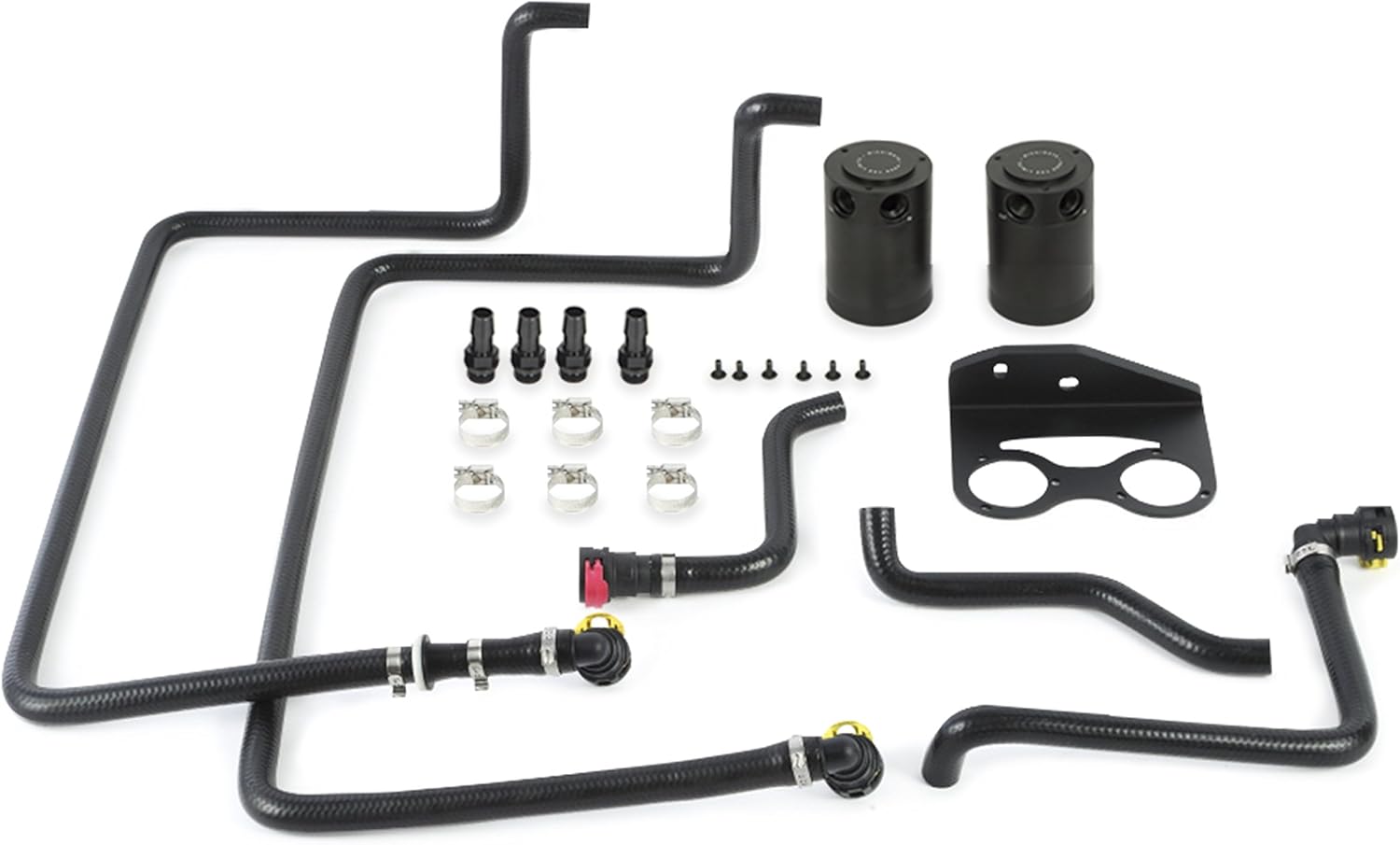
| Compatible Vehicle | 2015-2017 Ford F-150 2.7L EcoBoost |
|---|---|
| Capacity | 2.7 Liters |
| Material | Billet 6061 aluminum |
| Filter | 50-micron bronze filter |
| Bracket | 3 mm steel application-specific bracket |
This Mishimoto dual-can kit routes crankcase and cam cover blow-by away from the intake on 2015–2017 F-150 2.7L EcoBoost engines and captures oil and vapor in baffled aluminum canisters. It installs with an application-specific steel bracket and quick-disconnect fittings so the dual cans sit neatly in the engine bay and are serviceable for regular draining and cleaning. The internal 50-micron bronze filter, air diverter and baffled chamber improve oil separation compared with a simple inline trap, which helps reduce carbon buildup on intake valves over time. Practical benefits include a direct-fit design that keeps the factory pressure sensor in place and an easily accessible service interval if you check the cans at oil changes. Limitations reported by users include soft replacement hoses that can kink or degrade and occasional clogging or maintenance needs with the internal filters, so expect periodic monitoring and occasional parts replacement to keep the system functioning reliably.
Best for: Buyers seeking to protect intake valves and preserve performance on a turbocharged 2.7L EcoBoost who prioritize a factory-friendly, serviceable solution and are willing to perform routine maintenance.
Less Ideal for: Drivers who want a completely maintenance-free part or who are unwilling to inspect and replace hoses or filters periodically should consider other options.
- Direct-fit dual-can design captures blow-by from both PCV and CCV systems
- Baffled aluminum canisters with 50-micron bronze filters improve oil separation
- Includes vehicle-specific steel bracket and quick-disconnect fittings for tidy, serviceable installation
- Keeps stock pressure sensor which avoids check-engine issues tied to sensor removal
- Replacement hoses supplied have been reported to be soft, prone to kinking, and may require replacement over time
- Internal baffle filters can clog and require regular cleaning or service
Verdict: If you want a direct-fit, dual-can system to reduce intake carbon on the 2.7L EcoBoost and you will keep up with periodic hose and filter maintenance, this Mishimoto kit is a strong performance-minded choice.
EVIL ENERGY 300ml Baffled Aluminum Oil Catch Can with Hose Kit

| Capacity | 300 Milliliters |
|---|---|
| Hose length | 5 ft (1.5 m) |
| Hose ID | 3/8" |
| Thread size | M16×1.5 |
This EVIL ENERGY 300ml baffled catch can is a compact, universal kit designed to trap oil and moisture from PCV/CCV ventilation before vapors reach the intake. The aluminum can uses a removable baffle plus supplied steel wool to coalesce oil droplets, and the top cap and M16x1.5 threaded ports give a secure seal. The kit ships with a 5 ft NBR hose rated for heat and wear and basic clamps and bracketry for mounting. For a 2015–2020 F-150 this unit works well as an inline catch can between PCV hoses or as a breather on pre-PCV setups when space is limited. Benefits include durable metal construction, effective internal baffling, and a 300ml capacity that limits how often you need to empty it. Practical downsides are that provided hose length or fittings may not match every F-150 hose routing and you may need extra clamps or longer/alternate-diameter hose for a tidy install; small O-rings and bracket edges have been noted by buyers. Also take care in freezing conditions since moisture can collect and freeze if not emptied regularly.
Best for: Buyers who want a practical, durable catch can to reduce intake contamination and extend engine life on a 2015–2020 F-150 while prioritizing straightforward installation and low-maintenance operation.
Less Ideal for: If you need a vehicle-specific, bolt-on solution with guaranteed fitment or a very large capacity catch can for heavy-duty towing cycles, this universal kit may require extra parts or a different model.
- Baffled interior plus steel wool helps trap oil and moisture effectively.
- Solid aluminum body and threaded cap provide durable, serviceable construction.
- Includes 5 ft heat- and wear-resistant NBR hose and basic mounting hardware for straightforward installs.
- 300ml capacity is compact for tight engine bays yet large enough to avoid constant draining.
- Universal fittings and included hose length may require additional hoses or clamps to fit some F-150 layouts.
- O-rings and small hardware can be fiddly to install and may need replacement for a cleaner seal.
Verdict: A compact, well-built universal baffled catch can that provides effective oil separation for 2015–2020 F-150s when you want a durable, low-maintenance way to reduce intake contamination.
PQY Universal 2-Port Baffled Aluminum Oil Catch Can Kit

| Fit Type | Universal Fit |
|---|---|
| Capacity | 1.5 Liters |
| Material Type | Aluminum |
| Thread Size (inlet/outlet) | M16 x 1.5 (listed) |
This PQY two-port catch can captures oil and moisture from crankcase ventilation before it reaches the intake, helping keep the intake tract and intercooler cleaner. It installs inline on the PCV/vent hoses and uses a 50 micron bronze filter and internal baffle to separate contaminants; a bottom drain bolt or optional quick-drain valve lets you empty the roughly 1.5 liter reservoir without disassembling the unit. The small aluminum body and adjustable bracket make it easy to tuck into tight engine bays on a 2015-2020 Ford F-150, though you may need to source hoses and thread sealant separately and adapt fittings if thread sizes differ. Several users note the drain valve may require plumber tape or trimming to avoid leaks or trapped fluid, and one reviewer warns that catch cans must be vented appropriately on forced-induction engines to avoid crankcase pressure issues. For routine street use the can is a budget-friendly way to reduce oil accumulation in the intake and prolong engine cleanliness, but pay attention to fitting sizes and sealing during installation.
Best for: Buyers looking for an affordable, compact catch can to keep intake components cleaner on daily-driven 2015–2020 Ford F-150s and who prioritize simple installation and maintenance over high-capacity systems.
Less Ideal for: Owners who want a large-capacity or factory-integrated solution or those unwilling to modify fittings and plumbing for a precise, leak-free installation.
- Compact aluminum construction fits into tight engine bays
- Baffled design with 50 micron bronze filter separates oil effectively
- Includes adjustable bracket and CNC-machined fittings for flexible mounting
- Bottom drain bolt and optional quick-drain valve simplify emptying the reservoir
- Universal fitment suitable for many gasoline cars when hoses and fittings are matched
- Threaded fittings and drain valve may not match every hose or seal perfectly and can require tape or modification
- Small usable capacity after baffle and filter means more frequent draining
Verdict: A budget-friendly, compact baffled catch can that keeps intake plumbing cleaner on 2015–2020 F-150s if you accept small capacity and may adapt fittings during installation.
JLT Oil Separator Canister, Passenger Side (2011–2019 F-150)

| Compatible vehicles | 2011-2019 F-150 (2.7L, 3.5L, 5.0L including some supercharged setups) |
|---|---|
| Manufacturer | JLT |
| Item model number | 3016P-B |
| Country of manufacture | Made in the USA |
The JLT oil separator is a bolt-on catch can system that redirects crankcase vapors into a sealed aluminum canister so oil and oily condensate collect instead of being reintroduced to the intake. It installs with a vehicle-specific bracket and hoses for a near plug-and-play fit on supported F-150 engines and is intended for use where owners want to reduce intake valve contamination and oil ingestion. The can is machined and anodized for corrosion resistance and unscrews easily for periodic draining, while the included mounting hardware and instructions simplify installation for anyone with basic tools. Practical benefits are cleaner intake ports, reduced smoky startups, and an easy visual check of collected material during routine maintenance. Limitations are that the fixed hose exits limit how you can orient the can and occasional minor trimming or drilling of the battery tray may be required for a perfect fit on some trucks. Regular inspection and draining are required to keep it functioning as intended.
Best for: Owners prioritizing long-term engine reliability who want to limit intake valve carbon and oil being fed back into the combustion chamber, with willingness to perform simple periodic checks and drains.
Less Ideal for: Users seeking a fully adjustable or low-profile solution for extremely tight engine bays or those who do not want any modifications to battery tray or routing; not for vehicles outside the specified F-150 engine fits.
- Vehicle-specific bracket and hoses for straightforward installation on supported F-150 engines
- Solid machined aluminum can with anodized finish resists corrosion and is serviceable
- Easy to remove and drain canister for simple maintenance
- Designed to visibly collect oil condensate so you can monitor crankcase blow-by
- Hose exits are fixed which can limit final can orientation during mounting
Verdict: Install this JLT separator if you want a durable, serviceable catch can that reduces intake oil contamination and helps protect your F-150 engine for the long run.
EVIL ENERGY 300ml Baffled Oil Catch Can Kit with NBR Hose

| Capacity | 300 Milliliters |
|---|---|
| Fit Type | Universal |
| Hose length | 2.6 ft (0.8 m) |
| Hose inner diameter | 3/8" |
| Thread size | M16 x 1.5 |
This EVIL ENERGY 300ml baffled catch can is a compact, universal kit built to capture oil and moisture from crankcase ventilation before it reaches the intake. Installation uses the included NBR hose, clamps, bracket, and M16*1.5 threaded ports so it can be plumbed inline with PCV lines or fitted as a vent with the breather option. The removable internal baffle and supplied stainless coalescing wool help condense and retain oil, which slows valve and intake carbon buildup on older trucks. For a 2015–2020 F-150 this unit is small enough to tuck into tight engine bays and the aluminum construction feels sturdy. Practical downsides are that universal brackets and hose lengths may require modification or extra hose to get a clean, serviceable mount, and the O-rings and small hardware can be fiddly during install. Also in freezing climates the vendor recommends more frequent cleaning to avoid moisture freeze. For buyers who value proven results and clear installation tradeoffs, this catch can offers solid performance and good value for protecting the intake on high-mileage F-150s.
Best for: Buyers who want a proven, budget-friendly way to reduce intake oil contamination on a 2015–2020 F-150 and are willing to plan the install or make minor bracket or hose adjustments.
Less Ideal for: If you prefer a vehicle-specific bolt-on kit with exact-fit brackets and hoses or want a maintenance-free sealed system, this universal kit may not meet those expectations.
- Effective baffled design with removable baffle and steel wool to capture oil and moisture
- Aluminum construction feels durable and serviceable
- Universal kit includes NBR hose and fittings for flexible PCV or breather installations
- 300ml capacity is compact enough for tight engine bays yet reduces frequent emptying
- Widely reviewed with consistent user reports of reduced intake oil and easier maintenance
- Bracket and hose lengths are universal and may need trimming or extra parts for a tidy F-150 install
- O-rings and small fittings can be difficult to seat and are sensitive to over-tightening
Verdict: A durable, well-reviewed 300ml baffled catch can that offers effective intake protection for 2015–2020 F-150s when you are prepared to tweak fittings and mounting for a clean install.
EVIL ENERGY Oil Catch Can for 2011–2025 Ford F-150 5.0L (3 oz)

| Compatibility | 2011-2025 F-150 5.0L, 3.5L EcoBoost, 2.7L EcoBoost; 2018-2021 Expedition 3.5L |
|---|---|
| Capacity | 3oz |
| Material | Aluminum |
| Included hardware | Bracket, hoses, quick-connect fittings |
This oil catch can is a compact, vehicle-tailored air oil separator made for F-150 5.0L and several EcoBoost and Expedition engines. It installs inline with the PCV/CCV hoses using the supplied bracket, quick-connect fittings, and hoses so you rarely need extra adapters. Inside a fine mesh aluminum filter and a baffled collection cup trap oil vapor and blow-by, and the rotating base with an O-ring seal makes draining easier than fixed cups. Typical use is periodic inspection and draining every few hundred to a thousand miles depending on driving; it prevents oil gunk from building on intake valves and helps keep the intake tract cleaner. Build quality and fitment are frequently praised and many users report straightforward, near plug-and-play installs. Downsides to be aware of are the small 3 oz capacity that requires more frequent emptying and reports that cup threads can seize if not treated with anti-seize, which adds a small maintenance step.
Best for: Buyers who prioritize a factory-like fit and a reliable, simple solution to reduce intake oil contamination on F-150 or Expedition engines and prefer a product that installs with minimal modification.
Less Ideal for: Drivers who want a large-capacity or maintenance-free solution or those unwilling to perform occasional inspections and draining should consider other options.
- Vehicle-specific fitment with included bracket and quick-connect PCV fittings simplifies installation
- Fine mesh aluminum filter and baffled internal design capture small oil vapors and reduce intake contamination
- Rotating removable cup with O-ring seal allows relatively easy draining and helps prevent leaks
- Well reviewed for build quality and near plug-and-play fit on supported F-150 and Expedition engines
- Small 3 oz reservoir requires frequent checking and draining during heavy use
- Some users report cup threads can seize without applying anti-seize, risking difficult removal
Verdict: A compact, vehicle-matched catch can that gives risk-conscious F-150 owners an easy, factory-friendly way to cut intake oil contamination.
Choosing the Right 2015-2020 Ford F-150 Oil Catch Can: Key Factors to Consider
Separation Efficiency
Separation efficiency determines how much oil and aerosolized blow-by is removed from ventilation gases before they re-enter the intake. For the 2015-2020 F-150, effective separation preserves intake valves, throttle body, and intercooler cleanliness, which is particularly important on turbocharged engines where oil residue can reduce heat-exchange efficiency and cause detonation risks.
Higher-efficiency units typically use multi-stage baffling or coalescing media to condense and collect oil droplets. While laboratory numbers vary, prefer designs with documented filtration stages or visible collection volume that demonstrate consistent trapping over time. Less efficient cans may still reduce deposits but will require more frequent cleaning to avoid bypass or saturation.
Fitment and Hose Routing
Correct fitment for the 2015-2020 F-150 affects installation time and long-term reliability. The PCV and intake connections on these years are positioned to accommodate factory plumbing and accessories; a catch can that mirrors those attachment points or provides flexible hose lengths minimizes interference with heat shields, turbo piping, and steering components.
Check mounting bracket locations and hose end types supplied in the kit. Kits that provide multiple hose lengths, angled fittings, or preformed brackets cut down on custom fabricating and reduce the risk of kinks or tight bends that could impair crankcase ventilation flow.
Drain Design and Accessibility
How you empty the catch can matters for routine service. For an F-150 used in mixed driving conditions, easy-to-access drains encourage regular emptying and prevent overflow. Common drain types include twist drains, petcock valves, or integrated drain fittings designed for plumb-back to a container.
Consider whether the drain is located where you can reach it with the truck on the ground, or if it requires lifting the vehicle. Transparent sight tubes, clear bowls, or level windows let you monitor fluid without disassembly. A lockable or leak-proof drain valve will avoid mess during long trips or off-road use.
Materials and Durability
Materials influence both longevity and compatibility with the operating environment. Aluminum or anodized housings resist corrosion and handle engine-bay heat well, while stainless steel fasteners ensure mounting longevity in climates with road salt. Plastic components can be lighter and cheaper but may degrade faster near headers or turbochargers if not heat-rated.
Look for crush-resistant hose fittings and corrosion-resistant mounts. Durable construction reduces the chance of vibration-induced leaks on a work truck or an F-150 used for towing and hauling, where the engine bay sees additional stress.
Serviceability and Visibility
Routine maintenance of a catch can is unavoidable, so units designed for easy cleaning save time. Removable bowls, wide access openings, and simple fasteners make emptying and cleaning straightforward. Sight windows or clear collection chambers let you monitor contamination levels and determine service intervals without tools.
Also consider availability of replacement filters or elements, and whether the unit can be disassembled without specialty tools. Service-friendly designs reduce the chance that owners neglect draining, which would otherwise negate the benefit of installing the can.
Impact on Ventilation Flow and Pressure
A catch can must manage blow-by without creating restrictive backpressure in the crankcase ventilation system. The 2015-2020 F-150 engines rely on balanced ventilation to maintain correct crankcase pressure and turbocharger lubrication. Excessive restriction can alter PCV function, increase oil leaks, or affect engine seals.
Choose cans that are sized appropriately for the engine's ventilation volume and include low-restriction internal paths. Kits that document flow capacity or include multiple inlet/outlet sizes allow you to match the can to naturally aspirated or turbocharged variants within the 2015-2020 F-150 lineup.
Why F-150 Owners Add an Oil Catch Can
Owners install oil catch cans on 2015-2020 F-150 trucks to reduce oily deposits in the intake tract that can accumulate on valves, throttle bodies, and intercoolers. Keeping these components cleaner helps preserve peak efficiency, maintains more consistent air flow, and reduces the need for intake-side cleaning procedures.
For turbocharged F-150 engines, trapping oil before it reaches the intercooler helps maintain charge-air cooling efficiency. For naturally aspirated variants, the benefit is mostly in preventing intake valve and intake manifold coatings that eventually affect idle quality and emissions control.
- Reduces oil and carbon buildup in intake system
- Helps maintain turbo and intercooler efficiency
- Can lower frequency of intake cleaning and service
Common PCV and Hose Locations on 2015-2020 F-150 Engines
Across the 2015-2020 F-150 range, PCV and crankcase ventilation outlets are routed near the valve cover and intake manifold area. Familiarity with typical hose paths helps when selecting a catch can kit so hoses do not interfere with factory wiring, intake piping, or heat shields.
Before purchasing a kit, inspect your engine bay to note the proximity of turbo piping, the battery, and any engine covers that might limit mounting options. A can with adjustable bracketry or flexible hose fittings simplifies integration with your truck's specific engine configuration.
- Locate PCV outlet on the valve cover area
- Check for nearby turbo piping and heat sources
- Plan bracket placement to avoid steering and suspension components
Installation Tips for a Clean, Leak-Free Fit
Route hoses with gentle bends and avoid sharp kinks. Use supplied clamps and add quality reusable clamps where necessary. Secure hoses away from hot exhaust components and sharp edges to prevent premature wear.
Mount the catch can to a bracket tied to an existing engine bay anchor point or inner fender to minimize vibration. Ensure the drain valve is oriented for easy access and that hose connections are tight but not over-torqued to avoid damaging fittings.
- Use smooth hose routing to prevent restriction
- Hand-tighten fittings then secure clamps to manufacturer torque
- Confirm drain access with truck on the ground
Maintenance Schedule and Best Practices
Establish a drain interval based on observed collection rates rather than a fixed mileage. Check the sight window or bowl after a few hundred miles to learn how quickly your truck accumulates condensate and oil.
Clean the can and inspect hoses for deterioration each time you service the oil. Replace hoses or clamps that show signs of cracking or seepage. Keeping records of drain intervals helps predict future maintenance and prevents overflow.
- Inspect after initial 300-500 miles to set intervals
- Empty before long trips or heavy towing sessions
- Replace components showing wear to avoid leaks
Legal and Emissions Considerations
Altering ventilation plumbing can have regulatory implications in some regions. For most street-driven 2015-2020 F-150s, installers retain crankcase ventilation within a closed loop when using a proper catch can kit, which helps preserve emissions controls. However, local regulations vary, so confirm legality where the vehicle is registered.
Avoid modifications that vent to atmosphere if your truck is subject to emissions testing. Use kits designed to maintain a closed system and consult local rules if unsure.
- Prefer closed-loop installations where required
- Verify local emissions rules before modifying PCV routing
- Keep original parts so systems can be returned to stock if needed
Still looking for the perfect fit?
Select your Ford F-150 configuration to see the most relevant Oil Catch Cans recommendations
How We Chose the Best 2015-2020 Ford F-150 Oil Catch Can
We focused on criteria that matter specifically for the 2015-2020 Ford F-150 platform, prioritizing fitment and functional performance tied to the truck's PCV layout and turbocharged engines. Primary evaluation factors included separation efficiency, which measures how well a unit traps oil vapor before it reaches intake components; mounting and hose routing, to ensure the kit works with the F-150 engine bay and common accessory layouts; and drain design, since accessible, reliable drains reduce maintenance hassle on a truck that sees varied duty cycles.We also considered materials and construction for corrosion resistance under road salt and heat, and serviceability such as transparent sight tubes or accessible clear bowls for quick level checks. Ease of installation and whether a catch can kit includes hoses, fittings, and clamps were assessed to reduce the need for extra parts during fitment. Units that compromised engine ventilation flow or required extensive modification were excluded. We excluded products without clear compatibility guidance for the 2015-2020 F-150 or with poor user-servicing options. Ultimately, we prioritized options that balance separation performance, durable construction, and practical installation for this truck.
Our full evaluation process is outlined in our review methodology.
FAQ
Will adding a catch can trigger a check engine light on my 2015-2020 F-150?
A properly plumbed and sealed catch can should not trigger engine diagnostics. Issues arise when hoses are left disconnected, routed incorrectly, or if sensors are disturbed during installation. Ensure all factory vacuum and sensor lines remain connected and that the can maintains proper ventilation flow.
How often should I drain the catch can on my F-150?
Drain intervals depend on driving style and duty cycle. Check the collection level after the first 300 to 500 miles to establish a baseline, then set a regular interval. Trucks used for towing, heavy idling, or frequent short trips will typically require more frequent draining.
Can I install a catch can myself or do I need a mechanic?
Many owners can install a catch can with basic hand tools if the kit includes vehicle-specific hoses and mounting hardware. However, if routing requires removal of engine covers or tight access, or if you are unsure about preserving emissions plumbing, having a professional perform the installation is prudent.
Does a catch can affect engine oil consumption or turbo life?
A catch can does not change oil consumption itself, but it prevents oil vapor from reaching intake and intercooler surfaces. By reducing oil contamination in intake components, it can indirectly help maintain turbocharger and intercooler efficiency. It does not alter the lubrication system unless incorrectly installed.
Is a catch can necessary for naturally aspirated F-150 engines?
Necessity varies. Naturally aspirated engines can still develop intake valve deposits from blow-by, so some owners choose a catch can for maintenance reasons. The benefit is typically more pronounced on turbocharged variants where oil in the intake affects charge cooling and performance.
Final Verdict
When choosing an oil catch can for a 2015-2020 Ford F-150, prioritize separation efficiency, fitment that suits the engine bay layout, and an accessible drain design. Durable materials and serviceable construction reduce long-term maintenance hassle, while correct hose routing preserves ventilation flow and prevents leaks. Balance the level of filtration you need with how often you are willing to service the can, and choose a kit that eases installation on the F-150 platform. With those tradeoffs in mind, you can select a catch can that meaningfully reduces intake contamination and helps maintain your truck's performance over time.
Explore More:
- Check out all Ford F-150 parts & accessories
- Explore Oil Catch Cans Maintenance & Repair Guides
- Explore Engine
- Browse all Auto Parts
