

Note: This article contains affiliate links. If you click on these links and make a purchase, I may earn a small commission at no extra cost to you. This helps support my research and content. Read my full affiliate disclosure here.
If you drive a Ford F-150 EcoBoost, crankcase vapors and oil blow-by can leave sticky deposits in the intake tract and on turbocharger internals. Installing an oil catch can is a proactive way to trap oil and sludge before it reaches the intake, helping maintain throttle response and preserving turbo efficiency over time. This guide collects the top shortlisted options for the F-150 EcoBoost and explains the practical tradeoffs you should weigh.We evaluated options based on fitment to EcoBoost configurations, ease of installation, contamination separation efficiency, and serviceability. Read on for the features that matter and straightforward guidance to pick the right catch can kit for your truck.
Looking for other parts? See all Ford F-150 parts & accessories.
Top Picks at a Glance
| Best Overall The best all-around choice for most situations | J&L Oil Separator Co. 3.0 Oil Separator (Passenger Side) |  |
| Best Quality Built to a higher standard if you want something more solid | K&N Air Oil Separator for 2011-2023 Ford F-150 (Catch Can) 81-0800 |  |
| Best Value The sweet spot between price and what you get | RYANSTAR Racing Baffled Oil Catch Can Kit (400ml) |  |
| Best Budget The cheapest option that still gets the job done reliably | RALZAOTO Oil Catch Can Kit with Sight Glass (400ml) — Compatible with Ford F-150 2011–2023 |  |
| Highest Rated A top-rated pick with lots of positive feedback | JLT Oil Separator (Passenger Side) for 2011–2019 F-150 |  |
| Most Popular A crowd favorite that many people choose with confidence | JLT 3.0 Oil Separator for 2011–2026 Ford F-150 2.7L/3.5L (Passenger Side) |  |
| Best Seller A high-volume bestseller chosen again and again | EVIL ENERGY 300ml Baffled Oil Catch Can with Breather Filter (Universal) |  |
J&L Oil Separator Co. 3.0 Oil Separator (Passenger Side)
| Thread Size | 1/8 NPT |
|---|---|
| Product Grade | Performance Part |
| Compatible with Vehicle Type | Truck |
| Automotive Fit Type | Vehicle Specific Fit |
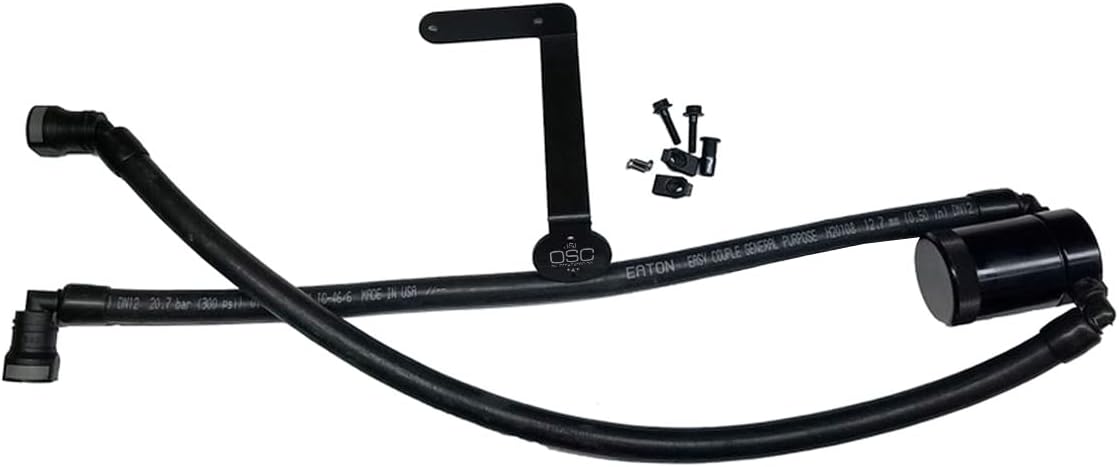
This J&L 3.0 oil separator is a compact, vehicle-specific catch can that connects to factory PCV/vent lines to capture oil vapor before it reaches the intake tract. Its fine mesh stainless filter coalesces oil vapors into droplets that collect in an aluminum canister with a knurled base and O-ring for leak-free access. Installation is straightforward and mostly plug-and-play using factory hose connections, and many users report fast installs and reliable sealing. In practice it reduces oil accumulation in the charge air cooler and throttle body, which can help prevent misfires and idle issues on DI EcoBoost engines. The canister is solidly made in the USA and is easy to remove for periodic draining, though the basic unit lacks an integrated drain valve and some drivers with heavy blow-by may need to empty it more often or add an extension. Overall it is a practical, performance-oriented separation solution for owners who want cleaner intake components without complicated plumbing.
Best for: Buyers who want a durable, easy-to-fit separator that reduces oil contamination of the intake on EcoBoost trucks and value straightforward installation and serviceability.
Less Ideal for: Drivers who prefer a catch can with an integrated drain or very large capacity to avoid frequent emptying should consider other designs.
- Vehicle-specific fit for easy installation with factory hoses
- Fine mesh stainless steel filter for effective oil-vapor separation
- Solid aluminum canister with knurled base and O-ring for reliable sealing
- Made in the USA and designed for periodic service and draining
- No built-in drain valve so frequent draining or an added extension may be required for high blow-by engines
Verdict: A rugged, plug‑and‑play oil separator that effectively keeps oil out of the intake for F‑150 EcoBoost owners who want a simple, serviceable solution.
K&N Air Oil Separator for 2011-2023 Ford F-150 (Catch Can) 81-0800

| Manufacturer | K&N Engineering, Inc. |
|---|---|
| Model | Catch Can |
| Exterior | Machined |
| Item model number | 81-0800 |
The K&N Air Oil Separator is a vehicle-matched catch can that redirects crankcase vapors through a machined reservoir to trap oil and contaminants before they reach the intake tract. It installs using factory-style hose connections and basic tools in roughly 30 minutes, so you can mount it in the engine bay without cutting or complex plumbing. Notable features include a high-capacity 6-ounce reservoir, OEM-quality hoses and connectors, and a machined exterior that looks factory-quality. In practice this reduces oil buildup in the intake and throttle body, helping preserve turbo and intercooler cleanliness and preventing knock or slow power loss from contaminated charge air. Users report solid fitment on EcoBoost engines, though a few have needed a different hose routing or replacement hose for ideal length. The can is easy to check and drain without tools and is backed by lifetime coverage, but it is not emissions-legal in California on pollution-controlled vehicles.
Best for: Buyers focused on maintaining peak EcoBoost performance who want a durable, vehicle-matched catch can to reduce intake contamination and protect turbocharging components.
Less Ideal for: Drivers who need California-compliant aftermarket parts or those who prefer multi-vehicle universal catch cans with adjustable plumbing options.
- Vehicle-specific design for direct replacement and tidy engine-bay fitment
- High-capacity 6-ounce reservoir captures significant oil before needing service
- OEM-style hoses and connectors for reliable, factory-quality connections
- Quick install with factory-style fittings and basic hand tools
- Not legal for sale or use in California on pollution-controlled motor vehicles
Verdict: A purpose-built, high-capacity catch can for F-150 EcoBoost trucks that helps keep the intake and turbo system cleaner for sustained performance.
RYANSTAR Racing Baffled Oil Catch Can Kit (400ml)
| Fit Type | Universal (listed for specific Ford EcoBoost years/models) |
|---|---|
| Product Grade | Performance Part |
| Fuel Type | Gasoline |
| Capacity | 400ML |
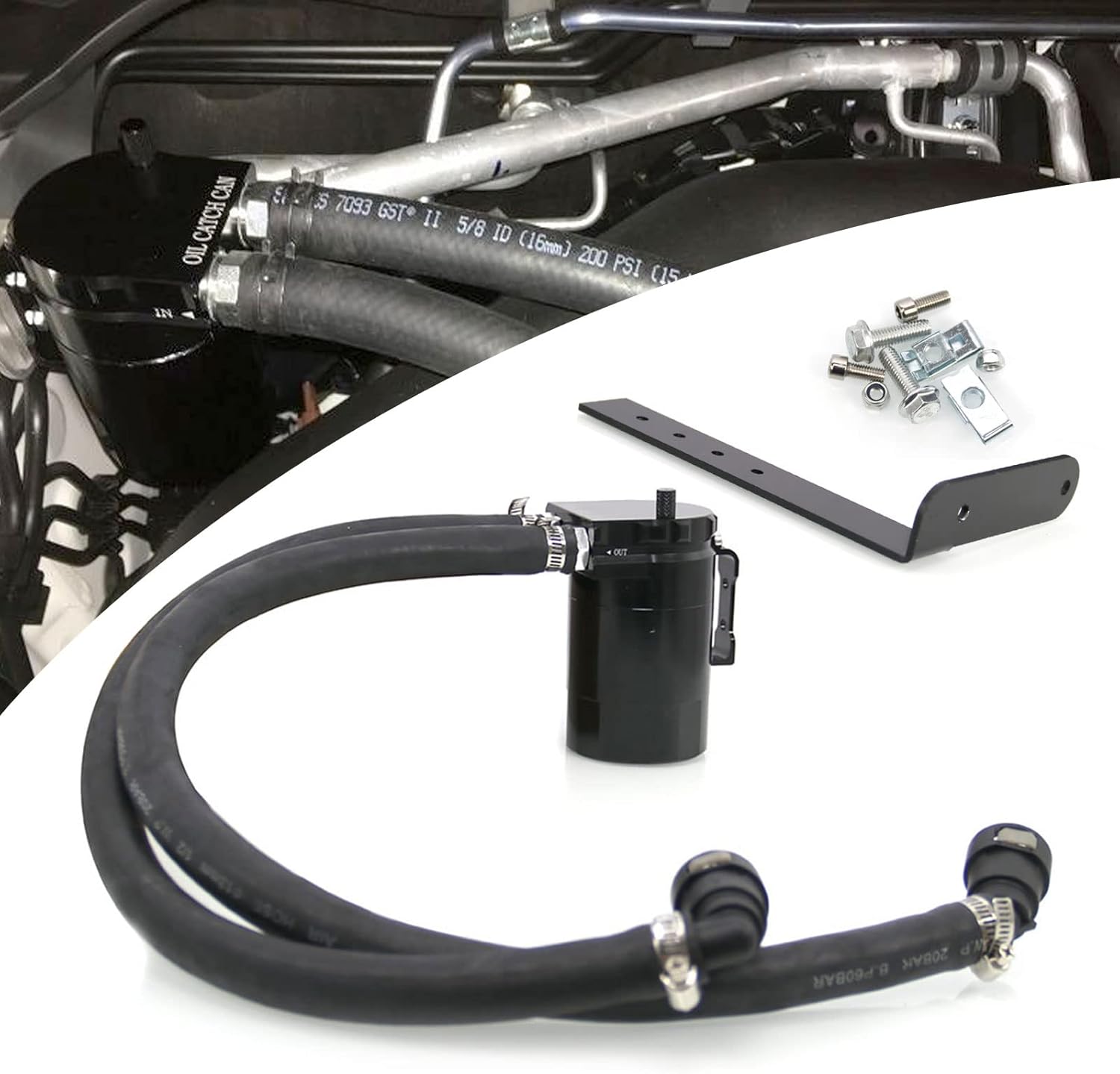
This Ryanstar Racing oil catch can is a budget-friendly baffled reservoir intended to reduce oil and contaminants entering the intake on EcoBoost engines. It mounts using a top bracket with multiple orientations and connects into the PCV/boost system with the included hoses and fittings. The 400ml aluminum can is TIG welded and uses O-ring seals so it is serviceable by unscrewing the bottom cup, and the internal baffling plus a small external filter help separate vapor and oil. In practice it is straightforward for a mechanically competent DIYer to fit to F-150 2.7L, 3.5L and 5.0L EcoBoost applications in the listed years, though some users trimmed or redrilled the bracket for tight battery-tray areas. The kit comes with basic clamps and hoses that are functional but not premium, so many buyers upgrade clamps or lines if they want longer-term robustness. There are no printed instructions, so expect to consult installation guides or videos during fitment.
Best for: A practical buyer who wants an affordable, functional catch can to reduce oil vapor entering the intake on EcoBoost F-150 and Expedition engines and is comfortable doing modest DIY installation and minor bracket modification if needed.
Less Ideal for: Drivers who want a fully plug-and-play, OEM-style kit with premium hoses and clamps or a professional-fit mounting solution without any modification should consider higher-end options.
- Designed specifically for EcoBoost F-150 and Expedition fitments listed, simplifying placement decisions
- 400ml baffled aluminum reservoir is serviceable via screw-off bottom and O-ring sealing
- TIG welded body and included fittings provide a factory-quality feel for the price
- Multiple mounting angles on the bracket increase chances of a good fit in tight engine bays
- No printed installation instructions are included so some users must rely on online guides
- Stock hose clamps and hoses are basic and may be worth upgrading for long-term durability
Verdict: A cost-effective, serviceable baffled catch can that fits the specified EcoBoost F-150/Expedition engines and delivers real oil separation for DIY-minded buyers.
RALZAOTO Oil Catch Can Kit with Sight Glass (400ml) — Compatible with Ford F-150 2011–2023

| Capacity | 400ml |
|---|---|
| Material | Anodized 6061 aluminum |
| Compatibility | F-150 2011-2023 (5.0L, 2.7L, 3.5L EcoBoost), Raptor 2017-2023, Expedition 2018-2023 |
This RALZAOTO catch can separates oil and blow-by from the PCV/CCV flow and stores it in a 400ml reservoir so less oil reaches the intake. It is built from anodized 6061 aluminum with a sight glass for easy level checks and includes hose clamps, mounting bracket, and two ports for inlet and outlet. Installation is straightforward for a DIYer thanks to the top bracket and compact size, and the bottom threaded reservoir makes draining and cleaning simple. In use it will reduce intake contamination and can improve combustion consistency and mileage over time, particularly on turbocharged EcoBoost engines. Limitations are the small internal baffle/filter design and basic rubber hose quality reported by some users, so expect periodic inspection and occasional hose replacement on high-mileage builds. For buyers prioritizing a low-cost, easy-to-fit catch can for routine maintenance and intake protection, this delivers practical value, but those wanting a high-end baffled unit or long-term heavy-duty hoses may want to step up to pricier options.
Best for: Drivers looking for an inexpensive, easy-to-install catch can to reduce oil in the intake on EcoBoost and 5.0L F-150s who prefer a practical maintenance upgrade over premium features.
Less Ideal for: Owners seeking a race-ready or heavily baffled catch can with premium internal filters and heavy-duty hoses should consider more expensive options.
- Made from anodized 6061 aluminum for corrosion resistance and durability
- 400ml reservoir with sight glass makes monitoring and draining simple
- Includes mounting bracket, clamps, and hoses for straightforward DIY installation
- Compact footprint fits tight engine bays on F-150 and Expedition EcoBoost applications
- Internal baffle and filtration are basic compared with higher-end catch cans
- Supply hoses reported to age and may need replacement after extended use
Verdict: A budget-friendly, compact catch can that gives Ford F-150 EcoBoost and 5.0L owners an easy way to keep oil out of the intake without complex installation.
JLT Oil Separator (Passenger Side) for 2011–2019 F-150

| Manufacturer | JLT |
|---|---|
| Item model number | 3016P-B |
| Made in | USA |
| Compatible engines | 2011–2019 F-150 2.7L, 3.5L EcoBoost, 5.0L |
The JLT oil separator is a plug-and-play catch can built for 2011–2019 F-150 trucks with 2.7L, 3.5L EcoBoost and 5.0L engines, mounted on the passenger side. It replaces the factory PCV routing with a black anodized can, mounting bracket and replacement hoses so blow-by condensate collects in the reservoir instead of cycling back into the intake. Typical installation takes 10 to 30 minutes and the kit includes instructions and an install video. In use the can is easy to unscrew and empty at service intervals and multiple owners report measurable liquid collection after a few hundred to a few thousand miles, indicating it reduces oil deposits reaching the intake and valves. The unit is well made and made in the USA, with sturdy hoses and a solid bracket that keeps the assembly secure. Limitations: the hose outlets do not swivel, which can make final positioning tight in some engine bays, and some users needed to enlarge a battery-tray hole to fit the mounting hardware. If you want a simple, durable separator to reduce valve and intake contamination and extend engine cleanliness, this kit delivers a reliable, serviceable solution.
Best for: Buyers prioritizing engine longevity and reliability who want a factory-quality, easy-to-service separator that reduces oil vapors entering the intake on 2011–2019 F-150 EcoBoost and 5.0L engines.
Less Ideal for: Drivers who need a fully adjustable or low-profile mounting solution without any modification to the battery tray should consider other kits with swivel fittings or alternate mounting options.
- Direct fit passenger-side kit for 2011–2019 F-150 EcoBoost and 5.0L engines
- Plug-and-play installation with bracket, hoses, and instructions
- Sturdy black anodized can and bracket made in the USA
- Easy to service can that unscrews for quick draining
- Fixed hose outlets limit final mounting positions in tight engine bays
- May require minor drilling or modification to battery tray for mount clearance
Verdict: A durable, plug-and-play oil separator that reliably reduces crankcase vapors reaching the intake to help preserve engine cleanliness and longevity on 2011–2019 F-150 EcoBoost and 5.0L trucks.
JLT 3.0 Oil Separator for 2011–2026 Ford F-150 2.7L/3.5L (Passenger Side)

| Brand | JLT |
|---|---|
| Item model number | 3016P-C |
| Compatible engines | 2.7L and 3.5L EcoBoost F-150 (2011–2026) |
| Made in | USA |
This JLT 3.0 oil separator is a purpose-built catch can for Ford F-150 2.7L and 3.5L EcoBoost engines that installs with basic hand tools and clear instructions. It routes PCV and intake hoses through a machined aluminum canister that traps oil and condensation before vapors reach the intake system. In everyday use it reduces carbon and sludge buildup in the intake tract and can eliminate hesitation and rough idle linked to fouled sensors, with owners reporting visible oil collection after a few weeks. The kit is plug-and-play for the specified engines and is easy to service thanks to a removable lower collection cup and included install directions and videos. Practical downsides are the thin mounting bracket that can flex during service and relatively short hose length that may require careful routing; some buyers also noted cheaper-coated fasteners that could rust over time. Overall it is a well-made, effective preventive upgrade for EcoBoost F-150s when installed and maintained properly.
Best for: Buyers who want a proven, low-effort preventative upgrade to reduce intake contamination and sensor issues on EcoBoost F-150s and who value products with strong owner feedback and straightforward installation.
Less Ideal for: Drivers who prefer a fully welded or heavy-duty mounting system out of the box or those unwilling to periodically inspect and drain a catch can.
- Made from machined aluminum for durable, serviceable construction
- Designed specifically for 2.7L and 3.5L EcoBoost F-150 fitment with plug-and-play hoses and fittings
- Removable collection cup makes draining and inspection simple
- Detailed instructions and installation video reduce install uncertainty
- Mounting bracket is relatively thin and can flex during service
- Hose length may be marginal for some routing positions
Verdict: A reliable, owner-validated oil separator that reduces intake oil contamination on EcoBoost F-150s with easy installation and serviceability.
EVIL ENERGY 300ml Baffled Oil Catch Can with Breather Filter (Universal)

| Capacity | 300 Milliliters |
|---|---|
| Material Type | Aluminum |
| Fit Type | Universal |
| Hose length | 0.8 m |
| Thread | M16*1.5 |
This EVIL ENERGY catch can is a compact, universal baffled separator designed to trap oil and moisture before they reach the intake or intake valves. It can be installed inline between PCV hoses as a sealed can or used with the included breather filter for pre-PCV venting. The kit includes aluminum canister, hoses, fittings with O-rings, a dipstick for checking fluid level and stainless wool baffle media to improve separation. In practice it cleans blow-by vapors, reducing intake gunk and helping maintain combustion chamber cleanliness. Installation is straightforward on most engines but may require additional hose length, bracket modification, or extra mounting hardware on some setups. The unit is well made for the price and reviews report solid build quality and no leaks, though instructions and inlet/outlet labeling have confused a few users. The 300 ml capacity is convenient for periodic checks but means it will need regular emptying on high blow-by engines or heavy-duty use.
Best for: Ford F-150 EcoBoost owners who want a low-cost, durable catch can to reduce intake oil buildup and are willing to do light modification for a universal fit and routine maintenance.
Less Ideal for: Drivers seeking a vehicle-specific plug-and-play solution with factory-style brackets and large capacity should consider model-specific kits instead.
- Baffled design with stainless wool improves oil separation and reduces intake deposits.
- Aluminum construction and O-ring sealed fittings give a durable, leak-resistant feel.
- Includes dipstick and hose kit so you can monitor fluid without disassembly.
- Can be run as sealed inline unit or vented with the breather filter for pre-PCV setups.
- Compact 300 ml capacity fits in tight engine bays common on trucks and V6 EcoBoost engines.
- Universal fit requires trimming hose or modifying the supplied bracket for some installations.
- 300 ml capacity will need more frequent draining on engines with heavy blow-by.
- Instructions and inlet/outlet labeling are not always clear, increasing install time for some users.
Verdict: A budget-friendly, well-built baffled catch can that helps protect an F-150 EcoBoost intake from oil contamination if you are comfortable with a universal install and regular draining.
Choosing the Right Ford F-150 EcoBoost Oil Catch Can: Key Factors to Consider
Separation Efficiency
How effectively a catch can separates oil mist and blow-by matters because residual oil in the intake will stick to throttle bodies, intercoolers, and turbo compressor wheels. A higher separation efficiency reduces the rate of deposit buildup and helps maintain boost response and fuel distribution over time.
Separation methods vary between mesh, baffle, centrifugal, and multi-stage designs. For the EcoBoost, look for designs that capture both heavy droplets during high boost and finer mist during steady cruise. The result is fewer cleanings and less potential for intake-side problems that can be time-consuming to diagnose.
Fitment and Hose Routing
Correct fitment for the Ford F-150 EcoBoost is critical because space around the intake manifold and turbocharger is limited, and hoses that are routed poorly can kink or rub against hot components. Choose a catch can with brackets and hose lengths intended for the EcoBoost layout to avoid heat exposure and unnecessary bends.
Consider where the can will mount relative to the PCV and intake plumbing. A location that keeps hoses clear of exhaust heat and high-vibration areas will extend hose life and reduce the risk of leaks. Some kits include vehicle-specific brackets and properly sized hoses to simplify installation and ensure a neat, durable layout.
Serviceability and Drain Method
How you empty and inspect the catch can affects long-term ownership. A can with a quick-drain petcock or removable canister saves time and reduces mess compared with designs that require unbolting the unit. Transparent sight tubes or clear windows make it easy to monitor accumulated fluid and schedule maintenance before overflow.
Consider the frequency of service for your driving habits. Short trips and heavy towing can increase condensate buildup. A design that allows rapid, clean draining without engine downtime is preferable for truck owners who use their F-150 for work.
Build Quality and Materials
Materials and construction govern durability under engine-bay conditions. Aluminum or stainless steel bodies resist corrosion and stand up to heat cycling better than low-grade plastics. High-quality fittings and crush washers reduce the risk of vacuum leaks or fitting failure.
Also check thread integrity for drain ports and mounting points. Welded seams and robust bracketry will endure road vibration and off-highway use. A well-built unit reduces the chance of leaks that could negate the benefits of installing a catch can.
Impact on Engine Crankcase Ventilation
A catch can must not create excessive crankcase vacuum or backpressure. The PCV system balances ventilation and engine sealing; overly restrictive catch cans can alter that balance and lead to oil leaks or increased crankcase pressure. Look for units designed to maintain free airflow while filtering contaminants.
Some designs include bypass valves or low-restriction filter elements to prevent negative effects on crankcase ventilation. Understanding how a given can interacts with the EcoBoost PCV flow characteristics helps avoid unintended consequences while still capturing oil and moisture.
Installation Complexity and Hardware Included
Installation difficulty affects whether you can do the job in your driveway or need a shop. Kits that include vehicle-specific brackets, hose lengths, fittings, and clear instructions reduce install time and the chance of incorrect hose routing. For the EcoBoost, check whether additional clamps or adapters are required for the existing PCV ports.
Complex installations that require intake removal or turbo work are best left to professionals. If you plan a DIY install, prioritize kits that list EcoBoost compatibility and provide all necessary hardware to minimize surprises.
How an Oil Catch Can Helps Ford F-150 EcoBoost Engines
A catch can intercepts crankcase vapors before they reach the intake. On turbocharged EcoBoost engines, those vapors can carry oil droplets that deposit on the compressor and intercooler piping, reducing efficiency and encouraging carbon buildup on intake components.
By capturing oil and condensate, a catch can reduces the amount of hydrocarbons that re-enter the combustion pathway and the intake tract. That preservation of intake cleanliness is especially helpful for trucks that tow, haul, or operate under varying loads where blow-by increases.
- Reduces intake and intercooler deposits that affect airflow
- Helps maintain turbo compressor cleanliness and performance
- Lowers frequency of intake and throttle-body cleaning
Typical Installation Steps for the F-150 EcoBoost
Installation usually involves mounting the can in an accessible location, cutting and routing PCV and crankcase hoses to the can, and securing all fittings and clamps. Many EcoBoost kits use existing PCV nipples or provide adapters to fit stock ports without permanent changes.
Test for leaks and confirm that hose routing stays clear of hot exhaust components. After the first few hundred miles, recheck fittings and drainage to ensure everything remains secure.
- Confirm bracket location and clearances before tightening
- Use supplied hose clamps and check for kinks
- Start the engine and inspect for leaks at idle and under boost
Choosing a Drain Method That Fits Your Routine
Different designs offer twist-off bowls, threaded drain plugs, or petcock valves. For owners who frequently drive short trips or tow, a quick-drain valve reduces maintenance time. Transparent windows or sight tubes help monitor when draining is needed without disassembling the unit.
Consider how and where you will empty the can. A drain positioned for easy access without removing the canister is ideal for trucks, especially if you plan to check fluid levels during routine vehicle inspections.
- Petcock drains for quick, mess-free emptying
- Removable canisters for inspection and deep cleaning
- Clear sight windows for visual fill-level checks
Hose Selection and Heat Management
Use high-temperature, oil-resistant hoses when replacing or extending PCV runs. Standard vacuum hose may degrade in the hot engine bay of the F-150, especially near exhaust manifolds. Routing hoses away from heat sources preserves hose life and prevents softening or collapse.
Secure hoses with high-quality clamps and avoid tight bends. Where hoses must pass near hot surfaces, consider routing with heat shields or additional clearance to reduce thermal exposure and prolong service intervals.
- Choose oil-resistant, heat-rated hose material
- Avoid sharp bends that can restrict flow
- Use stainless clamps for corrosion resistance
Monitoring Performance and When to Service
Check the catch can after a few hundred miles post-install and again after heavy use. Frequency of draining depends on driving style and load. Short commutes and repeated cold starts tend to fill cans faster due to increased condensation.
Keep a simple service log noting drain intervals for different uses like towing or highway driving. This helps set realistic maintenance expectations and prevents overfill that could allow oil to pass through into the intake.
- Inspect after the first 200-300 miles to verify installation
- Record drain intervals after towing or heavy-load days
- Replace hoses or fittings showing signs of wear
Still looking for the perfect fit?
Select your Ford F-150 configuration to see the most relevant Oil Catch Cans recommendations
How We Chose the Best Ford F-150 EcoBoost Oil Catch Can
We focused on items that fit Ford F-150 EcoBoost engine layouts and deliver reliable oil separation without complex engine modifications. Primary evaluation criteria included separation efficiency under boost and idling conditions, mounting and hose routing compatibility with EcoBoost intake and PCV systems, and the ability to service and drain the unit without spilling.We also assessed build quality and materials for corrosion resistance and pressure tolerance, the inclusion and quality of necessary fittings and hoses in a catch can kit, and whether the design minimizes crankcase pressure changes or vacuum formation. Ease of install and clarity of instructions were treated as important because many F-150 owners install these themselves.Exclusions: we did not include universal units that require custom fabrication or parts that lack clear fitment guidance for EcoBoost models. Items that rely solely on baffling without any measurable oil separation performance were excluded. The final list emphasizes practical balance between separation performance, installability on the EcoBoost layout, and long-term maintainability.
Our full evaluation process is outlined in our review methodology.
FAQ
Will a catch can affect my EcoBoost engine's warranty?
Warranty impacts vary and depend on local laws and dealer policies. Installing a catch can may be considered a modification; retain original parts and document installation steps to help address warranty questions if they arise.
How often should I empty a catch can on the F-150 EcoBoost?
Frequency depends on usage. Many owners empty the can every few thousand miles under normal driving, but short trips and towing can require more frequent draining. Use a sight tube or check after heavy-duty days to set your schedule.
Can I install a catch can myself on the EcoBoost?
Many kits are designed for DIY installation and include vehicle-specific brackets and fittings. Basic mechanical skills and common tools are usually sufficient. If a kit requires intake removal or turbo work, consider professional help.
Does a catch can cause crankcase pressure problems?
A properly designed catch can should maintain normal crankcase ventilation. Poorly designed or overly restrictive units can alter ventilation and potentially cause issues. Choose a design that allows free airflow while still capturing contaminants.
What should I look for in hoses and clamps for my install?
Use oil-resistant, heat-rated hoses and corrosion-resistant clamps. Ensure hoses are the correct internal diameter and long enough for secure routing without tight bends or contact with hot components.
Final Verdict
Prioritize a catch can that balances high separation efficiency with EcoBoost-specific fitment and straightforward serviceability. For Ford F-150 EcoBoost owners, attention to hose routing, durable materials, and an accessible drain method pays off in reduced intake deposits and easier long-term maintenance. Weigh the tradeoffs between install complexity and ongoing convenience to select the solution that matches how you use your truck.
Explore More:
- Check out all Ford F-150 parts & accessories
- Explore Oil Catch Cans Maintenance & Repair Guides
- Explore Engine
- Browse all Auto Parts
