
Note: This article contains affiliate links. If you click on these links and make a purchase, I may earn a small commission at no extra cost to you. This helps support my research and content. Read my full affiliate disclosure here.
Picking the right engine oil for a 2021-present Ford F-150 matters more than a simple fill-up. The 2021 redesign and subsequent model years brought tighter tolerances and modern turbocharged engines in some trims that respond differently to viscosity and additive chemistry. Using an oil that matches factory viscosity recommendations and provides good wear protection helps maintain performance, fuel economy, and long-term reliability. This guide shortlists seven top engine oils compatible with the 2021-present F-150 scope and explains the practical tradeoffs you should weigh. We evaluated oils for their viscosity behavior, detergency, wear control, and suitability for common F-150 driving patterns. Read on for the shortlist and the decision factors to pick the right oil for your truck.
Looking for other parts? See all Ford F-150 parts & accessories.
Top Picks at a Glance
| Best Overall Engine Oil A balanced, all-purpose choice that suits most owners' needs | Motorcraft SAE 5W-20 Synthetic Blend Motor Oil, 5-Quart |  |
| Best Budget Engine Oil A low-cost oil that still meets essential protection standards | Valvoline Daily Protection 5W-20 Synthetic Blend Motor Oil, 1 Qt |  |
| Best Premium Engine Oil A higher-end formulation focused on maximum protection and longevity | Castrol EDGE 5W-20 Full Synthetic Motor Oil, 5 Quart Jug |  |
| Best Full Synthetic Engine Oil A fully synthetic formulation for maximum high-temperature and cold-start protection | Castrol EDGE 5W-30 Full Synthetic Motor Oil, 5 Quart Jug |  |
| Best 5W-30 Engine Oil A specific viscosity choice commonly required by many modern engines | Motorcraft 5W-30 Synthetic Motor Oil 1 qt (XO5W30Q1FS) |  |
| Best High-Mileage Engine Oil Formulated for engines with elevated miles to reduce wear and leaks | Valvoline MaxLife Full Synthetic High Mileage 5W-20 Motor Oil, 5 qt |  |
| Best Extended-Drain Engine Oil Designed for longer service intervals with durable additive packages | Castrol Edge Extended Performance 5W-20 Full Synthetic Motor Oil, 5 QT |  |
Motorcraft SAE 5W-20 Synthetic Blend Motor Oil, 5-Quart
Best Overall Engine Oil

| SAE J300 Viscosity Grade | 5W-20 |
|---|---|
| Container Type | Jug |
| Liquid Volume | 5 Quarts |
| Meets specifications | WSS-M2C960-A1, SN PLUS |
| Compatible Vehicle Type | Car, SUV, Truck, Van |
This Motorcraft 5W-20 synthetic blend is designed for routine service in Ford family gasoline and flex-fuel engines and comes in a convenient 5-quart jug for DIY oil changes. It uses hydroprocessed base stocks and performance additives to reduce deposits, protect against high-temperature oxidation and turbocharger deposits, and resist rust and foaming. The friction-reducing formula aims to improve fuel economy versus heavier 5W-30 and 10W-30 grades while meeting Ford WSS-M2C960-A1 and SN PLUS specifications to address low speed pre-ignition concerns. In real-world use it is straightforward to pour, compatible with recommended drain intervals, and gives the reassurance of factory-recommended fit and specs for supported Ford F-150 engines within the 2021-present scope. The main limitation is its fixed 5W-20 viscosity, so it is only appropriate where that grade is specified; drivers who need a different viscosity or a full synthetic may prefer alternatives tailored to those requirements.
Best for: Buyers seeking a reliable, factory-recommended oil for regular maintenance on 2021-present Ford F-150s who prioritize balanced protection and fuel economy at a reasonable cost.
Less Ideal for: Drivers who need a different viscosity grade, demand a full synthetic for extreme conditions, or perform severe-duty towing and want a specialized high-temperature formulation.
- Factory-recommended formulation for Ford gasoline and flex-fuel engines
- Synthetic blend balance of protection and cost for routine maintenance
- Additives to reduce deposits, oxidation, and turbocharger buildup
- Friction-reducing formula that can improve fuel economy versus thicker oils
- Only available in SAE 5W-20 viscosity so not suitable where other grades are required
Verdict: The best all-around engine oil that balances protection, fuel economy, and cost for most routine maintenance and driving conditions.
Valvoline Daily Protection 5W-20 Synthetic Blend Motor Oil, 1 Qt
Best Budget Engine Oil

| SAE Viscosity Grade | 5W-20 |
|---|---|
| Liquid Volume | 1 Quarts |
| Viscosity Level | Low to Medium |
| Compatible with Vehicle Type | Car, Truck |
Valvoline Daily Protection 5W-20 is a synthetic blend formulated to give everyday wear protection, detergent cleaning, and easier cold starts without the cost of a full synthetic. In practice it is used as a direct replacement fill for engines calling for SAE 5W-20 and is suitable for routine oil changes on 2021-present Ford F-150 models that require that viscosity. The blend offers low-friction additives and detergents to help keep sludge and deposits under control and maintain fuel efficiency compared with basic conventional oils. It also meets current industry specifications including API SP and ILSAC GF-7A, so it covers factory performance requirements for compatible engines. The trade-off versus a full synthetic is long-term shear stability and extended drain interval tolerance, so it is best for owners prioritizing lower cost per quart while still keeping factory-spec protection between standard service intervals.
Best for: Ford F-150 owners seeking the lowest-cost option that still meets factory viscosity and modern performance standards and who change oil on regular manufacturer intervals.
Less Ideal for: Owners who want maximum engine protection with extended drain intervals or who prefer full synthetic oils for severe towing, heavy-duty use, or longer service intervals.
- Synthetic blend formulation improves cold-start flow and reduces startup wear compared with conventional oils
- Meets industry specs like API SP and ILSAC GF-7A for factory-spec performance
- Detergent additives help control sludge and deposits for cleaner engines
- Lower per-quart cost than full synthetic oils while retaining adequate protection
- Not a full synthetic so it does not support the longest drain intervals or the highest shear resistance
Verdict: The best budget engine oil for buyers who prioritize low price while retaining adequate wear protection and OEM-spec viscosity.
Castrol EDGE 5W-20 Full Synthetic Motor Oil, 5 Quart Jug
Best Premium Engine Oil
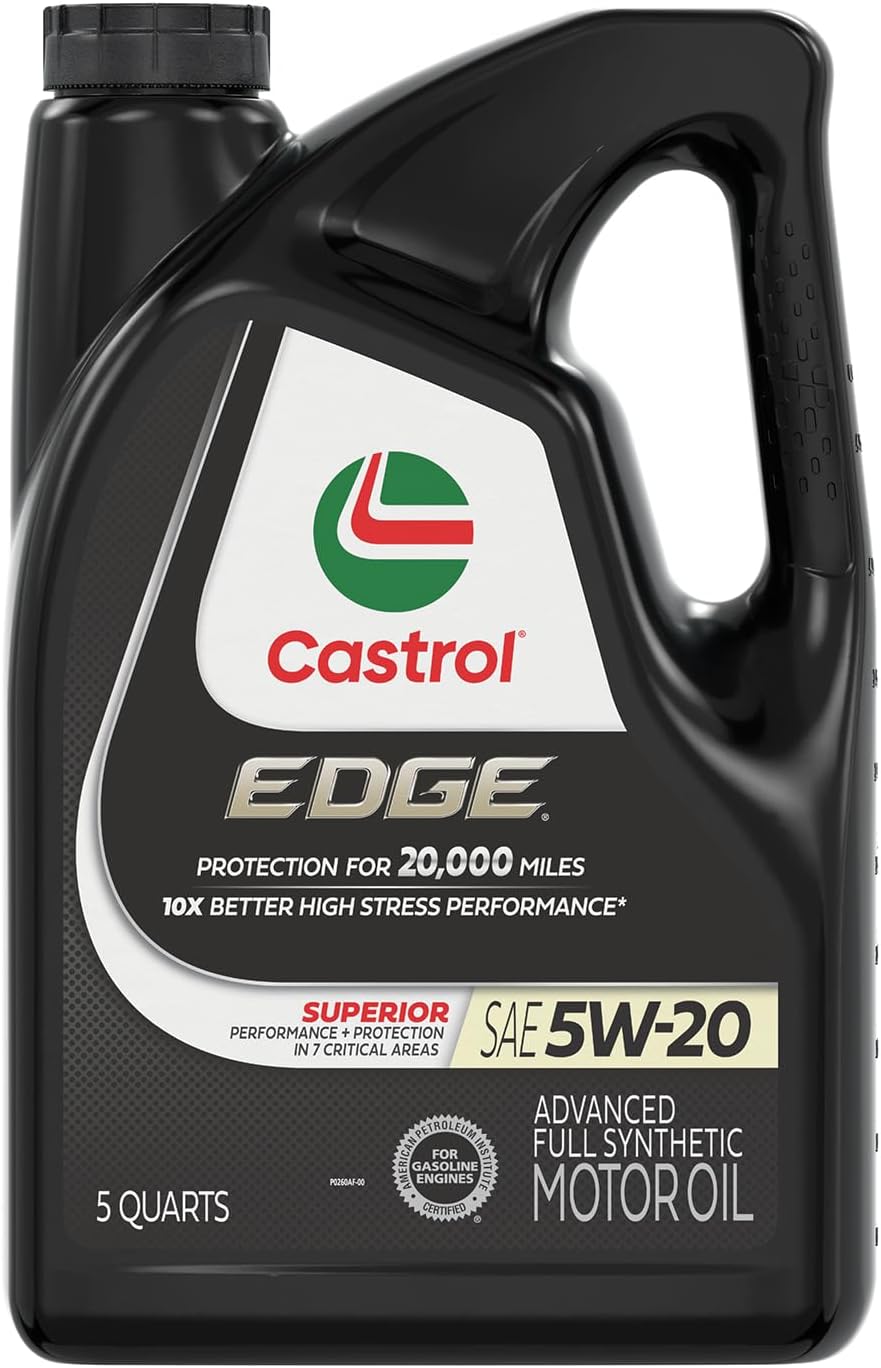
| SAE Viscosity Grade | 5W-20 |
|---|---|
| Liquid Volume | 5 Quarts |
| Compatible with Vehicle Type | Car, Truck |
| Unit Count | 160.0 Fluid Ounces |
Castrol EDGE 5W-20 is a premium full synthetic motor oil positioned for drivers who prioritize engine protection and thermal control. In daily use it lubricates the valvetrain and bearings, resists high-temperature breakdown, and helps keep deposits and sludge to a minimum. The formulation emphasizes viscosity control and an advanced additive package intended to reduce metal-to-metal wear and maintain engine efficiency over longer intervals. For a 2021‑present Ford F-150 specified to use 5W-20, this oil supports steady oil pressure and consistent cold-start flow while delivering strong high-temperature performance during towing or highway runs. Practical benefits include improved engine cleanliness and potential for longer oil life compared with conventional oils, though you should follow Ford’s recommended service intervals. The product comes in a recyclable EcoBox option and multiple jugs for easy topping up. The main trade-offs are higher cost than entry-level oils and the need to confirm manufacturer approvals for specific F-150 engines before extending change intervals beyond Ford recommendations.
Best for: Drivers of 2021‑present Ford F-150s who put engine longevity and high-temperature protection ahead of upfront cost and want a top-tier synthetic oil.
Less Ideal for: Drivers on a strict budget or those who prefer sticking to dealer service intervals without changing oil type or extending change intervals.
- Full synthetic base oil provides better high-temperature stability than conventional oils
- Advanced additive package aimed at reducing engine wear and controlling sludge
- 5W-20 viscosity supports proper cold-start flow and oil pressure for compatible engines
- Available in 5 quart jugs suitable for a single F-150 oil change plus extra
- Recyclable EcoBox packaging reduces waste and simplifies disposal
- Premium formulation costs noticeably more than mainstream conventional or synthetic blend oils
Verdict: The best premium engine oil for drivers willing to pay more for superior thermal stability, additive package, and extended component protection.
Castrol EDGE 5W-30 Full Synthetic Motor Oil, 5 Quart Jug
Best Full Synthetic Engine Oil

| SAE Viscosity Grade | 5W-30 |
|---|---|
| Volume | 5 Quarts |
| Vehicle Compatibility | Car, Truck (universal fit) |
| Approvals | API SP, ILSAC GF-7, dexos1 Gen 3 |
Castrol EDGE 5W-30 is designed as a high-performance full synthetic motor oil that keeps engines protected under heavy loads and high temperatures. For a 2021-present Ford F-150 this grade supports turbocharged and naturally aspirated gasoline engines that call for 5W-30, helping maintain viscosity during hot highway runs and towing. The formula emphasizes wear protection and deposit control, so you should see cleaner internals and reduced sludge compared with conventional oils. Castrol cites strong high-stress shear resistance and claims extended drain capabilities, which translates to longer intervals between oil breakdown when paired with manufacturer-approved service schedules. It also meets modern specifications such as API SP and ILSAC GF-7 and is licensed to dexos1 Gen 3, so it lines up with Ford requirements where dexos1 Gen 3 or API SP is specified. Trade-offs are typical for high-performance synthetics: benefits depend on following correct drain intervals and using the proper filter, and you should confirm your F-150 engine variant requires 5W-30 rather than a different factory-specified viscosity.
Best for: Drivers who prioritize maximum engine protection and stable performance under heavy loads, towing, or frequent highway driving and who want an oil that aligns with modern Ford engine specifications.
Less Ideal for: Owners who must follow a different factory viscosity spec for their F-150 engine or those who prefer conventional oil and shorter, more frequent oil change intervals.
- Full synthetic formulation for superior high-temperature stability and resistance to viscosity breakdown
- Meets API SP, ILSAC GF-7 and is licensed dexos1 Gen 3, aligning with modern Ford specifications
- Focused detergency and sludge control to help keep engine internals cleaner over time
- Designed for high-stress conditions suitable for towing and sustained highway driving
- Extended drain claims depend on following Ford service recommendations and correct filter use
Verdict: The best full synthetic engine oil for users who want the highest consistent protection, performance in extremes, and longer life between oil breakdowns.
Motorcraft 5W-30 Synthetic Motor Oil 1 qt (XO5W30Q1FS)
Best 5W-30 Engine Oil

| Container Type | Bottle |
|---|---|
| Compatible with Vehicle Type | Car |
| Liquid Volume | 946 Milliliters |
| Size | 1 Qt. |
Motorcraft 5W-30 is a factory-quality motor oil formulated to meet Ford and Lincoln specifications and supplied in a convenient one-quart bottle with a funnel. It is intended for drivers who must use 5W-30 viscosity to match manufacturer requirements, delivering correct cold-start flow for low-temperature starts and stable film protection at operating temperature. In real-world use you would carry it as a spare quart for top-offs or use it during scheduled oil service to maintain factory-specified performance. Notable features include Motorcraft engineering tailored to Ford engines and a funnel included for easier pouring. The practical benefits are confidence in compatibility with Ford-recommended service intervals and predictable lubricant behavior across typical driving conditions. Limitations are minimal for the intended purpose but the listing does not specify the full performance claims or API/ILSAC certifications on the label, so technicians should confirm compatibility with specific Ford engine oil specifications before bulk purchasing for fleet service.
Best for: Buyers who need a factory-replacement 5W-30 to meet Ford manufacturer requirements and prefer a branded oil tuned for Ford engines.
Less Ideal for: Drivers looking for detailed performance specs, aftermarket performance formulations, or larger bulk quantities for frequent oil changes should consider other options.
- Formulated to Ford/Motorcraft specifications for direct compatibility with Ford engines
- Correct 5W-30 viscosity for proper cold-start flow and high-temp protection
- Includes a funnel for easier, less-mess top-offs
- Sold in single-quart bottle ideal for keeping a spare on hand
- Listing does not state specific API or ILSAC certification details on the product page
Verdict: The best 5W-30 engine oil for buyers who need that specific viscosity grade to meet manufacturer specs and ensure correct cold-start flow and high-temp protection.
Valvoline MaxLife Full Synthetic High Mileage 5W-20 Motor Oil, 5 qt
Best High-Mileage Engine Oil

| SAE Viscosity | 5W-20 |
|---|---|
| Liquid Volume | 5 Quarts |
| Compatible with Vehicle Type | Car, Truck |
| Viscosity Level | Low to Medium |
Valvoline MaxLife Full Synthetic 5W-20 is a high-mileage motor oil formulated to help older engines run cleaner and reduce common age-related issues. In practice it is used as a direct replacement for factory motor oil in 5W-20 Ford F-150 engines where that grade is specified, and it is designed to be compatible with routine oil change intervals. Notable features include a full synthetic base for stable viscosity, extra anti-wear additives to slow wear in worn components, and seal conditioners intended to reduce leaks and lower oil consumption. Those elements translate into quieter cold starts, better protection against sludge and heat, and longer-term peace of mind for a truck with 75,000 miles or more. The trade-off is grade-specificity: this bottle is 5W-20, so it only fits F-150 engines that call for that viscosity and not engines requiring 5W-30 or other grades. For owners seeking a high-mileage formula that focuses on preserving seals and reducing oil burn, this is a practical upgrade from conventional or blend oils for compatible F-150 engines.
Best for: Ford F-150 owners with higher-mileage trucks who prioritize engine longevity and want a motor oil that targets leaks, oil consumption, and wear in older engines.
Less Ideal for: Drivers who need a different viscosity grade for their F-150, such as 5W-30, or who prefer oils specified by their dealer for warranty or fleet maintenance programs.
- Full synthetic formula offers strong viscosity stability and heat protection
- Includes seal conditioners to help reduce leaks and oil consumption in aging engines
- Extra anti-wear additives for improved protection of worn components
- Meets ILSAC GF-7A and API SP/SN specifications for modern gasoline engines
- Only available in SAE 5W-20 grade, so not suitable for F-150 engines that require other viscosities
Verdict: The best high-mileage engine oil for older engines, offering conditioners and seal-friendly additives to reduce oil consumption and protect worn components.
Castrol Edge Extended Performance 5W-20 Full Synthetic Motor Oil, 5 QT
Best Extended-Drain Engine Oil

| SAE J300 Viscosity Grade | 5W-20 |
|---|---|
| Container Type | Bottle |
| Compatible with Vehicle Type | Car, Gasoline and Light Duty Diesel, Hybrids, Truck |
| Liquid Volume | 5 Quarts |
Castrol Edge Extended Performance 5W-20 is a hyper-premium full synthetic motor oil designed to support long oil-change intervals while protecting modern engines. It is formulated to exceed multiple industry and manufacturer specifications including GM dexos1 Gen 3 and ACEA C5, and Castrol advertises extended drain capability up to 25,000 miles under qualifying conditions. In practical use it reduces high-temperature breakdown, resists sludge and deposits, and provides strong wear protection, which helps preserve engine components on heavily loaded or towing-capable trucks like a Ford F-150. The 5W-20 viscosity suits newer Ford engines that call for that grade, offering good cold-start flow and steady film strength at operating temperature. Limitations are that extended drain claims depend on following manufacturer service recommendations and using a quality filter, and 5W-20 is not the correct viscosity for F-150 engines that specify other grades such as 5W-30 or 0W-20, so confirm your truck's engine spec before choosing this oil.
Best for: Buyers who want a factory-quality full synthetic oil that supports longer, professionally managed drain intervals while prioritizing oxidation resistance and wear protection for modern Ford engines.
Less Ideal for: Drivers who do not follow extended service schedules or whose F-150 engines require a different viscosity grade should choose an oil matched to their engine's factory specification instead.
- Full synthetic formulation engineered for extended drain intervals under specified conditions
- Meets and exceeds several manufacturer and industry specifications including dexos1 Gen 3 and ACEA C5
- High thermal and wear resistance to reduce sludge and protect engine internals under load
- 5W-20 viscosity provides good cold-start flow and stable protection at operating temperature for engines calling for this grade
- Extended 25,000-mile drain interval applies only when service conditions and manufacturer guidance are followed and is not universal
Verdict: The best extended-drain engine oil for owners who prefer longer oil-change intervals while maintaining oxidation resistance and additive longevity.
Choosing the Right 2021-Present Ford F-150 Engine Oil: Key Factors to Consider
Recommended Viscosity Grade and Manufacturer Specs
Ford specifies acceptable viscosity grades and engine oil specifications for the 2021-present F-150 platforms. Choosing the recommended grade ensures oil flows properly at startup and provides the right film thickness at operating temperature. Using the incorrect viscosity can impair cold-start protection or reduce oil film strength under load.
Look for oils that explicitly meet the Ford engine oil specifications or the equivalent industry standards, and verify compatibility with your engine variant. When operating in cold climates, prioritize lower cold-cranking viscosities within the approved range; for heavy towing, ensure the oil maintains adequate film strength at high operating temperatures.
Synthetic Versus Conventional Base Oil
Synthetic base stocks offer better low-temperature flow, improved thermal stability, and superior shear resistance compared with conventional oils. For modern F-150 engines, especially turbocharged variants and trucks used for towing, synthetics typically provide more consistent protection over longer drain intervals.
Conventional oils may be adequate for low-mileage, light-duty use but can degrade faster under repeated thermal stress. When planning longer service intervals or frequent high-load operation, choose full synthetic products that prioritize high-temperature protection and low volatility.
Viscosity Index and Multi-Grade Behavior
The viscosity index reflects how much an oil changes viscosity with temperature. A higher viscosity index means the oil maintains its protective film better across the range from cold start to highway cruising. Multi-grade oils like 5W-30 or 0W-20 are formulated to behave like a low-viscosity oil at ambient temperatures and a thicker oil at operating temperature.
For 2021-present F-150 engines, pick a multi-grade within Ford's recommended grades so the oil flows quickly at startup without thinning excessively at operating temperature. This helps protect critical components during cold starts while preserving wear protection during heavy loads.
Additive Chemistry and Wear Protection
Additives such as anti-wear agents, detergents, and dispersants control wear, neutralize acids, and keep contaminants suspended. Good additive chemistry reduces deposit formation on pistons and rings and helps maintain oil cleanliness over the drain interval. For turbocharged or higher-output engines common in recent F-150 trims, robust anti-wear protection is particularly important.
Also consider oils with balanced detergency to limit sludge and varnish formation while protecting catalytic converters and other emissions components. Excessively aggressive additive packages can sometimes impact seals or emissions sensors, so balance is key.
Shear Stability and Oil Longevity
Shear stability determines how well an oil maintains its viscosity under mechanical stress. Oils that shear down will lose high-temperature protection during extended highway runs or heavy towing, increasing wear risk. For owners who tow frequently or drive long highway distances, shear-stable oils preserve protective properties and extend useful oil life.
Check technical data for total base number retention and viscosity-after-shear metrics when available. Choosing oils advertised for extended drain intervals is fine only if shear and oxidation resistance are proven for the expected operating conditions.
Compatibility With Emissions and Turbo Systems
Modern F-150 engines often use turbochargers and tight emissions controls. Oil must resist deposits that can foul turbocharger bearings or particulate filters and should not produce excessive soot or ash that harms emissions hardware. Low-ash formulations can be beneficial where required by engine design.
Ensure the oil chemistry is compatible with your engine's emissions control strategy and turbocharger requirements. Oils that help keep turbos clean and protect bearings under boost will support longevity and steady performance in turbocharged trims.
Recommended Viscity Choices by Climate and Use
Choose the viscosity grade based on both the ambient climate and how you use your F-150. Colder regions and frequent short trips benefit from lower cold-crank viscosity grades to improve startup lubrication, while hot climates and heavy towing call for grades that maintain film thickness at operating temperature.
- Cold climate, frequent short trips: favor lower cold-start numbers to reduce wear at startup.
- Towing and hot weather: prioritize grades with robust high-temperature viscosity retention.
- Everyday mixed-use: follow Ford's recommended grade that balances startup flow and high-temp protection.
Oil Change Intervals and Monitoring
Recommended drain intervals vary with oil type, driving conditions, and engine load. Full synthetic oils often permit longer intervals, but severe duty such as repeated towing, dusty conditions, or many short trips can justify shorter changes. Monitor oil level and appearance between services, and follow the vehicle's maintenance indicators for interval guidance.
- Inspect oil color and level monthly under heavy use.
- Reset or follow the truck's service reminder system for interval timing.
- For heavy towing or dusty use, reduce intervals even with synthetic oils.
Mobilizing the Truck for Towing and Payload
If you regularly tow or carry heavy payloads, choose an oil that emphasizes high-temperature film strength and anti-wear performance. These conditions raise oil temperatures and mechanical stress, so prioritize products with proven shear stability and strong anti-wear additive packages to protect bearings and cam components.
- Confirm oil maintains viscosity under long highway pulls.
- Prioritize oils that list high-temperature protection and anti-wear claims.
- Check drain interval guidance under towing conditions.
Top-Up Practices and Spot Checks Between Changes
For modern F-150 engines, periodic top-ups and spot checks help prevent low-oil conditions that risk engine damage. Use the same viscosity and specification as the oil currently in the engine when topping up. Mixing within the same specification and viscosity is acceptable for short-term top-ups, but plan to return to a full change with a chosen oil brand to maintain consistent additive balance.
- Always match viscosity and specification for top-ups.
- Keep a small amount of approved oil in the truck for emergencies.
- Document top-ups and note mileage to track long-term consumption.
Oil Filter Selection and Maintenance
A high-quality oil filter complements the oil by removing particles and helping keep the oil clean throughout the drain interval. For 2021-present F-150 engines, choose filters with good micron ratings and a capacity suited to the planned interval and operating conditions. Change the filter at each oil service and confirm it is compatible with your engine's bypass and anti-drainback needs.
- Match filter capacity to planned drain interval.
- Ensure correct bypass valve settings for cold climates.
- Replace filter with every oil change to prevent contamination.
Still looking for the perfect fit?
Select your Ford F-150 configuration to see the most relevant Engine Oils recommendations
How We Chose the Best 2021-Present Ford F-150 Engine Oil
We applied a vehicle-focused editorial filter tailored to 2021-present Ford F-150 engines and real-world ownership needs. Selection began with oils that meet or exceed the factory viscosity grades and Ford specifications applicable to this model range. Key evaluation criteria included viscosity stability across temperature ranges, anti-wear additive effectiveness, detergent and dispersant performance for combustion byproducts, and compatibility with turbocharged gasoline engines where relevant. We also considered oil drain interval recommendations and the impact of oil on fuel economy and emissions system health. Oils with excessive volatility or poor shear stability were excluded. We excluded products lacking appropriate manufacturer approvals or those formulated primarily for diesels when the scope called for gasoline engine applications. Final picks balance protection, longevity, and suitability for typical F-150 use cases such as towing, daily driving, and seasonal temperature extremes.
Our full evaluation process is outlined in our review methodology.
FAQ
What viscosity should I use in a 2021-present Ford F-150 during winter?
It usually depends on Ford's recommended grades for your specific engine, but selecting a lower cold-crank number within the approved range improves startup protection in winter. Check the owner's manual for the exact recommended grade and choose a synthetic oil with good low-temperature flow if you face frequent cold starts.
Can I extend oil change intervals if I use full synthetic oil?
Full synthetics often allow longer intervals due to better oxidation and thermal stability, but actual intervals depend on driving style, towing, and climate. For routine city driving you might extend intervals, but severe-duty use like towing or many short trips warrants shorter changes regardless of base oil.
Is it okay to mix different brands of engine oil temporarily?
Mixing oils of the same viscosity and specification temporarily is acceptable in a pinch, but long-term mixing can lead to unpredictable additive interactions. For best consistency and performance, use the same specification-grade oil for regular changes.
How does towing affect my oil choice for the F-150?
Towing increases oil temperature and mechanical stress, so choose an oil with proven high-temperature film strength and shear stability. Prioritize oils with strong anti-wear additives and follow more conservative drain intervals when towing frequently.
Should I switch to a different oil if my F-150 has higher mileage?
High-mileage-specific formulas can help older engines by addressing seal condition and oil consumption, but the right choice depends on the engine's wear and consumption characteristics. If the engine is burning oil or seals are a concern, consider high-mileage formulations designed to condition seals while still meeting viscosity specs.
Final Verdict
Choose an engine oil that matches Ford's recommended viscosity and specifications, then refine the choice based on your climate and how you use the truck. For regular towing and heavy loads prioritize shear-stable full synthetics with strong anti-wear chemistry; for cold climates emphasize low-temperature flow. Balance drain interval expectations with real-world driving patterns and monitor oil level and condition between services. Prioritize compatibility with your F-150's engine specs and maintenance schedule. That approach will give you reliable protection and predictable performance over the long term.
Explore More:
- Check out all Ford F-150 parts & accessories
- Explore Fluids & Chemicals
- Browse all Accessories
