

Note: This article contains affiliate links. If you click on these links and make a purchase, I may earn a small commission at no extra cost to you. This helps support my research and content. Read my full affiliate disclosure here.
Maintaining the right transmission fluid in a Ford F-150 with the EcoBoost configuration matters for smooth shifting, cooling, and long-term drivetrain health. Whether you use the truck for towing, daily commuting, or heavy loads, the fluid you choose affects shift feel, temperature control, and internal wear. This guide presents our top five transmission fluid options selected specifically for the Ford F-150 EcoBoost, focusing on compatibility, thermal stability, and service life. Below you will find concise evaluation points and the criteria used to shortlist these fluids, plus practical guidance on service intervals and installation considerations.
Looking for other parts? See all Ford F-150 parts & accessories.
Top Picks at a Glance
| Best Overall Transmission Fluid A reliable, widely compatible fluid that balances protection and price | Ford Motorcraft MERCON LV Automatic Transmission Fluid, 5-Quart Jug |  |
| Best Budget Transmission Fluid An inexpensive, entry-level ATF that meets basic automatic transmission needs | Valvoline MaxLife Multi‑Vehicle Full Synthetic ATF, 1 qt |  |
| Best OEM Ford Fluid Genuine or factory‑spec fluid formulated to Ford's published transmission requirements | Motorcraft XT105Q3LV Mercon LV Automatic Transmission Fluid, 5 Quart | |
| Best Full‑Synthetic Gallon A full‑synthetic formula sold in gallon bottles for multiple changes | Valvoline MaxLife Multi‑Vehicle Full Synthetic ATF 1 Gallon |  |
| Best Bulk or Case Pack Multi‑quart cases or 5‑quart jugs for shops and frequent DIY servicing | Motorcraft MERCON LV Automatic Transmission Fluid 12-Quart Case |  |
Ford Motorcraft MERCON LV Automatic Transmission Fluid, 5-Quart Jug
Best Overall Transmission Fluid
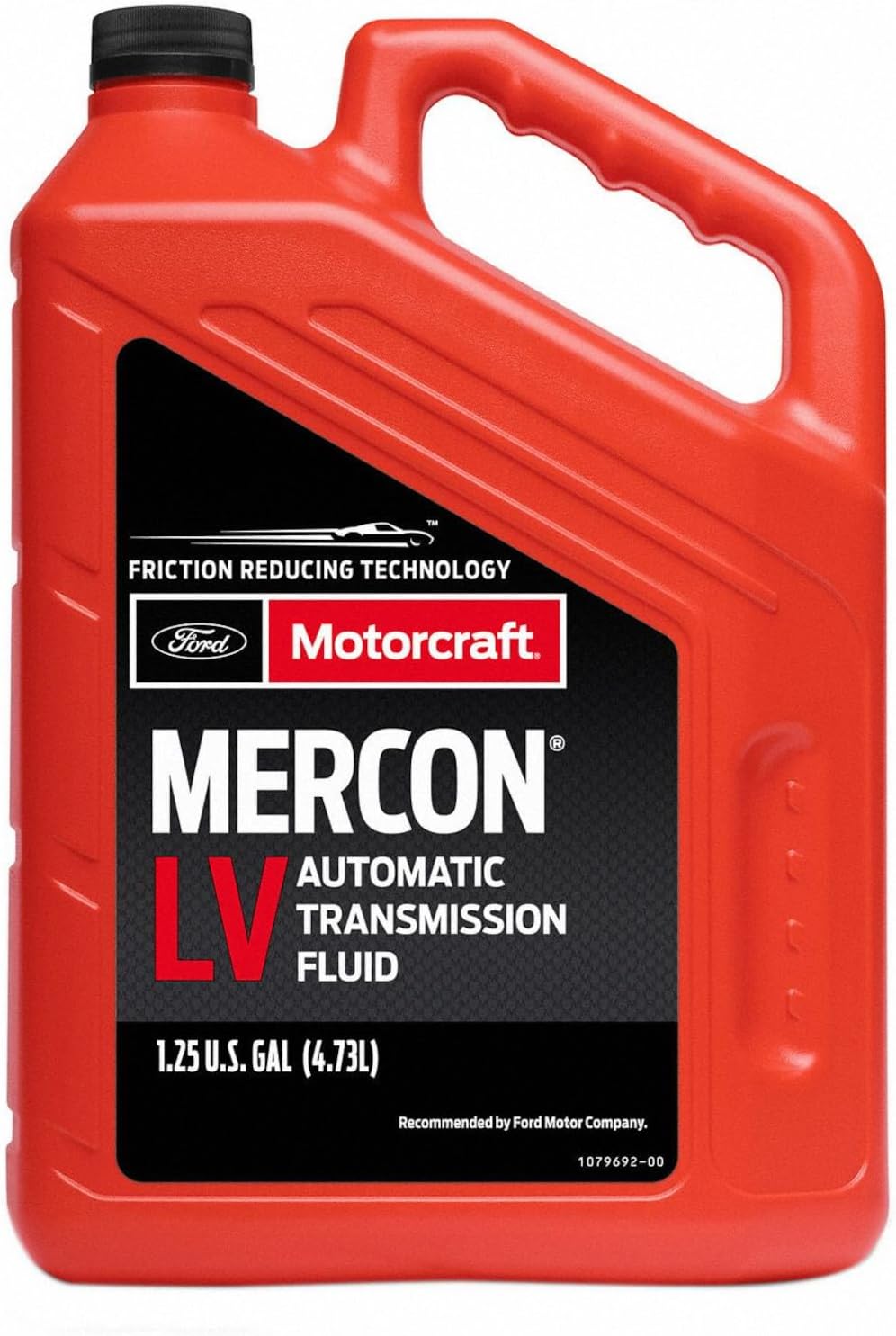
| Material | MERCON LV |
|---|---|
| Liquid Volume | 5 Quarts |
| Viscosity | 6.0 centistokes |
| SAE J300 Viscosity Grade | 5W-40 |
This Motorcraft MERCON LV jug is a factory-recommended ATF designed to meet the MERCON LV specification used in many Ford transmissions. It is intended for routine drain-and-fill service and for electronically controlled automatics, transfer cases, and some post-2012 power steering units where MERCON LV is specified. The formula uses hydroprocessed base oils and additives to improve thermal and oxidation stability, reduce transmission shudder, and maintain smooth shifting across a wide temperature range. In practice you get a product engineered to match factory shift feel and protect gear surfaces while resisting foam and deposits. The 5-quart jug size suits DIY maintenance or topping up during service. Important limits are clear: do not substitute it where MERCON V, MERCON SP (except TorqShift), MERCON ULV, or other specified fluids are required, and it is not for certain CVT or Type F applications. If your F-150 EcoBoost calls for MERCON LV, this delivers the closest factory-spec replacement for routine maintenance.
Best for: Buyers who prioritize using a factory-recommended fluid for routine maintenance on Ford transmissions and want dependable shifting and wear protection during normal use.
Less Ideal for: Owners looking for a universal fluid to cover multiple transmission spec types or those who need a CVT or Type F specific fluid should choose a different product.
- Factory-recommended formulation for vehicles that require MERCON LV, ensuring correct shift feel
- Designed for thermal and oxidation stability to resist breakdown under normal service conditions
- Additives reduce transmission shudder and help prevent foam, sludge, and corrosion
- 5-quart jug is convenient for DIY drain-and-fill services or topping up during maintenance
- Not compatible with transmissions that specify other MERCON types, CVT fluids, or Type F fluid
Verdict: Choose this slot if you want the best all-around ATF that meets common Ford specs and delivers dependable shifting and wear protection for routine maintenance.
Valvoline MaxLife Multi‑Vehicle Full Synthetic ATF, 1 qt
Best Budget Transmission Fluid

| Material | Synthetic |
|---|---|
| Liquid Volume | 1 Quarts |
| Flash Point | 394 Degrees Fahrenheit |
| Recommended Uses For Product | Automatic Transmission Fluid Replacement, CVT Transmissions, Preventing Leaks, Prolonging Transmission Life |
Valvoline MaxLife Multi‑Vehicle ATF is a full synthetic transmission fluid intended for broad compatibility across light‑duty vehicles. In practice it is used for routine flushes, fill‑ups, and maintenance where a factory‑quality, multi‑vehicle ATF is acceptable. The formula emphasizes thermal and viscosity stability, anti‑wear additives, and seal conditioners to help reduce leaks and maintain smooth shifting under varied driving conditions. For an F‑150 EcoBoost, it serves well as a cost‑conscious choice for scheduled service or top‑offs when the vehicle manual allows a multi‑vehicle ATF specification. The bottle is easy to pour and the fluid holds up under heat, which helps shift feel and reduces chatter in many high‑mileage transmissions. This is not a specialty performance fluid tuned for a specific Ford transmission variant, so technicians should confirm the F‑150 specific spec or label requirement before a full service; use when the recommended spec matches Valvoline’s multi‑vehicle formulation or for interim maintenance between dealer services.
Best for: Buyers looking to save on routine transmission service for an F‑150 EcoBoost who prioritize a factory‑quality, widely compatible full synthetic fluid for top‑offs or budgeted fluid changes.
Less Ideal for: Owners seeking a transmission fluid explicitly specified by Ford for a particular EcoBoost transmission variant or those wanting a performance‑tuned or dealer‑recommended specialty fluid.
- Full synthetic formula with additives for improved thermal and viscosity stability
- Multi‑vehicle compatibility suitable for many light‑duty automatic and CVT applications
- Seal conditioners to help prevent leaks and extend transmission life
- Proven brand with consistent pouring bottle and easy handling
- Not tailored to unique Ford transmission specs in every F‑150 EcoBoost application and may not replace fluids requiring a specific factory‑only formulation
Verdict: Pick this when you need a low-cost, spec‑meeting transmission fluid for routine top‑offs or budgeted fluid changes without specialty additives.
Motorcraft XT105Q3LV Mercon LV Automatic Transmission Fluid, 5 Quart
Best OEM Ford Fluid
| Material | MERCON LV |
|---|---|
| Liquid Volume | 5 Quarts |
| Viscosity Level | High |
| Model | XT105Q3LV |
This Motorcraft XT105Q3LV is the factory Mercon LV transmission fluid packaged in a 5-quart jug for servicing Ford and Lincoln vehicles that require this specification. It is intended for drain-and-fill or partial fluid changes to restore correct friction characteristics and help maintain factory shift feel. Buyers get a high-viscosity formula that manufacturers specify to control oxidation, corrosion, and friction performance at typical operating temperatures. Using the correct Mercon LV chemistry reduces the risk of shift harshness, slipping, or premature component wear compared with nonapproved fluids. The product is straightforward to use for DIY or shop service and one jug covers most planned fluid changes on modern F-150 EcoBoost transmissions that accept Mercon LV. A practical limitation is that it is a vehicle-specific fluid type, so it is only appropriate where Mercon LV is listed; it will not substitute for other Ford fluids or universal formulas with different chemistry requirements.
Best for: Drivers who prioritize maintaining factory shift feel and want a Ford‑specified fluid for scheduled transmission service on F-150 EcoBoost trucks that call for Mercon LV.
Less Ideal for: People seeking a universal or multi-vehicle transmission fluid or anyone with a vehicle that requires a different transmission fluid specification.
- Factory-approved Mercon LV chemistry matched to Ford/Lincoln shift calibration
- 5-quart jug size is convenient for a single service without mixing containers
- High-viscosity formulation helps control oxidation and corrosion under normal operating conditions
- Only suitable where Mercon LV is specified and not interchangeable with fluids using different chemistry
Verdict: Use this slot if you want a Ford‑specified or OEM fluid to preserve factory shift feel and stay within the manufacturer's approved chemistry.
Valvoline MaxLife Multi‑Vehicle Full Synthetic ATF 1 Gallon
Best Full‑Synthetic Gallon

| Material | Synthetic |
|---|---|
| Liquid Volume | 1 Gallons |
| Model | MaxLife Multi-Vehicle ATF |
| Flash Point | 394 Degrees Fahrenheit |
Valvoline MaxLife Multi‑Vehicle Full Synthetic ATF is a one‑gallon, full synthetic transmission fluid intended as a multi‑vehicle solution for light duty automatic and many CVT applications. It is typically used during transmission service or top‑offs and is formulated with conditioning agents to preserve seal elasticity, antiwear chemistry to reduce component wear, and frictional modifiers for smoother gear engagements. For a Ford F‑150 EcoBoost this fluid meets Ford MERCON LV specifications called out for many modern Ford transmissions, so it can serve for scheduled fluid changes where MERCON LV is required. The full synthetic base gives better thermal stability and viscosity control than conventional ATF, which helps with heat management on towing or heavy highway use. Limitations are that specific Ford model years and transmission variants can require unique factory fluids, so confirm MERCON LV compatibility for your exact F‑150 transmission before using this product. The one‑gallon size is convenient for multiple services or for keeping a spare on hand for fluid top‑offs.
Best for: Buyers who plan to perform multiple ATF services or keep a spare for maintenance and who prioritize synthetic protection and thermal stability for towing or frequent highway driving.
Less Ideal for: Owners who need a transmission fluid specified by Ford for a niche or older transmission that does not accept MERCON LV should choose the exact factory fluid instead.
- Full synthetic formulation for improved thermal stability and longer fluid life
- Contains conditioning agents to help preserve seals and reduce leaks
- Meets Ford MERCON LV and other common OEM specifications for broad compatibility
- One‑gallon size is practical for multiple service intervals or keeping a spare
- Not a fit for transmissions that explicitly require a different factory‑specified fluid not covered by MERCON LV
Verdict: Choose a gallon of full‑synthetic ATF when you plan multiple service intervals or prefer synthetic protection and better thermal stability.
Motorcraft MERCON LV Automatic Transmission Fluid 12-Quart Case
Best Bulk or Case Pack

| Brand | Motorcraft |
|---|---|
| Liquid Volume | 12 Quarts |
| Unit Count | 384.0 Fluid Ounces |
| Recommended Uses For Product | Transmission Fluid |
| Manufacturer Part Number | FBA_MERCON LV |
This 12-quart Motorcraft MERCON LV case gives you factory-quality ATF in a bulk format for routine servicing of Ford and Lincoln automatics. It is engineered with hydroprocessed base oils and performance additives to deliver stable shifting across hot and cold conditions, resist thermal and oxidation breakdown, and help prevent transmission shudder. The fluid is dyed red for easy leak checks and is recommended by Ford for applications specifying MERCON LV, so it matches factory replacement requirements where that spec is called for. Because this listing is a case, it is most practical for anyone who performs frequent drain-and-fill services, services multiple vehicles, or wants to stock the correct fluid for an F-150 EcoBoost transmission. Note that it must not be used in transmissions that require MERCON V, MERCON SP, Motorcraft Premium ATF, FNR5, CVT chain-type fluids, or Type F fluid, so confirm your truck's specified fluid before committing to a bulk purchase.
Best for: Buyers who perform frequent transmission service, maintain more than one Ford vehicle, or want to lower per-quart cost by purchasing a case of the correct factory-recommended fluid.
Less Ideal for: Casual owners who only need a single quart or those whose vehicle requires a different specified transmission fluid should avoid buying the full case.
- Factory-recommended formulation for Ford and Lincoln transmissions
- Sold as a 12-quart case ideal for multiple services or fleet use
- Hydroprocessed base oils and additives for thermal, oxidation, and shear stability
- Designed to improve shifting at high and low ambient temperatures and reduce transmission shudder
- Not compatible with several other Ford transmission fluid specifications such as MERCON V, MERCON SP, FNR5, CVT chain-type, or Type F
Verdict: Choose a bulk case or large jug when you do frequent fluid changes, maintain multiple vehicles, or want lower per‑quart cost for routine service.
Choosing the Right Ford F-150 EcoBoost Transmission Fluid: Key Factors to Consider
Ford Specification Compatibility
Confirming compatibility with Ford transmission specifications matters because the wrong additive package can alter friction characteristics and harm band or clutch operation. Ford often publishes service specifications that indicate acceptable friction modifiers and seal-compatible chemistries. Using a fluid that meets those specs reduces the risk of slippage, harsh shifts, or premature wear.
Compatibility also affects warranty and long-term reliability. Even small differences in detergent, antiwear, or friction modifier chemistry can change hydraulic pressure behavior in the valve body, so matching manufacturer guidance is a practical first filter when selecting a fluid for the EcoBoost-configured F-150.
Viscosity And Temperature Performance
Viscosity at operating temperature determines film strength between friction surfaces and affects hydraulic timing for shifts. Fluids that maintain their target viscosity under high load and heat provide consistent shift timing and reduce metal-to-metal contact during heavy towing or repeated acceleration.
Look for fluids with good low-temperature flow as well, because cold-weather viscosity impacts warm-up shift quality and drivability. A formulation that maintains appropriate viscosity across the EcoBoost's typical operating range helps protect internal parts and keeps shift behavior predictable in both winter and summer conditions.
Thermal Stability And Oxidation Resistance
Thermal stability is crucial for an F-150 that sees highway towing or sustained heavy loads. Fluids that resist oxidation and varnish formation preserve valve body passages and solenoids, preventing sticky control surfaces that cause delayed or erratic shifts.
Oxidation-resistant formulations typically extend service intervals and lower the chance of deposit-related failures. For owners who frequently tow or drive in hilly terrain, prioritizing fluids with strong high-temperature chemical stability will reduce maintenance headaches and preserve transmission efficiency.
Friction Characteristics And Shift Quality
Friction modifiers in the fluid control how clutches and bands engage. The right friction profile produces smooth, quick shifts while limiting clunking or slipping. Mismatched friction behavior can cause harsh engagements or hunting between gears, negatively affecting drivability and component life.
When choosing a fluid, consider how it is formulated to manage coefficient of friction over time and under load. Fluids that maintain stable friction characteristics deliver repeatable shift feel and reduce stress on the transmission's friction materials in the EcoBoost F-150.
Seal Compatibility And Leak Prevention
Transmission seals and gaskets are susceptible to swelling or hardening if exposed to incompatible chemistries. Seal-compatible fluids preserve elastomer flexibility and prevent leaks that can lead to low fluid levels and overheating.
For the Ford F-150 EcoBoost, selecting a fluid known to be compatible with common transmission elastomers helps prevent unexpected drips and reduces the chance of fluid-related seal degradation, which is especially important for trucks used in variable climates or with frequent temperature cycles.
Service Life And Maintenance Interval
Some formulations are designed to last longer between changes due to better additive durability and resistance to contamination. Longer service life reduces the frequency of fluid replacement and the labor related to maintenance, which matters for owners who use the F-150 for high-mileage or towing duties.
Consider manufacturer recommendations and whether the fluid's performance claims align with your driving profile. Even with longer-life fluids, periodic condition checks are prudent since factors such as contamination, overheating, or external leaks can shorten real-world life.
How Often To Check And Change Fluid In An EcoBoost F-150
Regular inspections of transmission fluid level and condition are important for preventing damage. Check levels following the vehicle owner manual procedures and inspect fluid color and odor; a darker color or burnt smell indicates thermal breakdown and the need for service.
Change intervals depend on usage. For typical daily driving, follow the manufacturer schedule. For towing or heavy-duty use, consider more frequent fluid changes and include a filter replacement when applicable.
- Inspect fluid visually at recommended intervals.
- Smell and color give early clues to overheating or contamination.
- Increase service frequency under heavy towing or repeated high-load driving.
Preparing For A Transmission Fluid Change
Before a fluid change, gather the correct fluid specification, a suitable funnel, and any seals or gaskets needed for pan removal. Warm the transmission by driving briefly to help drain more complete old fluid.
Plan for disposal of drained fluid according to local regulations and ensure the vehicle is securely supported if the change requires lifting.
- Warm engine for a fuller drain.
- Inspect pan and magnet for metal debris during service.
- Replace filter and pan gasket when recommended by service procedures.
Signs Your Transmission Fluid Needs Attention
Watch for delayed or harsh shifting, slipping under load, or abnormal noises that can signal fluid breakdown or contamination. Overheating or a persistent burning smell while driving also indicates the fluid has degraded.
Erratic shift points or noticeable changes in fuel economy may relate to transmission inefficiency caused by poor fluid condition. Address these signs promptly to avoid compounding internal damage.
- Harsh shifts or delays between gears.
- Burning odor or very dark fluid.
- Visible leaks or low fluid level warnings.
Using OEM Recommendations Versus Enhanced Formulations
OEM-recommended fluids are formulated to meet the baseline specifications for friction, viscosity, and seal compatibility. They provide predictable performance that aligns with factory service intervals and are often the safe default for maintenance.
Enhanced formulations may offer improved thermal stability or extended service life. If you choose an enhanced fluid, ensure it explicitly states compatibility with Ford transmissions used in EcoBoost-equipped F-150 trucks and consider monitoring fluid condition more closely after a switch.
- Check the vehicle-specific specification before mixing fluids.
- Transitioning fluids can be done, but monitor shift quality after change.
- Document any changes for future maintenance records.
Common Misconceptions About Transmission Fluids
One frequent misconception is that all automatic transmission fluids are interchangeable. In reality, formulations differ in friction modifiers and additive packages that affect shift feel and compatibility with seals and clutch materials.
Another myth is that darker fluid always means failure. While dark fluid often indicates age or heat exposure, condition and smell combined with performance symptoms give a clearer picture. Rely on multiple indicators rather than color alone.
- Do not assume interchangeability across fluid types.
- Use performance signs and service history alongside visual checks.
- Consult specifications rather than general labels when choosing a replacement.
Still looking for the perfect fit?
Select your Ford F-150 configuration to see the most relevant Transmission Fluids recommendations
How We Chose the Best Ford F-150 EcoBoost Transmission Fluid
We prioritized fluids that match the Ford F-150 EcoBoost's transmission specifications and the operating conditions common to this truck. Evaluation centered on chemical compatibility with Ford-approved friction modifiers and seal materials, high-temperature stability to resist breakdown during towing or heavy use, and formulated shift characteristics to maintain smooth gear changes under load.We also considered shear stability and viscosity retention across operating temperatures to ensure consistent hydraulic control and reduce slippage. Corrosion and oxidation resistance were included because long-term deposits and varnish can impact valve bodies and solenoids. Durability measures such as recommended service interval and resistance to foaming were evaluated to judge lifecycle value.Excluded from our list were fluids that lack clear compatibility with Ford transmissions used with EcoBoost engines or that do not meet standard performance benchmarks for modern automatic gearboxes. We focused on formulations appropriate for automatic transmissions in this vehicle and did not include fluids intended solely for manual or CVT units unless they explicitly state cross-compatibility with the truck's transmission type.
Our full evaluation process is outlined in our review methodology.
FAQ
How often should I change transmission fluid in a Ford F-150 EcoBoost used for towing?
For frequent towing, change intervals are usually shorter than standard service schedules. Many owners shorten the interval and inspect fluid condition more often because towing raises operating temperatures and accelerates additive depletion.
Can I mix different automatic transmission fluids in my EcoBoost F-150?
Mixing fluids is not ideal because differing additive packages can alter friction behavior. If mixing is unavoidable, use fluids that explicitly state compatibility with the vehicle's required specification and monitor shift quality closely.
Will switching to a longer-life transmission fluid affect shift feel?
Some extended-life formulations have different friction characteristics that can change shift firmness or timing. After switching, watch for any unusual shift behavior and be prepared to revert if drivability is negatively affected.
What are the signs of a transmission fluid leak on an F-150 EcoBoost?
Puddles under the parked truck, low fluid level warnings, or a noticeable drop in shift quality accompanied by low fluid checks suggest a leak. Inspect pan gasket, cooler lines, and seals for visible seepage.
Should I replace the transmission filter when changing fluid on this vehicle?
Replacing the filter is recommended when the service procedure calls for pan removal because it ensures internal passages and the filter media are clean. For many transmissions, filter replacement helps maintain hydraulic control and prolongs component life.
Final Verdict
Choose a transmission fluid that matches Ford's specifications, offers stable viscosity across anticipated operating temperatures, and provides strong thermal and oxidation resistance for the EcoBoost F-150. Prioritize formulations with proven seal compatibility and friction characteristics that suit your typical use, especially if you tow or haul heavy loads regularly. By focusing on specification match, temperature performance, and maintenance interval expectations, you can select a fluid that balances shift quality with long-term reliability for your truck.
Explore More:
- Check out all Ford F-150 parts & accessories
- Explore Fluids & Chemicals
- Browse all Accessories
