

Note: This article contains affiliate links. If you click on these links and make a purchase, I may earn a small commission at no extra cost to you. This helps support my research and content. Read my full affiliate disclosure here.
Maintaining the right engine oil is one of the simplest ways to keep a 2009-2014 Ford F-150 running reliably through daily driving and heavy-duty use. The V8 and V6 engines offered in those model years have distinct oil needs based on mileage, climate, and towing demands, so choosing an oil that matches your truck's service pattern helps protect internal components, control deposits, and preserve fuel economy.This guide presents six shortlisted engine oils that suit the 2009-2014 Ford F-150 range. We evaluated options across viscosity grades, base oil types, and formulations aimed at higher-mileage engines. Read on to understand which oil characteristics matter for your F-150 and how to match oil choice to driving habits and maintenance goals.
Looking for other parts? See all Ford F-150 parts & accessories.
Top Picks at a Glance
| Best Overall Engine Oil Balanced choice for most drivers combining protection and value | Motorcraft SAE 5W-20 Synthetic Blend Motor Oil, 5-Quart Jug |  |
| Best Budget Engine Oil Low-cost conventional or blend oil that protects on a tight budget | Castrol GTX Full Synthetic 5W-20 Motor Oil, 5 Quart |  |
| Best Full Synthetic Engine Oil 100% synthetic oil for peak performance and high-temperature stability | Castrol EDGE 5W-20 Full Synthetic Motor Oil, 5 Quart Jug |  |
| Best Synthetic Blend Engine Oil Compromise between synthetic benefits and lower cost than full synthetic | Valvoline Daily Protection 5W-20 Synthetic Blend Motor Oil (3 × 5 qt) |  |
| Best High-Mileage Engine Oil Formulated with seal conditioners and additives for older engines | Valvoline MaxLife Full Synthetic High Mileage 5W-20 Motor Oil, 5 Quart |  |
| Best 5W-20 Engine Oil Correct-viscosity option matched to many modern engine specifications | Castrol EDGE Extended Performance 5W-20 Full Synthetic Motor Oil, 5 Quart |  |
Motorcraft SAE 5W-20 Synthetic Blend Motor Oil, 5-Quart Jug
Best Overall Engine Oil

| SAE J300 Viscosity Grade | 5W-20 |
|---|---|
| Liquid Volume | 5 Quarts |
| Compatible with Vehicle Type | Car, SUV, Truck, Van |
| Item Type Name | Premium Synthetic Blend Motor Oil |
| Meets | WSS-M2C960-A1; SN PLUS |
This Motorcraft 5W-20 synthetic blend is engineered to meet Ford specifications for many of its gasoline engines and is intended for routine oil changes on compatible Ford-family vehicles. It combines high-viscosity index base oils and performance additives to reduce deposits, protect against high-temperature oxidation and turbocharger fouling, and resist foaming and corrosion. The formulation also includes friction-reducing technology that can improve fuel economy versus thicker 5W-30 and 10W-30 oils and is rated to address low-speed pre-ignition concerns. For maintenance use it behaves like a dependable factory-replacement oil: easy to pour from a 5-quart jug, broadly recommended across a long list of Ford model years, and familiar to technicians. Limitations are that it is a synthetic blend rather than a full synthetic and the grade is fixed at 5W-20 so it is only appropriate where that viscosity is specified for the engine and climate conditions.
Best for: Buyers who want a factory-recommended, practical oil for regular maintenance on compatible Ford-family trucks and light-duty vehicles and who prioritize reliable protection and fuel economy over top-tier full synthetic performance.
Less Ideal for: Drivers seeking maximum high-temperature longevity or extended oil change intervals from a full synthetic, or those whose vehicle requires a different viscosity grade should consider other options.
- Formulated to Ford specifications for direct compatibility with many Ford, Lincoln, and Mercury gasoline engines.
- Synthetic blend base with performance additives reduces deposits and helps protect against high-temperature oxidation.
- Friction-reducing technology can improve fuel economy compared with thicker oils.
- Sold in a convenient 5-quart jug suitable for a single oil change on most light trucks and passenger vehicles.
- Meets WSS-M2C960-A1 and SN PLUS ratings to address low-speed pre-ignition concerns.
- Not a full synthetic formulation, so it may offer less high-temperature longevity than premium full synthetic oils.
- Viscosity is fixed at 5W-20 so it is not suitable where a different grade is required.
Verdict: The best all-around engine oil that balances wear protection, fuel efficiency, and price for general maintenance needs in passenger trucks and light-duty vehicles.
Castrol GTX Full Synthetic 5W-20 Motor Oil, 5 Quart
Best Budget Engine Oil

| Viscosity | 5W-20 |
|---|---|
| Size | 5 Quarts |
| Meets | API SP, ILSAC GF-6 |
| Ford specs | WSS-M2C945-B1, WSS-M2C960-A1 |
Castrol GTX Full Synthetic 5W-20 is a ready-to-use motor oil for conventional oil changes on vehicles that call for a 5W-20 grade, including 2009–2014 Ford F-150 engines specifying that viscosity. It is marketed to reduce sludge, protect against wear at high temperatures, and maintain viscosity over extended drain intervals, making it suitable for typical highway and daily-driving conditions. The product comes in a 5 quart container and meets industry specifications such as API SP and ILSAC GF-6, plus Ford WSS-M2C945-B1 and WSS-M2C960-A1 where applicable. For the F-150 this translates to reliable protection for pistons and bearings during normal use and improved resistance to breakdown compared with many conventional oils. The main limitation for buyers focused strictly on lowest upfront cost is that full synthetic oils like this are usually pricier than conventional options, though they can extend drain intervals and better protect modern engines. For heavy towing, severe duty, or extended drain schedules beyond manufacturer recommendations, follow Ford service guidance or consider a product specified for those conditions.
Best for: Buyers looking for an affordable full synthetic 5W-20 that gives dependable protection for routine maintenance on a 2009–2014 Ford F-150 and prioritizes engine cleanliness and stability over the lowest purchase price.
Less Ideal for: Drivers who regularly tow heavy loads, run the truck in severe offroad or extreme high-load conditions, or who want to maximize interval length beyond the vehicle manufacturer’s recommendations should consider oils specified for those heavy-duty use cases.
- Full synthetic formulation for stronger high-temperature stability and reduced viscosity breakdown
- Meets API SP and ILSAC GF-6 specs and Ford WSS-M2C945-B1/WSS-M2C960-A1 approvals where required
- Described sludge-fighting additives help keep engines cleaner over time
- Suitable 5W-20 viscosity for 2009–2014 Ford F-150 engines that specify this grade
- Higher upfront cost than conventional motor oil options
Verdict: The best low-cost engine oil that provides acceptable protection and fluid performance for routine oil changes when cost is the primary concern.
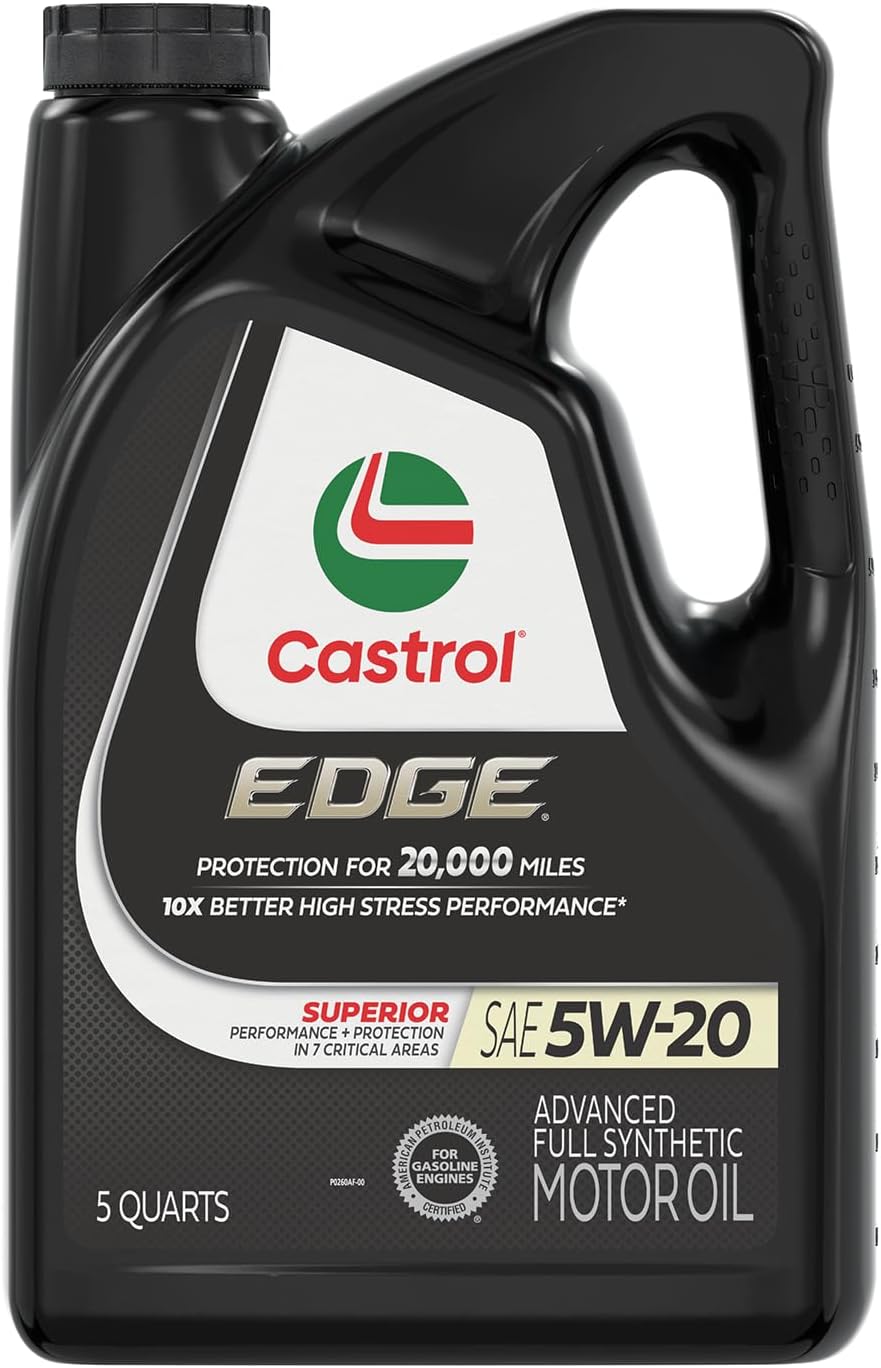
Castrol EDGE 5W-20 Full Synthetic Motor Oil, 5 Quart Jug
Best Full Synthetic Engine Oil
| SAE Viscosity Grade | 5W-20 |
|---|---|
| Liquid Volume | 5 Quarts |
| Compatible with Vehicle Type | Car, Truck |
| Viscosity Level | Low to Medium |
Castrol EDGE 5W-20 is a premium full synthetic motor oil intended to give DIYers stronger protection and steadier performance than conventional oils. It is typically used as a factory-quality replacement during oil changes in compatible cars and light trucks; the 5W-20 viscosity helps cold starts while maintaining film strength at operating temperature. Notable features called out by the manufacturer include enhanced shear stability, high temperature resistance to reduce sludge, and additive chemistry aimed at minimizing wear and preserving fuel economy. In real-world use you can expect smoother idle and responsive throttle feel compared with lower-grade oils and confidence to follow extended drain intervals when recommended by testing or oil analysis. Limitations are that it is a premium product so cost per quart is higher than mainstream conventional oils and you should still follow Ford's service intervals and spec recommendations for your F-150 rather than relying solely on marketing claims about extreme extended intervals. Also verify the 5W-20 viscosity matches your engine's required grade before switching.
Best for: DIYers who prioritize maximum thermal and wear protection and want a factory-quality full synthetic oil they can use at home while following manufacturer service guidance.
Less Ideal for: Drivers who strictly follow extended high-mileage or specialty oil regimes for very old engines or those who need a different viscosity than 5W-20 should choose a product matched to those needs.
- Full synthetic formulation provides stronger high-temperature stability and reduced sludge tendency
- 5W-20 grade supports easier cold starts and consistent viscosity control
- Engine wear protection and additive package aimed at improving longevity
- Packaged in a 5 quart jug suitable for a single oil change on most V6 and V8 engines
- Higher price than conventional motor oils
Verdict: The best full synthetic engine oil for DIYers who want superior high- and low-temperature protection, better shear stability, and longer-term performance than conventional oils.
Valvoline Daily Protection 5W-20 Synthetic Blend Motor Oil (3 × 5 qt)
Best Synthetic Blend Engine Oil

| Viscosity | 5W-20 |
|---|---|
| Volume per bottle | 5 Quarts |
| Unit count | 3 |
| Vehicle type | Car, Truck |
| Flash point | 390 Degrees Fahrenheit |
Valvoline Daily Protection 5W-20 is a synthetic blend intended for daily drivers that need better protection than conventional oil without the cost of a full synthetic. It is used like any motor oil at routine oil changes and meets requirements for many gasoline passenger cars and light trucks, including turbocharged engines that call for 5W-20. The formula combines refined base stocks, anti‑wear additives and detergents to resist sludge, control deposits and improve high‑temperature stability, while a low‑friction formulation helps fuel economy and cold‑start flow. Sold as three 5‑quart bottles, it is convenient for multi‑vehicle households or future changes. Limitations are that it is not a full synthetic, so the highest heat and extended drain interval performance of premium full synthetics may be lower, and users with manufacturer requirements for a different viscosity or full synthetic should follow their engine maker recommendations.
Best for: Buyers who want better engine protection and improved fuel efficiency over conventional oils while keeping maintenance costs moderate, especially for everyday driving on a 2009–2014 Ford F-150 that calls for 5W-20.
Less Ideal for: Drivers seeking maximum long‑interval protection or the highest thermal stability should consider a full synthetic alternative or follow Ford's exact oil spec if it mandates full synthetic products.
- Synthetic blend balance of protection and cost compared with conventional oil
- Formulated to reduce deposits and fight sludge with detergents
- Designed for good cold‑start flow and high‑temperature protection
- Approved for use in many turbocharged and naturally aspirated gasoline engines
- Not a full synthetic so it may not match top full synthetic performance for extreme heat or extended drain intervals
Verdict: The best synthetic blend engine oil for those seeking improved protection and performance over conventional oils without paying full synthetic prices.
Valvoline MaxLife Full Synthetic High Mileage 5W-20 Motor Oil, 5 Quart
Best High-Mileage Engine Oil

| SAE J300 Viscosity Grade | 5W-20 |
|---|---|
| Liquid Volume | 5 Quarts |
| Compatible with Vehicle Type | Car, Truck |
| Viscosity Level | Low to Medium |
| Flash Point | 390 Degrees Fahrenheit |
Valvoline MaxLife Full Synthetic 5W-20 is built for engines with higher mileage and includes additives aimed at slowing wear, conditioning seals, and fighting sludge. In use it replaces conventional or blend oils in routine oil changes and is suited for daily driving, towing light loads, and seasonal temperature swings common with older trucks. Notable features include a full synthetic base for better heat stability, extra anti-wear chemistry for reduced friction, and seal conditioners that can help mitigate oil seepage from aging gaskets. Practical benefits for a 2009–2014 Ford F-150 include stronger wear protection, improved sludge control, and potential reductions in oil consumption that can extend service intervals and engine life. Limitations to consider are grade compatibility and manufacturer specs; 5W-20 is appropriate only where the F-150 engine calls for that viscosity and approved specs, and it does not replace necessary mechanical repairs for major seal or gasket failures. For owners seeking a high-mileage focused synthetic oil that prioritizes seal care and deposit control, this is a well-rounded option.
Best for: Owners of 2009–2014 Ford F-150s looking to preserve and extend the life of a higher-mileage engine who prioritize reduced leaks and stronger deposit control.
Less Ideal for: Drivers whose F-150 engine requires a different viscosity or who need immediate mechanical repairs for major oil leaks should consider other options or service first.
- Formulated specifically for high-mileage engines with seal conditioners to help reduce leaks.
- Full synthetic base offers improved heat stability and wear protection over conventional oils.
- Claims stronger sludge defense and improved protection against deposits.
- Widely used viscosity grade (5W-20) suitable for F-150 engines that specify this grade.
- Includes anti-wear additives that can help reduce friction and extend engine life.
- Only suitable where the vehicle manufacturer approves 5W-20 viscosity and listed specifications.
- Does not fix mechanical seal or gasket failures; severe leaks require repair.
Verdict: The best high-mileage engine oil for vehicles with higher miles that need extra seal-conditioning additives, reduced leaks, and tailored detergency to extend engine life.
Castrol EDGE Extended Performance 5W-20 Full Synthetic Motor Oil, 5 Quart
Best 5W-20 Engine Oil

| SAE J300 Viscosity Grade | 5W-20 |
|---|---|
| Liquid Volume | 5 Quarts |
| Compatible with Vehicle Type | Car, Gasoline and Light Duty Diesel, Hybrids, Truck |
Castrol EDGE Extended Performance 5W-20 is a hyper-premium full synthetic motor oil designed to provide strong wear protection and thermal stability while supporting extended drain intervals up to 25,000 miles. In real-world use it serves as a direct replacement lubricant where 5W-20 is specified, offering improved cold-start flow for easier starting and faster oil circulation, plus additives intended to reduce sludge and maintain engine cleanliness. Notable features include manufacturer-level approvals and industry specs coverage and a pour-friendly 5 quart bottle for home service. Practical benefits for a 2009-2014 Ford F-150 include consistent protection under highway loads, reduced high-temperature breakdown during towing or heavy use, and potential fuel-economy gains from reduced friction. Limitations to consider are that extended drain claims depend on following the truck maker's maintenance schedule and using a compatible oil filter, and vehicles with significant wear or different viscosity requirements should stick to the viscosity called out in their manual.
Best for: Buyers who need a factory-replacement 5W-20 oil that prioritizes engine protection, cleaner operation, and the option to follow extended drain intervals when permitted by the vehicle maker.
Less Ideal for: Drivers who require a different viscosity than 5W-20, or owners of high-mileage engines that call for thicker oil or specialized high-mileage formulations.
- Formulated for strong wear protection and high-temperature stability
- Full synthetic base supports improved cold-start flow for 5W-20 engines
- Covers multiple manufacturer and industry specifications for broad compatibility
- Packaged in a 5 quart bottle with a user-friendly pour spout for DIY changes
- Extended 25,000 mile drain recommendation requires following manufacturer guidance and filter selection
Verdict: The best 5W-20 engine oil for buyers needing the specific viscosity grade that ensures proper cold-start flow and manufacturer-recommended lubrication characteristics.
Choosing the Right 2009-2014 Ford F-150 Engine Oil: Key Factors to Consider
Viscosity Grade and Temperature Range
Viscosity determines how the oil flows at cold startup and how it holds a lubricating film at engine operating temperature. For the 2009-2014 Ford F-150, choose a viscosity grade that matches your local climate and the engine variant. In colder regions, lower start-up viscosities help reduce wear during cold starts, while in hot climates or when towing heavy loads a thicker high-temperature viscosity helps maintain film strength.
Using the wrong grade increases startup wear or causes excessive oil consumption. Check the owner's manual for the recommended grades for your engine and consider whether conditions like regular towing or high-mileage operation push you toward a heavier-stability formulation. Also be mindful that multiweight oils are designed to balance low-temperature flow with high-temperature protection, but different brands vary in shear stability.
Base Oil Type and Additive Chemistry
Base oil—conventional, synthetic blend, or full synthetic—affects oxidation resistance, volatility, and overall longevity. Full synthetic oils typically resist thermal breakdown better and maintain viscosity under stress, which benefits F-150 owners who tow or drive at highway speeds for extended periods. Synthetic blends provide a middle ground for protection and cost.
Additive packages provide detergents, dispersants, anti-wear agents, and antioxidants. For older F-150 engines, look for additives that control sludge, neutralize acids, and condition seals. A robust anti-wear additive helps protect cam lobes, lifters, and bearings under high-load conditions common with trucks. Compatibility between base oil and additives also affects drain interval capability and deposit control.
High-Mileage Considerations
If your F-150 has high mileage, look for engine oils formulated for engines with significant wear. High-mileage formulations often include seal conditioners that reduce and slow oil leaks, plus additives that help restore some compression by reducing cylinder leakage through better lubrication of rings. Some contain higher detergent levels to loosen and suspend deposits, improving overall oil cleanliness.
High-mileage oils may also be slightly thicker when cold to compensate for increased internal clearances. That can reduce oil consumption and restore some oil pressure in worn engines. Keep in mind that ingredient interaction with older seals can vary; monitor leak behavior after switching and check oil consumption regularly.
Towing and Heavy-Load Performance
Many F-150 owners tow trailers, haul payloads, or operate under sustained loads that elevate operating temperature and mechanical stress. Oils suited to these demands offer enhanced thermal stability and shear resistance so the oil maintains protective viscosity under prolonged heat and load cycles. They also feature stronger anti-wear protection to guard bearings, camshafts, and timing components under higher torque and RPM.
Selecting an oil optimized for heavy-duty use helps prevent viscosity breakdown, reduces metal-to-metal contact during hot operation, and supports engine longevity when the truck regularly performs work above typical passenger-car duty cycles.
Compatibility with Recommended Service Intervals
Align your oil choice with how often you plan to change it. Some full synthetic oils support longer drain intervals because they resist oxidation and maintain additive strength, while conventional oils require more frequent replacement. For the 2009-2014 F-150, check the manufacturer recommended intervals and balance that with real-world conditions like short-trip driving, dusty environments, or heavy towing that may warrant shorter intervals.
Longer drain intervals can save time, but only if the oil maintains its protective properties throughout. For older engines, conservative intervals often reduce risk of sludge and deposit buildup. Regardless of oil type, follow periodic oil analysis or visual checks to ensure the chosen schedule is appropriate.
Manufacturer Specifications and Certification
Verify that any oil you select meets the industry and Ford specifications appropriate for the 2009-2014 F-150 engines. Look for compliance with API service categories and any Ford-specific approvals listed for those model years. Using oil that does not meet required specifications can risk warranty coverage where applicable and may not provide the advertised protection levels.
Certification labels and published specification claims indicate the product has been tested to defined standards for wear, deposit control, and oxidation. For owners aiming to maintain factory service standards, confirming specification compliance is an essential step before committing to an oil type.
Choosing the Right Viscosity for Your Climate
Ambient temperature affects how quickly oil circulates at startup and how well it protects during hot operation. For owners in colder climates within the 2009-2014 F-150 range, a lower winter viscosity helps minimize initial wear by ensuring rapid oil flow on cold starts. In warmer regions or when towing frequently, select a grade that preserves film strength at higher temperatures to avoid breakdown under load.
Refer to the vehicle's recommended grades as a baseline, then adjust based on real usage. If you switch seasons, consider whether multiweight oils already offer adequate coverage year-round or if seasonal changes provide safer protection.
- Cold climates: prioritize better low-temperature flow
- Hot climates/towing: prioritize high-temperature viscosity retention
- Always cross-check with owner manual recommendations
Synthetic Versus Conventional: Practical Tradeoffs
Full synthetic oils usually offer superior oxidation resistance and shear stability, which translates to more consistent protection during long-haul drives and heavy towing. Synthetic blends can be a cost-effective compromise, offering many of the protection benefits with lower expense. Conventional oils are acceptable for low-stress, low-mileage use but may oxidize faster under the heavier loads typical of truck work.
When deciding, weigh the F-150's duty cycle, planned drain intervals, and whether you need improved cold-start performance. For trucks that spend significant time towing or commuting at highway speeds, the benefits of synthetic base oils are often worthwhile.
- Synthetics: better thermal stability and longer life
- Conventional: acceptable for light, infrequent use
- Blends: middle ground on protection and cost
Maintenance Tips When Switching Oil Types
If you change from conventional to synthetic or to a high-mileage formula, give extra attention to seals and oil leaks during the first few hundred miles. Seal conditioning agents in high-mileage oils can sometimes reveal or reduce leaks. Also monitor oil levels more closely after a switch to detect increased consumption early.
When making a change, consider a complete oil and filter replacement and avoid mixing markedly different additive chemistries for extended periods. Keep records of mileage and oil behavior so you can judge whether the new oil meets expectations for consumption, noise, and cleanliness.
- Check for leaks and consumption after switching
- Use a fresh filter when changing oil types
- Avoid mixing incompatible additives long-term
Signs Your F-150 Needs a Different Oil
Watch for increased oil consumption, persistent oil leaks, excessive smoke, or a rough idle as indicators your current oil may no longer suit the engine's condition. Sludge deposits, engine knocking, or reduced oil pressure are stronger signs that the oil is not providing adequate protection or that the engine has internal issues.
If you notice any of these symptoms, try an oil with stronger detergency and anti-wear properties or a high-mileage formulation, and follow up with diagnostic checks if problems persist.
- Increased consumption or leaks
- Visible smoke or performance changes
- Sludge buildup or low oil pressure
Oil Filters and Complementary Maintenance
An effective oil change includes using a quality filter designed to capture contaminants without restricting flow. For 2009-2014 F-150 owners, match the filter's bypass and micron ratings to your engine's needs and follow recommended change intervals. Proper filtration reduces wear and prolongs oil life.
Also inspect the oil pan drain plug, gasket surfaces, and filter housing for damage or leaks during each service. Small maintenance items often extend the life of both oil and engine components.
- Use filters with appropriate micron ratings
- Inspect gaskets and drain fittings at each change
- Replace filter seals when servicing
Still looking for the perfect fit?
Select your Ford F-150 configuration to see the most relevant Engine Oils recommendations
How We Chose the Best 2009-2014 Ford F-150 Engine Oil
To assemble this list we applied selection filters focused on real-world durability and fit for 2009-2014 Ford F-150 engines. We prioritized oils that meet or exceed Ford-recommended specifications for the model years in scope and that offer clear data on viscosity stability, low-temperature fluidity, and high-temperature shear resistance. We also considered formulations designed for higher-mileage engines and those that include detergency and anti-wear chemistries that reduce deposit formation.Key evaluation criteria included: viscosity grade performance across temperature ranges, base oil type and additive chemistry, wear protection measurable through industry test results, deposit control and piston cleanliness, compatibility with extended drain intervals, and suitability for towing or heavy-load use. We emphasized oils with documented stability under repeated heat cycles and with additive packages that support seal conditioning for older engines.Exclusions: we did not include oils that lack published specification compliance, those formulated solely for passenger cars without truck or light-duty truck ratings, or products with unclear test data. The selected set reflects oils that balance protection, drivability, and practical maintenance considerations for 2009-2014 Ford F-150 owners.
Our full evaluation process is outlined in our review methodology.
FAQ
What oil viscosity should I use for a 2009-2014 F-150 in cold climates?
Follow the owner's manual recommendations for the specific engine, but generally choose a lower winter viscosity within the approved grades to improve cold-start flow and reduce startup wear.
Is it safe to switch from conventional to full synthetic in an older F-150?
Yes, many owners safely switch to full synthetic. Monitor seals and oil consumption after the change since seal conditioners and different base oils can alter leak behavior in older engines.
Should I use a high-mileage oil if my F-150 has over 100,000 miles?
High-mileage formulations can help by conditioning seals and improving compression through better ring lubrication. They are a good option if you notice leaks or increased oil consumption, but continue monitoring engine behavior after switching.
How often should I change oil if I tow regularly with my F-150?
Towing increases thermal and mechanical stress, so consider shorter service intervals than light-duty use. Follow severe-service recommendations and inspect oil condition more frequently if you tow often.
Can I mix different viscosity oils in an emergency?
Mixing viscosities in an emergency is acceptable for short-term use, but do not make a habit of it. Return to the recommended grade and perform a proper oil change and filter replacement as soon as practical.
Does synthetic oil improve fuel economy in the F-150?
Synthetic oils can slightly reduce friction and volatile losses, which may yield small fuel economy gains. The effect is usually modest and depends on driving conditions and engine wear.
Final Verdict
Choosing the right engine oil for a 2009-2014 Ford F-150 comes down to matching viscosity, base oil type, and additive chemistry to your driving conditions and the truck's mileage. Prioritize oils that meet the appropriate specifications, offer strong thermal and wear protection for towing or highway use, and include detergency if the engine has accumulated deposits.Balance planned service intervals with oil longevity and lean toward higher-stability formulations for heavy use. By focusing on the factors above and monitoring oil condition after any change, you can confidently pick an oil that helps extend the service life and reliability of your F-150.
Explore More:
- Check out all Ford F-150 parts & accessories
- Explore Fluids & Chemicals
- Browse all Accessories
