

Note: This article contains affiliate links. If you click on these links and make a purchase, I may earn a small commission at no extra cost to you. This helps support my research and content. Read my full affiliate disclosure here.
What You’ll Need
A quick look at the tools and supplies commonly used for this job.
Tools
Parts & Supplies
- Replacement center support bearing assembly
- Replacement driveshaft hardware if required
- Penetrating oil
- Shop rags
This article is part of our Transmission and Drivetrain Maintenance & Repair Guides.
A bad driveshaft center support bearing can cause vibration, thumping, humming, or clunking that feels a lot like a tire, axle, or transmission problem. Because it supports the middle of a two-piece driveshaft, even a small amount of wear can create noticeable driveline symptoms at certain speeds.
The good news is that you can often narrow it down at home with a careful road test and a visual inspection under the vehicle. The key is to separate center support bearing symptoms from bad U-joints, wheel balance issues, differential problems, and transmission-related vibration.
This guide walks through what the center support bearing does, the common warning signs, the safest ways to inspect it, and how to decide whether the bearing itself is the real cause of your driveline complaint.
What the Center Support Bearing Does
Many rear-wheel-drive, all-wheel-drive, and some truck or van drivetrains use a two-piece driveshaft instead of one long shaft. The center support bearing mounts between the two driveshaft sections and holds the shaft in position while allowing it to rotate smoothly.
The bearing is usually surrounded by a rubber support mount. In many failures, the bearing wears out, the rubber tears or sags, or both happen at the same time. When that support weakens, the driveshaft can move more than it should, changing driveline angles and creating vibration under load.
- The bearing supports the middle of the driveshaft.
- The rubber mount isolates vibration and keeps the shaft aligned.
- Failure can cause noise, shudder, clunking, or speed-related vibration.
Common Symptoms of a Bad Center Support Bearing
Speed-related Vibration
One of the most common signs is a vibration that shows up in a narrow speed range, often around neighborhood-road or highway speeds. The vibration may be felt through the floor, seat, or center of the vehicle rather than through the steering wheel. That helps distinguish it from many front tire or front suspension issues.
Thump, Rumble, or Humming From Under the Vehicle
A worn bearing can make a low rumble, growl, or humming noise that changes with vehicle speed. If the rubber support is badly torn, the shaft may also make a rhythmic thump as it moves more than normal.
Clunk when Shifting Into Drive or Reverse
If the driveshaft is no longer held firmly in place, you may hear or feel a clunk when shifting from park to drive, drive to reverse, or when getting on and off the throttle. This symptom can overlap with worn U-joints, transmission mounts, or differential backlash, so it should not be used alone to confirm the diagnosis.
Shudder on Acceleration
A failing support bearing can let the shaft angle change under load, which may cause a brief shudder when accelerating from a stop or during moderate throttle at low speed. The symptom may be worse with passengers or cargo because driveline angle changes slightly as the suspension settles.
- Vibration felt through the floor or seat is more suspicious than vibration felt mainly in the steering wheel.
- Noise and vibration often increase with road speed, not engine RPM alone.
- Symptoms may be strongest during acceleration or when the vehicle is loaded.
Before You Start: Safety and Setup
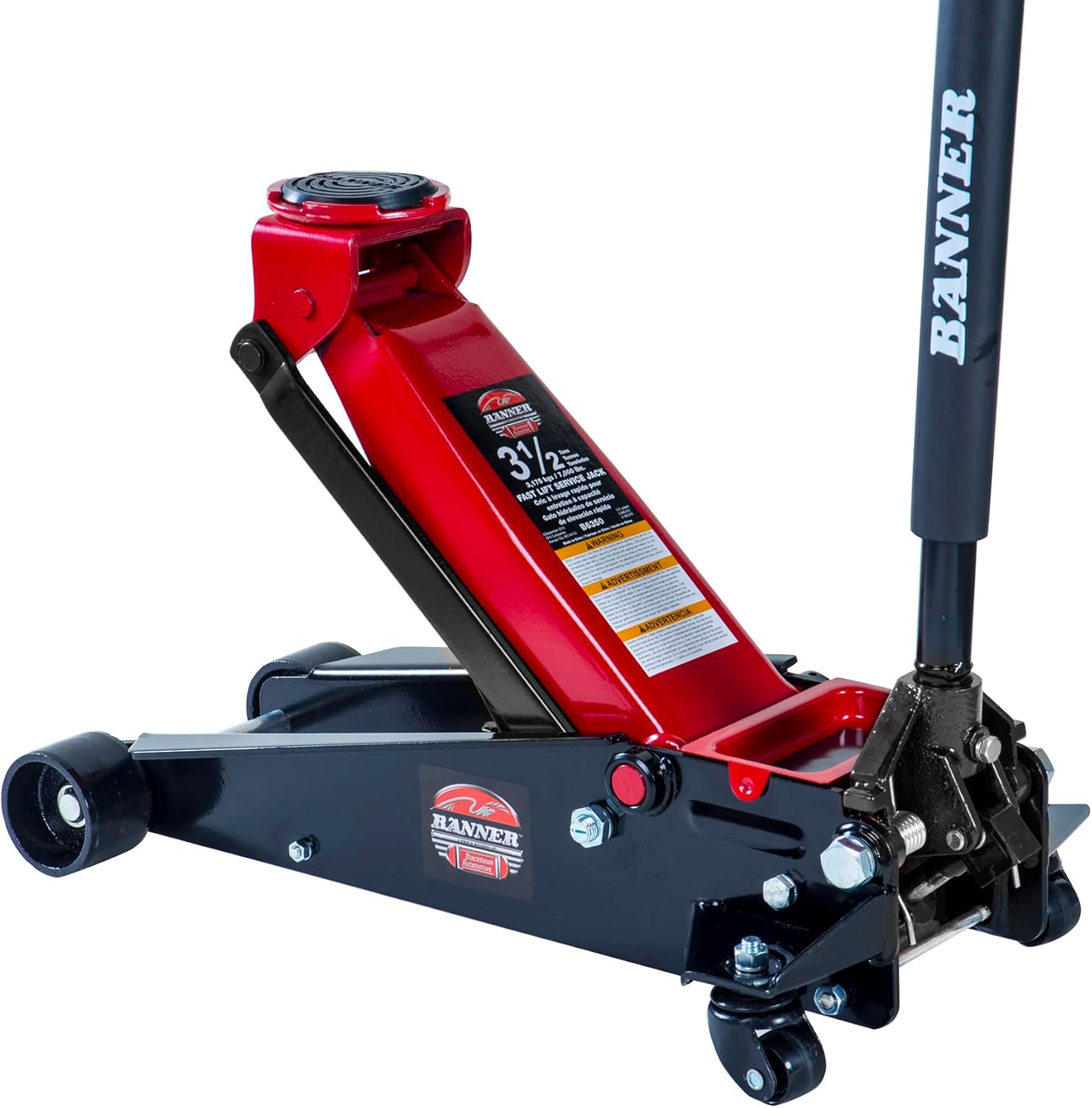
Work on a flat surface and make sure the vehicle cannot roll. If you need to go underneath, use wheel chocks, lift the vehicle at approved lift points, and support it securely with jack stands. Never rely on a jack alone.
If the vehicle has been driven recently, let the exhaust and driveline cool down. On some vehicles, the center support area sits close to the exhaust pipe or catalytic converter.
- Park on level ground.
- Chock the wheels.
- Use jack stands before inspecting underneath.
- Wear eye protection because dirt and rust often fall from the underbody.
Tools That Make This Job Easier


Road Test Clues That Point to the Bearing
Pay Attention to Where the Vibration Is Felt
A center support bearing problem usually feels like it is coming from the middle or rear of the vehicle. If the steering wheel shakes, front tires, wheel balance, or front suspension issues become more likely. If the seat and floor vibrate more than the steering wheel, driveline causes move higher on the list.
Notice Whether It Changes with Throttle
During a safe road test, note whether the vibration gets worse on acceleration, improves while coasting, or changes when you lightly lift off the throttle. A bad center support bearing often reacts to load changes because the driveshaft tries to shift position.
Compare Road Speed to Engine Speed
If the noise or vibration follows vehicle speed regardless of the transmission gear, it points more toward the driveline, wheel ends, or tires. If it changes mainly with engine RPM while stationary or in neutral, the center support bearing is unlikely to be the cause.
Listen During Takeoff and Gear Changes
A dull clunk or bang under the floor when taking off can happen when the support mount is torn enough to let the shaft shift. Still, confirm with an under-vehicle inspection, because worn U-joints and mounts can sound very similar.
How to Inspect the Center Support Bearing
Once the vehicle is safely raised and supported, locate the driveshaft. On a two-piece setup, the center support bearing sits roughly mid-vehicle where the front and rear sections of the shaft meet.
Check the Rubber Support Mount First
Use a flashlight and inspect the rubber that surrounds the bearing bracket. Look for cracks, splitting, sagging, separation from the metal bracket, or signs that the bearing is no longer centered in the mount. If the rubber is torn badly enough that the shaft hangs low or sits off-center, the support is very likely bad.
Look for Witness Marks
Search for shiny spots, polished metal, or fresh scraping marks near the bracket, exhaust, heat shields, or underbody. These marks can show that the shaft has been moving excessively and contacting nearby components.
Test for Excessive Movement
Grab the driveshaft near the center support and try moving it up, down, and side to side. There should not be large free movement at the support point. A small amount of compliance from the rubber mount can be normal, but obvious slop, sagging, or knocking is not.
You can also use a pry bar carefully to apply light pressure near the support mount. Do not force the shaft hard enough to damage anything. The goal is to see whether the rubber support is separated or the bearing feels loose in the mount.
Spin and Listen if Access Allows
With the vehicle safely secured and the engine off, rotate the driveshaft by hand if possible. A rough, gritty feel or noise from the bearing area can indicate bearing wear. On many vehicles, hand feel alone will not be conclusive, but it can support other evidence.
- Torn or sagging rubber mount strongly suggests support failure.
- The driveshaft should not droop noticeably at the center support.
- Grinding, roughness, or obvious play near the bearing adds confidence to the diagnosis.
How to Tell It Apart From Similar Problems
Bad U-joints
Worn U-joints can also cause clunks, vibration, and takeoff shudder. Inspect each U-joint for rust dust around the bearing caps, binding, looseness, or rough movement. If a U-joint has clear play, do not blame the center support bearing alone.
Wheel or Tire Problems
Out-of-balance tires usually cause speed-related vibration too, but they often show up in the steering wheel or remain fairly consistent whether you are on or off the throttle. Uneven tire wear, bent wheels, or recently lost wheel weights can point away from the center support bearing.
Pinion Angle or Suspension Issues
Lift kits, lowered suspension, worn leaf spring bushings, bad trailing arm bushings, or failed transmission mounts can alter driveline angles and create similar vibration. If the support bearing looks acceptable but the angles seem off or the vehicle was recently modified, broaden the diagnosis.
Differential or Wheel Bearing Noise
A differential whine often changes on acceleration versus deceleration and may sound more gear-like than a support bearing rumble. Wheel bearing noise often changes when steering slightly left or right on the road. The center support bearing usually stays tied closely to driveline rotation and underbody vibration.
Recommended Tools for This Job


Signs the Bearing Is Bad Enough to Replace
You are usually justified in replacing the center support bearing assembly when several clues point to it at the same time. One mild symptom by itself is not enough, but a pattern of vibration plus visible support damage is a strong indicator.
- The rubber support is cracked, torn, separated, or obviously sagging.
- The driveshaft moves excessively at the support point.
- You feel floor vibration that matches road speed and gets worse under load.
- There are witness marks showing the shaft has been moving out of position.
- Other common causes such as bad U-joints or tire issues have been ruled out.
When the Problem Might Not Be the Center Support Bearing
Do not jump straight to the center support bearing if the vehicle has only a one-piece driveshaft, because those systems do not use this part. Also be cautious if the only symptom is a high-speed vibration after recent tire work or after a driveshaft was removed and reinstalled.
A driveshaft installed out of phase, missing balance weights, bent tubing, or incorrect reassembly marks can all create similar symptoms. If the shaft was recently serviced, inspect alignment marks and hardware torque before replacing parts.
On higher-mileage vehicles, multiple driveline issues can exist at once. It is not unusual to find a worn center support bearing and worn U-joints together.
What to Do Next If You Confirm the Failure
If inspection confirms the support bearing is failing, plan the repair before the vibration gets worse. Continued driving can stress U-joints, transmission output components, and differential bearings. Severe movement can also damage nearby exhaust or underbody parts.
Mark the Driveshaft Before Removal
If you proceed with replacement, use a paint marker to mark the relationship between the driveshaft sections and flanges before disassembly. This helps preserve orientation and balance.
Check Related Parts While You’re There
Inspect the U-joints, carrier bracket, transmission mount, and rear differential mount or bushings during the repair. Replacing only the support bearing while ignoring another worn component can leave you with the same vibration afterward.
Know when to Outsource the Job
Some center support bearings can be replaced with normal hand tools plus a press or bearing puller setup, but others are better handled by a driveline shop. If the shaft needs pressing, balancing, or precise phasing and you do not have the equipment, professional service is often the smarter move.
Key Takeaways
- A bad center support bearing usually causes floor or seat vibration, underbody rumble, or clunking that follows vehicle speed and often changes with throttle.
- Visible rubber mount tearing, support sagging, and excessive driveshaft movement are the strongest at-home confirmation signs.
- Always rule out worn U-joints, tire balance issues, and driveline angle problems before replacing the center support bearing.
- If the shaft has been removed before, verify alignment marks and installation quality so you do not mistake a setup problem for a bad bearing.
- Do not ignore a confirmed failure, because continued driving can damage nearby driveline parts and make the repair more expensive.
FAQ
Can I Drive with a Bad Driveshaft Center Support Bearing?
Maybe for a short distance, but it is not a good idea to keep driving once symptoms are clear. A failing support can let the driveshaft move excessively, which can damage U-joints, mounts, exhaust components, and other driveline parts.
What Does a Bad Center Support Bearing Sound Like?
It can sound like a humming, rumbling, growling, or rhythmic thump from under the middle of the vehicle. Some vehicles also develop a clunk when shifting into drive or reverse.
Will a Bad Center Support Bearing Cause Vibration at Highway Speed?
Yes. Highway-speed vibration is one of the most common complaints, especially when the vibration is felt through the floor or seat and gets worse under acceleration.
How Do I Know if It’s the Center Support Bearing or a U-joint?
Inspect both. A torn support mount or sagging bearing points toward the center support, while a U-joint with visible play, rust dust, binding, or looseness points toward the joint. It is also possible for both to be worn at the same time.
Does Every Vehicle Have a Center Support Bearing?
No. It is typically used on vehicles with a two-piece driveshaft. A vehicle with a one-piece driveshaft will not have this part.
Can Bad Tires Feel Like a Bad Center Support Bearing?
Yes. Tire balance or wheel issues can mimic driveline vibration. A tire-related vibration is often felt more in the steering wheel and may not change much with throttle input, while center support problems often react more to load.
Should I Replace Just the Bearing or the Whole Assembly?
That depends on the vehicle design. Some use a serviceable bearing and mount, while others are best repaired with a complete assembly or by a driveline shop. Always compare parts availability, labor difficulty, and whether the shaft will need pressing or balancing.
Need Parts for This Repair?
The right parts and supplies vary by vehicle.
Select your make and model to find compatible parts and accessories for your car.
Exact Fit
Parts that fit your make and model
Quality You Can Trust
Top brands and OEM quality options
Fast Shipping
Get the parts you need, delivered fast