

Note: This article contains affiliate links. If you click on these links and make a purchase, I may earn a small commission at no extra cost to you. This helps support my research and content. Read my full affiliate disclosure here.
Good lighting changes everything during DIY auto repair. Whether you are tracing a leak, checking brake hardware, or working deep in an engine bay, the right mechanic light helps you see clearly, work faster, and avoid missing small details. A weak beam, short runtime, or awkward shape can turn a simple job into a frustrating one.This guide is built for garage users who need dependable work lights and flashlights for real repair tasks. The picks that follow cover different styles and use cases, but before you decide, it helps to understand how beam pattern, mounting options, durability, and charging setup affect day to day usability.
Top Picks at a Glance
| Best Overall Flashlight for DIY Mechanics A versatile, reliable light balancing brightness, battery life, and durability | DEWALT 20V MAX LED Work Light/Flashlight (DCL040) |  |
| Best Budget Flashlight for DIY Mechanics Affordable, dependable illumination for basic garage and occasional repairs | WORKPRO LED Pen Light 4-Pack, Aluminum Pen Flashlights with Clip (2 AAA Included) |  |
| Best Compact Flashlight Pocketable, narrow-beam design for tight spaces and quick inspections | CARELITE Magnetic Pocket Work Light — 780 Lumen Rechargeable LED |  |
| Best Rechargeable Flashlight Built-in rechargeable system for frequent use and cordless convenience | DEWALT 20V MAX Handheld LED Work Light (DCL050) |  |
| Best High-Lumen Flashlight High-output beam and long throw to light large dark areas | Zetunlo 21000 Lumen 3-Head LED Tripod Work Light |  |
| Best Heavy-Duty Flashlight Durable, impact- and weather-resistant construction for tough shop conditions | DEWALT 20V MAX LED Handheld Spotlight (DCL043) |  |
| Best Premium Flashlight Top-tier build quality, advanced features, and long-term reliability | OLIGHT ArkPro Ultra Rechargeable EDC Flat Flashlight with White, UV and Green Beams |  |
DEWALT 20V MAX LED Work Light/Flashlight (DCL040)
Best Overall Flashlight for DIY Mechanics
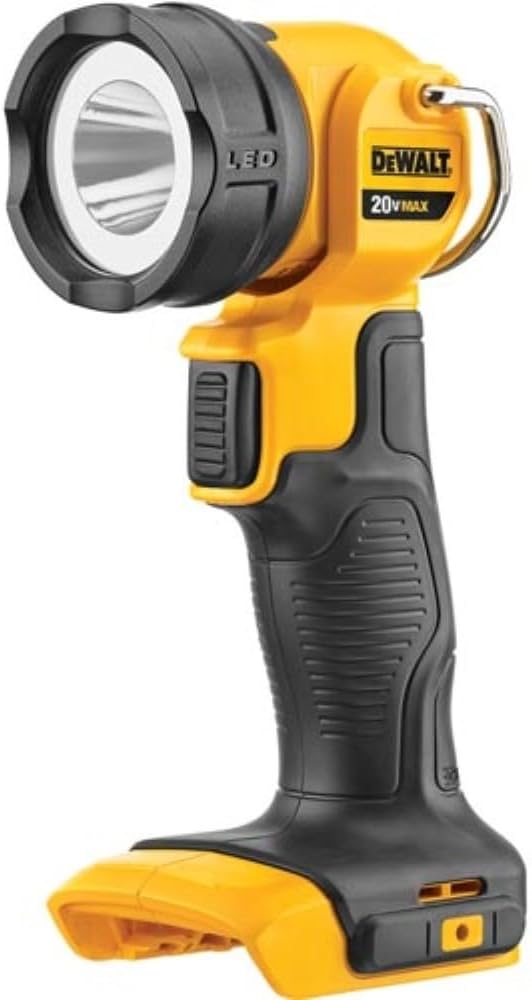
| Light Source Type | LED |
|---|---|
| White Brightness | 110 Lumens |
| Beam Angle | 120 Degrees |
| Battery Type | Lithium Ion |
| Mounting Type | Hook |
The DEWALT DCL040 is a compact, battery-powered LED work light designed for hands-on auto repair and shop tasks. It produces about 110 lumens from a single LED with a 120 degree rotating head, so it lights a wide area for engine bays, underbody work, or interior jobs. The built-in hook and durable plastic housing let you hang or position the light for hands-free use, while the low-heat LED keeps it comfortable during extended sessions. Run time varies with the battery but is long enough for typical DIY jobs, and the light includes a visual LED bar graph for quick battery-voltage checks. It is not water resistant and it ships without battery or charger, so you will need a compatible 20V MAX battery to use it. The rectangular shape concentrates light across a broad beam rather than a tight spotlight, which is better for general work but not ideal when you need a focused long-throw beam. For routine home mechanic tasks it is a practical, durable assistant if you already have or plan to buy DEWALT 20V batteries.
Best for: DIY mechanics and home garage enthusiasts who need a reliable, hands‑free work light that strikes a balance between bright, focused illumination and long battery runtime for routine repairs and inspections.
Less Ideal for: Users who frequently work in wet outdoor conditions or need a long-throw spotlight for distance illumination should look for a weatherproof or high-lumen spotlight instead.
- Wide 120° beam and 110 lumens provide broad, usable illumination for engine bays and work areas.
- Integral hook and rotating head enable hands-free placement and flexible aiming.
- Low-heat LED and efficient design extend runtime for longer repair sessions.
- Visual LED bar graph offers a quick check of battery voltage.
- Not water resistant so it is vulnerable to wet conditions in the garage or outdoors.
- Battery and charger are not included, requiring purchase of a compatible 20V MAX battery.
- Beam is broad rather than a focused long-throw spotlight, limiting distance illumination.
Verdict: The best all-around flashlight that balances brightness, battery life, durability, and practical features for general automotive repair and garage work.
WORKPRO LED Pen Light 4-Pack, Aluminum Pen Flashlights with Clip (2 AAA Included)
Best Budget Flashlight for DIY Mechanics

| Power Source | Battery Powered |
|---|---|
| Light Source Type | LED |
| Number of Batteries | 2 AAA (included) |
| Water Resistance Level | Water Resistant |
| Material Type | Aluminum |
These WORKPRO pen lights are small, clip-on LED flashlights intended for inspection and quick tasks around the garage. Each pen-style light uses two AAA alkaline batteries (included) and delivers a focused beam for up to about two hours of continuous runtime, making them handy for checking tight engine bays, under dash areas, and quick roadside inspections. The anodized aluminum body feels durable for a budget lamp and the spring clip keeps the light secured to a pocket or tool bag while you work. The rubberized tail switch reduces accidental activation and the single-LED design is simple and reliable. Limitations are obvious: runtime is short compared with rechargeable work lights, output is modest so these are best for close-range illumination rather than lighting a whole garage, and there are no multiple modes or hands-free mounting besides the clip. For DIY mechanics who need inexpensive, portable inspection lights for brief tasks, these offer straightforward value; for longer jobs or brighter area lighting look to larger rechargeable options.
Best for: Budget-minded DIYers and home mechanics who need a simple, pocketable inspection light for occasional under-hood work, quick checks in tight spaces, or emergency use where reliable basic illumination and durability matter more than high output or long runtimes.
Less Ideal for: Users who need long runtimes, very bright flood lighting, or hands-free area illumination for extended shop work should consider larger rechargeable work lights instead.
- Durable anodized aluminum body suited to workshop use
- Pocket clip for secure, hands-free carry on pockets or belts
- Includes batteries so lights are ready to use out of the box
- Compact, pen-style form ideal for reaching tight spaces
- Short runtime of about two hours per set of batteries
- Single LED with limited overall brightness and no multiple output modes
Verdict: The best low-cost flashlight that provides reliable illumination and basic durability for occasional DIY auto tasks without breaking the bank.
CARELITE Magnetic Pocket Work Light — 780 Lumen Rechargeable LED
Best Compact Flashlight

| Light Output Maximum | 780 Lumens |
|---|---|
| Battery Description | Lithium-Ion Polymer |
| Voltage | 3.7 Volts |
| Beam Angle | 110 Degrees |
| Protection | IP65, IK07 |
This CARELITE pocket work light is a small, rechargeable LED designed for hands-free jobs around the car or shop. It delivers up to 780 lumens across three brightness modes (190/390/780 lm) and the 360° pivoting head plus strong magnetic base make it easy to aim and mount on metal surfaces or a tripod. The built-in 3000mAh Li‑Po battery charges via USB‑C in about three hours and offers several hours of runtime depending on selected brightness. The housing meets IP65 and IK07 ratings for dust, water spray, and moderate impact, so it stands up to garage and roadside use. Practical extras include a battery status indicator and a low‑battery flashing warning before shutdown. The light is pocketable and rugged, but it is a single flood LED so it lacks a focused spotlight option and the highest output is brief compared with larger, multi‑LED mechanic lights. If you need a small, durable, magnet-mountable work light for inspections and repairs, this is a convenient choice; for extended high-output illumination consider larger dual-head models.
Best for: DIYers and mechanics who need a truly pocketable inspection light for tight engine bays, toolboxes, and quick roadside checks, prioritizing maneuverability, magnetic hands-free mounting, and adjustable brightness for short to medium-duration tasks.
Less Ideal for: Professionals who regularly need long-duration high-output illumination or a dedicated spotlight should consider larger dual-head or higher-capacity work lights.
- Compact and lightweight for easy pocket or toolbox carry
- Strong magnetic base and 360° pivoting head for flexible hands-free positioning
- Up to 780 lumens with three selectable brightness levels for variable tasks
- USB-C rechargeable 3000mAh battery with fast ~3 hour charge and runtime indication
- IP65 and IK07 ratings for dust, water spray, and impact resistance
- Single flood LED design lacks a focused spotlight or dual-beam option
- Highest output drains battery faster than lower modes
Verdict: A small, pocketable flashlight that offers focused light and easy maneuverability for tight engine bays, toolboxes, and quick inspections.
DEWALT 20V MAX Handheld LED Work Light (DCL050)
Best Rechargeable Flashlight

| White Brightness | 1000 Lumens |
|---|---|
| Power Source | Battery Powered |
| Battery Type | Lithium Ion |
| Beam Angle | 140 Degrees |
| Runtime | 3 hours |
The DEWALT 20V MAX Handheld LED Work Light (DCL050) provides a portable, battery-powered light source for workshops and repair bays. It delivers up to 1000 lumens from three LEDs with multiple brightness settings and a 140 degree pivoting head so you can aim light where you need it while working under a car or around tight engine bays. The built-in telescoping, 360 degree rotating hook and optional belt hook accessory let you hang or position the lamp hands-free, and the over-molded lens cover helps protect the lens on rough jobsite surfaces. Runtime is about three hours on a charged 20V battery, and the unit is water resistant for use in damp garages. The lamp is sold as a bare tool so you will need a compatible 20V battery and charger, which adds to total cost but lets owners use existing DEWALT 20V batteries. Expect a durable, work-focused light that is easy to reposition but plan for limited runtime compared with corded shop lights and the extra expense if you do not already own the battery platform.
Best for: Someone who wants a durable, rechargeable work light for regular garage and DIY auto tasks—ideal for mechanics who need bright, hands-free illumination and a portable battery-powered lamp they can hang or pivot around the vehicle.
Less Ideal for: If you need uninterrupted all-night illumination or do not own compatible 20V batteries, choose a corded shop light or a kit that includes a high-capacity battery and charger instead.
- High peak brightness up to 1000 lumens for clear illumination of work areas
- Pivoting 140 degree head for precise aiming in confined spaces
- Telescoping 360 degree rotating hook and hanging options for hands-free positioning
- Durable over-molded lens cover and water resistant rating for jobsite durability
- Sold as bare tool so battery and charger are not included
- Runtime (~3 hours) is limited compared with corded or larger battery lights
Verdict: A flashlight with an integrated or included rechargeable battery system designed for frequent use and economical, cord-free operation in the garage.
Zetunlo 21000 Lumen 3-Head LED Tripod Work Light
Best High-Lumen Flashlight

| Wattage | 210 watts |
|---|---|
| Color Temperature | 6500 Kelvin |
| Number of Light Sources | 216 |
| Mounting Type | Tripod |
| Ingress Protection | IP66 |
The Zetunlo 21000 Lumen 3-Head LED Tripod Work Light is a corded, high-output lighting solution designed for workshop and job site tasks. It mounts to an adjustable tripod and separates into three heads that each swivel 360 degrees and tilt 180 degrees, letting you aim bright, 6500K light exactly where you need it. Individual on/off switches let you run one, two, or all three heads to balance brightness and power draw. The die-cast aluminum housings and tempered glass lenses improve heat dissipation and weather resistance, while the IP66 rating and a 16-foot power cord make it usable outdoors in damp conditions and easier to position without extension cords. For DIY auto repair it delivers broad, shadow-reducing illumination for under-hood work, wheel wells, and garage bays. Downsides are that it is corded only so it needs an outlet and the light heads produce a cool, clinical color temperature that some users may find harsh for close detail work.
Best for: A DIY mechanic or homeowner who needs an extremely bright, tripod-mounted work light to flood large areas—like driveways, undercarriages, and garage bays—while working on repairs and wants durable, weather-resistant lighting that stays steady and adjustable.
Less Ideal for: Users needing battery-powered, highly portable lighting for remote or off-grid work should look at cordless options instead.
- Very bright 21000 lumen output suitable for lighting garage bays and engine compartments
- Three independently adjustable heads allow targeted illumination and reduced shadows
- IP66 rating and tempered glass make it usable in wet or dusty job site conditions
- Long 16 ft power cord and adjustable tripod improve placement flexibility
- Corded design requires access to AC power and limits portability
- 6500K color temperature is cool and can feel harsh for some close-up tasks
Verdict: A flashlight that prioritizes maximum brightness and beam distance for illuminating large dark areas like undercarriages and driveways during repairs.
DEWALT 20V MAX LED Handheld Spotlight (DCL043)
Best Heavy-Duty Flashlight

| Lumens | 1500 |
|---|---|
| Power | 20V battery (sold separately) |
| Head pivot | 90-degree |
| Beam distance | Visible up to 508 yards |
The DEWALT 20V MAX LED handheld spotlight is a rugged, cordless light intended for demanding workshop and jobsite tasks. It delivers up to 1500 lumens from four LEDs with two brightness settings for either maximum output or extended runtime. The head pivots 90 degrees so you can direct the beam while standing the light on its base or hang it using the integrated hook or belt clip for hands-free work. The lens is over-molded to resist scuffs and the overall build is geared to tolerate rough handling. Because it runs on DEWALT 20V batteries (battery not included) the runtime depends on battery capacity, and without a battery this is just the bare tool. The long-range beam is visible up to roughly 508 yards, which is useful for spotting and directional illumination but less relevant for close-in engine-bay work where a broader flood would be preferred. For DIY auto repair it functions well as a powerful, portable spotlight and a sturdy hands-free light when positioned or hung, though you will need a compatible battery to make it work and manage runtime for long sessions.
Best for: Serious DIY mechanics and heavy-duty home garage users who need a rugged, portable work light that survives drops, grease, and frequent shop use while providing bright, hands-free illumination for detailed repairs and inspections.
Less Ideal for: Those needing a broad, even flood light for close-up engine bay illumination or buyers who want a ready-to-use light without purchasing a separate battery.
- High peak output up to 1500 lumens for bright, focused illumination
- Pivoting 90-degree head plus integrated hook and belt clip enable hands-free placement
- Two brightness modes balance between max output and extended runtime
- Durable over-molded lens cover resists scuffs and jobsite wear
- Battery not included so a compatible 20V battery is required to operate
- Beam is focused and long-throw which may not evenly illuminate wide, close work areas
Verdict: A rugged, impact- and weather-resistant flashlight built to withstand drops, grease, and regular shop use for serious DIY mechanics.
OLIGHT ArkPro Ultra Rechargeable EDC Flat Flashlight with White, UV and Green Beams
Best Premium Flashlight
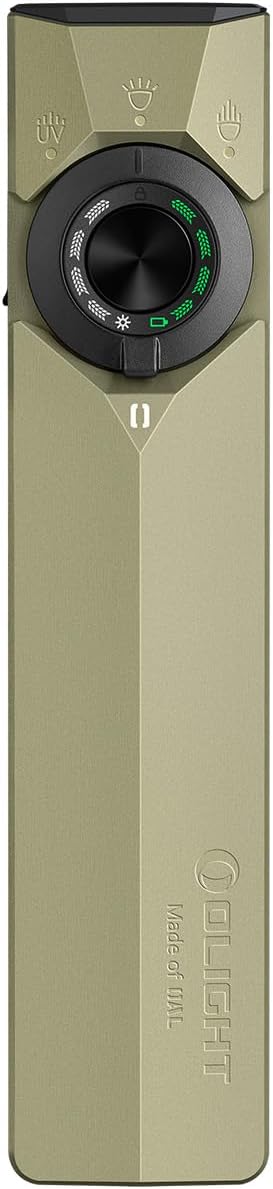
| Light Source Type | White LED, Green Beam, UV |
|---|---|
| White Brightness | 1700 Lumens |
| Battery Type | Lithium Polymer |
| Water Resistance Level | Waterproof |
| Runtime | 14 minutes |
The ArkPro Ultra is a pocket-friendly, rechargeable EDC light built for hands-on tasks and field work. It delivers a 1700-lumen pure flood for close-up area lighting plus an 800-lumen spotlight for distance, while separate UV and low-power green beams add inspection and pointing functions useful for diagnostics and marking. The flat rectangular body includes a magnetic base and dual clip for hands-free mounting on metal surfaces or clothing, and a USB-C or magnetic MCC charge option keeps it ready on the go. Practical touches include lockout to prevent accidental activation and color-coded indicators for brightness and battery level. Expect very bright, evenly distributed flood light for engine bays and under-hood work, with the spotlight useful for roadside checks; however the highest output runs down quickly and the runtime at turbo is limited compared with lower modes. The premium alloy housing is durable but the slim flat profile may feel different in heavy-glove use compared with a traditional tubular flashlight.
Best for: Technically minded DIYers and professional technicians who need a premium, durable EDC flashlight for automotive work, inspection, and hands‑free tasks and who prioritize build quality, versatile beam options, and advanced features over entry-level cost.
Less Ideal for: Users needing very long continuous high-output runtime or those who prefer a traditional cylindrical tactical grip for gloved heavy-duty work should consider other form factors.
- Multiple light sources in one unit: flood, spotlight, UV, and green beam for inspection and pointing.
- Magnetic base and dual clip enable stable hands-free mounting on metal and clothing.
- Rechargeable with USB-C and magnetic charging options plus color-coded battery/brightness indicators.
- Durable O-aluminum body with IPX7 waterproof rating for workshop and outdoor use.
- Maximum 1700-lumen turbo has very short runtime limiting prolonged high-output use.
- Flat rectangular shape may be less comfortable to grip with thick work gloves.
Verdict: A top-tier flashlight that commands a higher price for superior materials, advanced features, exceptional performance, and longer lifespan.
How We Chose the Best Mechanic Light
We focused on mechanic light options that make sense for DIY auto repair rather than general household use. For this category, the most important filters were usable brightness at close range, beam control for both wide area lighting and focused inspection, battery runtime through a typical repair session, and mounting flexibility. Magnetic bases, hooks, stable standing positions, and slim shapes for tight spaces all mattered because garage work often requires both hands.We also looked closely at durability features that matter around vehicles, including resistance to oil, grime, drops, and occasional moisture. Recharge convenience was another key factor, especially for lights that may live in a toolbox, glove box, or shop drawer between jobs. Size and weight were considered in relation to the task, since underhood lighting needs differ from quick inspection or roadside use.We excluded lights that were overly bulky for common DIY work, lacked practical mounting options, had limited runtime for garage tasks, or used beam patterns that created glare instead of useful visibility.
Our full evaluation process is outlined in our review methodology.
Choose the Right Light Style for the Job
Not every repair calls for the same kind of light. A compact flashlight is useful for quick inspections, checking fluid levels, or keeping in the car for emergencies. A slim inspection light works better when you need to reach behind hoses, around suspension parts, or into narrow cavities where a larger body gets in the way. For longer jobs, a broader work light can illuminate more of the engine bay or wheel well and reduce the need to constantly reposition the beam.
Different shapes also change how tiring a light is to use. Handheld flashlights are simple and versatile, but they tie up one hand unless you can tail stand or attach them magnetically. Panel style work lights spread light across a wider area, which helps with repetitive tasks like brake work, belt replacement, and interior repairs. If you frequently work under the hood, a light that can mount securely and flood a larger workspace may be more useful than a narrow beam flashlight.
- Flashlight for quick checks and emergency use
- Inspection light for narrow spaces and close detail work
- Work light for broad coverage during longer repairs
- Mounted light for hands free engine bay or undercar tasks
Beam Pattern Matters More Than Raw Brightness
Many buyers focus first on lumen output, but beam pattern often matters more in a garage. A very bright light with a tight hotspot can create harsh reflections on painted surfaces, chrome, or wet components, making it harder to see the exact area you are trying to inspect. For close range repair work, an even flood beam is often more useful because it lights the task area without blowing out details.
That does not mean a focused beam is unimportant. A narrower beam helps when you need to look deeper into an engine compartment, search behind a wheel liner, or inspect the underside of a vehicle from a distance. The best approach depends on how you work. Some users want one versatile mechanic light that balances flood and throw, while others benefit from keeping a wider work light and a smaller focused flashlight available for different steps of the job.
- Flood beams reduce glare and light a wider work area
- Focused beams help with deep inspection and longer reach
- Balanced beams are useful if you want one all around light
Runtime, Charging, and Power Planning
Battery performance becomes a real issue once repairs stretch beyond a quick inspection. A light that looks great on paper can become annoying if it fades too quickly on the settings you actually use. For DIY auto repair, think about your normal job length. Brake work, suspension repairs, and electrical troubleshooting can take much longer than a simple fluid check, so a dependable medium setting is often more valuable than a very short lived high mode.
Rechargeable lights are convenient for regular garage use, especially if you top them off after each project. They reduce battery waste and are easy to keep ready near a tool chest or bench. Still, charging setup matters. A common charging cable is easier to live with than a specialized one, and battery level indicators help prevent surprises in the middle of a repair. If you want a light for both the garage and the vehicle, consider how long it can sit unused without leaving you with a dead battery when you need it most.
- Prioritize useful runtime on medium output, not just maximum brightness
- Battery indicators help avoid downtime during longer repairs
- Simple charging is easier for lights kept in garage rotation
- For emergency storage, low self discharge matters
Hands Free Features That Improve Real World Usability
A mechanic light becomes far more useful when it can stay exactly where you need it without being held. Magnetic bases are especially practical around steel body panels, suspension components, and lift posts, but magnet strength and placement matter. A weak magnet or awkward base can cause the light to slip as soon as you angle it. Hooks, pivoting heads, and stable flat bases also add value because they let you adapt to the space instead of fighting it.
For DIY repair, flexibility often matters more than novelty features. A simple light that can stand, hang, and mount securely is usually more useful than one with extra modes you never use. Consider the jobs you do most often. If you are frequently underneath a vehicle, secure placement and angle adjustment are critical. If you mainly inspect engines and interiors, a slim body with multiple mounting options may save more time than a larger light with higher output.
- Magnetic mounting is useful for steel surfaces and quick setup
- Hooks help in engine bays, trunks, and interior work
- Pivoting heads make it easier to aim without repositioning the base
- Slim bodies fit where larger work lights cannot
Durability for Oil, Drops, and Garage Abuse
Garage lights do not live an easy life. They get set on concrete, knocked off crossmembers, smeared with grease, and used around coolant, brake dust, and road grime. That is why durability should be part of your buying decision, not an afterthought. A light for DIY auto repair should feel solid enough to handle regular drops and have a lens and housing that do not seem fragile after a few weekends of use.
Weather resistance also matters even if you mostly work indoors. Rain during roadside repairs, splashes while washing parts, or damp garage floors can all expose a light to moisture. Good sealing is helpful, but so is a shape that stays put and controls heat during longer use. A light that gets too hot to handle or becomes slippery with oily hands is less practical than one with modest output and better overall usability.
- Look for solid housing and impact resistance
- Grip texture helps when hands are dirty or oily
- Moisture resistance adds safety during outdoor or roadside use
- Stable shapes reduce rolling and accidental drops
When a Flashlight Beats a Work Light
A dedicated work light is great for broad illumination, but there are plenty of times when a flashlight is still the better tool. If you need to inspect a belt path, read a casting mark, follow a wire loom, or look through a narrow opening, a focused handheld beam gives you more control. Flashlights are also easier to stash in a door pocket, glove box, or smaller toolbox, which makes them better for emergency use away from the garage.
For many DIY users, the smartest setup is not choosing one style over the other. It is pairing a wider mechanic light for hands free repair with a compact flashlight for pinpoint inspection and backup duty. That combination covers most vehicle tasks without forcing one tool to do everything. If you only plan to buy one light, think carefully about whether your jobs lean more toward broad workspace lighting or short, precise inspections.
- Flashlights excel at directed inspection and portable emergency use
- Work lights are better for longer jobs that need both hands
- A two light setup covers the widest range of repair tasks
What DIY Mechanics Often Overlook
Small details can make a big difference after a few months of use. Switch placement matters when you are wearing gloves or trying to turn the light on with one hand. Mode memory can be helpful if you always return to the same setting, but annoying if it forces you through extra brightness levels every time. Color tone also affects visibility. A beam that is too cool can create harsh reflections, while a more neutral output may show wiring colors, leaks, and surface detail more clearly.
Storage is another overlooked factor. If a light is too bulky, awkward to charge, or hard to keep accessible, you may stop using it even if the performance is good. Think about where it will live between jobs. A light that fits your routine and workspace is more likely to stay charged, stay clean, and be ready when you need it.
- Check switch access with gloves or dirty hands
- Consider whether mode cycling is simple or annoying
- Think about beam color for detail work
- Choose a size that fits where you will actually store it
FAQ
What type of mechanic light is best for most DIY auto repair?
For most home garage users, a wider work light handles the biggest share of repair tasks because it lights the area and leaves both hands free. A compact flashlight is still useful for quick checks and deeper inspection. If you do a mix of jobs, having one of each is often the most practical approach.
How bright should a mechanic light be for engine bay work?
You usually do not need the highest possible output. For close range engine bay work, a controlled flood beam with usable medium brightness is often more effective than an extremely intense hotspot. The goal is clear visibility without harsh glare bouncing off metal, plastic, or painted surfaces.
Are rechargeable lights better than battery powered ones for garage use?
For regular DIY repairs, rechargeable lights are usually more convenient because they are easy to top off and avoid constant battery replacement. They work well if you have a routine place to charge them after use. Battery powered options can still make sense for backup or emergency storage if long shelf life matters most to you.
Do I need a magnetic base on a mechanic light?
Not always, but it is one of the most useful features for vehicle work. A magnetic base lets you place the light on steel surfaces and keep both hands free. If you often work around aluminum, plastic trim, or awkward mounting points, a hook or stable standing base is also important.
Is a flashlight enough for undercar work?
A flashlight can work for quick inspections, but it is usually less convenient for longer undercar tasks because one hand stays occupied. A work light with secure mounting or a broad beam is easier to live with when you need steady light for a longer repair. Many users keep a flashlight as a secondary light for spotting details.
What features matter most for a light kept in the car for roadside repairs?
Focus on dependable runtime, simple controls, compact size, and easy storage. A beam that balances area lighting with enough reach is helpful for tire changes, fluid checks, and general inspection. It is also smart to choose a light that can handle temperature swings and occasional moisture.
Final Verdict
The best mechanic light for DIY auto repair depends less on maximum output and more on how well the light matches your jobs. Beam pattern, runtime, mounting options, size, and durability all have a direct effect on how useful a light feels once you are actually working on a vehicle.If you mostly handle longer garage repairs, prioritize broad, hands free lighting and stable mounting. If you need something for inspections, tight spaces, and emergency carry, compactness and beam control matter more. Choose based on where and how you work most often, and you will end up with a light you use regularly and trust when visibility really counts.
