

Note: This article contains affiliate links. If you click on these links and make a purchase, I may earn a small commission at no extra cost to you. This helps support my research and content. Read my full affiliate disclosure here.
Jack stands are one of the most important safety tools in any home garage. When you need to work under a vehicle, the right pair helps provide stable support after lifting, while the wrong choice can limit access, fit poorly under your car or truck, or feel unsteady on the floor.For DIY mechanics, the best jack stands balance safe load support, practical lift range, ease of positioning, and a secure locking design. Your vehicle type, ride height, and the jobs you handle all affect what makes sense. The picks that follow are designed to help narrow the field, and this guide explains the key features and trade offs worth checking before you buy.
Top Picks at a Glance
| Best Overall Jack Stands for DIY Mechanics A versatile, dependable choice balancing stability, capacity, and everyday usability | Amazon Basics Steel Jack Stands, 3 Ton (Pair) |  |
| Best Budget Jack Stands for DIY Mechanics Affordable stands that maintain basic safety and acceptable occasional-use durability | BIG RED Torin 2-Ton Double-Locking Jack Stands (Pair) |  |
| Best Heavy-Duty Jack Stands Overbuilt stands with beefy construction for frequent heavy-load applications | BIG RED Torin 12-Ton Heavy Duty Pin-Type Jack Stands, Pair |  |
| Best Lightweight/Portable Jack Stands Compact, easy-to-carry stands optimized for transport and small storage spaces | Jack Boss 3-Ton Aluminum Jack Stands with Locking Support Pins, Pair |  |
| Best High-Capacity Jack Stands High-rated stands designed to support much heavier vehicles safely | VOWAGH 22-Ton Pin-Type Heavy Duty Jack Stands (pair) |  |
| Best Low-Profile Jack Stands Extra-low stands engineered to fit tight clearance under lowered cars | Jack Boss 2-Ton Low-Profile Jack Stands, 2-Pack |  |
| Best Premium Jack Stands Top-tier stands with superior materials, precision fit, and enhanced safety | OTC S06 6-Ton Ratcheting Jack Stands, Pair | 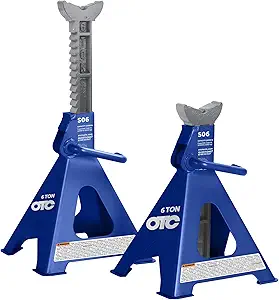 |
Amazon Basics Steel Jack Stands, 3 Ton (Pair)
Best Overall Jack Stands for DIY Mechanics

| Compatible with Vehicle Type | Car |
|---|---|
| Load Capacity | 3 tons ton |
| Maximum Lifting Height | 16.34 Inches |
| Material Type | Alloy Steel |
These Amazon Basics steel jack stands are a straightforward, budget-friendly pair designed to hold a vehicle safely off the ground for maintenance. Each stand is rated for 3 tons (6,000 lb) and uses a self-locking ratchet column that lets you raise or lower the stand quickly without a separate locking pin. The stamped alloy-steel frame and rust-resistant coating give them the durability expected for occasional to regular home use, and the wide saddle provides a stable contact point under factory lift points. They meet the ASME PASE-2014 safety standard, which is helpful for confidence during under-vehicle work. Practical benefits include easy height adjustment, clear capacity markings, and a compact footprint for tidy storage. Limitations are typical for entry-level stands: the ratchet mechanism can be noisier than a pin lock and may require periodic inspection for wear, and these stands are focused on cars and urban SUVs rather than heavy trucks. For routine DIY brake, suspension, and exhaust jobs they perform well, but professionals who need higher throughput or heavier-duty capacity might choose a commercial-grade alternative.
Best for: DIY mechanics and home enthusiasts who need a reliable, easy-to-use pair of jack stands for routine maintenance and repairs on cars and small SUVs, with an emphasis on solid load capacity and straightforward, tool-free height adjustment.
Less Ideal for: Shops or users who routinely work on heavy trucks, run high-volume commercial repairs, or require higher-capacity, professional-grade stands.
- 3 ton (6,000 lb) load capacity per pair suitable for most cars and urban SUVs
- Self-locking ratchet column allows quick, tool-free height adjustment
- Meets ASME PASE-2014 safety standard for portable automotive service equipment
- Durable alloy-steel construction with rust-resistant coating for garage use
- Ratcheting mechanism can be louder and may need occasional inspection compared with pinned designs
- Designed for cars and urban SUVs so not suitable for heavy trucks or commercial vehicles
Verdict: The all-around top pick that balances stability, load rating, build quality, ease of use, and value for typical DIY mechanic projects.
BIG RED Torin 2-Ton Double-Locking Jack Stands (Pair)
Best Budget Jack Stands for DIY Mechanics
| Load Capacity | 2 Ton |
|---|---|
| Maximum Lifting Height | 16.5 Inches |
| Compatible with Vehicle Type | Car, Sport Utility Vehicle |
| Material Type | Alloy Steel |
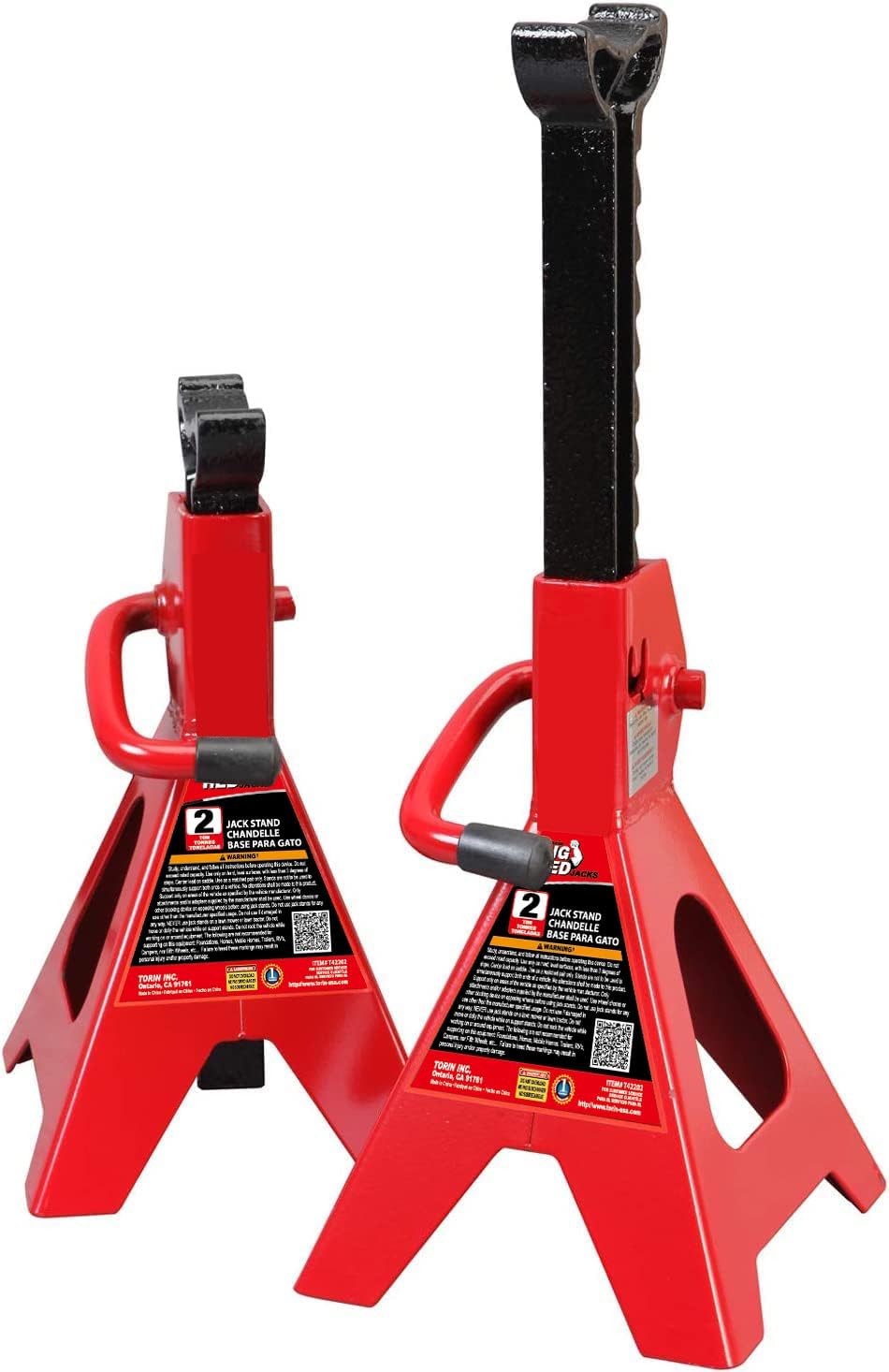
These BIG RED Torin jack stands are a straightforward, budget-oriented option for DIYers needing a reliable way to support a vehicle after it has been lifted. Each pair supports up to 2 tons and adjusts with a sawtooth ratchet bar that locks into multiple positions for quick height changes. The large concave saddle and wide pyramid base improve contact and stability when working under cars or small SUVs. Constructed from forged steel with a welded frame and a red protective coating, they are built for routine garage use rather than heavy commercial shops. Practical features include a dual-purpose handle for carrying and releasing the saddle and a height range that covers typical passenger-car lift points. Limitations are the 2-ton capacity and mid-level maximum height, which make them unsuitable for heavier trucks or very high lifts. They meet common safety standards but are best paired with proper lifting procedure and a quality jack. For weekend maintenance, they deliver sensible performance at an entry-level price point.
Best for: Home mechanics looking for an affordable, safety-minded pair of jack stands for occasional car and small-SUV maintenance who prioritize basic reliability and meeting safety standards over heavy-duty commercial use.
Less Ideal for: Shoppers who regularly work on heavy trucks, lifted SUVs, or need very low-profile stands should look for higher-capacity or specialized models instead.
- 2-ton (4,000 lb) rated capacity suitable for most passenger cars and light SUVs
- Sawtooth ratchet bar allows quick, multi-position height adjustment
- Large concave saddle and wide base improve contact and stability
- Welded forged-steel construction and powder coating for durable, everyday garage use
- 2-ton capacity and moderate height limit them to cars and light SUVs, not heavier trucks
- Not a low-profile design so may not fit very low vehicles
Verdict: The best low-cost jack stands that still meet essential safety standards, provide reliable support, and offer acceptable durability for occasional home-garage use.
BIG RED Torin 12-Ton Heavy Duty Pin-Type Jack Stands, Pair
Best Heavy-Duty Jack Stands

| Compatible with Vehicle Type | Car |
|---|---|
| Load Capacity | 12 ton |
| Maximum Lifting Height | 18.13 Inches |
| Material Type | Alloy Steel |
These BIG RED Torin jack stands are built for heavy lifting and steady support during maintenance. Sold as a pair, each stand uses a pinned ratchet column that adjusts between low and high positions so you can set the vehicle at the right working height and lock it in place. Thick welded alloy steel construction and a wide base improve stability under load, while the attached carrying handle and steel pin reduce the risk of losing parts between jobs. In practice they work well for lifting larger vehicles and for projects where a solid, long-term support is needed while you work under the chassis. The stands are portable enough to move around the shop but feel substantial when set. Limitations to note are the pin-style adjustment rather than dual-safety pawl mechanisms and a relatively heavy weight that makes them less convenient for frequent transport. These are best when you prioritize capacity and robustness for heavier vehicles and demanding DIY repairs.
Best for: DIY mechanics and professional home-shop users who need heavy-duty, high-capacity stands for working on larger vehicles or for frequent, demanding use and who prioritize strength and long-term durability over lightweight portability.
Less Ideal for: If you need a lightweight, road-ready pair for frequent transport or prefer a dual-locking pawl for redundant safety, consider other designs.
- Very high 12 ton load capacity suitable for heavy vehicles and demanding jobs
- Welded alloy steel construction and wide base for improved stability under load
- Pinned adjustable column with secured pin reduces chance of losing the locking pin
- Attached handle and durable finish make positioning and carrying easier
- Pin-style lock provides fewer redundant safety catches compared with dual-pawl designs
- Relatively heavy, making them less convenient to carry frequently
Verdict: Stands with higher load ratings and beefier construction intended for users who need extra strength and long-term durability for heavier vehicles or frequent use.
Jack Boss 3-Ton Aluminum Jack Stands with Locking Support Pins, Pair
Best Lightweight/Portable Jack Stands

| Material Type | Aluminum |
|---|---|
| Load Capacity | 6000 Pounds |
| Maximum Lifting Height | 15.6 Inches |
| Compatible with Vehicle Type | Car |
These Jack Boss jack stands are a lightweight aluminum pair rated for 3 tons (6,000 lbs) each and intended to keep a lifted vehicle stable while you work underneath. You set the height using the ratcheting saddle and secure it with the included locking support pin, which provides a definite mechanical lock rather than relying on friction alone. The wide non-slip base and multiple height positions make them useful for changing tires, brake service, and routine undercarriage maintenance in a home garage or a mobile job site. Aluminum construction keeps each stand easy to carry and move between jobs without heavy lifting, but it also means they are optimized for portability rather than the extreme durability of full steel stands. These stands are a practical option when you need dependable support and easier handling, though they require a flat, solid surface and correct placement to ensure safe use like any stand-based support system.
Best for: DIYers and mobile mechanics who need lightweight, easy-to-carry jack stands for routine maintenance and occasional repairs, prioritizing portability and simple setup over heavy shop-grade equipment.
Less Ideal for: Professional shops or users who frequently expose stands to heavy industrial use or repeated impacts should consider heavier steel stands or shop-rated supports instead.
- High 6000 lb load capacity suitable for many passenger vehicles and light trucks
- Lightweight aluminum construction for easier transport and handling
- Locking support pins provide a secure mechanical lock at set height
- Wide base design improves stability on typical garage floors
- Aluminum body may be less impact-resistant than heavier steel alternatives
- Requires a flat, solid surface and careful placement to ensure maximum stability
Verdict: Compact, lighter-weight stands that prioritize easy transport and storage while still delivering stable support for routine maintenance tasks.
VOWAGH 22-Ton Pin-Type Heavy Duty Jack Stands (pair)
Best High-Capacity Jack Stands

| Compatible with Vehicle Type | Truck |
|---|---|
| Load Capacity | 22 ton |
| Maximum Lifting Height | 19.75 Inches |
These VOWAGH 22-ton jack stands are built for heavy commercial use where high capacity and stability matter. Each stand is a pin-type design with multiple hole positions and a lanyarded height-adjustment pin so you can set and lock the support height between roughly 11.9 and 19.75 inches. The welded alloy-steel frame and wide four-leg base resist twisting and provide a broad footprint under heavy loads, while the large saddle with locating lugs helps position a truck frame or trailer axle securely. Typical use is in fleet garages, agricultural or construction settings and for DIY mechanics who work on heavy trucks and equipment and need reliable, high-capacity supports. Limitations are the stands' large size and weight, which reduce portability and make them less convenient for fast roadside tasks, and the pin-style adjustment is slower than ratcheting designs for frequent height changes. For lifting and long-term support of heavy vehicles these stands prioritize strength and stability over compactness and speed of adjustment.
Best for: DIY mechanics and small fleet operators who work on heavy trucks, trailers, or large SUVs and need exceptionally high-capacity, stable jack stands for lifting and staging heavyweight vehicles during maintenance and repairs.
Less Ideal for: If you need a lightweight, compact stand for quick roadside use or frequent height changes, these heavy-duty stands are not a good fit.
- Very high 22-ton load capacity suitable for heavy trucks and equipment
- Welded alloy-steel construction and wide four-leg base for strong, stable support
- Lanyarded pin with multiple holes provides secure, positive locking of height
- Large saddle with locating lugs helps position and hold the vehicle frame safely
- Heavy and bulky, making them harder to move or store compared with lighter stands
- Pin-type adjustment is slower to change height than ratchet-style stands
Verdict: Jack stands rated for significantly higher weight per pair, chosen for projects involving large trucks, SUVs, or vehicles with above-average curb weights.
Jack Boss 2-Ton Low-Profile Jack Stands, 2-Pack
Best Low-Profile Jack Stands

| Compatible with Vehicle Type | Car |
|---|---|
| Load Capacity | 2 Ton |
| Maximum Lifting Height | 15 Inches |
| Minimum Height | 10 Inches |
| Material Type | Alloy Steel |
These Jack Boss low-profile jack stands are built for routine DIY car maintenance where low lift clearance matters. Each stand is rated for 2 tons and uses a multi-position sawtooth ratchet bar with a hand-locking mechanism so you can set the height quickly and keep the vehicle supported while you work. The welded alloy-steel frame and wide pyramid base give a stable footprint and the concave saddle helps seat frame rails securely. Their 9.8 inch minimum height and 15 inch maximum height suit lowered cars and many sedans, and the red powder coat helps resist surface corrosion in a typical garage. Limitations are the 2-ton capacity and 15 inch top height, which mean these stands are not intended for larger trucks, tall SUVs, or commercial use; also the ratcheting mechanism requires occasional inspection and cleaning to maintain smooth engagement. For home mechanics who service brakes, suspension, and routine underbody tasks on cars, these stands offer a practical, space-saving support solution.
Best for: DIY mechanics and home garage enthusiasts who work on lowered cars or vehicles with tight clearance and need compact, stable stands that slide under low wheel wells for routine maintenance and light repairs.
Less Ideal for: Professional shops, owners of large pickups or tall SUVs, or anyone who needs higher lift capacity or commercial heavy-duty stands.
- Low minimum height for use with lowered cars and tight-clearance lifts
- Welded alloy-steel construction and wide base for stable load support
- Sawtooth ratcheting bar with hand-locking mechanism for quick height adjustment
- Maximum 15 inch lift and 2-ton rating limit use to most cars and light passenger vehicles
Verdict: Low-height stands designed to fit under vehicles with limited clearance, making them ideal when working with lowered cars or tight wheel wells.
OTC S06 6-Ton Ratcheting Jack Stands, Pair
Best Premium Jack Stands

| Compatible with Vehicle Type | Truck |
|---|---|
| Load Capacity | 6 tons |
| Automotive Fit Type | Universal Fit |
| Material Type | Alloy Steel |
The OTC S06 jack stands are built to hold heavier trucks and vocational vehicles, offering a 6-ton capacity per stand and a ratcheting, self-locking handle that cannot be released under load. You set the height using the ratchet rather than a pin, which provides fine increments and a wide adjustment range so they fit higher ride heights common on medium-duty trucks. The form-fitting V-notch saddle and broad welded base improve contact and stability on uneven surfaces, while the baked enamel finish and welded foot pads help resist corrosion and sinking on softer ground. These are typically used as a paired support after lifting with a compatible service jack and are aimed at professional or serious DIYers working on heavier vehicles. Limitations include substantial weight and bulk that make them less convenient for casual at-home use, and the ratchet mechanism requires occasional inspection and cleaning to ensure smooth operation over years of shop use.
Best for: Experienced DIY mechanics and small-shop professionals who prioritize durable, precision-made support for heavier vehicles and want premium safety features and corrosion resistance for long-term, frequent use.
Less Ideal for: Casual car owners or those who need lightweight, frequently portable stands for occasional use should consider smaller, easier-to-carry alternatives.
- 6-ton rated capacity suitable for heavier trucks and vocational vehicles
- Self-locking ratcheting handle allows quick, incremental height adjustments that lock under load
- Wide, formed welded base and V-notch saddle increase stability and secure contact with vehicle lift points
- Durable baked enamel finish and welded foot pads resist corrosion and reduce sinking on softer surfaces
- Heavier and bulkier than lighter-duty stands, making transport and storage more cumbersome
- Ratcheting mechanism needs periodic maintenance to stay reliable over long-term use
Verdict: Higher-end jack stands that emphasize superior materials, precision manufacturing, corrosion resistance, and refined safety features for users willing to pay more.
How We Chose the Best Jack Stands
We selected these jack stands by focusing on the needs of DIY mechanics who work in home garages, driveways, and small shops. The shortlist emphasized stands that fit common maintenance tasks such as brake work, suspension service, tire rotation, and underbody inspection without being overly specialized.Our evaluation centered on six factors that matter in this category: rated load capacity, minimum and maximum saddle height, base footprint and stability, locking mechanism design, saddle shape and contact security, and overall construction quality. We also considered ease of positioning under low vehicles, how confidently the stands sit on typical garage floors, and whether the height range supports both passenger cars and light trucks.We excluded stands with unclear capacity labeling, poorly defined locking systems, unstable narrow bases, or height ranges that are too limited for practical garage use. We also left out options intended mainly for commercial heavy equipment or niche applications. The goal was to focus on dependable, appropriately sized jack stands that make routine vehicle work safer and more manageable for home users.
Our full evaluation process is outlined in our review methodology.
How to Match Jack Stands to Your Vehicle
The first step is choosing jack stands that actually fit the vehicles you work on. Capacity matters, but so does usable height range. A stand with a strong rating is not automatically the right pick if its minimum height will not fit under a low car or if its maximum height leaves a truck too low for comfortable access.
Think about your most common jobs. If you mainly handle sedans and compact SUVs, a lower profile stand with a moderate lift range may be the most practical. If you rotate between cars, crossovers, and light trucks, a taller stand with a broader adjustment range can be more versatile. The goal is to support the vehicle securely at the correct lift point while preserving enough working room underneath.
- Check the vehicle weight and axle load, not just the total curb weight
- Confirm the minimum saddle height fits under the lifted vehicle at the intended jack point
- Make sure the maximum height gives enough clearance for the repair you plan to do
- Choose a shape and size that suits the vehicles you service most often
Why Capacity Ratings Are Only Part of the Story
Many buyers focus only on ton ratings, but that number should be treated as one part of the decision. A higher rating can provide extra confidence, yet it often comes with a larger frame, more weight, and a taller starting height. For some DIY mechanics, that trade off is worth it. For others, it creates fitment issues with smaller vehicles.
More capacity does not guarantee better usability. A stand still needs a stable base, a secure locking design, and a saddle that makes proper contact with the vehicle support point. Oversizing too much can make placement harder and reduce convenience for routine maintenance. A balanced choice usually works better than simply buying the biggest stand available.
- Use capacity as a safety baseline, not the only buying factor
- Do not sacrifice fit and access just to move up a size class
- Match the stand to your heaviest realistic vehicle and normal repair tasks
Locking Designs and Safety Features to Inspect
A dependable locking mechanism is critical because it helps hold the selected height under load. Most DIY users look for a clear, positive engagement that is easy to inspect visually before working under the vehicle. The stand should adjust smoothly, seat firmly at each step, and inspire confidence once weight is transferred onto it.
Also look beyond the main lock. The shape of the support post, the precision of the adjustment teeth or pin engagement, and the consistency of welds all affect long term trust. Wide feet, solid materials, and a saddle that grips the contact area without slipping are just as important as the headline capacity number. Before every use, the stand should be checked for damage, deformation, rust in critical areas, or any sign that the locking parts do not move or seat correctly.
- Verify the lock engages fully and can be inspected easily
- Inspect the saddle, support post, and weld areas before use
- Avoid stands with vague markings or unclear safety labeling
- Replace any stand that shows bending, cracking, or damaged locking parts
Finding the Right Height Range for Garage Work
Height range affects both safety and comfort. If a stand starts too tall, it can be difficult to place under lower vehicles even after lifting. If it tops out too low, you may not get enough room for jobs like exhaust work, drivetrain access, or more involved suspension repairs.
DIY mechanics often benefit from choosing based on the lowest and highest vehicles in the household rather than a single ideal number. Consider where your floor jack lifts, how much droop the suspension has when raised, and whether you need room to maneuver tools beneath the chassis. A stand that covers your real world range prevents frustration and reduces the temptation to improvise with unsafe support methods.
- Low profile compatibility matters for cars with limited clearance
- Extra top height helps with trucks and SUVs
- The best range is the one that covers your vehicles without awkward setup compromises
Base Shape, Floor Contact, and Garage Stability
A jack stand can only perform as well as the surface beneath it. In a typical home garage, concrete is the best working surface because it gives the base a flat, predictable contact patch. A wider, more stable footprint generally helps the stand resist rocking and feel settled once the load is applied.
Base design also affects usability. Some shapes are easier to position around suspension components or pinch weld areas, while others may be bulkier but more confidence inspiring under heavier vehicles. If you work in a driveway, pay close attention to slope, cracks, expansion joints, and surface irregularities. Even a good stand should only be used on firm, level ground with careful placement at approved support points.
- Use jack stands only on firm, level surfaces
- Check that all feet contact the floor evenly
- Reposition if the stand rocks or does not sit squarely under load
- Never rely on stands placed on soft ground or unstable improvised pads
Best Practices for Safe Use at Home
Choosing the right jack stands is only half the safety equation. Proper setup matters every time you lift a vehicle. Raise the vehicle at approved lift points, place the stands at designated support areas, and lower the vehicle slowly so the load settles evenly. Once the vehicle is on the stands, give it a careful stability check before getting underneath.
It also helps to think through the full job before lifting. Chock the wheels that remain on the ground, use the parking brake where appropriate, and keep the floor clear so you can place the stands squarely. If you remove major components or shift vehicle balance during the repair, stop and reassess support. Good habits reduce risk just as much as good equipment does.
- Use wheel chocks and follow the vehicle manual for lift points
- Lower the vehicle onto the stands slowly and evenly
- Test for stability before starting work underneath
- Never work under a vehicle supported only by a jack
FAQ
What size jack stands do DIY mechanics usually need?
That depends on the vehicles you work on most often. Many home users need a pair that fits standard passenger cars and small SUVs, while those servicing trucks may need more height and capacity. The best approach is to match the stands to your heaviest realistic vehicle and the clearance you need for your repairs.
Are taller jack stands better for home garages?
Not always. Taller stands can be useful for trucks and jobs that need more room underneath, but they may be too tall at their lowest setting for smaller cars. A useful height range is better than simply choosing the tallest option available.
How many jack stands should I use when working on a vehicle?
For many common jobs, DIY mechanics use a pair to support one end of the vehicle. Some projects require supporting all four corners, especially when you need the entire vehicle off the ground and level. The right setup depends on the repair, the vehicle, and the approved lift points.
Can I use jack stands on a driveway?
Only if the surface is firm, level, and stable enough to support them safely. Smooth concrete is typically the best choice. Avoid soft ground, gravel, or uneven surfaces where the base can shift, sink, or sit at an angle.
How do I know if a jack stand is safe to keep using?
Inspect it before every job. Look for bent parts, damaged welds, cracked saddles, rust in structural areas, worn locking teeth, or any locking mechanism that does not engage cleanly. If anything looks compromised or uncertain, replace the stand rather than risk using it.
Should jack stands match my floor jack capacity?
They do not need to match exactly, but they should be appropriate for the vehicle you are lifting and the way you plan to support it. Focus on whether the stands can safely support the load at the correct height and contact point. Capacity, fit, and stability all matter together.
Final Verdict
The right jack stands come down to fit, stability, and confidence in the locking design, not just the biggest capacity rating on the label. DIY mechanics should focus on the vehicles they actually service, the height range they need, and how securely the stands sit on a typical garage floor.If you choose a set with an appropriate load rating, practical saddle height, solid base support, and clear safety features, routine work becomes easier and safer. Start with your vehicle type and lift points, then pick the stands that match your real garage needs most closely.
