

Note: This article contains affiliate links. If you click on these links and make a purchase, I may earn a small commission at no extra cost to you. This helps support my research and content. Read my full affiliate disclosure here.
Mechanic gloves can make a big difference when you are tackling brake jobs, oil changes, electrical troubleshooting, or stubborn fasteners in the garage. The right pair helps protect your hands from scrapes, hot surfaces, sharp edges, and grime without making it harder to hold tools or feel small parts.For DIY auto repair, the challenge is finding gloves that offer real protection while still allowing the control needed for precise work. Some users need maximum dexterity for wiring and interior tasks, while others want more abrasion resistance for underbody or suspension jobs. The picks that follow cover that range, and the guide below explains what matters most before you choose.
Top Picks at a Glance
| Best Overall Gloves for DIY Mechanics A versatile, balanced glove combining protection, fit, dexterity, and durability | Mechanix Wear Original Tactical Glove (Medium) |  |
| Best Budget Gloves for DIY Mechanics Affordable gloves offering basic protection, grip, and decent fit for maintenance | FURWEY Micro Foam Nitrile Coated Work Gloves (pack) |  |
| Best Heavy-Duty Gloves Thick, reinforced gloves emphasizing abrasion and cut resistance for tough jobs | GRIPXX Herkules 8 Mil Black Nitrile Heavy-Duty Gloves |  |
| Best Lightweight/Dexterity Gloves Ultra-thin, flexible gloves prioritizing fingertip feel and precise control | Mechanix Wear Specialty 0.5mm High-Dexterity Tactical Gloves |  |
| Best Nitrile Coated Gloves Coated gloves with excellent chemical and oil resistance plus reliable grip | MaxiFlex Seamless Knit Nylon Gloves with Nitrile Micro-Foam Grip |  |
| Best Insulated/Cold-Weather Gloves Warm, insulated gloves preserving dexterity while protecting hands from cold | ATERET Cowhide Leather Work Gloves, 12 Pairs, Large |  |
| Best Premium Gloves Top-tier gloves with premium materials, refined fit, and reinforced durability | Mechanix Wear M-Pact Covert Tactical Impact Gloves |  |
Mechanix Wear Original Tactical Glove (Medium)
Best Overall Gloves for DIY Mechanics

| Material | Synthetic Leather |
|---|---|
| Closure Type | Hook and Loop |
| Protective Glove Temperature Rating | 32°F-200°F |
| Ansi Isea Abrasion Level | 3 |
The Mechanix Wear Original Tactical glove is a lightweight, slim-fit work glove designed for precision tasks and repeated use. It combines a 0.8mm touchscreen-capable synthetic leather palm with welded reinforcements and a welded Lock Ring thumb panel for added durability in high-wear areas. The Freedom-Flex cuff and breathable CoolPlus mesh back keep heat and bunching to a minimum so you can handle tools, fasteners, and small parts without losing feel. Padded palm heel cushioning helps absorb light impacts and vibration during repeated use while reinforced stitching and synthetic leather finger coverings improve abrasion resistance for tougher chores. These gloves are machine washable and use a hook-and-loop closure for a secure fit. Limitations are that they are not water resistant and are intended for light-to-moderate impact protection rather than heavy cut or chemical resistance, so they are best for mechanical work, assembly, and shop tasks rather than wet or hazardous environments.
Best for: DIY mechanics who need a single, versatile glove for routine auto work—someone who values fingertip dexterity for small parts and touchscreen use, reliable abrasion and impact protection for hand tools and light strikes, and a comfortable secure fit that holds up to repeated use and machine washing.
Less Ideal for: Users who need waterproof protection, heavy cut resistance, or gloves rated for prolonged exposure to chemicals or very high impacts should consider specialized alternatives.
- Touchscreen-capable synthetic leather palm for device use without removing gloves
- Welded Lock Ring thumb and reinforced stitching for improved durability in high-wear areas
- Breathable CoolPlus mesh back and Freedom-Flex cuff reduce heat and material bunching for better comfort and dexterity
- Padded palm heel provides vibration dampening and light impact absorption
- Machine washable for easy maintenance
- Not water resistant so performance drops in wet conditions
- Provides abrasion and light impact protection but not specialized cut, chemical, or heavy-impact resistance
Verdict: The all-around best gloves for DIY mechanics that balance dexterity, protection, fit, durability, and value for common automotive tasks.
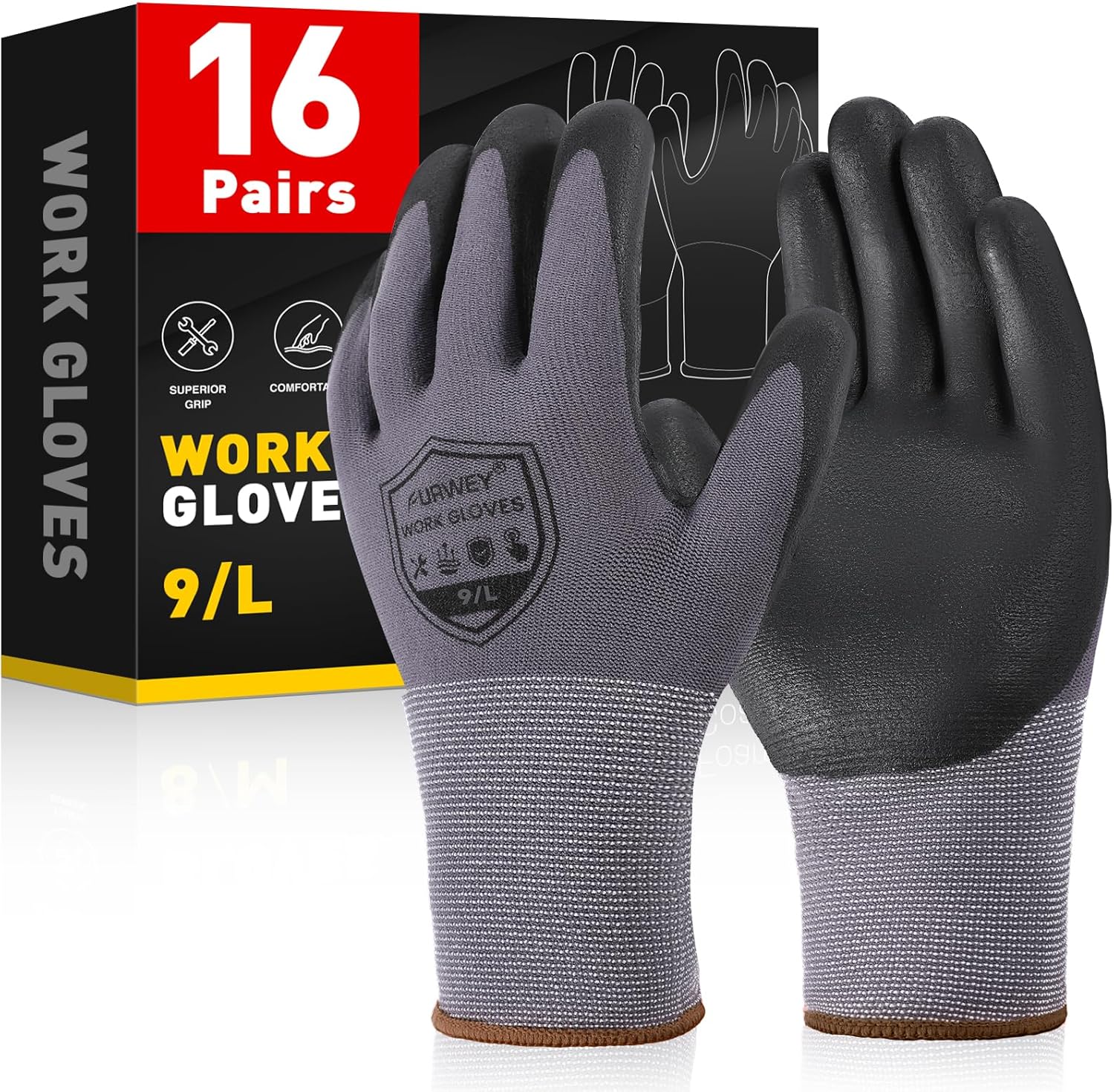
FURWEY Micro Foam Nitrile Coated Work Gloves (pack)
Best Budget Gloves for DIY Mechanics
| Material | Nylon with micro-foam nitrile coating |
|---|---|
| Sizes available | S to XL |
| Pack quantity | Multiple pairs (pack) |
These FURWEY work gloves are a pack of seamless knit nylon gloves with a micro-foam nitrile palm designed to improve grip and provide basic cut and abrasion resistance for light mechanical tasks. They slip on like a liner and are typically used for engine bay work, small part handling, and general DIY repairs where you need fingertip dexterity and a non-slip surface. The nitrile foam palm concentrates tacky grip without sacrificing breathability across the back of the hand, so they stay comfortable during longer jobs and reduce hand fatigue. Because they are thin and form-fitting they offer good tactile feedback for picking up fasteners and routing wires, but they are not heavy-duty cut-proof gloves and will wear faster when used with sharp edges or rough cast parts. Sizing from S to XL helps fit different hands but repeated exposure to solvents, heavy oils, or prolonged abrasion will shorten their life. These are a practical, low-cost option for homeowners and hobbyists who want better grip and light protection while working on cars.
Best for: Budget-minded DIYers who need basic hand protection and reliable grip for occasional car maintenance and light repairs, preferring an affordable, comfortable glove that fits a range of hand sizes.
Less Ideal for: Professionals or hobbyists who regularly handle sharp components, heavy fabrication, or chemical solvents should choose heavier-duty protective gloves instead.
- Micro-foam nitrile palm improves grip on oily or greasy parts
- Seamless knit nylon back offers breathability and comfort during extended use
- Thin, form-fitting cut preserves fingertip dexterity for small tasks
- Available in a range of sizes to fit different hands
- Not designed for heavy cut or puncture resistance
- Durability is limited when exposed to solvents, sharp edges, or intense abrasion
Verdict: The best low-cost gloves that still provide adequate grip, puncture resistance, and fit for occasional car maintenance and light repair jobs.
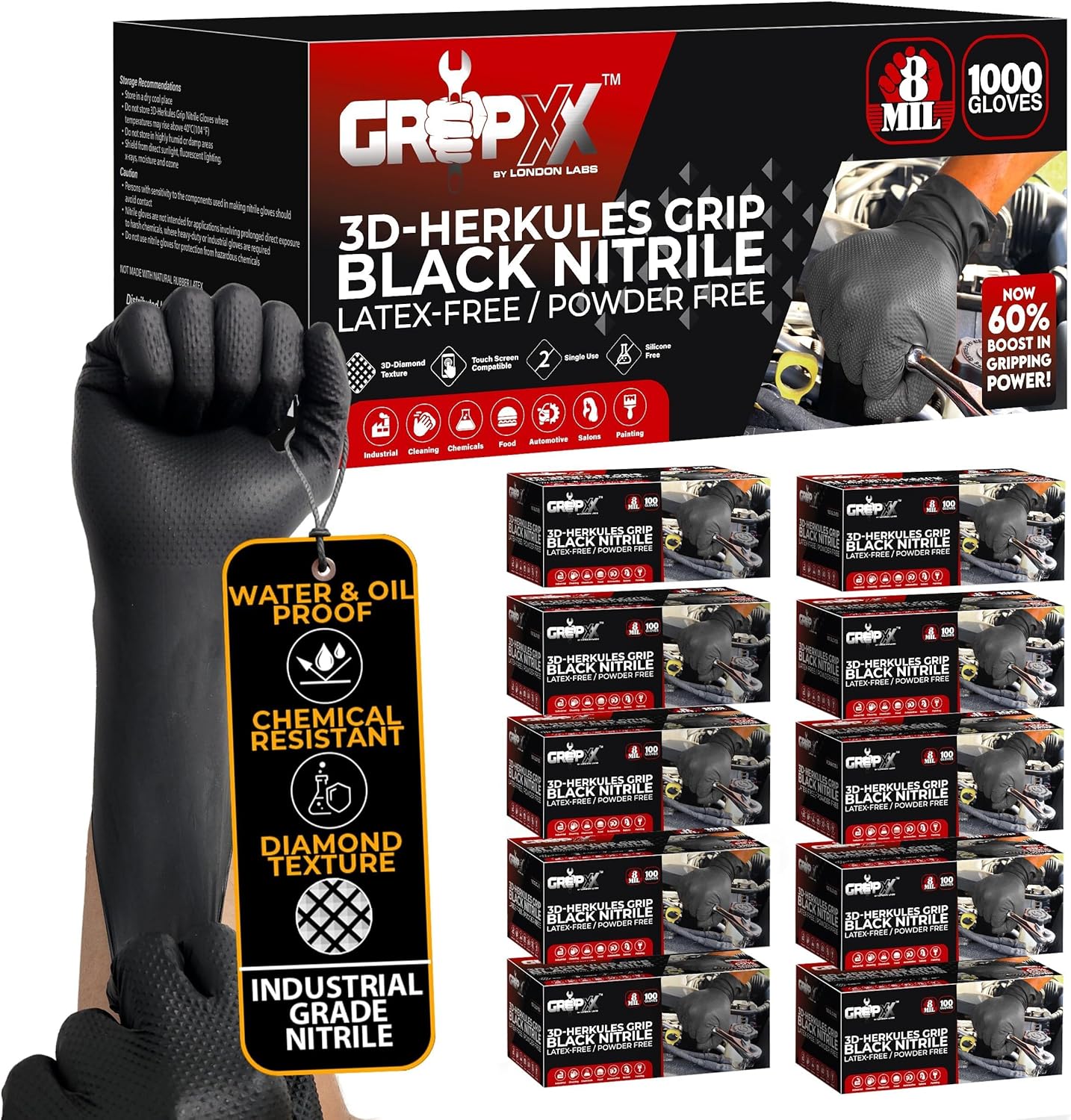
GRIPXX Herkules 8 Mil Black Nitrile Heavy-Duty Gloves
Best Heavy-Duty Gloves
| Thickness | 8 Mil |
|---|---|
| Material | 100% Nitrile |
| Powder & Latex | Powder-free, Latex-free |
| Intended use | Mechanic/Industrial |
These GRIPXX Herkules gloves are 8 mil black nitrile disposables built for heavy-duty mechanic and workshop work. They combine a tear-resistant nitrile compound with a 3D raised diamond texture that improves friction and helps channel fluids away from the contact surface, so you can handle oily or wet parts with a more secure grip. Typical uses include automotive maintenance, parts handling, and general shop cleanup where puncture and abrasion resistance matter more than thin tactile sensitivity. The gloves are powder- and latex-free, reducing glove-related skin reactions and making them suitable for extended wear. Certification references in the listing indicate compliance with common safety standards, which supports use in professional settings. The main limitations are the reduced fingertip dexterity compared with thinner exam-grade gloves and the disposable design that makes them less economical for continuous daily reuse compared with launderable work gloves.
Best for: DIYers and backyard mechanics who prioritize maximum hand protection and durable gloves for heavy garage tasks like engine work, grinding, and wrenching where tear resistance and strong wet/dry grip matter.
Less Ideal for: If you need very high tactile sensitivity for precision tasks or a reusable launderable glove for daily shop wear, consider thinner disposable options or dedicated reusable work gloves instead.
- 8 mil nitrile construction for improved tear and puncture resistance compared with thin exam gloves
- Raised diamond texture provides a stronger grip on oily or wet components
- Powder- and latex-free formula reduces skin irritation risk
- ISO and EN standard certifications cited, indicating tested protective performance
- Thicker 8 mil material lowers fine fingertip sensitivity compared with thinner gloves
- Disposable nature can be less cost-efficient for continuous heavy use
Verdict: Gloves built from thicker, highly abrasion- and cut-resistant materials intended for rougher garage work where maximum protection and longevity matter.
Mechanix Wear Specialty 0.5mm High-Dexterity Tactical Gloves
Best Lightweight/Dexterity Gloves

| Material | Synthetic Leather, AX‑Suede palm |
|---|---|
| Closure Type | Hook and Loop with TPR wrist closure |
| Item Thickness | 0.5 Millimeters |
| Fit Type | Standard |
| Protective Glove Temperature Rating | 32°F-200°F |
The Mechanix Wear Specialty 0.5mm gloves are built for tasks that need fingertip precision while offering light hand protection. The 0.5mm AX‑Suede palm and single‑palm construction give excellent tactile feedback for manipulating small fasteners, wiring, and controls during DIY auto repair. Breathable TrekDry on the back of the hand and expandable flex joints keep heat down and improve trigger‑finger mobility, so the gloves stay comfortable during longer jobs. A reinforced thumb and reinforced stitching add durability in high‑wear areas, and the hook‑and‑loop TPR wrist closure keeps the fit secure while carrier loops make storage simple. These gloves are not water resistant and provide only light abrasion protection, so they are best for clean mechanical tasks rather than heavy prying or handling caustic fluids. Machine washable materials make maintenance easy, but users needing impact protection or heavy cut resistance should look elsewhere.
Best for: DIYers and hobby mechanics who need maximum fingertip control for detailed auto work like routing small fasteners, handling sensors, and precision tasks where thin, tactile gloves keep dexterity and a secure fit without bulk.
Less Ideal for: Users who regularly perform heavy demolition, handle sharp sheet metal, or need chemical resistance should choose heavier-duty or specialty protective gloves instead.
- Excellent tactile feedback from 0.5mm AX‑Suede palm for fine manipulation
- Breathable TrekDry back panel and expandable flex joints for comfortable, extended wear
- Secure, adjustable TPR hook-and-loop wrist closure to maintain fit during work
- Reinforced thumb and stitching improve durability in high-stress areas
- Machine washable construction for easy cleaning and reuse
- Not water resistant so liquids and heavy oils can soak through
- Lightweight design offers limited cut and impact protection compared with heavier work gloves
Verdict: Thin, flexible gloves designed to maximize fingertip feel and fine motor control for detailed tasks like handling small fasteners and electronics.
MaxiFlex Seamless Knit Nylon Gloves with Nitrile Micro-Foam Grip
Best Nitrile Coated Gloves

| Department | Unisex Adult |
|---|---|
| Manufacturer | MaxiFlex |
| Date First Available | February 4, 2026 |
These MaxiFlex gloves are designed for precision handling in dry environments, combining a seamless nylon liner with a micro-foam nitrile coating on the palm and fingers. You put them on for tasks that demand dexterity such as small fastener work, wiring, and parts inspection during DIY auto repair. Notable features include a patented micro-foam nitrile finish that promotes 360 degree breathability and a smooth rounded fingertip knit that improves tactility. The knit wrist helps keep dirt out and the thin coating preserves fingertip feel while still offering abrasion and grip performance better than many thicker foam nitrile options. Because the coating is thinner, the gloves are comfortable for extended wear and reduce hand fatigue. Limitations are that they are intended for dry handling only and will not provide chemical resistance or protection against heavy cuts or crushing impacts, so they are not a substitute for more robust impact or chemical protective gloves when those hazards are present.
Best for: Car enthusiasts and home mechanics who need a breathable, form‑fitting glove that keeps dexterity for fine tasks while offering nitrile-coated micro-foam grip and good resistance to oils, punctures, and light chemicals during DIY auto repair.
Less Ideal for: Those needing chemical splash protection, heavy cut resistance, or impact-rated gloves should choose specialized protective gloves instead.
- Very breathable micro-foam nitrile coating for cooler, longer wear
- Seamless knit and rounded fingertips preserve high fingertip sensitivity for precision tasks
- Thin coating offers improved dexterity while maintaining good dry grip
- Knit wrist reduces debris entry and improves fit and comfort
- Not rated for chemical resistance or heavy liquid protection
- Not designed for high-cut or impact hazards
Verdict: Gloves featuring nitrile coating for superior chemical resistance, oil grip, and puncture protection while retaining good tactile sensitivity.
ATERET Cowhide Leather Work Gloves, 12 Pairs, Large
Best Insulated/Cold-Weather Gloves

| Material | Leather |
|---|---|
| Unit Count | 12 Count |
| Glove Construction | Cut and Sewn |
| Stitching Type | Reinforced Stitching |
| Thumb Style | Keystone Thumb |
These ATERET cowhide leather work gloves pack 12 pairs of heavyweight, cut‑and‑sewn driver gloves intended for heavy manual tasks. They provide full leather palms and reinforced stitching for abrasion resistance when handling tools, driving, or moving materials in a garage or workshop. The keystone thumb and ergonomic cut keep the hand flexible for gripping wrenches and ratchets, while the rubberized cuff helps keep the glove in place during repetitive work. Because they are unlined and not water resistant, they deliver good tactile feedback and durability but will not insulate in cold conditions or protect against fluids. The bulk pack is useful for shops or frequent DIYers who go through gloves, and the PVC‑free cowhide offers a high‑quality grain that holds up to scraping and light impact. Expect a no‑frills, reusable leather driver glove that trades thermal protection and wet resistance for dexterity and rugged wear life.
Best for: Someone needing rugged, all-leather driver-style gloves for general garage tasks who prioritizes heavy-duty abrasion resistance and grip over thermal warmth and plans to work in mild to cool conditions rather than extreme cold.
Less Ideal for: People who need insulated or waterproof gloves for cold or wet environments should choose a lined, weatherproof alternative instead.
- Full grain cowhide leather palm for abrasion resistance and long wear
- Reinforced stitching and keystone thumb for durability and improved hand mobility
- Rubberized cuff helps keep gloves secure during repetitive tasks
- Bulk 12-pair pack is convenient for workshops or frequent glove changes
- Unlined design provides little to no thermal insulation for cold-weather use
- Not water resistant so performance drops in wet or oily conditions
Verdict: Gloves with thermal lining or insulation that keep hands warm and functional during repairs in cold garages or outdoor conditions.
Mechanix Wear M-Pact Covert Tactical Impact Gloves
Best Premium Gloves

| Material | Faux Leather |
|---|---|
| Impact Level | Ansi Isea Impact Level 3 |
| Closure Type | Fingertip, Hook, Loop |
| Reusability | Reusable |
| Touchscreen | Yes |
The Mechanix Wear M-Pact Covert gloves are built to protect hands during heavy-duty tasks while preserving dexterity for tool and phone use. They combine a synthetic leather palm with D3O padding to absorb and dissipate impact and a thermoplastic rubber knuckle guard and finger guards to shield against knocks and abrasion. TrekDry fabric on the back of the hand keeps them breathable during long jobs and an adjustable hook-and-loop wrist closure keeps the fit secure so the gloves do not shift while working. Dual-layer reinforced fingertips and an embossed pattern improve grip and fingertip feel for handling sockets, ratchets, and small parts, and the gloves are machine washable for reuse. Limitations include that they are not water resistant and the thicker protective elements reduce fine tactile sensitivity compared with ultra-thin mechanic gloves, so they can feel bulky for precision tasks. For most DIY auto repair they offer a strong balance of protection and usable dexterity.
Best for: DIY mechanics who value long-lasting, premium hand protection and need gloves that balance impact protection, touchscreen dexterity, and a secure fit for routine repair, wrenching, and light shop work.
Less Ideal for: Those who need maximum fingertip feel for delicate electronics or precision work should consider ultra-thin mechanic gloves instead.
- High-impact protection with D3O palm padding and TPR knuckle/finger guards
- Reinforced fingertips and embossed pattern for improved grip on tools and fasteners
- Secure adjustable wrist closure that keeps gloves in place during tasks
- Breathable TrekDry back-of-hand fabric reduces sweat during extended use
- Touchscreen-capable synthetic leather lets you operate capacitive screens without removing gloves
- Not water resistant which limits use with fluids or in wet conditions
- Protective padding and guards reduce some fine fingertip sensitivity compared with thin mechanic gloves
Verdict: Higher-end gloves offering superior materials, fit, reinforced wear points, and long-term durability for DIY mechanics who want investment-grade gear.
How We Chose the Best Mechanic Gloves
We focused on mechanic gloves that fit the real needs of DIY auto repair rather than general shop or construction use. Our selections were filtered for tasks common in home garages, including fluid service, brake work, belt and hose replacement, electrical diagnosis, and parts handling. For this category, the most important criteria were fingertip dexterity, palm grip in oily conditions, abrasion resistance, seam placement, cuff security, and breathability during longer jobs.We also looked closely at material balance. Gloves that were too bulky for small clips, connectors, and fasteners did not make the cut, and neither did pairs that felt thin enough to wear out after a few sessions. Touchscreen usability, knuckle coverage, washability, and comfort over extended use were also considered because DIY mechanics often move between manuals, phones, tools, and dirty work areas.We excluded gloves built mainly for extreme cold, heavy welding, chemical immersion, or disposable single-use tasks, since those designs serve different priorities than most home automotive repairs.
Our full evaluation process is outlined in our review methodology.
What To Look For In Mechanic Gloves
The best mechanic gloves for garage work strike a balance between protection and control. If the gloves are too thick, it becomes harder to start bolts, handle clips, or feel small connectors. If they are too thin, they may wear through quickly or leave your hands exposed to scrapes, heat, and grime. Start by matching glove design to the type of repair you do most often.
A good fit is just as important as the material. Gloves that bunch at the fingertips can reduce precision, while a loose wrist opening can let in dirt and debris. For most DIY users, a snug but flexible fit with reinforced wear zones and a grippy palm gives the most versatile performance across common maintenance and repair jobs.
- Dexterity for handling small fasteners, fuses, clips, and connectors
- Palm grip that stays useful around oil, grease, and smooth tool handles
- Durability in high-wear areas such as fingertips, thumb saddle, and palm
- Breathability to reduce sweat during longer repairs
- Secure cuffs that stay in place without restricting wrist movement
Choosing The Right Protection Level For Your Jobs
Not every repair calls for the same type of protection. Light-duty tasks like cabin filter changes, trim removal, battery work, and electrical checks usually benefit from thin, flexible mechanic gloves that preserve touch sensitivity. Medium-duty jobs such as brake service, fluid changes, and general engine bay work often need a bit more reinforcement in the palm and fingers.
For heavier DIY jobs like suspension work, exhaust removal, and underbody repairs, extra abrasion resistance and back-of-hand protection can be worthwhile. Still, more padding is not always better. If a glove makes it difficult to grip sockets, ratchets, or small hardware, it may slow you down and increase frustration. The right choice depends on the most demanding task you expect to do regularly, not just the easiest one.
- Light-duty: prioritize feel, flexibility, and clean tool control
- Medium-duty: look for balanced grip, reinforced palms, and good comfort
- Heavy-duty: favor abrasion resistance and added coverage without excessive bulk
Material Features That Matter In The Garage
Synthetic leather palms are popular because they offer a useful blend of grip, flexibility, and wear resistance. Stretch fabric across the back of the hand can improve comfort and airflow, especially during warm-weather garage work. Reinforced fingertips and thumb areas often make a noticeable difference in glove lifespan, since those spots see repeated contact with tools and rough metal surfaces.
Some mechanic gloves include coatings or textured surfaces to improve grip when handling oily components. Others use padded knuckles or back panels for extra protection against bumps and scrapes. Breathable panels can help during long sessions, but large vented areas may reduce durability if you frequently work around rough castings, brackets, or sharp hardware. Think about where you need flexibility and where you need coverage, then choose materials accordingly.
- Synthetic palms for control and durability
- Stretch backs for mobility and comfort
- Reinforced fingertips for longer wear
- Textured grip surfaces for oily or slick parts
- Strategic padding for impact-prone tasks
Fit, Dexterity, And Comfort Tips
A mechanic glove should feel close-fitting without cutting off movement. Your fingertips should reach the end of the glove with little extra space, and you should be able to fully close your hand around a ratchet or screwdriver without pressure points. If the glove twists or shifts while turning tools, the sizing or pattern may not be right for you.
Comfort also affects safety and productivity. Gloves that trap too much heat can become distracting, while rough interior seams may cause irritation over time. If you switch between wrenching, using a phone, and checking diagrams, touchscreen-compatible fingertips can be genuinely useful. A flexible cuff can also help when you are reaching into tight engine bay spaces or working for long periods with bent wrists.
- Check fingertip length first for accurate tool control
- Avoid excess material in the palm that can bunch under load
- Look for smooth seams in high-contact areas
- Consider touchscreen use if you rely on digital manuals or diagnostic apps
When To Use Disposable Gloves Instead
Mechanic gloves are great for abrasion protection and general garage work, but they are not always the best option for every task. If you are dealing with messy fluids, sealants, or chemicals that you do not want soaking into fabric, disposable gloves can be the better choice. They also make sense for quick inspections or jobs where maximum finger feel matters more than scrape protection.
Many DIY mechanics keep both types on hand and use them for different parts of the same job. For example, you might wear disposable gloves during fluid handling or gasket work, then switch to mechanic gloves when loosening bolts or handling rough components. Matching glove type to the task usually gives better comfort, cleanliness, and hand protection than trying to force one style to do everything.
- Use disposable gloves for fluid-heavy or very messy work
- Use mechanic gloves for abrasion, grip, and repeated tool handling
- Keep both available for different stages of the same repair
How To Make Your Gloves Last Longer
Even good mechanic gloves wear out quickly if they are constantly soaked in oil, stuffed into toolboxes, or used for jobs they were never designed to handle. Let gloves dry fully after use, especially if they become damp from sweat or washing. Built-up grime can stiffen materials and reduce grip over time, so periodic cleaning can help preserve flexibility and comfort.
It also helps to rotate pairs if you wrench often. Using one pair for cleaner precision work and another for rougher jobs can extend the life of both. Inspect fingertips, seams, and palm reinforcements regularly, since those areas usually fail first. Once the grip surface is worn smooth or holes begin forming, protection and control drop fast.
- Air dry gloves after use instead of leaving them crumpled
- Clean according to material type to preserve flexibility
- Use separate pairs for fine work and rough work if possible
- Replace gloves when seams split, grip fades, or fingertips wear through
FAQ
Are mechanic gloves worth wearing for basic DIY car maintenance?
Yes, for most garage tasks they can improve both protection and comfort. They help reduce cuts, scrapes, and grime while giving you a better grip on tools and parts. The key is choosing a pair that does not sacrifice too much dexterity for protection.
Should mechanic gloves fit tight or loose?
They should fit snugly without restricting movement. A close fit improves control when handling small fasteners and reduces bunching in the palm. Gloves that are too loose can slip, snag, and make precise work harder.
Can mechanic gloves protect against oil and automotive fluids?
They can help reduce direct contact, but most mechanic gloves are not a full barrier for every fluid exposure. Fabric gloves may eventually absorb oil or chemicals, especially during long jobs. For fluid-heavy work, disposable gloves are often the better choice.
Do thicker mechanic gloves always offer better protection?
Not necessarily. Thicker gloves may resist abrasion better, but they can also reduce feel and make delicate work more difficult. For DIY auto repair, the best protection usually comes from the right balance of reinforcement and dexterity for the task.
Are touchscreen fingertips actually useful on mechanic gloves?
They can be very useful if you check repair guides, torque specs, or diagnostic information on a phone or tablet while working. Good touchscreen function saves time and keeps you from constantly removing dirty gloves. It is a convenience feature, but one many DIY users appreciate.
How often should mechanic gloves be replaced?
Replace them when the fingertips wear thin, seams start separating, or palm grip becomes smooth and unreliable. The exact timing depends on how often you wrench and what kind of jobs you do. Frequent suspension, exhaust, or underbody work will usually wear gloves out faster than light maintenance.
Final Verdict
The right mechanic gloves depend on how you work in the garage. If you spend more time on detailed engine bay, electrical, or interior jobs, prioritize dexterity and fit. If your projects lean toward rougher undercar, brake, or suspension work, put more emphasis on grip, abrasion resistance, and reinforced wear zones.For most DIY auto repair users, the best choice is a glove that feels secure, stays comfortable through longer jobs, and protects without getting in the way of tool control. Focus on the tasks you do most often, choose the protection level to match, and you will end up with a pair that makes wrenching cleaner, safer, and easier.
