

Note: This article contains affiliate links. If you click on these links and make a purchase, I may earn a small commission at no extra cost to you. This helps support my research and content. Read my full affiliate disclosure here.
What You’ll Need
A quick look at the tools and supplies commonly used for this job.
Tools
Parts & Supplies
- Brake cleaner
- Shop rags
- Grease pencil or paint marker
- Replacement U-joint
- Grease for serviceable U-joints
This article is part of our Transmission and Drivetrain Maintenance & Repair Guides.
Bad U-joints can cause clunks, vibration, and sudden driveline failure, so catching the problem early matters for both safety and repair cost. The universal joint connects the driveshaft to other driveline components and allows the shaft to keep transmitting power as the suspension moves. When a U-joint wears out, the needle bearings dry out or loosen up, and that extra play turns into noise, vibration, and eventually serious damage.
The good news is that DIY owners can often spot a failing U-joint with a careful road test and a hands-on inspection under the vehicle. You do not need advanced diagnostic equipment, but you do need to work safely and know what normal and abnormal movement feel like.
This guide walks you through the common symptoms, how to inspect front and rear driveshaft U-joints, how to tell U-joint issues from wheel balance or differential problems, and when the vehicle should not be driven until repairs are made.
What a U-Joint Does and Why It Fails
A U-joint, or universal joint, is a cross-shaped pivot with bearing caps on each end. It lets the driveshaft transmit engine torque even while the axle or transmission angle changes. Rear-wheel-drive trucks, SUVs, many vans, and some four-wheel-drive vehicles use one or more U-joints in the driveline.
Most failures happen because the bearing caps lose lubrication, water gets in, or the joint simply wears out over time. Heavy towing, lifted suspension geometry, rust exposure, and missed greasing on serviceable joints can accelerate wear. Once the bearings develop play, the driveshaft no longer rotates smoothly and starts loading the joint unevenly.
- Dry bearings often cause a chirping or squeaking noise at low speed.
- Worn bearing caps create looseness that shows up as clunks when shifting into drive or reverse.
- Severely worn joints can bind, causing vibration that changes with vehicle speed.
- If ignored, a failed U-joint can damage the driveshaft, transmission tailshaft, differential yoke, or underbody.
Common Symptoms of Bad U-Joints
Clunking when Taking Off or Shifting Gears
One of the most common signs is a distinct clunk when you shift from park to drive, drive to reverse, or first start moving from a stop. That sound happens because the slack in the worn U-joint gets taken up suddenly as torque loads the driveshaft.
Vibration That Increases with Road Speed
A failing U-joint may cause a steady vibration felt through the seat, floor, or center of the vehicle. Unlike an engine miss, this vibration usually gets worse as the vehicle speed increases. It may feel similar to an out-of-balance tire, but driveline vibration often continues even when the road surface is smooth and may be strongest during acceleration.
Squeaking or Chirping at Low Speed
Dry needle bearings can make a squeak or chirp, especially at parking-lot speeds. The sound may match wheel speed and sometimes changes or disappears once the joint warms up. Many people mistake this for a belt noise, but under-vehicle inspection often reveals the actual source.
Visible Rust Around the Bearing Caps
A red-brown powder around one or more caps is a strong clue. This rust dust often appears when internal bearing wear is grinding away and moisture has entered the cap. It does not automatically prove failure, but it is a major warning sign that the joint deserves close inspection.
Shudder or Binding
Some bad U-joints do not become loose first. Instead, they bind because a cap has dried out or brinelled. A binding joint can create a shudder on takeoff or a cyclical vibration that feels worse under load. This can be harder to detect by hand, so a road test matters.
Safety Before You Inspect
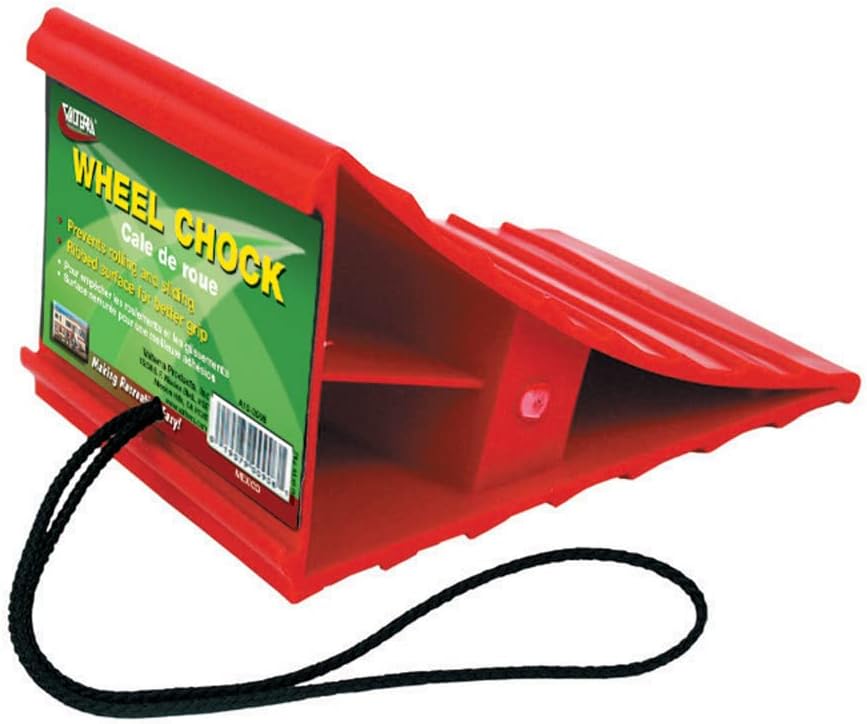
Never crawl under a vehicle supported only by a jack. Park on level ground, set the parking brake unless the inspection requires the shaft to rotate, chock the wheels, and support the vehicle with properly placed jack stands. If you need to release the parking brake to rotate the driveshaft, make sure the vehicle is securely lifted and the wheels are blocked so it cannot roll.
If the vehicle has a severe driveline clunk, strong vibration, or a metallic banging from underneath, limit driving until inspection is complete. A U-joint that comes apart can let the driveshaft drop or whip violently, which can damage the vehicle and create a serious hazard.
- Work on a cool vehicle whenever possible.
- Wear safety glasses because dirt and rust often fall during driveshaft inspection.
- If the transmission is in neutral for shaft movement checks, double-check wheel chocks and stand placement.
- Do not place fingers between yokes or rotating parts while checking play.
Tools That Make This Job Easier


How to Road Test for U-Joint Problems
A short road test gives you valuable clues before you lift the vehicle. Start in a quiet area where you can accelerate gently, coast, and shift between drive and reverse without traffic pressure.
- From a stop, accelerate gently and listen for a clunk from under the center or rear of the vehicle.
- Shift from drive to reverse and reverse to drive with your foot firmly on the brake; a delayed thunk can indicate driveline lash from a worn joint.
- Cruise at low and moderate speed and note any vibration through the seat or floor.
- Let off the throttle and then reapply it; a worn U-joint often reacts to torque changes.
- Drive slowly in a quiet lot with the windows down and listen for a repetitive squeak or chirp.
Make notes about when the symptom appears. A vibration only at one exact speed can be tire or wheel related, while a clunk during torque changes points more strongly toward driveshaft play. If the vehicle is four-wheel drive, note whether the symptom changes between two-wheel and four-wheel operation if your system allows safe testing according to the owner’s manual.
How to Inspect U-Joints Under the Vehicle
Start with a Visual Check
Locate the driveshaft and inspect each U-joint at the transmission, transfer case, carrier bearing section if equipped, and differential yoke. Use a flashlight and look closely at all four bearing caps.
- Rust dust around bearing caps
- Missing bearing cap seals
- Grease leakage or dried contamination around the caps
- Bent driveshaft tubing or damaged yokes
- Loose strap bolts or retaining hardware
Check for Looseness by Hand
With the transmission in neutral only if safely supported and chocked, grab the driveshaft near the U-joint and try to twist it back and forth while holding the yoke steady. You are feeling for free play in the joint itself, not normal drivetrain backlash from the differential or transmission.
A good U-joint should feel tight. The shaft and yoke should begin moving together with no clicking or visible movement between the bearing caps and trunnions. If you can see the cross move inside the caps, feel a knock, or hear a click, the joint is worn.
Push and Pull in Multiple Directions
Try moving the driveshaft up and down, side to side, and rotationally at each U-joint. Comparing both ends of the shaft helps because one bad joint may feel noticeably looser than the other. Use a pry bar carefully if needed, but do not damage seals or yokes.
Check for Binding
Rotate the driveshaft by hand and watch how each U-joint pivots. It should move smoothly through its range without stiff spots. If one cap looks stuck or the joint resists movement in part of the rotation, it may be binding rather than loose. Binding joints are just as serious as loose ones.
What Normal Play Looks Like Versus a Bad U-Joint
This is where many DIY diagnoses go wrong. Some rotational movement in the driveline can come from ring-and-pinion backlash, transmission gear lash, or transfer case slack. That does not automatically mean the U-joint is bad.
- Normal: the entire shaft and yoke move together with no visible motion inside the U-joint caps.
- Bad U-joint: you can isolate movement at the cross and caps, often with a click or knock.
- Normal: a smooth pivoting action as the shaft angle changes.
- Bad U-joint: roughness, notchiness, stiffness, or one cap that appears dry and rusty.
- Normal drivetrain lash: small rotational slack felt farther through the driveline, not concentrated at one joint.
If you are unsure, mark the shaft and yoke with a paint marker and watch them closely while applying hand pressure. Visible relative movement at the joint itself is the key clue.
Recommended Tools for This Job


How to Tell Bad U-Joints From Other Problems
Several issues can mimic bad U-joints, so it helps to compare the symptom pattern before ordering parts.
Bad U-joint Vs. Tire or Wheel Vibration
Wheel balance problems are usually most noticeable at a narrower speed range and are often felt in the steering wheel on vehicles with front-end imbalance. U-joint vibration tends to come through the floor or seat and can react more strongly to throttle changes.
Bad U-joint Vs. Worn Differential or Transmission Mounts
Mount problems can also create clunks during shifts, but they usually come with visible powertrain movement. If the U-joint is tight and the transmission or differential mount is torn, the mount is a more likely cause.
Bad U-joint Vs. Carrier Bearing Issues
On two-piece driveshafts, a bad carrier bearing can cause center-of-vehicle vibration and sagging support rubber. Inspect the support bearing along with each U-joint so you do not replace the wrong part.
Bad U-joint Vs. CV Axle or Front Driveline Problems
On four-wheel-drive and all-wheel-drive vehicles, front driveline noises can sometimes be confused with CV axle clicks or transfer case issues. Trace the sound source carefully and inspect every joint that transmits torque.
When the Vehicle Is Unsafe to Drive
Do not keep driving if you find clear looseness, missing bearing cap seals, visible cap movement, or a heavy clunk combined with vibration. Those signs mean the joint may be close to failure. At that point, the cost of towing is usually much lower than the cost of a dropped driveshaft, damaged transmission tailhousing, or collateral underbody damage.
- Loud banging or repeated metallic knocking from under the vehicle
- Visible movement in the U-joint when twisting the shaft by hand
- Strong vibration that worsens rapidly
- A bearing cap that is walking out, loose hardware, or missing clips
- Evidence the driveshaft has already contacted the floor or crossmember
What to Do After Diagnosis
If the inspection confirms a worn U-joint, replacement is the correct repair. U-joints are not adjusted; once they have play or binding, they should be replaced. If one joint is bad and the others are the same age, inspect them carefully because multiple joints often wear on a similar timeline.
Before removal, mark the driveshaft orientation with a paint marker so it can go back in the same position, which helps preserve balance. Follow the service procedure for your specific vehicle because strap bolts, flange bolts, driveshaft phasing, and torque specs vary.
- Replace the joint with a quality part that matches the exact application.
- Inspect the yoke ears for distortion, cracks, or wear before installing the new joint.
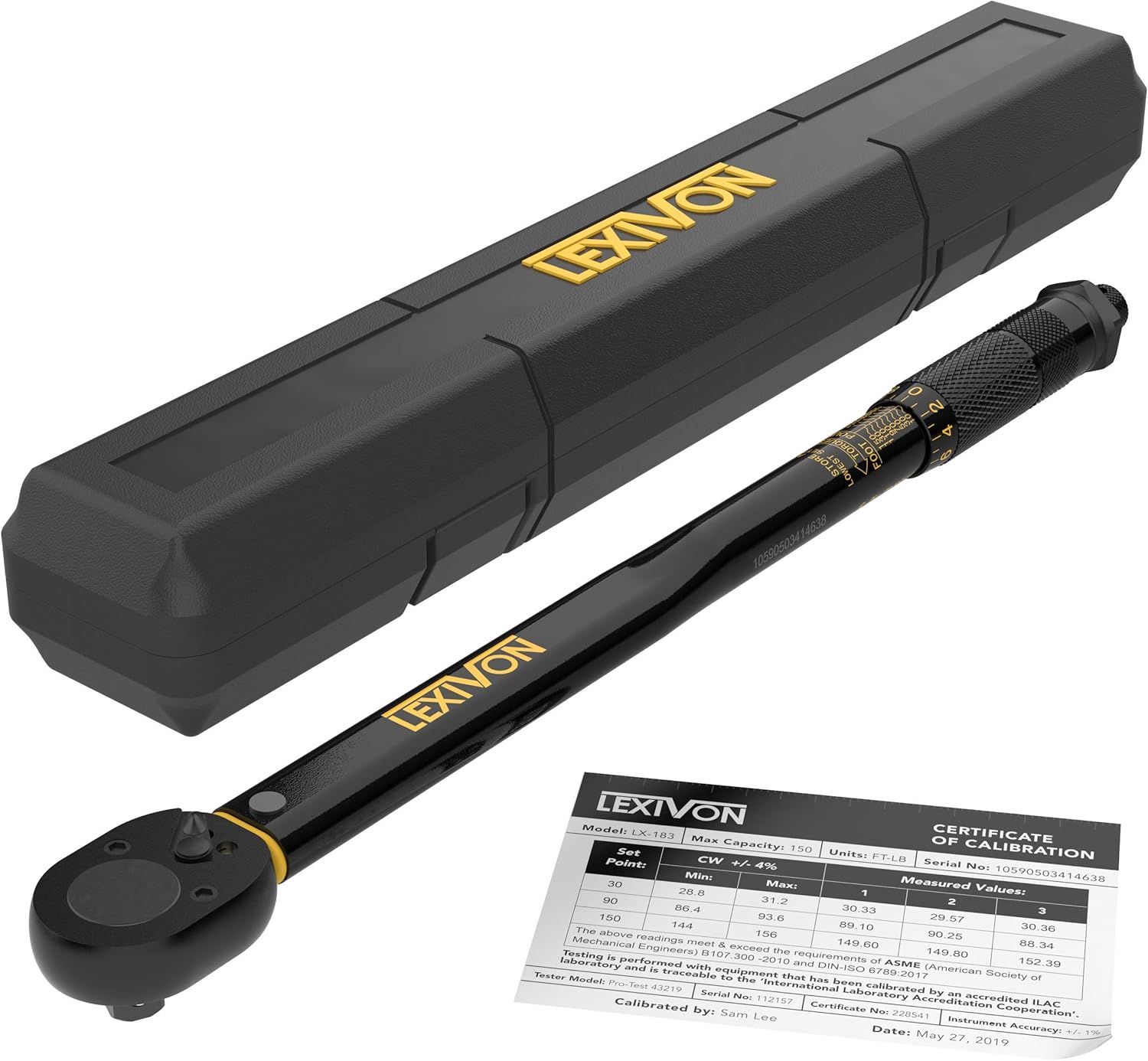
- Torque all fasteners to specification and use new hardware where required.
- Grease a serviceable replacement joint after installation if the manufacturer calls for it.
- Test drive again to confirm the clunk or vibration is gone.
If the new joint does not fix the symptom, recheck for a bent driveshaft, worn carrier bearing, pinion angle issue, damaged transmission mount, or wheel and tire problem. The initial symptom may have had more than one cause.
Key Takeaways
- A bad U-joint commonly causes clunks on gear changes, low-speed squeaks, and vibration that rises with road speed.
- The most reliable hands-on test is checking for visible or felt play at the U-joint itself, not just general driveline slack.
- Rust powder around bearing caps, binding during rotation, or clicking when twisting the shaft are strong warning signs.
- If the joint is loose or the vehicle has severe vibration, stop driving it until repairs are made.
- Replace worn U-joints promptly and inspect the rest of the driveshaft system for related damage.
FAQ
Can a Bad U-joint Feel Like a Bad Wheel Bearing?
Sometimes. Both can cause vibration or noise, but a bad U-joint usually reacts more to throttle changes and may clunk when shifting between drive and reverse. Wheel bearings more often produce a growl or hum that changes with vehicle speed and cornering load.
Will a Bad U-joint Always Have Visible Play?
No. Some U-joints fail by binding before they become obviously loose. If the joint feels stiff, notchy, or squeaks even without much free play, it may still be bad.
Is It Safe to Grease a Squeaky U-joint and Keep Driving?
Only if the joint is a serviceable type and it has no looseness or damage. Greasing may quiet a dry but otherwise intact joint, but if there is already play, rust bleed, or binding, replacement is the proper fix.
How Much Play Is Acceptable in a U-joint?
As a rule, there should be no noticeable free play in the joint itself. Small overall driveline lash can be normal, but visible movement between the cross and bearing caps is not.
Can Bad U-joints Cause Transmission Damage?
Yes. If a U-joint wears badly enough, it can overload the transmission tailshaft, output bearing, or rear seal area. In severe cases, a failing joint can also damage the differential yoke or allow the driveshaft to strike the underbody.
Should Both U-joints Be Replaced at the Same Time?
Not always, but it is common to inspect and often replace multiple joints together if they have similar age and mileage. If one has failed from wear, the others may not be far behind.
What Does a Bad U-joint Sound Like at Low Speed?
It can sound like a squeak, chirp, or light clunk depending on how it is failing. Dry bearings often squeak, while worn joints with play tend to clunk during takeoff or gear changes.
Need Parts for This Repair?
The right parts and supplies vary by vehicle.
Select your make and model to find compatible parts and accessories for your car.
Exact Fit
Parts that fit your make and model
Quality You Can Trust
Top brands and OEM quality options
Fast Shipping
Get the parts you need, delivered fast