

Note: This article contains affiliate links. If you click on these links and make a purchase, I may earn a small commission at no extra cost to you. This helps support my research and content. Read my full affiliate disclosure here.
What You’ll Need
A quick look at the tools and supplies commonly used for this job.
Tools
- Floor jack
- Jack stands
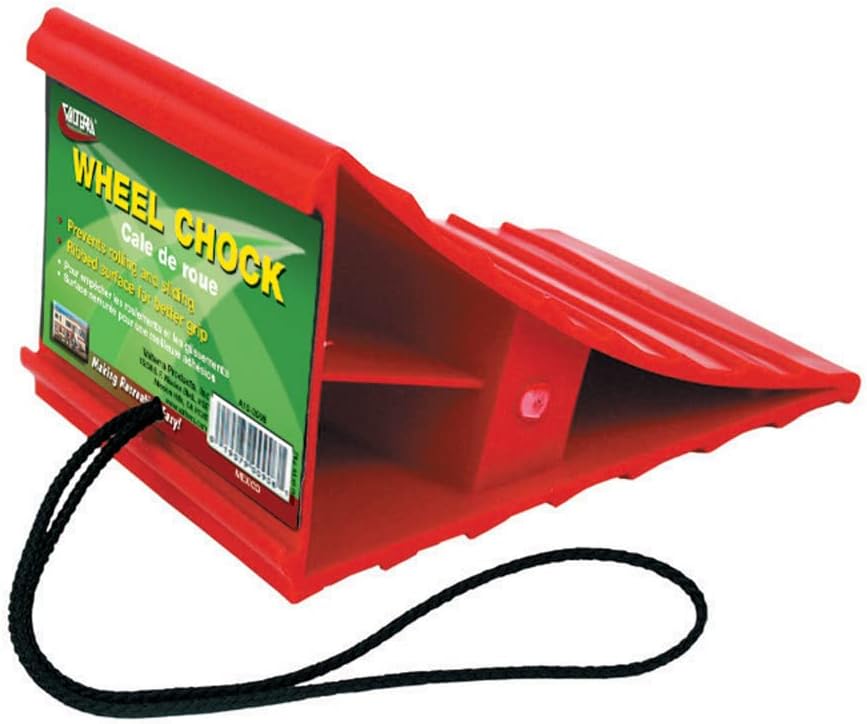
- Wheel chocks
- Flashlight
- Pry bar
- Lug wrench or impact wrench
- Torque wrench
- Large slip-joint pliers
- Dial indicator with magnetic base
- Helper to turn the steering wheel
Parts & Supplies
- Safety glasses
- Mechanic gloves
- Shop rags
- Pen and notepad
- Touch-up paint or chalk for marking movement
This article is part of our Suspension and Steering Maintenance & Repair Guides.
Worn front suspension or steering parts can cause clunks, wandering, uneven tire wear, vibration, and a loose or unpredictable feel at the wheel.
The tricky part is that several different components can create similar symptoms. A bad outer tie rod, lower ball joint, control arm bushing, strut mount, sway bar link, or wheel bearing may all feel like “front end play” from the driver seat. That is why a good diagnosis starts with symptom patterns, then moves to targeted hands-on checks.
This guide walks you through a practical DIY process to narrow down the problem safely before buying parts. The goal is to identify where the looseness or noise actually comes from, and to know when the car is no longer safe to drive.
Common Symptoms and What They Usually Point To
Start by matching the symptom to the most likely area. This does not confirm the failed part by itself, but it helps you inspect the right components first.
- A clunk over bumps often points to sway bar links, sway bar bushings, strut mounts, control arm bushings, or ball joints.
- A loose or wandering steering feel commonly points to inner or outer tie rods, steering rack play, worn control arm bushings, or poor alignment caused by worn parts.
- A shimmy or steering wheel vibration may come from tire balance, bent wheels, wheel bearings, ball joints, or tie rods.
- A single knock when braking or accelerating can point to control arm bushings shifting under load.
- A popping noise while turning may indicate strut mount bearing issues, ball joints, or CV axle issues on front-wheel-drive vehicles.
- Uneven tire wear such as feathering, cupping, or inside-edge wear often suggests alignment problems caused by worn joints or bushings.
- A steering wheel with free play before the car responds often points to tie rod wear, steering linkage wear, or steering gear/rack looseness.
If the vehicle pulls, wanders, or makes noise only on one side, pay extra attention to that corner. But remember that some worn parts, especially bushings and sway bar components, can transmit noise across the front end and sound like they are coming from the wrong side.
Safety Before You Inspect
Never crawl under a vehicle supported only by a jack. Park on flat ground, set the parking brake, chock the rear wheels, and use jack stands under solid lift points.
If you suspect a severely worn ball joint, tie rod, or wheel bearing, keep the road test short and low-speed. A badly worn steering or suspension joint can fail suddenly and cause loss of control.
- Check tire pressures first so handling symptoms are not misleading.
- Remove heavy cargo if the vehicle is loaded unusually.
- Inspect with good lighting.
- If a component is obviously cracked, separated, or leaking badly, stop driving until it is repaired.
Road Test Clues
What to Feel and Listen For
Take a short drive on a smooth road, a rough road, and a parking lot at low speed. Keep the radio off and the windows cracked if needed.
- Drive over small bumps and listen for light rattles or heavier clunks.
- At 25 to 40 mph, note whether the car tracks straight or needs constant correction.
- Gently brake and accelerate to see if the front end shifts, knocks, or changes direction.
- Turn the wheel lock-to-lock slowly in a parking lot and listen for pops, groans, or binding.
- Note whether the symptom changes with steering angle, braking, speed, or road surface.
A noise on every bump usually points to a loose component with vertical movement, like sway bar links, strut mounts, or ball joints. A symptom that appears mostly while steering usually points more toward tie rods, steering rack issues, or upper mount/bearing problems.
Visual Inspection With the Vehicle on the Ground
Before lifting the car, do a quick walk-around. Many suspension problems leave visible clues.
- Look for uneven tire wear on both front tires.
- Compare ride height side to side; a sagging corner can suggest spring or strut issues.
- Check whether either front wheel appears to sit farther back in the wheel opening, which can hint at a bent component or failed rear control arm bushing.
- Look behind the wheel for torn ball joint or tie rod boots, leaking struts, and shifted or cracked rubber bushings.
- Inspect sway bar links and bushings for split boots, missing hardware, or metal-to-metal contact marks.
If the steering wheel is off-center but the vehicle recently started doing that, do not assume it only needs an alignment. Worn steering or suspension parts often cause alignment to change.
Tools That Make This Job Easier


Hands-On Checks With the Front End Lifted
Lift one or both front wheels as needed and support the vehicle securely. For some checks, suspension load matters, so compare what you feel with the wheel hanging versus lightly supported under the control arm.
Check for Wheel Play at Different Positions
Grab the tire at 3 and 9 o’clock and rock it in and out. Then grab it at 12 and 6 o’clock and repeat.
- 3 and 9 o’clock play often points to inner or outer tie rods, steering rack play, or sometimes wheel bearing looseness.
- 12 and 6 o’clock play often points to ball joints or wheel bearing looseness.
- If the whole steering linkage moves immediately with the wheel and there is no isolated slop at a joint, the play may be elsewhere.
- If movement comes with a dull click you can feel in one joint, that joint is a strong suspect.
Watch the Joints While a Helper Moves the Wheel
Have a helper rock the wheel gently while you watch each joint. Look for a delay between input and output. A good joint moves as one unit. A worn joint shows visible separation or lag.
On tie rods, watch the outer tie rod end and the inner tie rod area at the rack boot. On ball joints, watch for the stud moving inside the socket or the control arm shifting abnormally.
Use a Pry Bar Carefully
A pry bar can help reveal bushing or ball joint movement, but use it gently. You are checking for excess movement, not trying to force a failure.
- Pry under the tire slightly to check lower ball joint play if the suspension design allows it.
- Pry against the control arm near bushings to look for torn rubber, separated sleeves, or large shifts.
- Pry lightly near sway bar links to feel for looseness or clicking.
- Do not pry on thin sheet metal, brake backing plates, or rubber boots.
How to Diagnose Specific Front-End Components
Outer and Inner Tie Rods
Tie rods transfer steering motion to the wheels. Wear here commonly causes wandering, toe change, steering wheel free play, and inside/outside edge tire wear.
- Rock the tire at 3 and 9 o’clock while watching the outer tie rod end.
- If the stud moves inside the socket, the outer tie rod is worn.
- If the outer tie rod looks solid but the movement starts closer to the rack under the boot, suspect the inner tie rod.
- A clicking joint with a torn boot and leaked grease is usually near the end of service life.
Ball Joints
Ball joints let the suspension move up and down while the wheels steer. Some wear is hard to feel unless the suspension is loaded or unloaded correctly for that vehicle design, so check service information if available.
- Support the control arm if needed, then check 12 and 6 o’clock movement.
- Use a pry bar under the tire to look for vertical movement at the joint.
- Look for torn boots, rust dust, grease leakage, or metal-on-metal contact.
- Any obvious looseness in a ball joint is a serious safety concern.
Control Arm Bushings
Worn bushings often cause clunks during braking or acceleration, vague steering, and alignment changes under load.
- Look for cracked rubber, separated rubber from the outer shell, or a centered sleeve that has shifted off-center.
- Use a pry bar to see if the arm moves excessively relative to the mount.
- A small amount of flex is normal; a large jump, knock, or metal contact is not.
- Compare the same bushing on the opposite side if you are unsure.
Struts and Strut Mounts
Leaking struts can reduce damping and cause bounce, while worn upper mounts can clunk or bind during steering.
- Check the strut body for oil leakage.
- Bounce the front corner; repeated oscillation suggests weak damping.
- Listen near the top mount while turning the steering wheel.
- A popping or spring-binding sound can indicate a worn strut bearing or mount.
Sway Bar Links and Bushings
These are common sources of front-end rattles over small bumps and rough pavement.
- Look for split link boots, loose nuts, or shiny wear spots where parts have been moving.
- Move the link by hand or with light leverage; it should not click or flop loosely.
- Inspect sway bar frame bushings for cracks, excessive clearance, or a dry, worn appearance.
- A failed sway bar link often makes noise without causing much steering looseness.
Wheel Bearings
Wheel bearings can mimic suspension looseness and may also create a humming noise that changes with speed or during turns.
- Check for play at 12 and 6 o’clock and compare both sides.
- Spin the wheel and listen for roughness, grinding, or rumbling.
- If the brake pads drag lightly, compare feel side to side rather than judging one wheel in isolation.
- If bearing play is present, address it before chasing alignment or tire wear symptoms.
Recommended Tools for This Job


How to Tell Normal Movement From Excessive Play
Rubber bushings are supposed to flex, and steering systems always have tiny amounts of compliance. The key is whether the movement is smooth and controlled or loose and delayed.
- Normal bushing movement looks like rubber twisting slightly without a knock.
- Excessive movement looks like the metal sleeve shifts abruptly, the arm jumps, or the bushing separates.
- Normal steering linkage movement begins immediately with the wheel.
- Excessive tie rod wear shows a visible pause, click, or side-to-side slop before the knuckle follows.
- Any movement you can both see and hear at a ball joint or tie rod should be treated seriously.
If you have access to a dial indicator and factory specs, use them. On some components, even small measured play is enough to require replacement. Without specs, obvious movement, noise, torn boots, or grease loss are strong practical indicators.
When the Problem Is Not Actually a Worn Suspension Part
Not every front-end complaint comes from suspension or steering wear. Rule out the common look-alikes before replacing parts.
- Incorrect tire pressure can cause wandering or pull.
- Unevenly worn or separated tires can cause vibration, pull, and noise.
- Loose lug nuts can mimic front-end looseness and are dangerous.
- Brake hardware noise can sound like suspension clunks.
- A bad CV axle joint can click on turns and be mistaken for a ball joint or strut mount.
If all front-end components feel tight but the car still wanders, inspect tire condition carefully and consider rear suspension issues as well. Rear toe problems often feel like a loose front end.
What to Do After You Find the Worn Part
Once you confirm the failed component, inspect nearby parts on both sides. Front-end wear often happens in groups, especially on higher-mileage vehicles.
- If one outer tie rod is worn, inspect the inner tie rod and the other side closely.
- If a ball joint or control arm bushing is bad, compare the opposite side before ordering parts.
- If struts are weak or leaking, replacement in pairs is usually best for consistent handling.
- After replacing most steering parts and many suspension parts, get a professional wheel alignment.
Do not ignore torque specs. Many front suspension fasteners, especially control arm and strut hardware, must be tightened correctly and sometimes at normal ride height to avoid premature bushing failure.
When to Stop Driving and Repair Immediately
Some front-end problems are more than annoying; they are safety-critical.
- Visible play in a ball joint or tie rod end.
- A wheel that rocks noticeably by hand.
- A separated control arm bushing or cracked control arm.
- A loud clunk plus unstable steering response.
- A humming or grinding wheel bearing with looseness.
- Loose lug nuts or damaged wheel studs.
If any of these are present, avoid highway driving and repair the issue before regular use.
Key Takeaways
- Match the symptom to the likely area first, then confirm it with hands-on play checks instead of guessing from noise alone.
- Use 3-and-9 and 12-and-6 wheel checks to separate likely tie rod, ball joint, and wheel bearing problems.
- Watch each joint while a helper moves the wheel; visible lag, clicking, or separation is the clearest sign of wear.
- Torn boots, leaked grease, shifted bushings, and metal-to-metal contact are strong replacement indicators even before severe play develops.
- Any obvious looseness in a tie rod, ball joint, or wheel bearing should be treated as a safety issue and repaired before normal driving.
FAQ
Can Worn Front Suspension Parts Cause Uneven Tire Wear?
Yes. Worn tie rods, ball joints, control arm bushings, and struts can all change alignment angles or allow the wheel to move under load, which leads to feathering, cupping, or edge wear.
How Can I Tell if the Play Is in a Tie Rod or a Wheel Bearing?
Play at 3 and 9 o’clock more often points to tie rods, while play at 12 and 6 o’clock more often points to a ball joint or wheel bearing. Watching the joint while a helper rocks the wheel is the best way to isolate it.
Is a Clunk Over Bumps Always a Bad Ball Joint?
No. Sway bar links, sway bar bushings, strut mounts, loose brake hardware, and control arm bushings can also clunk over bumps. Ball joints are only one possible cause.
Can I Drive with a Worn Tie Rod End?
It is not recommended. A mildly worn tie rod may first show up as wandering or uneven tire wear, but severe wear can lead to loss of steering control if the joint fails.
Do I Need an Alignment After Replacing Front Suspension or Steering Parts?
Usually yes. Tie rods directly affect toe, and many other front-end parts can alter camber or caster slightly once replaced. An alignment protects tire life and restores predictable handling.
What Does a Bad Control Arm Bushing Feel Like?
It often feels like a loose front end, a knock when braking or accelerating, or a slight shift in vehicle direction as the suspension loads and unloads.
Why Does My Car Wander Even Though Nothing Feels Loose by Hand?
Check tire pressure and tire condition first. If those are good, the issue may be minor wear that only shows up under load, rear suspension misalignment, weak struts, or steering rack problems.
Should I Replace Front-end Parts in Pairs?
Not every part must be replaced in pairs, but it is often smart with struts, sway bar links, and aged components with similar mileage. At minimum, always inspect the matching part on the other side carefully.
Need Parts for This Repair?
The right parts and supplies vary by vehicle.
Select your make and model to find compatible parts and accessories for your car.
Exact Fit
Parts that fit your make and model
Quality You Can Trust
Top brands and OEM quality options
Fast Shipping
Get the parts you need, delivered fast