

Note: This article contains affiliate links. If you click on these links and make a purchase, I may earn a small commission at no extra cost to you. This helps support my research and content. Read my full affiliate disclosure here.
Repair Snapshot
Use a mechanic if the leak is near the exhaust manifold, catalytic converter, or flex pipe, or if welding is required. Professional help is also the safer choice if heavy rust makes fasteners likely to break.
This article is part of our Exhaust and Emissions Maintenance & Repair Guides.
An exhaust leak can make your car louder, trigger fumes, reduce engine performance, and in some cases become a real safety issue. The good news is that many leaks come from common problem spots like a loose clamp, failed gasket, rust hole, or cracked pipe section that a careful DIYer can inspect and repair.
The key is to identify exactly where the leak is coming from before buying parts. A simple clamp replacement or gasket swap is usually straightforward, while manifold cracks, seized hardware, and badly rusted exhaust sections often turn into bigger jobs. This guide walks you through how to find the leak, choose the right repair, and verify the fix.
How to Tell If You Have an Exhaust Leak
Exhaust leaks often show up before you ever look under the car. A leak near the engine may sound like ticking or tapping on cold start, while a leak farther back may sound like a puffing, hissing, or deep rumble under acceleration.
- Louder exhaust noise than normal, especially on startup or acceleration
- Ticking noise from the engine bay that gets quieter as metal expands
- Exhaust smell in or around the cabin
- Reduced fuel economy or sluggish acceleration
- Visible soot marks near a flange, gasket, or crack
If the leak is ahead of the oxygen sensors, it can also affect air-fuel readings and turn on the check engine light. Common codes can include lean-condition or catalyst-efficiency codes, though those codes do not always mean the exhaust itself is the only problem.
Safety Before You Start
Never work around a hot exhaust system. Pipes, flanges, catalytic converters, and manifolds can stay hot long after the engine is off, and burns happen fast.
- Let the vehicle cool fully before touching any exhaust components.
- Park on a flat surface and use wheel chocks before lifting the car.
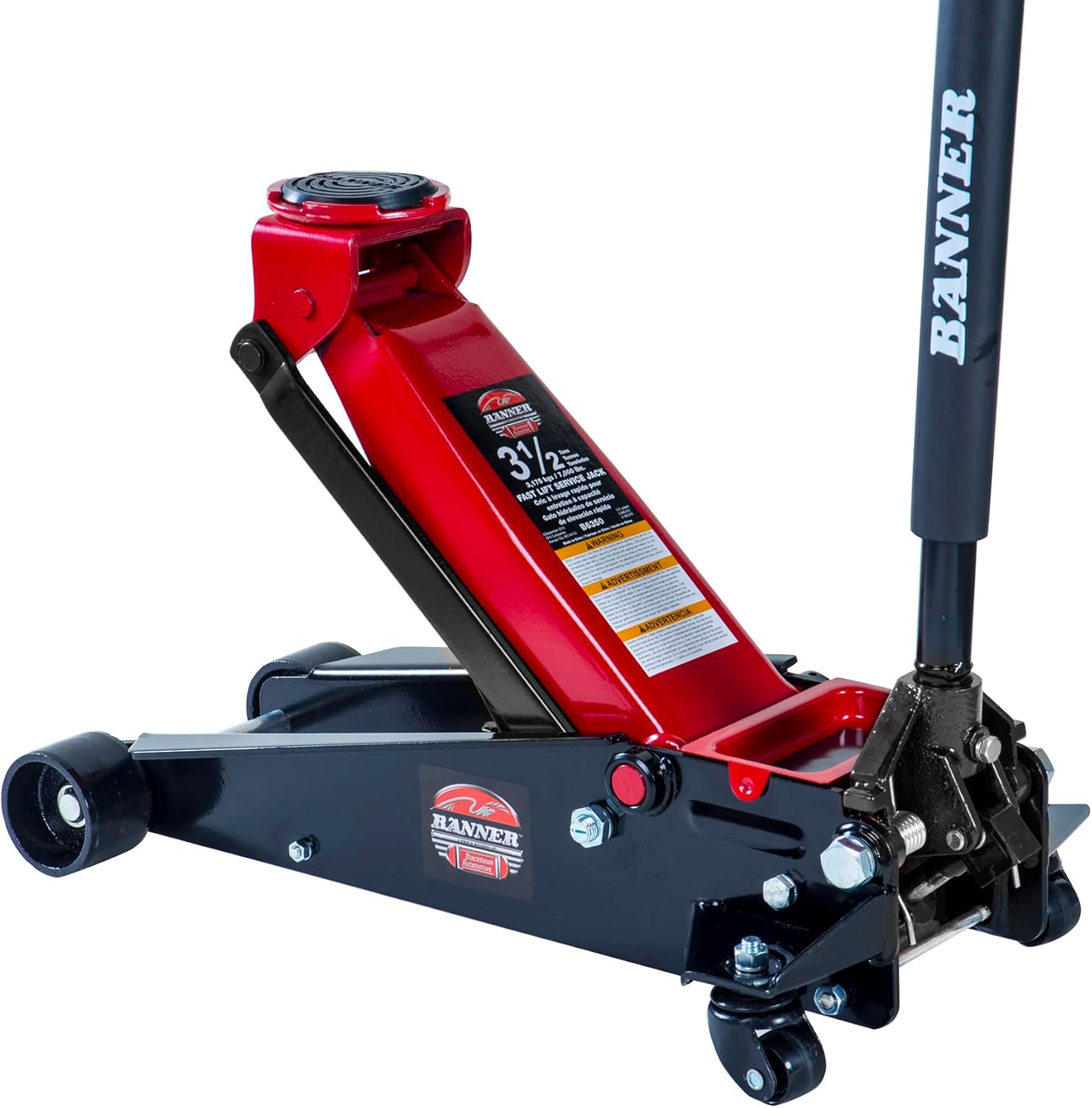
- Support the vehicle with jack stands, never just a floor jack.
- Work in a well-ventilated area and do not run the engine in a closed garage.
- Be especially careful if you suspect exhaust fumes are entering the cabin, because carbon monoxide exposure is dangerous.
If the leak is near the manifold or front pipe, you may need to start the engine briefly during diagnosis. Keep hands, clothing, hair, and tools away from belts and fans, and only do this when the car is safely supported and the area is ventilated.
Where Exhaust Leaks Usually Happen
Most leaks come from a few repeat failure points. Finding the exact location helps you decide whether the repair is as simple as tightening hardware or as involved as replacing a section of exhaust.
- Exhaust manifold or manifold gasket
- Flanges and donut gaskets between sections
- Flex pipe cracks
- Rust holes in pipes, resonators, or mufflers
- Loose or broken clamps
- Weld seams and hanger attachment points
Leaks near the engine are usually noisier and more likely to affect drivability or emissions readings. Leaks farther back are often easier to repair, especially if the damaged section is bolted together instead of welded.
How to Find the Leak
Start with a Cold Visual Inspection
With the engine off and the exhaust cool, use a flashlight to inspect from the manifold back to the tailpipe. Look for black soot, rust perforation, missing bolts, loose clamps, separated joints, broken hangers, or a section that looks freshly cracked.
Listen for the Leak
Start the engine briefly and listen carefully. A manifold leak often makes a sharp ticking at the front of the engine. A pipe or muffler leak usually sounds deeper and easier to hear under the vehicle.
Feel for Escaping Exhaust Carefully
Without touching the hot system, move your gloved hand near suspected joints and cracks to feel for pulses of escaping gas. Do not place your hand directly on or right next to a hot pipe. You are only checking for airflow around the area.
Use Soapy Water Only on Cool, Low-pressure Checks
On some accessible joints, a light mist of soapy water can help reveal bubbling from a small leak when the engine is briefly idling. This works best on cooler sections and should be done cautiously. Do not spray near glowing-hot components.
If you still cannot find the source, look at the most corroded or stressed points first. Flex pipes, flange gaskets, and the inlet and outlet of the muffler are common hidden leak areas.
Tools That Make This Job Easier


Decide Whether to Repair or Replace
Not every exhaust leak should be patched. A proper repair depends on how damaged the metal is and whether the part is still structurally sound.
- Use a clamp or gasket replacement if the pipe and flanges are still solid.
- Use an exhaust bandage or sealant only as a temporary fix on a small hole or seam leak.
- Replace the section if the pipe is thin, flaky with rust, split open, or leaking in multiple spots.
- Replace rather than patch if a muffler or resonator has major corrosion around its body or seams.
- Get professional help if the repair requires cutting and welding close to emissions components.
A temporary patch may quiet the leak for a while, but it rarely lasts on badly rusted metal. If the surrounding metal crumbles under a wire brush or screwdriver, replacement is the better long-term choice.
How to Fix a Loose Clamp or Slip Joint Leak
This is one of the easiest exhaust repairs and often the cheapest. A slip joint leak happens where one pipe section slides into another and is secured with a clamp.
- Spray the clamp fasteners with penetrating oil and let it soak.
- Raise and support the vehicle safely if needed for access.
- Inspect the joint for misalignment, corrosion, and missing hardware.
- If the clamp is reusable and the pipes are solid, realign the joint and tighten the clamp evenly.
- If the clamp is rusted, distorted, or stripped, remove it and install a new clamp.
- Apply exhaust sealant sparingly at the joint if recommended by the product and if the joint surfaces are still sound.
- Restart the engine and verify the leak is gone.
Do not overtighten a clamp on weak, rusty pipe. You can crush the metal and make sealing worse. If the pipe is too far gone to hold clamp pressure, replace that section.
How to Replace a Flange Gasket or Donut Gasket
Leaking flange gaskets are common where the manifold meets the front pipe or where two exhaust sections bolt together. You may see soot around the flange or hear a sharp leak from that exact point.
- Soak the flange nuts and bolts with penetrating oil well before removal.
- Support the exhaust section so it does not drop and strain other joints.
- Remove the old hardware carefully. Expect heavily rusted studs or bolts to break on older vehicles.
- Separate the flange and remove the old gasket or donut gasket.
- Clean both mating surfaces with a wire brush until rust and old material are removed.
- Install the new gasket in the correct orientation.
- Reassemble with new hardware if possible and tighten evenly to the vehicle’s specification.
- Start the engine and check for any remaining leak or flange movement.
If the flange faces are warped, heavily pitted, or cracked, a new gasket alone may not seal. At that point the affected pipe section or manifold connection may need replacement.
How to Patch a Small Hole in a Pipe or Muffler
A small rust hole or seam leak can sometimes be patched temporarily with exhaust repair tape, bandage, or paste. This is best treated as a short-term solution, not a permanent repair on a daily driver.
- Make sure the exhaust is fully cool and dry.
- Use a wire brush or sandpaper to remove loose rust and dirt around the damaged area.
- If the metal around the hole is paper-thin or crumbling, stop and replace the section instead.
- Apply the repair material exactly as directed, including any curing or wrap instructions.
- Allow the product to set before starting the engine.
- Run the engine and check whether the patch seals the leak.
Patches fail quickly if they are applied over heavy scale, active rust flaking, or a crack that flexes under engine movement. If the leak returns soon, do not keep stacking more patch material on top. Replace the damaged part.
How to Replace a Rusted Pipe, Resonator, or Muffler
If a section is rusted through, split, or leaking in multiple places, replacing it is usually the right move. Many aftermarket exhaust parts are sold as direct-fit bolt-on pieces, while others may require cutting or clamping.
- Confirm the exact failed section before ordering parts.
- Measure pipe diameter and compare the old part to the replacement if needed.
- Spray all fasteners and hanger points with penetrating oil.
- Support the old section before removing clamps, flange hardware, or hangers.
- Cut the old pipe only if necessary and only where the replacement design allows.
- Transfer or replace hangers, gaskets, and clamps as needed.
- Install the new part loosely first, align the system so it does not contact the body or suspension, then tighten all connections.
- Start the engine and listen for leaks, rattles, and vibration.
Exhaust alignment matters. A pipe that is twisted or hung unevenly can leak at a joint, strike the underbody, or stress a flex section. Before final tightening, make sure there is clearance all the way around the repair.
Recommended Tools for This Job


Problems That Can Complicate the Repair
Exhaust work is often simple in theory but frustrating in practice because of heat cycles, corrosion, and limited space. Plan for at least one complication on an older vehicle.
- Broken studs or bolts at flanges or manifold connections
- Pipe sections fused together by rust
- Lack of clearance to remove long exhaust sections
- Cracked manifold or flex pipe that cannot be sealed with clamps
- Oxygen sensor wiring or nearby heat shields in the way
If a manifold stud breaks in the cylinder head, the job quickly becomes more advanced. The same is true if you need torch heat, specialty extractors, or welding equipment to finish the repair correctly.
Checks to Perform After the Repair
Do not assume the job is done just because the new part is installed. A final inspection helps catch small leaks and alignment issues before they become repeat repairs.
- Listen at idle and during light throttle for any remaining ticking, puffing, or hissing.
- Look for movement at joints that suggests loose clamps or uneven flange tightening.
- Check that the exhaust does not touch the heat shields, crossmember, body, or suspension.
- Make sure rubber hangers are supporting the system without stretching or twisting.
- After a short drive and full cool-down, recheck clamp tightness and visible leaks.
If the check engine light was caused by the leak, it may clear on its own after several drive cycles, or you may need to clear the code with a scan tool. If the light comes back, further diagnosis may be needed.
When You Should Not Drive With an Exhaust Leak
Some exhaust leaks are mostly a noise issue, but others should be treated as urgent. The biggest concern is exhaust gas entering the cabin.
- Do not keep driving if you smell exhaust inside the car.
- Avoid driving if the leak is under the front seats or near the firewall and floor area.
- Do not drive if a loose section is hanging low or can strike the road.
- Address leaks near the manifold or catalytic converter quickly because of heat and emissions concerns.
- Stop driving if the leak is causing severe noise, poor performance, or obvious melting risk near nearby components.
If in doubt, repair it before regular driving. Even a small leak can get larger quickly once rust, vibration, and heat cycles continue working on the damaged area.
When to Call a Professional
A DIY repair makes sense when the leak is easy to access and the fix involves clamps, gaskets, or a simple bolt-on section. A professional is the better choice when the job is likely to escalate.
- The leak is at the exhaust manifold or manifold gasket
- You suspect broken studs, warped flanges, or a cracked manifold
- The part needs welding or custom pipe fabrication
- The catalytic converter is involved
- The exhaust is severely rusted and likely to break apart during removal
Shops also have lifts, torches, cutting tools, welders, and replacement hardware on hand, which can turn a half-day driveway struggle into a one- to two-hour repair.
Key Takeaways
- Find the exact leak point first, because the right fix depends on whether the problem is a gasket, clamp, crack, or rusted-out section.
- Replace weak or heavily rusted exhaust parts instead of trying to seal metal that can no longer hold a clamp or patch.
- Use jack stands, let the exhaust cool fully, and never run the engine in a closed garage during diagnosis or testing.
- Recheck for leaks, rattles, and exhaust alignment after the repair so a good part is not ruined by poor installation.
- Get professional help for manifold leaks, broken studs, catalytic-converter-area repairs, or any job that requires welding.
FAQ
Can I Drive with a Small Exhaust Leak?
Maybe for a very short time, but it is not ideal. If the leak is near the front of the vehicle or you smell exhaust in the cabin, stop driving and repair it as soon as possible.
Will an Exhaust Leak Cause a Check Engine Light?
Yes, especially if the leak is near the engine or ahead of an oxygen sensor. It can affect sensor readings and trigger lean-condition or catalyst-related trouble codes.
Does Exhaust Repair Tape Really Work?
It can work as a temporary fix for a small hole or seam leak on otherwise solid metal. It is not a long-term solution for heavily rusted, cracked, or flexing exhaust sections.
How Much Does It Cost to Fix an Exhaust Leak?
DIY cost can be as low as $15 to $50 for a clamp, gasket, or patch, while replacing a larger section may run $100 to $250 or more in parts. Shop repairs commonly range from about $120 for a simple fix to several hundred dollars for major section replacement.
What Does an Exhaust Manifold Leak Sound Like?
It often sounds like a ticking or tapping noise from the engine bay, especially on a cold start. As the metal heats up and expands, the sound may change or become less noticeable.
Can I Fix an Exhaust Leak Without Welding?
Often yes. Many leaks can be fixed with new clamps, gaskets, bolt-on replacement parts, or a temporary patch. Welding is usually needed when the system has custom sections, bad cracks, or damaged areas that cannot be clamped securely.
Why Does My Exhaust Leak Keep Coming Back?
Recurring leaks usually mean the underlying metal is too rusty, the joint is misaligned, the wrong gasket or clamp was used, or the damaged section should have been replaced instead of patched.
Need Parts for This Repair?
The right parts and supplies vary by vehicle.
Select your make and model to find compatible parts and accessories for your car.
Exact Fit
Parts that fit your make and model
Quality You Can Trust
Top brands and OEM quality options
Fast Shipping
Get the parts you need, delivered fast