

Note: This article contains affiliate links. If you click on these links and make a purchase, I may earn a small commission at no extra cost to you. This helps support my research and content. Read my full affiliate disclosure here.
Replacing a worn upper control arm can bring back steering precision and stabilize ride quality on your Ford Ranger. Whether you tow, haul, or use the truck for daily driving, a faulty or fatigued upper control arm affects alignment, tire wear, and overall handling.This guide covers our top shortlisted upper control arms for the Ford Ranger, focusing on parts that address common failure points and provide reliable performance. We evaluate each option for fitment accuracy, bushing and ball joint durability, and how the part affects alignment and steering feel. Read on to understand which attributes matter most and how to pick the best upper control arm for your needs.
Looking for other parts? See all Ford Ranger parts & accessories.
Top Picks at a Glance
| Best Overall The best all-around choice for most situations | Detroit Axle Front Suspension 4‑Piece Control Arm and Ball Joint Kit |  |
| Best Quality Built to a higher standard if you want something more solid | MOOG RK8708 Front Left Upper Control Arm with Ball Joint |  |
| Best Value The sweet spot between price and what you get | Detroit Axle Front Right Upper Control Arm with Ball Joint (K80052) |  |
| Best Budget The cheapest option that still gets the job done reliably | PM Auto Front Right Upper Control Arm with Ball Joint (Fits 1998–2011 Ford Ranger) |  |
| Highest Rated A top-rated pick with lots of positive feedback | Metrix Premium Chassis Parts Front Upper Control Arm Kit with Ball Joints (Left & Right) |  |
| Most Popular A crowd favorite that many people choose with confidence | Detroit Axle Front Upper Control Arms with Ball Joints (2-pack) |  |
| Best Seller A high-volume bestseller chosen again and again | Detroit Axle Front Upper Control Arms with Ball Joints, Pair | 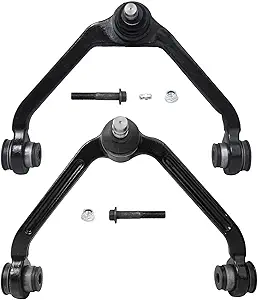 |
1. Detroit Axle Front Suspension 4‑Piece Control Arm and Ball Joint Kit

| Position | Front |
|---|---|
| Includes | 2 upper control arms w/ ball joints + 2 lower ball joints |
| Fitment years | 1998–2011 Ford Ranger; specified Mazda B2300/B2500/B3000/B4000 ranges |
| Manufacturer | Detroit Axle |
This Detroit Axle kit replaces both front upper control arms (with integrated ball joints) and the two lower ball joints, delivering a straightforward repair path for older Ford Ranger and compatible Mazda trucks with coil spring front suspension. The parts are offered as direct-fit replacements and are described as premium alloy with enhanced structural strength to resist corrosion and repeated impact. In practice the kit simplifies a common front-end refresh: install the uppers as assemblies to avoid press-running ball joints, swap in the lower ball joints, and realign. That approach saves time and reduces shop labor compared with rebuilding pressed-in joints. Expect improved steering feel and reduced play if your original components were worn. Limitations: this is a vehicle-specific replacement for the listed Ranger/B-series years and assumes the one-piece coil-spring front setup; it will not fit other front suspension designs. Also, buyers should plan an alignment after installation and accept that aftermarket fit and finish can vary versus factory parts.
Best for: Buyers who want a balanced, no-frills front suspension rebuild that replaces worn control arms and ball joints with ready-to-install assemblies to restore steering precision and reduce shop time.
Less Ideal for: Drivers who need parts for different suspension designs, custom modified Rangers, or those seeking OEM-labeled components for factory-identical finish or materials.
- Direct-fit assemblies for both upper control arms reduce installation time by avoiding separate ball joint pressing
- Includes both upper assemblies and two lower ball joints for a coordinated front-end refresh
- Premium alloy construction and reinforced structure intended to resist corrosion and repeated impact
- Fitment is limited to the specified Ford Ranger and compatible Mazda B‑series years with one-piece coil spring front suspension
Verdict: A practical, ready-to-install front control arm and ball joint kit that restores steering feel and saves installation time for the specified Ranger/B‑series trucks.
2. MOOG RK8708 Front Left Upper Control Arm with Ball Joint

| Auto Part Position | Front Left Upper |
|---|---|
| Fit Type | Vehicle Specific Fit |
| Material Type | Alloy Steel, Iron |
| Manufacturer Warranty Description | 2 year manufacturer warranty |
The MOOG RK8708 is a direct-fit front left upper control arm assembly with an integrated ball joint engineered to restore steering precision and suspension geometry on supported Ford Rangers and related vehicles. It is used as a one-for-one replacement when a worn arm is causing wandering, uneven inner tire wear, or steering play. Built from alloy steel and iron with corrosion-resistant coatings and heat-treated structural areas, the arm aims to withstand road stress and repetitive loads. Because it is a vehicle-specific fit, installation is straightforward for a mechanically competent DIYer or a technician, and it eliminates the need to press in a new ball joint. The practical benefits include improved steering feel, better tire wear characteristics, and longer service life compared with many cheap aftermarket arms. Limitations are that this part covers only the front left upper position and is designed for specific model years, so confirm fitment before buying, and its heavier structural design prioritizes durability over any weight savings favored in race-focused builds.
Best for: Drivers who want a durable, factory-replacement upper control arm to restore steering feel and alignment on a Ford Ranger and prioritize long-term reliability over lightweight race parts.
Less Ideal for: Owners building a track-focused or weight-optimized suspension should consider dedicated performance arms; those needing a different suspension position should look for the matching right or lower arms.
- Direct-fit vehicle-specific design simplifies installation and maintains factory suspension geometry
- Integrated ball joint removes need for separate ball joint replacement or pressing
- Heat-treated alloy steel and iron construction for enhanced structural strength and durability
- Corrosion-resistant coatings on studs and components extend service life under road exposure
- Fitment is limited to the specified front left upper applications and compatible model years
- Not optimized for weight-sensitive performance builds where lighter aftermarket arms are preferred
Verdict: Choose this MOOG upper control arm when you need a durable, direct-fit replacement that restores steering precision and long-term reliability for a Ford Ranger.
3. Detroit Axle Front Right Upper Control Arm with Ball Joint (K80052)

| Auto Part Position | Front Right Upper |
|---|---|
| Auto Part Orientation | Drivers Side |
| Fit Type | Vehicle Specific Fit |
| Material Type | Alloy Steel |
This Detroit Axle front right upper control arm replaces the factory unit and includes a preinstalled ball joint for a single-piece swap on compatible Ranger and Mazda models. Built from alloy steel with a one-piece design for coil spring setups, it is intended for routine suspension repairs and alignment restoration after wear or damage. The integrated ball joint simplifies installation by reducing parts to press in or out, and the vehicle-specific fit aims to match factory geometry so steering and tire wear remain predictable. Because it is a single control arm sold per unit, buyers repairing both sides or replacing other suspension components will need additional parts. The construction looks stout for street and light-duty use, but heavy off-road drivers should verify compatibility and local load expectations. Installation typically requires basic suspension tools and alignment afterward to ensure proper handling.
Best for: Buyers looking for a straightforward, factory-style replacement to restore suspension alignment and steering feel on compatible Ford Ranger and Mazda trucks who prioritize ease of installation and reliable everyday performance.
Less Ideal for: Drivers building a heavy-duty off-road rig or those wanting upgraded performance components should look for reinforced or performance-specific arms instead.
- Integrated ball joint simplifies replacement and reduces labor compared with separate components
- Vehicle-specific fit intended to preserve factory suspension geometry
- Alloy steel construction for durability in normal driving conditions
- One-piece design compatible with coil spring front suspensions
- Sold as a single arm so replacing both sides requires purchasing two units
Verdict: A practical, factory-style replacement upper control arm with an integrated ball joint that makes restoring correct suspension geometry quick and simple for everyday Ranger repairs.
4. PM Auto Front Right Upper Control Arm with Ball Joint (Fits 1998–2011 Ford Ranger)

| Fit Type | Vehicle Specific Fit |
|---|---|
| Auto Part Position | Front Right Upper |
| Material Type | Cast Iron |
| Unit Count | 1 Count |
This PM Auto front right upper control arm is a one-piece, vehicle-specific replacement designed for Ford Ranger models from 1998 through 2011. Made from cast iron and supplied with a rubber bushing and integrated ball joint, it replaces a worn arm to address clunking, steering wander, vibration, and uneven tire wear. Installation is typical for suspension work and may require basic shop tools and an alignment afterward. The cast-iron construction and reinforced design aim for durability under repeated impact loads, while the rubber bushing helps damp road noise and improve handling feel compared with a torn or fatigued original. Expect a straightforward direct-fit swap when you confirm fitment for your Ranger, though professional installation will ensure correct torque and alignment. The product is a budget-focused aftermarket option: it provides a cost-effective way to restore steering stability but lacks any upgraded materials or performance tuning you would find in premium aftermarket arms.
Best for: Drivers looking to restore safe steering and front-end stability on a budget who prioritize a direct-fit, dependable replacement over performance upgrades.
Less Ideal for: Shoppers seeking lightweight or performance-tuned suspension components or those who want upgraded ball joints and bushings for off-road or racing use.
- Vehicle-specific fit for 1998–2011 Ford Ranger which simplifies installation
- Cast iron construction intended for strength and durability
- Integrated ball joint and rubber bushing included for a complete front-right replacement
- Addresses common front-end symptoms like clunking, vibration, and steering wander
- Made from cast iron so it is heavier than some modern forged or stamped aluminum replacement arms
Verdict: A straightforward, budget-focused direct replacement that restores steering stability on 1998–2011 Ford Rangers without adding performance upgrades.
5. Metrix Premium Chassis Parts Front Upper Control Arm Kit with Ball Joints (Left & Right)

| Fit Type | Vehicle Specific Fit |
|---|---|
| Auto Part Position | Front Upper |
| Material Type | Carbon Steel |
| Manufacturer Warranty Description | 3 Year / 36,000 miles Limited Warranty |
This Metrix control arm kit replaces both front upper arms and includes pre-assembled ball joints for a direct, vehicle-specific swap. It is intended for front upper suspension on select Ford Ranger and related Mazda truck years and is supplied as left and right assemblies. Made from carbon steel with a corrosion-resistant coating and a greasable design, the arms are built to handle typical road loads and offer straightforward installation for experienced DIYers or professional shops. The greasable ball joints and pre-greasing help reduce early wear and make periodic maintenance easier, while the manufacturer certifications and 3 year/36,000 mile limited warranty provide added confidence in long-term reliability. Expect restored steering stability and reduced suspension noise when worn factory arms are replaced. Limitations: fitment is vehicle specific so confirm year and configuration before buying, and steel construction means slightly higher weight than aluminum alternatives though it can improve durability in rough use.
Best for: Buyers who prioritize a durable, serviceable replacement that restores steering feel and longevity on a maintained Ford Ranger and want parts built to automotive quality standards.
Less Ideal for: Shoppers seeking the lightest possible aftermarket upgrade or a universal fit part for multiple vehicle types should look elsewhere.
- Vehicle-specific fit for front upper position reduces installation fitment issues.
- Pre-greased assemblies and greasable ball joints simplify maintenance and extend service life.
- Carbon steel construction with corrosion-resistant coating for durability in harsh conditions.
- Includes both left and right arms with ball joints so both sides are refreshed at once.
- Steel construction is heavier than aluminum options which may slightly affect unsprung weight.
- Compatibility is limited to specified Ford Ranger and listed Mazda models so it is not universal.
Verdict: Choose this kit if you want a durable, maintenance-friendly factory-quality replacement that restores reliable steering and suspension performance on your Ford Ranger.
6. Detroit Axle Front Upper Control Arms with Ball Joints (2-pack)

| Fit Type | Vehicle Specific Fit |
|---|---|
| Auto Part Position | Front Left Upper |
| Unit Count | 2 Count |
| Manufacturer Part Number | K80052_K80054 |
This Detroit Axle kit replaces both front upper control arms and includes preinstalled ball joints for a straightforward swap on compatible Ranger and Mazda coil-spring front suspensions. It is intended as a direct-fit replacement to restore proper steering geometry and suspension function after wear or damage. The arms are described as made from premium alloy with corrosion-resistant coating and reinforced structure to resist repeated impact and extend service life. For DIY installers the one-piece design and vehicle-specific fit make installation easier than rebuilding separate ball joints, and the integrated assemblies reduce alignment headaches when installed correctly. Keep in mind these are aftermarket factory-quality replacements rather than an upgraded performance part, so drivers seeking firmer handling or heavy-duty off-road strength should consider upgraded control arms. Also confirm the arm shape matches your existing parts and that your truck uses coil-spring front suspension before ordering, since this kit is not universal.
Best for: Buyers who prioritize reliable, like-for-like replacement parts supported by strong customer feedback and who want a straightforward install to restore original handling and steering.
Less Ideal for: Drivers looking for performance-tuned or heavy-duty suspension components for frequent off-road use or substantially modified vehicles should choose purpose-built upgrades instead.
- Includes both left and right upper control arms with integrated ball joints for a complete front-side replacement
- Vehicle-specific direct-fit design simplifies installation for coil-spring front suspensions
- Premium alloy construction and corrosion-resistant finish for improved durability
- Not a performance or heavy-duty upgrade; built as a factory-style replacement rather than for extreme off-road loads
Verdict: Choose this kit if you want a dependable, ready-to-install factory-style pair of front upper control arms with ball joints to restore your Ranger's steering and suspension performance.
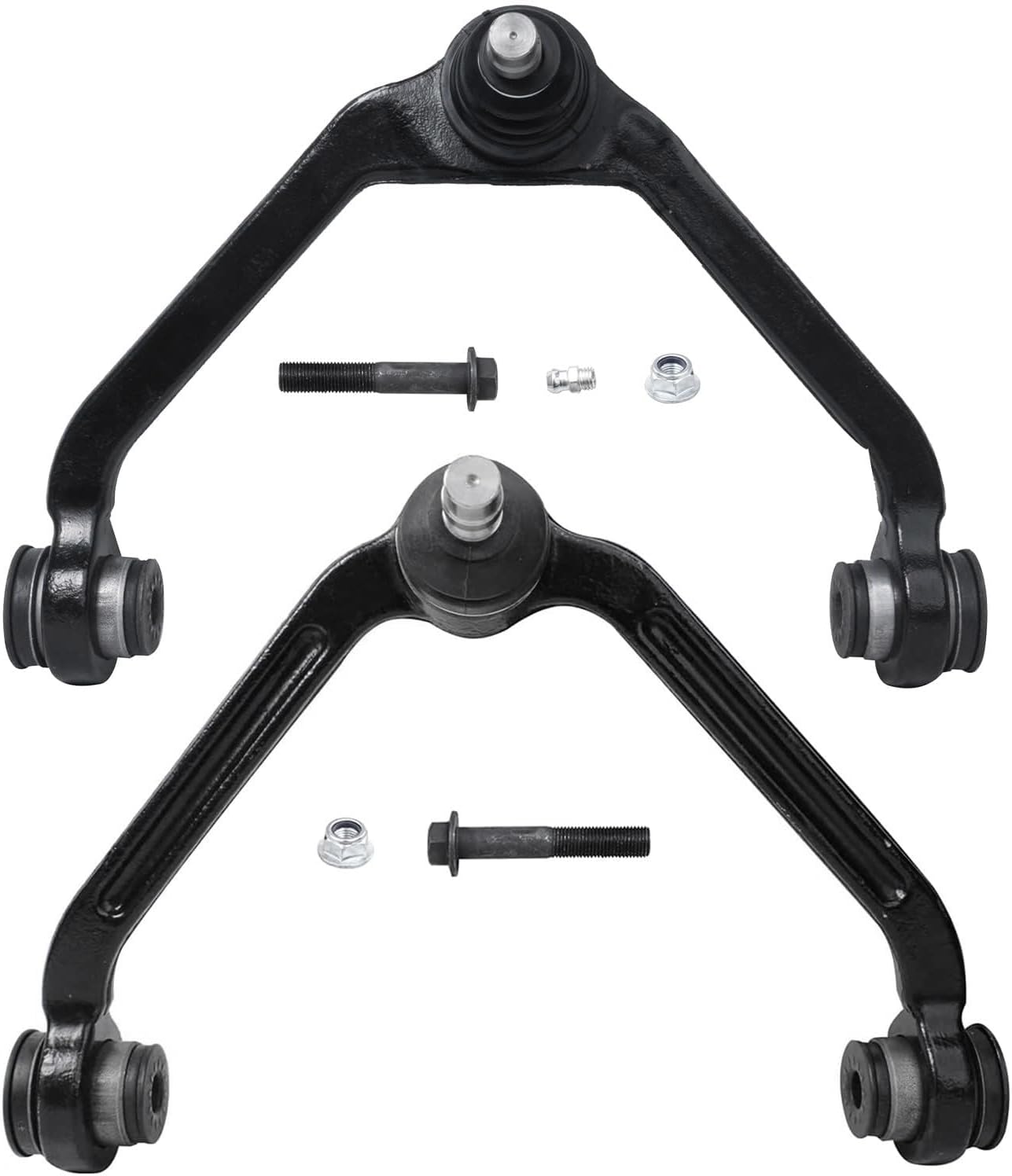
7. Detroit Axle Front Upper Control Arms with Ball Joints, Pair
| Fit Type | Vehicle Specific Fit |
|---|---|
| Auto Part Position | Bottom |
| Orientation | Drivers Side |
| Manufacturer | Detroit Axle |
These Detroit Axle front upper control arms replace the factory upper arms and come as a pair with preinstalled ball joints for straightforward installation. They are sold as vehicle-specific fit parts intended for late 1990s to early 2000s Ford Ranger, Explorer, Sport Trac and related platforms with torsion bar suspension. The one-piece design and factory-style mounting make them suitable for routine repairs or restoring steering geometry after worn original parts. Buyers will appreciate that the assemblies are tested for impact and fatigue and arrive ready to install, which reduces labor for ball joint press work. Practical benefits include restoring wheel alignment and steering response and avoiding the hassle of separately sourcing ball joints. Limitations to consider are that these are replacement control arms for stock ride height and suspension setups only and do not provide performance adjustability or aftermarket strengthening features, so they are not aimed at heavy-duty off-road modification or performance tuning.
Best for: Buyers who want a reliable, OEM-style replacement to restore steering and alignment on older Ford Ranger-era vehicles without modifying suspension geometry.
Less Ideal for: Drivers planning lifted, performance, or heavy off-road builds who need adjustable or reinforced aftermarket control arms.
- Sold as a complete pair with preinstalled ball joints for faster, simpler replacement
- Vehicle-specific fit intended to match factory mounting points and restore steering geometry
- One-piece design reduces installation steps compared with separate-arm and ball-joint replacements
- Manufacturer states parts undergo impact, wear, and fatigue testing
- Designed as a factory-style replacement without performance adjustments or reinforced construction
Verdict: A straightforward, ready-to-install pair of factory-style upper control arms that restore steering and alignment on older Ranger/Explorer platforms.
Choosing the Right Ford Ranger Upper Control Arm: Key Factors to Consider
Fitment and Year Compatibility
Accurate fitment to the Ford Ranger is the foundation of a useful replacement upper control arm. Differences in model years and subconfigurations can change mounting point locations, pickup points for ball joints, and sway bar or bracket interfaces. Choosing a control arm that specifies compatibility with your Ranger model years prevents installation surprises and the need for aftermarket adapters.
A part that matches factory geometry helps preserve suspension alignment and handling characteristics. If a control arm lists a wide year span, confirm the item references the same mounting pattern and ball joint orientation as your vehicle to avoid clearance or steering issues.
Bushing Type and Durability
Bushings isolate vibration and permit the controlled movement of the upper control arm; their material and design greatly influence NVH and longevity. Rubber bushings provide a compliant ride but can degrade faster under heavy loads or exposure to road salts. Polyurethane bushings are firmer and resist wear better, but they may transmit more noise and feel to the cabin.
Consider the typical driving conditions for your Ranger. If you tow or frequently drive on rough roads, prioritize robust bushing compounds and proven sealing methods that reduce the risk of early failure from dirt and moisture.
Ball Joint Quality and Serviceability
Many upper control arms include an integrated ball joint, which is a primary wear point affecting steering play and tire wear. The ball joint's construction, such as stud material, bearing type, and sealing, determines how long it will hold up under load. Some designs include grease fittings or are replaceable, which can extend service life and lower long-term maintenance costs.
When assessing ball joint quality, look for corrosion-resistant finishes, robust dust boots, and clarity about whether the joint is press-fit or bolted. Higher-quality joints reduce the chance of sudden steering looseness and help maintain precise alignment.
Material and Corrosion Protection
The base material and protective coatings influence structural longevity, especially in climates that use road salts or where the vehicle is exposed to moisture. Control arms made from thicker steel or with strategic reinforcement at stress points will withstand heavy loads and impacts better than thin, unstiffened components.
Powder coatings, e-coatings, and zinc plating are common protective finishes. Prefer parts that specify a durable corrosion barrier and well-sealed welds or joints to prevent rust from compromising mounting holes and threaded areas.
Preservation of Alignment Geometry
A replacement upper control arm should either preserve the factory alignment geometry or clearly state the alignment differences it introduces. Small changes in arm length, ball joint offset, or mounting hole placement can alter camber, caster, and toe settings, requiring additional alignment adjustments after installation.
For owners who want minimal alignment work, choose arms built to OEM dimensions. If you intend to change vehicle ride height or suspension geometry, consider how the control arm's design will interact with those modifications and whether aftermarket alignment adjustments will be necessary.
Installation and Maintenance Requirements
How easy a control arm is to install affects how quickly you can return the Ranger to service and whether the job is feasible as a DIY task. Features that simplify installation include preassembled ball joints, factory-style mounting holes, and bushings that do not require special presses or fixtures.
Also consider maintenance needs. Control arms with grease fittings or replaceable ball joints allow periodic servicing that can extend service life. Conversely, fully sealed, non-serviceable units may offer lower short-term fuss but could require whole-arm replacement if a single component fails.
Common Symptoms of a Failing Upper Control Arm
Understanding typical symptoms helps diagnose whether the upper control arm is the likely cause of handling issues on your Ford Ranger. Pay attention to changes in steering feel, unusual tire wear patterns, and noise from the front suspension.
Early signs often start subtly and worsen over time if left unaddressed. Being able to distinguish control arm symptoms from other suspension or steering faults lets you decide whether to inspect the arm or pursue other repairs first.
- Uneven or accelerated inner or outer tire wear indicating camber change
- Clunking or knocking noises when going over bumps or during steering inputs
- Loose or wandering steering that feels less precise at highway speeds
- Vibration or shimmy through the steering wheel under braking or at speed
Assessing Wear: Visual Checks and Quick Tests
A simple visual inspection can reveal obvious bushing deterioration, cracked dust boots, or excessive rust at mounting points. Park the truck on level ground and examine the upper control arm for cracks, missing material, or separated bushing faces.
Perform quick physical checks by lifting the front end and supporting it securely. With the wheel off, grasp the hub at 12 and 6 o'clock and try to rock it. Excessive play often points to a worn ball joint or a loose control arm bushing.
- Inspect dust boots and bushing rubber for cracks, splitting, or displacement
- Check welds and mounting holes for signs of elongation or corrosion
- Use a pry bar to assess bushing movement between the arm and mounting point
Installation Tips for a Smooth Swap
Preparation reduces installation time and helps preserve alignment. Before removing the old arm, mark the relative position of the arm at the mounting points if the design allows so you can approximate factory geometry on assembly. Use proper torque values at all fasteners and replace any mounting hardware that shows wear.
When installing a new upper control arm, tighten bolts to the recommended specification with the suspension at the correct ride height where applicable. If the replacement arm has a grease fitting, lubricate the joint after initial installation and retorque fasteners after a short break-in period if the manufacturer suggests it.
- Support the vehicle safely and work with the suspension unloaded when removing bushings
- Replace fasteners or nuts that show thread damage or corrosion
- Schedule a wheel alignment after installation unless the arm preserves factory geometry
How Replacement Affects Alignment And Tire Wear
A properly fitted upper control arm will restore the factory suspension geometry, reducing uneven tire wear and improving handling. However, if the replacement arm deviates from OEM dimensions, you may see changes in camber or toe requiring corrective alignment adjustments.
After replacing the upper control arm, monitor tire wear patterns for the first few hundred miles and consider performing a professional alignment. Correct alignment not only improves handling but also extends tire life, making it a critical follow-up to suspension component replacement.
- Small geometry changes can accelerate inner or outer edge tire wear
- Alignment checks are especially important if the vehicle was previously pulling or if wear patterns were present
When To Repair Versus Replace Components
Some control arms allow replacement of bushings or ball joints separately, while others are sealed assemblies intended to be swapped as a unit. Evaluate whether the wear is limited to a serviceable component or if corrosion and structural damage warrant full arm replacement.
For older Rangers with rusted mounting points or significant metal fatigue, a full replacement arm is often the safer and more cost-effective choice. For relatively new or lightly used vehicles, servicing the specific failing component may extend service life with lower material cost and waste.
- Replace the whole arm if welds, mounting holes, or the arm body show structural damage
- Consider bushing or ball joint service when those parts alone show wear and the arm body is sound
Still looking for the perfect fit?
Select your Ford Ranger configuration to see the most relevant Control Arms recommendations
How We Chose the Best Ford Ranger Upper Control Arm
We narrowed the field by prioritizing items that meet the fitment expectations and service demands of Ford Ranger owners. Evaluation criteria included exact vehicle fitment across model years, overall build quality, and the design of mounting points to ensure OEM-style geometry. Durability of bushings and the type and rating of integrated ball joints were weighed heavily because these components directly affect steering precision and component life. Corrosion protection and material thickness were considered to estimate long-term reliability in varied driving conditions. Ease of installation and whether the design preserves factory alignment settings were also assessed so owners can minimize shop time and alignment corrections. We excluded items without clear vehicle fitment information, those lacking robust bushing or ball joint specifications, and parts with construction likely to require early replacement. The final selections reflect the combination of fit, durability, and serviceability that matter most for Ford Ranger front suspension upgrades.
Our full evaluation process is outlined in our review methodology.
FAQ
How do I tell if my Ford Ranger needs an upper control arm replacement?
Common indicators include clunking noises over bumps, loose steering, and uneven tire wear. A physical inspection showing torn bushings or a floppy ball joint usually confirms the need for replacement.
Can I replace just the bushing or ball joint on the upper control arm?
It depends on the design. Some arms allow separate bushing or ball joint service, while many modern arms are sold as sealed assemblies. Serviceable joints can extend life but check whether the arm requires special tools for removal.
Will replacing the upper control arm fix alignment issues on my Ranger?
Replacing a worn upper control arm can correct alignment drift caused by stretched bushings or a worn ball joint. After replacement, however, a professional alignment is usually recommended to ensure camber and toe are within specification.
Are greaseable ball joints worth it for this vehicle?
Greaseable ball joints can extend service life when regularly maintained, especially if you drive in dusty or off-road conditions. They require periodic lubrication, but that maintenance can delay replacement compared with sealed joints.
What causes premature control arm bushing wear on a Ford Ranger?
Frequent heavy loads, harsh roads, and exposure to road salt or contaminants accelerate bushing degradation. Aggressive driving and off-road use also increase stress on bushings and joints, leading to earlier failure.
How long should a replacement upper control arm last?
Service life varies widely by material, driving conditions, and maintenance. With quality construction and normal driving, many upper control arms last several years, but harsh conditions or poor corrosion protection can shorten that span.
Final Verdict
When choosing an upper control arm for your Ford Ranger, prioritize correct fitment and components that preserve factory suspension geometry. Durable bushings and a well-made ball joint reduce noise, restore steering precision, and limit uneven tire wear.Balance the desire for serviceable components against the benefits of a sealed, maintenance-free assembly based on how you drive and maintain the vehicle. After installation, plan for an alignment check to lock in handling improvements and maximize tire life.
Explore More:
- Check out all Ford Ranger parts & accessories
- Explore Control Arms Maintenance & Repair Guides
- Explore Suspension & Steering
- Browse all Auto Parts
