

Note: This article contains affiliate links. If you click on these links and make a purchase, I may earn a small commission at no extra cost to you. This helps support my research and content. Read my full affiliate disclosure here.
If you drive a 1998-2011 Ford Ranger, worn control arms can cause vague steering feel, uneven tire wear, and a noisy suspension. Choosing the right control arm matters because fitment and bushing quality directly affect ride comfort, alignment stability, and long-term durability. This guide collects the top control arm options suited to the Ranger's suspension geometry and common service needs.We shortlisted seven control arms that match the Ranger's fitment and real-world demands, evaluating each for build quality, bushing materials, and ease of installation. Read on to understand what to expect during replacement and which features matter most for reliable steering and suspension performance.
Looking for other parts? See all Ford Ranger parts & accessories.
Top Picks at a Glance
| Best Overall The best all-around choice for most situations | MOOG CK80052 Front Right Upper Control Arm with Ball Joint |  |
| Best Quality Built to a higher standard if you want something more solid | MOOG Front Right Lower Suspension Control Arm with Ball Joint (RK620498) |  |
| Best Value The sweet spot between price and what you get | PetMigo Front Upper Control Arm and Ball Joint 10‑Piece Suspension Kit for Ford Ranger (RWD) |  |
| Best Budget The cheapest option that still gets the job done reliably | Koxot Front Upper Control Arm Kit with Ball Joints (2-Pack) |  |
| Highest Rated A top-rated pick with lots of positive feedback | Detroit Axle Front Upper Control Arms with Ball Joints (2‑pc) |  |
| Most Popular A crowd favorite that many people choose with confidence | Detroit Axle Front Upper Control Arms with Ball Joints, pair | 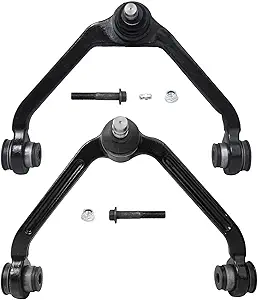 |
| Best Seller A high-volume bestseller chosen again and again | Detroit Axle 12pc Front End Suspension Kit for Ford Ranger and Mazda B-Series |  |
1. MOOG CK80052 Front Right Upper Control Arm with Ball Joint

| Fit Type | Vehicle Specific Fit |
|---|---|
| Auto Part Position | Front Right Upper |
| Auto Part Orientation | Drivers Side |
| Material Type | Rubber Bushings |
The MOOG CK80052 is a front right upper control arm assembly that replaces the factory unit on 1998–2011 Ford Ranger trucks. It arrives as a complete arm with a preinstalled ball joint and rubber bushings so you can swap a worn arm without sourcing separate parts. MOOG emphasizes a high-utilization design with reinforced components intended for heavier loads and rough roads, which translates to a sturdier feel and longer life compared with basic aftermarket arms. In practice this part restores proper wheel alignment, reduces steering play, and cuts down on inner tire wear caused by worn suspension links. Installation is typical for upper control arms and may require alignment afterward; the part weight and unfinished finish mean expect some surface prep if you want corrosion protection. This is a straightforward replacement for drivers who want a robust, vehicle-specific arm that matches factory mounting points while offering enhanced durability for demanding use.
Best for: Buyers who want a direct-fit, tougher-than-basic replacement to restore steering feel and suspension geometry on a Ranger used for daily driving or occasional heavy loads.
Less Ideal for: Drivers seeking a fully finished or cosmetic-ready part out of the box or those who need an extended aftermarket warranty.
- Complete assembly with preinstalled ball joint simplifies replacement and reduces parts sourcing
- High-utilization design components aimed at heavier loads and rough-road durability
- Vehicle-specific fit for direct replacement on 1998–2011 Ford Ranger front right upper position
- Rubber bushings provide a balanced combination of compliance and control
- Unfinished surface may require painting or rust protection for long-term corrosion resistance
- Manufacturer warranty period listed as 30 days which is relatively short
Verdict: A direct-fit, heavy-duty replacement arm that restores steering stability on 1998–2011 Ford Ranger trucks while simplifying installation with a preinstalled ball joint.
2. MOOG Front Right Lower Suspension Control Arm with Ball Joint (RK620498)

| Fit Type | Vehicle Specific Fit |
|---|---|
| Auto Part Position | Right |
| Auto Part Orientation | Front & Inside |
| Material Type | Alloy Steel, Iron |
This MOOG front right lower control arm and ball joint assembly is a direct-fit replacement designed for the Ford Ranger range covered by the listing. It reconnects the wheel assembly to the frame and restores proper suspension geometry, which helps steering response and straight-line stability. Constructed from alloy steel and iron with corrosion-resistant coatings and heat-treated structural areas, the part aims to resist wear from road stress and deliver longer service life than a worn original. The integrated ball joint simplifies installation compared with separate-component swaps and makes this a convenient, single-piece repair for the front-right lower position. Because it is vehicle-specific, it should bolt in without modification when matched to the listed model years; however, installers should still check alignment after replacement. Buyers focused on performance will appreciate the reinforced construction and factory-style fit, though drivers seeking an upgraded performance arm with adjustable alignment or lighter materials will need to look at dedicated aftermarket performance arms instead.
Best for: Drivers who want a durable, factory-style replacement to restore steering feel and handling on a 1998–2011 Ford Ranger without custom modification.
Less Ideal for: Enthusiasts looking for adjustable camber/caster control or lightweight race-focused suspension components should consider dedicated performance arms instead.
- Direct-fit, vehicle-specific design for straightforward installation
- Integrated ball joint reduces parts and speeds replacement
- Heat-treated alloy steel and iron construction for structural strength
- Corrosion-resistant coatings to extend service life
- Not an adjustable performance arm, so alignment tweaks require separate components
- Single-piece replacement may be heavier than lightweight performance options
Verdict: A strong, factory-style front right lower control arm with an integrated ball joint that restores handling on 1998–2011 Ford Rangers without requiring modifications.
3. PetMigo Front Upper Control Arm and Ball Joint 10‑Piece Suspension Kit for Ford Ranger (RWD)

| Fitment | Ford Ranger 1998-2011 RWD; select Mazda B2300/B2500/B3000/B4000 models |
|---|---|
| Unit Count | 10 Count |
| Material Type | Alloy Steel |
| Auto Part Position | Front Upper |
This PetMigo 10‑piece kit provides front upper control arms with preinstalled ball joints plus sway bar links, lower ball joints, and inner and outer tie rod ends to refresh the entire front steering linkage on compatible Rangers. It is intended as a direct-fit replacement for 1998–2011 Ford Ranger RWD models with one‑piece front suspension and coil springs, so installation is straightforward for a competent DIYer or a shop performing a full front-end overhaul. The parts are made from alloy steel with protective coatings to resist rust, and assemblies include bushings that help reduce noise and vibration. Because the kit replaces multiple wear items at once it saves time compared with sourcing individual components and helps restore proper steering geometry and alignment. Limitations are that this is a vehicle-specific kit for certain Ranger and Mazda pickup years and configurations only and does not cover trucks with torsion‑bar or 4×4 front suspensions, so confirm fitment before buying.
Best for: Buyers who want a cost‑effective way to rebuild the front steering and suspension on a RWD Ford Ranger with coil springs and prefer replacing all wear items in one service interval.
Less Ideal for: If you only need a single control arm or have a torsion‑bar or 4×4 Ranger front suspension, this full 10‑piece kit is not the right choice.
- Complete 10‑piece kit replaces upper control arms, ball joints, sway bar links and tie rod ends to address multiple wear points at once
- Preinstalled ball joints and bushings reduce installation steps and help limit road noise and vibration
- Alloy steel construction with coating for improved strength and corrosion resistance
- Designed as vehicle‑specific direct fit for easier alignment and faster installation
- Fits only specific RWD Ford Ranger and listed Mazda pickup years with coil‑spring front suspension, not suitable for torsion‑bar or 4×4 front setups
Verdict: If you want a complete, vehicle‑specific front steering rebuild for a RWD Ford Ranger with coil springs, this 10‑piece PetMigo kit delivers the most convenient all‑in‑one solution.
4. Koxot Front Upper Control Arm Kit with Ball Joints (2-Pack)

| Fit Type | Vehicle Specific Fit |
|---|---|
| Auto Part Position | Front Upper |
| Material Type | Iron |
| Unit Count | 2 Count |
| Manufacturer Warranty Description | 2-years |
This Koxot kit replaces both front upper control arms and includes preinstalled ball joints to restore steering geometry and suspension function on 1998–2011 Ford Ranger 2WD models with one-piece coil-spring front suspension and the comparable Mazda B-series years listed. Installation is typical for control-arm swaps: remove the old arms, press or unbolt the ball joints as needed, and torque to factory specs; having basic tools or a press speeds the job. The arms are iron construction with a corrosion-resistant surface treatment and reportedly passed extended salt-spray testing, which should help longevity in wet or salted-road environments. Because the pair is sold together and comes from a direct factory source, it is positioned as a budget-friendly replacement without requiring extra ball-joint purchases. Limitations: the parts are vehicle-specific so they only fit the stated Ranger/B-series configurations, and buyers who prefer fully rebuilt OEM units or forged aluminum aftermarket options may want a different choice for lighter weight or brand-name assurance.
Best for: Buyers looking for an affordable, complete front upper control arm replacement to restore handling on a 1998–2011 Ranger or the listed Mazda B-series trucks who prioritize cost-effective, direct-fit parts.
Less Ideal for: Drivers seeking lightweight performance upgrades, bespoke tuning parts, or parts for 4WD or different front suspension designs should consider other options.
- Includes both left and right front upper control arms with ball joints for a complete front-end replacement
- Iron construction with electrostatic salt-spray surface treatment for improved corrosion resistance
- Vehicle-specific fit for common Ranger and Mazda B-series model years reduces compatibility guesswork
- Sold as a 2-piece kit so you replace both sides at once to restore balanced handling
- Fits only 2WD Rangers with one-piece coil spring front suspension and the listed Mazda models, so not universal
- Iron construction is durable but heavier than forged aluminum aftermarket alternatives
Verdict: A budget-friendly, ready-to-install two-piece front upper control arm kit that restores steering and suspension function on 1998–2011 Ford Ranger 2WD models.
5. Detroit Axle Front Upper Control Arms with Ball Joints (2‑pc)

| Fit Type | Vehicle Specific Fit |
|---|---|
| Auto Part Position | Front Left Upper |
| Unit Count | 2 Count |
| Manufacturer Part Number | K80052_K80054 |
This Detroit Axle kit supplies both front upper control arms with integrated ball joints for coil-spring front suspensions on 1998–2011 Ford Rangers and compatible Mazda B-series models. It is a direct-fit, vehicle-specific replacement intended for owners who need a straightforward swap to restore steering geometry and front suspension stability. The arms are made from a premium alloy with a black corrosion-resistant finish and claim enhanced structural strength to resist repeated impacts. That construction and the included ball joints mean fewer separate parts to source and a faster install compared with rebuilding existing arms. Expect improved serviceability and a restoration of factory-like handling when worn original components are causing play or uneven tire wear. Limitations are typical of replacement suspension parts: these are standard replacement arms not performance-upgraded components, so drivers seeking stiffer aftermarket geometry or adjustable alignment features will need a different product. Also confirm visual match to your existing arms before ordering to ensure correct fitment.
Best for: Buyers who prioritize a reliable, factory-style replacement to restore original steering feel and stability on a 1998–2011 Ford Ranger or the listed Mazda B-series trucks.
Less Ideal for: Drivers wanting performance-adjustable arms, aftermarket lift or lowered suspension tuning, or custom alignment features should consider specialized aftermarket options instead.
- Vehicle-specific direct-fit design for straightforward installation
- Includes integrated ball joints so there is no need to press in separate joints
- Premium alloy construction with corrosion-resistant finish for durability
- Designed to restore factory steering geometry and reduce play
- Not an adjustable or performance-oriented control arm option
Verdict: Choose this kit when you need a dependable, direct-fit pair of front upper control arms with ball joints to restore factory steering and suspension performance on a 1998–2011 Ford Ranger.
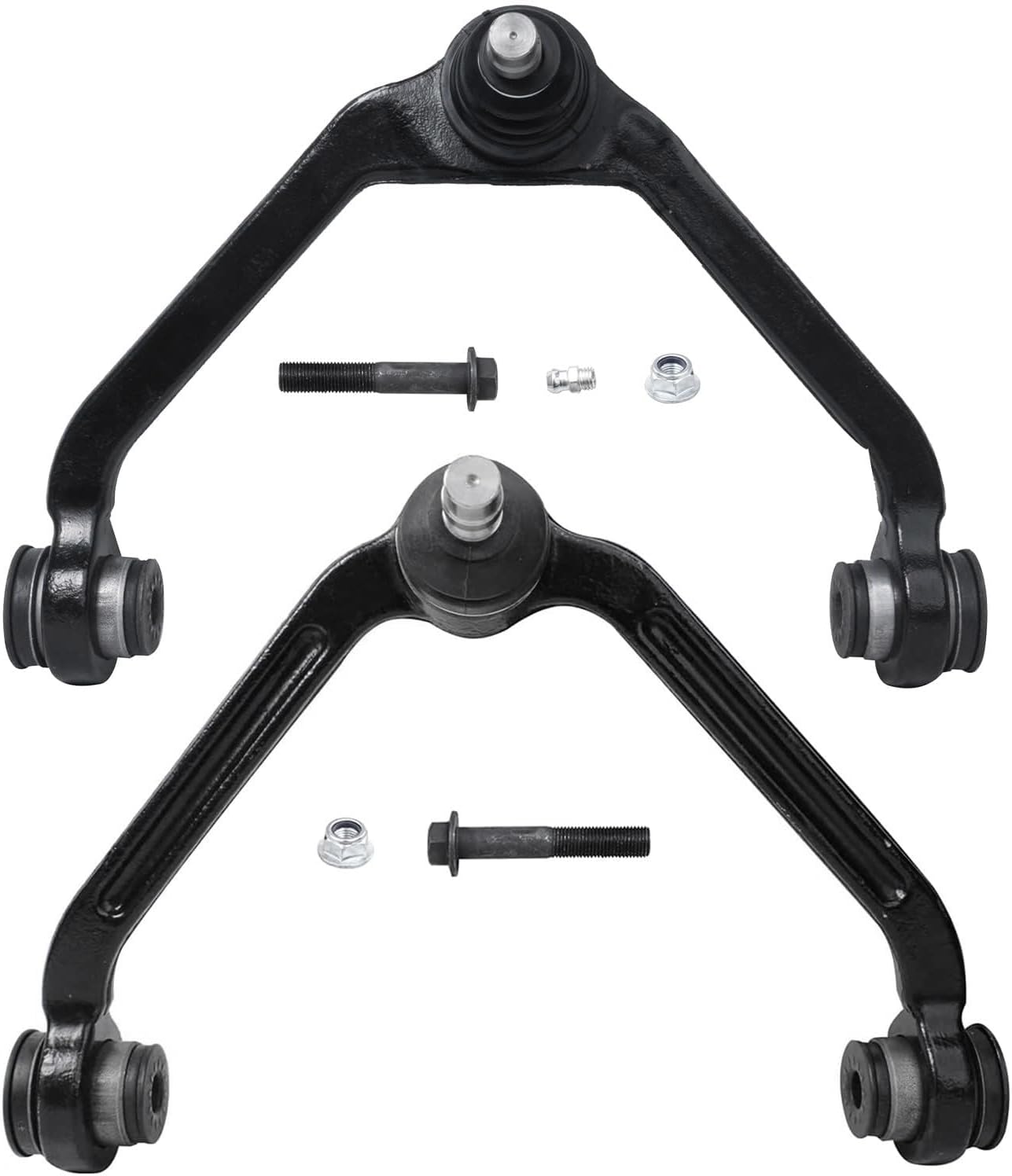
6. Detroit Axle Front Upper Control Arms with Ball Joints, pair
| Fit Type | Vehicle Specific Fit |
|---|---|
| Auto Part Position | Bottom |
| Orientation | Drivers Side |
| Manufacturer | Detroit Axle |
| Manufacturer Part Number | K8708_K80068 |
These Detroit Axle front upper control arms replace the factory upper arms on 1998–2011 Ford Ranger and a range of related models. Sold as a pair, each arm comes with an integrated ball joint so installation restores steering geometry and wheel alignment without sourcing separate components. The arms are finished in black and are described as vehicle specific fit, which simplifies swapping them into a Ranger with torsion bar front suspension. Detroit Axle states the parts undergo impact and fatigue testing and the listing includes a 10-year warranty, which provides useful peace of mind. Practical benefits include restoring front-end stability, reducing play in the steering, and getting alignment back into spec after worn-arm removal. Limitations are that these are direct replacement-style arms rather than performance uprated pieces, so drivers seeking heavy-duty or lifted-suspension upgrades should look elsewhere, and professional alignment after installation is still required to maximize tire life and handling.
Best for: Buyers who want a confidence-building, like-for-like replacement to restore steering feel and alignment on a Ranger and prioritize tested parts and warranty coverage.
Less Ideal for: Drivers planning heavy off-road use, lifted suspension, or seeking performance-strength control arms should consider reinforced aftermarket options instead.
- Sold as a complete pair with integrated ball joints for straightforward replacement
- Vehicle-specific fit for 1998–2011 Ford Ranger and listed compatible models simplifies installation
- Manufacturer reports impact, wear, and fatigue testing for durability expectations
- 10-year warranty provides long-term coverage and buyer reassurance
- Designed as factory-replacement quality rather than heavy-duty or performance upgrade
Verdict: A ready-to-install, warranty-backed pair of front upper control arms that restores factory steering geometry on 1998–2011 Ford Ranger models.
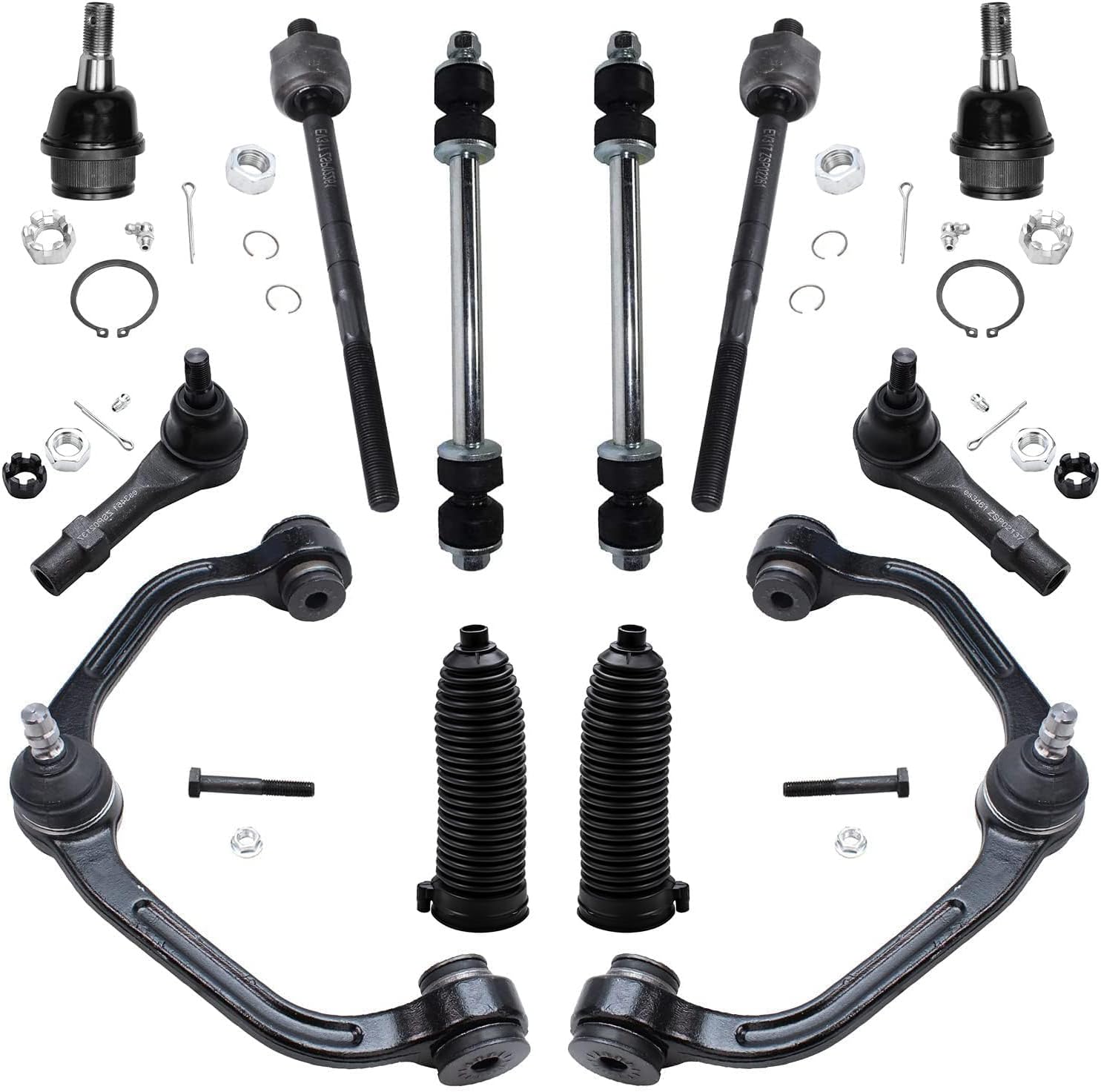
7. Detroit Axle 12pc Front End Suspension Kit for Ford Ranger and Mazda B-Series
| Fitment | 1998–2011 Ford Ranger (2WD) and compatible Mazda B2300/B2500/B3000/B4000 ranges |
|---|---|
| Kit contents | 2 upper control arms, 2 lower ball joints, 4 tie rod pieces, 2 sway bar links, 2 boots |
| Manufacturer | Detroit Axle |
| Manufacturer Part Number | 80466-12A |
| First available | February 27, 2018 |
This Detroit Axle 12-piece front end suspension kit bundles the common wear items needed when overhauling the front end on a 1998–2011 Ford Ranger (and matching Mazda B-series models). It installs as a coil-spring front suspension replacement and includes two upper control arms, two lower ball joints, four inner/outer tie rod pieces, two sway bar links, and protective boots. For routine repair or a backyard suspension refresh, the kit saves time by matching several factory-replacement parts in one package and helps restore steering feel and alignment when worn components are the source of play and vibration. Detroit Axle reports manufacturing to ISO standards and the parts are tested for impact and fatigue, which should reassure buyers prioritizing consistency and durability. Expect the parts to be a direct-fit style solution rather than a performance upgrade, so alignment and torque specs still need attention at installation. Also factor in that some items may benefit from professional installation if pressed-in joints or alignment adjustments are required.
Best for: Buyers who want a straightforward, low-risk repair solution to replace worn front-end components on a 1998–2011 Ford Ranger and prefer a complete kit that reduces parts-matching uncertainty.
Less Ideal for: Drivers looking for heavy-duty, lifted, or performance suspension components should consider specialty parts or upgraded control arms instead.
- Comprehensive kit groups the most commonly replaced front suspension parts for a single repair job.
- Parts are manufactured in ISO-certified facilities and subjected to impact and fatigue testing.
- Saves time sourcing individual components and helps restore steering response and alignment when worn parts are replaced.
- Designed as factory-style replacements, not performance or heavy-duty upgrades.
Verdict: This full front-end kit is the practical choice for anyone wanting a reliable, factory-style repair that quickly replaces the common worn suspension parts on 1998–2011 Ford Rangers.
Choosing the Right 1998-2011 Ford Ranger Control Arm: Key Factors to Consider
Material and Construction
The control arm's base material and how it is made determine its strength and long-term resistance to deformation. Stamped steel arms are common and cost-effective, while forged or cast units can offer higher strength and better impact resistance. Pay attention to weld quality, gussets, and reinforcement in stress areas because Rangers often encounter potholes and rough roads.
Construction also affects weight and corrosion behavior. Lighter arms can marginally improve unsprung weight but may sacrifice robustness. A quality finish or coating helps prevent rust that can lead to early failure or difficult removal later on. For the 1998-2011 Ranger, choose an arm whose construction matches your use: daily driving, light off-road, or heavier-duty work.
Bushing Type and Durability
Bushings control how the arm isolates vibrations and allows controlled movement. Factory-style rubber bushings prioritize ride comfort and noise suppression but can degrade faster under heat, oil exposure, or heavy loads. Polyurethane bushings often increase steering precision and longevity but can transmit more vibration into the cabin.
Consider common symptoms like clunking or wandering steering to determine the right bushing compound. Also evaluate how bushings are bonded or retained; replaceable bushing designs simplify future service. For Rangers used in harsh conditions, choose bushings and mounting methods that resist moisture and abrasion to reduce the frequency of control arm replacement.
Ball Joint Design and Serviceability
Many front control arms incorporate a ball joint that connects to the steering knuckle. Some arms come with an integrated, non-serviceable ball joint while others accept a replaceable joint. Integrated units are convenient for quick swaps but may require replacing the whole arm if the ball joint fails.
Serviceability matters because ball joints typically wear separately from the arm bushings. If you prefer lower long-term maintenance cost, choose an arm that allows ball joint replacement or uses a readily available joint design. Also check dust boot protection and grease fittings, since they extend ball joint life and reduce the chance of premature failure.
Fitment and Alignment Tolerances
Accurate fitment ensures the arm lines up with factory mounting points and suspension geometry. Poorly located holes or incorrect bush spacing can make alignment impossible or lead to abnormal tire wear and handling quirks. Even small dimensional errors can shift camber or caster beyond factory specs.
Look for arms that specify compatibility with the 1998-2011 Ford Ranger and state manufacturing tolerances or pre-fit testing. Some aftermarket arms offer slight adjustments to correct previous misalignment, but most owners will benefit from arms that match OEM geometry to minimize post-installation alignment work.
Corrosion Protection
The Ranger often faces wet, salty, or muddy conditions that accelerate corrosion. Surface treatment, galvanizing, powder coating, or ceramic coatings lengthen service life by preventing rust where metal meets water and road chemicals. Corrosion can lead to seized bolts, difficult future repairs, and weakened structural areas.
When choosing a replacement control arm, prioritize finishes that are proven to hold up under road exposure. Also consider designs that protect critical interfaces like bushing seats and ball joint bores from moisture intrusion to maintain long-term integrity.
Installation Difficulty and Hardware
Control arm installation ranges from straightforward to labor-intensive depending on whether the arm comes with new bushings, ball joint, and mounting hardware. Some arms are drop-in replacements requiring standard hand tools, while others need press-fitting of bushings or special tools to remove the old ball joint. That difference impacts total repair time and whether you can do the job at home.
Check whether the arm includes new mounting bolts or recommends reusing factory hardware. Consider whether an alignment will be required after installation; most front suspension replacements necessitate follow-up alignment to correct camber and toe. Choose an arm that matches your mechanical skill and workshop toolset to avoid surprises during replacement.
Common Symptoms of Worn Control Arms on a Ranger
Understanding typical symptoms helps you decide whether the control arm is the likely culprit. Clunking or knocking noises when going over bumps often point to loose bushings or a failing ball joint. You may notice a wandering steering feel or a lack of steering return, which indicates excessive play in the control arm connections.
Uneven tire wear, especially along the inner or outer edges, can result from altered camber due to arm wear or misalignment after installation. Vibration at speed or a noticeable shimmy during braking can also be related to arm issues, though they can stem from other suspension or tire problems as well. If you observe any of these symptoms, inspect the control arms, bushings, and ball joints as part of the diagnosis.
- Clunking or knocking over bumps
- Wandering steering or poor steering return
- Uneven tire wear patterns
- Vibration or shimmy at speed
Upper Control Arm Vs Lower Control Arm on the Ranger
The Ranger's front suspension uses both upper and lower control arms in certain model setups. Upper arms typically handle alignment adjustments and locate the spindle higher in the geometry, while lower arms often carry more load and house bushings that absorb vertical motion. Knowing which arm is causing issues helps target repairs efficiently.
Wear patterns differ between upper and lower arms. Upper arm problems frequently manifest as steering looseness or camber changes, whereas lower arm wear tends to show as more pronounced clunks and increased tire wear. When diagnosing, visually inspect both arms, their bushings, and ball joints to isolate the exact failing component.
- Upper arms affect camber and steering precision
- Lower arms manage heavier suspension loads and absorb impacts
- Different symptoms help pinpoint which arm needs replacement
Preparing for Control Arm Replacement
Before starting a control arm replacement on a 1998-2011 Ranger, gather required tools and parts. Common needs include a jack and sturdy stands, a torque wrench, socket set, breaker bar, pry bar, and possibly a ball joint separator or press. If the arm does not include bushings or ball joint, plan for bushing presses or professional service.
Plan for a wheel alignment after installation. Even with precise fitment, removing and reinstalling suspension components alters toe and camber. Also inspect related components like tie rods, sway bar links, and wheel bearings for wear while you have the wheel off. Replacing worn adjacent parts at the same time reduces repeat labor and ensures the suspension functions as intended.
- Gather jack stands, torque wrench, socket set, and pry bar
- Expect to need a ball joint separator or bushing press for some jobs
- Schedule a wheel alignment after replacement
How Bushing Choices Affect Ride Quality
Bushing selection is a tradeoff between comfort and control. Softer rubber bushings isolate road noise and small jolts for a smoother ride on daily-driven Rangers. Stiffer polyurethane or solid mounts reduce deflection and improve steering responsiveness but may transmit more vibration into the cabin.
Think about how you use the truck. If you prioritize a quiet, comfortable commute, rubber-mount solutions are appropriate. If you need crisper steering for towing, hauling, or occasional off-road use, a firmer bushing compound can improve handling and alignment retention under load.
- Rubber for comfort and noise suppression
- Polyurethane for precision and durability
- Consider tradeoffs based on daily use and load
Post-Installation Checks and Alignment Issues
After replacing control arms, verify torque on all mounting hardware and ensure the ball joint boot is seated properly. Incorrect torque or loose fasteners can lead to rapid rewear and unpredictable handling. Check for binding through the suspension's travel by jacking the wheel slightly and moving the steering through its full range.
Alignment issues after replacement are common if bushings compress or if the arm did not seat perfectly. Address alignment problems promptly to avoid accelerated tire wear and compromised handling. If you notice persistent pull to one side or uneven wear after a short distance, recheck fitment and fasteners before assuming a different cause.
- Verify torque specs and fastener seating
- Check for binding and full-range movement
- Re-align and re-check if pull or uneven wear persists
Still looking for the perfect fit?
Select your Ford Ranger configuration to see the most relevant Control Arms recommendations
How We Chose the Best 1998-2011 Ford Ranger Control Arm
We focused on criteria that directly affect performance and longevity on 1998-2011 Ford Ranger trucks. Primary evaluation factors included material and construction quality, because stamped steel, forged, or cast designs influence strength and resistance to bending. Bushing type and compound were assessed for ride comfort and noise control, with attention to whether rubber, polyurethane, or bonded bushings suit common Ranger use cases. Ball joint integration and serviceability were considered next, looking at whether the arm includes a replaceable ball joint or an integrated unit, since that affects future repairs.Fitment accuracy and hole location tolerances were prioritized to minimize alignment correction at installation. Corrosion protection and surface finish were reviewed because many Rangers see road salt and moisture exposure. We also examined installation friendliness, including whether hardware aligns with factory points and if common tools suffice. Exclusions: we did not consider arms intended for other makes or model years outside 1998-2011, nor arms that require suspension modifications or extensive fabrication.These filters produced a list of options that balance durability, correct geometry, and serviceability for typical Ranger owners.
Our full evaluation process is outlined in our review methodology.
FAQ
How can I tell if a control arm is bad on my 1998-2011 Ranger?
Common signs include clunking noises over bumps, loose steering, and uneven tire wear. Visual inspection may show cracked or missing bushing material and excessive play in the ball joint. A mechanic can also check for suspension play by lifting the vehicle and testing the wheel for movement.
Should I replace just the bushing or the entire control arm?
It depends. If the arm is straight and the bushing is serviceable, replacing only the bushing can be economical. However, if the arm shows corrosion, cracks, or the ball joint is integrated and worn, replacing the entire arm can be more reliable and save repeat labor.
Will control arm replacement fix alignment issues on the Ranger?
Replacing a worn control arm can correct alignment drift caused by bushing collapse or deformation. Even so, a professional wheel alignment is usually required after replacement to restore toe and camber to factory specifications.
Can I install a control arm on the Ranger at home?
Many owners can perform a control arm swap with common tools, a jack, and stands. Some jobs require a ball joint separator or bushing press. If the arm requires press-in bushings or the ball joint is integrated and difficult to access, professional help may be more efficient.
How long do control arm bushings typically last on these Rangers?
Bushing life varies with driving conditions. Under normal road use, bushings often last many years, but exposure to off-road use, salt, or heavy loads accelerates wear. Inspect bushings periodically and consider replacement when you notice noise, looseness, or visible deterioration.
Do replacement control arms include new mounting hardware and ball joints?
Some replacement arms include new ball joints and mounting hardware while others are supplied as bare arms. Check fitment notes before purchasing and plan for additional parts or tools if the arm does not come with serviceable components.
Final Verdict
When replacing control arms on a 1998-2011 Ford Ranger, prioritize correct fitment, bushing quality, and ball joint serviceability. These elements determine whether the repair restores proper steering geometry, reduces noise, and avoids repeat labor.Balance the tradeoffs between comfort and precision when choosing bushing type, and plan for a professional alignment after installation. With those priorities in mind, you can select a control arm that offers reliable handling and long-term durability for your Ranger.
Explore More:
- Check out all Ford Ranger parts & accessories
- Explore Control Arms Maintenance & Repair Guides
- Explore Suspension & Steering
- Browse all Auto Parts
