

Note: This article contains affiliate links. If you click on these links and make a purchase, I may earn a small commission at no extra cost to you. This helps support my research and content. Read my full affiliate disclosure here.
Selecting the right tires for a Jeep Wrangler Rubicon affects ride quality, off-road capability, and safety on pavement. The Rubicon's heavier axles, locking differentials, and common lift modifications place specific demands on tires that change handling and wear patterns.This guide shortlists the top seven tire options suited to the Rubicon's mix of on-road driving and serious off-road use. We evaluated options for traction, durability, ride comfort, and compatibility with typical Rubicon setups so you can pick the best fit for how you use your Jeep. Read on for our evaluation criteria and what to expect from each tire type.
Looking for other parts? See all Jeep Wrangler parts & accessories.
Top Picks at a Glance
| Best Overall The best all-around choice for most situations | BFGoodrich Mud-Terrain T/A KM3 Mud-Terrain Tire, 33×12.50R17 120Q |  |
| Best Quality Built to a higher standard if you want something more solid | Nitto Ridge Grappler All-Season LT35/12.50R20 Radial Tire |  |
| Best Value The sweet spot between price and what you get | Goodyear Wrangler Duratrac LT275/65R18 113Q All-Terrain Tire |  |
| Best Budget The cheapest option that still gets the job done reliably | Crosswind Trail Traxx All-Terrain 265/60R18 Tire |  |
| Highest Rated A top-rated pick with lots of positive feedback | BFGoodrich All-Terrain T/A KO2 Radial Tire, 35×12.50R17/E 121R LRE |  |
| Most Popular A crowd favorite that many people choose with confidence | Goodyear Wrangler TrailRunner AT All-Terrain Tire LT275/65R20 |  |
| Best Seller A high-volume bestseller chosen again and again | Lexani Terrain Beast AT All-Terrain Tire 265/50R20 |  |
1. BFGoodrich Mud-Terrain T/A KM3 Mud-Terrain Tire, 33×12.50R17 120Q

| Rim Size | 17 Inches |
|---|---|
| Load Index | 120 |
| Speed Rating | Q |
| Load Capacity | 3085 Pounds |
| Construction Type | Radial |
The KM3 is built for serious off-road use where mud, rocks, and rough terrain demand maximum traction and durability. It features a Terrain-Attack tread with large blocks and Mud-Phobic bars to shed packed mud and maintain bite, while Krawl-TEK elements and thicker sidewalls reduce splitting and improve rock grip. In daily driving the tire is usable but its aggressive pattern will be noisier and offer a firmer ride than mild all-terrain tires, and rolling resistance may reduce fuel economy. Typical use is paired with lifted or stock-height light trucks and Jeep Rubicon-style vehicles for trail driving, rock crawling, and muddy conditions; drivers report solid puncture resistance and long wear in construction and mixed-use scenarios. Important trade-offs are higher cabin noise, a harsher on-road feel, and generally higher cost versus more road-oriented tires. For someone who spends significant time off road and wants dependable mud and rock performance, the KM3 delivers a clear capability upgrade.
Best for: Buyers who want a tire that prioritizes off-road capability for trails, rocks, and mud while remaining usable on pavement and value durability over ride comfort.
Less Ideal for: Commuters or long-distance drivers who prioritize quiet, smooth highway manners and maximum fuel efficiency should consider less aggressive all-terrain or highway tires instead.
- Exceptional mud traction from large Terrain-Attack tread blocks and Mud-Phobic bars
- Improved rock climbing grip via Krawl-TEK design
- Thicker, more puncture-resistant sidewalls for durability in rough terrain
- Reported long tread life and resistance to nail/screw leaks in mixed use
- More road noise and firmer ride compared with all-terrain or highway tires
- Higher rolling resistance can reduce fuel economy
Verdict: Choose the KM3 when you need a mud- and rock-capable tire with tougher sidewalls that will stand up to serious off-road use.
2. Nitto Ridge Grappler All-Season LT35/12.50R20 Radial Tire

| Rim Size | 20 Inches |
|---|---|
| Load Index | 125 |
| Speed Rating | Q |
| Tread Type | Mud |
| Ply | 12-Ply |
The Nitto Ridge Grappler is a hybrid all-terrain tire designed to give strong off-road traction without sacrificing highway comfort. It combines staggered shoulder lugs, lateral Z grooves, and stone ejectors to push out mud and debris and provide bite in loose terrain, while a variable pitch tread pattern tones down road noise for daily driving. Typical use is a lifted Jeep or light truck that spends time both on dirt tracks and long highway runs; the tire’s reinforced block foundation reduces tread flex under load and its 12-ply construction increases durability. Drivers report good wet and dry grip and long tread life compared with pure mud tires, though very aggressive mudding will still favor a dedicated mud-terrain. Expect a firmer ride than a mild highway tire and be mindful that heavy wet wear can reduce traction later in the tread life. For a performance-minded Wrangler Rubicon buyer looking for capability across surfaces, this tire balances traction, durability, and comfort in real-world use.
Best for: Drivers who want a performance-focused tire that can handle aggressive off-road trails and long highway stints without constant compromise, prioritizing versatility and durability over single-condition specialization.
Less Ideal for: If you spend most of your time doing extreme rock crawling, deep mud bogging, or need the absolute quietest highway tire, choose a more specialized mud-terrain or touring tire instead.
- Hybrid tread gives strong off-road traction while remaining noticeably quieter on pavement
- Reinforced block foundation and 12-ply construction improve durability and resistance to tread flex
- Lateral Z grooves, shoulder grooves, and stone ejectors help clear mud, slush, and debris for sustained traction
- Variable pitch tread pattern provides a more comfortable highway ride than typical mud-terrain designs
- Not as specialized in extreme mud or pure rock crawling as a dedicated mud-terrain tire
- May show reduced wet traction as tread wears heavily over many miles
Verdict: Choose the Ridge Grappler when you want a performance-oriented hybrid tire that delivers durable off-road grip and surprisingly civilized highway manners for a Rubicon-style build.
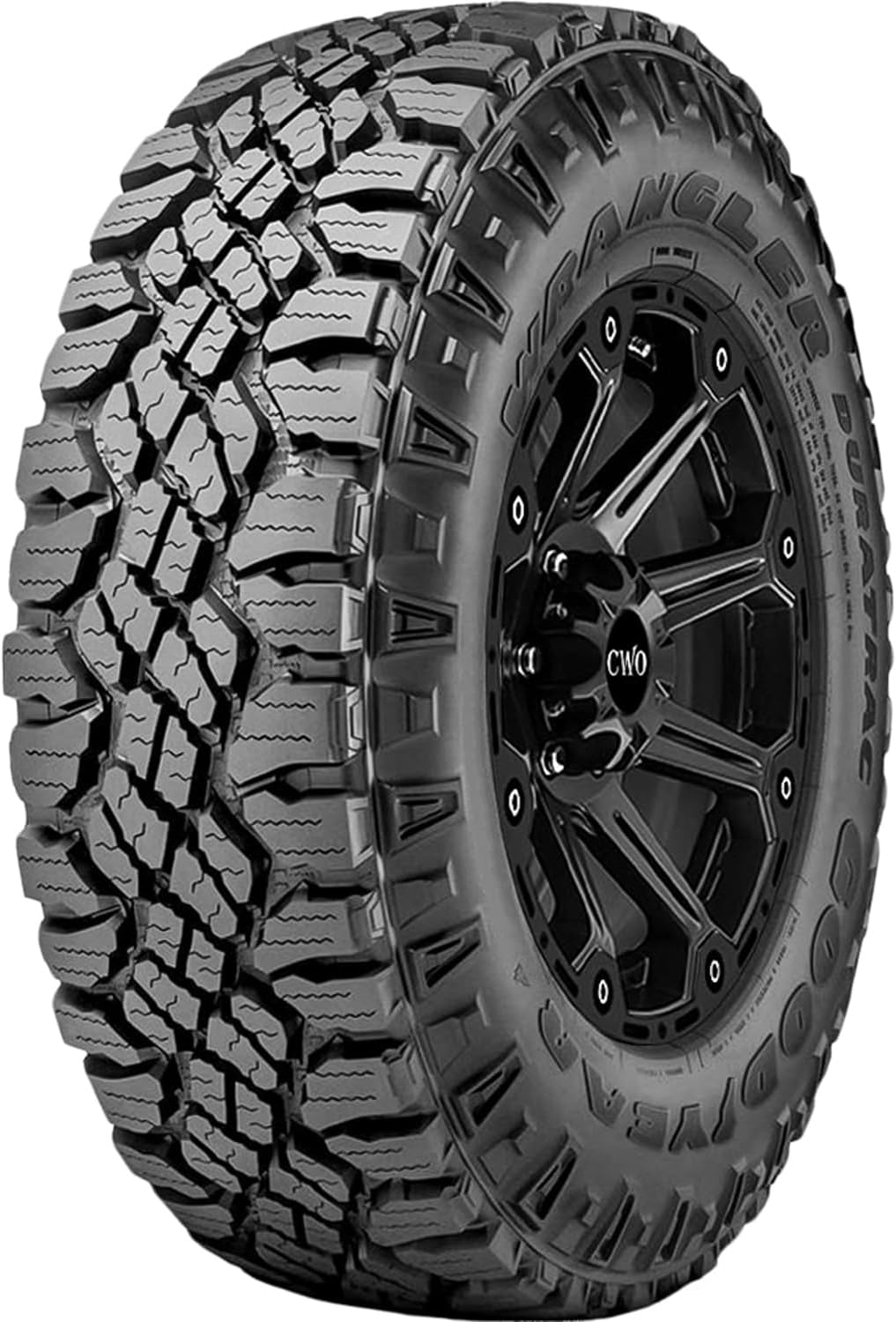
3. Goodyear Wrangler Duratrac LT275/65R18 113Q All-Terrain Tire
| Size | LT275/65R18 113Q |
|---|---|
| Load Index | 113 |
| Load Capacity | 2535 Pounds |
| Load Range | C |
| Seasons | Year Round |
The Goodyear Wrangler Duratrac LT275/65R18 is an all-terrain light truck tire built to handle mud, gravel, and winter conditions while still providing a comfortable highway ride. It uses TractionGroove technology, self-cleaning shoulder blocks, and highly angled center tread blocks to boost grip off road and reduce road noise on pavement. The tire is a C-load-range radial with a 113 load index and 24-ply construction in LT sizing, so it carries heavier loads and is suitable for lifted Rubicon setups that need tougher sidewall and load capability. Pinned LT sizes accept metal studs for improved winter traction where allowed. Owners report strong tread life and relatively low highway noise for an aggressive tread. Expect firmer ride characteristics compared with stock street tires and slightly higher rolling resistance. Also, very deep mud or extreme rock crawling will still benefit from a dedicated mud or rock tire rather than this more versatile option.
Best for: Jeep Rubicon owners who prioritize a balance of off-road capability, winter traction, and long tread life while keeping a tolerable on-road ride for daily driving and light towing.
Less Ideal for: Drivers who spend most of their time on paved roads wanting the smoothest, quietest ride or those who need a tire dedicated solely to extreme rock crawling or competitive mud performance.
- Aggressive tread pattern with TractionGroove and self-cleaning shoulders for strong off-road and winter grip
- LT construction and 113 load index support heavier loads and upgraded Rubicon setups
- Pinned sizes accept studs to improve traction in icy conditions
- Reported long tread life backed by a 50,000 mile tread life limited warranty
- Rim protector helps reduce curb damage on rough trails
- Firmer ride and higher rolling resistance than factory street tires
- Not as specialized for extreme rock crawling as dedicated mud or rock tires
Verdict: A durable, versatile all-terrain tire that gives Rubicon owners strong off-road and winter traction with the load capacity and tread life for practical, everyday use.
4. Crosswind Trail Traxx All-Terrain 265/60R18 Tire

| Size | 265/60R18 |
|---|---|
| Tread Depth | 13.4 32nds |
| Construction Type | Radial |
| UTQG | 580AB |
The Crosswind Trail Traxx is an all-terrain radial tire intended for Jeeps, light trucks, and SUVs that balances off-road capability with everyday driving. Its optimized block tread and anti-stone design help eject debris and improve traction on dirt and gravel, while extra sipes and a Three Peak Mountain Snowflake rating aid grip in wet and snowy conditions. A reinforced sidewall offers added resistance to punctures on rough trails, and the high UTQG rating suggests a focus on tread life backed by a 55,000 mile limited treadwear warranty. In real-world use this tire will feel competent on trails and stable on pavement, though it is a budget option so ride refinement and noise levels will not match premium all-terrain models. Fitment is standard for 265/60R18 setups and it is sold per tire. If you need a cost-conscious tire that works for weekend trail runs and daily driving, the Trail Traxx delivers sensible performance for the price, but buyers seeking the quietest highway manners or maximum off-road aggression should consider higher-end alternatives.
Best for: Buyers looking for a lower-cost all-terrain tire that can handle weekend trail use and year-round driving on a Wrangler without sacrificing basic winter traction.
Less Ideal for: Drivers who prioritize the quietest possible highway ride or who need highly aggressive mud-terrain performance for extreme off-road use.
- All-terrain tread with anti-stone design helps shed debris and maintain traction off-road
- Three Peak Mountain Snowflake and extra sipes improve wet and winter performance
- Reinforced sidewall adds puncture resistance for rougher trail use
- 55,000 mile limited tread life warranty indicates long-wear focus
- Budget-oriented construction may be noisier and less refined on highway driving
Verdict: A practical, budget-friendly all-terrain tire that gives Jeep owners dependable mixed on/off-road traction and winter capability for everyday use.
5. BFGoodrich All-Terrain T/A KO2 Radial Tire, 35×12.50R17/E 121R LRE

| Fitment | Light Trucks, SUVs, Crossovers |
|---|---|
| Tire size | 35×12.50R17/E |
| Load index | 121 |
| Speed rating | R |
The BFGoodrich All-Terrain T/A KO2 is built for drivers who need dependable traction across mixed surfaces while keeping everyday drivability. It uses interlocking tread elements and an advanced footprint to deliver stable handling and more uniform wear, which helps it last longer under heavy use. The compound and tread design are severe winter rated with the three-peak mountain snowflake symbol, so it retains grip in snow as well as mud, sand, and rocks. For typical use on a Jeep Wrangler Rubicon this tire provides confident off-road grip and predictable steering on pavement, but the aggressive all-terrain tread does produce more road noise and slightly higher rolling resistance than a highway tire. Installation and rotation patterns are standard for light truck fitment, and the reinforced sidewalls improve puncture resistance on rough trails. Expect a tire that prioritizes longevity and mixed-surface capability while accepting modest compromises in highway refinement and fuel economy.
Best for: Drivers who prioritize dependable, long-lasting traction on mixed surfaces and want a tire that can handle regular off-road use while still serving as a daily driver.
Less Ideal for: Drivers who want the quietest, most fuel-efficient highway ride or who rarely leave paved roads should consider a touring or highway tire instead.
- Designed for year-round traction including severe winter performance with three-peak mountain snowflake rating
- Interlocking tread elements and advanced footprint promote stable handling and more even wear
- Reinforced sidewalls increase resistance to punctures and damage on rough trails
- Balanced for off-road traction and acceptable on-road comfort for daily driving
- More road noise and higher rolling resistance compared with dedicated highway tires
Verdict: Choose these BFGoodrich KO2s if you want a rugged, winter-capable all-terrain tire that emphasizes durability and reliable mixed-surface traction for a Wrangler Rubicon.
6. Goodyear Wrangler TrailRunner AT All-Terrain Tire LT275/65R20

| Rim Size | 20 Inches |
|---|---|
| Load Index | 126 |
| Speed Rating | S |
| Load Range | E |
| Ply | 10-Ply |
The Goodyear Wrangler TrailRunner AT LT275/65R20 is an all-terrain, all-season tire built for light trucks and SUVs that balances on-road comfort with modest off-road capability. Its large interlocking tread blocks and stepped shoulder give added grip in mud and deep snow, while multi-angle sipes and a tuned tread pattern are intended to reduce road noise and extend tread life. Typical use includes daily driving, highway miles, and occasional dirt or gravel trails where you want dependable traction without a harsh ride. The tire carries a 55,000 mile tread-life limited warranty and a 10-ply construction that signals a tougher casing for heavier loads. Expect a quieter, smoother ride than an aggressive mud tire, with improved durability versus economy highway tires. The trade-offs are that it is not a full off-road mud-terrain performer and traction can soften as tread wears; buyers wanting the most extreme off-road grip or maximum tread longevity should compare purpose-built options.
Best for: Buyers who prioritize confident, quiet everyday driving plus occasional trail use and who value positive owner feedback and warranty protection when choosing tires.
Less Ideal for: Drivers who spend most of their time on extreme off-road trails or who need the absolute longest-lasting commercial tread should consider more specialized tires.
- All-season tread with multi-angle sipes for wet and light snow traction
- Interlocking tread blocks and stepped shoulder for added off-road grip
- Optimized tread pattern that helps reduce road noise on highways
- 10-ply construction and a heavier load range for tougher casing and durability
- Backed by a 55,000 mile tread life limited warranty
- Not as aggressive off-road as dedicated mud-terrain tires
Verdict: A dependable all-terrain choice that delivers quiet, comfortable highway manners and credible off-road traction backed by strong owner reviews and a tread-life warranty.
7. Lexani Terrain Beast AT All-Terrain Tire 265/50R20

| Size | 265/50R20 |
|---|---|
| Rim Size | 20 Inches |
| Load Index | 107.0 |
| Speed Rating | V |
| Tread Depth | 12 32nds |
The Lexani Terrain Beast AT is an aggressive all-terrain radial meant for light trucks and SUVs, offering deep grooves, full-depth siping, and an open-shoulder tread to clear mud and debris. In everyday use it provides confident traction on wet, muddy, and snowy roads while a unilateral center rib helps stability on pavement. The manufacturer calls out a computer-optimized design that reduces road noise and vibration compared with typical AT patterns, and user reports show generally quiet operation when properly balanced. Its 12-ply construction and 107 load index support heavy loads for towing or hauling, but some owners reported wandering or sway on larger trucks until pressures and balance were adjusted. Fuel economy may be reduced versus highway tires because of the deeper tread and aggressive pattern. This tire is summer-season rated, so it is best used where winter-rated tires are not required. Expect solid off-road grip and durable tread life in return for modest compromises in highway fuel economy and the occasional need for careful balancing and pressure tuning.
Best for: Buyers who prioritize predictable off-road traction and load-carrying ability but still want reasonable on-road comfort, especially those who value a conservative, dependable choice over experimental or performance-only tires.
Less Ideal for: Drivers who need a dedicated winter tire for icy roads or those seeking maximum fuel economy and lowest road noise for primarily highway driving.
- Aggressive tread with deep grooves and full-depth siping for strong traction in wet, muddy, and snowy conditions
- Computer-optimized design aimed at lowering road noise and vibration for a more comfortable ride
- 12-ply construction and 107 load index support heavier loads and towing use
- Unilateral center rib increases stability and resists uneven wear
- Designed as a summer all-terrain tire so it is not optimized for sustained cold-weather or ice-only conditions
- Deeper tread and aggressive pattern can reduce fuel economy compared with highway-focused tires
Verdict: Choose the Terrain Beast AT if you want a dependable, load-capable all-terrain tire that prioritizes traction and durability for a Jeep Wrangler Rubicon-style use case while keeping reasonable on-road comfort.
Choosing the Right Jeep Wrangler Rubicon Tires: Key Factors to Consider
Tread Pattern and Compound
Tread design determines how a tire grips loose surfaces and sheds mud, snow, or water. Aggressive, blocky tread patterns provide better bite on rocks and in deep mud, while more closed patterns improve wet pavement braking and road manners.
Compound choices affect both grip and wear. Softer compounds usually boost initial traction off-road and in cold conditions but wear faster under heavy road miles and heavier vehicle weight. Harder compounds last longer but can reduce bite in slippery or cold situations. For a Rubicon, choose a tread and compound combination that matches how often you hit trails versus drive on highways, because that balance directly affects both safety and replacement intervals.
Sidewall Strength and Construction
Sidewall robustness matters for resisting cuts, punctures, and puncture-related failures when crawling over rocks or hitting trail debris. Reinforced sidewalls, additional plies, and protective rim guards reduce the risk of damage during off-road use and allow safer operation at lower inflation pressures for better traction.
Construction choices also influence ride comfort and steering feedback. Stiffer sidewalls improve load handling and reduce tire roll during aggressive cornering, but they can transmit more vibration and harshness to the cabin. For Rubicon owners who regularly air down for trails, prioritize construction that balances puncture resistance with predictable handling on paved roads.
Size Compatibility and Fitment
Selecting the correct tire size maintains speedometer accuracy, clearance, and steering geometry. Many Rubicon owners fit larger diameter tires for ground clearance and obstacle clearance, but oversized tires can affect gearing, fuel economy, and suspension components if not paired with proper tuning.
Check recommended factory sizes and commonly used upgrade sizes for the Rubicon. Tire load rating and wheel width compatibility are also important because mismatches can shorten tire life and change handling. Proper fitment avoids rubbing, interference with fenders or suspension, and preserves intended braking and stability characteristics.
Tread Life and Durability
Treadwear affects how often you need replacements and how the tire performs over its lifespan. Tires built for off-road grip often trade some tread life for better immediate traction. Conversely, all-terrain designs aim to extend usable miles while keeping acceptable off-road capability.
Consider your annual mileage and how many miles are off-road versus on-road. For higher road mileage, prioritize tires with longer tread life warranties or harder-wearing patterns. For frequent trail use, durability against cuts and retained traction matter more than maximum highway miles.
Wet, Snow, and Ice Performance
Weather-dependent traction matters because Rubicons are driven year-round in many climates. Tread siping, compound formulation, and void patterns influence braking and cornering on wet or snowy roads. Some tires carry winter ratings that indicate improved cold-weather performance.
If you drive the Rubicon in snowy or icy conditions regularly, select tires with proven winter capability or consider a dedicated winter set for cold months. Tires optimized for dry rock crawling may not perform well on ice, so match tire choice to the seasonal mix you encounter.
Noise, Comfort, and On-Road Handling
Off-road-focused tires can generate significant road noise and a harsher ride, which matters for daily-driven Rubicons. Tread block arrangement, compound, and overall tire geometry influence steering precision, high-speed stability, and comfort.
If your Rubicon spends much time on asphalt or at highway speeds, look for options that reduce repetitive noise patterns and maintain predictable handling. Balanced choices minimize driver fatigue on long trips while preserving enough off-road capability for trail use.
Choosing Between All-Terrain and Mud-Terrain Options
All-terrain tires aim to be versatile, offering a compromise between on-road civility and off-road capability. They typically have more closed tread blocks than mud-terrain designs, which reduces noise and improves wet braking while still providing traction on hardpack and loose surfaces.
Mud-terrain tires prioritize self-cleaning and maximum bite in deep mud and loose dirt. That makes them ideal for rock gardens and extremely muddy trails, but they trade off comfort, tread life, and wet pavement braking in many cases.
Decide based on your typical trails: frequent rock crawling and deep mud favor more aggressive designs, while a mix of highway driving and moderate trails typically points toward an all-terrain choice.
- All-terrain: better on-road manners, longer tread life in many cases
- Mud-terrain: superior deep-mud and rock traction, louder and less stable on highways
How Tire Size Changes Rubicon Performance
Increasing tire diameter boosts ground clearance and obstacle approach angles, which helps in technical terrain. However, larger tires increase rotational mass and can impact acceleration, braking distances, and fuel economy. They may also require gear changes to restore original low-end performance.
Wider tires broaden the contact patch but can reduce the ability to cut through mud or snow. They also affect steering effort and may require wheel offset adjustments to maintain clearance. Consider suspension, fender clearance, and differential stress when upsizing.
- Larger diameter: improved clearance, potential loss of acceleration and altered speedometer
- Wider tires: more traction on hard surfaces, potential packing in mud and snow
Tire Maintenance Basics for Rubicon Owners
Regular maintenance preserves performance and extends tire life. Rotate tires at recommended intervals to even out wear caused by weight distribution and off-road stresses. Check and maintain proper inflation pressures for both on-road efficiency and off-road traction since incorrect pressures accelerate irregular wear.
Monitor tread depth and look for sidewall damage after trail runs. Balancing and alignment after upgrades or frequent off-road use keeps steering predictable and prevents uneven wear patterns.
- Rotate tires every 5,000 to 8,000 miles or after heavy trail use
- Check tire pressure before and after off-road runs
- Inspect sidewalls and tread for cuts, bulges, or embedded objects
Seasonal Strategies: When to Consider a Dedicated Winter Set
If you encounter regular snow and ice, a dedicated winter tire outperforms all-season and off-road tires in cold temperatures. Winter tires use softer compounds and specific siping patterns that maintain flexibility and grip when temperatures drop.
Many Rubicon owners opt for an all-terrain for year-round use and switch to a winter-specific tire for months with persistent snow or ice. This approach preserves tread life on the all-terrain set and enhances safety in winter conditions.
- Winter tires improve braking and handling below 45 degrees Fahrenheit
- Switching seasonally can extend the life of both tire sets
Impact of Wheel Choice and Offset
Wheel width and offset affect how a tire sits and wears. Choosing wheels that match your intended tire width and maintain proper scrub radius keeps steering responses predictable. Incorrect offset can cause rubbing, increased wear, and altered load distribution across the tire.
When planning an upgrade, verify wheel specifications and consult tire size guidance to ensure the combination preserves clearance with fenders, suspension components, and sway bar links on the Rubicon.
- Match wheel width to tire size recommendations
- Confirm offset to avoid rubbing and maintain proper handling
Still looking for the perfect fit?
Select your Jeep Wrangler configuration to see the most relevant Tires recommendations
How We Chose the Best Jeep Wrangler Rubicon Tires
To assemble this list we applied practical, vehicle-specific filters to find tires that match the Jeep Wrangler Rubicon's unique demands. First, we prioritized tires with proven off-road traction and reinforced sidewalls to handle rock and trail hazards common to Rubicon use. We looked for tread compounds and patterns that balance bite in mud and snow with acceptable on-road noise and steering response.Key evaluation criteria included tread life estimates under load, wet and dry braking performance, sidewall strength and puncture resistance, compatibility with common Rubicon wheel and lift configurations, and the availability of sizes matching the Rubicon's factory and commonly upgraded dimensions. We also weighted ride comfort and road noise because many Rubicon owners split time between trails and daily driving.Exclusions: We omitted tires designed solely for low-speed recreational UTVs, tires rated only for highway use with no off-road capability, and any options lacking published load or size specs suitable for Rubicon axles. The shortlist reflects a balance of durability, traction, and real-world usability for most Rubicon owners.
Our full evaluation process is outlined in our review methodology.
FAQ
How often should I replace tires on my Jeep Wrangler Rubicon?
Replacement frequency depends on mileage, driving style, and conditions. Many drivers replace tires every 30,000 to 60,000 miles, but heavy off-road use or aggressive tread compounds can shorten that span. Inspect tread depth, sidewalls, and overall condition regularly and factor in unusual wear patterns after trail seasons.
Is it better to run larger tires on a Rubicon?
Larger tires improve ground clearance and approach angles, which helps on technical trails. However, they increase rotating mass and can affect acceleration, braking, and fuel economy. If you upsize, consider gearing, suspension clearance, and whether you need re-tuning to maintain intended performance.
Can I use the same tires year-round on a Rubicon?
You can use a single set year-round if your climate is moderate and you accept tradeoffs. All-terrain tires make a good compromise for mixed use, but in areas with severe winter weather a dedicated winter set provides noticeably better braking and traction on ice and packed snow.
How important is tire balancing and alignment after an upgrade?
Balancing and alignment are important after fitting larger or heavier tires. Proper balancing reduces vibration and premature wear, while alignment ensures even tread wear and predictable steering. Both steps help protect suspension components and retain comfort on pavement.
What tire tread depth should I watch for on a Rubicon?
Monitor tread depth regularly. Many owners consider replacing tires once usable tread approaches 4/32 inch for safe wet traction and off-road performance, though the exact threshold depends on the terrain you frequent. Uneven depth or exposed ply require immediate attention.
Do reinforced sidewalls affect ride comfort?
Reinforced sidewalls improve puncture resistance and allow airing down for better off-road traction but can make the ride feel firmer and transmit more road shock. Choose a construction that balances protection with acceptable on-road comfort for your driving mix.
Final Verdict
Prioritize durability and the traction characteristics that match your typical driving and trail conditions when choosing tires for a Jeep Wrangler Rubicon. Consider how often you drive on pavement versus trails, whether you need winter performance, and how tire size will affect gearing and clearance.A balanced choice that matches tread pattern, sidewall construction, and size to your usage will give the best mix of safety, longevity, and capability. Focus on the tradeoffs described here to pick the right tire for your Rubicon and maintain it with regular inspections and proper servicing.
Explore More:
- Check out all Jeep Wrangler parts & accessories
- Explore Tires Maintenance & Repair Guides
- Explore Wheels & Tires
- Browse all Auto Parts
