

Note: This article contains affiliate links. If you click on these links and make a purchase, I may earn a small commission at no extra cost to you. This helps support my research and content. Read my full affiliate disclosure here.
Upgrading to 37 inch tires transforms a Jeep Wrangler's off-road capability, ground clearance, and presence. The right 37 inch tires deliver better traction in mud, rock, or sand while still letting you steer and brake predictably on pavement. You want tires that match your driving mix, suspension and gearing so you avoid excess noise, poor fuel economy, or premature wear.This guide covers six shortlisted 37 inch tires chosen for balanced performance on and off the trail. We evaluated traction, durability, ride comfort, and load capacity so you can match a tire to your typical terrain and driving style. Read on to find which attributes matter most and how to fit 37 inch tires to your Wrangler setup.
Looking for other parts? See all Jeep Wrangler parts & accessories.
Top Picks at a Glance
| Best Overall The best all-around choice for most situations | Cooper Discoverer STT Pro 37×13.50R20LT All-Season Off‑Road Tire |  |
| Best Quality Built to a higher standard if you want something more solid | Toyo Open Country M/T 37×12.5-20 All-Terrain Radial Tire |  |
| Best Value The sweet spot between price and what you get | Arisun Aresta R/T ZG07 37×12.50R20 All-Terrain Light Truck Tire |  |
| Best Budget The cheapest option that still gets the job done reliably | Armstrong Desert Dog MT 37×12.50R20 10‑Ply Mud Terrain Tire |  |
| Highest Rated A top-rated pick with lots of positive feedback | Milestar Patagonia M/T Mud-Terrain Tire, LT37x12.50R17 |  |
| Most Popular A crowd favorite that many people choose with confidence | Crosswind M/T 37×13.50R20 Mud-Terrain Radial Tire, Load Range E |  |
1. Cooper Discoverer STT Pro 37×13.50R20LT All-Season Off‑Road Tire

| Size | 37X13.50R20LT 127Q |
|---|---|
| Load Index | 127 |
| Load Capacity | 3860 Pounds |
| Load Range | E |
| Seasons | Year Round |
The Cooper Discoverer STT Pro is a heavy‑duty 37‑inch all‑terrain tire built for serious off‑road use without completely sacrificing on‑road manners. You get deep, aggressive tread blocks, mud‑scooping channels, and sidewall climber cleats that dig into loose surfaces and help clear mud and stones. Armor Tek3 construction and stone‑expelling features reduce the chance of sidewall and tread damage when running over rocks or rough trails. On pavement the tire is livable for daily driving but shows the expected mud‑tire hum at highway speeds and can sling stones on gravel. Its 10‑ply load range E construction and high load index make it suitable for heavier Jeeps and vehicles carrying gear. Because it is an aggressive design, expect somewhat higher road noise and potentially faster wear than milder all‑terrain tires; balancing and proper alignment will help minimize vibration. For Wrangler owners who prioritize capable trail performance with acceptable road behavior, this tire is a solid choice.
Best for: Drivers who want a 37‑inch tire that prioritizes off‑road capability and durability on a Jeep Wrangler but remains usable for everyday driving and hauling.
Less Ideal for: If you primarily drive long highway miles and value quiet, long‑wearing pavement performance, a less aggressive all‑terrain tire would be a better fit.
- Very aggressive tread and sidewall climbers for strong off‑road traction
- Armor Tek3 and stone‑deflecting features increase resistance to cuts and lodged rocks
- 10‑ply, Load Range E construction supports heavier loads and trail abuse
- Deep mud‑slinging channels help self‑cleaning in sticky mud
- Noticeable road noise and hum at higher speeds compared with milder all‑terrain tires
- More aggressive tread may wear faster on primarily paved driving
Verdict: Choose the Discoverer STT Pro for a 37‑inch Wrangler setup when off‑road grip and sidewall durability are the top priorities.
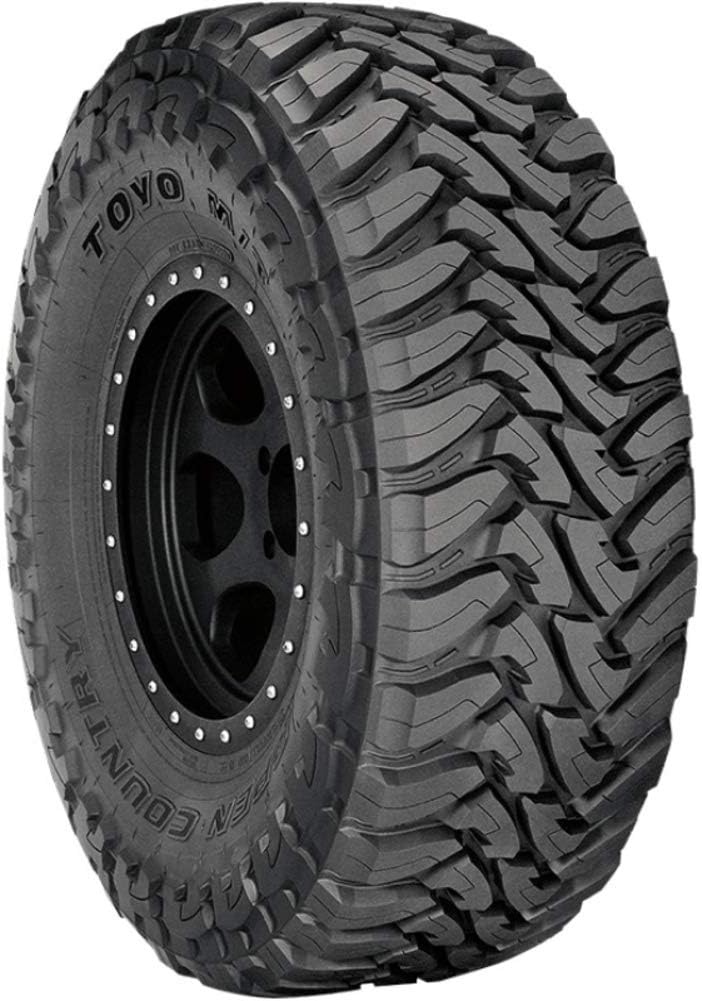
2. Toyo Open Country M/T 37×12.5-20 All-Terrain Radial Tire
| Rim Size | 20 Inches |
|---|---|
| Load Index | 126 |
| Speed Rating | Q |
| Tread Depth | 10 32nds |
| Ply | 10-Ply |
The Toyo Open Country M/T in 37×12.5-20 is built for drivers who prioritize off-road traction and durability. Its aggressive tread and 10-ply construction deliver strong bite in mud and loose surfaces while the deep 10/32nds tread depth helps resist cuts and chunking on rocky trails. As a year-round radial with a high 65 psi maximum pressure and a 1500 pound load capacity, it handles heavy loads and prolonged off-road use without collapsing. On pavement the tread is noticeably louder and the blocky pattern sacrifices some on-road refinement and fuel economy compared with highway tires. This size carries a Q speed rating and a 126 load index, so installation should be paired with proper gearing and brake checks on modified vehicles. In short, the tire gives excellent off-road grip and toughness for serious trail use but you accept more road noise and a firmer ride when driving on highways.
Best for: Drivers who prioritize off-road traction and durability for demanding trail or rock-crawling use and are willing to compromise on on-road refinement.
Less Ideal for: Drivers seeking quiet, comfortable highway miles or the best fuel economy should consider a less aggressive all-terrain or highway tire instead.
- Aggressive tread and 10/32nds depth give strong traction in mud and loose terrain
- 10-ply construction improves resistance to punctures and sidewall damage
- High maximum pressure and 1500 lb load capacity support heavy loads and towing
- Year-round radial design maintains consistent performance across conditions
- Blocky mud-terrain tread produces higher road noise and lower on-road comfort
Verdict: Choose this tire if you need a tough, high-traction 37-inch mud-terrain that performs on challenging trails above all else.
3. Arisun Aresta R/T ZG07 37×12.50R20 All-Terrain Light Truck Tire

| Size | 37X12.50R20 |
|---|---|
| Load Index | 128 |
| Load Capacity | 3968 Pounds |
| Maximum Pressure | 80 Pound per Square Inch |
| Load Range | F |
The Arisun Aresta R/T ZG07 is a rugged-terrain, all-season light truck tire built for heavy loads and off-road use. Its aggressive tread and wide grooves promote traction and self-cleaning in mud and loose surfaces while the reinforced internal construction and durable compound aim to resist irregular wear under heavy loads. With a 128 load index and 12-ply load-range F rating the tire supports high-capacity hauling and towing; it is intended to be mounted on 20-inch rims and runs at up to 80 psi. In everyday use expect improved cornering grip on rough terrain and confident steering response on gravel or dirt, though road noise and ride firmness can be higher than on highway-oriented tires. Reviewers report generally good initial ride and value, but a minority have experienced quality issues such as out-of-round tires. This model is a practical choice if you prioritize durability and off-road traction on a 37-inch setup, but have a professional inspect balance and roundness at mount to avoid vibration problems.
Best for: Buyers who want a durable, high-capacity 37-inch tire that prioritizes off-road grip and load carrying over road comfort, and who will verify proper mounting and balancing before regular use.
Less Ideal for: Drivers who prioritize a quiet, cushioned highway ride or who need a tire optimized solely for snow and ice performance should consider other specialty tires.
- Aggressive tread and wide grooves for improved off-road traction and self-cleaning.
- 12-ply, load-range F construction and 128 load index for high load carrying capacity.
- All-season compound intended to provide usable traction in wet and light winter conditions.
- Tread design aimed at resisting irregular wear for longer tread life.
- Some customers report quality control problems including out-of-round tires that cause vibration.
- Designed for rugged performance so on-road comfort may be firmer and louder than highway tires.
Verdict: If you need a heavy-duty 37-inch tire focused on off-road traction and load capacity for a Wrangler build, this Arisun offers rugged performance and durability.
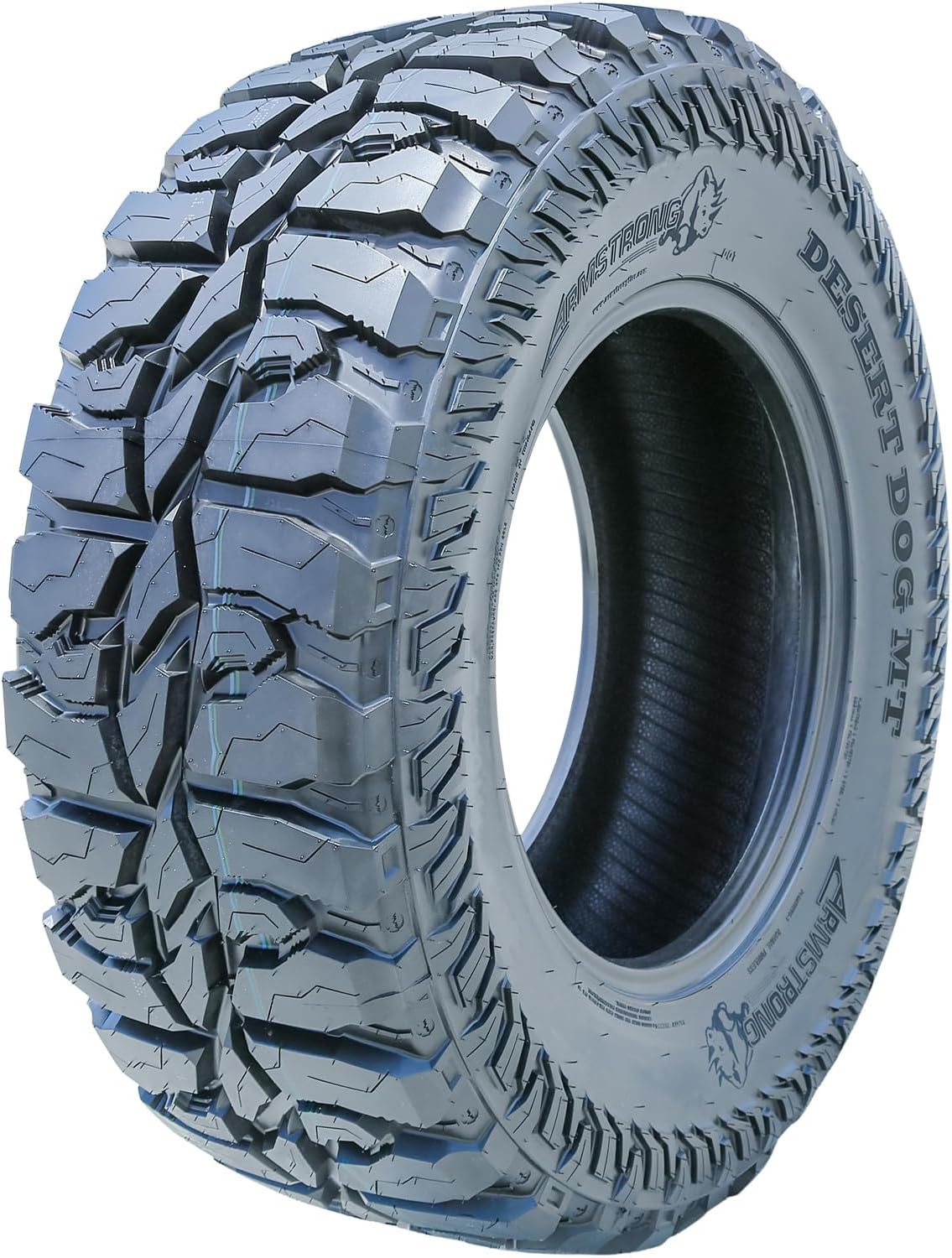
4. Armstrong Desert Dog MT 37×12.50R20 10‑Ply Mud Terrain Tire
| Rim Size | 20 Inches |
|---|---|
| Load Index | 126 |
| Load Capacity | 3748 Pounds |
| Maximum Pressure | 65 Pound per Square Inch |
| Load Range | E |
The Armstrong Desert Dog MT is a mud-terrain tire aimed at drivers who want aggressive looks and capable off-road traction without spending top-tier money. It combines deep Tuff Tusk tread blocks with stone ejectors and wide shoulder scallops to clear mud and grab lateral grip, and a reinforced 3-ply polyester sidewall paired with a 10-ply carcass to resist punctures when running on rough trails. In daily use it behaves like a serious M/T: strong mud and loose-surface performance, reasonable highway manners for its class, and reported noise that is noticeable but not extreme. The non-directional tread and universal fitment make mounting straightforward, and the 126 load index and 65 PSI max pressure suit heavier trucks. Keep in mind this is a mud-terrain compound with limited siping, so wet-rock traction and winter ice performance will lag compared with all-terrain or dedicated snow tires. For buyers focused on value and rugged off-road use, it delivers a lot for the price; for mixed-winter driving consider a different tread type.
Best for: Drivers who need a low-cost, heavy-duty 37-inch mud-terrain that prioritizes off-road traction and durability over winter performance, and who value aggressive looks and rugged construction on their Wrangler build.
Less Ideal for: People who spend significant time on icy roads or need quiet, all-season touring tires should choose a dedicated snow tire or a premium all-terrain instead.
- Aggressive mud-terrain tread with stone ejectors for strong off-road traction
- 3-ply polyester reinforced sidewall and 10-ply rating for improved cut and puncture resistance
- High load capacity (126 load index) suitable for heavier light trucks and SUVs
- Universal fit and non-directional tread simplify mounting and rotation
- Limited siping and compound tuning reduce grip on ice and smooth wet rock surfaces
Verdict: If you want a budget-friendly 37-inch mud-terrain that delivers aggressive traction and tough sidewalls for trail and mud duty, the Armstrong Desert Dog MT is a strong value pick.
5. Milestar Patagonia M/T Mud-Terrain Tire, LT37x12.50R17

| Rim Size | 17 Inches |
|---|---|
| Load Index | 124 |
| Speed Rating | Q |
| Tread Type | Mud |
| Load Range | D |
The Milestar Patagonia M/T is a mud-terrain radial built for heavy-duty off-road use and long-term durability. It’s typically used on lifted Jeeps and light trucks where 37-inch rubber is needed for improved ground clearance and deep-terrain grip. The tire’s deep 19/32 tread and 8-ply construction provide strong bite in mud, sand, and loose surfaces while the D load range and 124 load index support heavier vehicles and loads. Real-world owners report surprisingly quiet highway manners for an M/T and solid performance in wet and snowy conditions, though the aggressive tread throws debris and can hydroplane in some situations. Mounting and balancing may require more weight and the tire’s mass makes handling feel heavier than stock rubber; expect a firmer ride and higher rotational weight. For reliability-focused buyers the Patagonia’s stout construction and positive user history suggest it will resist damage and hold up under hard use, but plan for somewhat faster tread wear if used primarily on pavement.
Best for: Buyers who prioritize dependable off-road traction and a tough, damage-resistant tire for regular trail use and heavier duty driving, and who value durability over on-road comfort.
Less Ideal for: Drivers who spend most miles on pavement, want the quietest possible ride, or need the best fuel economy should consider a less aggressive all-terrain or highway tire instead.
- Aggressive 19/32 tread depth and mud pattern for strong off-road traction
- 8-ply construction and D load range for durability under heavier loads
- Positive owner reports of quieter-than-expected highway noise for an M/T
- Universal fitment and 124 load index suitable for many light truck applications
- Heavier than standard tires which increases rotational mass and can affect fuel economy and steering feel
- Aggressive tread can throw stones and is more prone to hydroplaning on smooth wet pavement
Verdict: Choose the Milestar Patagonia M/T if you need a rugged, 8-ply 37-inch mud tire that prioritizes off-road durability and traction for heavier Jeeps and light trucks.
6. Crosswind M/T 37×13.50R20 Mud-Terrain Radial Tire, Load Range E

| Rim Size | 20 Inches |
|---|---|
| Load Index | 127 |
| Speed Rating | Q |
| Load Range | E |
| Construction Type | Radial |
The Crosswind M/T is a 37×13.50R20 mud-terrain radial built for light trucks and SUVs that want aggressive off-road traction without a premium brand price. It uses a directional open tread and wide grooves to clear mud and slush, improving grip in mud, dirt, and wet conditions, while the wraparound shoulder tread adds sidewall bite for off-road situations. The 10-ply, load range E construction and a 127 load index mean it carries heavy loads and suits vehicles that occasionally tow or carry gear. On pavement the tire is reported to ride quieter than many mud tires and balances well, though mud-terrain tread will still generate more noise than highway tires and can wear faster than premium competitors. Installation and balancing are straightforward, but the directional pattern requires correct rotation direction. For buyers focused on value, this tire delivers strong off-road performance and load capacity with acceptable on-road manners, while those seeking the longest tread life or the quietest highway ride may prefer a higher-end alternative.
Best for: Buyers who want a budget-friendly 37-inch mud-terrain that performs well off-road and can carry heavier loads while still offering acceptable on-road manners backed by positive user feedback.
Less Ideal for: Drivers who prioritize maximum tread life or the lowest possible road noise for long highway miles should consider higher-end all-terrain or highway tires instead.
- Aggressive directional open tread clears mud and snow for strong off-road traction
- Wraparound shoulder tread adds sidewall grip for ruts and obstacles
- 10-ply Load Range E construction supports high load capacity for heavier trucks
- Wide grooves help resist hydroplaning in wet conditions
- Generally quieter on-road than many other mud-terrain options according to user reports
- Mud-terrain tread can wear faster than higher-priced premium tires
- Directional design requires attention to correct mounting and rotation
Verdict: A cost-conscious 37-inch mud-terrain that delivers strong off-road traction and heavy-load capability with surprisingly reasonable on-road behavior.
Choosing the Right Jeep Wrangler 37 Inch Tires: Key Factors to Consider
Traction Across Terrain
Traction is the most visible difference when you step up to 37 inch tires. For a Wrangler, off-road traction in mud, rock, and sand matters because poor bite can leave you stuck or force risky maneuvers. On wet pavement, tread pattern and siping affect braking distances and hydroplaning resistance, which impacts daily driving safety.
Look at how tread blocks, void ratio, and compound are described for different surfaces. Larger voids and aggressive lugs improve self-cleaning in mud but may increase road noise. Deeper siping helps wet traction but can reduce long-term wear resistance if the compound is too soft. Balancing these features determines how confidently you can attack different trails and still commute reliably.
Tread Life and Durability
37 inch tires face heavier loads and more abuse than smaller sizes, so expected tread life and construction durability are major buying considerations. Heavier vehicles or frequent off-road use accelerate tread wear, so a durable compound and reinforced sidewalls are beneficial for longer service intervals.
Check construction features such as multiple plies, stone ejectors, and cut-resistant sidewall layers. Treadwear indicators and manufacturer mileage warranties can give a sense of relative longevity, but real-world reports from other Wrangler owners often reveal how fast aggressive patterns wear on pavement. Prioritizing durability reduces downtime and replacement frequency for owners who drive both on- and off-road.
Load Capacity and Speed Rating
Load capacity is critical when you carry gear, add armor or recover a trailer. Not all 37 inch tires have equal load ratings, and under-rated tires can lead to overheating or premature failure under load. Ensure the tire's load index matches your Wrangler's gross vehicle weight and any additional payload.
Speed rating relates to the tire's structural limits at highway speeds. While Wranglers are not high-speed vehicles, it is still important to maintain appropriate speed ratings to avoid stress on the tire at sustained highway speeds. Mismatched load or speed ratings can also affect handling and braking performance, so pick a tire that meets or exceeds the vehicle's requirements.
Ride Comfort and Noise
Aggressive tread patterns on 37 inch tires can create significant road noise and a harsher ride on pavement. For many Wrangler owners who split time between daily driving and trail use, balancing off-road capability with acceptable highway manners is vital. Excessive noise or vibration can make long trips fatiguing.
Assess features such as staggered tread block sequencing, variable pitch, or comfort-focused compound formulations that manufacturers highlight. Keep in mind that more aggressive mud-terrain styles will be louder than all-terrain or hybrid patterns. Consider your typical mileage and the importance of quiet highway cruising when choosing tread aggressiveness.
Fitment and Vehicle Modifications
Fitting 37 inch tires often requires suspension lift, wider wheels, or trimming of inner fenders for clearance. Incorrect fitment can lead to rubbing during articulation, binding of steering components, or stress on hubs and drivetrain. Confirm the tire's overall diameter and recommended rim widths relative to your Wrangler's setup.
Consider whether you will pair the tires with a lift kit, wheel spacers, or re-gearing. Some tires work better with minor lifts while others require significant suspension changes. Planning fitment ahead of purchase prevents installation surprises and preserves steering geometry and driveline life.
Wet and Winter Performance
If you drive a Wrangler year-round, wet traction and light snow performance should influence your choice. Winter capability depends on tread compound and siping density more than simply tread shape. For those in snowy climates, look for tires with documented winter ratings or patterns that maintain bite in cold temperatures.
Some aggressive off-road tires perform poorly on ice and hard-packed snow due to large blocks and fewer sipes. If you expect winter highway driving, choose a tire that balances cold-weather rubber performance with off-road traction or be prepared to switch to a dedicated winter tire when conditions demand it.
Sizing, Gearing, and Why 37 Inches Change Driving Characteristics
Moving to 37 inch tires alters effective gearing, speedometer readings, and ground clearance. Taller tires reduce engine rpm at a given road speed, which can feel like lower acceleration and reduced low-end torque during hill climbs or towing. Many owners re-gear differentials to restore acceleration and drivability after upsizing.
Speedometer and odometer calibration will also shift with a larger diameter. Depending on how you use your Wrangler, recalibration may be desirable to maintain accurate distance and speed readings. Finally, increased rolling circumference raises unsprung mass and rotational inertia, which influences braking distances and suspension tuning.
- Expect slight reduction in acceleration; consider re-gearing for heavy loads.
- Check clearance for full steering lock and suspension articulation.
- Speedometer recalibration preserves accuracy after installation.
Mounting, Balancing, and Alignment Considerations
Proper mounting and balancing are essential for large tires to avoid vibration and uneven wear. Heavier 37 inch tires require correct wheel weights and potentially dual-plane balancing for consistent performance. Unbalanced tires can accelerate wear on suspension bushings and wheel bearings.
Wheel alignment should be performed after installation to correct camber, toe, and caster as needed. Larger tires can expose preexisting alignment issues more quickly, so fresh alignment helps extend tread life and improves steering feel.
- Use appropriate wheel offset and backspacing to prevent rubbing.
- Inspect lug torque after initial break-in miles.
- Consider reinforced valve stems and high-quality mounting beads.
Choosing Between Aggressive Mud-Terrain and Tamer All-Terrain Patterns
Deciding how aggressive a tread you need depends on trail types and pavement percentage. Mud-terrain patterns excel in deep mud and rock but sacrifice road noise and tread life. All-terrain or hybrid patterns provide more balanced highway manners while still offering capable off-road grip for most trails.
If your Wrangler spends most time on trails with occasional pavement runs, a middle-ground pattern may be the best compromise. For dedicated rock crawling or heavy mud use, accept the tradeoffs in noise and wear for superior off-road performance.
- Mud-terrain: superior off-road bite, higher noise, faster pavement wear.
- All-terrain: quieter, longer-lived, slightly less extreme off-road traction.
Preparing Your Wrangler for 37 Inch Tires
Before installing 37 inch tires, evaluate suspension components, steering stops, and wheel well clearance. Hardened bump stops, extended control arms, or a modest lift kit may be necessary to prevent rubbing under full articulation. Check brake clearance and consider upgraded brake components if you use the vehicle for heavy towing or frequent mountain runs.
A full vehicle inspection before upsizing reduces the risk of damage after installation. Also plan for additional maintenance intervals since larger tires can accelerate wear on drivetrain and suspension parts.
- Inspect and potentially upgrade brake lines and calipers for added load.
- Verify whether wheel wells need trimming or flares for clearance.
- Reassess differential oil change intervals and cooling if towing.
Tire Care, Monitoring, and When to Replace
Regular inspection and maintenance extend the life of 37 inch tires. Rotate tires on the recommended schedule, check pressures frequently, and monitor tread depth with a reliable indicator. Uneven wear patterns often point to alignment, balance, or suspension issues that should be corrected promptly.
Replace tires when tread depth reaches safe limits, when structural damage is evident, or when performance declines in wet or snowy conditions. Knowing how often to replace tires depends on driving style and mileage, but proactive monitoring avoids sudden failures on remote trails.
- Rotate every 5,000 to 8,000 miles or per service intervals.
- Use a tread wear indicator to spot end-of-life early.
- Address vibration or cupping quickly to prevent accelerated wear.
Still looking for the perfect fit?
Select your Jeep Wrangler configuration to see the most relevant Tires recommendations
How We Chose the Best Jeep Wrangler 37 Inch Tires
We shortlisted tires based on a set of Wrangler-specific performance and durability criteria aimed at real-world owners. Primary evaluation included traction across surfaces relevant to Wrangler use, with separate attention to mud, rock, sand, and wet pavement grip. Durability was assessed through reported tread life and construction features that resist cuts, punctures, and sidewall damage common off-road. Ride and road manners were considered so daily driving is not excessively noisy or harsh. Load capacity and speed rating were checked to ensure safe carrying of gear and towing where applicable. Compatibility factors such as overall diameter, recommended rim widths, and required suspension or gearing changes informed suitability for 37 inch fitment. We excluded tires intended solely for passenger cars or high-speed performance cars because their construction and load ratings do not match Wrangler requirements. Final selections prioritized tires that consistently meet the practical needs of Jeep Wrangler owners rather than niche racing or economy-only options.
Our full evaluation process is outlined in our review methodology.
FAQ
Will 37 inch tires fit without a lift on my Wrangler?
It depends on your Wrangler's current suspension and wheel setup. Many stock Wranglers require at least a modest suspension lift or trimming to prevent rubbing during full articulation. Check wheel offset, backspacing, and mock-fit the tire before committing to a purchase.
How often should I rotate and balance 37 inch tires?
Rotate large off-road tires every 5,000 to 8,000 miles or as recommended by the tire manufacturer. Balance should be checked at installation and rechecked if you notice vibration. Regular rotation and balance help even out wear, especially with asymmetric or directional patterns.
Do 37 inch tires affect fuel economy a lot?
Yes, taller and heavier tires typically reduce fuel economy due to increased rolling resistance and weight. The exact impact varies with driving habits, tire tread pattern, and whether you re-gear the vehicle. Expect some reduction in miles per gallon compared with stock sizes.
Can I keep factory gearing with 37 inch tires?
You can physically fit 37 inch tires while keeping factory gears, but you will notice reduced acceleration and engine effort on climbs or when carrying heavy loads. Many owners choose re-gearing to recover low-end performance when upsizing significantly.
Are all 37 inch tires suitable for winter driving?
Not all 37 inch tires perform well in winter. Aggressive off-road compounds and large block patterns can lose effectiveness on ice or packed snow. For consistent winter performance, look for tires with cold-weather-rated compounds or consider a dedicated winter tire for severe conditions.
What load rating should I look for on a 37 inch tire?
Choose a load rating that meets or exceeds your vehicle's gross axle weight and any additional payload you regularly carry. Higher load indexes are safer when you add armor, roof gear, or tow. Refer to your vehicle's placard and account for aftermarket weight increases.
Final Verdict
Choosing 37 inch tires for a Jeep Wrangler is a balance between off-road capability and street manners. Prioritize traction and durable construction if you spend most miles on rough trails, but choose a less aggressive pattern if highway comfort and tread life matter more. Always confirm load ratings, fitment requirements, and whether you will need suspension or gearing changes before purchase.Your best choice depends on how you split driving between trail and pavement and how much modification you are willing to make. Focus on the factors outlined above to match tire attributes to your driving needs and to keep your Wrangler reliable on every surface.
Explore More:
- Check out all Jeep Wrangler parts & accessories
- Explore Tires Maintenance & Repair Guides
- Explore Wheels & Tires
- Browse all Auto Parts
