

Note: This article contains affiliate links. If you click on these links and make a purchase, I may earn a small commission at no extra cost to you. This helps support my research and content. Read my full affiliate disclosure here.
Picking the right tires for your Jeep Wrangler Sahara shapes how it performs on pavement, dirt, and in bad weather. The wrong choice can hurt ride comfort, reduce fuel efficiency, and limit the vehicle's capability where you drive most.This guide shortlists the seven best tire options that suit the Sahara trim and explains the practical tradeoffs between off-road grip, on-road manners, and long-term tread life. We evaluated tread patterns, construction, load capacity, and ride noise so you can match a tire to your typical driving conditions and priorities.
Looking for other parts? See all Jeep Wrangler parts & accessories.
Top Picks at a Glance
| Best Overall The best all-around choice for most situations | Goodyear Wrangler All-Terrain Adventure LT275/70R18 Tire |  |
| Best Quality Built to a higher standard if you want something more solid | BFGoodrich Mud-Terrain T/A KM3 LT255/75R17 6-Ply Mud-Terrain Tire |  |
| Best Value The sweet spot between price and what you get | Goodyear Wrangler SR-A All-Season Radial Tire (P275/60R20) |  |
| Best Budget The cheapest option that still gets the job done reliably | Accelera MT-01 Mud Terrain Light Truck Tire — 235/75R15 |  |
| Highest Rated A top-rated pick with lots of positive feedback | BFGoodrich All-Terrain T/A KO2 Radial Tire, 32×11.50R15 113R |  |
| Most Popular A crowd favorite that many people choose with confidence | Starfire Solarus AP All-Season 265/70R16 112T Tire |  |
| Best Seller A high-volume bestseller chosen again and again | Prinx HiCountry A/T2 All-Terrain 275/60R20 116T XL Tire |  |
1. Goodyear Wrangler All-Terrain Adventure LT275/70R18 Tire

| Size | LT275/70R18 |
|---|---|
| Load Index | 125 |
| Speed Rating | R |
| Tread Depth | 10 32nds |
| Mileage Warranty | 60,000 Mile Tread Life Limited Warranty |
The Goodyear Wrangler All-Terrain Adventure LT275/70R18 is an LT-rated all-terrain tire that aims to blend quiet highway manners with dependable off-road grip. It is commonly used as a truck or SUV replacement tire where drivers need year-round traction without the harsh ride of aggressive mud tires. Notable features include DuPont Kevlar reinforcement and Goodyear Durawall construction, which add sidewall strength and puncture resistance for light off-road use. On pavement the tread pattern is relatively quiet and stable for its class, and the 60,000-mile tread-life limited warranty reflects a focus on longevity. Limitations are typical of all-terrain designs: it is not intended for severe winter service and will not match the traction of dedicated mud or winter tires in deep snow. The LT construction and 10-ply rating mean a firmer ride and higher rolling resistance compared with passenger tires, and buyers should expect professional mounting and balancing to get the best performance.
Best for: Buyers looking for a single tire that handles daily highway driving comfortably while still allowing occasional off-road use and who prioritize durability and tread life over maximum off-road or winter performance.
Less Ideal for: Drivers who need peak off-road traction for rock crawling or dedicated winter traction in deep snow should choose a more specialized mud-terrain or winter tire instead.
- Kevlar-reinforced carcass and Durawall sidewall for improved puncture and sidewall resistance
- Balanced on-road comfort and reduced road noise for an all-terrain tread
- 60,000-mile tread-life limited warranty indicating emphasis on longevity
- High load capacity (Load Index 125) suitable for heavy light-truck use
- Not designed for severe winter conditions and lacks winter-specific rating
- LT/10-ply construction produces a firmer ride and higher rolling resistance than passenger tires
Verdict: A durable, Kevlar-reinforced all-terrain tire that delivers quiet highway manners and long tread life for drivers who want a balanced everyday/off-road option.
2. BFGoodrich Mud-Terrain T/A KM3 LT255/75R17 6-Ply Mud-Terrain Tire

| Load Index | 111 |
|---|---|
| Speed Rating | Q |
| Load Capacity | 2405 Pounds |
| Construction Type | Radial |
| Ply | 6-Ply |
The BFGoodrich Mud-Terrain T/A KM3 is built for drivers who need confidence off-road while retaining usable on-road manners. Its Terrain-Attack tread with large, angled blocks and Mud-Phobic bars clears compacted mud and provides bite in loose soil and on rocks, while Krawl-TEK technology improves climbing traction. The reinforced sidewall construction increases puncture resistance in challenging terrain and is aimed at reducing sidewall damage from rocks and debris. In daily use these tires feel grippy and predictable and several owners report acceptable noise for a mud tire, though you should expect more road noise and slightly harsher ride than a highway tire. Fitment is for LT255/75R17 size with a 6-ply rating and 2405 pound load capacity, so installation on lifted or stock-height Jeeps with compatible gearing is straightforward. Consider that mud-terrain tread will wear faster and reduce fuel efficiency compared with all-terrain options, so this is best when off-road performance and durability are priorities.
Best for: Drivers who prioritize off-road performance and durability on trails, mud, and rock where traction and sidewall protection matter more than road comfort or maximum tread life.
Less Ideal for: Drivers who do mostly highway miles, want the quietest ride, or need the longest possible tread life should consider an all-terrain or highway tire instead.
- Aggressive Terrain-Attack tread provides strong mud and rock traction.
- Krawl-TEK technology improves rock-climbing grip.
- Reinforced sidewalls increase resistance to punctures and cuts.
- 6-ply construction supports higher load capacity for light trucks and SUVs.
- Mud-terrain tread typically increases road noise and reduces fuel efficiency compared with all-terrain tires.
- Heavier wear rate on pavement versus highway-focused tires.
Verdict: Choose the KM3 when maximizing off-road traction and sidewall protection for a Jeep Wrangler Sahara is your top priority.
3. Goodyear Wrangler SR-A All-Season Radial Tire (P275/60R20)

| Rim Size | 20 Inches |
|---|---|
| Load Index | 114.0 |
| Speed Rating | S |
| Load Capacity | 2601 Pounds |
| Tread Type | Non-Directional |
The Goodyear Wrangler SR-A P275/60R20 is an all-season radial built for light trucks and SUVs that need predictable wet performance and reasonable longevity. It uses wide circumferential grooves and a wet-traction compound to channel water and improve grip in rainy conditions, while zigzag microgrooves help with light snow traction. Typical use is daily driving and regional trips where you want a quiet, stable ride and steady tread wear rather than aggressive off-road capability. The tire comes with a 50,000-mile tread life limited warranty for non-LT sizes and is a factory-quality replacement from a long‑standing brand. Expect a comfortable on-road ride and confident wet handling, but know this is not a dedicated mud or deep-snow tire and will not match the traction of more aggressive all-terrain or winter-specific models. Fitment is vehicle-specific so confirm the P275/60R20 size for your wheels before buying.
Best for: Drivers who prioritize reliable on-road wet performance, predictable tread life, and a comfortable daily ride for a Wrangler Sahara that stays mostly on pavement with occasional light snow or gravel roads.
Less Ideal for: Those who frequently tackle muddy trails, deep snow, or need aggressive off-road traction should choose a dedicated all-terrain or winter tire instead.
- Effective water evacuation from wide circumferential grooves for improved wet traction
- Wet-traction compound and microgrooves that enhance grip in rain and light snow
- Backed by a 50,000-mile tread life limited warranty for non-LT sizes
- Designed for a comfortable on-road ride and steady tread wear
- Not intended for heavy off-road, mud, or deep snow use compared with all-terrain or winter tires
Verdict: Buy this tire if you want a factory-quality, long-wearing all-season tire that favors wet-road confidence and a comfortable on-road ride for a Wrangler Sahara.
4. Accelera MT-01 Mud Terrain Light Truck Tire — 235/75R15

| Size | 235/75R15 |
|---|---|
| Load Index | 104 |
| Speed Rating | Q |
| Tread Type | Directional |
| Ply | 6-Ply |
The Accelera MT-01 is a mud-terrain light truck tire built to deliver deep tread bite off-road while still functioning acceptably on pavement. Typical use is for off-road driving, trail runs, and seasonal snow or mud where extra traction is needed; buyers report good performance on gravel, sand, and soft ground. Notable features include a directional, open scalloped tread for water and mud evacuation, a 12.7 mm tread depth that helps dig into loose surfaces, and a 6-ply, Load Range C construction for added durability under load. In practice this tire provides confident grip in mud and snow and sheds debris well, though you should expect more road noise and slightly lower fuel economy than all-terrain or highway tires. It is a budget-focused option that prioritizes off-road traction and toughness over quiet highway manners and long rolling efficiency. Fitment is for vehicles that accept 235/75R15 tires and need a cost-conscious mud-terrain upgrade.
Best for: Buyers who prioritize affordable off-road traction for trail driving, weekend overlanding, or seasonal snow use on a Jeep Wrangler Sahara and want a rugged, value-oriented mud-terrain upgrade.
Less Ideal for: Drivers who spend most miles on highway or want the quietest, most fuel-efficient tire should consider an all-terrain or highway tire instead.
- Deep 12.7 mm tread provides strong off-road bite and better mud evacuation.
- 6-ply Load Range C construction adds robustness for light truck use and loaded driving.
- Directional scalloped tread design helps evacuate water and debris to maintain traction.
- Reports from users show good performance across mud, gravel, sand, and snow for the price.
- Mud-terrain pattern produces more road noise and can reduce on-road comfort compared with all-terrain tires.
- Less fuel efficient and may wear faster on long highway mileage compared with highway-focused tires.
Verdict: A budget-friendly mud-terrain tire that gives Jeep Wrangler Sahara drivers strong off-road traction and durability without a premium price.
5. BFGoodrich All-Terrain T/A KO2 Radial Tire, 32×11.50R15 113R

| Rim Size | 15 Inches |
|---|---|
| Load Index | 113 |
| Speed Rating | R |
| Load Capacity | 2535 Pounds |
| Construction Type | Radial |
The BFGoodrich All-Terrain T/A KO2 is built for drivers who need a dependable tire that works on paved roads and rough trails. It uses reinforced sidewall rubber and an optimized footprint to resist cuts and sidewall damage while promoting even wear, so it is useful for long drives and repeated off-road use. The tread includes interlocking elements and 3-D sipes that improve traction in dirt, gravel, and snow while keeping handling stable on pavement. In everyday use the KO2 delivers a comfortable, relatively quiet ride for an aggressive all-terrain and drivers report long tread life. Important limitations are that it is a non-winter-specific tire despite a severe snow rating and its heavier construction can slightly reduce fuel economy and feel firmer than touring tires; also sizes with high ply ratings may require confirming fitment on some vehicles. For someone prioritizing toughness and predictable performance across seasons, the KO2 is a sensible choice; drivers focused on the quietest possible highway ride or maximum fuel savings may prefer a highway tire instead.
Best for: Buyers who prioritize long-term dependability and off-road toughness over the absolute quietest highway ride, and who use their vehicle for a mix of daily driving and regular trail or rough-road use.
Less Ideal for: Drivers whose primary concern is maximum fuel economy or the softest, quietest highway comfort should look at highway or touring tire options instead.
- Reinforced sidewall and CoreGard technology increase resistance to cuts and bruises for off-road durability
- Optimized footprint and interlocking tread elements promote more uniform wear for longer service life
- 3-D sipes and aggressive tread provide strong traction in dirt, gravel, and snow
- Comfortable and relatively quiet on pavement for an all-terrain tire
- Heavier construction can slightly reduce fuel economy and ride compliance compared with highway tires
- May feel firmer on-road than touring-focused tires and some ply-rated sizes require fitment checks
Verdict: A rugged, reliability-focused all-terrain tire that gives Jeep owners confidence on trails while remaining comfortable and long-wearing on the road.
6. Starfire Solarus AP All-Season 265/70R16 112T Tire

| Size | 265/70R16 112T |
|---|---|
| Construction Type | Radial |
| Load Capacity | 2469 Pounds |
| Tread Type | Non-Directional |
| UTQG | 500AB |
The Starfire Solarus AP 265/70R16 is an affordable all-season, all-terrain radial that aims to balance on-road comfort with light off-road capability. Its centered angled blocks and full-depth sipes provide extra bite on gravel, dirt, wet roads, and light snow, while wide anti-hydroplane grooves help channel water and reduce hydroplaning. Users report a quiet, composed highway ride thanks to the zig-zag tread noise disruption, and the construction supports heavy loads typical for utility use. The tire comes with a 50,000-mile warranty and carries an M+S rating for mud and snow. Expect solid wet traction and competent light off-road grip, but several owners note faster-than-premium wear in demanding use and occasional balance or vibration concerns that may require rebalancing. For drivers who prioritize proven user feedback and lower cost over maximum longevity or aggressive off-road performance, this tire delivers sensible capability for daily driving and occasional trails.
Best for: Jeep Wrangler Sahara owners who want a budget-friendly tire with credible real-world feedback that performs well on-road and on light trails while prioritizing wet and winter grip over aggressive off-road capability.
Less Ideal for: Drivers who regularly climb rocks, run deep mud, or require maximum tread life should consider more aggressive or premium off-road tires instead.
- All-season tread with full-depth sipes improves wet and light snow traction
- Wide anti-hydroplane grooves help resist hydroplaning in heavy rain
- Quiet ride design reduces road noise on highways
- Backed by a 50,000-mile warranty
- Some owners report faster wear compared with premium brands
- Occasional balance or vibration issues reported that required rebalancing
Verdict: A cost-conscious all-season A/T option that gives Jeep Sahara owners reliable wet and light-off-road performance backed by strong user approval.
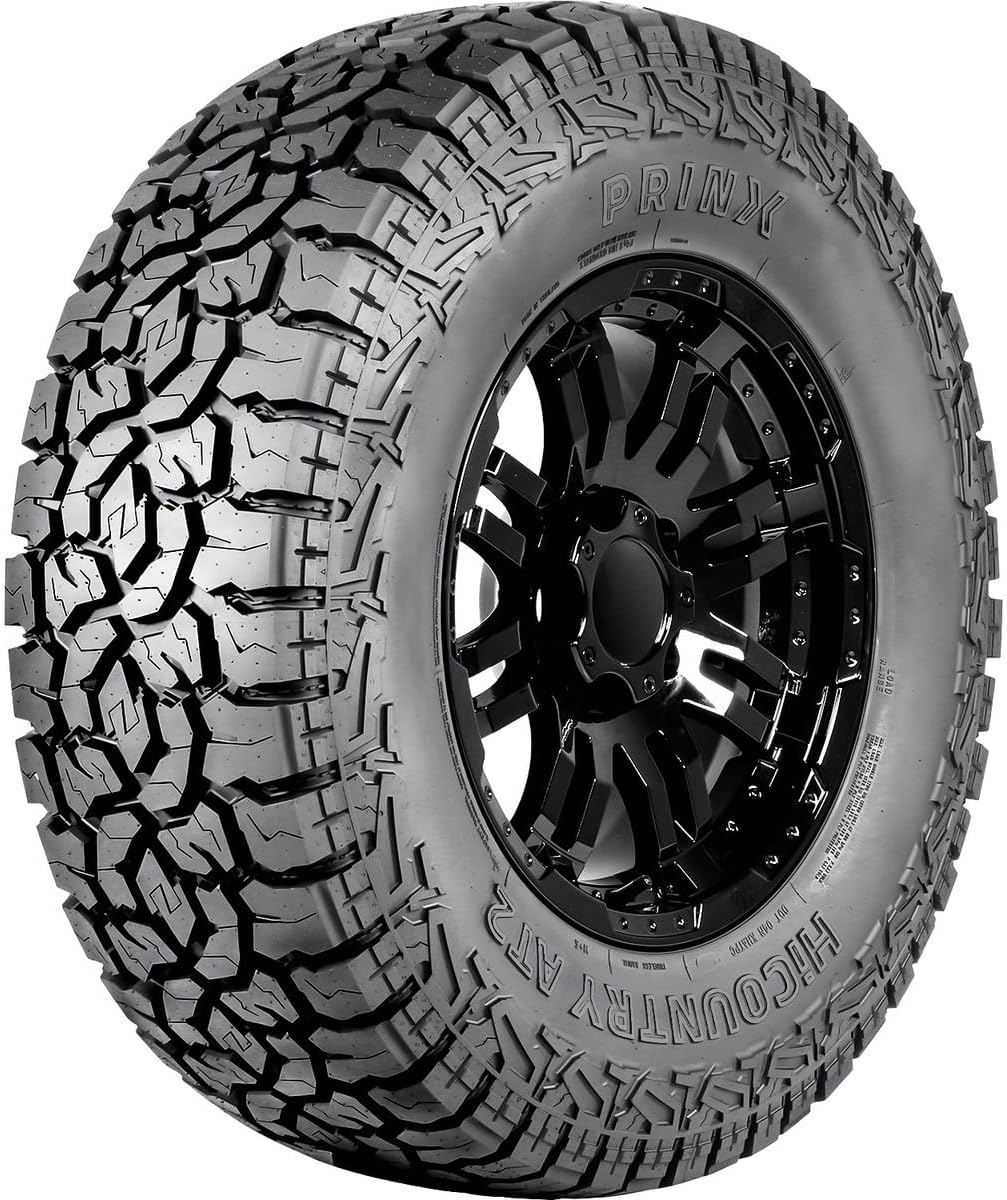
7. Prinx HiCountry A/T2 All-Terrain 275/60R20 116T XL Tire
| Rim Size | 20 Inches |
|---|---|
| Load Index | 116 |
| Speed Rating | T |
| Seasons | Year Round |
| Tread Depth | 13 32nds |
The Prinx HiCountry A/T2 is an all-terrain tire built to give a stable, quiet ride on pavement while maintaining capable traction off-road. It is typically used on SUVs and light trucks that see a mix of highway driving and occasional trails; the non-directional, aggressive tread pattern and robust sidewall help resist punctures and improve grip in mud, snow, and gravel. Notable features include Three Peak Mountain Snowflake and M+S ratings for winter use, a claimed 13/32 tread depth for longer life, and a 50,000-mile limited manufacturer tread life warranty. In practice the tire delivers a quieter, smoother highway feel than many aggressive A/T patterns, and reviewers report good balance and minimal noise at highway speeds. Important limitations are that the listing and some customer comments conflict about ply construction and marketing claims, and riders expecting a full mud-terrain level of off-road bite will find this more of a balanced A/T rather than extreme off-road rubber. Proper installation and periodic inspection are advisable to preserve even wear and warranty coverage.
Best for: Drivers who prioritize a quiet, reliable all-terrain tire for daily highway use with occasional off-road or winter driving and who want a covered tread-life warranty for peace of mind.
Less Ideal for: Enthusiasts who need maximum mud-terrain traction or extreme off-road durability should consider a dedicated mud-terrain tire instead.
- Balanced on-road comfort with noticeably lower noise for an aggressive-looking A/T tread
- Three Peak Mountain Snowflake and M+S ratings for winter and mud performance
- 50,000-mile limited tread life warranty provides buyer reassurance
- Aggressive tread design and reinforced sidewall improve traction and puncture resistance
- Some customer reports question advertised ply construction and product descriptions may be inconsistent
Verdict: A solid, warranty-backed all-terrain tire that favors quiet, dependable highway manners while still handling occasional trails and winter roads.
Choosing the Right Jeep Wrangler Sahara Tires: Key Factors to Consider
Tread Pattern and Compound
Tread design determines how a tire bites into loose surfaces and channels water away on wet roads. For a Wrangler Sahara you want a compromise between aggressive lugs for mud and voids that resist stone retention, and continuous ribs that improve steering precision on pavement. The rubber compound matters too; softer compounds increase grip in cool or wet conditions but often wear faster, while harder compounds last longer but can be slippery when cold.
Consider seasonal needs. If you drive through snow or slush, a tread tuned for cold-weather flexibility and biting edges will outperform an all-season compound at low temperatures. If most of your miles are highway, a more closed tread with harder compound will reduce road noise and extend tread life.
Tire Size and Load Rating
Selecting the correct tire size ensures the Wrangler Sahara maintains accurate speedometer readings, steering geometry, and suspension behavior. Deviating from recommended diameters or widths can change effective gear ratios, clearance, and steering effort. Always match the tire's load rating to or above the vehicle's specifications to preserve handling and safety under load.
Larger diameter or wider tires can improve off-road traction but may rub on fenders or require trimming. Likewise, some owners prefer a slightly higher load rating for towing or when frequently carrying heavy gear. Verify that the tire's published load index and overall diameter fit the Sahara trim without necessitating further vehicle modifications.
Durability and Puncture Resistance
Wrangler owners often encounter debris, rocks, and other hazards that increase puncture risk. Reinforced sidewalls, internal plies, and protective rubber compounds reduce the likelihood of cuts and bead failures. Durability also includes resistance to chipping and chunking, which preserves tread depth and performance over time.
Assess long-term durability by checking construction details and user reports about tread life under mixed driving. Tradeoffs exist: heavier-duty constructions commonly add weight and may raise rolling resistance, but they save you downtime and replacement costs in rough conditions.
Wet and Winter Performance
Wet traction matters for safety during rain or on wet highways. Tread grooves and siping patterns evacuate water to reduce hydroplaning risk, while compound flexibility at low temperatures affects grip on cold pavement. For true winter conditions you may prefer a dedicated winter tire with a softer compound and additional biting edges.
If you expect snow or icy roads, examine ratings such as the mountain-snowflake symbol and look for designs that maintain traction in slush without excessively compromising dry-road handling. Remember that a tire optimized strictly for snow may feel noisy or wear faster in warm, dry climates.
Ride Comfort and Road Noise
Sahara owners who use their Jeep for daily driving should weigh the noise and comfort tradeoffs of off-road capable tires. Aggressive tread blocks create more road noise and transmit impacts from uneven pavement, while touring or highway-oriented patterns typically offer a quieter, more comfortable ride.
Construction features that cushion impacts and maintain a stable footprint help reduce vibration and steering feedback. If you split time between long highway cruises and weekend trails, prioritize a tire that keeps noise and harshness to acceptable levels without sacrificing necessary traction.
Warranty and Expected Tread Life
Treadwear warranties and mileage projections give a baseline for ownership costs and replacement intervals. A higher mileage warranty usually signals a harder compound and longer life, but verify that the warranty terms apply to your driving conditions. Consider pro-rating, workmanship guarantees, and exclusions tied to improper mounting or misuse.
Also factor in local repair and service availability for support over the tire's life. A robust warranty can offset higher upfront cost by reducing long-term replacement uncertainty, but warranty coverage should not replace sensible tire selection based on your driving needs.
Sizing and Fitment Tips for the Sahara
Confirm the factory tire sizes for your Jeep Wrangler Sahara before shopping. The factory sizes balance overall diameter, load rating, and rolling circumference to preserve speedometer accuracy and suspension geometry. If you plan to change wheel size or run a larger diameter tire for increased ground clearance, check for potential rubbing during full lock steering, suspension compression, and with accessories like fender flares.
When upsizing, recalculate effective gear ratio and consider gearing changes if you intend to maintain acceleration and fuel economy. If you choose a wider tire, verify wheel backspacing and offset to avoid contact with steering components.
- Stick to load ratings equal to or higher than factory specifications.
- Re-measure with the vehicle loaded to typical weight for true clearance checks.
- Document original tire size so you can return to it if necessary.
Seasonal Strategies: Swapping Vs. All-Season
Decide whether to run a single all-season tire year-round or swap between dedicated winter and all-season tires. All-season options offer convenience and reasonable wet-weather performance, but they are a compromise in deep snow and ice. A dedicated winter tire delivers better cold-weather grip and braking but will wear faster in warm conditions.
If you live where winters are mild, high-quality all-season tires with good siping can be a practical choice. In regions with regular snow, plan for seasonal tire sets and store the off-season tires properly to extend their life.
- Winter tires improve stopping distances on ice and snow.
- Mount winter tires on a second set of wheels to simplify seasonal swaps.
- All-season tires reduce the hassle of changing tires but accept performance compromises in extreme weather.
Maintaining Tire Health on the Wrangler Sahara
Routine care keeps tires performing and extends their service life. Check inflation weekly and adjust to the recommended cold inflation pressures for the vehicle load. Underinflation increases tread wear and fuel consumption while overinflation reduces contact patch and can cause uneven wear.
Rotate tires at regular intervals and inspect for uneven wear patterns, cuts, or bulges. Proper balancing and alignment also prevent premature wear and maintain handling characteristics.
- Inspect tread and sidewalls monthly for damage.
- Rotate tires every 5,000 to 7,500 miles or per the vehicle service schedule.
- Balance wheels and check alignment after suspension work or if you notice vibration.
Noise and Comfort Tradeoffs
Tire choice strongly influences cabin noise and ride comfort. Aggressive off-road tread patterns tend to create more cabin sound and harsher ride quality on pavement. If you use the Sahara mainly for commuting or long road trips, prioritize quieter tread designs and constructions that reduce vibration.
Conversely, if weekend trail use is the priority, accept a higher noise level in exchange for better traction and durability off-road. Small reductions in tread aggressiveness can yield notable comfort gains without dramatically sacrificing capability on many dirt and gravel roads.
- Touring-oriented tires deliver the quietest highway ride.
- Intermediate all-terrain designs aim to balance noise and off-road grip.
- Consider aftermarket wheel liners or sound-deadening if switching to louder tires.
Installation and Post-Install Checks
Have tires mounted by experienced technicians who will ensure proper seating of the bead, correct torque on the lug nuts, and accurate tire balancing. After installation, drive a short distance and re-torque the lug nuts to confirm they are settled.
Schedule a wheel alignment if the new tires differ significantly from the previous size or if the vehicle shows signs of pull or uneven wear. Proper alignment preserves even wear and predictable handling for the Sahara.
- Always check tire pressure when the tires are cold.
- Carry a kit to temporarily repair small punctures, but rely on professional repair or replacement for larger damage.
- Re-check for any rubbing or clearance issues after the first few miles.
Still looking for the perfect fit?
Select your Jeep Wrangler configuration to see the most relevant Tires recommendations
How We Chose the Best Jeep Wrangler Sahara Tires
We selected candidates by focusing on attributes that directly affect ownership of a Jeep Wrangler Sahara. Primary evaluation criteria included tread compound and pattern for traction on mixed surfaces, tire construction and sidewall strength for durability and puncture resistance, and load and speed ratings appropriate to the Sahara configuration. We also weighed rolling resistance and tread life estimates for real-world economy, plus reported ride comfort and noise characteristics since Sahara owners often use their Jeep for daily driving.Additional filters removed tires with insufficient load capacity for the vehicle or options that required wheel or suspension changes to fit. We excluded specialized racing or ultra-low-profile passenger tires that do not match the Wrangler Sahara's intended use. The list emphasizes versatility: options that offer a balance of on-road civility and occasional off-road performance, clear sizing compatibility, and documented longevity or warranty coverage where available.Finally, fitment was restricted to tire sizes and ratings commonly specified for the Sahara trim so every shortlisted tire is a practical, vehicle-appropriate choice rather than an extreme or niche alternative.
Our full evaluation process is outlined in our review methodology.
FAQ
How often should I replace tires on a Jeep Wrangler Sahara?
Tire replacement depends on use and wear but often falls between 30,000 and 60,000 miles. Inspect tread depth and look for uneven wear, sidewall damage, or the tread wear indicators; any of these may require earlier replacement.
Can I fit larger tires on my Sahara without modifications?
Minor size increases may fit without modification, but larger diameter or much wider tires can require trimming, lift kits, or different wheels. Confirm clearance at full suspension travel and steering lock before committing to larger tires.
Should I choose all-terrain or highway tires for daily driving?
All-terrain tires provide better off-road capability at the cost of increased noise and sometimes faster wear on pavement. Highway-focused tires offer a quieter, more comfortable ride and longer tread life for primarily on-road driving.
What inflation pressure is best for carrying heavy loads?
Follow the vehicle manufacturer's placard for recommended pressures under different load conditions. For heavier loads, increase pressure within the tire's specified range and avoid exceeding the tire's maximum inflation rating.
How do I know if a tire is winter-rated for snow and ice?
Look for the mountain-snowflake symbol that indicates the tire meets severe snow service requirements. Those designs also typically have softer compounds and more siping for improved traction in cold conditions.
Is tire balancing and alignment necessary after fitting new tires?
Yes. Proper balancing prevents vibration and uneven wear, while alignment ensures correct handling and even tread life. Both are recommended after installing new tires or changing tire size.
Final Verdict
Choose jeep wrangler sahara tires by matching your daily driving priorities with realistic off-road needs. Prioritize correct size and load rating first, then balance tread pattern, compound, and construction to get the traction and durability you need. If you split time between highway and trails, favor versatile designs that limit noise and wear without sacrificing essential grip.Ultimately, accept the tradeoffs inherent to each tire category and pick the option that best fits your driving environment and mileage expectations. That approach makes it easier to select a practical, long-lasting tire for the Sahara.
Explore More:
- Check out all Jeep Wrangler parts & accessories
- Explore Tires Maintenance & Repair Guides
- Explore Wheels & Tires
- Browse all Auto Parts
