

Note: This article contains affiliate links. If you click on these links and make a purchase, I may earn a small commission at no extra cost to you. This helps support my research and content. Read my full affiliate disclosure here.
If you own a 2007-2018 Jeep Wrangler and want more tire clearance or a wider stance, selecting the right wheel spacers matters. Proper spacers let you run wider tires, clear suspension components, and achieve a more planted look without compromising safety when fitted correctly. This guide covers the top seven wheel spacers shortlisted for the 2007-2018 Wrangler across JK and JKU years. We evaluated each option for fitment accuracy, hub centricity, material strength, and installation practicality so you can pick a spacer that matches your driving needs and planned ride setup.
Looking for other parts? See all Jeep Wrangler parts & accessories.
Top Picks at a Glance
| Best Overall The best all-around choice for most situations | Richeer 2" 5×5 Hubcentric Forged Wheel Spacers with 1/2-20 Studs (4 pcs) |  |
| Best Quality Built to a higher standard if you want something more solid | dynofit 2" 5×5 Wheel Spacers, 71.5mm Hub-Centric, Set of 4 |  |
| Best Value The sweet spot between price and what you get | Rough Country 1.5" 5×5 Wheel Spacers (pair) |  |
| Best Budget The cheapest option that still gets the job done reliably | ECCPP 5×5 (5×127) Hub-Centric Wheel Spacers 1.25" — 2-Pack |  |
| Highest Rated A top-rated pick with lots of positive feedback | Orion Motor Tech 1.5" 5×5 Hub-Centric Wheel Spacers, Set of 4 |  |
| Most Popular A crowd favorite that many people choose with confidence | KSP PERFORMANCE 1.5" 5×5 (5x127mm) Hub-Centric Wheel Spacers with 71.5mm Bore |  |
| Best Seller A high-volume bestseller chosen again and again | dynofit 1.5" 5×5 (5×127) Hub-Centric Wheel Spacers, 71.5mm, 4pc |  |
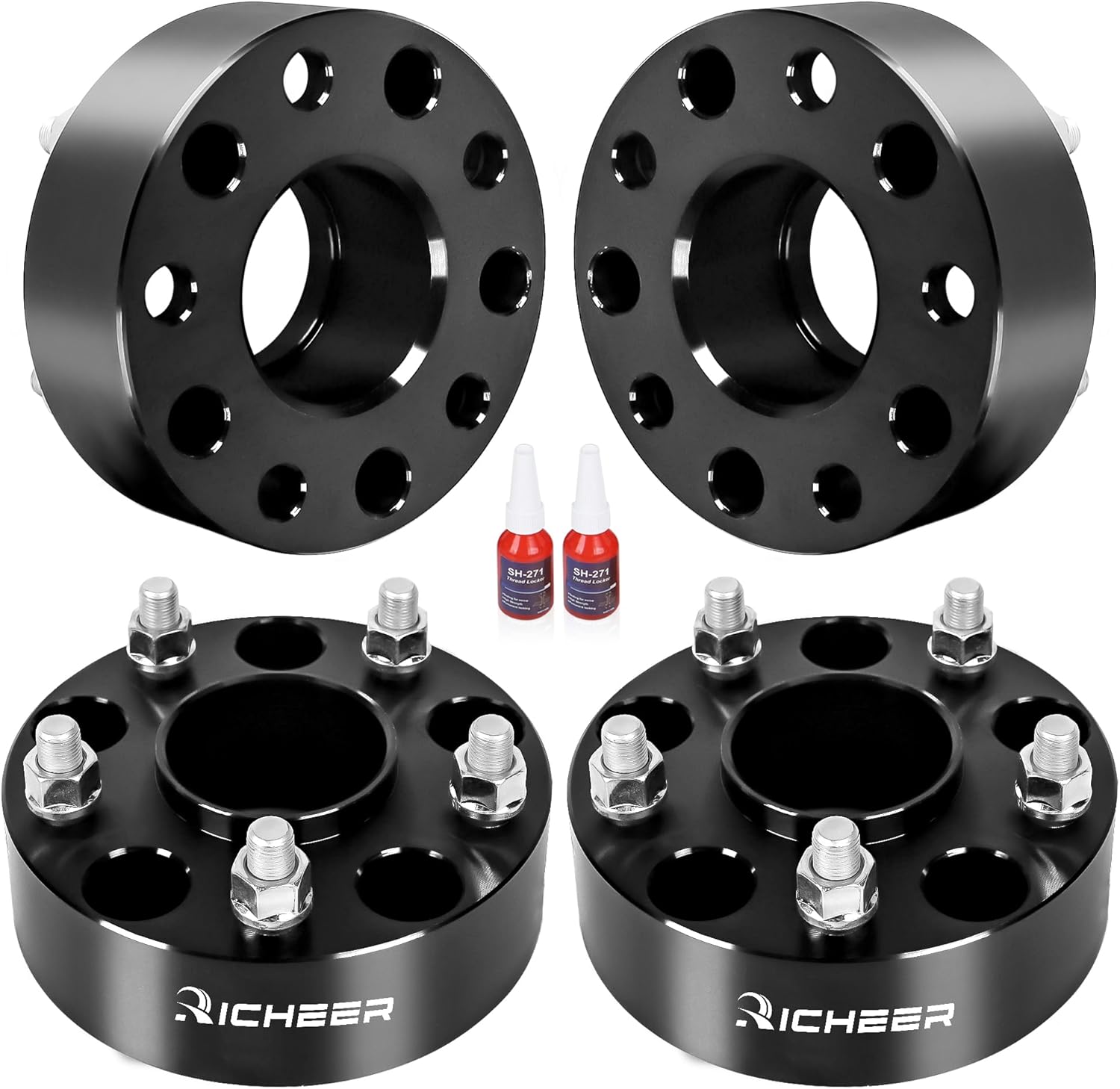
1. Richeer 2" 5×5 Hubcentric Forged Wheel Spacers with 1/2-20 Studs (4 pcs)
| Thickness | 2 Inches |
|---|---|
| Bolt pattern | 5×127 mm (5×5) |
| Center bore | 71.5 mm |
| Stud thread | 1/2-20 |
| Material | Aluminum 6061-T6 |
These Richeer 2-inch wheel spacers are a hubcentric, forged 6061-T6 aluminum upgrade intended to push wheels outward for a wider stance and improved on-road stability. Installation replaces the factory hub bolts with the supplied 1/2-20 Grade 12.9 studs and uses the 71.5 mm center bore to locate the spacer on the hub; the listing recommends 85 to 90 ft-lbs torque. In practice the spacers dress up the vehicle, reduce body roll feel, and can improve traction when paired with wider tires or offset wheels. CNC machining and anodized finish help resist corrosion, and reviewers report straightforward installation with no vibration when torqued correctly. Important limits: they add 2 inches of track so check wheel stud length and wheel clearance first, and some users note increased brake noise until components bed in. Proper installation, torque checks after initial miles, and using the supplied threadlocker are necessary to avoid stud or lug issues.
Best for: Drivers who want a balanced upgrade that improves stance and on-road stability while keeping installation and maintenance straightforward.
Less Ideal for: Drivers looking for extreme offset changes or who do not want to verify stud length and wheel compatibility should consider other fitting options.
- Forged 6061-T6 aluminum construction for strength and corrosion resistance
- Hubcentric 71.5 mm bore ensures centered fitment on matching hubs
- Includes high-strength Grade 12.9 studs for improved tensile strength
- CNC machining and anodized surface for precise fit and environmental protection
- Adds 2 inches of track which may require checking wheel stud length and fender/wheel clearance
- Requires correct torque procedure and recheck after initial miles to avoid issues
Verdict: A strong, factory-quality 2-inch hubcentric spacer that delivers a wider stance and improved stability for a balanced Jeep upgrade.
2. dynofit 2" 5×5 Wheel Spacers, 71.5mm Hub-Centric, Set of 4

| Wheel pattern (PCD) | 5×5 (5x127mm) |
|---|---|
| Hub bore | 71.5mm |
| Thickness | 2" (50mm) |
| Thread pitch | 1/2"-20 |
| Material | Forged 6061-T6 aluminum |
These dynofit spacers are forged 6061-T6 aluminum hub-centric adapters that move your Jeep Wrangler's wheels 2 inches outward to clear larger tires and improve track width. Intended as a bolt-on modification, the kit includes precision CNC-machined spacers with a 71.5mm hub bore and long, heat-treated 10.9-grade studs for solid thread engagement. In practice they solve brake caliper and rubbing issues after lifts, and many owners report a noticeably firmer, more stable feel on corners once installed and properly torqued. The black anodized finish helps resist corrosion and the hub-centric design reduces vibration compared with lug-centered alternatives. Do expect a careful installation process: correct torque sequence, re-torque after the first 50-100 miles, and alignment are recommended. A few user reports note occasional fitment variance that required minor hub prep, so check fit closely before final torquing. These are a performance-focused spacer rather than a cosmetic-only option and work best when installed with attention to torque and wheel/tire clearance limits.
Best for: Drivers upgrading a 2007–2018 Jeep Wrangler for larger tires or sharper handling who prioritize a stronger, hub-centered spacer to improve clearance and stability and are willing to follow proper installation and re-torque procedures.
Less Ideal for: Buyers looking for a purely cosmetic change or those unwilling to perform wheel alignment and post-install torque checks should consider other options.
- Forged 6061-T6 aluminum construction for higher strength than cast spacers
- Hub-centric 71.5mm bore reduces vibration and centers the wheel on the hub
- Includes heat-treated ISO/DIN 10.9 studs for strong thread engagement
- 2 inch thickness creates clearance for larger tires and resolves rubbing or caliper interference
- Black anodized finish and CNC machining for corrosion resistance and precise fit
- Some users reported occasional fitment variance requiring slight hub dressing or replacement of a spacer
Verdict: A strong, hub-centric 2-inch spacer built for Wrangler owners who want reliable clearance and improved cornering stability when fitting larger tires.
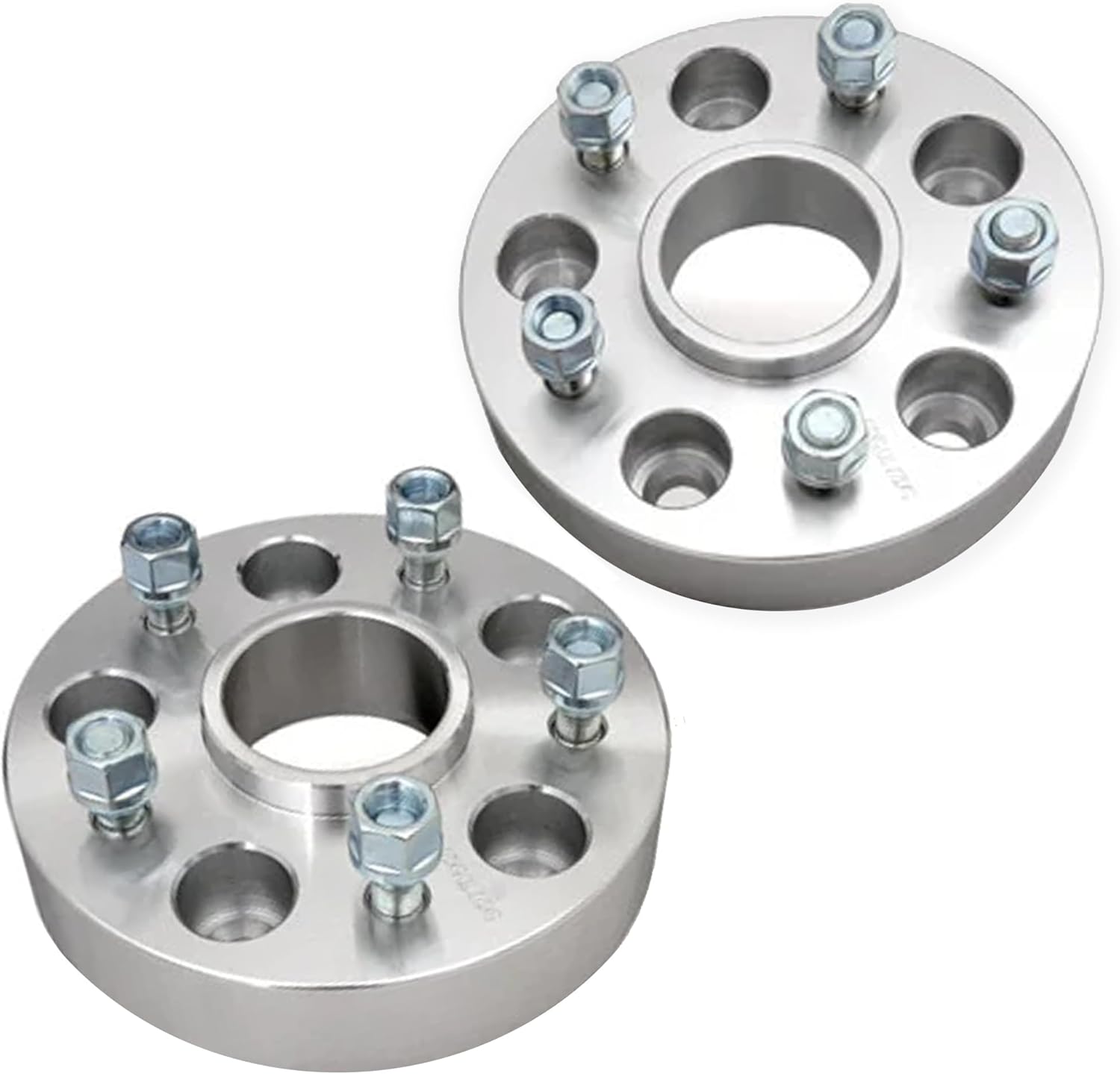
3. Rough Country 1.5" 5×5 Wheel Spacers (pair)
| Size | 1.5" |
|---|---|
| Bolt Pattern | 5 holes (5 x 5.0") |
| Construction | Forged 6061-T6 Aluminum |
| Position | Outer |
These Rough Country 1.5" wheel spacers push the wheel 1.5 inches outward to create extra clearance for larger tires and to square up wheel fitment with fender flares. They come with preinstalled studs and a hub-centric design for a straightforward bolt-on install when used on the specified 5 x 5.0" bolt pattern vehicles. Made from forged 6061-T6 aluminum, the spacers are corrosion resistant and intended for everyday driving and light off-road use. Practical benefits include preventing tire rub with larger tires, improving visual stance, and retaining factory wheel mounting using the supplied studs. Important limitations are fitment specificity and the need for proper installation practices such as using threadlocker and re-torquing lug nuts after initial miles; these spacers are sold in pairs so buyers spacing all four wheels must purchase two sets. Some users report careful inspection after 500 miles and occasional trimming or fender adjustments may be required for full clearance with very large tires.
Best for: Buyers who want a straightforward, hardware-based way to fit wider tires or correct wheel offset on their Wrangler while keeping a practical, installation-focused approach to modifications.
Less Ideal for: People seeking a permanent wheel offset solution without added components or those unwilling to follow post-install maintenance checks and re-torques should consider different wheel or offset options.
- Forged 6061-T6 aluminum construction offers corrosion resistance and solid feel
- Preinstalled studs and hub-centric design simplify installation
- 1.5" offset gives meaningful clearance for larger tires and improves wheel stance
- Sold as a pair for front or rear fitment and intended specifically for 5 x 5.0" bolt pattern vehicles
- Spacers are vehicle and bolt-pattern specific so incorrect selection will not fit
- Sold in pairs only, so spacing all four wheels requires buying two sets
Verdict: A simple, vehicle-specific 1.5" forged aluminum spacer that reliably adds clearance and stance for Wrangler owners looking for a practical upgrade.
4. ECCPP 5×5 (5×127) Hub-Centric Wheel Spacers 1.25" — 2-Pack

| Bolt pattern | 5×5 (5x127mm) |
|---|---|
| Thickness | 1.25 inch |
| Center bore | 71.5mm |
| Material | T6 billet aluminum |
| Stud grade | 10.9 heat-treated studs |
These ECCPP 1.25-inch hub-centric wheel spacers are a straightforward way to push wheels outward for a wider stance or to clear larger brake calipers and mild lift setups. Designed for 5×5 (5x127mm) bolt patterns, the kit includes two T6 billet aluminum spacers with heat-treated grade 10.9 studs and a 71.5mm center bore to register on the hub. Installation is typical of spacers: clean mating surfaces, fit the spacer over the hub, torque the studs, and use proper thread locker if desired. The practical benefits are improved wheel clearance, a more aggressive look, and slightly better stability during cornering. Because the studs are longer than some factory studs, you may need to shorten studs, fit shorter studs, or use open-end lug nuts depending on your wheels. These spacers are hub-centric which helps reduce vibration when properly installed, but correct fitment and careful installation are essential to avoid stud interference or improper wheel seating. For budget-focused shoppers this kit gives solid materials and function, though professional installation or modest modification may be required on some vehicles.
Best for: Buyers looking to widen their Wrangler's stance or fit larger brakes on a tight budget who are comfortable checking fitment and doing basic wheel installation or arranging a shop to handle minor stud modifications.
Less Ideal for: Drivers seeking a zero-modification, drop-in solution or those unwilling to verify thread pitch and hub bore fitment before installing should consider alternative wheel/tire or hub-matched options.
- Hub-centric 71.5mm bore reduces vibration when matched to the hub
- T6 billet aluminum construction for improved strength over stamped alloys
- Grade 10.9 heat-treated studs for durable wheel retention
- 1.25-inch thickness provides noticeable stance widening and extra brake clearance
- Fits 5×5 (5x127mm) bolt pattern common to many Jeep Wranglers in the 2007–2018 range
- May require shortening or replacing factory studs or using open-end lug nuts if studs protrude past spacer face
Verdict: A cost-effective, hub-centric 1.25" spacer that widens the 2007–2018 Wrangler stance and clears larger brakes when installed with proper fitment checks.
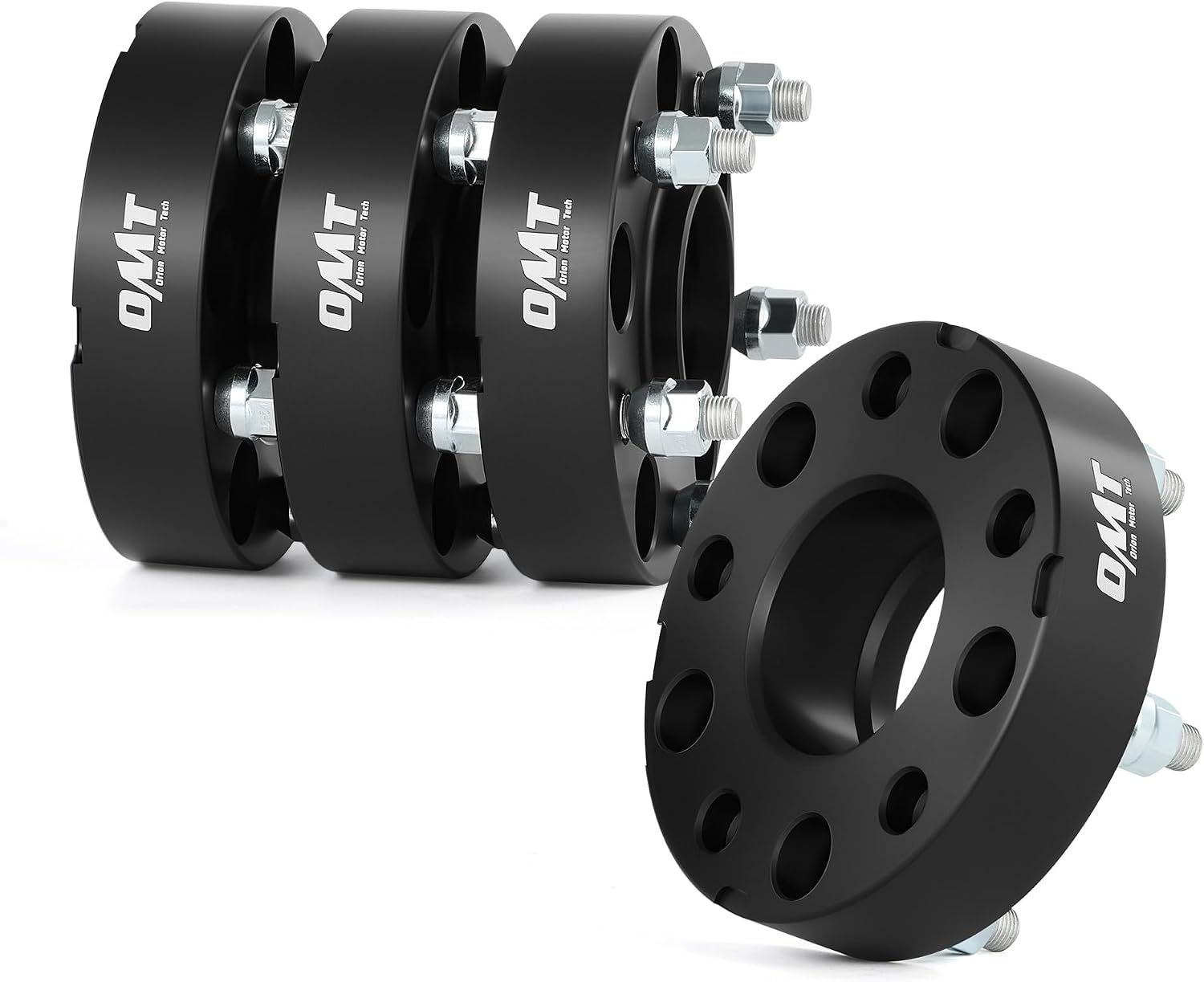
5. Orion Motor Tech 1.5" 5×5 Hub-Centric Wheel Spacers, Set of 4
| Bolt pattern | 5×127 |
|---|---|
| Spacer thickness | 1.5 inches |
| Studs | 1/2"-20 Dacromat-coated bolts |
| Material | T6 aircraft-grade aluminum |
| Hub bore | 71.5 mm |
These Orion Motor Tech spacers push the wheels out 1.5 inches to correct stance, clear larger tires, and improve stability for lifted or wider-wheel setups on compatible Jeeps. Made from T6 aircraft-grade aluminum, the spacers are lightweight yet rigid and use hub-centric rings to center the wheel against the hub for better balance and reduced vibration compared with generic stud-only designs. The kit includes 1/2"-20 Dacromat-coated bolts that resist corrosion and slots on the back face to make removal easier after prolonged use. In practice they address rubbing and tuck wheels closer to the fender edge, and many users report straightforward installation with factory hardware reuse and a clear improvement in handling at low speeds. Important caveats are that wheel studs and axle components see increased leverage, so you should inspect and, if necessary, upgrade studs or torque carefully; some users have reported stud failures when underlying studs were already weakened. Also the included bolts may be lower grade than factory studs, so use correct torque, threadlocker, and periodic checks for long-term reliability.
Best for: Buyers who prioritize a reliable, factory-quality spacer to correct wheel fitment and improve low-speed stability on 2007–2018 Jeep Wranglers while minimizing added weight and vibration.
Less Ideal for: Drivers who do not want to alter vehicle loading on studs or who are unwilling to inspect and maintain wheel hardware regularly should look at alternatives that do not change wheel offset.
- Hub-centric T6 aluminum construction reduces added unsprung mass while keeping the spacer stiff
- Slots on the rear face simplify removal after service or corrosion
- Dacromat-coated 1/2"-20 bolts offer improved corrosion resistance over plain steel fasteners
- Fits common 5×127 bolt pattern used on Wrangler JK models and related Jeeps
- Adds leverage to axle studs which can accelerate wear or cause failure if studs are already weakened or underspecified
- Kit bolts may not match factory stud grade so some owners prefer higher-grade hardware or stud upgrades
Verdict: A well-machined, hub-centric 1.5" spacer that reliably fixes fitment and improves handling on 2007–2018 Jeep Wranglers when paired with proper stud inspection and torque practices.
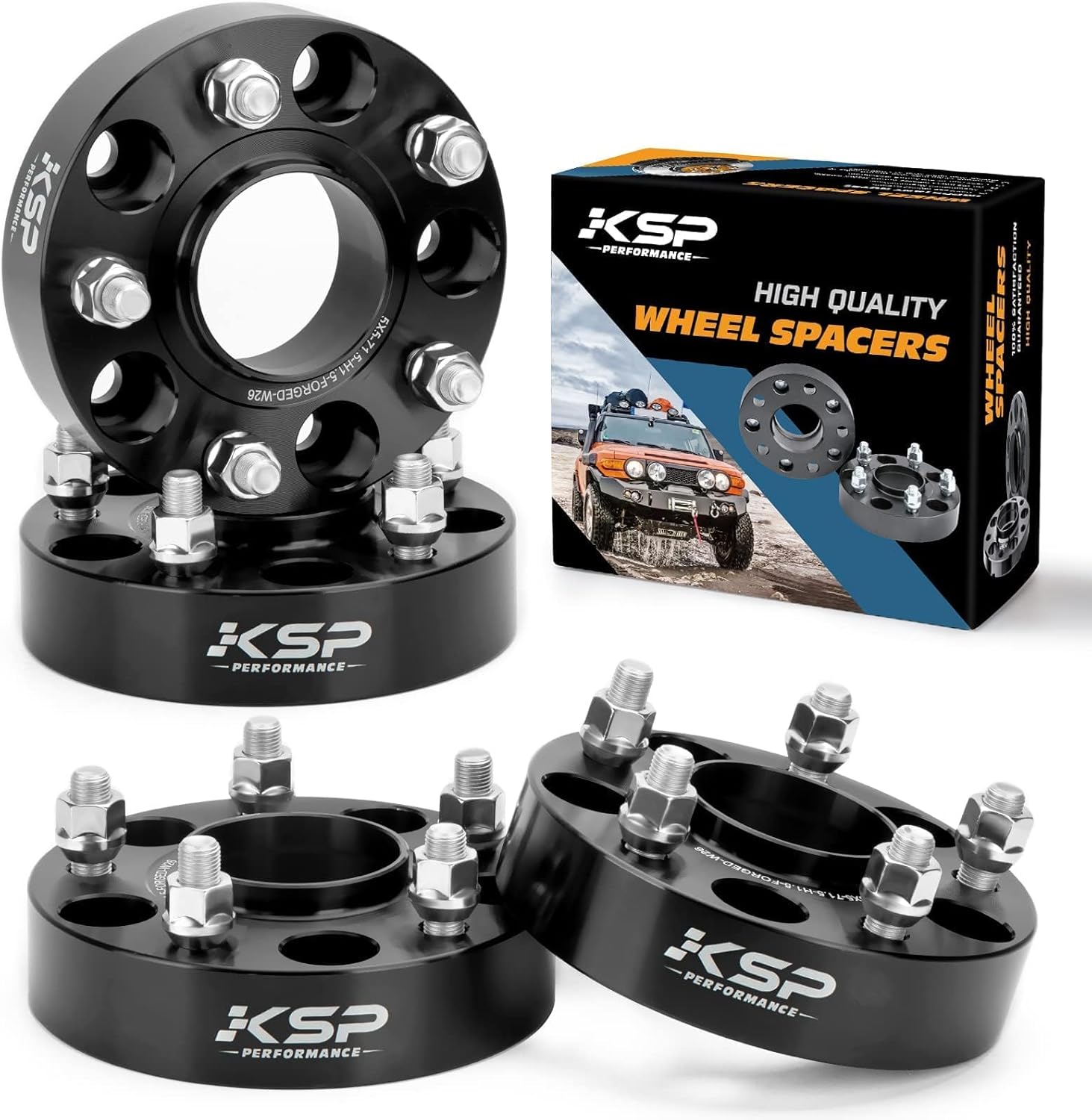
6. KSP PERFORMANCE 1.5" 5×5 (5x127mm) Hub-Centric Wheel Spacers with 71.5mm Bore
| Bolt pattern | 5x127mm (5×5) |
|---|---|
| Spacer thickness | 1.5" (38mm) |
| Hub bore | 71.5 mm |
| Thread size | 1/2"-20 |
These KSP PERFORMANCE wheel spacers are a forged, hub-centric solution that pushes each wheel out 1.5 inches to increase track width and clear larger tires. Made from 6061-T6 billet aluminum and anodized for corrosion resistance, the kit ships with hardened 10.9 grade bolts preinstalled and open-ended lug nuts for installation. In use they provide a wider stance, reduced tire rubbing on suspension components, and a noticeable improvement in cornering stability for lifted Wranglers. Fitment is specific to 5x127mm Jeep applications and the 71.5mm center bore helps eliminate vibration when mounted correctly. Installation is straightforward for anyone comfortable with wheel work but requires careful attention to hub cleanliness, correct torqueing, and thread locker where recommended to avoid stud damage. The set is light compared with steel spacers and resists corrosion better, but users must confirm exact year/model fit and check lug length clearance since some factory studs may need trimming or different hardware.
Best for: Buyers who want a proven, hub-centric spacer to clear larger tires and improve stance and stability on 2007–2018 Jeep Wrangler models and who value documented user experiences and build quality.
Less Ideal for: Drivers who prefer a bolt-on solution with no modification or those unwilling to follow torque and installation best practices should consider alternatives.
- Forged 6061-T6 aluminum construction provides high strength with low weight
- Hub-centric 71.5mm bore reduces risk of vibration when properly installed
- Anodized surface improves corrosion resistance compared with raw aluminum
- Includes heat-treated 10.9 grade bolts and open-ended lug nuts for a complete install
- May require trimming or replacement of factory studs on some vehicles due to spacer thickness
- Proper installation demands torque discipline and thread locker to avoid stud damage
Verdict: A forged, hub-centric 1.5" spacer built for Jeep 5x127mm wheels that reliably widens stance and helps clear larger tires when installed correctly.
7. dynofit 1.5" 5×5 (5×127) Hub-Centric Wheel Spacers, 71.5mm, 4pc
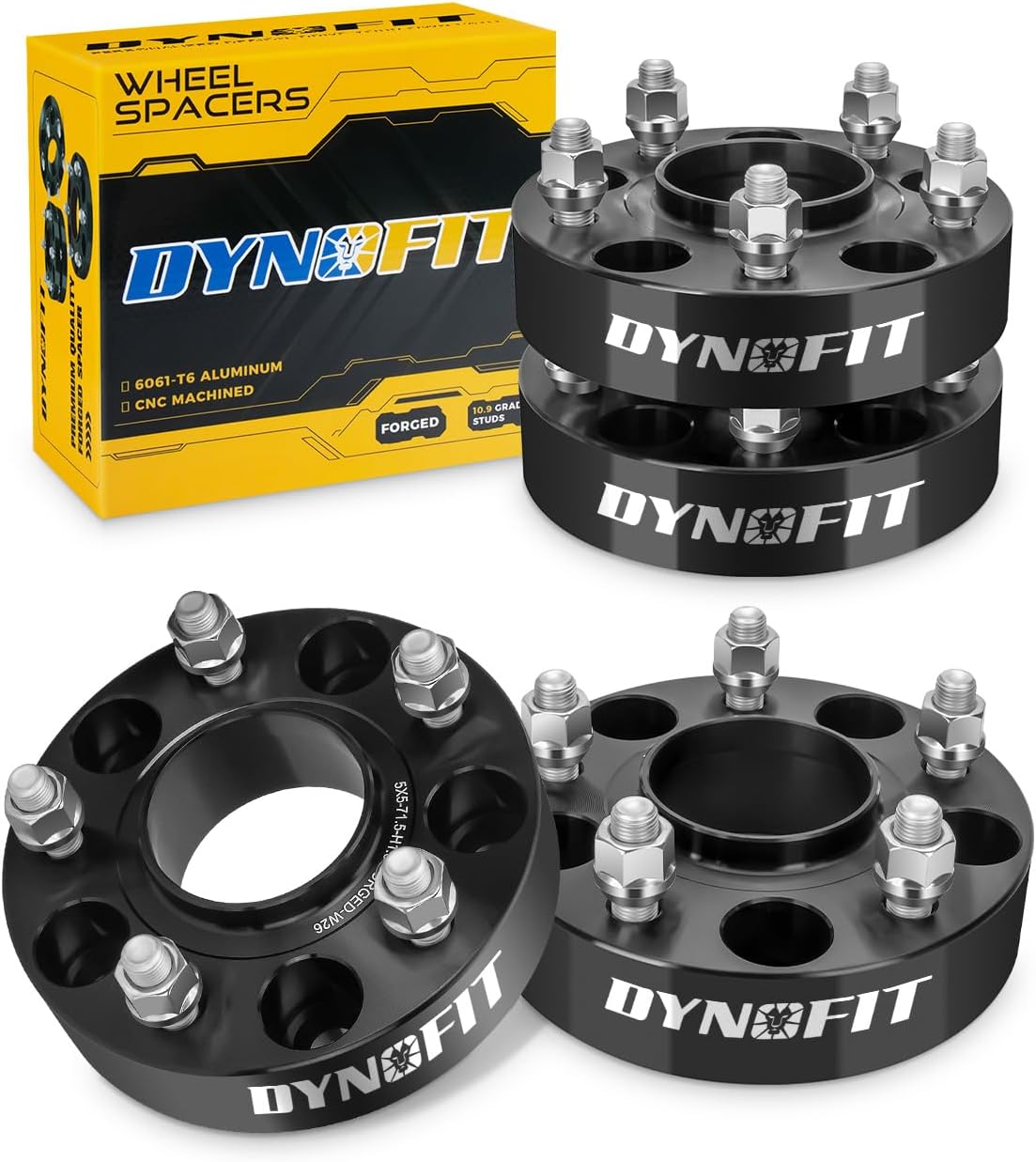
| Bolt pattern (PCD) | 5×5 (5x127mm) |
|---|---|
| Hub bore | 71.5mm |
| Thickness | 1.5 inch (38.1mm) |
| Material | 6061-T6 Aluminum |
| Thread size | 1/2"-20 |
These dynofit spacers move wheels out 1.5 inches to correct backspacing, improve tire clearance, and give a wider stance on compatible Jeep Wrangler JKs and similar models. Made from forged 6061-T6 aluminum with anodized finish and CNC machining, they are lighter than steel options while still offering strong shear resistance; the kit includes Grade 10.9 studs and open lug nuts treated for corrosion resistance. Installation is straightforward for anyone with basic tools but requires correct torque, use of threadlocker as recommended, and a post-install alignment for best handling. Most buyers report precise hub-centric fit and noticeable handling improvement, though a few users had to lightly fit one spacer on the hub. These are a practical, lower-weight choice for drivers who want a factory-quality feel and aggressive stance, provided you confirm hub bore and bolt pattern before buying and follow installation guidance to avoid fitment or safety issues.
Best for: Drivers who prioritize a conservative, safety-first upgrade to improve clearance and handling on compatible Wrangler JKs and related models and want a durable, factory-quality spacer without a heavy weight penalty.
Less Ideal for: People looking for a universal spacer for many different vehicles or those unwilling to verify hub bore and bolt pattern before purchase should look elsewhere.
- Hub-centric 71.5mm bore for a precise fit on specified Jeep models
- Forged 6061-T6 aluminum construction for strength with reduced weight
- Includes Grade 10.9 studs and DACROMAT-treated bolts for corrosion resistance
- Anodized finish and CNC machining improve durability and fit accuracy
- Requires professional installation or careful torquing and recheck after 500 miles to ensure safety
- One-off quality control issues reported where a spacer needed light fitting to the hub
Verdict: A lightweight, forged 1.5-inch hub-centric spacer built to give Wrangler JK owners a safer, more stable stance while keeping a factory-quality fit.
Choosing the Right 2007-2018 Jeep Wrangler Wheel Spacers: Key Factors to Consider
Bolt Pattern and Hub Bore Compatibility
Correct bolt pattern and center bore are the foundation of safe spacer fitment for the 2007-2018 Wrangler. Using a spacer with the wrong 5×114.3 bolt pattern or incorrect center bore can cause improper seating, uneven load transfer, and increased risk of wheel stud or lug failure. Confirming bolt circle diameter and hub bore dimensions prevents stresses that lead to loosening or wobble. For JK and JKU era Wranglers the mounting surfaces must align precisely; many spacers include hubcentric rings or come machined to match the hub diameter to center the wheel on the hub rather than relying solely on the lugs. That center alignment is especially important if you plan to run larger tires or change wheel offsets because it minimizes eccentric loading and reduces the chance of vibration at highway speeds.
Material Strength and Manufacturing Method
Material choice and how the spacer is made affect long-term durability under offroad and highway loads. Forged or billet aluminum spacers provide superior grain structure and strength compared with low-grade cast pieces, which may be more prone to cracking under repeated stress. Look for spacers made from tested automotive-grade alloys with proper heat treatment and CNC machining tolerances. Quality finishes and anodizing help resist corrosion where salt and mud are common. Manufacturing consistency also influences how well bolt holes and the hub seat are concentric, which directly affects vibration and stress on wheel studs.
Hubcentric Vs Lugcentric Design
Hubcentric spacers center the wheel on the hub using a precise center bore, while lugcentric types rely on the lug nuts to pull the wheel tight. For the Wrangler, hubcentric spacers generally reduce the risk of harmonic vibration because they provide positive location on the hub. If your wheels already have a snug center bore match, a hubcentric spacer preserves that alignment. When using aftermarket wheels with larger or smaller center bores, examine whether the spacer includes rings or an integrated seat. A lugcentric spacer can work but requires perfect lug torque and good stud condition to avoid wobble, so it is less forgiving in high-disturbance offroad use.
Spacer Thickness and Wheel Offset Effects
Thickness determines how far the wheel moves outboard and directly affects the effective wheel offset. Small increases can improve clearance for wider tires or lift a bit of track width for stability, while excessive thickness may overload wheel studs, change steering geometry, or rub on fenders. Consider the tradeoff between desired stance and mechanical limits. Thicker spacers increase leverage on bearings and studs, so it is common to use stronger hardware or convert to extended studs when exceeding manufacturer recommendations. A thickness guide will help you choose the minimum spacer that achieves clearance without introducing undue stress on suspension or steering components.
Hardware Quality and Torque Specifications
Good hardware and clear torque specs are essential to keep spacers secure over time. Using studs, nuts, or bolts rated for automotive use with proper thread engagement prevents stripping and reduces failure risk. Follow recommended torque values for wheel studs and lug nuts and re-check torque after initial use. Some spacers come with hardened studs and washers; others rely on the vehicle's studs and recommend using longer studs. Verify whether the spacer requires an installation kit and whether torque specs are supplied for both spacer-to-hub and wheel-to-spacer fasteners.
Fitment for Offroad Use and Clearance Needs
How you use your Wrangler dictates the spacer choice. Offroad drivers need spacers that withstand repeated impact, mud, and water exposure while maintaining centering and clamping force. Trail abuse can loosen hardware if torque is not maintained, and abrasive environments accelerate corrosion. If you run larger tires or aftermarket wheels, prioritize spacers that provide adequate clearance without pushing the wheel beyond safe load paths. Consider whether you will need extended studs or changes to the brake backing plate clearance. Durable coatings and sealed constructions help protect against corrosion and debris in offroad conditions.
JK and JKU Generation Fit Notes (2007–2018)
The 2007–2018 Wrangler span multiple internal generations, most commonly referred to as JK and JKU for owner discussions. When planning spacer fitment, confirm the specific year and submodel because minor hub diameter and wheel center bore tolerances can vary across trims and wheel packages.
Measure the hub center bore and confirm the 5×114.3 bolt circle before ordering spacers. Many Wrangler owners label fitment by JK and JKU when searching, so if your vehicle is a mid-decade model check factory wheel specs to match any hubcentric ring supplied with a spacer.
- Verify hub bore using a caliper rather than assuming factory spec.
- Match the 5×114.3 bolt pattern to avoid adapter-style solutions.
- Account for trim-specific wheel center caps that may affect spacer seat depth.
Choosing Thickness for Clearance Versus Load
Determine the minimum spacer thickness that achieves the clearance you need. Small thicknesses, like 5 to 10 millimeters, often provide enough room to clear control arms or inner fender liners while keeping leverage on studs modest.
If you need more than about 20 millimeters, consider upgraded hardware or consulting a professional installer. Increased track width improves cornering stability but also raises stresses on bearings and steering components, so balance desired look with mechanical consequences.
- Measure tire and wheel clearance at full articulation before finalizing thickness.
- Remember that thicker spacers may require longer studs or nuts.
Installation Prep and Required Tools
Prepare your Wrangler with safe jacking points and wheel chocks. Clean the hub mating surface of rust and debris to ensure a flat seating area for the spacer. Use anti-seize or lubricant on threads only where the manufacturer recommends it to prevent galling without affecting torque readings.
Typical tools include a torque wrench calibrated to vehicle specifications, appropriate sockets, a breaker bar, and a jack and stands rated for the vehicle. If the spacer kit includes longer studs or hardware, confirm thread engagement depth to maintain safe clamp force.
- Torque wrench capable of the vehicle's lug torque range.
- Torque angle or torque sequence guidelines where applicable.
- Calipers for measuring hub bore and spacer thickness.
Common Installation Mistakes to Avoid
Do not rely on lug nuts alone to center the wheel if the spacer is designed to be hubcentric. Omitting hub rings or using mismatched center bore parts increases vibration risk. Also avoid uneven torque tightening; follow a proper star pattern and the recommended torque steps.
Another frequent error is skipping a re-torque after the initial miles. Studs and nuts can seat further after the first drive; re-check torque at the recommended interval. Finally, do not exceed manufacturer-stated stud engagement or use improperly sized washers that can cause clamping irregularities.
- Always use hub rings if supplied or when center bores differ.
- Re-torque wheel fasteners after 50 to 100 miles of initial use.
When to Consider Extended Studs or Professional Installation
If spacer thickness or wheel offset pushes stud engagement close to or beyond safe limits, extended studs provide more thread engagement and improved clamping reliability. This upgrade is common for owners using thick spacers or switching to much wider wheel widths.
Professional installation is advisable if you lack the tools to verify torque accurately or if you plan to modify suspension geometry. A trained installer can confirm hub seating, check for runout, and advise whether bearings or other components need upgrading to support the new loads.
- Extended studs increase thread engagement for thicker spacer setups.
- A professional can test for wheel runout and vibration sources after installation.
Maintenance and Long-Term Checks
Regularly inspect spacer hardware, studs, and the hub mating surface, especially after offroad use. Look for signs of corrosion, loosened fasteners, or unusual runout when driving. Routine maintenance reduces the chance of progressive failures that can arise from neglect.
Keep a service log for torque checks and any hardware replacements. If vibration develops after installation, re-evaluate centering, torque, and whether a hubcentric ring is necessary to correct the issue.
- Inspect hardware after heavy offroad events.
- Re-torque at intervals based on use and manufacturer guidance.
Still looking for the perfect fit?
Select your Jeep Wrangler configuration to see the most relevant Wheel Spacers recommendations
How We Chose the Best 2007-2018 Jeep Wrangler Wheel Spacers
We shortlisted wheel spacers by prioritizing fitment, structural integrity, and installation practicality specific to the 2007-2018 Jeep Wrangler (including common JK and JKU chassis fit considerations). Our evaluation emphasized bolt pattern accuracy, center bore tolerances, and load-rated construction to ensure spacers align correctly with the Wrangler's hub and wheel mounting surface. We checked material and machining quality, focusing on forged or high-grade billet aluminum and corrosion-resistant finishes that resist galling in offroad environments. Thread engagement and hardware quality were a key filter, so spacers using Grade 10.9 or comparable studs and nuts rated for vehicle loads were favored. We also considered spacer thickness options and whether hubcentric rings or integral hub seats were provided to reduce vibration risk. Practical factors included the availability of installation hardware or kits and clear torque guidance to help owners install parts safely. Excluded items were adapters that alter bolt patterns or require permanent hub modifications, and any spacer solutions not explicitly compatible with the 2007-2018 Wrangler bolt patterns and hub diameters. The end result is a focused set of candidates that meet structural, fitment, and usability standards relevant to typical Jeep owners.
Our full evaluation process is outlined in our review methodology.
FAQ
Do wheel spacers cause vibration on a Wrangler?
They can if the spacer is not hubcentric or has poor machining tolerances. Vibration often comes from eccentric mounting or insufficient centering, so choosing a spacer with proper center bore match and re-checking torque reduces that risk.
What thickness spacer should I pick for larger tires?
Start with the minimum thickness that clears the tire and suspension, often 5 to 15 millimeters. Thicker spacers increase stud leverage and may require extended studs or reinforced hardware if you exceed about 20 millimeters.
Are hubcentric spacers necessary for the 2007-2018 Wrangler?
Hubcentric spacers are recommended because they center the wheel on the hub and reduce the chance of vibration. If your wheels already have a precise center bore match, confirm whether a hubcentric ring is still needed for added accuracy.
How tight should wheel spacer hardware be torqued?
Follow the torque specs provided with the spacer and the vehicle's lug torque for wheel-to-spacer fasteners. Torque values vary by stud and nut grade, so use a calibrated torque wrench and re-check torque after initial driving.
Can I install spacers myself on a JK and JKU Wrangler?
Many owners can install spacers with basic mechanical skills and the right tools, but careful measurement, correct torque procedure, and a re-torque after initial miles are essential. If you are unsure about fitment or runout, seek a professional installer.
Will spacers affect my Wrangler's wheel bearings or steering?
Increasing track width changes loads on bearings and steering components; small spacers have a minimal effect, but thicker spacers increase leverage and can accelerate wear. Monitor components and upgrade hardware if using large offsets.
Final Verdict
When choosing wheel spacers for a 2007-2018 Jeep Wrangler, prioritize precise fitment, hubcentric seating, and hardware rated for automotive loads. Balance the thickness needed for clearance or stance with the mechanical tradeoffs to studs, bearings, and steering components. Maintain a routine of proper torque checks and inspections, and consider extended studs or professional help for thicker spacer setups. With careful selection and installation you can achieve the desired clearance or stance without compromising long-term reliability.
Explore More:
- Check out all Jeep Wrangler parts & accessories
- Explore Wheel Spacers Maintenance & Repair Guides
- Explore Wheels & Tires
- Browse all Auto Parts
