

Note: This article contains affiliate links. If you click on these links and make a purchase, I may earn a small commission at no extra cost to you. This helps support my research and content. Read my full affiliate disclosure here.
If your 2011-2019 Ford Explorer is running hot or not reaching normal temperature, the thermostat is one of the most common causes. Choosing the right thermostat matters because the correct opening temperature and reliable sealing affect engine warm-up time, cabin heater performance, and long-term cooling-system health. This guide shortlists the top thermostat options for the Explorer across the 2011 to 2019 model years and explains the key features to check before you buy. We evaluate physical fitment, opening specification, and durability so you can quickly find a compatible replacement and get the cooling system back to normal.Below are our top picks and the buying guidance to help you pick the best thermostat for your Explorer and driving needs.
Looking for other parts? See all Ford Explorer parts & accessories.
Top Picks at a Glance
| Best Overall The best all-around choice for most situations | Gates Engine Coolant Thermostat for Ford Explorer 3.5L V6 (2011–2019) |  |
| Best Quality Built to a higher standard if you want something more solid | TRQ Thermostat with Housing Assembly |  |
| Best Value The sweet spot between price and what you get | A-Premium Engine Coolant Thermostat for Ford and Select Vehicles |  |
| Best Budget The cheapest option that still gets the job done reliably | MAXWIN Thermostat Housing Assembly for Select Ford, Lincoln, Mazda and Mercury Vehicles |  |
| Highest Rated A top-rated pick with lots of positive feedback | Motorcraft RT1254 Thermostat Assembly |  |
| Most Popular A crowd favorite that many people choose with confidence | MotoRad 354-180 180° Engine Coolant Thermostat |  |
| Best Seller A high-volume bestseller chosen again and again | Motorcraft Thermostat Assembly RT1258 |  |
1. Gates Engine Coolant Thermostat for Ford Explorer 3.5L V6 (2011–2019)

| Compatible vehicles | Ford Explorer 2011–2019 3.5L V6 |
|---|---|
| Temperature rating | 180 Degree |
| Manufacturer | Gates |
| Manufacturer part number | 4036005250 |
This Gates-compatible engine coolant thermostat replaces a stuck or failing unit to help the Explorer reach and hold normal operating temperature. It is intended as a direct replacement for 3.5L V6 Explorers across 2011–2019 and is used when symptoms include overheating, running too cool, or a persistent P0128 code. The part matches factory temperature spec (180 degree) and installs in the same location as the original thermostat; it comes in the manufacturer packaging with required hardware. In daily use it restores proper thermostat operation so the heater works reliably and the engine reaches operating temperature on time, which improves fuel economy and reduces wear. The main limitations are that some model years list the thermostat excluding the housing, so you may need to transfer or buy the separate housing depending on your vehicle, and installation requires basic mechanical access and coolant draining. For a balanced replacement that follows factory temperature rating and fitment for the Explorer 3.5L V6, this unit offers a practical fix without extra features.
Best for: Buyers who want a reliable, factory-spec replacement to restore correct engine temperature and heater performance on a 3.5L V6 Explorer without seeking performance upgrades.
Less Ideal for: If you need an upgraded thermostat with a different temperature rating or a complete housing-and-thermostat assembly included, this separate thermostat may not meet your needs.
- Direct replacement for Ford Explorer 3.5L V6 2011–2019, matching factory temperature rating
- Supplied in manufacturer packaging with original-style hardware for straightforward installation
- Restores proper engine warm-up and cabin heat, addressing overheating or persistent low-temperature faults
- Does not include thermostat housing on some model-year listings so housing purchase or transfer may be required
Verdict: A straightforward factory-spec thermostat that reliably returns normal operating temperature and heater function for 3.5L V6 Explorers from 2011 to 2019.
2. TRQ Thermostat with Housing Assembly

| Material | Plastic |
|---|---|
| Gasket Included | Yes |
| Opening Temperature | 180 Deg. F |
| Manufacturer Part Number | ECA90657 |
This TRQ thermostat with housing assembly combines the thermostat and plastic housing into a single direct-replacement unit intended for 3.5L and 3.7L V6 Ford and Lincoln applications from the 2011–2019 model years. It installs as a pre-assembled assembly, which simplifies a cooling-system service by avoiding separate sourcing of the gasket and housing. The part lists an opening temperature of 180 F and includes the gasket, so it restores proper coolant flow and temperature control to the engine while keeping installation time down for a DIYer or mobile technician. The machined exterior and factory-style fit make it a practical swap when the original housing is cracked or the thermostat is failing. Being a plastic housing, long-term durability may lag behind all-metal aftermarket options, but for most performance-oriented drivers who want reliable temperature regulation and quick serviceability this unit is an effective, ready-to-install replacement.
Best for: Drivers who need a straightforward, direct-replacement thermostat assembly to restore reliable coolant control with minimal downtime and simpler installation.
Less Ideal for: Enthusiasts running heavily modified, high-boost, or track-focused engines that demand metal housings and higher temperature or flow performance.
- Pre-assembled thermostat and housing reduces installation steps and fitment errors
- Includes gasket so you receive everything needed for a single-point replacement
- Factory-style opening temperature (180 F) suitable for restoring correct engine operating temperature
- Machined exterior finish and direct-fit design aimed at easy, reliable installation
- Plastic housing may be less durable than metal alternatives under high-heat or boosted applications
Verdict: Choose this TRQ assembled thermostat and housing when you want a ready-to-install, factory-style replacement that restores proper engine temperature control with minimal fuss.
3. A-Premium Engine Coolant Thermostat for Ford and Select Vehicles
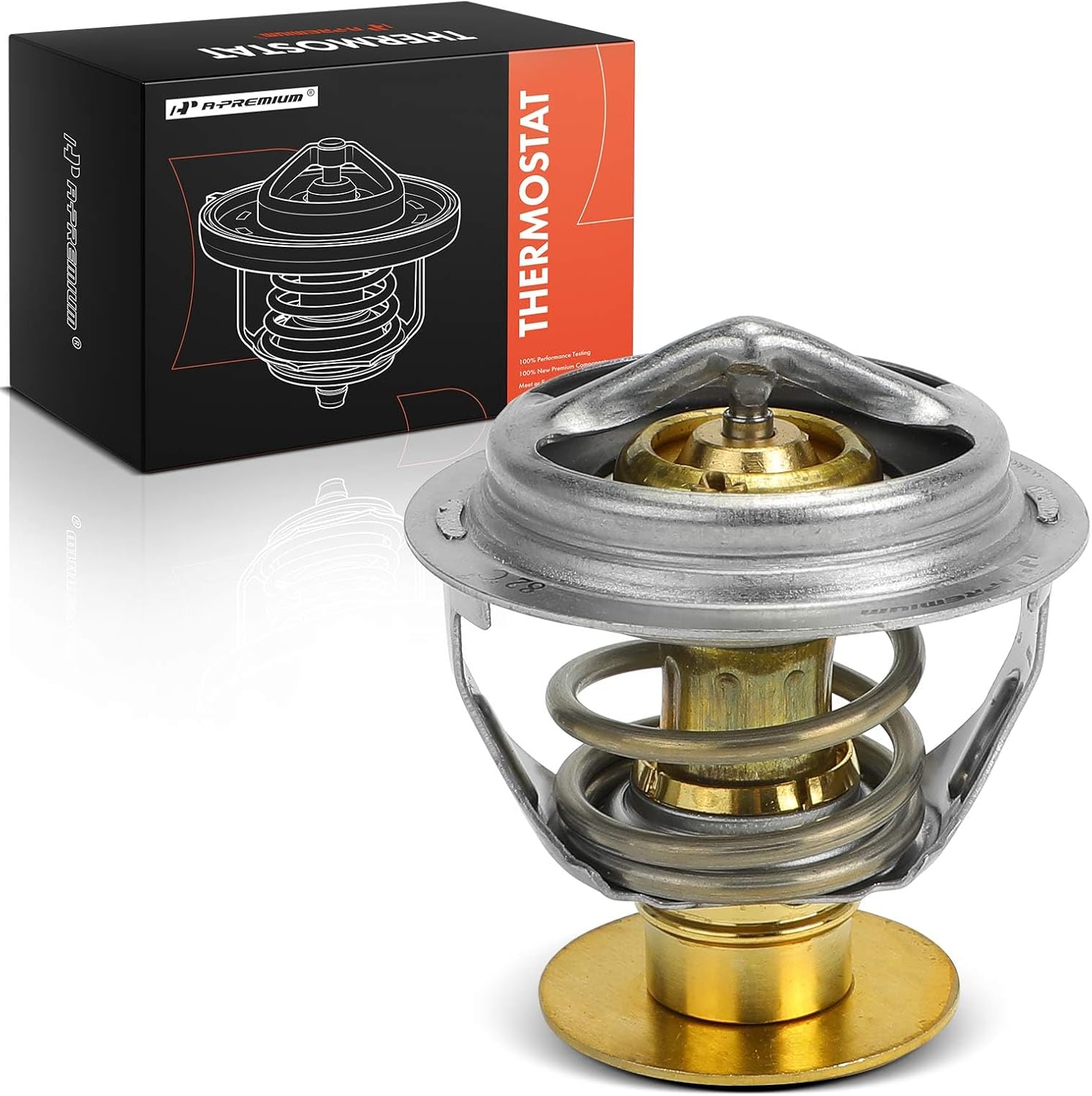
| Start to Open Temperature | 82°C |
|---|---|
| Gasket or Seal Included | No |
| Material | Metal |
| Package Quantity | 1 |
This A-Premium thermostat replaces the engine coolant thermostat in a range of Ford-family and related vehicles to restore proper cooling system operation. It installs in place of a failed unit and opens at the factory-specified temperature of 82°C, helping the engine reach and maintain optimal operating temperature and preventing overcooling or overheating. The metal construction and single-piece design are straightforward and suit routine DIY or shop replacements, and the package includes one thermostat ready for installation. It does not include a gasket or seal, so plan to reuse the factory seal if serviceable or buy a new gasket separately to ensure a leak-free installation. The part covers many model years and engine variants listed in the fitment, so it is useful when matching reference numbers is possible. A-Premium backs the part with a one-year unlimited-mileage guarantee, which provides extra confidence for regular drivers and technicians. For buyers wanting a drop-in, temperature-accurate replacement, this is a practical option, but you will need to supply a seal and verify exact reference numbers before ordering.
Best for: Buyers who want a straightforward, factory-temperature replacement thermostat to restore normal cooling performance without unnecessary bells and whistles and who prioritize matching reference numbers for fitment.
Less Ideal for: People seeking a thermostat with upgraded performance features such as higher temperature thresholds, heavy-duty racing spec parts, or a complete seal/installation kit included should look elsewhere.
- Opens at specified 82°C start-to-open temperature for correct engine warm-up behavior
- Metal construction suitable for standard replacement durability
- Covers a wide range of Ford, Lincoln, Mazda, Jaguar, and Mercury fitments listed by reference numbers
- Backed by a one-year unlimited-mileage guarantee from the brand
- Does not include a gasket or seal, requiring a separate purchase or reuse of the old seal
Verdict: A practical, temperature-accurate replacement thermostat for matching Ford-family engines when you need a reliable factory-style swap.
4. MAXWIN Thermostat Housing Assembly for Select Ford, Lincoln, Mazda and Mercury Vehicles

| Manufacturer | Maxwin Auto Parts |
|---|---|
| Brand | MAXWIN |
| Manufacturer Part Number | NTH-0050 |
| Opening Temperature | 180°F / 82°C |
This MAXWIN thermostat housing assembly replaces the factory thermostat in compatible Ford, Lincoln, Mazda, and Mercury applications and is built to the same basic function as the factory part. It opens at 180°F (82°C) and arrives as a single housing assembly for a straightforward swap when the old unit leaks or the thermostat sticks. For everyday use it restores normal coolant flow and helps the engine reach and hold operating temperature, which improves heater performance and fuel economy compared with a failed thermostat. The part is compact and comes with a standard fitment orientation, so installation is typically a simple bolt-out, bolt-in job for anyone comfortable with basic cooling system service. Expect the practical benefits of reliable temperature control at a low cost, though this aftermarket part may not include OEM packaging or OEM-branded fasteners. It is a good budget replacement but installers who want dealer parts traceability or brand-matched hardware should plan accordingly.
Best for: Buyers looking for an affordable, functional replacement thermostat to get a 2011–2019 Explorer back to normal operating temperature without paying dealer prices.
Less Ideal for: Drivers who require dealer-part traceability, original factory packaging, or matched OEM hardware for warranty or resale concerns should look elsewhere.
- Factory-style housing assembly that restores coolant flow and temperature regulation
- Opens at 180°F (82°C), matching common thermostat operating specs
- Compatible with a long list of Ford-family and related models including 2011–2019 Explorer
- Low-cost aftermarket alternative to save on routine cooling system repairs
- May not include OEM-branded fasteners or factory packaging
Verdict: A budget-friendly, direct-fit thermostat housing assembly that restores proper engine temperature control for 2011–2019 Ford Explorer owners who want reliable function at a low cost.
5. Motorcraft RT1254 Thermostat Assembly

| Brand | Motorcraft |
|---|---|
| Model | RT1254 |
| Manufacturer | Motorcraft |
This Motorcraft RT1254 thermostat assembly is a direct factory-style replacement intended to restore proper coolant control and engine warm-up behavior. It installs in place of the original unit and is typically used during cooling-system repairs or when a failing thermostat causes poor temperature regulation or heater performance. Because Motorcraft parts are designed to Ford specifications, the RT1254 offers predictable fitment and consistent opening temperature that helps prevent overheating or extended cold running. The unit's painted exterior and OE-style construction suggest corrosion resistance and a long service life under normal driving conditions. Installed properly, it reduces the chance of repeat coolant-related issues and simplifies maintenance for technicians and owners. The main limitations are that it is a single replacement part without hoses or gaskets included and buyers should verify vehicle compatibility before ordering since housings and mounting hardware vary by application.
Best for: Buyers prioritizing long-term reliability and factory-quality replacement parts for routine cooling-system repairs on their Explorer who want predictable temperature control and straightforward installation.
Less Ideal for: Those looking for an upgrade part with altered opening temperature for performance tuning or a complete repair kit that includes hoses and additional hardware should consider other options.
- Designed to Ford factory specifications for consistent fit and operation
- Predictable opening behavior that helps prevent overheating and poor warm-up
- Painted exterior offers added resistance to corrosion
- Simple direct-replacement design makes installation straightforward for most repairs
- Sold as the thermostat assembly only and may not include associated gaskets or housing components
Verdict: A dependable, factory-spec thermostat assembly for owners who want a reliable, direct replacement that restores correct engine temperature control.
6. MotoRad 354-180 180° Engine Coolant Thermostat

| Brand | MotoRad |
|---|---|
| Model | 354-180 |
| Temperature | 180 Degrees |
| Included components | Copper case, wax compound, offset design, air relief valve, OEM style seals |
| Manufacturer warranty description | Limited lifetime. |
The MotoRad 354-180 is a single-piece engine coolant thermostat intended as a direct factory-style replacement for many Ford-family and related vehicles from the mid 1990s through the 2010s. It installs in place of the original thermostat and controls coolant flow at approximately 180 degrees to help maintain proper engine operating temperature. Notable features include a copper case, wax element, offset design, air relief valve, and OEM-style seals that simplify installation and aim to replicate factory function. In practice this thermostat provides predictable warm-up behavior and consistent opening temperature, which helps reduce overheating or overcooling on vehicles it fits. The included materials and construction are durable for routine driving, though fit and function depend on matching the exact part number for your engine. Buyers should verify vehicle fitment before purchasing because it covers many models and years rather than a specific engine code. This unit is best for owners who want a like-for-like replacement with familiar factory performance and straightforward installation by a DIYer or mechanic.
Best for: Buyers who prioritize a proven, factory-style replacement and want social proof from other owners before committing, especially those comfortable confirming fitment and performing a straightforward DIY swap or using a trusted mechanic.
Less Ideal for: People who need a thermostat calibrated for an uncommon engine variant or those unwilling to check exact part compatibility should consider a model-specific alternative.
- Factory-style construction with copper case and OEM-style seals for reliable sealing and durability
- Includes wax compound and air relief valve to promote consistent opening and reduce air-lock risk
- Offset design facilitates fitment into the original housing on compatible vehicles
- Straightforward direct-replacement fit for many Ford, Lincoln, Mazda, Mercury, and Jaguar models
- Limited lifetime manufacturer warranty listed in product details
- Fitment spans many makes and years so verifying exact part number is required before installation
- Not vehicle-specific for individual engine variants which may require a different thermostat calibration
Verdict: Choose this MotoRad thermostat when you want a direct factory-style 180° replacement with durable materials and proven fitment for covered Ford-family vehicles.
7. Motorcraft Thermostat Assembly RT1258

| Manufacturer | Motorcraft |
|---|---|
| Model | Thermostat Assembly |
| Item model number | RT1258 |
This Motorcraft RT1258 thermostat assembly replaces the engine thermostat and is designed to restore proper engine temperature control. It installs in the cooling system where the thermostat regulates coolant flow to maintain normal operating temperature. Being a Motorcraft part, it is built to match factory fit and function, which simplifies installation and reduces the chance of fitment or reliability issues compared with generic aftermarket units. The product is a single-piece assembly and comes as a ready-to-install unit, so you do not need to source extra seals or components. Practical benefits include predictable warm-up behavior and reduced risk of overheating when paired with a functioning cooling system. Limitations are minimal but include the usual dependency on proper installation and compatibility with the specific Ford Explorer model years listed in the article goal; this part is not a performance thermostat and will not change thermostat opening temperature beyond factory specifications.
Best for: Buyers who prioritize a risk-averse, factory-correct replacement for temperature control on supported Ford Explorers and want a straightforward, dependable swap with minimal fuss.
Less Ideal for: Those seeking aftermarket performance thermostats or altered opening temperatures for tuned engines should look for specialty parts designed for those goals.
- Factory-engineered fit and function for Ford and Lincoln applications
- Supplied as a complete thermostat assembly ready for installation
- Reduces fitment and reliability uncertainty compared with unknown aftermarket units
- Designed to restore factory temperature control and engine warm-up behavior
- Not a performance or modified-temperature thermostat for custom cooling needs
Verdict: Choose this Motorcraft thermostat if you want a factory-quality, direct-fit replacement to restore reliable engine temperature control on compatible Ford Explorers.
Choosing the Right 2011-2019 Ford Explorer Thermostat: Key Factors to Consider
Correct Opening Temperature
The thermostat's rated opening temperature determines when coolant begins circulating through the radiator. On the Explorer, the specified opening point affects engine warm-up time and how quickly the cabin heater produces warm air. If the thermostat opens too early the engine can run cooler than intended, reducing fuel efficiency and increasing emissions. If it opens too late or sticks closed you risk overheating and possible head gasket damage.
Look for thermostats that match the factory-specified opening temperature within a small tolerance. Consistent operation at that temperature across repeated cycles is important because a thermostat that drifts will change idle temperature, heater comfort, and long-term cooling performance.
Physical Fitment And Seal Type
Mechanical compatibility with the Explorer's thermostat housing is essential. The correct flange diameter, bolt-hole alignment, and overall height ensure the thermostat seats properly and that the housing compresses the gasket evenly. An incorrectly sized unit can cause coolant leaks, poor sealing, or improper temperature sensing.
Pay attention to the type of gasket or O-ring used and whether a separate housing gasket is included. Some thermostats rely on a rubber O-ring while others use a paper or composite gasket. For the Explorer, choose a seal design that matches the original to avoid thermostat housing seal leaks and to maintain a reliable coolant seal through thermal cycles.
Material Quality And Corrosion Resistance
Thermostats and their components sit in coolant that can be chemically active over time. Stainless steel, brass, or plated components resist corrosion and sticking far better than untreated metals. The valve, spring, and frame materials determine how well the thermostat withstands repeated heating and cooling cycles without binding.
Corrosion-resistant materials reduce the risk of a thermostat failing stuck open or stuck closed. For the Explorer, components that tolerate typical coolant formulations and resist scale build-up will extend service life and reduce the need for frequent engine thermostat replacement.
Valve Movement Reliability
A thermostat must open and close predictably across many cycles. Quality manufacturing ensures the wax pellet or alternative actuation mechanism provides smooth movement without sticking. Sticking often manifests as intermittent overheating or engine running cold when the thermostat is stuck open.
Check for specifications or manufacturer testing that indicate cycle life or thermal accuracy. While aftermarket parts vary, thermostats designed and tested for reliable valve movement reduce the chance of driveability or temperature-control issues on the Explorer.
Gasket And Housing Interface Durability
The interface between the thermostat and housing is a common failure point. Repeated thermal expansion, vibration, and clamp load can degrade gaskets and cause slow coolant leaks. A robust gasket material that resists compression set and coolant absorption will maintain a seal longer.
Consider whether the thermostat comes with a new gasket or whether you should replace the housing seal during installation. Replacing the seal at the same time minimizes the risk of future thermostat housing seal leak issues and ensures the cooling system remains leak-free after the swap.
Ease Of Installation And Serviceability
Many Explorer owners perform thermostat replacement themselves. A thermostat that installs with minimal disassembly of surrounding components saves time and reduces the chance of installation errors. Clear instructions, included gaskets, and a design that sits flush in the housing simplify the job.
Also factor in whether the housing requires resurfacing or replacement hardware. Parts that match OEM geometry reduce the need for additional modifications and make it easier to diagnose cooling problems after installation.
Common Thermostat Symptoms And What They Mean
Thermostat issues commonly present as overheating, steady high temperature at the gauge, or the engine failing to reach normal operating temperature. Overheating often indicates the thermostat is not opening fully or at all, while a constantly cold engine usually means the thermostat is stuck open.
Other symptoms include fluctuating temperature gauge needle, delayed cabin heat, coolant loss around the thermostat housing, and sporadic temperature spikes. Some issues mimic head gasket problems, so confirming thermostat operation helps narrow the diagnosis before pursuing more invasive repairs.
- Consistent overheating at normal driving speeds may indicate a stuck-closed thermostat.
- Engine taking a long time to warm up or heater blowing cool air suggests a thermostat stuck open.
- Coolant pooling or drips near the housing point to a failing seal or improper fitment.
- Fluctuating gauge readings can result from partial opening or a thermostat that opens inconsistently.
How To Test A Thermostat On The Explorer
Simple tests can confirm thermostat operation without removing it. Start the engine cold and feel the upper radiator hose as the engine warms. The hose should remain cool until the thermostat opens, then get noticeably warmer as coolant flows through the radiator. A thermostat that opens at the correct temperature will cause a sharp change in hose temperature.
For a more direct approach remove the thermostat and inspect it, or bench-test it by placing it in a pot of water with an accurate thermometer. Heat the water and observe the thermostat valve opening at its rated temperature. Always follow safety practices when boiling coolant and never rely solely on ambient observations if symptoms persist.
- Check hose temperature change during warm-up to infer opening behavior.
- Bench-test removed thermostats in heated water to confirm opening temperature.
- Inspect seals and housing surfaces for leaks when the thermostat is out.
Thermostat Housing And Seal Maintenance
When replacing a thermostat on the Explorer it is a good practice to inspect the housing mating surface for corrosion or pitting. A damaged surface can prevent proper sealing even with a new gasket and lead to slow leaks. Light cleaning and ensuring the surface is flat can prevent future thermostat housing seal leak problems.
Always replace the gasket or O-ring during thermostat replacement. Reusing an old gasket increases leak risk. Use the correct gasket material type for the Explorer and torque bolts to the manufacturer's specification to avoid over-compressing or under-compressing the seal.
- Inspect housing surface for damage and clean before installing a new thermostat.
- Replace the gasket or O-ring whenever you change the thermostat.
- Torque bolts to spec to ensure even compression and avoid leaks.
When To Replace The Thermostat Versus Other Cooling Components
Thermostat problems often present alongside radiator, water pump, or sensor issues. If the thermostat tests good but overheating persists, inspect the water pump for proper circulation, the radiator for blockages, and the coolant temperature sensor for accurate readings. Thermostat replacement is the first reasonable step when temperature control symptoms appear, but it is not a cure-all for unrelated cooling system failures.
If your Explorer has a history of coolant contamination, corrosion, or frequent thermostat failures, evaluate the coolant condition and the entire cooling circuit. Replacing the thermostat alongside hoses and the coolant can be preventative, but verify each component to avoid unnecessary replacements.
- Replace the thermostat first when you see temperature control symptoms.
- If replacement does not resolve overheating, inspect the water pump and coolant flow.
- Check coolant quality and address contamination before installing a new thermostat.
Installation Tips For Owners Doing Their Own Replacement
Prepare the job by draining coolant to a level below the thermostat housing and gathering the correct gasket and tools. Label hoses and note routing to make reassembly straightforward. Clean the housing and mating surface thoroughly to ensure a good seal with the new thermostat.
Use a new gasket or O-ring and follow torque specifications for housing bolts. After installation refill the coolant and bleed air from the system to prevent hot spots. Monitor engine temperature closely on the first test drive and recheck for leaks after the engine reaches operating temperature.
- Drain coolant to an appropriate level before removing the housing.
- Use a new gasket or O-ring and clean mating surfaces.
- Bleed the cooling system after refilling and check for leaks at operating temperature.
Still looking for the perfect fit?
Select your Ford Explorer configuration to see the most relevant Thermostats recommendations
How We Chose the Best 2011-2019 Ford Explorer Thermostat
We prioritized criteria that directly affect cooling function and long-term reliability on the 2011-2019 Ford Explorer. Fitment and mechanical compatibility were mandatory filters; we only considered thermostats that match the Explorer's bolt pattern, flange, and required housing interface for model years 2011 through 2019. Opening temperature accuracy and tolerance were reviewed because they determine warm-up speed and engine operating range. Durability factors included valve construction, corrosion resistance, and the quality of seals used at the thermostat housing. We also considered valve movement consistency across temperature cycles and resistance to sticking under real-world conditions.Additional evaluation criteria included gasket and seal material quality, compatibility with the Explorer cooling system materials, and ease of installation for owners performing engine thermostat replacement. Units with unclear fitment or lacking required seals were excluded. We did not include parts that required custom modification or nonstandard housings. The result is a shortlist focused on mechanical fitment, consistent heat-control performance, durable sealing, and straightforward installation for the 2011-2019 Ford Explorer.
Our full evaluation process is outlined in our review methodology.
FAQ
What are common signs of a bad thermostat on a 2011-2019 Explorer?
Common signs include overheating, the engine running colder than normal, delayed cabin heat, fluctuating temperature gauge readings, and coolant leaks around the thermostat housing. These symptoms often indicate the thermostat is sticking or the housing seal has failed.
How long does a thermostat typically last in the Explorer?
Thermostat life varies based on coolant quality and driving conditions, but many last several years. Corrosion, scale, or repeated thermal cycling can shorten life. Inspect the thermostat and cooling system during major service intervals to catch issues early.
Can I bench-test my Explorer thermostat at home?
Yes. Removing the thermostat and heating it in water with an accurate thermometer lets you observe the valve opening near its rated temperature. Take safety precautions when working with hot coolant and avoid inhaling fumes.
Should I replace the gasket when doing an engine thermostat replacement?
Yes. You should always replace the gasket or O-ring when changing the thermostat. Reusing the old seal increases the chance of a slow coolant leak at the housing.
Will a stuck-open thermostat cause overheating?
A thermostat stuck open generally prevents the engine from reaching normal operating temperature and can cause poor heater performance. Overheating is more commonly caused by a stuck-closed thermostat, though a faulty thermostat can contribute to temperature irregularities in some scenarios.
How soon after replacing a thermostat should I expect normal temperature readings?
Once installed, the engine should warm to normal operating temperature on the first drive cycle if the thermostat and cooling system are otherwise sound. Monitor for leaks and confirm the temperature stabilizes during typical driving conditions.
Final Verdict
When selecting a thermostat for a 2011-2019 Ford Explorer prioritize correct opening temperature, proper mechanical fitment, and durable sealing. These factors have the most direct effect on warm-up behavior, heater performance, and preventing coolant leaks. Balance material quality and installation ease against the expected service life for your driving conditions.If you perform the replacement yourself, replace the gasket at the same time and verify the housing surface is in good condition. Focus on matching the Explorer's specifications and you will minimize the chance of recurring temperature issues and achieve reliable engine temperature control.
Explore More:
- Check out all Ford Explorer parts & accessories
- Explore Thermostats Maintenance & Repair Guides
- Explore Cooling System
- Browse all Auto Parts
