

Note: This article contains affiliate links. If you click on these links and make a purchase, I may earn a small commission at no extra cost to you. This helps support my research and content. Read my full affiliate disclosure here.
If you own a 2006-2010 Ford Explorer, the thermostat is a small part that has a big effect on engine temperature, heater performance, and long-term durability. A failing thermostat can cause overheating, poor cabin heat, or an engine that runs too cool, and diagnosing the issue early saves time and prevents bigger repairs. This guide covers the top thermostats shortlisted for these Explorer model years and explains the criteria used to evaluate each option. You will find clear guidance on fitment, temperature regulation, and installation considerations to help you pick the right replacement for your driving needs.Read on for a practical look at the best thermostat choices for the 2006-2010 Ford Explorer and what matters when you install one.
Looking for other parts? See all Ford Explorer parts & accessories.
Top Picks at a Glance


1. IRONTEK Thermostat Housing Assembly with Sensor for Ford 4.0L V6 (2002–2010)

| Fitment | 2002–2010 Ford Explorer, 2007–2010 Explorer Sport Trac, 2002–2010 Mercury Mountaineer, V6 4.0L |
|---|---|
| Manufacturer | IRONTEK |
| Manufacturer Part Number | IRKTMH8053 |
| Interchange Part Numbers | 2L2Z8592AA, 2L2E9K478BA, 6L2Z8592FA and others |
This IRONTEK thermostat housing assembly replaces the factory housing and includes the temperature sensor, making it a one-piece swap for 4.0L V6 Explorers and Mountaineers from the 2002–2010 era. It is typically used when the original housing cracks, leaks, or when replacing the thermostat and associated coolant sensor to restore reliable engine temperature control. The housing is described as precision-engineered to match factory fit and is built from aftermarket materials tested for durability. Buyers will appreciate the included sensor and direct-fit approach that streamlines installation and reduces the need to transfer parts from the old housing. Limitations include the usual caveats of aftermarket parts: fitment should be confirmed against vehicle details and the part may differ slightly in appearance or material from factory pieces. For a balanced buyer who wants a complete replacement that minimizes installation steps, this brings practical value without complex modification.
Best for: Buyers who want a straightforward, balanced replacement that restores cooling system function with minimal extra work and includes the coolant sensor for an easier install.
Less Ideal for: If you prefer dealer-sourced factory parts or need a guaranteed factory-identical material and finish, this aftermarket assembly is not the best match.
- Includes temperature sensor so you do not need to reuse the old sensor
- Designed as a direct replacement for Ford 4.0L V6 cooling systems to simplify installation
- Precision-engineered fitment intended to match original mounting points and hose connections
- Backed by the seller's stated 36-month after-sales service for replacement support
- Aftermarket material and finish may differ from factory parts which can affect long-term appearance or robustness
Verdict: A complete, sensor-included thermostat housing that provides a practical, direct-replacement solution for 4.0L V6 Explorers and Mountaineers seeking a reliable repair.
2. TRQ Thermostat with Housing Assembly for 2001–2010 Ford Explorer and Mercury Mountaineer

| Fitment | 2001–2010 Ford Explorer, 2001–2003 Sport, 2007–2010 Sport Trac, 2001–2010 Mercury Mountaineer V6 4.0L |
|---|---|
| Material | Aluminum |
| Gasket or Seal | Included |
| Mounting Hardware Included | No |
This TRQ thermostat with housing assembly replaces the factory thermostat and housing as a single pre-assembled unit for 4.0L V6 Explorers and Mountaineers. It is machined from aluminum and ships with the gasket or seal included, so installation is simplified compared with swapping separate components. Typical use is a cooling-system repair to restore proper engine warm-up and maintain operating temperature; the preassembled design reduces bench time and helps avoid alignment or leak issues during reassembly. Notable features include the cast/machined aluminum housing for better heat transfer and corrosion resistance compared with some plastics, and TRQ's DIY installation videos to guide hobby mechanics. Limitations are that mounting hardware is not included, so you may need to reuse factory fasteners or source replacements, and fitment is limited to the specified Ford/Mountaineer model years and the 4.0L V6. Buyers should also verify compatibility with their specific submodel and engine before ordering.
Best for: Enthusiasts focused on performance and dependable cooling who want a direct replacement that restores proper operating temperature without modifying the cooling system; ideal for do-it-yourselfers who value faster installs and a durable metal housing.
Less Ideal for: If you prefer a complete hardware kit or need a budget plastic housing option, this product is not the best choice; also avoid if your vehicle is outside the listed year or engine match.
- Direct-fit preassembled thermostat and housing reduces installation time and alignment errors
- Aluminum machined housing offers improved durability and heat dissipation over common plastic housings
- Includes gasket or seal so you do not need to source a separate seal
- Manufacturer provides step-by-step installation videos to support DIY repairs
- Mounting hardware is not included, so bolts or studs may need to be reused or purchased separately
Verdict: Choose this preassembled aluminum thermostat housing when you want a durable, direct-fit replacement that speeds installation and restores reliable engine temperature control for 2006–2010 Explorers.
3. WMPHE Aluminum Thermostat Housing Assembly for 2002–2010 Explorer and Mountaineer

| Fitment | 2002–2010 Explorer, 2007–2010 Explorer Sport Trac, 2002–2010 Mountaineer |
|---|---|
| Material | Aluminum |
| Thermostat opening temp | 198°F / 92°C |
| Manufacturer | WMPHE |
This aluminum thermostat housing replaces the common plastic unit used on 2002–2010 Ford Explorer, Explorer Sport Trac, and Mountaineer V6 4.0L engines. It houses the thermostat rated to open at about 198°F (92°C) and is intended to reduce deformation and coolant leaks that occur with aging plastic housings. Typical use is a direct replacement during a cooling-system repair or when swapping a failed housing and thermostat. The aluminum construction offers better heat and cold resistance and should last longer under thermal cycling, while maintaining the factory mounting points and coolant passages for straightforward installation. Buyers should note this is a replacement housing assembly so installation requires draining coolant and basic mechanical access to the thermostat area. Also the listing references OEM part numbers for fitment but does not include a full kit breakdown such as gaskets or sensor hardware in the product details, so confirm what's included before starting the job.
Best for: Buyers who prioritize a durable, longer-lasting replacement for a plastic thermostat housing and want a straightforward, factory-style swap to reduce future cooling-system failures.
Less Ideal for: If you prefer a full overhauled kit with every sensor and gasket included or lack tools/comfort to drain and service coolant, look for a more complete kit or professional installation.
- Aluminum construction resists deformation and heat better than stock plastic housings
- Direct replacement design matches factory mounting and coolant passages for easier fitment
- Thermostat calibrated to open near 198°F (92°C) for correct operating temperature control
- Improves long-term coolant retention and reduces risk of antifreeze leaks
- Product listing does not clearly state included hardware such as gaskets or sensors which may need to be purchased separately
Verdict: Choose this aluminum housing to replace a failing plastic unit when you want a more durable, factory-style thermostat assembly for 2002–2010 Explorer and Mountaineer cooling systems.
4. A-Premium Engine Coolant Thermostat

| Start to Open Temperature | 91°C |
|---|---|
| Gasket or Seal Included | Yes |
| Material | Metal and Rubber |
| Package Quantity | 1 |
This A-Premium thermostat is a straightforward replacement part intended to restore proper engine temperature control on compatible vehicles. It arrives as a single metal-and-rubber thermostat with gasket included and an advertised opening temperature of 91°C, so it functions the same way as a factory-style thermostat by holding coolant until the engine reaches operating temperature and then opening to allow flow. Typical use is a direct swap during routine cooling-system repairs or when a stuck thermostat causes overheating or slow warm-up. The part lists many OEM reference numbers for fitment and includes a one-year unlimited-mileage guarantee from the brand, which is useful for an economical repair. Expect basic factory-replacement fit and function without performance upgrades. Limitations are that the listing does not detail finishing or corrosion-resistant coatings and long-term durability depends on installation and coolant condition, so it is best as a budget-focused replacement rather than an upgraded performance component.
Best for: Drivers looking for an affordable, direct-fit replacement thermostat to return cooling performance to factory-like operation on compatible Ford Explorers and similar vehicles.
Less Ideal for: Do not choose this if you want a performance thermostat with altered opening temperature or heavy-duty coatings for extreme-duty use.
- List of OEM reference numbers for matching to factory part
- Gasket included for a single, direct replacement install
- Advertised 91°C start-to-open temperature suitable for standard engine control
- One-year unlimited-mileage guarantee from the brand
- No detailed info on corrosion-resistant coatings or long-term materials durability
Verdict: A budget-friendly, factory-style replacement thermostat that restores normal temperature control for 2006–2010 Ford Explorer owners who need a reliable, low-cost fix.
5. BOXI Thermostat Housing Kit Assembly with Sensor for Ford Explorer & Mercury Mountaineer (V6 4.0L)

| Vehicle fitment | 2002–2010 Ford Explorer & Mercury Mountaineer V6 4.0L |
|---|---|
| Included components | Thermostat Housing Assembly, Sensor, Gasket, O-ring, Thermostat, Connector |
| Opening temperature | 197.6 °F / 92 °C |
| Manufacturer part number | BX00500001-1 |
This BOXI kit replaces the upper and lower thermostat housing assemblies and includes the thermostat, sensor, gaskets, O-ring, and connector so you get a ready-to-install unit for the 4.0L V6 Ford Explorer and Mercury Mountaineer. It uses a copper-cased, wax-element thermostat rated to open at about 197.6°F (92°C), and the listing states the parts are produced and tested to factory-style specifications including cycle durability testing. In practice this means a straightforward repair that restores coolant flow and temp sensing without hunting down multiple parts. The offset design and OEM-style seals help reduce leaks common with old housings, and the included sensor and connector simplify swapping electronics. Expect typical installation in an engine-bay mount location and reuse of the original cap for a second sensor slot when required. Limitations are that fitment is specific to the 4.0L V6 Explorers/Mountaineers and the part is an aftermarket replacement rather than a branded factory part, so buyers should confirm part numbers and inspect mating surfaces during installation.
Best for: Buyers who prioritize a durable, fully packaged replacement that restores reliable cooling and temperature sensing on 2006–2010 Ford Explorer 4.0L V6 engines and want a kit that minimizes parts hunting.
Less Ideal for: Do not choose this if you need a part for a different engine or model year outside the specified 4.0L V6 fitment, or if you require a factory-branded original part number guaranteed by the vehicle manufacturer.
- Complete kit includes thermostat, sensor, gasket, O-ring and connector for one-stop replacement
- Thermostat uses copper case and wax element with tested opening temperature for predictable thermal response
- Manufactured and tested to factory-style specifications with cycle durability testing
- Offset design and OEM-style seals reduce likelihood of coolant leaks after installation
- Aftermarket unit rather than factory-branded original so fit and finish can vary between batches
Verdict: A full, durability-tested housing kit that restores reliable cooling control on 4.0L V6 Ford Explorers with minimal additional parts needed.
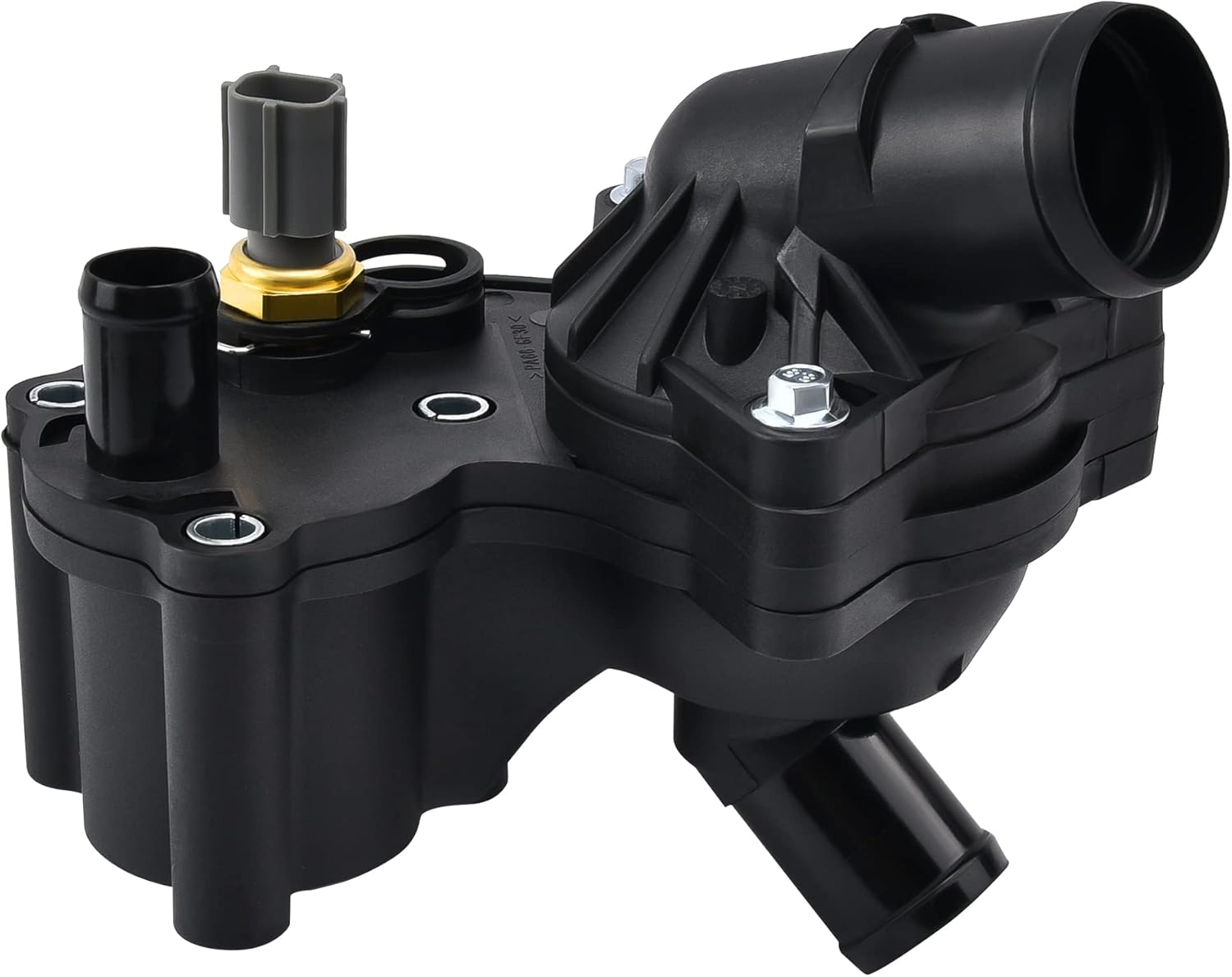
6. EVIL ENERGY Thermostat Housing Kit Assembly for 2002-2010 Explorer & Mountaineer 4.0L
| Included Components | Thermostat, Rubber Gasket, Plastic Housing, Nitrile gloves |
|---|---|
| Operating temperature (open) | 197.6°F / 92°C |
| Compatible engines | Explorer/Mountaineer V6 4.0L (2002–2010) |
| Material Type | Plastic |
This EVIL ENERGY thermostat housing kit replaces the factory thermostat assembly for 2002–2010 Ford Explorer and compatible Mountaineer 4.0L V6 applications. It ships with the thermostat, rubber gasket, plastic housing and nitrile gloves so you can swap the entire assembly in one service. The thermostat is rated to open at about 197.6°F (92°C), which helps the cooling system bring the engine to operating temperature and then flow coolant to the radiator as needed. The plastic housing simplifies installation compared with sourcing separate parts and fits where the factory assembly sits on the engine. Expect typical benefits like restored temperature regulation and reduced risk of overheating when the original unit fails. Because the kit uses a plastic housing, it is lightweight and cost effective but may not match the longevity of a metal factory-style part under extreme heat cycling. Installation is straightforward for a competent DIYer with basic hand tools, but confirm hose and mounting surface condition before reuse.
Best for: Buyers looking for a ready-to-install replacement that restores proper coolant flow and engine temperature control in a 2006–2010 Explorer, and who value straightforward fitment and included parts when replacing a failed thermostat assembly.
Less Ideal for: Drivers seeking a heavy-duty or long-life metal housing solution for severe-duty use or high-mileage engines should consider aftermarket metal housings or dealer parts instead.
- Complete kit includes thermostat, rubber gasket, housing and gloves for a single replacement job
- Thermostat calibrated to open at 197.6°F (92°C) for standard engine temperature control
- Designed to fit 2002–2010 Explorer and Mercury Mountaineer 4.0L applications, avoiding compatibility guesswork
- Lightweight plastic housing simplifies handling and installation
- Plastic housing may be less durable than metal alternatives under prolonged high-heat cycling
- Product listing contains some inconsistent extra specs (irrelevant connectivity and control fields) that require buyers to rely on fitment details
Verdict: If you need a full, plug-and-play replacement to restore proper cooling for a 2006–2010 Explorer 4.0L, this kit provides the thermostat, gasket and housing in one convenient package.
7. MILIPARTS Aluminum Thermostat Housing for 2002–2010 Ford Explorer/2007–2010 Sport Trac/Mercury Mountaineer

| Brand | MILIPARTS |
|---|---|
| Model | Thermostat Housing |
| Exterior | Aluminum |
| Manufacturer Part Number | 3001-1048 |
| OEM Part Number | 2L2Z8592BA 2L2Z8592AA 2L2E-9K478-BA |
This MILIPARTS aluminum thermostat housing replaces the factory coolant outlet on specific 4.0L V6 Explorers, Sport Tracs, and Mountaineers. It is a direct replacement intended for routine cooling system repairs and swaps directly into the engine bay where the original housing sits. The aluminum construction resists corrosion better than many plastic housings and should tolerate engine heat cycles without deforming. Installation is typical for a thermostat housing swap and will require draining some coolant and reattaching hoses and fasteners; the housing is offered to match the factory mounting and mating surfaces for a straightforward fit when the correct year and model are confirmed. Buyers should expect standard replacement-level fit and finish rather than an upgraded performance part and should verify OEM part numbers before ordering. The product comes with manufacturer support for fitment questions but does not include a thermostat or additional gasket hardware in the listed details, so plan to reuse or buy those separately if not provided.
Best for: Buyers who prioritize a reliable, factory-style replacement for their cooling system and want a corrosion-resistant metal housing that installs like the original while minimizing risk of fitment issues.
Less Ideal for: Anyone looking for a performance-upgrade or universal aftermarket housing, or buyers who prefer a complete replacement kit that includes a thermostat and gaskets.
- Aluminum body offers improved corrosion and heat resistance compared with many plastic housings.
- Designed as a direct replacement for the specified 2002–2010 Ford Explorer and related models for straightforward installation.
- Manufactured to match factory mounting points and OEM part numbers listed, reducing fitment guesswork.
- Available from a dedicated brand with customer support for fitment questions.
- Does not include a thermostat or explicit gasket/hardware in the product listing, which may require purchasing additional parts.
- Fitment is limited to the specified years and models so it is not a universal solution.
Verdict: A corrosion-resistant, factory-fit aluminum housing for buyers who want a dependable, low-risk replacement for specified 2002–2010 Ford Explorer family vehicles.
Choosing the Right 2006-2010 Ford Explorer Thermostat: Key Factors to Consider
Correct Opening Temperature
The thermostat's opening temperature determines when the cooling system allows coolant flow through the radiator. For the 2006-2010 Ford Explorer, using a thermostat with the OEM-specified opening temperature helps maintain optimal engine operating temperature for performance and emissions. If the thermostat opens too late, the engine can overheat during heavy load or stop-and-go traffic; if it opens too early or stays open, the engine may run too cool, which increases fuel consumption, emissions, and cabin heating delay.
When selecting a replacement, confirm the specified temperature tolerance and whether the unit lists a calibrated opening point. Manufacturers sometimes provide a tolerance band; tighter tolerances generally produce more consistent temperature control. Consider how you use the Explorer—towing, heavy cargo, or frequent highway driving can change cooling demands—and choose a thermostat rated to handle those conditions without compromising warm-up time.
Fitment And Housing Compatibility
Thermostats must match the Explorer's thermostat housing geometry and the sealing method used between the housing and engine block. Even a thermostat with the correct opening temperature can fail to seal properly if the flange or O-ring location differs from the factory part. Poor fitment increases the risk of thermostat housing seal leak, coolant loss, and air ingress, which can cause erratic temperature readings and overheating.
Check whether the replacement reuses the stock housing or requires a new gasket or O-ring. Some aftermarket units are sold as a kit with the housing or seal; other times you will need to transfer the original housing. Be aware of variations across the 2006-2010 range and confirm the chosen part lists explicit compatibility with your vehicle's engine and model year to avoid fitment issues.
Material Quality And Corrosion Resistance
Exposure to coolant and heat over many cycles challenges thermostat materials. Units made with corrosion-resistant metals or high-grade polymers reduce the chance of sticking or valve degradation over time. Corroded components can bind or fail to seat, leading to thermostat symptoms overheating or allowing coolant to bypass prematurely.
Look for thermostats with plated or stainless internal components and durable seals that resist coolant additives. The long-term integrity of the valve, spring, and housing contact surfaces matters for consistent operation. If your Explorer has a history of coolant chemistry issues or extended service intervals, favor thermostats built to withstand a wider range of coolant conditions.
Seal And Gasket Design
A reliable seal prevents external coolant leaks and maintains system pressure. The thermostat-to-housing interface is a common source of thermostat housing seal leak complaints when the replacement gasket or O-ring is inferior or omitted. A good kit will include a properly sized gasket or a molded rubber seal that matches the housing flange profile.
Consider whether the replacement includes a new gasket or whether you will need to reuse the old one. Reusing a compressed or damaged gasket often leads to seepage. Also note the torque specifications for the housing bolts; uneven tightening can warp the housing and compromise the seal. Proper sealing is essential to keep coolant contained and to preserve consistent temperature readings.
Durability Under Driving Conditions
How you use the Explorer affects thermostat life. Frequent highway driving, towing, heavy payloads, or stop-and-go city traffic impose different thermal loads on the cooling system. A thermostat that tolerates frequent thermal cycling and high-flow conditions will reduce the likelihood of premature failure.
Consider thermostats rated for higher cycle counts or that advertise reinforced components for heavy-duty use. Also weigh whether the unit's design supports easy replacement of the mechanical element without disturbing the housing, which can be beneficial for maintenance in vehicles used under severe conditions.
Ease Of Testing And Serviceability
Being able to diagnose a suspected thermostat issue quickly prevents unnecessary teardown. Thermostat symptoms overheating or engine running cold thermostat stuck open are common complaints, and practical tests can confirm whether the thermostat is the cause. A thermostat that can be inspected or bench-tested easily allows faster returns to service.
Check whether the replacement is straightforward to remove and whether common test methods, such as measuring temperature at the housing or bench-heating the unit, apply. Consider whether replacement gaskets and seals are readily available and whether the kit includes the parts needed for a complete service. Simpler serviceability reduces shop time and the chance of installation errors.
Common Thermostat Symptoms On The 2006-2010 Explorer
Recognizing early symptoms helps avoid engine damage. Overheating under load, inconsistent temperature gauge readings, delayed cabin heat, or rapid fluctuations in cooling fan activity often point to thermostat issues. If the thermostat sticks closed, coolant cannot circulate through the radiator and the temperature will climb quickly during idling or heavy traffic.
A thermostat stuck open produces the opposite symptom: the engine may fail to reach normal operating temperature, leading to poor fuel economy and weak heater output. Intermittent symptoms can indicate a partially failing unit or a seal leak that allows air into the cooling system and causes erratic temperature behavior.
- Steady rise to overheating at idle or in traffic often means a stuck-closed thermostat.
- Engine taking too long to warm up or running consistently cool suggests a thermostat stuck open.
- Visible coolant seepage at the housing indicates a sealing problem rather than an internal valve failure.
- Heater blowers producing cold air despite a warm engine can result from thermostat or circulation issues.
How To Test A Thermostat In The Explorer
Start with simple observations: check whether the upper radiator hose remains cool or becomes warm as the engine warms. If the thermostat opens normally, the hose temperature will rise once operating temperature is reached. For a more definitive check, measure temperature changes with an infrared thermometer at the housing and radiator inlet while the engine warms from cold.
A bench test can confirm mechanical operation. Removing the thermostat and heating it in water while watching for the valve to open at the specified temperature reproduces the operating condition. Always follow safe procedures when handling hot coolant, and ensure any removed gasket is replaced to prevent leaks upon reinstallation.
- Observe hose temperature change during warm-up to detect flow problems.
- Use an infrared thermometer for quick, noncontact checks of housing and radiator inlet.
- Bench-heat the unit in a pot of water to confirm the valve opens at the listed temperature.
Replacing The Thermostat: Practical Tips
Plan for basic service items: new gasket or O-ring, fresh coolant if contamination is present, and hand tools that match housing fasteners. Work on a cool engine, drain enough coolant to lower the level below the housing, and support any components that may obstruct access. Inspect the housing and mating surfaces for corrosion or warpage before installing the new unit.
When tightening the housing bolts, follow torque recommendations where available and tighten bolts in a crisscross pattern to avoid distorting the flange. After installation, refill and bleed the cooling system to remove trapped air, then monitor for leaks and verify normal temperature rise on a short test drive.
- Replace the gasket or O-ring with the new thermostat to avoid seal issues.
- Bleed the cooling system thoroughly to prevent air pockets that cause erratic temperatures.
- Check for housing corrosion or damage and replace if it compromises the seal.
Thermostat Housing Seal Leak: Diagnosis And Fixes
Seal leaks at the thermostat housing are common failure points. Small weeps may show as dried coolant residue around the housing or a slight loss of coolant over time. A more serious leak will produce visible drips and can allow air into the system, causing overheating and inconsistent gauge readings.
Fixing a seal leak requires removing the housing, cleaning the mating surfaces, and installing a properly sized gasket or molded seal. If the housing flange is pitted or warped, a new housing is the correct remedy rather than forcing a seal to work against damaged metal.
- Inspect for dried coolant streaks or fresh drips around the housing.
- Clean mating surfaces before installing new seals to ensure proper contact.
- Replace a warped or corroded housing rather than relying on thicker gaskets.
What To Expect From Service Costs And Parts
Thermostat replacement cost depends on whether the housing and gasket are included and whether additional work like coolant flush or housing replacement is needed. Labor time is driven by access complexity and any ancillary items that must be removed to reach the housing. If you are doing the job yourself, factor in the cost of proper coolant and a new gasket or O-ring.
Keep in mind that choosing a unit that requires the original housing to be reused might save parts cost but may not address housing-related seal problems. Weigh upfront savings against the risk of a repeat service if a compromised housing or corroded mating surface causes leakage after installation.
- Budget for a new gasket and fresh coolant when replacing the thermostat.
- Consider whether the housing condition necessitates replacement to avoid repeat labor.
- DIY installers should prepare for coolant handling and proper system bleeding.
Matching Thermostat Part Number Fitment
Confirming thermostat part number fitment for the 2006-2010 Explorer avoids wasted time and returns. Use the vehicle year range, engine type, and any relevant emissions or accessory differences when checking compatibility. Some thermostats are offered with slightly different flange styles or sensors integrated; ensure the physical design matches the Explorer's requirements.
If a thermostat kit includes sensors or adapters, verify these match the vehicle's connectors and sensor locations. Incorrect part choices often show up as leaks, poor sealing, or the need to modify hoses, which is not recommended.
- Verify part number fitment against the Explorer's year and engine configuration.
- Check for integrated sensors or unique flange features before purchase.
- Avoid modifications to the housing or hoses to force fit a mismatched thermostat.
Still looking for the perfect fit?
Select your Ford Explorer configuration to see the most relevant Thermostats recommendations
How We Chose the Best 2006-2010 Ford Explorer Thermostat
Our selection focused on items that meet the specific fitment and operating needs of the 2006-2010 Ford Explorer. We prioritized correct part fit to the vehicle's cooling passages and housing, verified opening temperature tolerance that matches Ford specifications, and examined build quality factors that affect longevity like valve design, wax pellet reliability, and corrosion-resistant materials. Thermal response was a central criterion because precise opening and closing at the specified temperature range controls both overheating risk and cold-running issues.We also evaluated installation practicality, including whether the unit reuses existing housings or gaskets and whether the replacement requires minimal additional parts. Durability considerations included resistance to coolant corrosion, reinforced seals to prevent thermostat housing seal leak, and overall construction that reduces the chance of premature failure. Fitment verification and manufacturer-stated opening temperatures were used to filter options; any unit without clear compatibility for the 2006-2010 Explorer or lacking verified temperature specs was excluded. Finally, we considered common maintenance factors such as ease of testing, availability of replacement gaskets, and whether the part supports typical engine coolant types used in this vehicle.
Our full evaluation process is outlined in our review methodology.
FAQ
What are the first signs of a bad thermostat on a 2006-2010 Explorer?
Common early signs include the engine running hotter than normal at idle, delayed or weak cabin heat, or the temperature gauge fluctuating. You may also notice coolant seepage around the thermostat housing if the seal has failed.
Can I test the thermostat without removing it from the Explorer?
Yes. Observing the temperature change in the upper radiator hose during warm-up or using an infrared thermometer at the housing and radiator inlet can indicate whether the thermostat opens. For a definitive check, a bench test after removal is more conclusive.
Should I replace the thermostat gasket when installing a new thermostat?
Usually you should replace the gasket or O-ring whenever you replace the thermostat. Reusing an old, compressed gasket increases the risk of a thermostat housing seal leak and subsequent coolant loss.
How does a stuck-open thermostat affect the Explorer's performance?
A stuck-open thermostat prevents the engine from reaching normal operating temperature, which can reduce fuel efficiency, increase emissions, and delay cabin heating. The engine may feel sluggish until it reaches optimal temperature, if it does at all.
Is it necessary to change the coolant when replacing the thermostat?
Not always, but you should inspect the coolant condition. If coolant is contaminated, old, or shows signs of corrosion, change it while replacing the thermostat. Draining and refilling is also often required to remove trapped air after installation.
How do I know the thermostat opened at the correct temperature?
You can bench-test the thermostat by heating it in water while monitoring the temperature. The valve should begin to open close to the listed opening temperature. Alternatively, verify that the radiator hose warms up at the expected engine operating temperature during a controlled warm-up.
Final Verdict
For the 2006-2010 Ford Explorer, prioritize a thermostat that matches the OEM opening temperature and provides reliable sealing with the housing. Proper fitment, corrosion-resistant construction, and a high-quality gasket reduce the chances of overheating and coolant leaks. Balance durability and serviceability based on how you use the vehicle, and be prepared to address the housing condition during replacement.Choosing a correctly specified thermostat and installing it with a new seal will restore consistent temperature control and heater performance. Focus on verified fitment, opening-temperature accuracy, and robust sealing when making your final decision.
Explore More:
- Check out all Ford Explorer parts & accessories
- Explore Thermostats Maintenance & Repair Guides
- Explore Cooling System
- Browse all Auto Parts
