

Note: This article contains affiliate links. If you click on these links and make a purchase, I may earn a small commission at no extra cost to you. This helps support my research and content. Read my full affiliate disclosure here.
If you own a 2011-2019 Ford Explorer, the serpentine belt is a small part that has an outsized impact on everyday reliability. A worn or improperly fitted belt can cause squeal, accessory failures, or unexpected breakdowns. This guide focuses on the top shortlisted serpentine belts compatible with the 2011-2019 Explorer, explaining why they made the list and what matters when you install a replacement.We evaluated belts for fitment accuracy, material and build quality, noise characteristics, and compatibility with common Explorer accessories and tensioner setups. The following picks reflect those priorities and are meant to help you select a belt that restores drivability and reduces maintenance headaches. Read on for installation notes, common symptoms, and practical buying guidance.
Looking for other parts? See all Ford Explorer parts & accessories.
Top Picks at a Glance
| Best Overall The best all-around choice for most situations | A-Premium Serpentine Belt Drive Kit with Tensioner for Ford 3.5L/3.7L |  |
| Best Quality Built to a higher standard if you want something more solid | Gates Micro-V Serpentine Belt for Ford Explorer 3.5L V6 (2011–2019) |  |
| Best Value The sweet spot between price and what you get | Jaxivo 6PK1143 Serpentine V-Ribbed Drive Belt (1143mm) |  |
| Best Budget The cheapest option that still gets the job done reliably | TOP DRIVE 6PK1140 Premium EPDM Serpentine Drive Belt |  |
| Highest Rated A top-rated pick with lots of positive feedback | Goodyear Multi V Serpentine Belt 6-Rib, 45" (Model 1060450) |  |
| Most Popular A crowd favorite that many people choose with confidence | Bando USA 6PK1140 Serpentine Belt |  |
| Best Seller A high-volume bestseller chosen again and again | A-Premium 44.84 in Serpentine Drive Belt (6-Rib) |  |
1. A-Premium Serpentine Belt Drive Kit with Tensioner for Ford 3.5L/3.7L

| Brand | A-Premium |
|---|---|
| Manufacturer Part Number | APTBK467 |
| Compatible Engines | V6 3.5L and 3.7L (listed models) |
| Kit Contents | 1x serpentine belt, 1x belt tensioner |
This kit includes a replacement serpentine belt and a belt tensioner intended to restore proper accessory drive tension on compatible Ford and Lincoln V6 engines. It is typically used when a worn belt or failing tensioner causes squeal, slip, or accessory charging issues. The kit ships with one belt and one tensioner and is marketed as manufactured to OEM part numbers, which simplifies selection for common replacements. In real-world use the combined swap reduces noise and restores belt routing reliability compared with replacing only the belt, and the included tensioner saves a second purchase and extra labor. Limitations are that fitment is specific to a set of model years and engine configurations so buyers must verify their exact engine and alternator option before ordering, and the listing offers a one-year unlimited-mileage guarantee rather than a longer warranty some buyers expect. For a balanced buyer wanting a complete, affordable belt-drive refresh this kit covers the basic needs without extra hardware like idler pulleys or installation guides.
Best for: Drivers who want a straightforward, factory-spec replacement belt and tensioner together to restore accessory drive performance without sourcing multiple parts.
Less Ideal for: People seeking a comprehensive pulley overhaul that includes additional idlers or a longer warranty should consider more complete kits or OEM dealer parts.
- Includes both serpentine belt and matching tensioner for a single purchase replacement
- Manufactured to OEM part number for compatibility with listed engine configurations
- One-year unlimited-mileage guarantee provides short-term coverage
- Kit eliminates need to source a separate tensioner, saving time and installation cost
- Fitment is limited to specific model years and engine/alternator configurations and requires careful verification
Verdict: A simple, cost-effective way to replace both the serpentine belt and tensioner on the listed Ford and Lincoln 3.5L/3.7L vehicles to quickly restore accessory drive function.
2. Gates Micro-V Serpentine Belt for Ford Explorer 3.5L V6 (2011–2019)

| Compatible vehicles | Ford Explorer 2011–2019 3.5L V6 |
|---|---|
| Belt style | Serpentine Belt |
| Unit count | 1.0 Count |
| Compatible devices | UTV |
This Gates Micro-V serpentine belt is a factory-style replacement for Ford Explorer 3.5L V6 models from 2011 to 2019. It installs like a stock belt and is used to drive the alternator, power steering, air conditioning, and other front-end accessories. The Micro-V profile and multi-rib design help maintain consistent contact with pulleys to reduce slipping, squeal, and premature glazing, which improves accessory drive performance under load. Because it is a direct replacement, fitment is straightforward and it works with both standard and higher-output alternator configurations listed for these engines. The practical benefits are predictable engine bay behavior and quiet operation after correct installation. Limitations are that this is a single replacement belt without added reinforcement or performance upgrades for extreme-duty or motorsport use, so drivers seeking a higher-temperature or heavy-duty belt should consider specialty options instead.
Best for: Drivers who prioritize reliable, factory-equivalent replacement parts to restore quiet, consistent accessory drive performance on 2011–2019 3.5L V6 Explorers.
Less Ideal for: Enthusiasts looking for upgraded belts built for sustained high heat, extreme duty, or motorsport conditions should choose a specialty performance belt instead.
- Direct-fit replacement for 3.5L V6 Ford Explorer 2011–2019 ensuring straightforward installation
- Micro-V multi-rib profile reduces belt slip and helps minimize squeal or chirp
- Designed to match factory routing and accessory loading for predictable performance
- From a recognized belt profile with original packaging for an OEM-style swap
- Not a reinforced or heavy-duty performance belt for track or high-boost applications
Verdict: Choose this Gates Micro-V belt when you want a quiet, predictable factory-style replacement for 3.5L V6 Ford Explorers from 2011 to 2019.
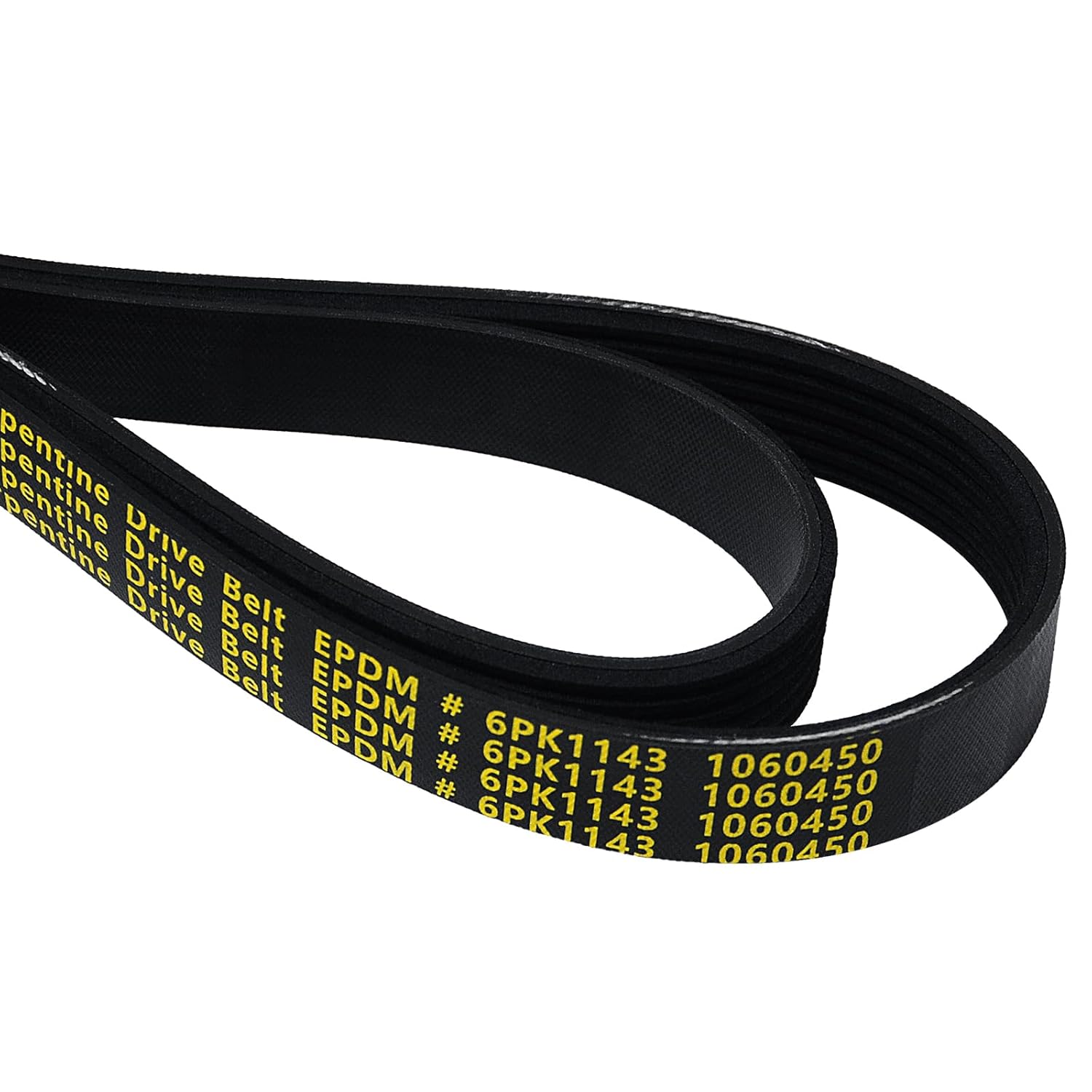
3. Jaxivo 6PK1143 Serpentine V-Ribbed Drive Belt (1143mm)
| Brand | Jaxivo |
|---|---|
| Included Components | 1 belt |
| Belt Style | V-Belt |
| Material Type | Rubber |
This Jaxivo 6PK1143 is a straightforward replacement serpentine belt made from rubber with a six-rib profile and a 1143 mm (45") length. It installs the same way as other multi-rib drive belts and is used to drive accessories like the alternator, power steering, water pump, and AC compressor on compatible Ford V6 engines. The listing emphasizes OEM-equivalent fit numbers and broad vehicle compatibility across Edge, Explorer, Taurus, and related models, so it works as a direct swap when the part number matches. Practical buyers will appreciate the simple construction and claim of durable material that resists premature cracking. Expect a no-frills, cost-effective option for routine belt replacement. Limitations are typical for economy aftermarket belts: there is no detailed durability testing data, and the product relies on correct part-number matching for fitment rather than vehicle-year lookup, so verify part numbers before ordering for a 2011–2019 Explorer application.
Best for: Buyers who prioritize a practical, cost-conscious replacement that matches factory part numbers and gets the Explorer back on the road without upgrades.
Less Ideal for: Do not choose this if you want a performance upgrade, extended-life belt with published endurance testing, or if you cannot confirm the exact part number for your vehicle.
- Direct replacement with listed OEM part numbers for straightforward fitment
- Six-rib V-profile matches factory-style accessory pulleys
- Made from rubber intended for long-term stability and basic durability
- Sold as a single belt for simple one-to-one replacement
- No performance or longevity test data provided and limited manufacturer detail
Verdict: A budget-conscious, factory-fit replacement belt for Explorer owners seeking a simple, direct swap when the 6PK1143/1060450 part number matches.
4. TOP DRIVE 6PK1140 Premium EPDM Serpentine Drive Belt

| Part Number | 6PK1140 |
|---|---|
| Material Type | Ethylene Propylene Diene Monomer (EPDM) |
| Cord Material | Polyester |
| Belt Style | Serpentine Drive Belt |
| Compatible Devices | Car, SUV, Truck |
This TOP DRIVE 6PK1140 serpentine belt is a straightforward replacement belt made from EPDM rubber with a polyester cord, designed to match factory routing and function. It installs like a standard belt and is meant for routine engine accessory drive duties such as turning the alternator, power steering, and A/C compressor. Notable features include EPDM construction for improved resistance to heat and weathering and a 6-rib profile for stable contact with pulleys. For a budget-conscious buyer it delivers the basics: decent durability for normal driving and easy fitment when the correct part number is used. Limitations are that it is a value aftermarket option rather than a branded premium or performance belt, so longevity may be closer to average replacement intervals and it lacks advanced wear indicators or reinforced cord technologies found on higher-end belts.
Best for: Buyers looking to replace a worn belt on a tight budget who want a simple, factory-style replacement that installs easily and performs acceptably for regular driving.
Less Ideal for: Drivers who need an extended-life or heavy-duty belt for high-mileage, towing, or performance applications should consider higher-grade or reinforced aftermarket options.
- EPDM construction resists heat and weathering for reliable everyday use
- 6-rib profile matches common factory pulley configurations for stable drive
- Designed for easy, direct replacement installation
- Compatible with many Ford vehicle applications including 2011–2019 Explorer when matched to part 6PK1140
- Value aftermarket construction may not match longevity of premium branded belts
Verdict: A practical, budget-friendly replacement serpentine belt for 2011–2019 Ford Explorer owners who want a direct-fit, everyday-performance option.
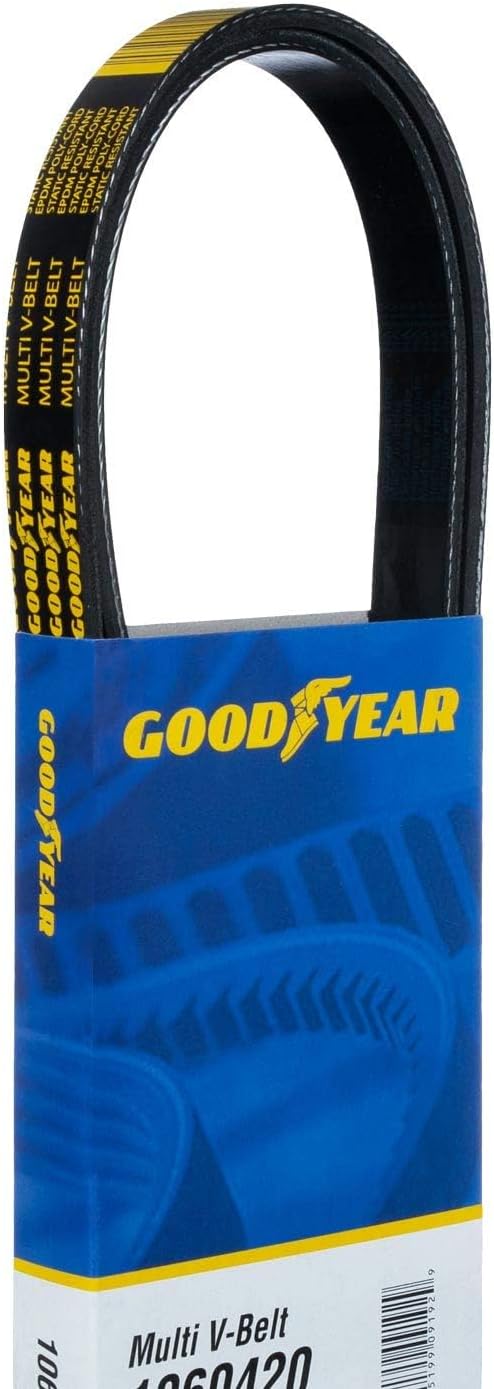
5. Goodyear Multi V Serpentine Belt 6-Rib, 45" (Model 1060450)
| Rib count | 6-Rib |
|---|---|
| Length | 45 inch |
| Model | 1060450 |
| Material | EPDM rubber with polyester cord |
This Goodyear Multi V serpentine belt is a straightforward replacement belt built for durability and quiet operation. Constructed from EPDM rubber with balanced twist polyester cords, it is intended for typical engine accessories such as the alternator, water pump, A/C compressor, and power steering. Installation is the same as any factory-style belt and it restores proper routing and tension without requiring special tools. For routine maintenance it follows industry guidance to inspect around 60,000 miles and replace near 90,000 miles, so this belt works well for owners seeking long service life and reliable accessory drive performance. The product lists multiple OEM cross references which helps confirm fitment for many factory applications. Limitations are that fitment must be confirmed to your specific engine and pulleys before purchase and it is a direct replacement part rather than an upgraded performance belt, so no extra heat shielding or specialty compounds are provided.
Best for: A buyer who prioritizes a dependable, factory-quality replacement belt to restore accessory drive reliability and minimize honest maintenance visits.
Less Ideal for: Not the best choice for someone seeking a performance or heavy-duty upgrade for extreme-duty or motorsport use.
- EPDM rubber compound resists heat and ozone for longer life
- Balanced twist polyester cords for stable power transmission and reduced stretch
- Designed for common engine accessories so it replaces factory routing without modification
- Sold as a direct replacement only and does not include enhanced heat or abrasion protection beyond standard materials
Verdict: Choose this Goodyear 6-rib serpentine belt when you want a dependable, factory-quality replacement that focuses on long life and quiet operation.
6. Bando USA 6PK1140 Serpentine Belt

| Belt Style | Serpentine Belt |
|---|---|
| Material Type | Rubber |
| Included Components | Bando USA 6PK1140 OEM Quality Serpentine Belt |
| Unit Count | 1.0 Count |
This Bando 6PK1140 serpentine belt is a direct-fit replacement designed to restore accessory drive performance on compatible Ford Explorers from 2011 to 2019. Made from EPDM rubber with precision-ground ribs and strong tensile cords, it is intended for routine replacement when the original belt shows wear, cracking, or glazing. In typical use it installs like a factory belt and runs the alternator, power steering, A/C compressor, and other front-end accessories without noticeable noise or slip when tensioned correctly. The belt’s OEM-quality manufacturing and materials improve heat and wear resistance compared with generic molded belts, so you can expect longer service life under normal driving conditions. Limitations are that correct routing and proper tensioning are essential for quiet operation, and a worn tensioner or misaligned pulley can still cause premature failure. This is a straightforward replacement for owners who want a factory-spec aftermarket option rather than an economy knockoff.
Best for: Buyers looking for a trustworthy, factory-spec replacement belt for routine maintenance on a 2011–2019 Explorer who prioritize proven manufacturing and community-backed reliability.
Less Ideal for: If you are rebuilding the accessory drive or need a complete service solution, technicians who want a kit with new tensioners and pulleys should choose a multi-component repair kit instead.
- OEM-quality manufacturing with precision-ground ribs for consistent fit and contact
- EPDM rubber compound for improved heat and wear resistance
- Strong tensile cords that resist stretching under high loads
- Direct-fit coverage for 2011–2019 Ford Explorer applications listed in the fitment
- Does not include tensioner or idler pulleys, which should be inspected or replaced separately if worn
Verdict: Choose this Bando 6PK1140 when you want a factory-quality, direct-fit serpentine belt for a 2011–2019 Ford Explorer backed by proven OEM-grade manufacturing.
7. A-Premium 44.84 in Serpentine Drive Belt (6-Rib)

| Belt Material | EPDM |
|---|---|
| Cord Material | Polyester |
| Cross Section | K |
| Effective Length | 44.84 in |
| Rib Quantity | 6 |
This A-Premium serpentine belt is a factory-replacement style 6-rib drive belt built from EPDM with polyester cords for heat and abrasion resistance. It fits multiple V6 Ford engines listed for 2011 to 2019 Explorers and similar vehicles and is used to drive accessories like the alternator, power steering and A/C. The construction promises quieter operation and longer life than older rubber belts, and the listing notes straightforward installation when the tensioner is in good condition. Notable features include a 44.84 inch effective length, K cross-section and compatibility with many OEM reference numbers, which helps confirm fitment for specific engine codes. Practical benefits are durable EPDM material and a one-year unlimited-mileage warranty for peace of mind. Limitations are typical for aftermarket belts: proper fit depends on confirming exact vehicle/engine application and the belt requires a healthy tensioner and pulleys to achieve the advertised longevity and quiet operation.
Best for: Buyers seeking a durable, quietly operating replacement belt for V6 Ford Explorers who prioritize reliable fit and material longevity over lowest-cost options.
Less Ideal for: People who prefer a complete pulley and tensioner replacement kit or who have an unknown or worn accessory drive system that should be serviced before belt installation.
- EPDM construction resists heat, ozone and cracking for longer service life
- Polyester cord core for stable strength and reduced stretching
- Matches common OEM reference numbers to simplify fitment verification
- Designed for quieter operation compared with older rubber belts
- Performance depends on underlying tensioner and pulley condition which are not included
Verdict: A durable, OEM-referenced 6-rib EPDM replacement belt that gives risk-averse Explorer owners a quiet, long-lasting option when the tensioner and pulleys are in good condition.
Choosing the Right 2011-2019 Ford Explorer Serpentine Belt: Key Factors to Consider
Fitment and Correct Length
Correct fitment is the single most important factor for the 2011-2019 Ford Explorer. The vehicle uses different belt lengths and rib counts depending on engine and accessory layout, and an incorrect length can cause poor tension, rapid wear, or outright failure. Before purchasing, confirm the belt matches the exact year-range and engine configuration of your Explorer, and verify rib count and measured length against your existing belt or a factory diagram.
Fitment also affects installation ease. A belt that is too tight can strain the tensioner and accessories, while a belt that is too loose may slip and produce squeal. Choosing a belt that lists compatibility with 2011-2019 Explorer models reduces the risk of returns and ensures the belt runs on pulleys with proper alignment.
Material Construction and Durability
Belts are typically made from EPDM or older rubber compounds with reinforcing cords. For the Explorer, a belt with proven compound stability and multi-cord reinforcement offers better resistance to heat, oil contamination, and ozone cracking, which are common failure modes. Superior materials slow rib fatigue and edge wear, extending service intervals and reducing the chance of sudden belt failure while driving.
Durability also ties to manufacturing tolerances. Consistent molding and properly bonded cords prevent delamination and uneven wear. When comparing options, look for clear material specifications and manufacturing quality indicators, as these predict how long a belt will last under normal driving and seasonal temperature swings.
Noise and Ride Comfort
Squeal, chirp, or intermittent noise is a frequent symptom when a belt is worn or misaligned on the Explorer. Some belts use rib profiles and damping compounds designed to minimize noise. Quiet operation matters because persistent belt noise can indicate slippage or accelerated wear, and it negatively affects daily driving comfort.
Consider belts that advertise low-noise performance and that include anti-squeal rib treatments. However, note that noise often results from the entire belt drive system. Correct tensioner condition and pulley alignment are equally important. Choosing a belt optimized for reduced vibration and noise can make a noticeable difference when the rest of the drive system is in good condition.
Resistance to Environmental Factors
The 2011-2019 Explorer operates in a wide range of climates, so belts that resist heat, cold, oil exposure, and ozone are preferable. Materials that maintain flexibility in low temperatures reduce the chance of cracking, while heat-resistant compounds limit stretching and glazing. Belts with protective edge treatments help prevent chunking and fraying when exposed to contaminants.
Environmental resistance directly affects service life and the interval between replacements. If you encounter frequent idling, towing, or stop-and-go driving, favor belts with documented resistance to thermal cycling and chemical exposure to avoid premature failure.
Compatibility With Tensioner and Accessory Layout
The Explorer's serpentine system relies on a tensioner to maintain correct belt tension and on multiple accessory pulleys that must remain aligned. Some replacement belts are designed to work specifically with the factory tensioner travel and pulley diameters. Choosing a belt that matches those parameters reduces the likelihood of belt slip, mistracking, or premature glazing.
Also, consider the condition of the tensioner and idler pulleys during replacement. A new belt will wear rapidly if pulleys are scored or the tensioner is weak. Evaluate the tensioner travel range and ensure the replacement belt does not demand tension beyond the component's capacity.
Labeling, Sizing Information, and Ease of Future Maintenance
Clear labeling and accessible sizing information are practical but important factors for the Explorer owner. A belt that includes the number of ribs, exact length, and a cross-reference to OEM part numbers simplifies future replacements and helps avoid incorrect purchases. Good documentation reduces shop time and makes do-it-yourself replacement more straightforward.
Also look for belts that come with basic installation notes or a simple routing diagram for the 2011-2019 Explorer. Even when you plan to have the belt installed professionally, accurate labeling prevents errors and speeds up service.
Common Serpentine Belt Symptoms on the 2011-2019 Explorer
Recognizing common symptoms can help you diagnose a failing serpentine belt before it causes accessory or charging-system issues. The most typical signs include persistent squeal on cold start, visible cracking or rib fraying, and loss of accessory function such as power steering assist or air conditioning.
Squealing that varies with engine load often points to slippage or glazing, while intermittent chirps may indicate misalignment or a failing idler pulley. Visual inspection can reveal rib separation, missing chunks, or glazing on the ribs, which are reliable indicators that replacement is needed.
- High-pitched squeal at engine start or during acceleration
- Visible cracks, missing chunks, or rib separation
- Accessory failures like intermittent power steering assist or A/C loss
- Belt slipping under load or belt-side fraying
How To Check Belt Size and Rib Count on Your Explorer
Confirming the correct belt size and rib count is essential before ordering a replacement. You can measure the old belt for length and count the ribs across the belt face. When the old belt is missing or damaged beyond recognition, refer to a factory routing diagram or the service manual for the 2011-2019 Explorer to determine the correct specifications.
If you plan to measure the belt, lay it flat and measure the outside circumference. Count the ribs by looking at the belt end or the flat face. Cross-referencing this data with the replacement product listing will ensure the belt matches the Explorer's pulley profile and avoids fitment problems.
- Measure outside circumference of the removed belt if possible
- Count rib grooves across the belt face for rib count
- Use factory routing diagrams when the original belt is missing
Basic Steps to Replace a Serpentine Belt on the 2011-2019 Explorer
Replacing the serpentine belt on an Explorer generally requires releasing the tensioner, removing the old belt, routing the new belt, and reapplying tension. Always follow torque and safety procedures, and ensure the engine is cool before starting work. Use the proper wrench or breaker bar on the tensioner to avoid damage to the tensioner arm.
After installing the new belt, visually confirm that the ribs are fully seated in each pulley groove and that the belt tracks straight across the pulleys. Rotate the engine by hand one or two revolutions, if possible, to verify alignment. If you notice persistent noise after replacement, recheck pulley condition and tensioner operation.
- Relieve tension using the correct tool on the tensioner
- Follow the factory belt routing for the specific 2011-2019 Explorer layout
- Verify rib seating and track alignment before running the engine
When To Replace the Tensioner and Idler Pulleys
A new serpentine belt will last longer if the tensioner and idler pulleys are in good condition. Inspect pulleys for bearing noise, play, or roughness. The tensioner should provide steady resistance and return to its resting position smoothly. If the tensioner arm is weak, sticking, or shows excessive travel, it should be replaced at the same time as the belt to prevent premature belt failure.
Replacing worn pulleys and a degraded tensioner at the same time as the belt is a common best practice for the Explorer because it avoids repeating labor and helps ensure long-term, trouble-free operation of the drive system.
- Listen for bearing noise from idler pulleys at engine idle
- Check tensioner travel and resistance manually with the engine off
- Replace pulleys or tensioner if they show roughness, play, or uneven wear
Documenting and Storing Belt Information for Future Service
When you replace the belt, write down the exact rib count, measured length, and any part cross-reference numbers in your vehicle maintenance log. This makes future replacements faster and reduces the risk of ordering the wrong item. Keep a photo of the installed routing or the factory belt routing diagram in your service records.
If you do work professionally, ask the technician to note the belt specifications on your invoice. Clear documentation matters because the 2011-2019 Explorer can have subtle fitment differences across engines and accessory options, and accurate records prevent confusion at the next service interval.
- Record rib count, measured length, and cross-reference numbers
- Store a photo of the installed routing or factory diagram
- Note any replaced tensioner or pulley part numbers in service records
Still looking for the perfect fit?
Select your Ford Explorer configuration to see the most relevant Serpentine Belts recommendations
How We Chose the Best 2011-2019 Ford Explorer Serpentine Belt
We prioritized criteria that directly affect performance and long-term service on the 2011-2019 Ford Explorer. First, fitment accuracy was essential; we checked belt length ranges, rib counts, and fit notes that match the Explorer's engine and accessory layouts to minimize installation issues. Second, material and construction quality were evaluated, including compound type, cord reinforcement, and molded rib profiles that influence longevity and resistance to cracking or delamination. Third, noise and vibration behavior were considered because screeching or chirping is a frequent user complaint on this vehicle. Fourth, compatibility with the Explorer's belt routing, tensioner design, and common accessory options was assessed to avoid clearance or alignment problems. Finally, availability of replacement sizing information and clear labeling was used to favor belts that make future maintenance simpler.We excluded belts that lacked clear length or rib-count specifications, belts without documented compatibility with the 2011-2019 Explorer range, and products with inconsistent manufacturing quality notes. We did not include belts intended for heavy-duty commercial use or for Explorer variants outside the 2011-2019 scope. Overall, selections prioritized accurate fitment, durable materials, quiet operation, and clear installation information.
Our full evaluation process is outlined in our review methodology.
FAQ
How often should I replace the serpentine belt on a 2011-2019 Explorer?
Recommended replacement intervals vary by use and environment, but many belts show signs of wear between 60,000 and 100,000 miles. Inspect the belt regularly for cracking, glazing, or rib damage and replace sooner if you notice symptoms.
What causes a serpentine belt to squeal on the Explorer?
Squealing often results from belt slip due to glazing, incorrect tension, misaligned pulleys, or worn pulley bearings. It can also be caused by a failing tensioner that no longer maintains proper belt tension.
Can I replace the serpentine belt myself on the 2011-2019 Explorer?
Many owners can perform the replacement with basic hand tools and the correct tensioner tool, provided they follow safety procedures and the factory routing. If you are unsure about tensioner condition or pulley alignment, professional help is advisable.
Should I replace the tensioner when I change the belt?
It often makes sense to replace the tensioner and idler pulleys when installing a new belt, especially if they show wear, bearing noise, or excessive travel. Replacing them together prevents premature belt wear and avoids repeat labor.
How can I determine the correct belt size for my Explorer if the old belt is missing?
Use the factory belt routing diagram or the service manual for your specific 2011-2019 Explorer engine to determine rib count and belt length. Measuring pulley circumference and counting ribs on similar layouts can also help when the original belt is not available.
Is a noisy belt always a sign it needs replacement?
Not always. Noise can indicate temporary slip from contamination or a misrouted installation. Inspect the belt for visible damage and check the tensioner and pulleys. If noise persists after cleaning and proper tensioning, replacement is usually warranted.
Final Verdict
Prioritize correct fitment, material durability, and the condition of the tensioner and pulleys when replacing the serpentine belt on a 2011-2019 Ford Explorer. Accurate rib count and length, combined with a belt built from a heat- and ozone-resistant compound, will reduce the chance of squeal and premature failure. If you are unsure about pulley alignment or tensioner health, address those components at the same time. With the right balance of fit and build quality, you can restore quiet, reliable accessory operation and minimize repeat shop visits.
Explore More:
- Check out all Ford Explorer parts & accessories
- Explore Serpentine Belts Maintenance & Repair Guides
- Explore Engine
- Browse all Auto Parts
