

Note: This article contains affiliate links. If you click on these links and make a purchase, I may earn a small commission at no extra cost to you. This helps support my research and content. Read my full affiliate disclosure here.
If you own a 2006-2010 Ford Explorer, the serpentine belt is a small part that has a big impact on daily reliability. A worn or improperly fitted belt can cause squeal, loss of charging, overheating, or accessory failure, often at the worst moment. This guide shortlists seven top-performing serpentine belts for the Explorer and explains why each made the cut.We evaluated belts against fitment accuracy, material and construction, and how they interact with the vehicle's tensioner and accessory layout. Below you will find what to expect from each type of belt, practical signs of wear to watch for, and clear guidance on replacement and installation considerations.
Looking for other parts? See all Ford Explorer parts & accessories.
Top Picks at a Glance
| Best Overall The best all-around choice for most situations | Cheyia Serpentine Belt Drive Component Kit with Tensioner & Idler Pulleys |  |
| Best Quality Built to a higher standard if you want something more solid | Gates Micro-V Serpentine Belt for Ford Explorer 4.0L V6 (2006–2010) |  |
| Best Value The sweet spot between price and what you get | TOP DRIVE 6PK2605 Premium EPDM Serpentine Drive Belt |  |
| Best Budget The cheapest option that still gets the job done reliably | Bando USA 6PK2605 Serpentine Belt |  |
| Highest Rated A top-rated pick with lots of positive feedback | Gates Complete Serpentine Belt Drive Component Kit |  |
| Most Popular A crowd favorite that many people choose with confidence | JAVOUKA Drive Belt Component Kit with Tensioner and Idler Pulleys |  |
| Best Seller A high-volume bestseller chosen again and again | Dasbecan Serpentine Belt Tensioner and Idler Pulley Kit (includes belt) |  |
1. Cheyia Serpentine Belt Drive Component Kit with Tensioner & Idler Pulleys

| Brand | Cheyia |
|---|---|
| Item model number | 90K-38274A |
| Manufacturer Part Number | 90K-38274A |
| Package contents | Belt, tensioner, 1 grooved idler, 2 smooth idlers |
This Cheyia kit bundles a serpentine belt, belt tensioner, one grooved idler and two smooth idler pulleys to replace the accessory drive components on compatible Ford V8 trucks and SUVs. It is intended for direct-fit replacement during routine maintenance or a failed belt/tensioner repair, letting you refresh the whole drive path in one job instead of sourcing parts separately. The kit’s heat-resistant rubber belt and precision pulleys are designed to reduce squeal and vibration so charging, A/C, and power steering drive stay smooth and quiet. Including the tensioner simplifies alignment and installation for a DIY mechanic or a shop doing a timed service. Limitations are that fitment is vehicle-specific and the kit replaces only the belt and idlers so any related brackets or hydraulic tensioner assemblies not listed may still require separate parts. Overall it is a convenient all-in-one option when servicing the serpentine system on covered Ford models.
Best for: Buyers wanting a balanced, practical repair kit that replaces the belt and related idler hardware in one purchase for routine maintenance or a single-shop repair.
Less Ideal for: Anyone needing parts for vehicles outside the listed Ford 4.6L/5.4L V8 fitment or users who require additional accessory brackets or different tensioner types.
- Complete kit includes belt, tensioner, one grooved and two smooth idler pulleys for a single-stop repair
- Heat-resistant rubber belt and precision pulleys aimed at reducing squeal and vibration
- Designed to fit specified Ford 4.6L and 5.4L V8 applications for direct replacement
- Bundled parts simplify installation and reduce the risk of mismatched components
- Compatibility is limited to certain Ford V8 years and engine sizes and must be confirmed before purchase
- Does not include unrelated mounting brackets or other accessory components that some repairs may need
Verdict: A convenient all-in-one replacement kit that refreshes the serpentine belt and pulleys for covered Ford V8 vehicles, making routine drive‑belt service simpler.
2. Gates Micro-V Serpentine Belt for Ford Explorer 4.0L V6 (2006–2010)

| Compatible Vehicles | Ford Explorer 2006–2010 4.0L V6 |
|---|---|
| Belt Style | Serpentine Belt |
| Compatible Devices | UTV |
This Gates Micro-V serpentine belt is a factory-style replacement for the 4.0L V6 in 2006–2010 Ford Explorers. It installs like a standard multi-rib belt and is used to drive accessories such as the alternator, power steering pump, water pump, and A/C compressor. The Micro-V design and multi-rib profile help restore smooth accessory operation and reduce squeal caused by worn or glazed belts. As a direct-fit replacement it matches the original routing and should fit without modification, making it practical for routine maintenance or performance-minded owners who want reliable accessory drive under higher loads. The belt is from a recognized Micro-V spec which tends to resist cracking and glazing better than lower-quality aftermarket belts, though longevity depends on pulley and tensioner condition. If you are chasing peak performance gains from engine swaps or forced induction, also inspect and upgrade tensioners and pulleys because the belt alone cannot prevent misalignment or premature wear under increased loads.
Best for: Drivers who want a reliable, performance-oriented replacement belt that restores smooth accessory operation and reduces noise while keeping the factory routing and fitment.
Less Ideal for: Owners planning major power upgrades or forced-induction builds who will not also upgrade tensioners and pulleys should look for heavy-duty drive solutions instead.
- Factory-style Micro-V multi-rib profile restores smooth accessory drive and reduces belt squeal.
- Direct-fit design for 2006–2010 Ford Explorer 4.0L V6 simplifies installation and fitment checks.
- Constructed to resist cracking and glazing better than basic aftermarket belts, improving service life potential.
- Performance under significantly increased accessory loads depends on condition of tensioners and pulleys, not just the belt.
Verdict: Choose this Gates Micro-V belt to reliably restore factory-style accessory drive and reduce squeal on 2006–2010 Explorer 4.0L V6s.
3. TOP DRIVE 6PK2605 Premium EPDM Serpentine Drive Belt

| Part Number | 6PK2605 |
|---|---|
| Belt Style | Serpentine Drive Belt |
| Material Type | Ethylene Propylene Diene Monomer (EPDM) |
| Included Components | Serpentine Drive Belt |
This TOP DRIVE 6PK2605 serpentine belt is a replacement engine belt molded from EPDM designed for long service life and resistance to heat and weathering. It installs the same way as other multi-rib drive belts and is used to drive accessories such as the alternator, power steering pump, and A/C compressor. Notable features include EPDM construction for improved cracking and ozone resistance and polyester cord reinforcement for tensile strength. In everyday use it offers a cost-effective option for routine belt replacement and should handle normal driving loads when routed and tensioned correctly. Limitations are that fitment must be confirmed against vehicle application lists and older routing/tensioner differences can affect compatibility; this listing does not provide vehicle-specific tensioner guidance. Buyers should also expect standard wear over time like any rubber belt and verify exact part number fit before ordering for a 2006-2010 Ford Explorer application.
Best for: Buyers who prioritize a practical, durable replacement belt that balances longevity and cost for routine maintenance on covered vehicles, and who will verify fitment before installation.
Less Ideal for: People seeking a vehicle-specific kit with tensioner or routing hardware included or those who need an exact OEM-branded part number without cross-reference.
- EPDM material resists heat, ozone, and weathering for longer belt life
- Polyester cord reinforcement for reliable tensile strength under load
- Designed as a direct serpentine replacement for vehicles listed in the fitment references
- Simple one-piece design that installs like a typical multi-rib serpentine belt
- Fitment requires careful cross-checking against the vehicle application list since routing and tensioner setups vary
Verdict: A budget-conscious, durable EPDM serpentine belt choice for routine replacement when the 6PK2605 fitment matches your Explorer.
4. Bando USA 6PK2605 Serpentine Belt

| Part Number | 6PK2605 |
|---|---|
| Belt Style | Serpentine Belt |
| Material Type | Rubber |
| Included Components | Bando USA 6PK2605 OEM Quality Serpentine Belt |
The Bando USA 6PK2605 is a direct-fit replacement serpentine belt designed to restore accessory drive operation on compatible vehicles. It is an EPDM rubber belt with precision-ground ribs and strong tensile cords intended to resist heat and stretching, so it is typically used when a worn or cracked belt needs a cost-effective swap. Installation is straightforward for anyone replacing a belt on an Explorer in the 2006–2010 range because it matches OEM rib profile and part references. Notable features include twice-ground rib surfaces for consistent pulley contact and construction aimed at long wear under normal driving. Practical benefits are reliable grip on pulleys, reduced slip risk, and an expected life similar to factory belts while costing less than many OE-branded parts. Limitations are that fitment is vehicle-specific so you must confirm the part number for your engine and accessory layout, and like all aftermarket belts it does not include installation hardware or routing guidance beyond factory service information.
Best for: Buyers looking to replace a worn factory serpentine belt on a 2006–2010 Ford Explorer who prioritize a budget-friendly option that still follows factory specifications.
Less Ideal for: Drivers wanting a bundled kit with tensioner or idler pulleys included or those seeking performance upgrades beyond factory replacement level.
- Manufactured from EPDM rubber for improved heat resistance and longevity
- Precision-ground ribs to match factory rib profile for reliable pulley contact
- Strong tensile cords to resist stretching under load
- Made by a long-established belt manufacturer with OEM supply experience
- Must confirm exact part number and routing for your engine configuration as fitment is specific
Verdict: A cost-effective, factory-quality replacement belt that restores reliable accessory drive performance for 2006–2010 Ford Explorers when the OEM belt needs replacing.
5. Gates Complete Serpentine Belt Drive Component Kit

| Manufacturer | Gates |
|---|---|
| Item model number | 90K-38274A |
| Position | Front, Rear |
This Gates complete serpentine kit supplies the main components needed when replacing a worn belt: a multi-ribbed EPDM belt, a tensioner, an idler pulley, and installation hardware with instructions. It is designed for service jobs where the belt is being removed anyway, such as alternator, water pump, A/C compressor, or power steering work, so you replace the entire drive system at once and avoid premature belt failure. The kit is built to match factory form, function, and fit, and includes tech tips to simplify installation. For a reliability-minded buyer the practical benefit is fewer comebacks and longer service life from the replacement belt and accessory parts. Limitations are that kit contents vary by application so you must verify the exact parts included for your vehicle, and professional installation may still be advisable to ensure correct tension and alignment.
Best for: Buyers who prioritize long-term reliability and want to replace the entire accessory drive components when servicing the belt to prevent repeat failures and roadside breakdowns.
Less Ideal for: If you only need a single replacement belt or are performing a temporary field repair, a complete kit is more than required and a basic belt may be a simpler choice.
- Includes belt, tensioner, idler pulley, and hardware in one package for convenient, coordinated replacement
- Belt made from EPDM multi-rib construction for durability and heat resistance
- Designed to meet or exceed factory fit and function to reduce installation issues
- Installation instructions and tech tips included to assist correct fitment
- Actual kit contents depend on application and may not include every part mentioned in marketing copy
Verdict: Choose this Gates complete kit to restore the whole serpentine drive at once and cut the risk of future belt-related failures.
6. JAVOUKA Drive Belt Component Kit with Tensioner and Idler Pulleys

| Manufacturer | JAVOUKA |
|---|---|
| Model | Drive Belt Component Kit |
| Exterior | Machined |
| Manufacturer Part Number | 49314, 49253, 45710, 1L2Z8678AB, 89130 |
This JAVOUKA drive belt component kit supplies a replacement belt tensioner and idler pulleys for select Ford V8 4.6L/5.4L trucks and SUVs from the mid-2000s. It is typically used when the factory tensioner or pulleys show wear, noise, or belt slippage; installers replace the worn components as a set to restore correct belt routing and tension. The parts are described as machined from high-strength, wear-resistant materials and include multiple interchange part numbers for direct fitment with the listed Ford part references. In practice the kit simplifies a standard service by bundling the tensioner and pulleys so you do not need to source separate pieces. The practical benefits are straightforward: quieter belt operation, restored belt tension, and reduced risk of premature belt failure. Limitations are that fitment is specific to the listed Ford V8 applications so you must confirm part numbers before ordering, and the kit does not include installation instructions so professional or experienced DIY installation is recommended.
Best for: Buyers who want a ready-made replacement kit to restore belt tension and silence a noisy serpentine drive on compatible mid-2000s Ford V8 vehicles and who prioritize parts that reference factory part numbers.
Less Ideal for: Drivers who need universal or multi-vehicle compatibility or who prefer parts that include step-by-step installation guidance should consider other options.
- Complete kit bundles tensioner and idler pulleys for a one-stop replacement
- Machined, high-strength components designed for wear and corrosion resistance
- Lists multiple OEM interchange part numbers for easier fit confirmation
- Specifically matched to mid-2000s Ford V8 4.6L/5.4L applications
- No installation instructions included, so professional fitting or prior experience is needed
- Fitment is limited to the listed Ford engine and model years and requires part-number confirmation
Verdict: If you need a matched tensioner and idler pulley replacement for compatible mid-2000s Ford V8 Explorers and trucks, this kit provides a convenient, factory-referenced solution.
7. Dasbecan Serpentine Belt Tensioner and Idler Pulley Kit (includes belt)
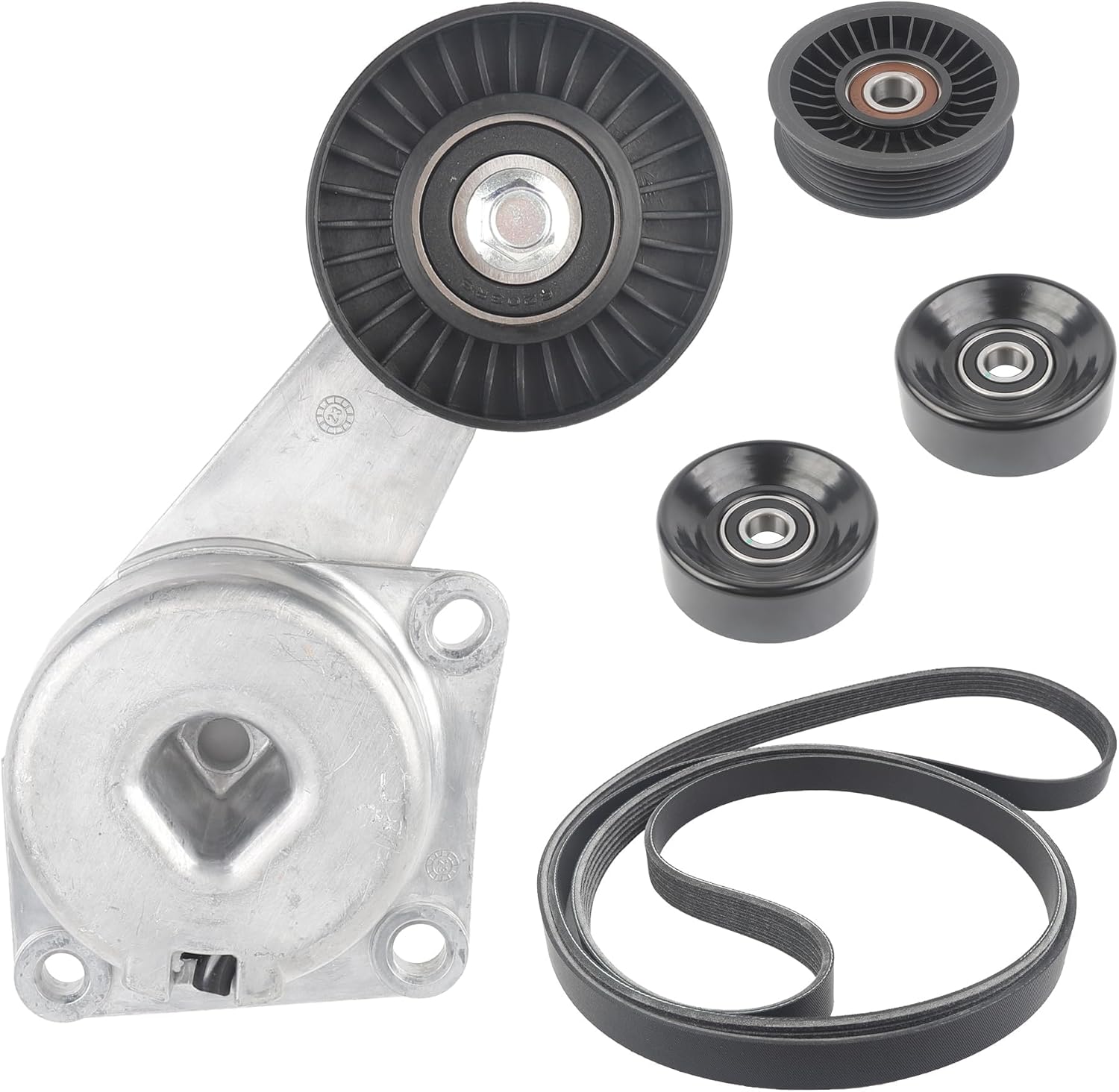
| Replaces part | 90K-38274A |
|---|---|
| Includes | 1 tensioner, 3 idlers, 1 belt |
| Brand | Dasbecan |
| Compatible engines | 4.6L and 5.4L listed Ford/Lincoln/Mercury models |
This Dasbecan kit supplies a direct-replacement tensioner, three idler pulleys, and a serpentine belt to restore the accessory drive on compatible Ford trucks and SUVs. It is designed as a 1:1 fit for the original factory component and is intended for bolt-on replacement during routine belt service or when worn pulleys cause noise or belt slippage. The kit is made from higher-grade materials to provide stable tension and longer service life than a single-part swap, and including the belt simplifies troubleshooting by addressing multiple failure points at once. Installation is straightforward for a competent DIYer and typically requires no specialty tools. The main limitations are that fitment is specific to listed Ford and Lincoln/Mercury model years and engine sizes, and buyers should verify the exact part number before ordering because it replaces a particular factory part. For risk-averse buyers this kit reduces uncertainty by grouping all related components in one package for a coordinated replacement job.
Best for: Buyers who want a single, factory-sized replacement kit that removes guesswork during a belt-tensioner service and prefer a low-risk, do-it-right solution.
Less Ideal for: Do not choose this kit if you need a universal or cross‑vehicle part or if your vehicle is outside the listed model years and engine sizes.
- Complete kit includes tensioner, three idler pulleys, and a serpentine belt to address common failure points at once.
- Built to match factory sizing for direct fit and straightforward installation.
- Materials and design aim to provide stable tension and extended service life compared with replacing a single worn part.
- Compatibility limited to specific Ford, Lincoln, and Mercury year/engine combinations so confirmation of fit is required.
Verdict: A complete, factory-sized tensioner and pulley kit that simplifies and lowers the risk of serpentine drive repairs on the listed Ford 2006–2010 Explorer and similar models.
Choosing the Right 2006-2010 Ford Explorer Serpentine Belt: Key Factors to Consider
Correct Fitment and Length
Getting the exact belt length and rib count for the 2006-2010 Ford Explorer is the foundation of a successful replacement. The wrong length or rib profile can cause poor tracking, rapid wear, or even allow the belt to slip off pulleys. When assessing fitment, check the vehicle year range and engine variant so the belt matches the accessory layout and pulley spacing.
Fitment matters beyond simple compatibility listings. A belt slightly too long will ride loosely and transfer less torque to the alternator and water pump, while a belt that is too short will over-stress the tensioner and bearings. For owners replacing the belt themselves, precise length and rib count eliminate the need for on-vehicle trial-and-error and reduce installation time.
Material and Rib Construction
Belt materials affect longevity and noise on the 2006-2010 Explorer. Modern EPDM compounds resist cracking and heat better than older materials, and bonded cord construction improves strength and load distribution across the ribs. Look for multi-rib profiles designed to match the pulleys to spread contact and reduce localized wear.
Rib shape and backing reinforcement influence how the belt handles oil exposure and high-idle stress. Softer compounds may dampen noise but can wear faster, while stiffer constructions resist stretching but may transmit more vibration. Prioritizing a material balanced for heat resistance and flexibility will extend service life in typical Explorer use.
Compatibility With Tensioner and Pulleys
The 2006-2010 Explorer uses a spring-loaded tensioner and multiple accessory pulleys that determine how a belt tracks and maintains tension. A belt that works with the factory tensioner profile and pulley diameters will maintain correct tension across temperature cycles and component wear.
Incompatible belt cross-sections or stiffness can alter the tensioner workload, accelerating bearing wear or causing the tensioner to bottom out. Consider belts specified for units that use similar tensioner travel and pulley layouts to ensure consistent performance and to reduce the chance of belt squeal or slippage.
Resistance to Contaminants and Heat
Under-hood contaminants such as oil, coolant, and road grime are common sources of accelerated belt failure on the Explorer. Belts with compounds formulated to resist oil swelling and heat degradation will last longer and keep tensioner travel within acceptable ranges.
Heat resistance is particularly important for Explorers used in stop-and-go traffic or hot climates where accessory load and engine bay temperatures rise. Choosing a belt rated for higher temperature exposure reduces the risk of glazing and cracking and delays the onset of belt-related symptoms.
Noise and Vibration Characteristics
Noise is often the first sign of a belt issue and can indicate misalignment or incorrect material choice. Some belt constructions emphasize noise damping through softer backing layers or rib geometry designed to reduce harmonic squeal on the Explorer's accessory train.
While quieter belts can improve the ownership experience, they must not sacrifice durability. Evaluate tensioner compatibility and rib profile along with noise-reduction features because an overly soft belt may mute noise initially but exhibit faster rib wear under load.
Service Life and Maintenance Considerations
Anticipated service life influences replacement intervals and overall maintenance cost for the 2006-2010 Explorer. Choose belts from manufacturers that publish expected life metrics or demonstrate robust construction to reduce the frequency of replacements.
Also consider access to size information and clear diagrams to simplify future replacements. If your Explorer has higher miles or shows early wear signs, plan to inspect the belt and tensioner together and replace both if the belt condition or tensioner travel suggests imminent failure.
Common Serpentine Belt Symptoms on the 2006-2010 Explorer
Recognizing early symptoms helps prevent roadside breakdowns. The most common signs include high-pitched squeal on cold startup, visible cracking or fraying at the ribs, glazing on the belt surface, and slipping under load which can cause intermittent charging or overheating. These indications often point to either belt wear, contamination, or reduced tensioner effectiveness.
Pay attention to accessory behavior as well. Dim headlights at idle, slow power steering response, or an illuminated charging-system indicator can all stem from a belt that is slipping or has stretched beyond the tensioner range. Regular visual inspections catch many problems before they lead to accessory failure.
- High-pitched squeal during startup or acceleration
- Visible rib cracking, fraying, or chunking
- Glazing or shiny rib surfaces
- Intermittent accessory issues like dim lights or poor A/C performance
How to Inspect the Belt and Tensioner
A quick inspection requires the engine off and cool. Examine the belt for consistent rib profiles, cracks across ribs, and any embedded debris. Check the underside of the belt for worn cord exposure. Then check the tensioner for smooth movement and for signs of oil or coolant leaks that might have contaminated the belt.
If the belt shows uneven wear or the tensioner appears to be sitting at one extreme of travel, it is often best to replace both the belt and the tensioner as a matched service. That approach restores proper belt tracking and prevents premature rework.
- Look for rib cracking and backing delamination
- Confirm tensioner pulley spins freely without roughness
- Measure tensioner travel visually for extremes
- Inspect surrounding components for fluid leaks
DIY Replacement Basics for the Explorer
Replacing the serpentine belt on a 2006-2010 Explorer is a straightforward task for a mechanically inclined owner with basic tools. The typical steps are to release tension using a wrench on the tensioner, remove the old belt, route the new belt according to the accessory layout, and reapply tension while ensuring proper routing and seating on all pulleys.
Use a clear belt routing diagram or take a photo before removal to avoid misrouting. After installation, start the engine and observe belt tracking and any immediate noise. Recheck after a short test drive to confirm tensioner behavior and that accessory operation is normal.
- Relieve tension with a suitable wrench on the tensioner
- Route the belt carefully following the routing diagram
- Inspect pulleys and idlers while the belt is off
- Run the engine and monitor for noise and correct tracking
When to Replace the Tensioner and Pulleys
The tensioner and idler pulleys are wear items that influence belt life. Replace the tensioner if it shows rough pulley bearings, excessive play, or if the spring mechanism does not maintain stable tension. Worn idler pulleys can produce noise and cause belt misalignment, so check for wobble or noise when spinning them by hand.
As a best practice, if the belt has failed because of aging or contamination, inspect the tensioner and pulleys and replace them if there is any doubt. Doing these items together reduces the chance of immediate repeat failure and ensures correct belt life after service.
- Replace tensioner with rough pulley bearings or weak spring action
- Swap idler pulleys that show wobble or noise
- Consider matched replacement when belt failure occurs
Sizing, Diagrams, and Verifying Fit
Before purchasing a replacement, verify the belt size and rib count with a reliable diagram or the vehicle's service information. The 2006-2010 Explorer has specific routing and rib profiles depending on engine variants, so cross-check length measurements and rib count against the routing diagram to avoid fitment problems.
If you cannot find a diagram, measure the old belt or the pulley circumference and count ribs precisely. Accurate sizing prevents incorrect purchases and eliminates the need to return belts or perform on-vehicle trimming.
- Confirm rib count and belt length before ordering
- Use the factory routing diagram for correct installation
- Measure the old belt if documentation is unavailable
Noise Troubleshooting Tips
If you hear a squeal after installing a new belt, first ensure the belt is routed correctly and fully seated in the pulley grooves. Belt squeal can result from misalignment, a contaminated belt surface, or a weak tensioner spring. Cleaning oil or coolant residue from the pulleys and replacing contaminated belts often removes the noise.
Also inspect the pulleys for glazing and score marks. Polishing or replacing damaged pulleys and ensuring the tensioner provides correct preload typically resolves persistent squeal issues.
- Confirm correct routing and full seating
- Clean pulleys and remove contamination
- Check for pulley damage and tensioner preload
Still looking for the perfect fit?
Select your Ford Explorer configuration to see the most relevant Serpentine Belts recommendations
How We Chose the Best 2006-2010 Ford Explorer Serpentine Belt
We applied a focused editorial framework to identify serpentine belts suitable for the 2006-2010 Ford Explorer. First, fitment was the primary filter: we prioritized belts specified for the exact 2006-2010 Explorer configurations to avoid fitment issues with the engine accessory layout. Next, material and construction were assessed, favoring multi-rib EPDM compounds and bonded cord designs known to resist cracking and glazing under typical Explorer operating conditions. Durability indicators such as reinforced ribs and resistance to oil contamination were weighted heavily.We also evaluated compatibility with the Explorer's factory tensioner and pulley arrangement, since a belt that does not track properly can accelerate wear or cause noise. Ease of installation and availability of clear size references were considered to help owners performing a replacement. Exclusions included belts lacking clear fitment data for the 2006-2010 Explorer, universal belts that require custom trimming, or items with insufficient technical specs. Final selections balance correct fitment, durable construction, and practical service-life expectations for Explorer owners.
Our full evaluation process is outlined in our review methodology.
FAQ
How often should I inspect the serpentine belt on a 2006-2010 Explorer?
Inspect the belt visually at least every oil change or every 6 months. High-mileage or frequently driven vehicles should be checked more often for cracking, glazing, or rib separation.
Can I replace the serpentine belt myself on the Explorer?
Yes. With basic hand tools and a clear routing diagram, many owners can replace the belt. Ensure you relieve tension safely and confirm correct routing and tension after installation.
What causes a serpentine belt to squeal on startup?
Squeal on startup usually stems from slipping due to contamination, glazing on the belt ribs, or a tensioner that has lost preload. Cold starts can amplify the sound until the belt warms and conforms to pulley profiles.
Should I replace the tensioner when I change the belt?
Often it is prudent to inspect the tensioner and replace it if there is bearing roughness, excessive play, or weak spring action. Replacing the tensioner along with the belt reduces the chance of premature belt failure.
How do I find the correct belt size for my Explorer?
Use the vehicle routing diagram, service manual, or measure the old belt for length and rib count. Verifying rib count and length against factory references prevents fitment issues.
What are early signs the belt is nearing failure?
Early signs include hairline cracks across the ribs, glazing or shiny rib surfaces, fraying at edges, and intermittent accessory issues like dim lights or A/C struggling under load.
Final Verdict
Focus on correct fitment, durable material, and tensioner compatibility when choosing a serpentine belt for the 2006-2010 Ford Explorer. Prioritize belts that specify exact fitment for the model years and that use EPDM or similar compounds resistant to heat and contaminants. Inspect the belt and tensioner together and replace pulleys or the tensioner if they show wear.Balancing noise characteristics against long-term durability will deliver the most reliable outcome. Selecting a properly sized, well-constructed belt and addressing worn tensioner components gives the best chance of trouble-free service and fewer repeat visits to perform the same repair.
Explore More:
- Check out all Ford Explorer parts & accessories
- Explore Serpentine Belts Maintenance & Repair Guides
- Explore Engine
- Browse all Auto Parts
