

Note: This article contains affiliate links. If you click on these links and make a purchase, I may earn a small commission at no extra cost to you. This helps support my research and content. Read my full affiliate disclosure here.
If you own a 1995-2001 Ford Explorer, the serpentine belt is a simple but critical component that keeps your engine accessories working. A worn or improperly sized belt can cause squeal, loss of charging, overheating, or steering assist failure at the worst times. This guide shortlists the top serpentine belts that fit the 1995-2001 Explorer and focuses on the attributes that matter most for long-term reliability.We evaluate belts for correct fitment to the Explorer's specified routing, material durability, and real-world service life. The picks below reflect those priorities and are intended to make replacement straightforward and dependable. Read on for fitment notes, installation considerations, and how to choose the right belt for your Explorer's engine and accessories.
Looking for other parts? See all Ford Explorer parts & accessories.
Top Picks at a Glance
| Best Overall The best all-around choice for most situations | A-Premium Serpentine Belt Drive Kit for 5.0L Ford Explorer / Mercury Mountaineer (1996-2001) |  |
| Best Quality Built to a higher standard if you want something more solid | Dayco Main Drive Serpentine Belt for Ford Explorer 4.0L V6 (1998–2001) |  |
| Best Value The sweet spot between price and what you get | MOCA 6PK1800 EPDM Serpentine Belt |  |
| Best Budget The cheapest option that still gets the job done reliably | Bando USA 6PK1800 Serpentine Belt |  |
| Highest Rated A top-rated pick with lots of positive feedback | Gates K060882 Micro-V Serpentine Drive Belt |  |
| Most Popular A crowd favorite that many people choose with confidence | Bando USA 6PK2375 Serpentine Belt |  |
1. A-Premium Serpentine Belt Drive Kit for 5.0L Ford Explorer / Mercury Mountaineer (1996-2001)

| Vehicle fit | Ford Explorer 1996-2001, Mercury Mountaineer 1997-2001 5.0L |
|---|---|
| Kit contents | 1 belt, 1 tensioner, 1 idler pulley, 1 tensioner pulley |
| Manufacturer | PremiumpartsWhosale |
| Brand | A-Premium |
This A-Premium kit replaces the serpentine belt and the common wear items that keep the front accessory drive running smoothly on 5.0L Explorers and Mountaineers. The package includes a routed belt, belt tensioner, idler pulley, and tensioner pulley so you replace the parts most likely to fail at the same service interval. In use it restores correct belt tension and routing to drive the alternator, power steering, and A/C without slipping or noise when installed correctly. The main practical benefit is convenience and reduced follow-up trips since the kit addresses multiple failure points at once. Limitations are typical for aftermarket kits: fit and finish can vary compared with factory parts and installation may require some mechanical experience or a vehicle lift to access the tensioner safely. The seller offers a one-year unlimited-mileage guarantee which helps offset that uncertainty for routine street use.
Best for: Drivers who want a practical, all-in-one service kit to renew the front accessory drive on a 5.0L Explorer or Mountaineer and avoid separate parts purchases and extra labor.
Less Ideal for: People seeking an exact factory-spec replacement or professional shops that prefer OEM-sourced components for warranty or fleet standards.
- Complete kit replaces belt plus tensioner and both pulleys to avoid repeat labor
- Specifically matched to 5.0L Ford Explorer and Mercury Mountaineer 1996–2001 fitments
- One-year unlimited-mileage guarantee from the brand
- Restores proper belt tension and reduces squeal or slip when installed correctly
- Aftermarket fit and finish can differ from factory-quality parts
Verdict: If you want a single, practical kit to refresh the belt and the common wear pulleys on a 5.0L Explorer or Mountaineer, this A-Premium set covers the job in one purchase.
2. Dayco Main Drive Serpentine Belt for Ford Explorer 4.0L V6 (1998–2001)

| Compatible vehicles | Ford Explorer 1998-2001 4.0L V6 |
|---|---|
| Belt style | Serpentine Belt |
| Brand | Sixity Auto |
This Dayco main drive serpentine belt is a direct replacement intended for the 4.0L V6 Ford Explorer from 1998 through 2001. It installs in the main drive position and is used to transfer power to accessories while restoring proper belt tension and alignment. The belt is a multi-rib serpentine style from a recognized belt maker and ships in manufacturer packaging for straightforward swap-in replacement. In practice it removes squeal and chirp caused by cracked or glazed belts and returns factory-like fit and routing without modification. The practical benefits are simple: reliable accessory drive, reduced noise, and compatibility with factory pulleys and routing. Limitations are minimal for this application but include that fitment is limited to the listed model years and engine, so it is not a universal solution and you should confirm the exact engine code before buying.
Best for: Drivers who want a straightforward performance-focused replacement that restores quiet, reliable accessory drive on late 1990s to early 2000s Explorers without modifying the engine.
Less Ideal for: People looking for a universal belt for multiple makes or those who need belts for different engines or non-main-drive positions should look elsewhere.
- Direct-fit replacement for 1998–2001 Ford Explorer 4.0L V6 main drive
- Multi-rib serpentine design restores proper accessory drive and reduces belt noise
- Manufactured by an established belt supplier and packaged as a factory-style part
- Simple swap-in installation with no modifications to pulleys or routing
- Fitment is limited to the specified Explorer years and 4.0L V6 configuration
Verdict: Choose this Dayco main drive serpentine belt when you need a direct-fit, performance-minded replacement to eliminate squeal and restore reliable accessory drive on 1998–2001 Ford Explorer 4.0L V6s.
3. MOCA 6PK1800 EPDM Serpentine Belt

| Part Number | 6PK1800 |
|---|---|
| Material Type | Rubber (EPDM) |
| Belt Style | Serpentine Belt |
| Package Includes | 1 Serpentine Belt |
This MOCA 6PK1800 serpentine belt is an EPDM rubber replacement designed to restore accessory drive function on older vehicles listed in the fitment. It replaces the single multi-rib belt that drives the alternator, power steering, water pump and air conditioning in compatible engines. Typical use is direct swap-in during routine maintenance or when the original belt shows cracking, glazing, or noise. The EPDM construction increases toughness and aims to reduce noise and wear compared with older rubber compounds. The listing includes fitment notes for many GM, Ford and Jeep applications and basic measuring guidance so you can confirm length before installing. Practical benefits are straightforward: a factory-style replacement that lets you maintain accessory drive reliability without modifying pulleys or tensioners. Limitations are that this is a single belt sold by part number so you must confirm exact vehicle application and belt length before purchase, and there is no detailed performance testing or mileage life beyond the stated one year or 20,000 mile warranty in the description.
Best for: Buyers who want a practical, no-frills replacement belt to restore accessory drive reliability on older vehicles and prefer a direct-fit option they can install during routine maintenance.
Less Ideal for: Those seeking a performance upgrade, extended-lifetime specialty belt, or coverage beyond the listed one year/20,000 mile support should consider higher-end or branded long-life options.
- EPDM rubber compound for improved toughness and reduced noise compared with older formulations
- Sold to match factory accessory drive function for direct replacement when correct size is chosen
- Includes measuring and fitment guidance to help confirm correct belt length prior to installation
- Fitment is specific and you must verify the exact part number and length for your vehicle before buying
Verdict: A straightforward EPDM replacement belt for older vehicles that restores accessory drive function when you confirm the exact fitment.
4. Bando USA 6PK1800 Serpentine Belt
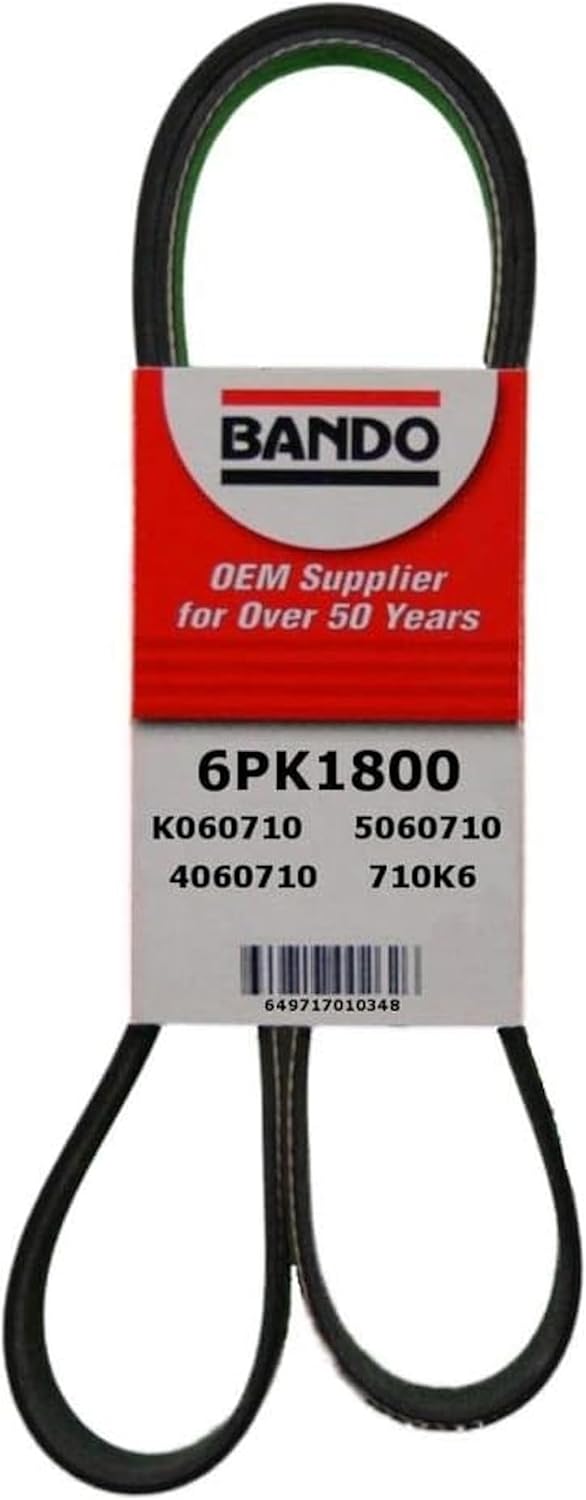
| Brand | Bando USA |
|---|---|
| Style | Serpentine Belt |
| Material Type | Rubber |
| Included Components | Bando USA 6PK1800 OEM Quality Serpentine Belt |
This Bando USA 6PK1800 is a straightforward replacement serpentine belt intended to match factory fit and performance. It is built from EPDM rubber with reinforced tensile cords, which resists heat and wear and helps maintain tension under load. Typical use is direct swap-in replacement for engines specified to use a 6-rib, 1800 mm (71 in) belt — install it when the old belt shows cracking, glazing, or excessive stretch. The belt is produced to OEM-level grinding and rib profile standards so it runs smoothly on pulleys and accessory drives. Practical benefits include broad compatibility with older domestic models and a one-year warranty for peace of mind. Limitations are that this listing is a single belt without installation hardware or routing instructions, and fitment must be confirmed against your vehicle year and engine since older vehicles often had multiple belt lengths and accessory configurations.
Best for: Buyers looking for an affordable, factory-quality replacement belt for routine maintenance on older Ford Explorer engines who prioritize reliability and OEM-style construction over premium aftermarket features.
Less Ideal for: Drivers who want a complete repair kit with tensioner or idler bearings included or those who need a belt matched to a modified accessory layout should look elsewhere.
- Factory-quality manufacturing process with precision ground ribs for reliable pulley engagement
- EPDM rubber compound for improved heat and wear resistance compared with older compounds
- Reinforced tensile cords to minimize stretch under load and maintain belt tension
- Sold as a single belt without installation hardware or detailed routing instructions
Verdict: A budget-friendly, factory-quality replacement belt that delivers OEM-style fit and durable EPDM construction for older Explorer engines needing a reliable swap-in.
5. Gates K060882 Micro-V Serpentine Drive Belt

| Manufacturer | GATES |
|---|---|
| Model | Micro-V Serpentine Drive Belt |
| Item model number | K060882 |
| Manufacturer Part Number | K060882 |
| OEM Part Number | 04854033AB, 12583316, 5135746AA, 9008091173, 90916A2004 |
The Gates K060882 Micro-V serpentine belt is a replacement drive belt intended to restore proper accessory drive function on compatible vehicles. It is used where a single multi-rib belt routes the crank, alternator, power steering, A/C and other accessories. Gates builds this Micro-V belt to match OEM size, construction and materials so it fits like a factory-quality replacement and resists glazing and premature wear. In practice it installs like a standard serpentine belt and provides smooth power transfer and quiet operation under normal driving conditions. The belt’s precision fit reduces the chance of slippage or misalignment compared with generic belts, which helps maintain charging, steering assist, and climate function. A practical limitation is that fitment must match the exact belt part number for the 1995–2001 Ford Explorer application, and belts will still wear over time so inspection and correct routing are required during replacement.
Best for: Buyers who prioritize long-term dependability and want a factory-quality replacement belt to keep charging, steering, and A/C systems working reliably on a 1995–2001 Ford Explorer.
Less Ideal for: If you need a belt for a different make, model, year, or a modified engine layout, choose a belt specified for that application instead.
- Designed to match OEM size and construction for reliable fitment
- Precision manufacturing reduces slip and noise compared with many aftermarket belts
- Durable materials resist glazing and routine wear for longer service life
- Common replacement part number that covers typical engine accessory routing
- Must exactly match the vehicle’s required part number for correct fit and rib count
Verdict: Choose this Gates Micro-V belt when you want a factory-quality, reliability-focused replacement for a 1995–2001 Ford Explorer.
6. Bando USA 6PK2375 Serpentine Belt

| Brand | Bando USA |
|---|---|
| Model | SERP BELT |
| Item model number | 6PK2375 |
| Exterior | Rubber |
The Bando 6PK2375 is a replacement serpentine belt engineered to match factory-spec fit and performance for compatible vehicles. It is built from EPDM rubber with strong tensile cords and precision-ground ribs intended to reduce slip and operate quietly. In practice this belt is used to drive accessories such as the alternator, power steering pump, and A/C compressor, and the construction aims to resist heat and wear so it lasts through typical driving cycles. Notable features include Bando's run-quiet compound and two-times precision grinding to match the rib profile of factory belts, which helps with smooth engagement on pulleys. The belt is straightforward to install as a direct replacement when your vehicle uses the same part number and is a sensible choice for owners who prioritize a reliable, OEM-style replacement backed by a long-established manufacturer. Expect the usual limitations of an aftermarket single-belt replacement: it does not include installation hardware or additional guides and compatibility must be confirmed against your vehicle's exact belt routing and part number.
Best for: Buyers who want a proven, factory-quality replacement serpentine belt and prefer products from established manufacturers with widespread real-world use and positive customer feedback.
Less Ideal for: Do not choose this if you need a complete belt-service kit with pulleys or tensioners included or if you cannot confirm exact fitment for your vehicle before purchase.
- Made from EPDM rubber and precision ground to match factory rib profile for reliable fit
- Proprietary run-quiet compound reduces noise and minimizes slip
- Strong tensile cords designed to resist stretching under high loads
- Produced by a long-established supplier with OEM manufacturing experience
- Sold as a single belt with no installation hardware or additional components
Verdict: A dependable, factory-quality replacement belt for owners who want a quiet, OEM-style serpentine belt from a reputable manufacturer.
Choosing the Right 1995-2001 Ford Explorer Serpentine Belt: Key Factors to Consider
Correct Length and Rib Count
A serpentine belt must match the Explorer's specified belt length and rib profile to seat properly on the pulleys. Using a belt with the wrong length or rib count can cause slippage, premature wear, or misalignment that leads to noise or accessory failure.
Before buying, confirm the belt number or measure the length and count ribs against the original. This matters for the 1995-2001 Ford Explorer because different engine options and accessory configurations over those years can use subtly different belt sizes. Ensuring an exact match avoids repeat replacements and helps the belt work with the factory routing and tensioner geometry.
Material Compound and Reinforcement
The belt compound and internal reinforcement cords determine resistance to heat, oil contamination, and cracking. Higher quality compounds resist glazing and brittle failure, which keeps grip on accessory pulleys and reduces noise over time.
Look for belts specifying EPDM or other modern rubber compounds and strong tensile cords. For the Explorer, where under-hood temperatures and exposure to engine oil can vary with age, compound resilience directly affects service intervals and reduces the chance of sudden belt breakdowns while driving.
Compatibility With Tensioner and Pulleys
The belt must work with the Explorer's tensioner type and pulley diameters to maintain correct tension across the system. A belt that is too stiff or too elastic can interfere with tensioner travel, leading to slack or over-tension situations that accelerate wear.
Consider whether the vehicle has an automatic tensioner or manual adjustment and verify the belt's compatibility. Proper interaction with the tensioner is particularly important on older Explorers where tensioner wear is common; the right belt will maintain consistent tension and reduce chatter or slipping.
Resistance to Noise and Squeal
Noise such as squeal is often the first sign of belt problems, caused by glazing, misalignment, or incorrect material. Choosing a belt engineered to minimize vibration and maintain friction characteristics will reduce squeal and provide quieter operation.
For the 1995-2001 Explorer, noise reduction matters because failing belts or worn pulleys can be mistaken for other accessory issues. A quieter belt can also signal correct installation and proper seating, so expect belts with good compound and rib design to produce less audible drivetrain noise under acceleration or at start-up.
Durability and Service Life
Expected service life determines how often you will replace the belt and how likely it is to fail between maintenance intervals. Durability depends on compound resilience, reinforcement, and resistance to environmental factors like heat and ozone.
Select belts with documented mileage expectations and positive owner reports of longevity. For Explorers used in harsher climates or with higher engine heat, prioritize belts rated for longer service life to avoid frequent replacements and the inconvenience of roadside failures.
Ease of Replacement and Installation Support
Replacing the serpentine belt on a 1995-2001 Explorer is a routine maintenance task for many owners, but access, routing, and tensioner engagement vary with engine layout. A belt that comes with clear sizing references and routing guidance makes installation quicker and reduces the risk of incorrect routing.
Consider whether the belt vendor or packaging provides a routing diagram, replacement tips, or compatibility notes for the Explorer. Good installation support lowers the chance of mistakes and helps owners complete the job with standard hand tools, saving time and frustration.
Common Serpentine Belt Symptoms on the Explorer
Recognizing early symptoms helps prevent a breakdown. Typical signs include a high-pitched squeal at start-up or during acceleration, visible cracking or fraying along the ribs, and glazing on the belt surface. Loss of charging or intermittent power steering assist are operational symptoms that often point to slipping or belt failure.
Addressing these signs promptly avoids collateral damage to pulleys and the tensioner. When you hear squeal, check for contamination from oil or coolant and inspect pulley alignment. On older Explorers, vibration or rhythmic noise under load can also indicate belt wear interacting with worn bearings or a failing tensioner.
- Squeal at idle or acceleration
- Visible cracks, fraying, or glazing
- Intermittent charging or power steering issues
- Belt slip under load or during hard acceleration
How to Confirm the Correct Belt Size
Confirming belt size can be done two ways: referencing the original belt number or measuring the belt length and counting ribs. For the 1995-2001 Explorer, check under the hood for a part number stamping or consult the vehicle's service manual for the correct length and rib profile.
If the old belt is available, lay it flat and measure the total circumference or use a flexible tape to measure length. Count the number of ribs across the belt cross-section and note the profile type so you match both length and rib count when sourcing a replacement.
- Measure circumference of the removed belt
- Count ribs and check rib profile
- Reference factory service manual routing diagram
Installation Tips Specific to 1995-2001 Explorers
Work with the engine cold and use proper tools to release the tensioner. Many Explorers in this range use an automatic tensioner; rotating it to relieve tension lets you remove the old belt and route the new belt following the factory diagram. Make sure the belt sits fully in each pulley valley before releasing tension.
Inspect accessory pulleys and the tensioner for play or roughness while the belt is off. Replacing a worn tensioner or pulley at the same time can extend belt life. After installation, run the engine and observe for noise and proper accessory operation, and recheck tension after a short test drive.
- Use the correct tensioner tool to avoid damage
- Verify full seating of ribs in pulley grooves
- Inspect pulleys and tensioner when changing the belt
When to Replace the Tensioner or Pulleys
Even a new belt will wear quickly if the tensioner or pulleys are worn. Replace the tensioner if it shows excessive play, noise, or if the tensioner pulley bearing is rough. Worn pulleys can cause misalignment and noise that mimic belt faults.
On Explorers from 1995-2001, age-related degradation of tensioner springs and pulley bearings is common. If you observe wobble, grinding, or irregular tensioner movement during inspection, install replacement components at the same time as the belt to ensure long-term reliability.
- Check pulley bearings for roughness
- Look for groove wear or misalignment
- Replace tensioner if spring tension is weak
Maintenance Intervals and Practical Care
Typical preventive maintenance recommends inspecting the belt at every oil change and replacing at interval recommendations from the service manual or when wear signs appear. For Explorers driven in severe conditions, shorten inspection intervals and consider higher-spec belts for better heat and ozone resistance.
Keep the belt and pulley area clean from oil and coolant leaks. Even small leaks accelerate belt degradation. Routine visual checks and listening for new noises will extend service life and reduce the chance of unexpected failures.
- Inspect belt every maintenance service
- Address engine oil or coolant leaks promptly
- Use higher-durability belts in hot or harsh climates
Still looking for the perfect fit?
Select your Ford Explorer configuration to see the most relevant Serpentine Belts recommendations
How We Chose the Best 1995-2001 Ford Explorer Serpentine Belt
We applied vehicle-specific fitment checks, material and construction assessment, and service-life considerations to select these serpentine belts for the 1995-2001 Ford Explorer. Primary evaluation criteria included correct belt length and rib count for the Explorer routing, construction compound and cord reinforcement that affect longevity, and resistance to heat, oil, and cracking in under-hood conditions. We also prioritized durability indicators such as manufacturer-reported mileage ratings and common-user feedback on squeal and premature wear.Additional editorial filters covered compatibility with the Explorer's accessory layout and any necessary tensioner interactions. We excluded belts lacking clear fitment data for the 1995-2001 Explorer, aftermarket products with unknown compound specs, and options intended for different accessory arrangements. Finally, we considered availability of installation guidance and whether belts retained flexibility for proper seating on pulleys without excessive stretch. This process ensured the list focuses on belts that meet the practical demands of Explorer ownership while minimizing fitment risk.
Our full evaluation process is outlined in our review methodology.
FAQ
How often should I replace the serpentine belt on a 1995-2001 Ford Explorer?
Replacement intervals vary with use, but inspect the belt at every service and consider replacement when you see cracking, glazing, or fraying. Many owners replace belts between routine maintenance cycles or when about to perform accessory repairs.
Can I install a new belt without replacing the tensioner?
You can install a new belt without replacing the tensioner if the tensioner is in good condition. However, if the tensioner shows play, noise, or weak spring action, replace it to prevent premature belt wear.
What causes serpentine belt squeal on the Explorer?
Squeal is often caused by glazing, contamination from oil or coolant, misalignment, or a failing tensioner. Addressing the root cause and using a belt with appropriate compound will usually eliminate the noise.
How can I verify the belt routing for my Explorer?
Verify routing by checking the factory service manual or the routing diagram under the hood if present. If the diagram is not available, photograph the old belt routing before removal or consult vehicle-specific repair literature.
Are there size variations in belts for different Explorer engines between 1995 and 2001?
Yes, belt length and rib count can vary with engine option and accessory layout across the 1995-2001 Explorer range. Confirm the correct size for your engine and accessory configuration before purchasing.
What are the signs a belt is about to fail while driving?
Signs include sudden loud squeal, burning rubber smell, visible fraying, or loss of accessory functions such as charging or power steering. If you notice these, stop safely and inspect the belt when possible.
Final Verdict
For the 1995-2001 Ford Explorer, prioritize correct belt length and rib count first, then compound durability and proper interaction with the tensioner. Addressing pulley and tensioner wear at the time of belt replacement reduces the chance of repeat failures and quiets common noise issues.Choose a belt that matches the Explorer's routing and material needs and replace worn support components when needed. That approach balances reliability, reduced squeal, and longer service life so you can get back on the road with confidence.
Explore More:
- Check out all Ford Explorer parts & accessories
- Explore Serpentine Belts Maintenance & Repair Guides
- Explore Engine
- Browse all Auto Parts
