

Note: This article contains affiliate links. If you click on these links and make a purchase, I may earn a small commission at no extra cost to you. This helps support my research and content. Read my full affiliate disclosure here.
If your Honda Civic Hybrid is showing rough idle, reduced fuel economy, or a persistent check engine light, the oxygen sensor is a common source of those issues. Choosing the right Honda Civic Hybrid oxygen sensor matters because the hybrid powertrain relies on accurate exhaust readings to balance gasoline engine operation and emissions control.This guide covers seven shortlisted oxygen sensors selected for reliable fitment and long-term performance on the Honda Civic Hybrid. We explain the evaluation criteria you should care about, what symptoms point to sensor failure, and practical steps to inspect and install a replacement. Read on to find an option that fits your maintenance plan and restores proper engine management.
Looking for other parts? See all Honda Civic parts & accessories.
Top Picks at a Glance
| Best Overall The best all-around choice for most situations | BOSJINLAI O2 Oxygen Sensor Kit for Honda Civic 1.3L (2006–2011), 2-Pack |  |
| Best Quality Built to a higher standard if you want something more solid | Denso 234-9063 Air and Fuel Ratio Oxygen Sensor |  |
| Best Value The sweet spot between price and what you get | Automotive-leader 2‑Piece Heated Oxygen Sensor Kit (Upstream + Downstream) for Honda Civic Hybrid 1.3L (2006–2011) |  |
| Best Budget The cheapest option that still gets the job done reliably | GRIZZLY AUTO Upstream Oxygen Sensor for Honda Civic Hybrid 1.3L |  |
| Highest Rated A top-rated pick with lots of positive feedback | QIYBONE Oxygen O2 Sensor (Upstream & Downstream) — 2-Pack |  |
| Most Popular A crowd favorite that many people choose with confidence | DrCax 234-9063 Heated Oxygen O2 Sensor – Upstream |  |
1. BOSJINLAI O2 Oxygen Sensor Kit for Honda Civic 1.3L (2006–2011), 2-Pack

| Compatible vehicles | Honda Civic 1.3L L4 2006-2011 |
|---|---|
| Replaces part numbers | 234-9063, 234-4350 |
| Package | 2 pieces (upstream and downstream) |
These BOSJINLAI oxygen sensors are a direct-replacement style sensor set intended for Honda Civic 1.3L models from 2006 to 2011. They serve the engine control system by measuring exhaust oxygen and sending a voltage signal so the ECU can adjust fuel trim and maintain efficient combustion. The listing highlights compatible part numbers and says each sensor is tested before leaving the factory. For typical use a technician or competent DIYer will install them in place of worn sensors to restore drivability, reduce emissions, and correct fuel economy or idle issues caused by a failing O2 sensor. The practical benefits are straightforward: matched pair coverage for upstream and downstream positions, claimed consistent output and quick response, and plug-and-play fit for the Civic models listed. Limitations include reliance on correct vehicle fit confirmation and no explicit OEM-branding or extended warranty information, so buyers who need manufacturer-backed coverage or verified lab certifications may prefer name-brand replacements. Overall the sensors are a sensible, budget-focused option for restoring normal sensor function on the specified Civic models.
Best for: Buyers who want an affordable, ready-to-install replacement to restore normal fuel control and emissions behavior on a 2006–2011 Honda Civic 1.3L and who value practical function over brand-name coverage.
Less Ideal for: Drivers seeking factory-brand replacement parts with extended warranty support or documented certification should consider alternatives from established OEM suppliers.
- Sold as a matched pair covering upstream and downstream positions
- Designed to provide stable, quick-response oxygen signals for ECU fuel trim control
- Advertised as tested before leaving the factory to ensure operation
- Direct-replacement fit for Honda Civic 1.3L models 2006–2011
- No manufacturer-backed warranty or certification details shown
- Compatibility requires confirming fit using vehicle-specific lookup
Verdict: A practical, budget-friendly matched pair of oxygen sensors for restoring proper fuel control on 2006–2011 Honda Civic 1.3L models.
2. Denso 234-9063 Air and Fuel Ratio Oxygen Sensor

| Mounting Type | Threaded |
|---|---|
| Output Type | Push-Pull |
| Material Type | Zirconium |
| Measurement Accuracy | High |
The Denso 234-9063 is an aftermarket air and fuel ratio sensor designed to monitor exhaust oxygen and help the engine control system keep fuel mixture in range. It uses a zirconia solid electrolyte with an integrated alumina heater so it reaches operating temperature quickly and gives accurate readings. Typical use is as a direct replacement sensor in vehicles that match the fitment; installation is threaded and requires an oxygen-sensor socket and proper torque on the heat shield washer to prevent exhaust leaks. Buyers will appreciate its corrosion-resistant construction and high measurement accuracy, which in practice clears related check-engine codes and restores expected fuel economy in hybrid Civics according to owner reports. The sensor includes a copper compound for thread protection and is supplied as a single unit. Limitations are that fitment must be confirmed for the exact Civic Hybrid application and installation access or wiring differences may require professional help.
Best for: Buyers who need a factory-quality replacement sensor to restore correct air-fuel readings and fuel economy on a Honda Civic Hybrid and who prioritize measurement accuracy and longevity.
Less Ideal for: Drivers who need a universal or multi-vehicle sensor solution or who prefer a plug-and-play harness adapter instead of a direct threaded replacement.
- Zirconia sensing element with integrated heater for fast, accurate readings
- Durable, corrosion- and abrasion-resistant construction
- Threaded direct-replacement design that matches factory-style mounting
- High measurement accuracy that helps clear fuel-ratio related error codes
- Fitment is specific and must be verified for the exact hybrid Civic application
Verdict: A factory-quality, heater-equipped oxygen sensor built to restore accurate air-fuel monitoring and fuel economy on a Honda Civic Hybrid.
3. Automotive-leader 2‑Piece Heated Oxygen Sensor Kit (Upstream + Downstream) for Honda Civic Hybrid 1.3L (2006–2011)

| Specific use | Honda Civic 1.3L L4 (2006-2011) |
|---|---|
| Sensor type | Heated 4-wire |
| Placement | Upstream and downstream |
| Interchange part numbers | 36531RMXA01/36531RMXA02; 36532RMXA01/36532RNAA01 |
| Upper temperature rating | 1000 Degrees Celsius |
This kit supplies both the upstream and downstream heated oxygen sensors needed to restore proper fuel trim and emissions control on a Honda Civic Hybrid 1.3L from 2006 to 2011. It includes a 4‑wire heated upstream sensor (234-9063) and a 4‑wire heated downstream sensor (234-4350) with factory-style threaded mounting and vehicle-specific connectors. Typical use is direct replacement of worn or failed sensors to clear check-engine codes, stabilize idle, and improve fuel economy and catalytic converter monitoring. Notable features are the heated element for faster warm-up, four‑wire construction for sensor and heater power, and listed interchange numbers matching common Honda part references. Practical benefits include a complete pair in one package and plug-and-play fitment for the specified Civic hybrid, which can save installation time. Trade-offs are typical of aftermarket sensor kits: fitment depends on matching the listed part numbers and some users report connector tightness or variable long-term durability compared with factory parts.
Best for: Buyers who prioritize a practical, cost-conscious repair solution for a Honda Civic Hybrid and want a ready-to-install pair to clear codes and restore engine management without sourcing separate parts.
Less Ideal for: Shoppers seeking an exact factory-brand replacement with manufacturer warranty backing or those who prefer sensors for multiple vehicle models or years beyond the listed Civic Hybrid scope.
- Complete upstream and downstream pair included for one repair job
- Heated 4-wire design gives faster warm-up and reliable sensor signal
- Threaded, vehicle-specific connectors match Honda replacement locations
- Includes interchange part numbers to confirm compatibility with Honda Civic Hybrid
- Long-term durability may vary compared with factory-brand sensors
Verdict: A practical, plug-and-play heated upstream and downstream O2 sensor pair that gets a 2006–2011 Honda Civic Hybrid back to proper fuel trim and emissions monitoring without buying separate components.
4. GRIZZLY AUTO Upstream Oxygen Sensor for Honda Civic Hybrid 1.3L

| Manufacturer | GRIZZLY AUTO |
|---|---|
| Compatible Models | Honda Civic Hybrid 2006–2011 1.3L |
| Manufacturer Part Number | FGA-001411-ga |
| Replaces Part Numbers | 234-9063; 36531-RMX-A01; 211200-2321 |
This GRIZZLY AUTO upstream oxygen sensor is a budget-friendly direct-replacement part intended for the 1.3L Honda Civic Hybrid from 2006–2011. It installs in the exhaust manifold upstream position to monitor oxygen content and feed data to the engine control system, which helps correct air-fuel ratio for smoother idling and better fuel economy. The sensor features a reinforced heating cover, thread coating for stability, and a stainless steel body with double laser welding for corrosion resistance and longer life. In use it behaves like a standard replacement sensor: expect gradual improvement in drivability and fuel delivery after installation rather than instant dramatic change. Installation requires matching the connector shown in the listing and basic access to the upstream port; no special programming is needed. The main compromise is that this is an aftermarket unit aimed at value buyers so long-term durability may vary compared with higher-end branded sensors, and fit must be confirmed against your original plug before ordering.
Best for: Buyers who need an affordable, direct-fit upstream oxygen sensor for a 2006–2011 Honda Civic Hybrid and prioritize restoring proper fuel trim and drivability on a tight budget.
Less Ideal for: Drivers who want a long-term, high-end performance sensor or who prefer an OEM-branded replacement should consider higher-tier options.
- Made for listed Honda Civic Hybrid 1.3L upstream fitment to replace the original sensor
- Reinforced heating element and stainless steel body for basic high-temperature durability
- Thread coating and connector design intended to improve installation stability and compatibility
- Double laser welding and waterproof sealing to help extend service life
- Aftermarket construction prioritizes value so long-term durability may not match premium OE-quality sensors
Verdict: An economical, direct-fit upstream oxygen sensor that restores proper fuel control on 2006–2011 Honda Civic Hybrids without the premium price.
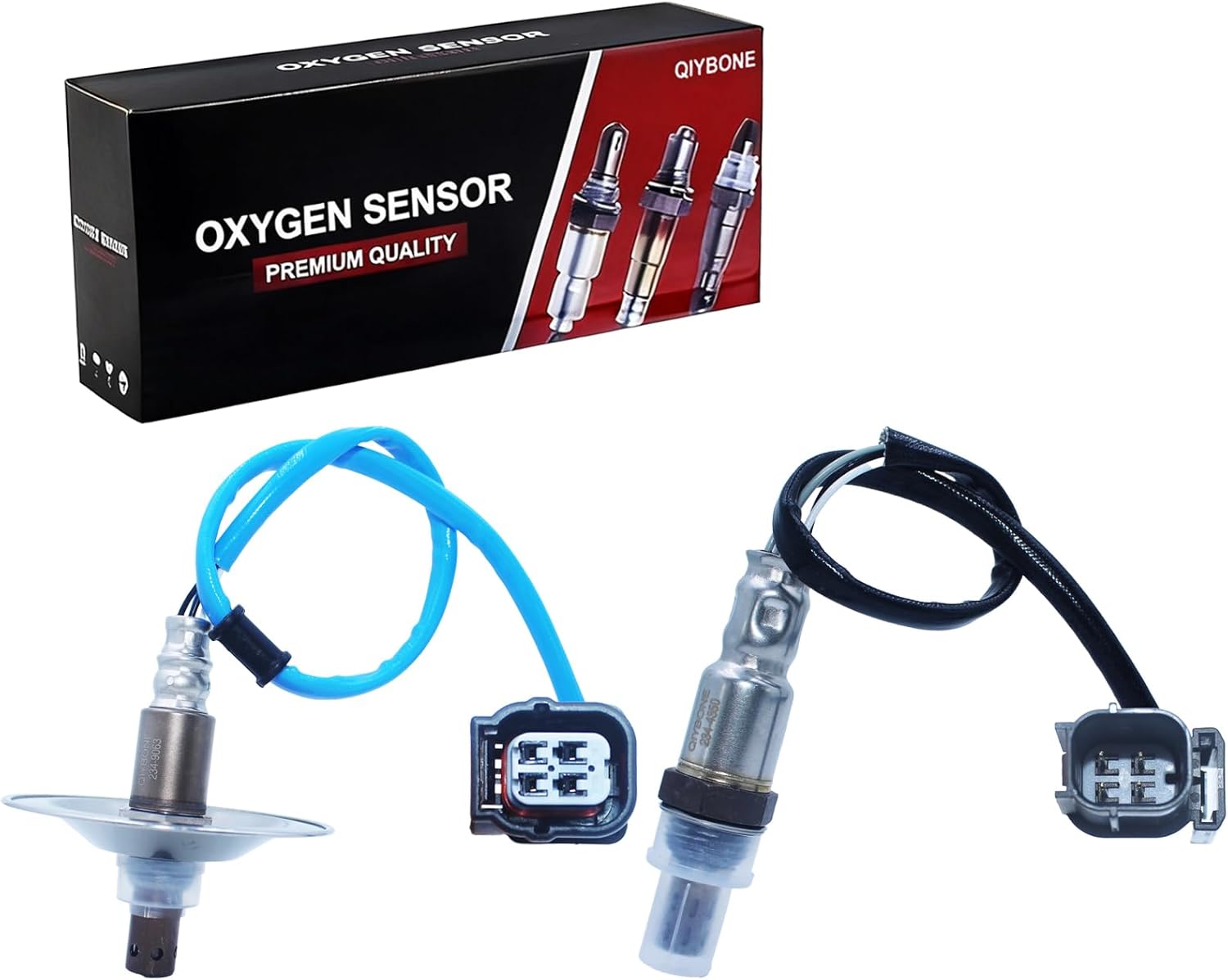
5. QIYBONE Oxygen O2 Sensor (Upstream & Downstream) — 2-Pack
| Mounting Type | Flange Mount |
|---|---|
| Output Type | Analog |
| Material Type | Stainless Steel |
| Unit Count | 2.0 Count |
This QIYBONE two-pack of upstream and downstream oxygen sensors is a direct-fit replacement intended for the Honda Civic Hybrid listed in the fitment. The sensors use stainless steel construction and high-temperature materials to resist corrosion and extend service life. In use they measure exhaust oxygen content and send an analog signal to the engine control system so fuel trim and emissions control return to expected levels, which helps improve fuel efficiency and throttle response after installation. The plug-and-play design and OEM-style flange mount make installation straightforward for a mechanically comfortable DIYer or a technician, and the pair covers both pre- and post-cat sensing positions so you can address multiple codes at once. Limitations include no factory warranty details provided and a small number of customer reviews, so long-term durability beyond initial fit and function is less documented than with some established brands. For Civic Hybrid owners wanting an affordable replacement set that matches factory fitment, this is a practical option.
Best for: Buyers who prioritize a reliable, factory-fit replacement to restore proper engine management and fuel efficiency on a Honda Civic Hybrid and prefer a straightforward install.
Less Ideal for: People seeking a sensor backed by extensive third-party longevity testing or a branded OEM warranty should consider alternatives with longer track records.
- Includes both upstream and downstream sensors for a complete repair
- Stainless steel and high-temperature materials for improved corrosion and heat resistance
- OEM-style flange mount and plug-and-play connector for straightforward installation
- Analog output compatible with factory engine management to restore fuel trim
- No explicit manufacturer warranty or long-term durability data included
Verdict: A practical two-piece replacement that matches factory fitment and materials to get a Civic Hybrid's air-fuel sensing back to spec quickly.
6. DrCax 234-9063 Heated Oxygen O2 Sensor – Upstream

| Mounting Type | Flange Mount |
|---|---|
| Measurement Accuracy | High |
| Upper Temperature Rating | 1472 Degrees Fahrenheit |
| Output Type | physical |
This DrCax 234-9063 is a heated upstream oxygen sensor sold as a direct replacement for the 2006–2011 Honda Civic Hybrid 1.3L. It measures exhaust oxygen and sends that signal to the engine control module so fuel trim and combustion stay balanced, which can improve fuel economy and emissions after a failed factory sensor is removed. The sensor uses a flange mount and is rated for high temperature exposure, and the listing emphasizes measurement accuracy and factory-equivalent form. In practice it installs like a standard O2 sensor and is typically used to restore drivability, reduce check engine lights related to oxygen sensor codes, and recover MPG lost to a failing sensor. The main practical benefit is simple compatibility with the listed Civic Hybrid fitment and a heated element for faster warm-up. Limitations are typical for aftermarket sensors: long-term durability can vary and fit depends on correct part number and proper installation, so confirm vehicle fitment before replacing the original.
Best for: Buyers who want a straightforward, vehicle-specific replacement to clear oxygen-sensor-related check-engine codes and restore fuel trim and emissions performance while valuing documented compatibility and measurable results.
Less Ideal for: Drivers seeking an OEM-branded factory sensor or a long-term performance upgrade beyond restoring factory operation should consider manufacturer-branded alternatives or diagnostics before replacing the sensor.
- Direct-replacement fitment specified for 2006–2011 Honda Civic Hybrid 1.3L upstream position
- Heated element for quicker sensor activation and more accurate readings at idle or short trips
- Flange mount and design intended to match factory-style installation
- High temperature rating suitable for exhaust environment
- Long-term durability and real-world lifespan can vary versus factory-brand sensors
Verdict: A vehicle-specific heated upstream oxygen sensor built to replace a failing unit and quickly restore fuel trim, emissions control, and drivability on the 2006–2011 Civic Hybrid.
Choosing the Right Honda Civic Hybrid Oxygen Sensor: Key Factors to Consider
Exact Fitment And Connector Compatibility
Oxygen sensors must match the Civic Hybrid's sensor thread size, connector type, and wiring pinout to communicate correctly with the engine control unit. An exact-fit sensor reduces installation time and prevents electrical or sealing issues that can cause false codes or exhaust leaks.
Pay attention to whether the sensor is listed for the Civic Hybrid configuration specifically. Some sensors that look similar can have different heater circuits or signal arrangements and will not function correctly in hybrid duty cycles.
Heater Circuit And Warm-Up Speed
The built-in heater accelerates sensor warm-up so the ECU gets reliable readings sooner after cold starts. For a hybrid, frequent engine start-stop events make heater performance more important because the engine often restarts and needs prompt accurate oxygen readings.
Choose sensors with fast warm-up characteristics and a robust heater element. A slow or failed heater prolongs rich or lean closed-loop behavior and can trigger emissions faults or degrade fuel economy.
Durability Against Exhaust Contaminants
Exhaust contaminants such as oil vapors, fuel additives, or coolant traces can coat the sensing element and shorten service life. Hybrid operation sometimes leads to different combustion patterns and transient conditions that affect contaminant exposure.
Look for sensors with coatings or construction designed to resist fouling. Materials and manufacturing quality influence how well the sensing element tolerates contaminants over tens of thousands of miles.
Response Time And Signal Stability
A sensor's response time and stability determine how accurately the ECU can control air-fuel ratio. Faster, stable signals let the control system make timely corrections, which is especially useful during engine-on transients when the gasoline engine resumes operation in a hybrid.
Avoid sensors that produce noisy or drifting signals. Stable voltage swings and consistent switching behavior under load help maintain steady idle, proper throttle response, and efficient combustion.
Wiring Length And Mounting Position
Correct wiring length and proper mounting affect both installation and long-term reliability. Wiring that is too short can strain connectors or require splices, while excess slack can snag on chassis components.
Consider the sensor location designated by the Civic Hybrid service information. Upstream sensors near the exhaust manifold see higher temperatures and require more heat-resilient wiring and tighter routing considerations than downstream sensors.
Warranty And Aftermarket Support
A reasonable warranty indicates manufacturer confidence and provides recourse if a sensor fails prematurely. Aftermarket support, including clear technical documentation and replacement harnesses, simplifies troubleshooting and installation.
Check warranty terms and what is covered in hybrid-specific failure modes. Good support reduces downtime and the risk of repeat parts returns.
Common O2 Sensor Symptoms On A Civic Hybrid
Several symptoms typically point to a failing oxygen sensor on the Honda Civic Hybrid. The most obvious is a persistent check engine light with codes related to oxygen sensor circuits, but drivability clues often appear first. You may notice rough idle, hesitation during acceleration, or a drop in fuel economy as the ECU runs in open loop or compensates for faulty readings.
- Fluctuating or rough idle when the gasoline engine is active
- Reduced miles per gallon during city driving or mixed cycles
- Black smoke or strong fuel smell under high load
- Check engine light with bank or sensor-specific codes
Reading And Interpreting OBD-II Codes
When the check engine light illuminates, the diagnostic trouble code helps pinpoint sensor issues. Codes referencing bank and sensor position provide guidance, for example codes that indicate a heater circuit fault or a slow response signal. Use the code as a starting point, but verify with live data rather than replacing parts solely on code presence.
- A heater circuit code suggests a faulty internal heater rather than the sensing element
- Slow switching or out-of-range voltages on live data indicate degraded sensor response
- Intermittent codes may point to wiring, connector corrosion, or exhaust leaks rather than the sensor itself
Inspecting The Sensor And Related Components
Before replacing an oxygen sensor, perform a visual and electrical inspection. Check the wiring harness for chafing, corrosion, or broken clips. Inspect the sensor threads and surrounding exhaust flange for leaks, as air ingress can cause false readings. If the heater circuit is suspected, measure resistance per service specifications to confirm an open or shorted heater.
- Look for soot buildup or deposits on the sensing tip
- Verify connector pins are clean and fully seated
- Check exhaust flanges and gaskets near the sensor for leaks
When To Replace Upstream Versus Downstream Sensors
Upstream sensors (located before the catalytic converter) primarily control fuel trim and air-fuel ratio; downstream sensors monitor converter efficiency. On the Civic Hybrid, prioritize upstream sensor replacement when you see drivability impacts or codes indicating sensor response out of range. Replace downstream sensors when the focus is on catalyst monitoring codes or persistent converter efficiency faults.
- Upstream sensor failure often affects idle and fuel economy more directly
- Downstream sensor faults typically show as catalyst efficiency codes or monitoring failures
Basic Installation Tips For Honda Civic Hybrid Owners
Installation is straightforward with the right tools and correct replacement that matches the Civic Hybrid connector and thread. Use anti-seize sparingly on threads if the replacement part does not come pre-coated, and avoid getting anti-seize on the sensing tip. Tighten to the torque specified in the vehicle manual and route wiring clear of heat sources or moving suspension parts.
- Disconnect the battery or follow safety recommendations before starting
- Allow the exhaust to cool before removing the old sensor
- Use an oxygen sensor socket or appropriate wrench to avoid damaging the hex surface
Still looking for the perfect fit?
Select your Honda Civic configuration to see the most relevant Oxygen Sensors recommendations
How We Chose the Best Honda Civic Hybrid Oxygen Sensor
To compile this list we applied practical, vehicle-specific filters that matter for Honda Civic Hybrid owners. Primary evaluation criteria included exact fitment to the Civic Hybrid exhaust architecture, sensor connector and thread compatibility, and whether the part supports the vehicle's emissions control strategy. We prioritized sensors with proven durability in high-heat exhaust environments and resistance to common contaminants present in hybrid duty cycles.Performance criteria also included reported response time and consistency of voltage or signal under varying load, since hybrid operation cycles between engine-off and engine-on states more often. Installation ease and availability of OE-style harnesses or boot adapters were considered to minimize fitment issues. We excluded universal sensors that require extensive modification or cutting and splice work and any units with known warranty or reputation concerns.Finally, we weighted documented longevity and aftermarket support so replacements are less likely to trigger recurring faults on this specific vehicle platform.
Our full evaluation process is outlined in our review methodology.
FAQ
How long do oxygen sensors typically last on a Civic Hybrid?
Oxygen sensor life varies with driving conditions and exposure to contaminants, but many last between 60,000 and 100,000 miles. Hybrid operation can alter duty cycles, so monitor performance and codes rather than relying on a fixed interval.
Can a bad oxygen sensor cause a check engine light only while in hybrid mode?
It often depends. Some faults appear only during gasoline engine operation or transition events. If the gasoline engine is off most of the time, faults may surface when the engine restarts and the sensor is expected to provide accurate readings.
Is it necessary to replace both upstream and downstream sensors at the same time?
Not always. Replace the sensor that shows fault codes or poor performance first. However, if one sensor failed due to contamination or age, the other might be close to failure and replacing both can be practical during larger maintenance tasks.
How can I test the sensor without removing it?
You can observe live OBD-II data to check voltage swings and heater circuit status. A healthy narrowband upstream sensor will switch between low and high voltages during closed-loop operation. Heater resistance can be checked from the connector with the sensor in place if service specs are available.
Will replacing the oxygen sensor clear fuel economy issues immediately?
If the sensor was causing incorrect air-fuel commands, you should see improvements once the ECU relearns and returns to closed-loop control. Some systems need drive cycles to fully adjust, so expect incremental improvement rather than an instant fix.
Are repair shop diagnostics necessary before replacing a sensor?
Diagnostics are recommended if you are unsure about the fault source. Many faults are wiring or connector related, and replacing the sensor without proper diagnosis can lead to unnecessary parts changes and unresolved issues.
Final Verdict
Choosing the right oxygen sensor for your Honda Civic Hybrid means balancing exact fitment, heater performance, and durability against exhaust contaminants. Prioritize a sensor that matches the Civic Hybrid connector and thread, offers a dependable heater for rapid warm-up, and provides stable signal response under transient conditions.If you see drivability problems or persistent diagnostic codes, address upstream sensor issues first because they most directly affect fuel trim and engine behavior. Use the evaluation criteria above to weigh tradeoffs between longevity, ease of installation, and warranty support so you can replace the sensor confidently and restore proper engine management.
Explore More:
- Check out all Honda Civic parts & accessories
- Explore Oxygen Sensors Maintenance & Repair Guides
- Explore Engine
- Browse all Auto Parts
