

Note: This article contains affiliate links. If you click on these links and make a purchase, I may earn a small commission at no extra cost to you. This helps support my research and content. Read my full affiliate disclosure here.
If you drive a Honda Civic Hatchback and are considering a turbocharger swap or upgrade, picking the right unit matters for drivability, reliability, and engine longevity. The wrong turbo can cause lag, poor boost control, or excessive stress on the engine and ancillary systems. This guide gathers the top shortlisted turbochargers suitable for the Civic Hatchback and explains the practical differences that affect daily driving and performance.We evaluated options based on fitment accuracy, spool characteristics, and durability under common Civic operating conditions. Below you will find our top picks, plus guidance on installation considerations and what signs to watch for when a turbo needs attention.
Looking for other parts? See all Honda Civic parts & accessories.
Top Picks at a Glance
| Best Overall The best all-around choice for most situations | BFO TD025 Turbocharger for Honda 1.5L L15B7 (2016–2020) |  |
| Best Quality Built to a higher standard if you want something more solid | Honda Genuine Turbocharger Assembly |  |
| Best Value The sweet spot between price and what you get | maXpeedingrods TD025 Turbocharger for Honda 1.5L L15B7 (2016–2020) |  |
| Best Budget The cheapest option that still gets the job done reliably | GELUOXI TD025 Turbocharger with Gaskets for Honda 1.5L |  |
| Highest Rated A top-rated pick with lots of positive feedback | AUTISTOP Complete Turbocharger Kit with Actuator and Gasket for 1.5L Honda L15B7 (2016–2021) |  |
| Most Popular A crowd favorite that many people choose with confidence | labwork TD025 Turbocharger Replacement for Honda Civic & CR-V 1.5L |  |
| Best Seller A high-volume bestseller chosen again and again | A-Premium TD025L4B Turbocharger Kit with Actuator and Gasket for Honda Civic 1.5L (2016–2021) |  |
1. BFO TD025 Turbocharger for Honda 1.5L L15B7 (2016–2020)

| Turbo Model | TD025 |
|---|---|
| Engine Code | AP2T, L15B7 |
| Bearing Type | Journal Bearing / Floating Bearing |
| Cooling Type | Water + Oil Cooling |
| Actuator Type | Electronic Actuator |
This BFO TD025 turbocharger is offered as a direct factory-style replacement for Honda 1.5L L15B7 (AP2T) engines used in Civic and CR-V models 2016–2020. It replaces the factory unit with a journal-style center bearing, water and oil cooling passages, and an electronic actuator to restore boost control. The turbine housing is ductile iron and the compressor wheel is forged aluminum with an aerodynamic profile aimed at improving airflow and transient response. In practice this means it should bring a worn or failed turbo back to near-factory performance and deliver predictable boost and drivability without extra tuning. Installation is intended to be straightforward for a competent mechanic since it matches OEM fitment and mounting points. Limitations include the journal bearing design, which can be less robust than modern ball-bearing performance turbos under extreme duty, and the unit is sized for stock or mildly tuned engines rather than high-power builds. For buyers seeking a reliable, like-for-like replacement that keeps factory behavior, this is a sensible option.
Best for: Buyers who want a reliable, like-for-like turbo replacement to restore factory drivability and boost behavior on a 2016–2020 Honda 1.5L without major modifications.
Less Ideal for: Not a good choice for tuners planning large power increases or aggressive track use who need a high-performance ball-bearing turbo or uprated internals.
- Direct-fit replacement tailored to L15B7/AP2T 1.5L engines for 2016–2020 Civics and CR-Vs
- Water and oil cooling helps manage temperatures during normal driving and prolongs component life
- Forged aluminum compressor wheel and aerodynamic design improve airflow and boost response
- Ductile iron turbine housing resists high exhaust temperatures for durability
- Electronic actuator provides factory-style boost control and compatibility with stock engine management
- Uses a journal (floating) bearing rather than a ball-bearing cartridge, which is less durable under sustained high-RPM or heavily modified use
Verdict: A straightforward, direct-fit TD025 replacement that restores factory boost control and drivability for 1.5L Honda Civic and CR-V engines from 2016–2020.
2. Honda Genuine Turbocharger Assembly

| Manufacturer | Honda |
|---|---|
| Model | Genuine Honda TURBOCHARGER ASSY- |
| Item model number | 18900-5AA-A01 |
| Manufacturer Part Number | 18900-5AA-A01 |
This is a genuine Honda turbocharger assembly intended as a factory-quality replacement unit. It installs in place of the original turbo and is used to restore boost performance and drivability for turbocharged Honda engines. As an OEM part it matches factory fit and connections so installation is straightforward when following service procedures, and buyers can expect the same compressor and turbine geometry as the original unit. The unit is compact and comes packaged for parts-level replacement rather than performance modification. That means it delivers reliable, stock-caliber boost and durability but does not include upgraded internals for higher boost, improved flow, or extended spinning limits that aftermarket performance turbos offer. For someone returning a vehicle to factory specification after failure this turbocharger is a solid choice, while tuners seeking significant power gains should consider performance-specific options instead.
Best for: Buyers who need a reliable, factory-standard replacement to restore a turbocharged Honda to stock performance and reliability, prioritizing correct fit and original behavior over extra power.
Less Ideal for: Drivers focused on significant performance gains, high-boost builds, or track-focused modifications should look at purpose-built aftermarket turbos and supporting hardware instead.
- Factory-quality fit and factory-spec connections for straightforward replacement
- Restores original boost, drivability, and emissions behavior when installed correctly
- Manufactured by Honda, ensuring parts compatibility and consistent build standards
- Compact assembly packaged for direct parts-level swap with original mounting points
- Not designed or balanced for higher boost or performance tuning
- Comes as a stock replacement only with no upgraded internals or performance enhancements
Verdict: Choose this Honda turbocharger assembly when you want a factory-quality direct replacement to restore stock boost and reliability.
3. maXpeedingrods TD025 Turbocharger for Honda 1.5L L15B7 (2016–2020)

| Turbo Model | TD025 |
|---|---|
| Engine Code | AP2T, L15B7 |
| Cooling Type | Water + Oil Cooling |
| Bearing Type | Journal Bearing/Floating Bearing |
| Actuator Type | Electronic Actuator |
This maXpeedingrods TD025 turbocharger is built as a direct factory-quality replacement for Honda 1.5L L15B7/AP2T engines used in Civic and CR-V models from 2016–2020. It installs like a stock unit and includes an electronic actuator, water and oil cooling, a ductile iron turbine housing and a forged aluminum compressor wheel to improve airflow and boost response. The turbo is sized to restore factory-level power up to the listed 174 HP and is intended for street use where reliability and plug-and-play fitment matter. Practical buyers will appreciate the journal-style bearing and materials chosen for high-temperature resistance, which help with durability under regular driving and moderate spirited use. Expect straightforward replacement without modifications, but this is a basic VL-series unit rather than a high-performance upgrade, so drivers seeking large power gains or track-focused durability should look elsewhere. Proper installation and oil/coolant line condition are important for long life.
Best for: Buyers who want a reliable, plug-and-play replacement turbo to restore factory performance on a 2016–2020 Honda 1.5L without chasing upgrades or modifications.
Less Ideal for: Drivers planning significant power increases, racing use, or frequent high-RPM track sessions should choose a performance-oriented turbo instead.
- Direct factory-replacement fitment for L15B7/AP2T 1.5L Honda engines simplifies installation
- Electronic actuator provides consistent boost control similar to factory units
- Water and oil cooling support sustained operation and help manage temperatures
- Ductile iron turbine housing and forged aluminum compressor wheel are chosen for heat and oxidation resistance
- Journal (floating) bearing design is less robust for high-power or track-intensive use compared with ball-bearing turbos
Verdict: A straightforward, factory-fit TD025 turbo that restores stock power and boost control on 1.5L L15B7 Honda engines with minimal fuss.
4. GELUOXI TD025 Turbocharger with Gaskets for Honda 1.5L

| Manufacturer | GELUOXI |
|---|---|
| Manufacturer Part Number | GELUOXI 49373-07013 18900-5AA-A01 |
| OEM Part Number | 189005AAA01, 4937307011, 4937307012, 4937307013, 4937307100 |
| Replacement For | Honda Civic 2016-2020, CR-V 2017-2020 |
| Warranty | 12 Months |
This GELUOXI TD025 turbocharger is an aftermarket replacement built to fit the 1.5L turbo Honda applications listed for Civic and CR-V model years in the listing. It arrives as a complete cartridge-style unit with gaskets and a billet compressor wheel design intended to restore forced-induction performance after a failed turbo. Typical use is direct replacement during a repair or engine refresh; professional installation is recommended. The listing calls out matching OEM part numbers and a multi-blade billet wheel and shaft specification, which suggests attention to airflow and durability compared with low-cost cast wheels. Practical benefits include getting a ready-to-install turbo assembly that avoids core exchanges and the included gaskets simplify refit. Limitations are typical of budget aftermarket turbos: fitment must be confirmed against your vehicle s OEM part number and professional installation is advised to ensure proper oiling and boost control. Warranty coverage is limited to the seller s stated policy, so expect less support than dealer-sourced units.
Best for: Buyers seeking a lower-cost replacement turbo to get a 1.5L Honda back on the road quickly without sourcing a remanufactured core or dealer unit; suited to owners prioritizing value over OEM sourcing.
Less Ideal for: Those who want full dealer support, guaranteed factory-fit performance, or who expect a plug-and-play performance upgrade beyond restoring stock function should consider remanufactured or factory-sourced options instead.
- Sold as a complete turbo cartridge with gaskets so no core exchange needed
- Matches multiple OEM part numbers listed for direct replacement on specified Honda 1.5L turbos
- Billet-style compressor wheel design aimed at improved airflow over basic cast wheels
- Aftermarket unit may require verification of exact fit and tuning to match factory boost behavior
Verdict: If you need a budget-friendly, ready-to-install replacement turbo for a Honda 1.5L, this aftermarket TD025 offers a straightforward way to restore turbo function without a core exchange.
5. AUTISTOP Complete Turbocharger Kit with Actuator and Gasket for 1.5L Honda L15B7 (2016–2021)

| Fitment | 2016–2021 Honda Civic and CR-V 1.5T L15B7 |
|---|---|
| Includes | Turbo core, actuator, gaskets |
| Manufacturer | AUTISTOP |
| Model | AUT-W250700002 |
This AUTISTOP turbocharger kit is a direct replacement option for the 1.5T L15B7 turbo used in 2016–2021 Honda Civic and CR-V models. It ships with the turbo core, actuator, and necessary gaskets so installers do not need to source extra parts. The manufacturer states the unit is machined alloy built for high heat and pressure resistance, which should support long service life when installed correctly and maintained with proper oiling. In real-world use the kit restores boost response and drivability for cars that have worn or failed turbos and is a practical choice for a full replacement during a repair. Expect a professional or experienced DIY installer to handle the swap without unexpected parts gaps. Limitations: this is an aftermarket component so fit and longevity can vary by installation quality and vehicle history, and buyers should verify part numbers and compatibility before ordering. Warranty and dealer-level support are available through the seller rather than factory channels.
Best for: Buyers who prioritize a reliable, ready-to-install replacement to restore factory-like turbo performance and want a single kit that includes the core parts for a straightforward repair.
Less Ideal for: People seeking a factory-sourced dealer turbo or those who want a performance-upgraded or custom turbo beyond stock specifications should look elsewhere.
- Complete kit includes turbo core, actuator, and gaskets to simplify replacement
- Machined alloy construction intended for heat and pressure resistance
- Designed to replace several Honda part numbers for direct fitment on L15B7 turbo models
- Restores boost response and acceleration when replacing a worn turbo
- Aftermarket unit so long-term durability may vary compared with factory-sourced parts
Verdict: A practical, full replacement turbo kit that restores factory turbo function with the core parts included, making it a strong reliability-focused choice for 1.5T Honda repairs.
6. labwork TD025 Turbocharger Replacement for Honda Civic & CR-V 1.5L

| Manufacturer Part Number | TR-2910336-261741-SS |
|---|---|
| OEM Part Number | 49373-07011 |
| Applicable Engines | Honda 1.5 VTEC R4 1497ccm 134Kw 182HP |
| Package Contents | 1x TD025 Turbocharger with installation accessories |
This labwork TD025 is a direct-replacement turbocharger intended for the 1.5 VTEC Honda Civic and CR-V to restore boost and engine performance. It ships as a complete turbo with installation accessories and is designed to match the listed part numbers so it can replace a worn or failed factory turbo. In real-world use it returns lost horsepower and boost response and can improve fuel efficiency when installed and lubricated correctly. Notable features include cast components rated for high-temperature stability and an instruction to fully oil the bearing before fitment. Practical benefits are straightforward: a single-package swap that avoids rebuilding the original turbo and parts-matching to common Honda 49373-07011/07012/07100 part numbers. Important limitations are that fitment depends on matching the vehicle's engine and part number exactly and that professional installation and proper pre-lube are required to avoid premature failure; it is not an upgraded performance turbo but a replacement unit, so expect stock-equivalent output rather than increased power.
Best for: Buyers who need a reliable replacement turbo to restore a 1.5L Honda Civic or CR-V to factory boost and drivability, and who prioritize documented part compatibility and practical repair results.
Less Ideal for: Drivers looking for a performance upgrade, custom tuning, or parts that increase boost beyond factory levels should consider aftermarket performance turbos instead.
- Sold as a complete turbocharger kit with installation accessories for easier replacement
- Matches multiple Honda part numbers for straightforward fit verification
- Materials described for high-temperature stability and corrosion resistance
- Helps restore factory boost, horsepower, and can improve fuel economy when functioning properly
- Marketed as a replacement unit rather than a performance upgrade, so no extra power over factory spec
- Requires correct part-number match and professional installation to avoid damage
Verdict: A straightforward, parts-matched replacement turbo that restores factory boost and drivability for 1.5L Honda Civic and CR-V engines.
7. A-Premium TD025L4B Turbocharger Kit with Actuator and Gasket for Honda Civic 1.5L (2016–2021)
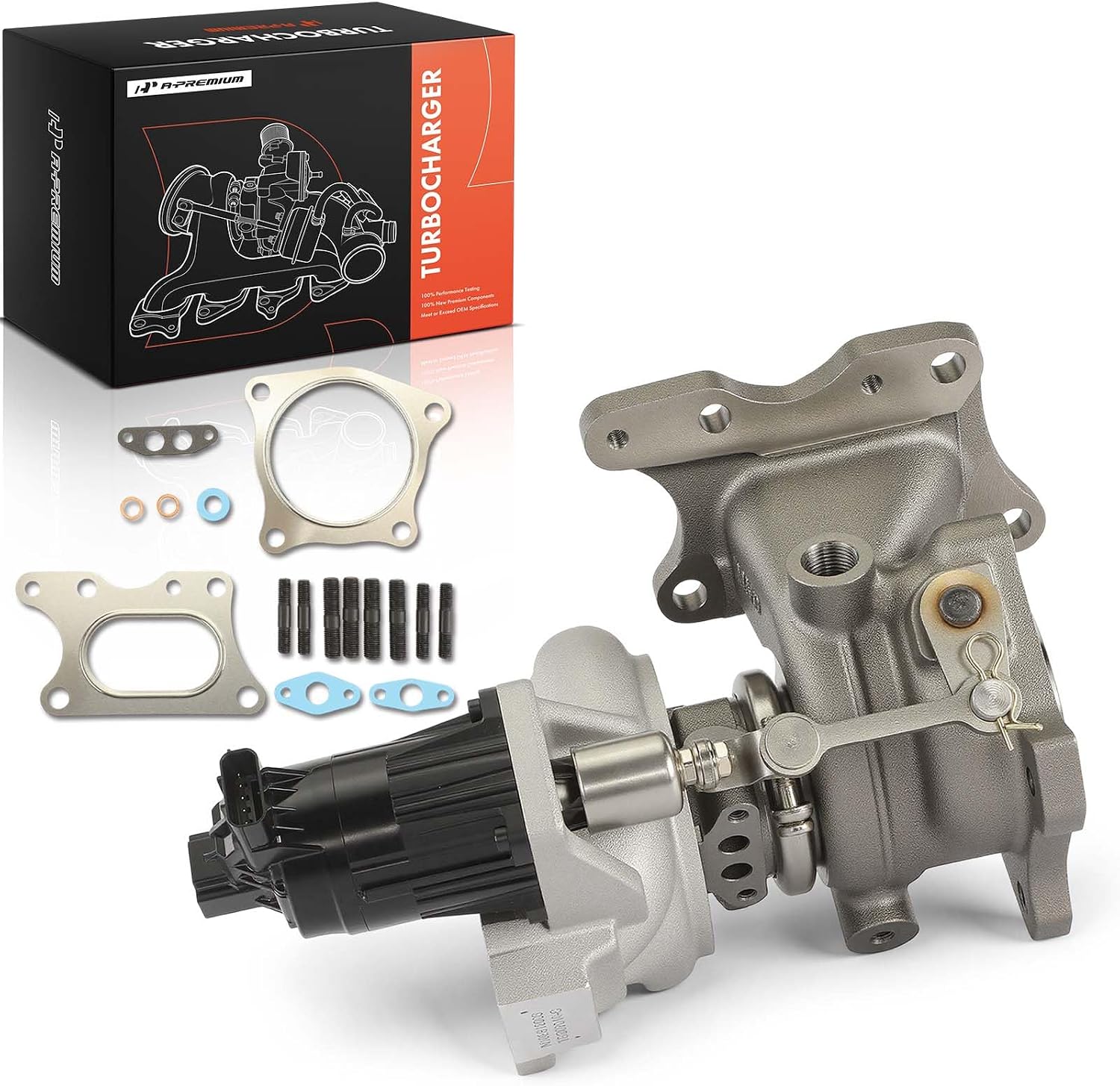
| Compatible Turbo Model | TD025L4B |
|---|---|
| Fitment Years | 2016-2021 |
| Engine | 1.5L L4 |
| Includes | Wastegate actuator and gasket |
| Material | Alloy |
This turbocharger kit replaces the factory TD025L4B turbo on compatible 1.5L Honda Civic hatchbacks and comes with the wastegate actuator and a gasket for a more complete swap. It is designed as a bolt‑in replacement for cars that originally used the TD025L4B turbo, so installation follows the same plumbing and mounting points as the factory unit. The alloy turbine housing and included actuator aim to restore boost and drivability after a failed or worn turbo, and the kit covers many common OEM part numbers to simplify verification. Practical benefits include having the actuator and gasket included so you avoid sourcing separate parts, and the seller backs the unit with a one‑year unlimited‑mileage guarantee. Limitations are that it only fits Civics with the TD025L4B turbo and excludes Si models, and long‑term durability and exact match to factory performance can vary compared with an original factory replacement. Expect to follow standard turbo installation procedures including proper oiling and break‑in to avoid premature wear.
Best for: Buyers who want a straightforward, lower‑risk replacement turbo that matches the original TD025L4B layout and prefer a kit that includes the actuator and gasket to reduce parts sourcing and installation uncertainty.
Less Ideal for: If you are seeking performance upgrades, custom tuning, or a turbo for Si models, this factory‑style replacement is not the right choice.
- Includes wastegate actuator and gasket for a more complete, ready‑to‑install turbo swap
- Covers multiple OEM part numbers to simplify fitment checks for TD025L4B applications
- Alloy construction aimed at restoring boost and drivability after turbo failure
- One‑year unlimited‑mileage guarantee from the seller for added peace of mind
- Fits only Civics equipped with the TD025L4B turbo and explicitly excludes Si models
Verdict: Choose this kit if you need a ready‑to‑install, factory‑style replacement turbo for a 2016–2021 1.5L Civic that simplifies fitment and parts sourcing.
Choosing the Right Honda Civic Hatchback Turbocharger: Key Factors to Consider
Fitment and Mounting Compatibility
Correct fitment is critical because the Civic Hatchback has specific exhaust manifold geometry, oil feed and return routing, and constrained engine-bay space. A turbo that requires custom manifold fabrication, rerouted oil lines, or extensive modifications to intercooler mounting will increase install time and potential leak points.
Confirming bolt pattern, actuator linkage clearance, and whether the turbo clears heat shielding and suspension components helps avoid unexpected shop hours. Also check whether the unit uses the same oil pressure and return plumbing style as the original to prevent lubrication issues that lead to premature failure.
Spool Characteristics and Boost Curve
Spool behavior determines how the car feels in everyday driving. A quick-spooling turbo gives better low-end response and makes the Hatchback feel more lively in city and twisty-road situations. A larger turbo may provide higher peak power but often at the cost of low-RPM responsiveness, which can reduce drivability for commuters.
Review the expected boost onset RPM and the shape of the boost curve for the unit. For street-driven Hatchbacks, favor turbos tuned for usable midrange rather than units that only shine at very high RPMs. Consider whether the boost control system is adjustable so you can fine-tune response without major hardware swaps.
Oil and Cooling Requirements
Turbochargers rely on engine oil for bearing lubrication and, in many designs, engine coolant for thermal management. The Civic Hatchback's stock oiling system has limits, so ensure the turbo's oil feed and return demands are compatible. Some high-performance turbos require larger oil returns or dedicated scavenge pumps, which add complexity.
Coolant-cooled turbos can reduce bearing temperatures and improve longevity, but they require secure coolant connections and hose routing. Plan for hose lengths, clamp access, and the potential need for an auxiliary cooler when sustained high-load driving is expected.
Intercooler and Intake Integration
Delivering compressed air to the engine efficiently requires matched intercooler piping and intake plumbing. The Hatchback's front-end space and bumper openings limit intercooler size and pipe routing. A turbo upgrade should be assessed for how well it interfaces with stock or upgraded intercoolers without creating excessive pressure drop or heat soak.
Consider whether the turbo inlet and outlet diameters match common intercooler plumbing sizes and if hose adapters are needed. Poorly matched piping increases intake-air temperatures and reduces power while stressing the turbo and engine components.
Durability and Materials
Material choice and internal design affect how long a turbo will last under Civic Hatchback driving conditions. Turbos with robust bearing systems, corrosion-resistant compressor wheels, and high-temperature turbine materials resist failure modes like shaft play and wheel damage. Pay attention to turbine housing thickness and wastegate actuator design as they impact thermal resilience and boost control reliability.
Units designed for prolonged spirited driving or track use should have stronger construction and serviceable components. For daily-driven Hatchbacks, aim for a balance between durable construction and acceptable weight and packaging.
Support and Serviceability
Easy access to replacement parts and the ability to service or rebuild the turbo prolongs its useful life. Some turbo designs allow bearing cartridge swaps or rebuild kits that restore function without full replacement. Consider availability of rebuild parts and whether local shops are familiar with the unit's internals.
Warranty terms and manufacturer support also matter. Clear documentation for break-in procedures, recommended oil types, and boost-control setup reduces the chance of installation errors that lead to failures.
Planning the Installation on a Civic Hatchback
Installing a turbo on a Civic Hatchback involves more than swapping the unit itself. Plan for oil feed and return lines, coolant lines if required, intercooler piping, and any necessary ECU or fueling adjustments. Inventory the stock components you will reuse and note any hoses, brackets, or sensors that may need extension or relocation.
If you are using a turbo that closely matches factory mounting points, the installation is simpler. Still, allow time for routing, leak checking, and a careful break-in routine. Expect to verify oil pressure at idle and under boost, check for exhaust leaks at all flange connections, and confirm that wastegate and boost-control linkages move freely.
- Verify oil feed pressure and secure return routing to the pan
- Plan intercooler pipe routing to avoid sharp bends and rubbing
- Check clearance around heat shields and suspension components
ECU, Fueling, and Driveability Effects
Changing turbo size or compressor flow alters air delivery and can require ECU calibration or fueling upgrades. Even modest increases in boost may need richer fueling maps or higher-capacity fuel injectors to maintain safe air-fuel ratios under load. Without proper tuning, detonation or lean conditions can occur.
Driveability considerations include throttle response, boost onset, and how the car behaves during partial-throttle cruising. Aim for a setup that preserves smooth low-RPM manners for daily use while delivering usable midrange power for spirited driving.
- Budget for ECU tuning when boost or compressor maps change significantly
- Consider fuel pump and injector capacity for sustained high-power use
Signs a Turbo Needs Attention
Common symptoms that suggest turbo problems include reduced boost, increased oil consumption, and unusual noises such as whining or grinding from the turbo area. Smoke from the exhaust that is blue or gray often indicates oil leakage past turbo seals, while black smoke can indicate rich running due to fueling issues after a turbo swap.
Other warning signs include sudden loss of power under acceleration, fluctuating boost pressure, or visible shaft play when inspecting the turbo. Early detection through visual checks and listening to engine behavior reduces the risk of catastrophic failure that can damage the engine.
- Reduced boost or slower spool time than expected
- Unusual whine or grinding noises from the turbocharger area
- Blue-gray exhaust smoke during acceleration
Choosing Between Rebuild and Replacement
When a turbo shows wear, you can either fit a rebuilt core or replace the entire unit. Rebuild kits can be cost-effective if the turbine housing and compressor housing are in good condition and the core shaft and bearings are the only issues. However, not all cores are serviceable, and a full replacement may be preferable if housings are cracked or damaged.
For Civic Hatchback owners, consider the history of abuse, oil contamination, and heat cycling. A rebuild may restore function for a vehicle maintained with regular oil changes and gentle driving. For cars subjected to high-power use or track days, a fresh unit with modern materials may offer a longer service life.
- Inspect housings for cracks and signs of heat damage before rebuilding
- Serviceable cores require skilled technicians and clean facilities
Maintenance Tips to Prolong Turbo Life
Regular oil changes with manufacturer-recommended oil and proper warm-up and cool-down routines significantly extend turbo life. Avoid shutting the engine off immediately after hard driving; allow the turbo to cool by idling the engine for a minute or using a water- or oil-cooling strategy where applicable. Clean air intake filters and a secure intake path prevent debris from damaging compressor wheels.
Monitor oil consumption and watch for leaks in oil feed and return lines. Replace soft hoses near the turbo that can become brittle and crack from heat exposure. Periodic inspection helps catch developing issues early and avoids larger repairs.
- Use correct oil grade and change at recommended intervals
- Allow turbo to cool after heavy use before engine shutdown
- Inspect hoses and clamps for heat-related degradation
Still looking for the perfect fit?
Select your Honda Civic configuration to see the most relevant Turbochargers recommendations
How We Chose the Best Honda Civic Hatchback Turbocharger
Our selection focused on real-world fitment and performance factors that matter for the Honda Civic Hatchback. We prioritized units that match the factory mounting points and oil/coolant feed patterns to minimize modification. Spool and boost characteristics were assessed for street drivability to avoid excessive turbo lag or peak-only power that does not suit regular road use. Durability factors included bearing design, compressor wheel materials, and known failure modes that affect longevity under typical Civic use.We also considered ease of installation, including whether the turbo integrates with stock exhaust routing and engine management without extensive fabrication. Noise and heat management were evaluated because tight engine bays in the Hatchback can amplify thermal issues. Units requiring major engine changes, incompatible oiling arrangements, or that force ECU or fuel-system upgrades beyond common upgrades were excluded. The final list balances compatibility, reliable boost response, and longevity for the Civic Hatchback owner.
Our full evaluation process is outlined in our review methodology.
FAQ
What are common turbocharger symptoms I should watch for on my Civic Hatchback?
Common symptoms include reduced boost pressure, slower spool time, increased oil consumption, and unusual noises like whining or grinding. Blue or gray exhaust smoke during acceleration may indicate oil entering the exhaust path through worn seals.
Can I reuse the stock oil feed and return lines with an upgraded turbo?
Often the stock lines can be reused if the upgraded turbo uses compatible fittings and does not demand higher oil flow. Verify thread sizes and return routing clearance, and replace any hard lines that show corrosion or damage to avoid leaks.
How much tuning is typically required after installing a different turbo?
Tuning depends on how the new turbo changes airflow and boost. Small changes may be managed with minor ECU adjustments, while larger turbo upgrades usually need a full calibration of fueling, ignition timing, and boost control to maintain safe air-fuel ratios.
Is a turbo rebuild kit worth considering for a Civic Hatchback?
A rebuild kit can be worthwhile if the housing is undamaged and a skilled technician can replace worn bearings and seals. For cores with cracked housings or severe heat damage, a full replacement is typically more reliable.
What maintenance keeps a turbocharger running longer on the Civic Hatchback?
Regular oil changes with the right oil grade, allowing the turbo to cool before shutdown, and keeping the intake and oil lines clean will extend turbo life. Inspecting hoses and clamps periodically helps prevent leaks and failures.
Are coolant-cooled turbos better for sustained driving?
Coolant-cooled turbos can reduce bearing temperatures during prolonged high-load use, improving longevity. They add plumbing complexity, so ensure proper hose routing and secure connections when used on the Civic Hatchback.
Final Verdict
When selecting a turbocharger for a Honda Civic Hatchback, prioritize correct fitment, appropriate spool characteristics, and compatible oiling and cooling arrangements. Balance the desire for peak power with everyday drivability by choosing a unit that delivers usable midrange torque and reliable boost control. Consider serviceability and available rebuild options so you can maintain the turbo over the long term.Focus on matching the turbo to how you drive the Hatchback. For daily-driven cars, lean toward units with quick spool and proven durability. If you plan higher-power use, plan the supporting mods and tuning up front to protect the engine and ensure a satisfying driving experience.
Explore More:
- Check out all Honda Civic parts & accessories
- Explore Turbochargers Maintenance & Repair Guides
- Explore Engine
- Browse all Auto Parts
