

Note: This article contains affiliate links. If you click on these links and make a purchase, I may earn a small commission at no extra cost to you. This helps support my research and content. Read my full affiliate disclosure here.
If your 1996-2000 Honda Civic is showing reduced fuel economy, rough idling, or a check engine light tied to oxygen sensor codes, swapping the sensor can often restore normal operation. These Civics, commonly identified by chassis codes such as EJ, EK, and EM, rely on properly functioning O2 sensors to manage fuel trim and emissions. This guide covers seven carefully shortlisted oxygen sensors that fit the 1996-2000 Civic and explains why each made the cut.We evaluate sensors for accurate fitment, reliable signal output, and long-term durability under typical driving conditions. The following sections lay out what matters when choosing a sensor, how we selected the candidates, and practical guidance for testing and installation before you buy.
Looking for other parts? See all Honda Civic parts & accessories.
Top Picks at a Glance
| Best Overall The best all-around choice for most situations | Erovisch Oxygen O2 Sensor Set of 2 (Upstream & Downstream) for Honda Civic 1997–2000 1.6L |  |
| Best Quality Built to a higher standard if you want something more solid | Bosch 13007 Premium Fitment Oxygen Sensor |  |
| Best Value The sweet spot between price and what you get | GAM Set of 2 Oxygen Sensors (Upstream & Downstream) for 1996–2000 Honda Civic 1.6L |  |
| Best Budget The cheapest option that still gets the job done reliably | QIJIAUTO Heated Oxygen Sensor (234-4099) – Threaded O2 Sensor, 4-Wire |  |
| Highest Rated A top-rated pick with lots of positive feedback | Denso 234-4099 Oxygen Sensor |  |
| Most Popular A crowd favorite that many people choose with confidence | DOSKJOK 234-4099 Heated Oxygen (O2) Sensor, Upstream |  |
| Best Seller A high-volume bestseller chosen again and again | TRQ O2 Oxygen Sensor Downstream Bank 1 Sensor 2 (OSA61240) |  |
1. Erovisch Oxygen O2 Sensor Set of 2 (Upstream & Downstream) for Honda Civic 1997–2000 1.6L

| Mounting Type | Flange Mount |
|---|---|
| Output Type | electrical signal |
| Specific Uses For Product | automotive |
| Material Type | Stainless Steel, High-Temperature Resistant Materials |
This Erovisch set includes an upstream and downstream oxygen sensor intended to replace factory sensors on 1997–2000 Honda Civic 1.6L engines. Installers use the upstream sensor to monitor and adjust the engine’s air-fuel ratio and the downstream sensor to help the vehicle’s emissions and sensor diagnostics. The sensors use a double laser-welded stainless steel housing and high-temperature materials intended to improve durability and response time compared with worn units. For routine repairs the set provides a straightforward, direct replacement that can clear drivability issues like rough idle, hesitation, or poor fuel economy caused by failing sensors. Expect typical installation under the exhaust manifold or pipe with standard hand tools or an O2 sensor socket. These are aftermarket parts so fitment depends on matching the listed part numbers; buyers wanting exact factory matching or extended coverage may prefer OEM parts or professional verification before purchase.
Best for: Buyers who want a balanced, cost-conscious repair option to restore engine drivability and emissions performance on a 1997–2000 Honda Civic 1.6L without paying for OEM parts.
Less Ideal for: Owners seeking an exact factory-original sensor or extended warranty coverage should consider an OEM part or dealer-sourced replacement.
- Sold as an upstream and downstream pair for full replacement needs
- Stainless steel, double laser-welded housing for improved durability
- Built with high-temperature resistant materials for faster sensor response
- Direct-replacement design referencing multiple Honda part numbers for easier fit checks
- Aftermarket part that may differ slightly from factory sensor in long-term durability or exact calibration
Verdict: This pair delivers a practical, durable aftermarket replacement to reliably restore air-fuel sensing and drivability on 1997–2000 Honda Civic 1.6L models.
2. Bosch 13007 Premium Fitment Oxygen Sensor

| Mounting Type | Flange Mount |
|---|---|
| Maximum Supply Voltage | 12 Volts (DC) |
| Output Type | Push-Pull |
| Material Type | Stainless Steel |
The Bosch 13007 is a premium direct-fit oxygen sensor meant to replace a worn or failing O2 sensor and restore accurate exhaust oxygen readings to the engine control system. It is used as an upstream or downstream sensor in compatible 1996–2000 Honda Civics and similar vehicles to correct fueling, emissions, and catalytic converter performance. Notable features include a double laser-welded stainless steel body for corrosion resistance, a built-in fast-acting heater for quicker warm-up, factory-style connector and pre-coated threads for easier installation, and 100 percent functional testing at the factory. In real-world use this sensor typically clears check-engine codes tied to sensor failure, helps the ECU maintain the correct air-fuel ratio, and can improve drivability and fuel economy compared with a degraded sensor. Installation is generally straightforward for a DIYer but the wiring lead can be longer than factory and some installs require a low-profile socket or loosening shields to fit a wrench. This Bosch unit is a solid, factory-quality replacement focused on reliability rather than performance tuning modifications.
Best for: Drivers who want a reliable, factory-quality replacement that restores proper air-fuel control and emissions function in late-1990s Honda Civics without modifying the engine management strategy.
Less Ideal for: People building performance-tuned engines who need specialized wideband sensors or custom-fit high-temperature race components should look for dedicated performance sensors instead.
- Direct-fit connector and pre-coated threads speed installation and reduce prep work
- Stainless steel double laser-welded body resists exhaust corrosion for longer service life
- Fast-acting heater brings the sensor to operating temperature quickly to provide accurate readings sooner
- Factory testing ensures each unit functions before shipping, reducing early failures
- Wiring lead length may be longer than OEM which can require zip-tying or routing adjustments
Verdict: Choose the Bosch 13007 when you want a dependable, factory-quality oxygen sensor that reliably restores proper fueling and emissions control in late-1990s Honda Civics.
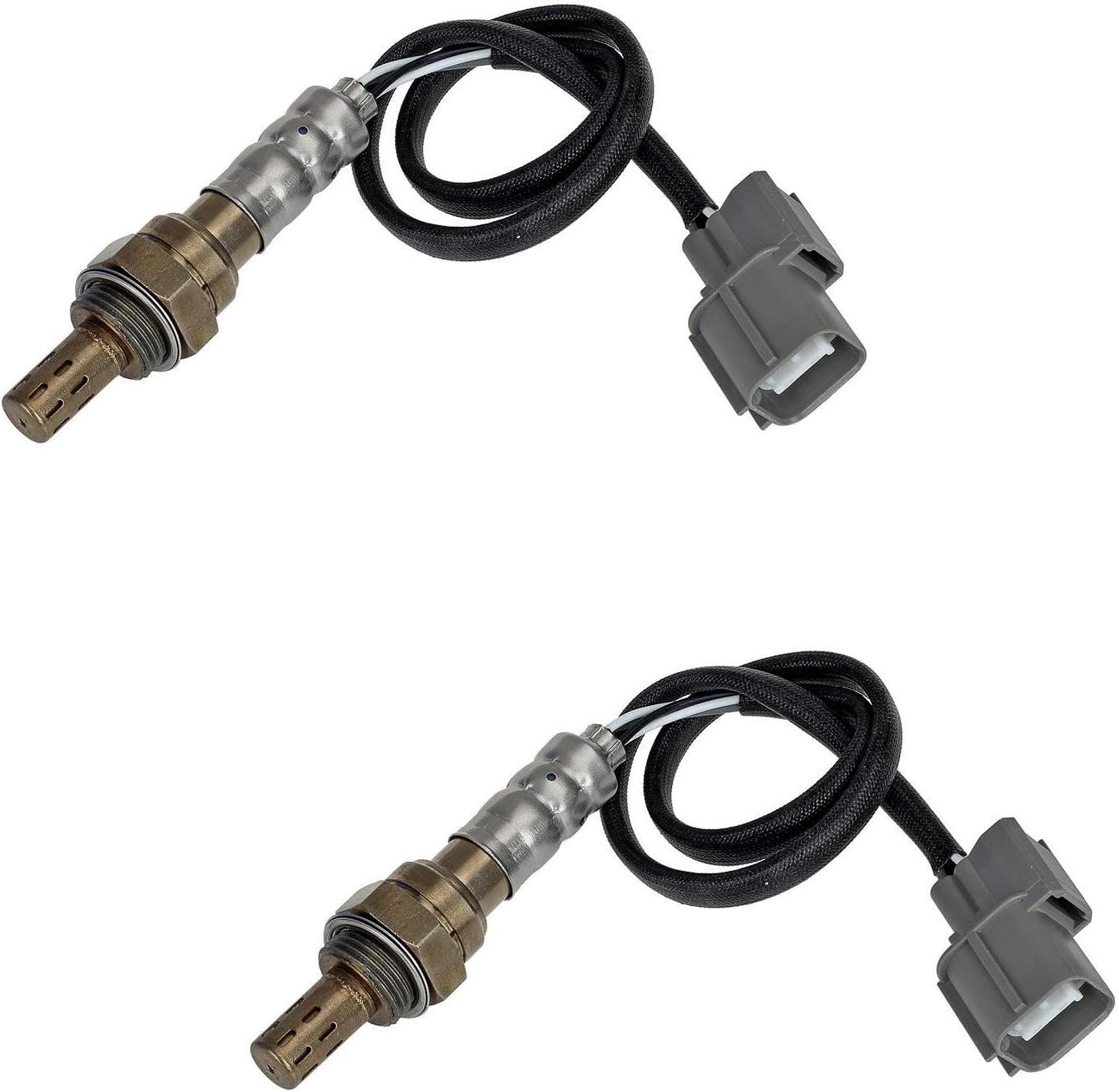
3. GAM Set of 2 Oxygen Sensors (Upstream & Downstream) for 1996–2000 Honda Civic 1.6L
| Mounting Type | Exhaust Mount |
|---|---|
| Output Type | electrical signal |
| Measurement Accuracy | ±1% |
| Upper Temperature Rating | 1562 Degrees Fahrenheit |
This GAM replacement kit supplies one upstream (front) and one downstream (rear) oxygen sensor intended for 1996–2000 Honda Civic 1.6L models. Install the upstream sensor to restore accurate exhaust oxygen measurement for closed-loop fuel control and the downstream sensor to monitor catalytic converter performance. The sensors are built to match factory fit, form, and electrical output so they plug into the existing harness and perform like a direct replacement. Notable specs include an exhaust-mount design, electrical signal output, and a high temperature rating that suits hot exhaust conditions. Practical benefits are straightforward: repairing a failing sensor clears check engine codes, improves fuel economy and emissions, and helps the engine management system run correctly. Limitations are typical of aftermarket sets — you should confirm the exact engine designation listed for fitment and use proper gaskets or anti-seize where required during installation. The kit is best for DIY mechanics or technicians needing a cost-effective pair of sensors to restore normal engine operation on specified Civic engines.
Best for: Buyers who want a practical, cost-conscious repair that restores factory-style oxygen sensing on a 1996–2000 Civic 1.6L and prefer a direct-fit aftermarket replacement to fix emissions and fuel-trim issues.
Less Ideal for: Those seeking an upgraded performance sensor or a universal adjustable sensor for modified engines should consider specialized options instead.
- Includes both upstream and downstream sensors so both measurement points are replaced at once
- Designed to match factory fit and electrical output for direct plug-in replacement
- High upper temperature rating suitable for exhaust environment
- Covers the specific 1996–2000 Civic 1.6L engine family listed in the compatibility chart
- Compatibility is limited to the exact engine designations listed so verify engine code before buying
Verdict: If you need a straightforward, factory-style replacement pair of oxygen sensors for a 1996–2000 Honda Civic 1.6L, this GAM kit lets you swap both sensors at once to restore proper emissions and fuel control.
4. QIJIAUTO Heated Oxygen Sensor (234-4099) – Threaded O2 Sensor, 4-Wire

| Mounting Type | Threaded Mount |
|---|---|
| Output Type | electrical/digital |
| Specific Uses For Product | Oxygen Sensor |
| Material Type | Electronic Sensor Materials (E.G., Silicon, Metals, Polymers) |
This QIJIAUTO heated oxygen sensor is a threaded 4-wire replacement intended to act as an upstream or downstream O2 sensor on older Honda and Acura vehicles in the specified fitment range. It measures exhaust oxygen content and sends an electrical signal to the engine computer so the fuel trim and emissions control can be corrected. Typical use is direct replacement during routine diagnostics when a faulty sensor triggers a check-engine light or causes rough idle and poor fuel economy. Notable features include a factory-style threaded mounting, a heated element for faster warm-up, and a 4-wire connector to match factory harnesses. In practice it should restore smoother idling and improved fuel efficiency when the original sensor has degraded. Limitations are typical of aftermarket parts: fitment must be checked carefully against the plug and part pictures and the sensor alone will not clear stored fault codes or fix downstream catalytic converter issues. Buyers should also follow the listing advice to read trouble codes and clear them with a scan tool after installation.
Best for: Hands-on owners looking for an affordable replacement part to fix a check-engine light or improve fuel economy on a late 1990s Honda Civic while keeping repair costs low.
Less Ideal for: Drivers who need a guaranteed OEM part or who have complex emissions damage beyond a failing sensor, such as a failed catalytic converter, should consider professional repair options instead.
- Heated element for quicker operation and more accurate readings at cold start
- Threaded mount and 4-wire connector match common factory-style installations
- Designed to replace both upstream and downstream positions for applicable models
- Fitment varies by year and model so plug and part images must be matched before buying
Verdict: A budget-friendly heated 4-wire replacement that restores proper O2 sensing on compatible 1990s Honda Civics when the original sensor fails.
5. Denso 234-4099 Oxygen Sensor

| Measurement Accuracy | ±1% |
|---|---|
| Measuring Range | 0-25% or 0-2000 ppm |
| Mounting Type | Threaded |
| Output Type | Electrical Signal |
| Material Type | Zirconium |
The Denso 234-4099 is a threaded zirconium oxygen sensor built as a direct replacement for upstream O2 locations on compatible Honda Civics. It measures exhaust oxygen and outputs an electrical signal the engine computer uses to adjust fuel trim, which helps clear check engine codes and return drivability and fuel economy to expected levels. Installation is plug-and-play for matching connectors and threads, and Denso includes anti-seize on the threads to ease fitting. The sensor is heated for faster warm-up and has tight measurement accuracy, so it stabilizes idle and responsiveness on vehicles with worn or failing sensors. Practical limits are that it is a single replacement unit so wiring routing clips or grommets from the original may not be included, and some users report occasionally stiff threading that requires care during installation. For anyone replacing a worn upstream sensor on a 1996–2000 Civic, this model gives reliable, factory-style performance without complicated calibration.
Best for: A buyer who prioritizes a dependable, factory-style replacement to restore correct engine running and clear emissions codes on a 1996–2000 Civic; this suits owners who want a straightforward, long-lasting swap rather than a budget or performance tweak.
Less Ideal for: Drivers looking to upgrade performance tuning or who need a universal sensor for multiple vehicle types should consider application-specific or adjustable sensors instead.
- Factory-quality construction and fit for matching Honda upstream sensor locations
- Heated zirconium element for quicker operation and stable readings
- Includes anti-seize on threads to protect during installation
- Tight measurement accuracy for consistent air-fuel feedback
- May ship without the rubber grommet used for cable routing so reuse of the old grommet may be necessary
- A few users report the threads can be stiff to start and require careful hand-starting to avoid cross-threading
Verdict: Choose the Denso 234-4099 when you want a reliable, factory-quality upstream oxygen sensor replacement to restore drivability and emissions performance on a 1996–2000 Honda Civic.
6. DOSKJOK 234-4099 Heated Oxygen (O2) Sensor, Upstream

| Current Rating | 2 Amps |
|---|---|
| Maximum Supply Voltage | 12 Volts |
| Measurement Accuracy | +/-0.5% |
| Response Time | 100 Milliseconds |
| Upper Temperature Rating | 900 Degrees Celsius |
This DOSKJOK 234-4099 is a heated upstream O2 sensor designed to replace the factory unit in compatible late 1990s Honda vehicles. It measures exhaust oxygen and sends an electrical signal to the engine computer so the system can adjust fuel trim for smoother idle, better drivability, and improved emissions. The sensor is stainless steel, includes a flange mount and pre-coated threads for straightforward installation, and the integrated heater cuts warm-up time compared with unheated sensors. The product lists a fast 100 ms response time and wide operating temperature range, which supports consistent readings under hot exhaust conditions. Practical benefits are simpler installation, quicker closed-loop operation after cold starts, and potential fuel economy and emissions improvements when replacing a failing sensor. Limitations are that fitment must be confirmed against the vehicle year and part number before purchase and this is a single sensor sold alone, so buyers needing multiple positions must order separately.
Best for: Buyers looking for a budget-friendly, direct-replacement upstream oxygen sensor to restore correct fuel trim and emissions control on compatible late 1990s Honda Civics and similar models who prefer products with tested specifications and user feedback.
Less Ideal for: Drivers who need downstream sensors, multi-pack replacements, or a guaranteed OEM-branded part should consider other options.
- Heated element enables faster warm-up and quicker closed-loop fuel control
- Stainless steel construction for corrosion and high-temperature resistance
- Pre-coated threads and flange mount simplify direct replacement installation
- Specified 100 millisecond response time supports timely air/fuel adjustments
- Sold as a single sensor so additional positions require separate purchases
Verdict: A cost-conscious, heated upstream replacement that restores proper air/fuel sensing and faster closed-loop operation for compatible late 1990s Honda Civics.
7. TRQ O2 Oxygen Sensor Downstream Bank 1 Sensor 2 (OSA61240)

| Mounting Type | Flange Mount |
|---|---|
| Output Type | Analog |
| Upper Temperature Rating | 1600 Degrees Fahrenheit |
| Material Type | Stainless Steel |
This TRQ downstream O2 sensor is a four-wire, narrow-band replacement made to fit late 1990s Honda Civic, Integra, and CR‑V 4‑cylinder applications without modifications. It mounts with a flange and uses an analog output to feed the engine control module so the fuel trims can be corrected after installation. In practice you would swap this in when a check engine code or poor fuel economy indicates a failing downstream sensor. The stainless steel construction and 1600°F rating suggest reasonable durability against heat and road contamination, and TRQ supplies pre-assembled hardware and installation videos to simplify a DIY swap. Because it is narrow-band and downstream, it is intended for monitoring and emissions control rather than high‑precision tuning, and some owners may prefer an OEM or higher‑end sensor for long-term durability in harsh conditions. Fitment is application-specific so confirm compatibility with the Civic 1996–2000 model details before buying.
Best for: Buyers wanting a reliable, direct-replacement downstream oxygen sensor to fix a check-engine light, restore fuel economy, and avoid complex modifications; ideal for hands-on owners who prefer a straightforward DIY swap.
Less Ideal for: Drivers seeking a high-precision or wideband sensor for aftermarket tuning or those who need heavy‑duty sensors for extreme off‑road or race conditions should look elsewhere.
- Direct-fit flange mount designed for late 1990s Honda 4‑cylinder applications for straightforward installation
- Four-wire narrow-band design provides proper downstream feedback to correct fuel trims
- Stainless steel construction with 1600°F upper temperature rating for basic heat and corrosion resistance
- Pre-assembled design and available step‑by‑step videos make DIY replacement easier
- Narrow-band downstream sensor is for monitoring/emissions and not meant for high-precision tuning or performance applications
Verdict: A straightforward, direct-fit downstream replacement that gets late 1990s Honda Civics and similar 4‑cylinder models back to proper emissions and fuel control with minimal fuss.
Choosing the Right 1996-2000 Honda Civic Oxygen Sensor: Key Factors to Consider
Fitment and Connector Compatibility
Correct physical fit and connector matching are the first steps to a trouble-free replacement. The 1996-2000 Honda Civic uses specific thread sizes and harness connectors for upstream and downstream sensors, and some aftermarket parts require adapters or splicing. Ensuring the new sensor matches the Civic's exhaust flange geometry avoids installation headaches and potential exhaust leaks.
Connector compatibility also matters for signal integrity. A sensor with the wrong connector may fit electrically but suffer from poor grounding or loose pins that cause intermittent codes. For these Civics, confirm whether the part is listed for EJ, EK, and EM, or EM chassis codes to reduce the risk of misfit.
Heater Circuit Performance
Many fault codes and drivability complaints stem from a failed heater circuit, which prevents a cold sensor from reaching operating temperature quickly. A working heater helps the sensor transition to closed-loop operation sooner, improving fuel economy and emissions after startup. For 1996-2000 Civic owners who do a lot of short trips, heater reliability is especially important because frequent cold starts stress the element more than steady highway driving.
When evaluating replacement sensors, prioritize those that specify robust heater specifications and temperature tolerance. Durable heater circuits reduce the chance of codes like P0135 and the need for repeated replacements.
Signal Accuracy and Response Time
Oxygen sensors must produce accurate voltage swings representing the exhaust oxygen content. Slow or dampened response can confuse the engine control unit, leading to incorrect fuel trim adjustments and symptoms such as rough idle, hesitation, or elevated emissions. For the Civic, upstream sensors (bank 1 sensor 1) directly influence short-term fuel trims, so their response time is critical.
Choose sensors with proven response characteristics and materials that resist contamination from oil or coolant leaks. Faster signal recovery after rich or lean events helps maintain consistent performance across driving conditions.
Durability and Corrosion Resistance
These Civics are often driven for many years, and replacement parts need to withstand heat cycles, road salt, and exhaust contaminants. A sensor built with corrosion-resistant housings and quality oxygen-sensitive elements will last longer and maintain signal fidelity. Corrosion can seize threads and damage connectors, making future replacements harder and potentially damaging the exhaust manifold threads.
Look for sensors with protective coatings, stainless-steel housings, and sealed connectors. Durable construction reduces the frequency of repeat repairs and avoids secondary damage to adjacent components.
Location-Specific Requirements (Upstream Vs Downstream)
Upstream and downstream sensors play different roles and have distinct durability expectations. The upstream (bank 1 sensor 1) sensor monitors combustion for fuel trim adjustments and is exposed to raw exhaust gas variations, so response and heater function are critical. The downstream sensor after the catalytic converter is primarily for catalyst efficiency monitoring and can tolerate different signal characteristics.
Be sure the replacement is specified for the correct location rather than assuming interchangeability. Using a downstream-design sensor upstream can lead to slow readings and incorrect fuel trims, while using an upstream-style sensor downstream may not match emission-monitoring expectations.
Ease of Installation and Serviceability
Practical considerations like thread reach, included gaskets, and connector access affect installation time and the chance of installation errors. Many Civic owners perform the swap themselves, so sensors that install with common hand tools and do not require exhaust removal are preferable. Features such as hex flats for oxygen sensor sockets, pre-attached pigtails, or anti-seize coating on threads make future servicing easier.
Also account for the surrounding components on the EJ, EK, and EM exhaust layout; tight clearances or heat shields can complicate removal of a seized sensor. Choosing parts designed with serviceability in mind reduces labor and frustration.
Common O2 Sensor Symptoms on 1996-2000 Civics
On these Civic models, failing oxygen sensors often manifest as a check engine light with codes related to heater circuits or sensor response. Typical symptoms include rough idle, decreased fuel economy, hard starting when cold, and black exhaust smoke when running rich.
Sometimes the issue presents as less consistent performance such as hesitation during acceleration or surging at cruising speeds. Intermittent connector faults or a partially failed heater element can cause symptoms that come and go, making diagnosis harder without testing.
- Steady check engine light with O2 or heater-related codes
- Reduced miles per gallon and frequent fueling adjustments
- Rough idle or stumbling on acceleration
- Intermittent symptoms that worsen after cold starts
Diagnostic Steps Before Replacing the Sensor
Run a full OBD-II scan to capture current and pending codes and to identify which bank and sensor location is reporting faults. Codes like P0135 typically indicate heater circuit issues, while other P01xx codes can suggest slow response.
Visually inspect the wiring and connector for corrosion, broken insulation, or rodent damage. Heat and road grime often degrade the pigtail before the sensor element itself fails. Also check for exhaust leaks near the sensor flange which can cause false readings.
- Scan for codes and note bank/sensor numbers
- Inspect wiring harnesses and connectors
- Check exhaust manifold flange for leaks or damage
How to Test an Oxygen Sensor on a Civic
Basic testing begins with checking the heater circuit for proper resistance and power during key-on. A bad heater often shows an open circuit or no voltage at the connector. Next, monitor live O2 sensor voltage with a scan tool or multimeter while the engine reaches operating temperature; upstream sensors should fluctuate rapidly between lean and rich voltage ranges.
For more detailed diagnostics, observe response time to induced rich or lean conditions, such as momentarily revving the engine or introducing a small vacuum leak. These tests help differentiate between a sensor that is aging and one that is electrically compromised.
- Measure heater resistance and check for connector voltage
- Monitor live sensor voltage swings at operating temperature
- Induce brief rich/lean conditions to observe response time
Installation Tips for 1996-2000 Civic Oxygen Sensors
When replacing a sensor, allow the exhaust to cool to avoid burns, and use the proper oxygen sensor socket to avoid damaging the sensor body. Apply a small amount of anti-seize to the threads if the replacement does not include it, but avoid contaminating the sensor tip. Protect wiring from heat and secure the connector away from hot exhaust components.
If the original sensor is seized, apply penetrating lubricant and let it soak before attempting removal. Pay attention to the harness routing on EJ, EK, and EM chassis codes to return the connector to its original position and avoid strain.
- Use the correct sensor socket and protect the sensor tip from anti-seize
- Allow cooling time and apply penetrating oil for seized sensors
- Route and secure wiring to avoid heat and abrasion
Understanding Upstream Vs Downstream Roles
Upstream sensors directly affect fuel trims and engine operation by providing the ECU with immediate feedback on exhaust oxygen levels. Downstream sensors are primarily used to monitor catalytic converter performance and may have slower or different voltage characteristics.
When buying replacements, match the designation to the intended location so the sensor's response profile and heater characteristics align with the ECU's expectations. Swapping locations can lead to persistent diagnostic trouble codes or failed emissions checks.
- Upstream sensors impact fuel trims and drivability
- Downstream sensors monitor catalytic efficiency
- Replace with location-specific parts for correct performance
When to Replace Instead of Repair
Minor wiring damage or a corroded connector may be repairable, but once the sensor element or heater has failed, replacement is the most reliable course. Repairing a damaged pigtail can be a temporary fix, but it risks future failures if the sensor itself is degraded.
Also consider replacement when repeated codes occur after repairs to other systems, such as fuel injectors or ignition components, since a marginal sensor can mask or amplify upstream issues.
- Repair harness damage for temporary fixes; replace failed elements
- Replace sensors that produce slow or erratic signals
- Choose replacement when repeated codes persist after other repairs
Still looking for the perfect fit?
Select your Honda Civic configuration to see the most relevant Oxygen Sensors recommendations
How We Chose the Best 1996-2000 Honda Civic Oxygen Sensor
We focused on criteria that directly affect drivability and emissions control on 1996-2000 Honda Civic models. Primary evaluation points were fitment accuracy to the EJ, EK, and EM exhaust flanges and wiring harnesses, sensor signal fidelity and response time under varying engine loads, and compatibility with the vehicle's original oxygen sensor circuits (upstream and downstream locations). We also weighted build quality and materials that resist contamination and thermal cycling, plus expected service life when exposed to road salts and regular driving conditions.Electrical reliability was assessed by looking at heater circuit robustness and typical cold-start behavior, since a failed heater commonly triggers codes such as P0135 and prolonged closed-loop delays. Ease of installation was considered, including thread type and whether adapters or extensions are commonly required. We excluded products that lack clear fitment information for the 1996-2000 Civic, those that do not specify wiring or connector compatibility, and items with consistently reported failures in heater or signal elements.In short, the list favors sensors that match OEM fitment, restore correct oxygen sensor behavior, and minimize the chance of recurring check engine light issues due to poor signal or heater faults.
Our full evaluation process is outlined in our review methodology.
FAQ
How long do oxygen sensors last on a 1996-2000 Civic?
It depends on driving conditions and sensor quality. Many last well beyond 50,000 miles, but exposure to oil or coolant contamination, frequent short trips, and road salt can shorten life. Regular monitoring of fuel economy and OBD codes helps decide when to replace.
Can a bad oxygen sensor cause a check engine light on these Civics?
Yes. Failed heaters, open circuits, or slow sensor response often trigger check engine codes related to oxygen sensors. Codes specifying bank and sensor location help pinpoint whether the upstream or downstream sensor is affected.
Should I test the sensor before replacing it?
Often that is the best first step. Basic heater resistance checks and live voltage monitoring at operating temperature can reveal electrical or response issues. Testing avoids unnecessary replacements when the problem is wiring or an intermittent connector fault.
Is the upstream sensor the same as bank 1 sensor 1 on the Civic?
Typically yes. The upstream sensor on these Civic engines is usually referred to as bank 1 sensor 1 and directly influences short-term fuel trims. Confirm using your OBD code and vehicle layout before ordering a replacement.
Can I install an oxygen sensor myself on a 1996-2000 Civic?
Many owners can complete the swap with basic tools and an oxygen sensor socket. Take precautions for hot exhaust parts, and ensure the connector and wiring are routed correctly. If the sensor is seized or the threads are damaged, professional help may be needed.
Will replacing the O2 sensor fix fuel economy issues?
If the sensor is causing incorrect fuel trims or prolonged open-loop operation, replacing it can restore expected fuel economy. However, other issues such as vacuum leaks, injector problems, or ignition faults can also affect economy, so diagnose comprehensively.
Final Verdict
When replacing an oxygen sensor on a 1996-2000 Honda Civic, prioritize correct fitment for the EJ, EK, and EM chassis, a reliable heater circuit, and fast, accurate signal response for the intended upstream or downstream location. Those factors most directly affect drivability, emissions, and long-term reliability.Balance durability and serviceability with the sensor's electrical characteristics to reduce the chance of repeat repairs. With the right replacement focused on location-specific requirements, you can restore proper fueling and eliminate many common O2 sensor symptoms with confidence.
Explore More:
- Check out all Honda Civic parts & accessories
- Explore Oxygen Sensors Maintenance & Repair Guides
- Explore Engine
- Browse all Auto Parts
