

Note: This article contains affiliate links. If you click on these links and make a purchase, I may earn a small commission at no extra cost to you. This helps support my research and content. Read my full affiliate disclosure here.
If your 2012-2015 Honda Civic is showing drivability problems or a lit check engine light, replacing the oxygen sensor is often one of the most effective repairs. The Civic models built in this period use the FB and FG chassis codes, so fitment and wiring compatibility matter for a direct swap and reliable operation. This guide covers the top shortlisted oxygen sensors chosen for this Civic generation and explains the criteria we used to evaluate them.You will find options suitable for upstream and downstream locations, guidance on common O2 sensor symptoms, and practical notes on testing and installation to help you make a confident selection.
Looking for other parts? See all Honda Civic parts & accessories.
Top Picks at a Glance


1. MANATEE Upstream and Downstream Oxygen Sensor Kit (2-Pack)

| Included Components | Upstream and downstream oxygen sensors (2 pcs) |
|---|---|
| Material Type | Stainless Steel |
| Upper Temperature Rating | 1000 Degrees Celsius |
| Output Type | electrical signal |
This MANATEE kit supplies both the upstream and downstream heated oxygen sensors needed for front-bank replacement on compatible Honda Civic and Acura ILX engines. Designed as direct replacements for the listed OE part numbers, the sensors come with a stainless steel shell, laser-welded construction and double insulating thermal protection to resist contaminants and high exhaust temperatures. The built-in heater shortens the warm-up time so the engine control system can resume closed-loop operation faster after installation. Typical use is straightforward: remove the old sensors, thread in the replacements and reconnect the wiring harness without modification. The package includes both sensors so you avoid sourcing parts separately. Keep in mind the listing excludes some 2014 and 2015 Civic 1.8L applications, so confirm vehicle fitment before buying, and professional installation or an OBD-II check after fitting is recommended to clear codes and verify operation.
Best for: Buyers who want a complete, factory-style replacement set to restore proper oxygen sensing and emissions control on compatible Civics or an ILX and prefer replacing both sensors at once for convenience and consistent performance.
Less Ideal for: Drivers who need a single sensor only or who have Civic 1.8L models explicitly excluded by the fitment notes should look for an alternative with confirmed compatibility.
- Includes both upstream and downstream sensors in one kit for a complete front-bank replacement
- Heated sensor design speeds warm-up and improves closed-loop emissions control
- Stainless steel body with laser welding and double thermal insulation for durability
- Direct-fit replacements for the listed OE part numbers without wiring modifications
- Not compatible with some 2014 and 2015 Civic 1.8L variants per the product notes
Verdict: A convenient two-piece, direct-fit sensor kit that restores proper oxygen sensing and faster closed-loop operation for compatible Honda Civic and Acura ILX models.
2. AISIN Set of 2 Upstream & Downstream Oxygen Sensors (OXSH-00023)

| Compatible vehicles | Honda Civic 2006-2015 L4 1.8L |
|---|---|
| Sensor quantity | 2 (upstream & downstream) |
| Sensor type | Wideband + Narrowband |
| Thread size | M18 + M18 |
| Terminal quantity | 4 + 4 |
These Aisin oxygen sensors come as a two-piece kit with both upstream (wideband) and downstream (narrowband) units intended as direct replacements for Honda Civic L4 1.8L models. Installation is plug-and-play with matching M18 threads and four-pin connectors, so a technician can swap them in without modifying wiring or fueling systems. Having both sensors in one kit is practical when diagnosing check-engine codes or restoring proper fuel trim after a failing sensor. Aisin emphasizes factory-quality fit and matching terminal counts, which helps ensure proper signal communication with the engine computer and consistent emissions readings. The sensors are built to the same connector shapes and thread sizes as the factory parts, reducing compatibility guesswork. Downsides are limited to the scope of the kit: it only fits the specified Civic 1.8L application and does not include hardware for hard-to-reach installations like exhaust heat shields or anti-seize; professional installation may still be needed if bolts are corroded. For drivers focused on responsive fueling and reliable emissions operation, this kit supplies the expected factory-style replacement components.
Best for: Buyers who want a factory-style replacement that restores proper air-fuel sensing and emissions operation on 2012–2015 Civic 1.8L models and prioritize correct fit and signal consistency.
Less Ideal for: People seeking a universal sensor solution or a performance-tuned aftermarket sensor with altered response characteristics should look elsewhere.
- Includes both upstream and downstream sensors for a complete replacement
- Plug-and-play design with matching M18 thread size and four-pin connectors simplifies installation
- Factory-quality fit and terminal configuration promote reliable sensor-to-ECU communication
- Wideband upstream plus narrowband downstream covers both sensing roles required by the engine control system
- Limited to Honda Civic 1.8L application and not universal
- Does not include anti-seize or additional hardware for seized or corroded fittings
Verdict: If you need a factory-style, plug-and-play replacement pair to restore accurate air-fuel sensing on a 2012–2015 Civic 1.8L, this Aisin kit is a dependable choice.
3. NTLTPYY Oxygen O2 Sensor Kit — Upstream & Downstream Direct Fit for Honda Civic 1.8L (2012–2015) and Acura ILX 2.0L (2013–2014)
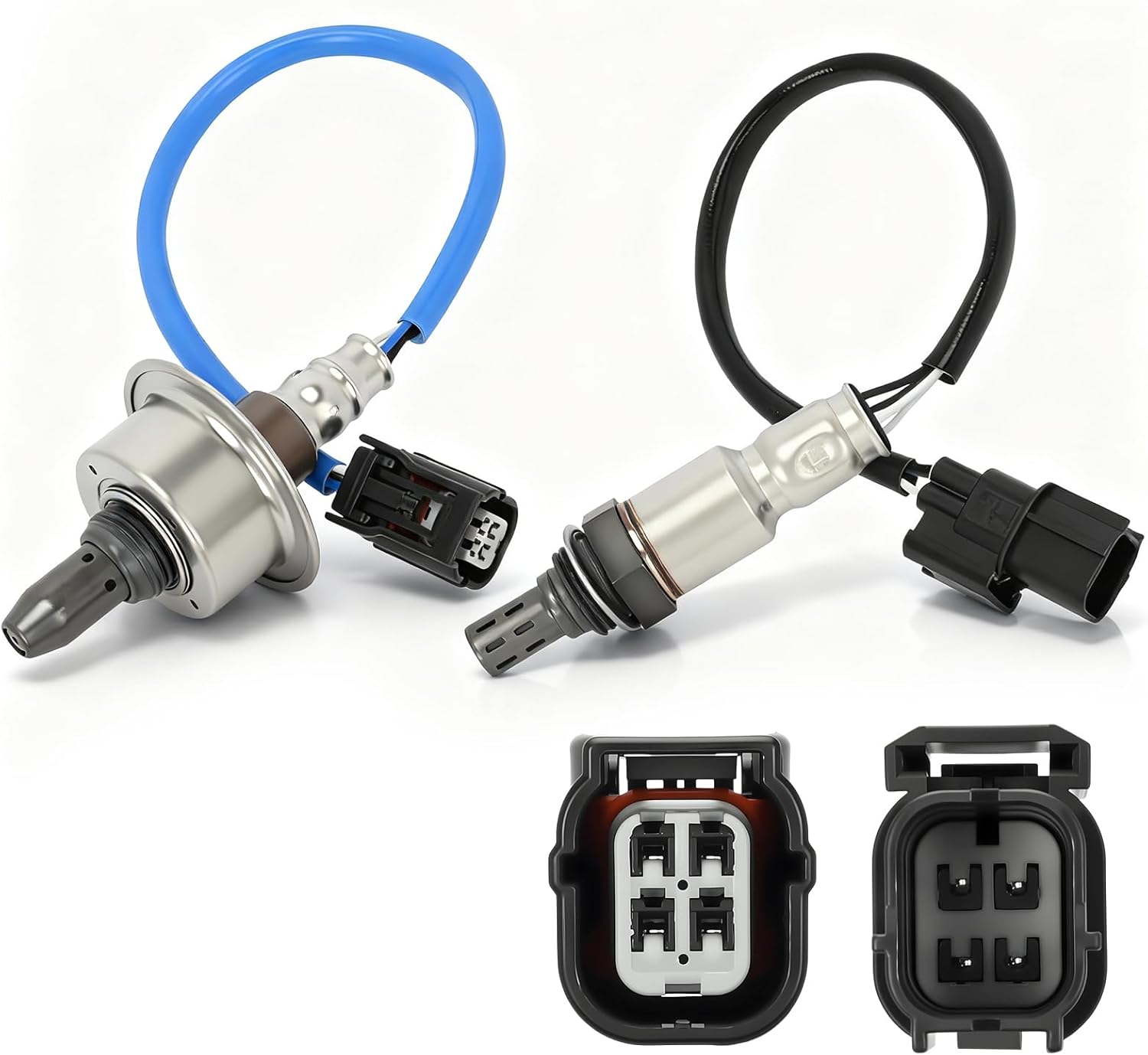
| Brand | NTLTPYY |
|---|---|
| Model | 234-9119 & 234-4350 |
| Manufacturer Part Number | GZLF-US-OS-43 |
| Compatible Engines | Honda Civic 1.8L (2012–2015); Acura ILX 2.0L (2013–2014) |
| Replaces | Upstream 234-9119 / Downstream 234-4350 |
This NTLTPYY kit supplies both the upstream and downstream O2 sensors needed for a complete oxygen-sensor service on select Honda Civic 1.8L (2012–2015) and Acura ILX 2.0L (2013–2014) engines. The sensors are sold as direct replacements for the listed OEM part numbers and use factory-style connectors for plug-and-play installation, so a typical DIYer can swap them without modifications. In use the upstream sensor handles real-time air-fuel feedback to the engine computer while the downstream sensor monitors catalytic converter efficiency, so replacing both at once helps clear codes, improve fuel trim, and stabilize idle if the originals are failing. The listing emphasizes durable construction and claims OEM-caliber fitment, which should reduce installation headaches. Limitations include reliance on correct vehicle fitment and that long-term durability beyond the first year depends on driving conditions; the product page notes a 12-month warranty. For budget-minded owners wanting a complete, same-day replacement set, this kit is a straightforward practical option.
Best for: Practical owners who want a single kit to replace both oxygen sensors and restore normal engine operation without custom work, especially DIYers who prioritize straightforward fitment and quick repair.
Less Ideal for: Drivers who need long-term, high-mileage durability data or extended coverage beyond the included one-year warranty should consider options with longer proven warranties or professional-grade parts.
- Includes both upstream and downstream sensors for a full system replacement
- Direct-fit design with factory-style connectors for plug-and-play installation
- Fits the specified Honda Civic 1.8L (2012–2015) and Acura ILX 2.0L (2013–2014) OEM part numbers
- Designed with durable materials and intended for stable performance across driving conditions
- Manufacturer warranty is limited to 12 months which may be short for long-term reliability assessment
Verdict: Buy this kit if you want a ready-made, plug-and-play pair of oxygen sensors to quickly restore proper air-fuel monitoring on the specified Civic or ILX without fabrication.
4. Automotive-leader 2-Pack Oxygen O2 Sensors (Upstream & Downstream) for 2012–2015 Honda Civic / 2013–2014 Acura ILX

| Mounting Type | Flange Mount |
|---|---|
| Output Type | electrical signal |
| Upper Temperature Rating | 500 Degrees Celsius |
| Included Components | Plug and Probe |
This two-piece kit replaces the upstream (pre-cat) and downstream (post-cat) oxygen sensors for the listed Honda Civic and Acura ILX engines. Each sensor is a four-wire heated type with flange mount that plugs into the factory harness, so installation is like-for-like for vehicles the seller lists as compatible. In everyday use the upstream sensor feeds the engine computer for fuel-trim and combustion control while the downstream sensor monitors catalytic converter efficiency. The set advertises high temperature resistance and includes plug and probe hardware, which helps simplify a DIY swap and can restore fuel economy and check-engine light fixes when the original sensors have aged. Expect basic, functional parts rather than premium-brand performance; a few reviewers reported fitment or vehicle recognition problems on some cars, so double-check connector and part numbers before ordering. The kit comes with a one-year warranty from the manufacturer.
Best for: Buyers seeking an affordable, direct-replacement sensor pair to fix check-engine light codes or restore fuel economy on the specified Civic/ILX engines and who prefer a DIY installation to avoid shop labor costs.
Less Ideal for: Do not choose this if you need OE-brand sensors, warranty-backed dealer parts, or guaranteed cross-vehicle compatibility; professional installers wanting premium aftermarket brands may prefer other options.
- Sold as a matched upstream and downstream pair for a complete replacement
- Heated four-wire design supports faster warm-up and stable readings
- Flange mount and included plug/probe make installation straightforward for DIYers
- Rated for high temperature exposure appropriate for exhaust environments
- Some buyers reported compatibility or ECU recognition issues on particular vehicles
Verdict: A budget-friendly matched upstream and downstream replacement kit that covers the specified Civic and ILX engines and lets DIYers fix emissions-related faults without buying individual sensors.
5. Zxyculture Oxygen O2 Sensor Kit (Upstream 234-9124 + Downstream 234-4350) for Honda Civic 1.8L 2006–2015

| Compatible vehicles | Honda Civic 1.8L L4 2006-2015 |
|---|---|
| Included parts | Upstream 234-9124 and Downstream 234-4350 |
| Manufacturer | Zxyculture |
| Item model number | 234-9124 234-4350 |
This Zxyculture kit includes one upstream (234-9124) and one downstream (234-4350) oxygen sensor intended as a direct replacement for the Honda Civic 1.8L (2006–2015). The sensors monitor exhaust oxygen levels so the ECU can trim fuel for smoother idle, steadier throttle response, and improved combustion efficiency. Installation is straightforward using standard connector ports and typical sensor sockets, so a competent DIYer can swap them without major teardown. The listing emphasizes high-temperature resistant materials for durability in exhaust conditions, and multiple buyer reports show the sensors fit well and can clear common OBD-II codes when the originals fail. Limitations are that performance depends on correct fitment and vehicle condition; these are aftermarket units so long-term durability versus higher-end branded sensors may vary and some users may still need diagnostics when persistent engine codes are present. For routine replacement of faulty Civic oxygen sensors this kit delivers practical performance and an easy installation path.
Best for: Buyers who prioritize restoring reliable engine operation and emissions function with a straightforward, vehicle-specific replacement that is easy to install themselves or hand to a local shop.
Less Ideal for: Those who need a lifetime performance guarantee or who prefer OEM-branded parts for long-term peace of mind should consider factory-quality alternatives.
- Includes both upstream and downstream sensors for a complete replacement
- Designed to match factory connection ports for straightforward installation
- Made with high temperature resistant materials for exhaust environments
- Multiple customer reports of restored idle stability and cleared check engine lights
- Aftermarket part so long-term longevity may differ from higher-end factory-quality sensors
Verdict: If you want a practical, vehicle-matched replacement to restore emissions control and steady engine behavior on a 2012–2015 Civic, this paired upstream/downstream kit is a reliable, easy-to-fit option.
6. DOSKJOK 234-4350 Heated Downstream Oxygen Sensor

| Position | Downstream |
|---|---|
| Sensor Type | Heated |
| Wire Quantity | 4 wire |
| Maximum Supply Voltage | 12 Volts |
| Measurement Accuracy | +/-0.5% |
This DOSKJOK 234-4350 is a heated downstream oxygen sensor intended as a direct replacement for certain Honda Civic (2006–2015) and ILX (2013–2014) applications. It measures exhaust oxygen and sends an electrical signal to the engine control unit so the fuel trim can be adjusted for efficient combustion. The sensor is flange-mounted, uses a four-wire heated design, and is rated for high operating temperatures, which helps it reach operating temperature quickly and remain stable in service. Practical benefits include restoring proper fuel economy and emissions performance after a failing sensor and reducing rough idle caused by incorrect air/fuel readings. Installation follows the original sensor location and uses the same connector style for a straightforward swap when the parts match. Limitations are that fitment is specific to listed engine variants so buyers must confirm exact model/year and connector before ordering, and longevity will depend on vehicle conditions such as contamination from oil or coolant leaks. No advanced diagnostics or vehicle-specific programming is included with the part.
Best for: Buyers who prioritize replacing a failed downstream oxygen sensor with a cost-effective factory-style unit and want clear fitment and performance evidence before purchasing.
Less Ideal for: Drivers seeking a universal sensor for multiple vehicle types or those who need an upstream/air-fuel ratio sensor for primary fuel control should look at other listings.
- Heated four-wire design speeds warm-up and improves accuracy during cold starts
- Flange mount and matching connector allow direct swap into covered Civic/ILX models
- High temperature stainless steel construction resists oxidation and thermal stress
- Spec-listed response time and measurement accuracy support timely ECU fuel trim adjustments
- Compatibility limited to specific Civic and ILX engine years so wrong selection causes fitment issues
Verdict: A direct-fit heated downstream sensor that restores emissions control and fuel trim for covered Civic and ILX models, making it a pragmatic replacement when you need a tested factory-style swap.
7. SDYYDS 2-Pack Upstream and Downstream Oxygen Sensors for 2006–2015 Honda Civic 1.8L

| Fitment | 2006–2015 Honda Civic 1.8L L4 |
|---|---|
| Material | Copper, Stainless Steel |
| Mounting Type | Plug Mount |
| Upper Temperature Rating | 800 Degrees Celsius |
| Output Type | electrical signal |
These SDYYDS oxygen sensors come as a matched upstream and downstream pair intended to replace the factory sensors on 1.8L Honda Civic engines from 2006 through 2015. They are plug-and-play replacements that connect to the stock harness and are used to restore proper air-fuel feedback to the engine control unit, which can clear emissions-related check-engine lights and improve idle smoothness and fuel economy. Notable details include stainless steel and copper construction, an advertised 800°C temperature rating, and anti-seize applied to threads in many units to ease future removal. Installation is straightforward for anyone with basic hand tools and an O2 sensor socket, though the lower sensor can be awkward to access on some cars. Most buyers report the sensors fit and function like factory units, but a small number experienced a fitment bracket mismatch. These are a practical, lower-cost alternative to factory parts for owners who want a direct replacement that restores emissions operation without modifying the vehicle, while buyers seeking guaranteed OEM-brand provenance may prefer purchasing from a dealer.
Best for: Buyers who want a straightforward, lower-cost direct replacement to clear emissions faults and restore normal engine operation on a 2012–2015 Honda Civic 1.8L without chasing OEM parts.
Less Ideal for: Buyers who need branded dealer-origin sensors for warranty or who require guaranteed manufacturer-certified parts for resale or compliance inspections.
- Sold as an upstream and downstream matched pair for complete replacement
- Plug-and-play connector designed for direct fit to the Civic 1.8L harness
- Stainless steel and copper construction with high temperature rating for durability
- Many units include anti-seize on threads to simplify future removal
- One reported case of a bracket or sensor not fitting the vehicle exactly
Verdict: A matched upstream/downstream plug-and-play pair that reliably restores emissions control and engine smoothness on 2012–2015 Honda Civic 1.8L models.
Choosing the Right 2012-2015 Honda Civic Oxygen Sensor: Key Factors to Consider
Fitment and Connector Compatibility
Exact mechanical fit and correct electrical connector are essential because the 2012-2015 Civic uses specific sensor thread sizes and a factory harness layout. A sensor that matches the thread pitch and length avoids exhaust leaks and ensures the sensor tip sits at the proper depth in the exhaust stream, which affects readings.
Connector compatibility prevents the need for splicing, adapters, or modifications to the factory wiring. Using a direct-fit sensor preserves the heater circuit and signal wiring, which is important for the vehicle's engine control module to properly read the oxygen sensor and manage fuel trim.
Upstream Versus Downstream Location
Upstream (pre-cat) sensors directly influence fuel trim because the engine control unit uses their rapid switching signal to adjust air/fuel ratio. Downstream (post-cat) sensors monitor catalytic converter efficiency and typically do not drive closed-loop fuel corrections in the same way. Choosing the correct sensor type for the intended bank and position on the Civic is crucial for proper operation.
Ensure you select the sensor specified for bank 1 sensor 1, or the downstream bank 1 sensor 2 location as required. A mismatched sensor may fit physically but will not deliver the expected control behavior if its heater or signal characteristics differ from factory design.
Heater Circuit Performance
The heater element in the oxygen sensor brings the sensing tip up to operating temperature quickly after cold start. Faster heater response reduces rich-running conditions and shortens the time the vehicle runs in open loop, improving emissions and drivability. For the 2012-2015 Civic, a sensor with a robust heater circuit helps the engine reach closed-loop operation sooner, especially in colder climates.
Check that the replacement sensor supports the same heater voltage and current characteristics as the factory unit. Inadequate heater performance can trigger diagnostic trouble codes like P0135 and lead to rough idle or increased emissions until the sensor reaches temperature.
Signal Speed and Accuracy
Oxygen sensors vary in how quickly and accurately they switch between rich and lean readings. Faster response and stable output help the engine control module make timely fuel trim corrections, which improves fuel economy and throttle response on the Civic. Sensors that report noisy, sluggish, or drifting signals will produce inconsistent fuel trims and can mask other drivability issues.
Consider sensors with proven switching characteristics and minimal drift over time so the vehicle maintains consistent performance and emission control across varied driving conditions.
Durability and Corrosion Resistance
Exhaust components face high temperatures and corrosive contaminants from road salt and fuel additives. A sensor with a treated housing and durable tip materials will resist corrosion and maintain sealing integrity in the exhaust manifold or pipe on the Civic. Long-term durability reduces the risk of thread seizure and exhaust leaks when the part needs future service.
Also consider protective features such as reinforced wiring and robust strain relief for the connector to prevent damage from engine movement and underbody exposure.
Ease of Installation and Support
A straightforward install reduces labor time whether you do the job yourself or have a technician handle it. Direct-fit sensors with factory-style connectors, clear orientation markings, and included torque or installation notes simplify replacement on the Civic. Some sensors also provide manufacturer support documentation or vehicle-specific fit lists that reduce installation guesswork.
Availability of replacement gaskets, anti-seize guidance, and access to repair manuals for the FB and FG chassis are useful for ensuring a correct and lasting installation.
Common O2 Sensor Symptoms on the 2012-2015 Civic
Recognizing symptoms helps you decide whether the oxygen sensor is the likely cause of a drivability issue. Typical signs include a persistent check engine light with codes related to oxygen sensors, reduced fuel economy, rough idle, and hesitation on acceleration. The car may also exhibit black smoke or a gasoline smell when the sensor reports a rich mixture.
Codes such as bank 1 sensor 1-related faults often point to the upstream sensor; intermittent faults can indicate wiring or heater circuit problems rather than a failed sensor. Diagnosing the symptom pattern and matching it to upstream or downstream behavior will guide whether a replacement is appropriate.
- Rough idle and fluctuating RPMs after startup
- Decreased fuel economy and richer-than-normal exhaust
- Persistent check engine light with oxygen sensor-related codes
- Failed emissions test or odd exhaust odors
Testing and Diagnosing Oxygen Sensor Issues
Before replacing a sensor, run basic diagnostics to confirm sensor performance. Visual inspection of wiring and connector corrosion is a good first step. For electrical verification, you can monitor the sensor voltage on a scan tool or multimeter; upstream sensors typically switch rapidly between low and high voltage as the engine cycles rich and lean.
Heater circuit checks are also important. A blown heater element may prevent the sensor from reaching operating temperature, producing delayed or incorrect signals. Follow proper safety procedures when probing connectors and consider referencing service manual values for expected voltage and resistance ranges for the FB and FG Civic sensors.
- Use a scan tool to view live oxygen sensor data and switching frequency
- Measure heater circuit resistance against manufacturer specs
- Inspect connector pins for corrosion and wiring for damaged insulation
- Replace or repair wiring faults before fitting a new sensor
Upstream Versus Downstream: Which One to Replace?
Deciding whether to replace an upstream or downstream sensor depends on symptoms and diagnostic codes. Upstream sensors influence fuel control directly, so problems there commonly cause drivability issues and fuel trim errors. Downstream sensors usually indicate catalytic converter performance and may set codes related to emissions efficiency without causing major driveability symptoms.
When in doubt, prioritize the sensor identified by diagnostic trouble codes and confirmed with live-data testing. If you see bank 1 sensor 1 codes or erratic upstream readings, start with the upstream unit. For post-cat monitoring faults, focus on the downstream sensor after ruling out catalytic converter and exhaust leaks.
- Prioritize upstream sensors for fuel trim and rough running issues
- Inspect downstream sensors when catalyst efficiency faults appear
- Address wiring or exhaust leaks before replacing sensors
Installation Tips for the Civic FB and FG Chassis
When installing a new oxygen sensor on a 2012-2015 Civic, follow proper torque and anti-seize guidance to avoid damaging the threads. Use a sensor socket or appropriate wrench and tighten to the specified torque to prevent exhaust leaks. If the replacement is a direct-fit unit with the correct connector, avoid cutting or splicing the factory harness.
Work on a cool exhaust to prevent burns and consider applying a small amount of anti-seize only to the sensor threads where specified by the manufacturer. Reconnect the harness securely and clear any stored codes before verifying operation with a test drive and live-data monitoring.
- Replace sensors with the engine and exhaust cool to touch
- Use the correct sensor socket and torque specifications
- Avoid splicing factory connectors unless necessary
- Clear codes and verify with live-data after installation
Interpreting Diagnostic Trouble Codes Like P0135
Codes such as P0135 commonly point to heater circuit faults in the upstream oxygen sensor. While the code indicates the heater circuit is not performing as expected, causes range from a bad sensor to blown fuses, broken wiring, or connector issues. Verify the heater element resistance and wiring integrity before replacing the sensor.
Other O2 related codes may indicate slow switching or out-of-range voltage. Use live-data graphs to observe sensor behavior during warm-up and under driving conditions. Confirm that fuel trims and long-term learning are within expected ranges to ensure the underlying issue has been resolved.
- P0135 often indicates upstream heater circuit problems
- Check fuses, wiring, and connectors before replacing the sensor
- Observe live sensor voltage for switching and stability
Wideband Versus Narrowband Sensors: What Applies Here
Most factory oxygen sensors on the 2012-2015 Civic are narrowband types designed to switch around stoichiometric balance. They provide the signal characteristics the engine computer expects for closed-loop control. Wideband sensors offer a continuous lambda reading and are typically used in tuning or aftermarket engine management contexts rather than as direct replacements for factory sensors.
For regular replacement and emissions compliance, choose a sensor that matches the factory narrowband electrical and signal behavior. Using a wideband sensor without appropriate controllers will not provide the expected closed-loop signals and can lead to incorrect fuel trim management.
- Factory applications generally use narrowband sensors for closed-loop control
- Wideband sensors are for tuning and require compatible electronics
- Match sensor signal type to factory expectations for correct fuel control
Still looking for the perfect fit?
Select your Honda Civic configuration to see the most relevant Oxygen Sensors recommendations
How We Chose the Best 2012-2015 Honda Civic Oxygen Sensor
Our selection prioritized components that meet the electrical and mechanical needs of the 2012-2015 Honda Civic while offering dependable signal performance over time. We evaluated sensors on exact fitment for the FB and FG chassis, connector and harness compatibility, and correct thread and heater circuit specifications so they plug into the factory wiring without modification. Signal reliability was assessed based on reported switching speed and stability under varied engine conditions, since accurate oxygen sensor output is essential for correct fuel trim and emissions control.Durability and corrosion resistance were considered, including sensor tip and housing treatments that resist exhaust and road chemicals. We also factored in heater circuit responsiveness, which affects cold-start emissions and smooth idle. Installation ease and availability of clear fitment guidance were part of the editorial filter so owners can replace the part with standard tools or professional installation.Excluded items include universal sensors that require splicing or aftermarket controllers and products lacking documented compatibility with the Civic FB and FG wiring. Our focus remained on sensors that maintain factory electrical behavior and provide reliable oxygen sensing for this vehicle range.
Our full evaluation process is outlined in our review methodology.
FAQ
How long do oxygen sensors typically last on a 2012-2015 Civic?
Lifespan varies with driving conditions, but many oxygen sensors last multiple years. Exposure to road salt, fuel additives, or persistent engine issues shortens life, so monitor performance and codes rather than relying on a fixed interval.
Can I clear a check engine light and keep driving without replacing the sensor?
Clearing the light may temporarily remove the warning, but if the sensor fault is real the code will likely return and drivability or emissions can be affected. Diagnose the underlying cause before assuming the problem is resolved.
Is the upstream sensor the one that causes rough idle?
Often the upstream sensor influences fuel trims and can cause rough idle if it is failing, but wiring, vacuum leaks, or ignition issues can produce similar symptoms. Use live-data checks to confirm the sensor is the root cause.
Should I replace wiring or connectors when changing the sensor?
Inspect the wiring and connector condition and repair any corrosion or damaged insulation. Replace only when necessary, since a good direct-fit sensor with intact wiring typically provides the most reliable long-term operation.
What does a P0135 code mean on my Civic?
P0135 generally points to a heater circuit malfunction in the upstream oxygen sensor. Verify fuses, wiring, and heater resistance before replacing the sensor to avoid unnecessary parts changes.
Can I install the sensor myself or should a mechanic do it?
Many owners can install a direct-fit oxygen sensor with basic tools if they follow safety and torque guidance. If you are uncomfortable working under the vehicle or diagnosing electrical circuits, professional installation is a safe choice.
Final Verdict
Focus first on matching the correct sensor location and electrical connector for the 2012-2015 Civic FB and FG chassis, since fitment and heater circuit compatibility determine whether the vehicle will return to proper closed-loop operation. Prioritize upstream units when fuel trim, poor idle, or bank 1 sensor 1 codes are present, and inspect wiring or exhaust leaks before replacing parts.Balancing signal speed, heater performance, and durability will give the best long-term outcome. By targeting those criteria and following proper installation practices, you can restore emissions performance and drivability with confidence.
Explore More:
- Check out all Honda Civic parts & accessories
- Explore Oxygen Sensors Maintenance & Repair Guides
- Explore Engine
- Browse all Auto Parts
