

Note: This article contains affiliate links. If you click on these links and make a purchase, I may earn a small commission at no extra cost to you. This helps support my research and content. Read my full affiliate disclosure here.
If you drive a 2013-2017 Honda Accord and notice handling vagueness, uneven tire wear, or clunking over bumps, the lower control arms are a common source. Choosing the right lower control arm matters because it directly affects wheel alignment, steering feel, and suspension geometry — all of which influence safety and tire life.This guide covers the top shortlisted lower control arms for the 2013-2017 Accord, explaining why each made the list and outlining the performance and durability attributes to watch for. We evaluate fitment accuracy, bushing and ball joint quality, and long-term fatigue resistance to help you pick the best replacement for your driving needs. Read on for practical guidance before you install or hire the work done.
Looking for other parts? See all Honda Accord parts & accessories.
Top Picks at a Glance
| Best Overall The best all-around choice for most situations | TRQ Front Lower Control Arm and Ball Joint 4-Piece Set for 2013–2017 Honda Accord (Automatic) |  |
| Best Quality Built to a higher standard if you want something more solid | MOOG RK642517 Front Left Lower Control Arm |  |
| Best Value The sweet spot between price and what you get | KEYOOG Front Lower Control Arm Kit for 2013–2017 Accord (12‑Piece Suspension Kit) |  |
| Best Budget The cheapest option that still gets the job done reliably | HAWK BROTHER Front Right Lower Control Arm (Passenger Side) |  |
| Highest Rated A top-rated pick with lots of positive feedback | Detroit Axle Front Left Lower Control Arm Assembly (Driver Side) |  |
| Most Popular A crowd favorite that many people choose with confidence | TUCAREST 4‑Piece Front Lower Control Arm and Ball Joint Kit for 2013–2017 Honda Accord / 2015–2020 Acura TLX |  |
| Best Seller A high-volume bestseller chosen again and again | TRQ Front Left Lower Control Arm with Ball Joint for 2013–2017 Honda Accord |  |
1. TRQ Front Lower Control Arm and Ball Joint 4-Piece Set for 2013–2017 Honda Accord (Automatic)

| Fitment | 2013-2017 Honda Accord – Automatic Transmission – Front |
|---|---|
| Quantity | 4 Piece (2 control arms, 2 ball joints) |
| Brand | TRQ |
| Model | PSA69825 |
This TRQ kit supplies two front lower control arms and two lower ball joints designed to replace worn factory components on 2013–2017 Honda Accord models with automatic transmission. The parts arrive pre-assembled to simplify installation and TRQ provides DIY videos to walk through the job. In practice the arms offer a factory-replacement fit and restore steering stability and ride quality when original pieces become noisy or loose. Several users praise the fit and finishing, and the kit includes common reference numbers for cross-checking fitment. Watch for a few quality notes reported by buyers: some ball joints arrive with low grease or missing small collars, and a minority experienced fitment errors. Plan to inspect the joints on receipt, add grease if needed, and budget for a front alignment after installation. This set is a practical midrange option for value-focused owners who want near-factory fit without sourcing individual components separately.
Best for: A balanced buyer who wants an affordable, direct-fit replacement to restore front-end stability and steering feel on a 2013–2017 Accord and prefers parts that are ready to install with video support.
Less Ideal for: Not the best choice for someone seeking premium, long-life performance ball joints or for installers who do not plan to verify fitment and add lubrication if needed.
- Vehicle-specific direct-fit design intended for 2013–2017 Honda Accord automatics
- Arrives with control arms pre-assembled to reduce installation time
- Includes ball joints so you replace the lower suspension as a complete set
- TRQ supplies DIY videos to guide backyard mechanics through the procedure
- Some buyers reported low grease levels or missing small collar pieces on ball joints requiring parts salvage or additional greasing
- A few reports of incorrect fitment exist, so confirm compatibility before starting the job
Verdict: Choose this TRQ four-piece lower control arm and ball joint kit when you want a vehicle-specific, ready-to-install set to quickly restore steering and ride quality on a 2013–2017 Honda Accord.
2. MOOG RK642517 Front Left Lower Control Arm

| Fit Type | Vehicle Specific Fit |
|---|---|
| Auto Part Position | Front |
| Auto Part Orientation | Drivers Side |
| Material Type | Alloy Steel |
The MOOG RK642517 is a front left lower control arm engineered to replace a worn factory unit and restore proper suspension geometry on compatible vehicles. It is constructed from alloy steel and intended for vehicle-specific fitment, so installation typically involves swapping the old arm for this unit and rechecking alignment. MOOG highlights durability and accurate fit as its selling points, which helps return steering response and consistent vehicle stability after wear on the original arm. For a performance-minded driver, the arm’s focus on maintaining alignment and solid construction supports predictable handling and reduced wandering. Expect standard installation procedures and an alignment afterwards; this part does not include bushings or ball joint upgrades beyond factory-equivalent components, so it will not increase performance beyond restoring factory handling. Overall it is a practical replacement that prioritizes strength and fit to get a tired suspension back to factory-spec behavior without aftermarket tuning features.
Best for: Drivers seeking a strong, factory-quality replacement to restore precise steering and alignment after a worn lower control arm, especially those who prioritize predictable handling over aftermarket performance mods.
Less Ideal for: Enthusiasts looking to extract increased cornering performance or those wanting integrated upgraded suspension components should consider performance-oriented aftermarket control arms instead.
- Vehicle-specific fit for direct replacement on listed models
- Alloy steel construction aimed at durability under road stress
- Restores suspension geometry to improve steering response and stability
- Does not include upgraded bushings or performance ball joints for enhanced handling
Verdict: Buy this MOOG lower control arm when you want a durable, factory-quality replacement that restores proper suspension geometry and steering stability.
3. KEYOOG Front Lower Control Arm Kit for 2013–2017 Accord (12‑Piece Suspension Kit)

| Fit Type | Vehicle Specific Fit |
|---|---|
| Auto Part Position | Front Lower |
| Unit Count | 12.0 Count |
This KEYOOG kit bundles both front lower control arms with associated wear items so you can replace the whole front lower suspension assembly in one job. It is designed as a vehicle-specific direct-replacement for 2013–2017 Honda Accord 2.4L (automatic) and compatible Acura TLX 2.4L models. The kit includes outer and inner tie rod ends, sway bar links, ball joints, and rack boots, which simplifies installation and reduces time spent sourcing parts. Reviewers report generally good fitment and straightforward installation with alignment often staying close to spec, though quality varies between components. Some ball joints arrive ungreased and a few users saw early failures, so plan to grease fasteners and inspect parts before installation. This kit is best when you want a single purchase that addresses most front-end wear items at once, but expect aftermarket fit and longevity to be mixed compared with higher-end factory-quality replacements.
Best for: Buyers who want a practical, one-stop replacement to refresh the entire front lower suspension on a 2013–2017 Accord 2.4L and prioritize convenience and upfront completeness over premium OEM longevity.
Less Ideal for: Those who prioritize longest-possible factory-quality durability or who prefer to replace individual components with aftermarket premium-brand parts should consider single-part factory-quality replacements instead.
- Complete 12-piece kit covers lower control arms, inner and outer tie rods, sway bar links, ball joints, and rack boots so one order replaces most front-end wear items
- Vehicle-specific design for 2013–2017 Accord 2.4L and 2015–2020 Acura TLX 2.4L simplifies fitment and installation
- Reportedly straightforward direct-replacement installation that reduces time and parts-sourcing effort
- Some ball joints are shipped ungreased and at least a few users reported premature ball joint failure
Verdict: If you need to refresh the front lower suspension on a 2013–2017 Accord 2.4L quickly and with one purchase, this all-in-one kit gets the job done.
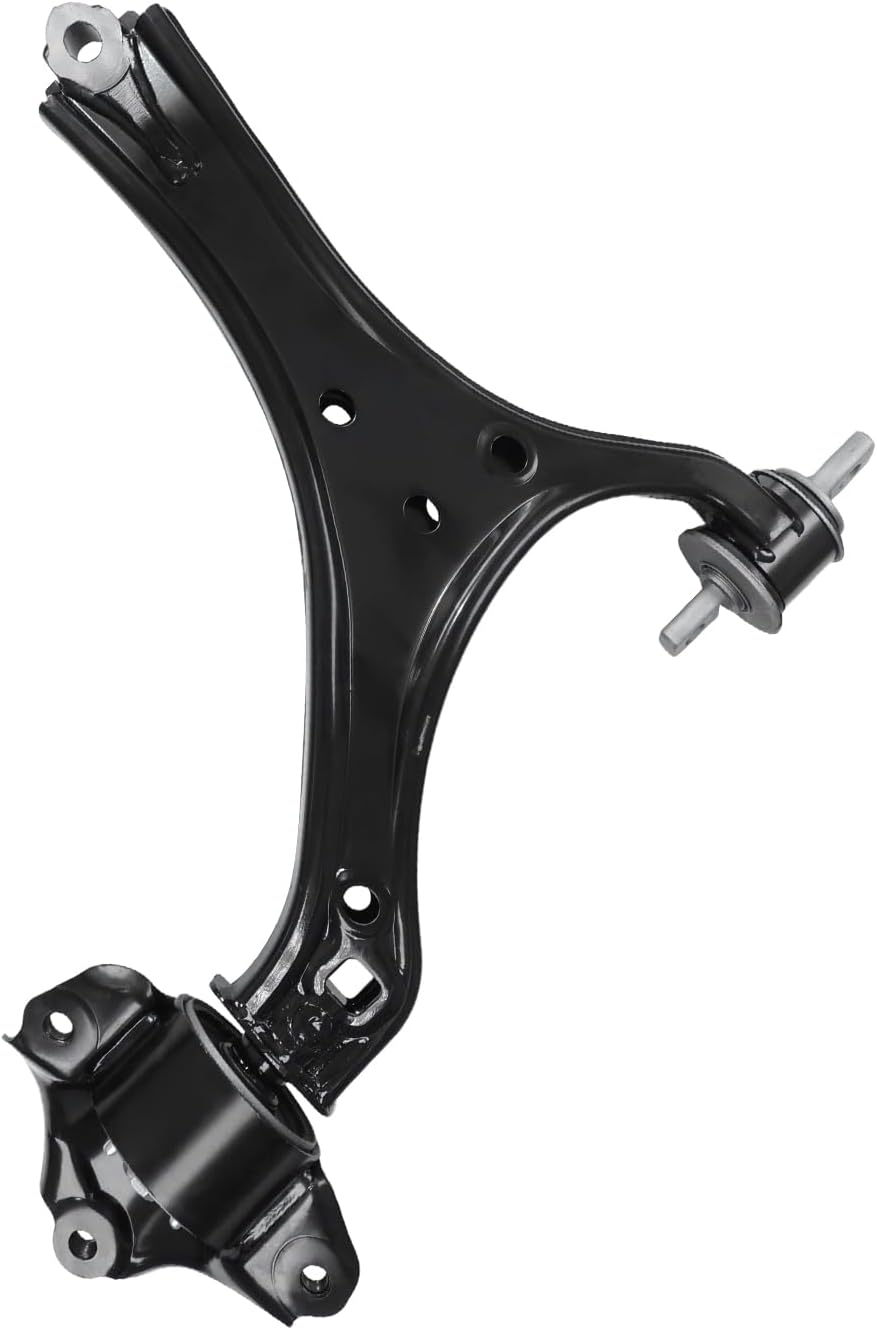
4. HAWK BROTHER Front Right Lower Control Arm (Passenger Side)
| Fit Type | Vehicle Specific Fit |
|---|---|
| Auto Part Position | Front Right Lower |
| Auto Part Orientation | Passengers Side |
| Material Type | Alloy Steel |
This HAWK BROTHER front right lower control arm is a direct replacement designed for 2013–2017 Honda Accord (and some 2015–2020 Acura TLX) passenger-side applications. It installs where the lower arm connects the wheel hub to the chassis and is used to restore proper steering geometry and suspension control after wear or damage. The arm is made from alloy steel with an electrophoretic corrosion coating and includes silicone bushings intended to reduce road noise and vibration compared with older, worn rubber bushings. For DIYers and independent shops this part offers a straightforward swap-in that matches common factory fitment references and comes as a single arm unit. Expect a lower-cost option that improves ride comfort and handling vs a worn original, though long-term durability and exact fit depend on matching the correct part number and vehicle details. It is not a performance upgrade and may lack the same finish and bushings as higher-end replacements, so careful inspection and proper torqueing during installation are recommended.
Best for: Buyers looking to restore safe steering and ride comfort on a budget who want a direct-fit replacement for a 2013–2017 Honda Accord passenger-side lower arm and prefer a simple DIY or independent-shop installation.
Less Ideal for: Drivers seeking performance suspension upgrades or factory-matching high-end OEM finishes should consider premium aftermarket or dealer parts instead.
- Vehicle-specific fit for front right lower position on listed Accord and TLX years
- Alloy steel construction with electrophoretic coating for improved corrosion resistance
- Silicone bushings designed to reduce road noise and vibration compared with worn rubber bushings
- Sold as a single control arm so replacement of the opposite side requires a separate purchase
Verdict: A cost-conscious, vehicle-specific replacement that restores steering control and reduces noise for the right front lower arm on the specified Accord/TLX models.
5. Detroit Axle Front Left Lower Control Arm Assembly (Driver Side)

| Fit Type | Vehicle Specific Fit |
|---|---|
| Auto Part Position | Front Left Lower |
| Auto Part Orientation | Drivers Side |
| Manufacturer Part Number | K642517 |
This Detroit Axle front left lower control arm is a direct-fit replacement intended for 2013–2017 Honda Accord (excluding manual transmission) and select 2015–2020 Acura TLX models. It replaces the factory lower arm and is typically used when worn bushings or ball joints cause looseness, uneven tire wear, or steering wander. The arm ships as a single driver-side assembly and is made from a premium alloy with a reinforced structure to resist wear and corrosion. That construction and the claimed high rigidity aim to restore stable steering feel and handling compared with a worn original part. Installation is straightforward for anyone with basic suspension tools, though access to a shop press or ball-joint tool may be needed depending on your vehicle. The part carries a 10-year warranty and has many user reports of exact fit and improved ride smoothness. Limitations to note are that fitment is vehicle specific so you must confirm year and transmission exclusions, and some users have reported minor clearance or bolt-access challenges during installation that can add labor time.
Best for: Buyers who prioritize a reliable, factory-replacement style suspension repair and want a durable control arm that restores original steering stability with minimal fuss.
Less Ideal for: If you are looking for a performance-tuned or upgraded suspension arm for track use or altered geometry, this factory-style replacement is not the right choice.
- Vehicle-specific direct-fit design simplifies replacement and reduces modification needs
- Premium alloy construction and reinforced structure for better wear resistance and corrosion protection
- Ships as a complete front lower arm assembly for the driver side, minimizing additional part sourcing
- Backed by a long 10-year warranty and broad user reports of restored steering and smoother ride
- Fitment excludes manual-transmission Accords and requires verifying exact year/application before purchase
- Some installations report tight bolt access or minor clearance issues that can increase labor time
Verdict: Pick this Detroit Axle front lower control arm when you want a durable, direct-fit replacement that restores factory steering stability for 2013–2017 Honda Accord driver-side repairs.
6. TUCAREST 4‑Piece Front Lower Control Arm and Ball Joint Kit for 2013–2017 Honda Accord / 2015–2020 Acura TLX

| Fit Type | Vehicle Specific Fit |
|---|---|
| Auto Part Position | Front Lower |
| Material | Alloy Steel |
| Item model number | 4Pcs (13-17 Accord, Front Lower) |
| Manufacturer Part Number | TZ063-643770 |
This TUCAREST kit supplies both front lower control arms (left and right) plus two lower ball joints as a direct replacement for the specified Honda Accord and Acura TLX models. The parts are stamped and forged from alloy steel and come machined and preassembled where applicable so a professional or competent DIYer can install them as a factory-style replacement. In use the kit restores the control link between wheel and chassis, correcting excessive play, uneven tire wear, and steering wander that worn arms cause. Notable features include vehicle-specific fitment, factory-style bushings and ball joints, and a stated 12 month warranty. Some buyers report soft rubber bushings that can lead to faster outer-edge tire wear on aggressive cornering, and a few reviews flag quality control inconsistencies, so expect to inspect parts on arrival and plan a shop alignment after installation. This is a practical budget-friendly replacement when you need full lower-arm hardware and want close-to-factory fit and function without upgrading to performance arms.
Best for: Buyers who prioritize a full, vehicle-specific front lower suspension replacement at a modest cost and want parts that match factory mounting and steering geometry for road use.
Less Ideal for: Drivers seeking heavy-duty or performance suspension upgrades or anyone who wants guaranteed long-term bushing firmness without aftermarket reinforcement.
- Complete kit includes both left and right lower control arms plus two lower ball joints for a single install.
- Vehicle-specific fitment engineered for 2013–2017 Honda Accord and 2015–2020 Acura TLX front suspension.
- Alloy steel construction with machined finish aimed at meeting factory replacement fit and function.
- Includes preassembled or ready-to-install components to simplify replacement and reduce shop time.
- Some users report soft rubber bushings that may accelerate outer-edge tire wear during sharp cornering.
- Mixed quality-control reports mean parts should be inspected before installation.
Verdict: A complete, vehicle-specific front lower control arm and ball-joint kit that restores factory fit and steering feel for 2013–2017 Accords at a budget-friendly level.
7. TRQ Front Left Lower Control Arm with Ball Joint for 2013–2017 Honda Accord

| Fitment | 2013–2017 Honda Accord front left |
|---|---|
| Kit includes | Lower control arm with ball joint |
This TRQ front left lower control arm arrives as a complete assembly with the ball joint pressed in, so it replaces the factory component without the need to transplant parts. It is designed as a direct-fit replacement for 2013–2017 Honda Accord, which simplifies installation for a DIYer or a shop because mounting points and bushings match factory locations. The included ball joint removes the extra step and ensures the suspension geometry stays correct after installation. TRQ emphasizes compatibility and provides video resources to guide fitment and installation, which helps reduce uncertainty during the repair. As a replacement part it focuses on restoring original handling and steering response rather than performance upgrades. Buyers should confirm exact fitment to their Accord trim and year before ordering and expect professional alignment after installation to maintain tire wear and handling.
Best for: Buyers seeking a reliable, factory-style replacement to restore original steering and suspension feel on a 2013–2017 Honda Accord and who prefer a straightforward install with guidance available.
Less Ideal for: Drivers looking for upgraded performance suspension components or parts that alter handling characteristics should consider aftermarket performance arms instead.
- Complete assembly with ball joint included for straightforward replacement
- Direct-fit design matching factory mounting points to simplify installation
- Manufacturer provides DIY videos to help with proper installation and fit confirmation
- Designed as a factory-style replacement so it does not improve performance over the original part
Verdict: Choose this TRQ lower control arm if you want a direct-fit, complete replacement that restores factory steering and suspension behavior on a 2013–2017 Honda Accord.
Choosing the Right 2013-2017 Honda Accord Lower Control Arm: Key Factors to Consider
Fitment and Mounting Geometry
Correct fitment is the foundation for a lower control arm on a 2013-2017 Honda Accord. Mounting points must match factory locations to preserve suspension geometry; even small deviations can change camber or toe and lead to uneven tire wear.
Check that the arm is specified for the Accord 2013 through 2017 range and for the front or rear position as required. If the arm uses an eccentric bolt or alignment slot, understand how that interacts with your alignment process so you do not introduce misadjustment during installation.
Bushing Design and Material
Bushings control compliance and noise isolation. The material, whether rubber, polyurethane, or a bonded elastomer, changes ride feel and NVH. Softer rubber bushings absorb road inputs and reduce noise but can allow more steering play over time. Stiffer polyurethane improves steering crispness but can increase transmitted road harshness and may require more frequent lubrication.
Also consider whether the bushings are bonded or removable. Bonded bushings reduce movement at the shell but make service more difficult. For daily-driven Accords, balance durability against comfort and expected maintenance when choosing bushing type.
Ball Joint Quality and Serviceability
Many lower control arms incorporate a ball joint that endures steering and suspension loads. A high-quality ball joint will have durable seals, correct stud taper, and retention hardware that matches factory specs. Premature ball joint wear leads to looseness, steering wander, and abnormal tire wear.
Serviceable ball joints let you replace the joint without changing the entire arm, which can be cost-effective in the long run. Non-serviceable press-in joints simplify initial replacement but mean the whole arm must be replaced if the ball joint fails.
Material, Construction, and Corrosion Protection
Lower control arms carry structural loads and are exposed to road salt and moisture. Construction material, whether stamped steel, forged steel, or aluminum, affects stiffness, weight, and fatigue life. For the Accord, stamped steel arms are common and provide a good balance of strength and cost.
Corrosion protection such as zinc plating, e-coat, or robust powder coatings extends service life in climates with road salt. Pay attention to weld quality and seam finishes because imperfections can be initiation points for cracks over years of use.
Alignment Compatibility and Adjustment Features
Some replacement arms include provisions for alignment adjustment, like eccentric bolts or slotted mounting holes. These features can simplify setting camber and toe during installation and may reduce shop labor. However, they must be properly designed to avoid slippage under load.
If an arm lacks adjustment features, be prepared for a full alignment after installation; verify that the arm permits the range of movement needed by the Accord's factory specs.
Installation and Maintenance Considerations
Ease of installation matters when deciding between arms. Features such as included hardware, pre-installed bushings or ball joints, and compatibility with factory torque specs reduce installation time and error. Also consider maintenance: if bushings or ball joints are serviceable, you can replace wear items without swapping the entire arm.
Factor in whether the replacement will require control arm removal tools, press equipment, or special torque sequences. For many owners, a part that lets a standard shop perform the job without additional fabrication reduces total downtime and potential complications.
Common Symptoms That Indicate Lower Control Arm Issues
Understanding typical failure signs helps you diagnose whether a lower control arm is the likely culprit. Common symptoms on a 2013-2017 Accord include clunking or popping noises over bumps, wandering or imprecise steering, and rapid or uneven tire wear at the inner or outer shoulder.
Vibration through the steering wheel at certain speeds or a looseness felt when turning can also indicate worn bushings or a failing ball joint. Not every symptom requires arm replacement; sometimes a bushing or ball joint service will restore performance. Use symptom patterns alongside a visual inspection to determine the appropriate repair.
- Clunking noise on compression or rebound of the suspension
- Steering wander or reduced steering precision
- Uneven tire wear, especially on one edge
- Vibration through the steering wheel at speed
Front Vs Rear Lower Control Arms on the Accord
The Accord's front lower control arms typically handle steering loads and connect to the steering knuckle through a ball joint. Rear lower control arms focus on locating the rear wheel laterally and controlling toe and camber under load. Each position experiences different forces and therefore different wear patterns.
When replacing arms, ensure you select the correct left or right and front or rear unit. The front arms are more likely to use a ball joint that needs specific torque and alignment procedures, while rear arms may rely more on bushings to manage lateral movement.
- Front arms: steering load, ball joint wear, direct impact on alignment
- Rear arms: lateral location, bushing wear, influence on rear toe/camber
How Bushing Choices Affect Ride and Steering
Bushing material alters how the suspension communicates road inputs to the chassis. Softer bushings isolate noise and small vibrations, improving ride comfort. Stiffer bushings reduce deflection under load and can sharpen steering response but may increase transmitted road harshness.
For an everyday Accord, balanced elastomer bushings often provide the best compromise. If you chase sportier steering without sacrificing too much comfort, consider higher-durometer materials but plan for slightly increased NVH and possible additional maintenance.
- Rubber: best for comfort and NVH isolation
- Bonded elastomer: reduced movement, increased durability
- Polyurethane: improved responsiveness, higher NVH and maintenance
Installation Tips to Preserve Alignment
When installing a replacement lower control arm on the 2013-2017 Accord, follow factory torque sequences and torque values. Tightening fasteners with the suspension unloaded or in the incorrect ride-height position can pre-load bushings and cause premature wear or altered geometry.
If the replacement arm includes alignment slots or eccentric bolts, make coarse adjustments before lowering the vehicle, then perform a full alignment at ride height. Inspect fasteners and torque re-check after a short break-in period to ensure nothing has settled loose.
- Install with vehicle at specified ride height where possible
- Use new mounting hardware if original bolts show wear or distortion
- Always perform a full alignment after arm replacement
When To Consider Serviceable Vs Non-Serviceable Options
Serviceable arms let you replace a worn ball joint or bushing separately, which can be economical for owners who plan long-term maintenance. Non-serviceable arms with pressed-in components are convenient for an immediate fix and eliminate bearing play concerns from reused parts.
Decide based on your maintenance habits and local labor rates. If you expect to own the vehicle long term and have access to workshop tools, serviceable designs can lower lifetime parts costs. If you prefer a straightforward replacement with minimal shop time, non-serviceable complete arms may be preferable.
- Serviceable: lower long-term cost, more labor for component replacement
- Non-serviceable: quicker swap, entire arm replaced when any component fails
Signs To Inspect During a Visual Check
A visual inspection of the control arm can reveal common failure modes. Look for torn or displaced bushings, corrosion at welds, or play at the ball joint stud. Excessive surface rust that has pitted the metal or cracked welds are reasons to replace the arm.
Also check for uneven wear patterns on mounting surfaces and any deformation from impacts. Catching these signs early can prevent secondary damage to tires, steering components, or alignment settings.
- Torn or split bushing rubber
- Excessive ball joint play or torn dust boot
- Corroded or cracked welds and mounting points
Still looking for the perfect fit?
Select your Honda Accord configuration to see the most relevant Lower Control Arms recommendations
How We Chose the Best 2013-2017 Honda Accord Lower Control Arm
We prioritized components and attributes that have the biggest impact on fitment, handling, and longevity for the 2013-2017 Honda Accord. Evaluation focused on accurate OE-equivalent mounting geometry, bushing design and material, ball joint type and retention method, corrosion protection for steel arms, and manufacturing tolerances that affect alignment. We also considered build materials and reinforcement where applicable to resist fatigue from road impacts and potholes.Qualification filters excluded any parts that required vehicle modifications, lacked clear fitment data for the 2013-2017 Accord, or used non-serviceable ball joints when that compromises long-term serviceability. We favored parts with documented torque spec compatibility and replacement-friendly hardware where available. Final selections balanced durability, ease of installation, and the ability to restore or maintain correct camber and toe settings without excessive shop rework.
Our full evaluation process is outlined in our review methodology.
FAQ
How do I tell if my Accord needs a lower control arm replacement?
Common indicators include clunking over bumps, steering that feels loose or wanders, and uneven tire wear. A visual inspection for torn bushings, a torn ball joint boot, or obvious play at the ball joint will help confirm the diagnosis.
Can I replace just the bushing instead of the whole lower control arm?
Sometimes you can replace just the bushing if the arm design allows serviceable bushings. Many arms have bonded components that require press tools. The decision depends on the arm's construction and the availability of replacement bushings compatible with the 2013-2017 Accord.
Will replacing a lower control arm fix alignment issues?
Replacing a worn or bent lower control arm often restores alignment range but you should always perform a full alignment after installation. If mounting points are damaged or the new arm does not match factory geometry, additional adjustments may be needed.
How long should a quality lower control arm last on a 2013-2017 Accord?
Lifespan varies with driving conditions, climate, and maintenance. In typical driving environments a well-made control arm can last many years, but exposure to road salt and frequent impacts will shorten life. Regular inspections will identify wear before failure.
Is it better to install serviceable or non-serviceable ball joints?
Serviceable ball joints allow individual replacement and can be more economical long term if you plan to maintain the vehicle. Non-serviceable joints simplify installation and reduce the chance of reusing worn parts. Choose based on expected maintenance practices and access to tools.
What noises indicate lower control arm problems on an Accord?
Clunking or knocking when going over bumps, creaks during steering input, and intermittent popping noises can point to worn bushings or ball joints. Track when the noise occurs to help isolate front or rear arm issues.
Final Verdict
When choosing lower control arms for a 2013-2017 Honda Accord, prioritize correct fitment and bushing quality to preserve alignment and steering precision. Balance bushing hardness against desired ride comfort and factor in ball joint serviceability depending on whether you prefer long-term maintenance or a quick swap.Ultimately, pick an arm that restores the Accord's factory geometry, offers corrosion protection for your climate, and matches your installation preferences. Those priorities will deliver reliable handling and help avoid repeat repairs.
Explore More:
- Check out all Honda Accord parts & accessories
- Explore Lower Control Arms Maintenance & Repair Guides
- Explore Suspension & Steering
- Browse all Auto Parts
