

Note: This article contains affiliate links. If you click on these links and make a purchase, I may earn a small commission at no extra cost to you. This helps support my research and content. Read my full affiliate disclosure here.
If your 1998-2002 Honda Accord shows uneven tire wear, wandering steering, or persistent clunks over bumps, a worn lower control arm could be the cause. Replacing the control arm is one of the most impactful suspension repairs for restoring proper alignment, steering feel, and ride quality on this generation Accord.This guide lists the top shortlisted lower control arms chosen for this model years range. Each pick meets strict fitment and bushing quality checks, and we review how they perform for daily driving, rough roads, and alignment stability. Read on to understand what matters when selecting a lower control arm for your Accord and which features to prioritize before you buy.
Looking for other parts? See all Honda Accord parts & accessories.
Top Picks at a Glance
| Best Overall The best all-around choice for most situations | Detroit Axle Front Lower Control Arms Kit with Ball Joints |  |
| Best Quality Built to a higher standard if you want something more solid | MOOG RK620044 Front Right Lower Control Arm |  |
| Best Value The sweet spot between price and what you get | Copap Front Lower Control Arm Pair for Honda Accord 1998–2002 / Acura CL 2001–2003 / Acura TL 1999–2003 |  |
| Best Budget The cheapest option that still gets the job done reliably | SCITOO Front Right Lower Control Arm (K620044) |  |
| Highest Rated A top-rated pick with lots of positive feedback | Detroit Axle Front Lower Control Arms — Pair (vehicle-specific) |  |
| Most Popular A crowd favorite that many people choose with confidence | Detroit Axle Front Left Lower Control Arm Assembly (Driver Side) |  |
1. Detroit Axle Front Lower Control Arms Kit with Ball Joints

| Fit Type | Vehicle Specific |
|---|---|
| Includes | 2 lower control arms, 2 lower ball joints |
| Manufacturer Part Number | 80022-4B |
This Detroit Axle kit replaces both front lower control arms and the two lower ball joints on compatible Accords and Acura CL/TL models. It is supplied as a direct-fit replacement intended for straightforward installation using factory mounting points, so a competent home mechanic or shop can swap the assemblies without fabrication. The arms are made from a premium alloy and are described as rust-resistant with increased structural strength to resist repeated impact loads, which should improve durability over worn factory pieces. Including ball joints in the kit simplifies the repair and restores front suspension geometry and steering feel. Expect practical benefits like tighter steering response and reduced play compared with aged components. The kit is vehicle-specific so fitment is limited to the listed model years and applications, and buyers should still inspect alignment and related wear items after installation. This is a repair-oriented part rather than an upgrade for improved performance handling beyond restoring factory-quality behavior.
Best for: Buyers who want a straightforward, value-focused repair to restore front suspension function on covered Honda Accord and Acura CL/TL years without custom work or upgrades.
Less Ideal for: Drivers seeking performance suspension upgrades or parts for vehicles outside the listed model years should look for specialized performance components or the correct-fit option for their vehicle.
- Complete kit includes both front lower control arms plus two lower ball joints for one-visit repair
- Direct-fit vehicle-specific design for straightforward bolt-on installation
- Premium alloy construction and enhanced structural strength aimed at corrosion resistance and longevity
- Restores suspension geometry and reduces steering play when replacing worn components
- Fitment is limited to the specified model years and vehicles so it is not universal
- Not positioned as a performance upgrade beyond restoring factory-level handling
Verdict: A complete, direct-fit lower control arm and ball joint kit built to restore factory suspension function on the specified Accord and Acura models.
2. MOOG RK620044 Front Right Lower Control Arm

| Fit Type | Vehicle Specific Fit |
|---|---|
| Auto Part Position | Front Right Lower |
| Automotive Fit Type | Vehicle Specific Fit |
The MOOG RK620044 front right lower control arm is a direct-fit replacement intended to restore suspension geometry and steering response on compatible 1998–2002 Honda Accord and related Acura models. Built for durability, the arm uses heat-treated structural components and corrosion-resistant coatings to resist impact stresses and surface rust over time. Installation is typical for a lower control arm swap and should fit without modification when replacing the factory unit. In real-world use this part helps eliminate steering wander, reduce premature inner tire wear, and remove play or rattles caused by worn linkage. Expect a firmer, more predictable front-end feel after installation. Limitations: this is a vehicle-specific factory-quality replacement rather than an adjustable or performance-tuned arm, so it will not provide aftermarket alignment adjustment or increased camber/track control for aggressive handling setups. Buyers who want upgraded geometry or motorsport features will need a performance-oriented aftermarket arm instead.
Best for: A buyer who wants a durable, factory-quality replacement to restore steering feel and suspension geometry on a 1998–2002 Honda Accord or compatible Acura without modifying the suspension.
Less Ideal for: Drivers seeking adjustable or race-oriented control arms for cornering or custom alignment should consider aftermarket performance arms instead.
- Direct-fit design for straightforward installation on specified models
- Heat-treated construction aimed at improved structural strength under load
- Corrosion-resistant coatings to extend service life in road conditions
- Not adjustable for alignment or camber tuning for performance alignment setups
Verdict: Choose this MOOG control arm when you need a durable, direct-fit replacement to restore factory steering stability on a 1998–2002 Accord.
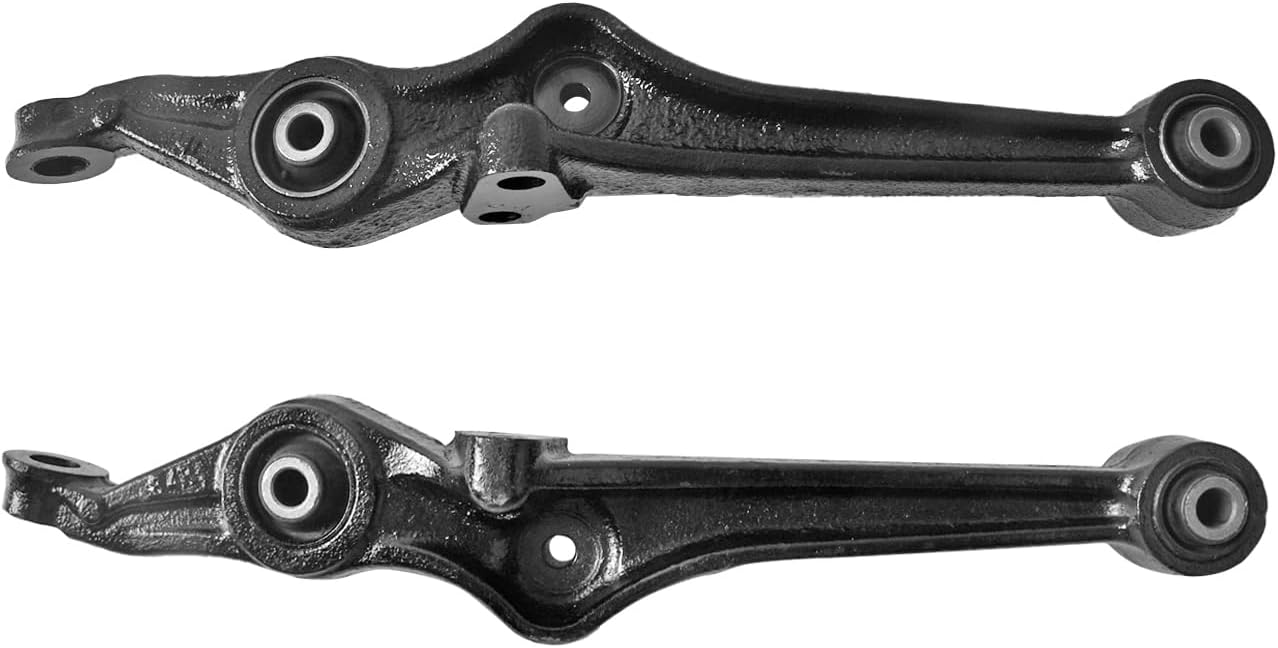
3. Copap Front Lower Control Arm Pair for Honda Accord 1998–2002 / Acura CL 2001–2003 / Acura TL 1999–2003
| Fit Type | Vehicle Specific Fit |
|---|---|
| Auto Part Position | Front |
| Material Type | Alloy Steel |
| Included Components | Front Lower Control Arm (Driver) and (Passenger) |
These Copap front lower control arms replace both left and right lower control arms and are designed to fit Honda Accord 1998–2002 and compatible Acura CL/TL years. Built from alloy steel and sold as a matched driver and passenger set, the parts are intended to restore steering stability and proper wheel alignment after worn arms have caused play or uneven tire wear. The listing notes precision tolerances and testing for impact, wear, and fatigue, which suggests a close fit and reasonable durability for a replacement part. In use you would swap both sides during a suspension service to regain factory handling and reduce vibration or pull. Limitations: this is an aftermarket replacement with a one year manufacturer warranty and no bushings or ball joints explicitly listed, so inspect or transfer hardware as needed during installation. Fitment is vehicle specific so confirm year and submodel before ordering. Overall these arms offer a straightforward way to return worn front suspension geometry to factory-like behavior without unnecessary extras for buyers focused on practical repairs.
Best for: Buyers who want a practical, vehicle-specific replacement to restore factory steering and alignment without upgrades or modifications, prioritizing a correct fit and durability for everyday driving.
Less Ideal for: Not a fit for enthusiasts seeking performance suspension upgrades or for projects that require upgraded joints or adjustable components.
- Sold as a matched pair for driver and passenger sides so both arms can be replaced at once
- Alloy steel construction aimed at strength and fatigue resistance
- Vehicle-specific fit designed to match factory mounting points and tolerances
- Manufacturer reports impact, wear, and fatigue testing for quality control
- One year warranty only and limited documentation on included bushings or ball joints
Verdict: A straightforward, alloy-steel matched pair that restores factory front suspension fitment and handling on 1998–2002 Accords and compatible Acura models.
4. SCITOO Front Right Lower Control Arm (K620044)

| Fit Type | Vehicle Specific Fit |
|---|---|
| Auto Part Position | Front Right Lower |
| Auto Part Orientation | Passengers Side |
| Material Type | Alloy Steel |
This SCITOO front right lower control arm is a pre-assembled replacement designed to fit select 1998–2003 Honda Accord and Acura CL/TL applications. It arrives with bushings already installed so it swaps into the vehicle in place of the original unit, which makes it a straightforward part for a standard suspension repair. Constructed from alloy steel, the arm targets budget-focused repairs while promising factory-style fitment when matched to the listed model years. The included bushing and ball joint interface reduce additional parts purchases and labor compared with buying components separately. Expect typical durability for an aftermarket control arm of this construction, but plan on standard installation work such as pressing or bolting depending on your vehicle and whether surrounding hardware is corroded. Professional installation is recommended if you are not experienced with suspension work. This is a practical, lower-cost option to restore steering stability and ride geometry on older Accords and compatible Acura models, trading premium materials and brand-name backing for an economical replacement that fits the intended models.
Best for: Buyers needing an affordable, ready-to-install replacement control arm to restore proper steering and suspension alignment on older Accords or compatible Acuras who prioritize cost and fitment over premium branding.
Less Ideal for: Owners seeking an OEM-identical part with factory warranty coverage or those planning high-performance suspension upgrades should consider higher-end or brand-name alternatives.
- Pre-assembled with bushings for faster, simpler installation
- Vehicle-specific fit for listed 1998–2003 Honda Accord and compatible Acura models
- Alloy steel construction provides reasonable strength for road use
- Aftermarket construction may not match long-term durability of higher-end factory-quality parts
- Some installations may require cutting or replacing rusted fasteners on older cars
Verdict: A budget-friendly, pre-assembled front right lower control arm that makes a quick, model-specific replacement for older Accords and compatible Acuras.
5. Detroit Axle Front Lower Control Arms — Pair (vehicle-specific)
| Fit Type | Vehicle Specific Fit |
|---|---|
| Auto Part Position | Front Lower |
| Manufacturer | Detroit Axle |
| Manufacturer Part Number | K620044_K620045 |
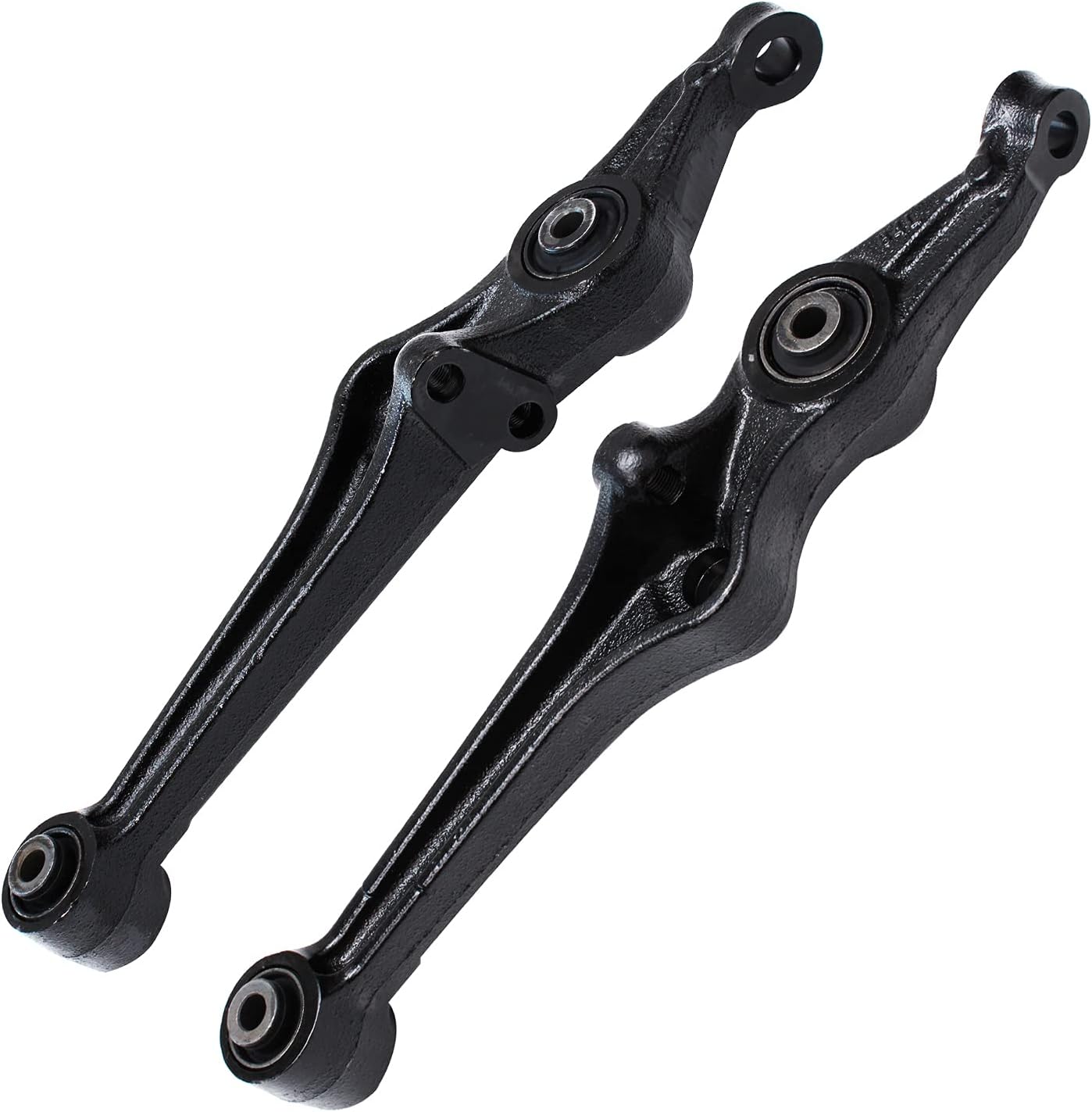
These Detroit Axle front lower control arms are a direct-style replacement intended to restore front suspension geometry and ride stability on 1998–2002 Honda Accords and the listed Acura models. The kit includes both left and right lower arms with preinstalled ball joints, so installation is straightforward for a DIYer with basic tools or for a shop doing a front-end refresh. Detroit Axle says the parts are tested for impact, wear, and fatigue and they carry a long warranty, which aligns with their position as an affordable aftermarket supplier. In real-world use buyers report solid fitment, tightened steering feel, and elimination of clunks associated with worn original arms. Expect factory-like fit and finish in a black finish, but note that some customers needed firm persuasion to seat a joint and there have been occasional quality-control outliers. If you value dependable replacement parts that restore alignment and handling without premium pricing, these offer a practical balance of durability and value.
Best for: A buyer who wants a dependable, vehicle-specific replacement that restores factory steering feel and alignment without paying OEM prices, prioritizing long-term reliability and straightforward installation.
Less Ideal for: If you need upgraded performance suspension components or are restoring a show car where original-spec finish and provenance matter, choose a performance or OEM-sourced alternative instead.
- Sold as a complete left and right lower control arm pair for direct replacement
- Preinstalled ball joints reduce installation time and simplify fitting
- Manufacturer reports impact, wear, and fatigue testing for durability
- Long warranty period indicating manufacturer confidence
- Some units may require force to seat a joint during installation and occasional QC defects reported
Verdict: If you need a reliable, vehicle-specific pair of lower control arms to restore suspension stability on a 1998–2002 Accord, this Detroit Axle kit delivers factory-style fit and durability at an affordable value.
6. Detroit Axle Front Left Lower Control Arm Assembly (Driver Side)

| Fit Type | Vehicle Specific Fit |
|---|---|
| Auto Part Orientation | Drivers Side |
| Manufacturer Part Number | K620045 |
| Brand Name | Detroit Axle |
This Detroit Axle front left lower control arm is a direct-fit replacement intended to restore steering stability and suspension geometry on compatible 1998–2002 Honda Accords and the listed Acura models. It installs in place of the factory part and includes the lower control arm assembly built to match the vehicle-specific mounting points and ball joint interface. Typical use is as a one-for-one repair when worn bushings or a loose ball joint create steering wander, vibration, or uneven tire wear. Buyers will appreciate the part’s reinforced construction and vehicle-specific fit that simplifies installation and reduces alignment headaches. Customer feedback consistently notes accurate fitment and noticeably firmer steering feel after replacement. Limitations are that it is a single-side arm so you may want the opposite side for balanced wear, and installation can require pressing or torquing suspension fasteners accessible with a shop press or breaker bar. Expect to check wheel alignment after installation to ensure factory handling is restored.
Best for: A cautious buyer who values proven fit and social proof and needs a straightforward, factory-style replacement to stop play in the front suspension and restore predictable handling.
Less Ideal for: Not for buyers seeking an upgraded or performance-tuned suspension component or those wanting both sides in one purchase without ordering a second unit.
- Vehicle-specific fit for direct replacement on listed models
- Reinforced assembly and included ball joint interface that restores steering control
- Well-reviewed by other buyers for accurate fit and noticeable handling improvement
- Sold as a single lower control arm so both sides are not included
Verdict: Choose this Detroit Axle front left lower control arm when you want a well-reviewed, vehicle-specific factory-style replacement to restore original steering and suspension feel.
Choosing the Right 1998-2002 Honda Accord Lower Control Arm: Key Factors to Consider
Fitment And Chassis Compatibility
Exact fitment to the 1998-2002 Honda Accord chassis is the foundation of a successful control arm replacement. Small differences in mounting hole spacing, arm length, or bracket orientation alter suspension geometry and can lead to poor alignment, accelerated tire wear, or unusual steering feel. Confirm left and right sides match factory locating points and that the arm clears adjacent components such as sway bar links and splash shields.
A control arm designed specifically for the 1998-2002 Accord helps ensure the ball joint and bushing positions keep camber and caster within factory tolerances. That reduces the chance of repeated trips to the alignment shop after installation and preserves predictable handling in both city driving and highway cruising.
Bushing Type And Durability
Bushings determine how much compliance the control arm allows and how much vibration or noise transmits into the chassis. For this Accord generation, common bushing options include molded rubber, high-density elastomer, and polyurethane. Rubber offers quieter ride characteristics and better absorption of road harshness, while firmer elastomers or polyurethane deliver crisper steering response at the cost of slightly more NVH.
Assess bushing construction for bonded interfaces, resistance to oil and road contaminants, and whether the design is serviceable. Durable bushings reduce the frequency of future repairs and help the arm maintain alignment settings over time, which matters if you drive on rough roads or in climates with road salt.
Ball Joint Integration And Serviceability
The ball joint links the control arm to the steering knuckle and is a wear item that affects steering precision and safety. Integrated, sealed ball joints reduce maintenance but require replacement of the entire arm when worn. Replaceable ball joint designs allow for lower long-term repair costs, provided the replacement procedure is straightforward.
Check spec details for pre-pressed versus serviceable ball joints and consider what you are willing to install now versus replace later. A pre-assembled, greasable ball joint can simplify installation and extend service life, while a non-serviceable sealed joint can be convenient but may necessitate replacing the whole arm when it fails.
Construction Material And Corrosion Protection
Control arms face water, salt, and road debris, especially around wheel wells. Materials and protective finishes significantly influence longevity. Stamped steel arms are common and provide good strength-to-cost balance; look for quality welds and reinforced stress points. Some arms use forged or cast components for higher strength in high-stress areas.
Corrosion protection such as e-coating, powder coating, or galvanized finishes slows rusting and maintains structural integrity. For owners in regions with road salt or frequent wet conditions, prioritize arms with robust corrosion resistance to avoid premature failure.
Alignment Stability And Geometry Retention
A lower control arm must maintain its shape and mounting geometry under load to preserve alignment settings. Excess flex or distortion changes camber and toe, which leads to poor handling and rapid tire wear. Evaluate design features that resist bending, such as boxed sections, gussets, or thicker gauge steel in high-load areas.
Arms that help retain alignment reduce the need for repeated adjustments after installation and improve long-term ride stability. This is particularly important if you tow light loads, carry passengers frequently, or drive on uneven surfaces where suspension loads vary.
Installation Considerations And Hardware
Practical installation details affect how quickly and cleanly you can complete the job. Confirm whether the arm comes with necessary mounting hardware, such as bolts, nuts, and translatable ball joint nuts, as well as whether instructions are provided. Some designs require press-fitting a ball joint or installing new bushings, which may necessitate specialty tools.
Consider the availability of replacement bushings or ball joints and whether the arm allows for a straightforward shop or DIY installation. Less time in the shop saves money and reduces the chance of damage during installation, so choose an option that matches your mechanical skill level or your preferred garage's capabilities.
Symptoms That Point To A Bad Lower Control Arm
Knowing the typical symptoms can help you confirm that the lower control arm is the likely culprit before disassembly. Common signs include a clunking or popping noise when going over bumps, loose or wandering steering at highway speeds, and uneven inner tire wear.
You may also notice vibration through the steering wheel during acceleration or braking if the ball joint has excessive play. Observing these symptoms alongside a visual inspection for torn bushings or a rusted or bent arm gives a strong indication that replacement is needed.
- Clunking or knocking over bumps
- Uneven inner tire wear or rapid tire wear
- Excessive steering play or wandering
- Vibration or shudder through the steering wheel
Front Versus Rear Lower Control Arm Roles
On this generation Accord, front lower control arms anchor the suspension to the steering knuckle and play the largest role in steering geometry and wheel alignment. The front arm directly affects toe and camber during suspension travel and thus has a more noticeable impact on steering feel.
Rear lower control arms, where present in multi-link assemblies, help locate the rear wheel and maintain tracking. Rear arm wear often shows up as instability during lane changes or a loose feel in the rear of the car. Understanding which arm is failing helps prioritize repairs and ensures you address the root cause of handling issues.
- Front arm: primary influence on steering and front alignment
- Rear arm: maintains rear tracking and lateral stability
What To Expect During A Control Arm Replacement
Replacement typically involves lifting the car, removing the wheel, and disconnecting the sway bar link and ball joint from the steering knuckle. On the 1998-2002 Accord, corroded hardware can add time, so using penetrating lubricant ahead of the job is helpful.
After installing the new arm, a professional alignment is recommended because mounting points affect toe and camber. If you replace only one side, expect minor alignment shifts; replacing both sides or installing new bushings can improve symmetry and tire life.
- Plan for 1 to 3 hours depending on rust and tools
- Expectation of post-replacement alignment
- Inspect and replace associated hardware if corroded
Maintenance Tips To Extend Control Arm Life
Regular visual inspections during oil changes or tire rotations catch early wear signs such as cracked bushings, leaking grease from ball joints, or corrosion. Cleaning the wheel wells and rinsing off road salt reduces corrosion risk.
If your selected arm has a greasable ball joint, schedule greasing intervals per the part recommendations. Addressing minor bushing deterioration early can avoid the larger cost and labor of full arm replacement later.
- Inspect bushings and ball joints every 6 months
- Rinse undercarriage after winter driving
- Use protective sprays on mounting bolts to prevent seizure
Choosing Mounting Hardware And Ancillary Parts
Matching hardware quality matters because weakened or corroded bolts can compromise the new arm's clamping force and create alignment drift. Where possible, use new grade-appropriate bolts and torque them to factory specifications.
Consider replacing sway bar links or tie rod ends if they show wear, since these components share loads with the lower control arm. Upgrading to plated or higher-grade fasteners can reduce future service time and make later removal easier.
- Always use torque-specified fasteners
- Replace seized or corroded mounting bolts
- Inspect adjacent suspension parts during replacement
Still looking for the perfect fit?
Select your Honda Accord configuration to see the most relevant Lower Control Arms recommendations
How We Chose the Best 1998-2002 Honda Accord Lower Control Arm
We focused on criteria that directly affect long-term performance and fit for 1998-2002 Honda Accord owners. Primary evaluation factors included exact chassis fitment to the 1998-2002 Accord configuration, the type and resilience of bushings, and the quality of ball joint integration. We prioritized components engineered to match factory mounting points and torque specifications to avoid alignment surprises after installation.Durability assessments emphasized bushing material and reinforcement, corrosion protection of the arm, and construction methods such as stamped steel versus forged designs. Ride and handling considerations involved how the control arm preserves steering geometry and resists deflection under load. Ease of installation and availability of right- and left-side arms or mounting hardware were also considered.Exclusions: we excluded parts that required substantial modification to factory mounting points, units with unclear fitment claims, and any arm lacking replaceable or reliable bushing and ball joint assemblies. The final selections balance long-term durability, predictable alignment behavior, and practical installation for typical Accord owners.
Our full evaluation process is outlined in our review methodology.
FAQ
How long does a lower control arm last on a 1998-2002 Accord?
Lifespan varies with driving conditions. Under normal driving, arms and bushings can last many years, but exposure to salt, potholes, and heavy loads can accelerate wear. Inspectments every 12 months help catch deterioration early.
Can I drive with a worn lower control arm?
You can for short distances at low speed in some cases, but driving with a significantly worn arm risks steering instability and uneven tire wear. Address noticeable clunks, wandering steering, or visible bushing failure promptly for safety.
Are lower control arm bushings replaceable separately?
Some designs allow bushing serviceability while others use bonded or pressed-in bushings that require special tools. Serviceable bushings can be replaced to extend arm life, but verify compatibility and needed tools before attempting a DIY repair.
Will replacing a single lower control arm affect alignment?
Replacing only one side can shift alignment slightly because the new arm may have different bushing compliance. An alignment after replacement is recommended to restore correct camber and toe settings.
What causes lower control arm noise on this Accord generation?
Noise often stems from worn bushings, a failing ball joint, or corrosion where the arm contacts mounting points. Clunks over bumps and squeaks at low speed usually point to degraded rubber components or loose fasteners.
How do I identify a bent lower control arm?
Visual inspection can reveal obvious bends or twisted sections. Compare both sides for symmetry and check for unusual tire wear patterns and alignment issues. A professional inspection can confirm structural damage that is not visually obvious.
Final Verdict
When choosing a lower control arm for a 1998-2002 Honda Accord, prioritize correct fitment and the bushing style that matches your comfort and handling preferences. Durable bushings, solid ball joint design, and corrosion protection reduce repeat repairs and maintain alignment longer.Balance serviceability against initial convenience: replaceable or greasable joints can lower long-term costs, while sealed pre-assembled arms simplify installation. Focus on preserving steering geometry and choose the option that best aligns with your typical driving conditions and maintenance plans.
Explore More:
- Check out all Honda Accord parts & accessories
- Explore Lower Control Arms Maintenance & Repair Guides
- Explore Suspension & Steering
- Browse all Auto Parts
