

Note: This article contains affiliate links. If you click on these links and make a purchase, I may earn a small commission at no extra cost to you. This helps support my research and content. Read my full affiliate disclosure here.
If your Honda Accord is showing loose steering or uneven tire wear, replacing the inner tie rod end can bring back crisp handling and predictable tracking. The inner tie rod end is a small part of the steering linkage but plays an outsized role in steering precision and safety. Choosing the right inner unit matters because fitment, joint design, and material durability all affect steering feel and how long the repair lasts.This guide shortlists the top inner tie rod ends for the Honda Accord and explains the evaluation criteria used to select them. It also covers installation considerations, alignment implications, and signs that indicate a replacement is needed. Read on to find the best options for restoring tight steering and reliable road behavior.
Looking for other parts? See all Honda Accord parts & accessories.
Top Picks at a Glance
| Best Overall The best all-around choice for most situations | TRQ 4-Piece Front Inner and Outer Tie Rod Set (PSA66780) |  |
| Best Quality Built to a higher standard if you want something more solid | Metrix Premium Chassis Parts 4‑Piece Front Inner & Outer Tie Rod End Kit |  |
| Best Value The sweet spot between price and what you get | Suspension Dudes Pair Inner Tie Rod End Kit for Honda Accord and Acura TLX |  |
| Best Budget The cheapest option that still gets the job done reliably | BOXI Front Inner Tie Rod End Links (pair) for Honda Accord 2008–2012 |  |
| Highest Rated A top-rated pick with lots of positive feedback | Metrix Premium Chassis Parts Front Inner Tie Rod End Kit (2 pc) |  |
| Most Popular A crowd favorite that many people choose with confidence | Detroit Axle Front Inner and Outer Tie Rod End Kit for 2008–2012 Honda Accord (4‑Piece) |  |
1. TRQ 4-Piece Front Inner and Outer Tie Rod Set (PSA66780)

| Model | TRQ PSA66780 4 Piece Tie Rod Set |
|---|---|
| Position | Front Inner/Outer |
| Compatible Vehicles | 2013-17 Honda Accord L4 2.4L; 2015-20 Acura TLX L4 2.4L |
| Exterior | Machined |
This TRQ 4-piece tie rod kit supplies both inner and outer front tie rods intended as direct-fit replacements for the specified 2013–2017 Honda Accord L4 2.4L and 2015–2020 Acura TLX L4 2.4L. The kit arrives preassembled where applicable and uses machined components to match factory steering geometry, which simplifies installation for a DIYer or tech following the included guidance and online videos. Practical benefits include complete front-side coverage so you replace both sides at once, consistent fitment to the factory mounting points, and accessible installation videos from the maker that reduce guesswork during removal and alignment prep. Limitations are typical of aftermarket steering parts: you should still have a professional alignment after installation and confirm vehicle compatibility before ordering since fitment is vehicle-specific. The set is focused on straightforward repair rather than performance upgrades, so it is best when you want reliable, factory-style steering restoration rather than upgraded handling characteristics.
Best for: Buyers who want a straightforward, factory-quality replacement kit to restore steering feel on the specified Accord or TLX and prefer a DIY-friendly product with strong installation support.
Less Ideal for: Drivers seeking performance-tuned steering components or parts for vehicles outside the stated Accord and TLX 2.4L fitment should look elsewhere.
- Complete front-side kit includes both inner and outer tie rods for driver and passenger sides
- Machined exterior and direct-fit design aimed at matching factory steering geometry
- Preassembled components where applicable to speed installation and reduce prep time
- Extensive installation video library from the manufacturer to help DIY installers
- Installation requires a post-replacement wheel alignment to ensure proper steering and tire wear
Verdict: Choose this TRQ kit when you want a complete, factory-style front tie rod replacement with clear DIY installation support for the listed Accord and TLX 2.4L models.
2. Metrix Premium Chassis Parts 4‑Piece Front Inner & Outer Tie Rod End Kit

| Compatible vehicles | 2013–2017 Honda Accord; 2015–2020 Acura TLX FWD (listed models) |
|---|---|
| Kit contents | 2x front inner tie rod EV801120, 1x front left outer ES801001, 1x front right outer ES801000 |
| Certifications | IATF 16949 and ISO 9001 |
| Corrosion protection | Cataphoresis plating |
| Position | Front |
This Metrix 4-piece kit replaces both front inner and outer tie rod ends to restore steering precision and alignment on compatible Honda Accord and Acura TLX FWD models. The kit includes two inner tie rod ends and matched left/right outer ends so both sides can be renewed together, which helps eliminate steering play and uneven tire wear. Key features are greasable fittings on some components, cataphoresis corrosion protection, and a factory-style design intended for straightforward fitment. In practice the parts are used during a front-end steering refresh and require a post-install alignment; DIYers and mechanics reported easy installs with standard tools. The aluminum and steel construction aims to balance strength and corrosion resistance, and the greasable joints extend service life with periodic maintenance. Limitations to expect are occasional fitment differences that may need minor adjustment and cosmetic finish issues reported by a few users over time. If you want higher-than-basic replacement quality with maintainable joints and a matched set for both inners and outers, this kit covers those needs well.
Best for: Drivers focused on restoring or improving steering precision and handling on compatible Honda Accord/TLX FWD models who prefer a matched inner/outer kit that is serviceable and installation-friendly.
Less Ideal for: If you need heavy-duty steering components for racing, off-road abuse, or non‑stock suspension setups, choose performance-specific or upgraded parts instead.
- Complete matched kit with inner and outer tie rod ends for both sides, simplifying replacement.
- Greasable design on some components allows periodic lubrication to extend service life.
- Cataphoresis plating improves corrosion resistance compared with untreated parts.
- Designed to fit and replace factory steering geometry to restore steering feel and reduce play.
- Some users reported faster-than-expected surface rust or cosmetic finish degradation over time.
- Occasional fitment variation may require minor adjustments and an alignment after installation.
Verdict: Choose this matched inner and outer tie rod kit when you want a serviceable, corrosion‑protected replacement that restores steering precision on the specified Honda Accord and TLX FWD models.
3. Suspension Dudes Pair Inner Tie Rod End Kit for Honda Accord and Acura TLX
| Compatible models | Honda Accord 2013–2017, Acura TLX 2015–2020 |
|---|---|
| Quantity | Pair of inner tie rod ends |
| Manufacturer | Suspension Dudes |
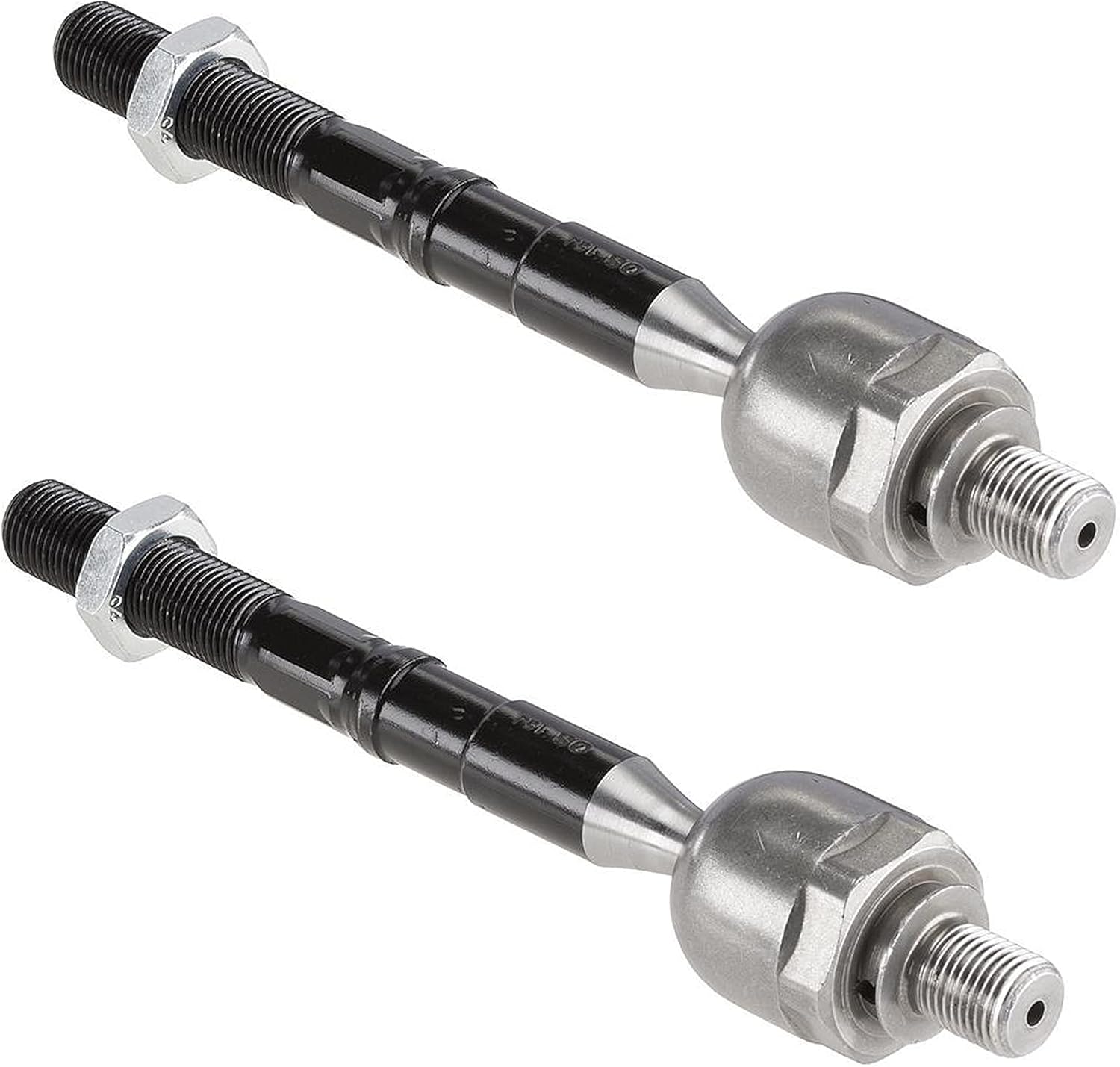
This Suspension Dudes inner tie rod end kit replaces the factory inner tie rods on compatible Honda Accord and Acura TLX model years to restore steering precision and safety. It is supplied as a pair and is intended for routine steering system service or when play, vibration, or uneven tire wear indicate worn inner tie rods. The parts are promoted as made from premium materials and tested for durability, which suggests they will hold up under normal street driving and return a firmer, more direct steering feel after installation. Installation requires basic suspension knowledge and standard tools; alignment is recommended after fitting. The kit focuses narrowly on inner tie rod replacement so it does not include outer tie rods or other steering components, and buyers should confirm fitment for their exact engine and model year before purchasing. For DIYers and independent shops this kit is a straightforward OEM-style replacement that gets a worn steering linkage back to factory-spec handling without extra features or upgrades.
Best for: Buyers who want a practical, cost-effective factory-style replacement to restore tight steering on compatible Accords or TLX models and prefer doing the job themselves or using a local shop.
Less Ideal for: People seeking performance-upgrade steering components or a complete steering rack overhaul should look for purpose-built performance parts or full kits that include outer tie rods and additional hardware.
- Sold as a matched pair so both sides can be serviced together
- Built from reportedly premium materials aimed at durability
- Direct replacement fit for the listed Accord and TLX year ranges to simplify installation
- Does not include outer tie rods or hardware beyond the inner tie rods
Verdict: A straightforward, durable pair of inner tie rod ends made to restore factory steering feel on the specified Accord and TLX model years.
4. BOXI Front Inner Tie Rod End Links (pair) for Honda Accord 2008–2012

| Fitment | Honda Accord 2008-2012 All Models |
|---|---|
| Placement | Front, left and right |
| OEM Part Number | EV800461 |
| Manufacturer | ShangHai BOXI Auto Parts Co., Ltd. |
These BOXI front inner tie rod ends replace the factory inner tie rods on 2008–2012 Honda Accords and come as a pair for driver and passenger sides. They are marketed as direct-fit replacements with precision tolerances to simplify installation for DIYers or professional installers. Constructed from a premium alloy and described as reinforced for impact resistance, the parts aim to restore steering linkage play and return a firmer, quieter front end compared with worn originals. The kit includes both left and right inner rods and lists the OEM part number EV800461 for fit reference. Real-world feedback is mixed: some buyers report a perfect fit and improved steering feel after months of use while others experienced early failures, so expect variable longevity. These are a budget-focused solution that can get an Accord back on the road quickly, but installers should verify fitment before installation and consider professional installation if alignment and tie rod adjustment tools are needed.
Best for: Buyers seeking an affordable, direct-replacement inner tie rod kit to repair steering play on a 2008–2012 Honda Accord and who prioritize getting a working, OEM-compatible part without premium-brand pricing.
Less Ideal for: Those who want a long-term performance upgrade or the highest durability standards; consider higher-end aftermarket or OEM options if you plan heavy-duty driving or expect maximum longevity.
- Direct-fit replacement designed for Honda Accord 2008–2012, matching OEM part number EV800461
- Sold as a pair covering both left and right front inner tie rods for a complete service
- Made from premium alloy with reinforced structure intended to resist corrosion and impact
- Precision tolerances simplify installation and help restore steering feel
- Customer reports show inconsistent durability with some units failing prematurely
Verdict: A budget-friendly, direct-fit pair of inner tie rod ends for 2008–2012 Honda Accords that restores steering function quickly without premium cost.
5. Metrix Premium Chassis Parts Front Inner Tie Rod End Kit (2 pc)
| Model | 98336MT |
|---|---|
| Manufacturer Part Number | 98336MT |
| OEM Part Number | 53010T2BA01, EV801120, TI59280 |
| Position | Front Inner |
| Pre-greased | Yes |
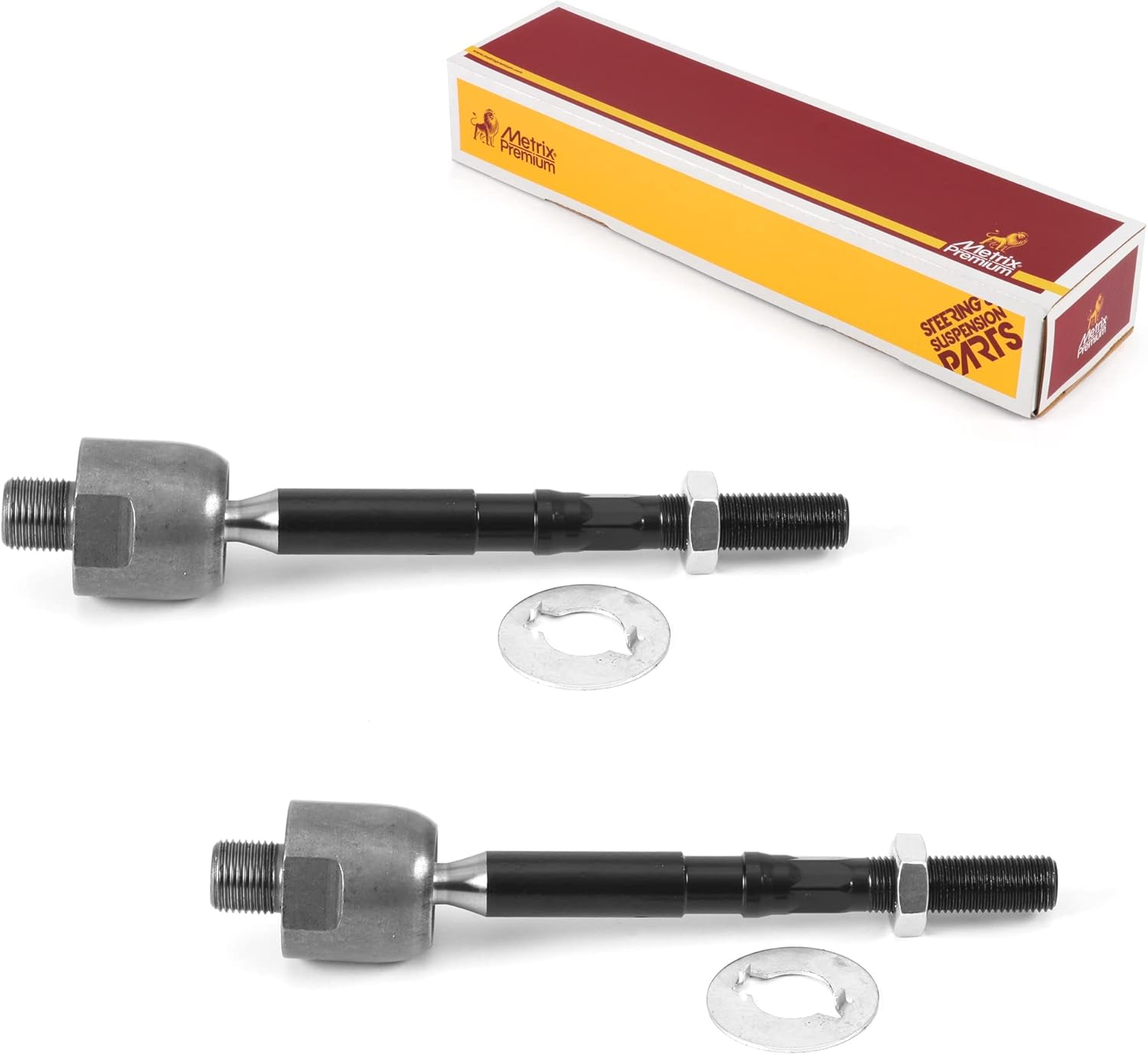
This Metrix Premium Chassis Parts kit supplies two front inner tie rod ends intended as a direct replacement for compatible Honda Accord and Acura TLX applications. The parts come pre-greased and feature a greasable design so periodic lubrication is straightforward for extending service life. Metrix emphasizes precision fit and factory-style geometry, which helps keep steering feel consistent and reduces the risk of uneven tire wear when installed and aligned correctly. The aluminum construction and cataphoresis coating aim to resist corrosion, useful in wet or salted-road conditions. Certification to quality systems suggests manufacturing controls above generic aftermarket options. Limitations to note are that installation requires lifting the vehicle, wheel removal, and a post-replacement alignment; these are normal for tie rod work but add labor time or shop cost. Also the listing covers front inner positions only, so outer ends or additional front suspension parts may be needed if other components are worn.
Best for: Buyers who prioritize long-term dependability and want a factory-style, serviceable replacement for worn inner tie rods on their Honda Accord or Acura TLX, with parts designed for professional or DIY installation.
Less Ideal for: If you need a complete steering overhaul or are replacing outer tie rod ends as well, this inner-only kit is not a full solution and you should consider a multi-part suspension kit or a matched outer end set.
- Sold as a two-piece kit so both front inner tie rods are replaced together
- Pre-greased and greasable design allows maintenance to extend service life
- Engineered for precision fit to maintain steering geometry and reduce uneven tire wear
- Corrosion-resistant coating and aluminum construction improve durability in corrosive environments
- Covers front inner tie rod ends only so other worn steering components may still require replacement
Verdict: Choose this kit when you want a corrosion-resistant, pre-greased factory-style inner tie rod replacement focused on long-term reliability.
6. Detroit Axle Front Inner and Outer Tie Rod End Kit for 2008–2012 Honda Accord (4‑Piece)

| Fitment | 2008–2012 Honda Accord |
|---|---|
| Kit contents | 2 inner tie rod ends + 2 outer tie rod ends |
| Material | Premium alloy |
| Manufacturer | Detroit Axle |
| Manufacturer Part Number | 4S2600259 |
This Detroit Axle kit supplies two front inner and two front outer tie rod ends as a direct-fit replacement for 2008–2012 Honda Accord. Intended for routine steering repair or worn tie rod replacement, the parts are made from premium alloy and designed for straightforward installation without modification. The kit aims to match factory fit and function, with reinforced structure and corrosion-resistant material to resist wear and repeated impact loads. For a DIYer or independent shop, the parts simplify restoring steering feel and alignment tracking after replacement. The practical benefits are a full-axle replacement in one purchase and components that are sized to accept standard ball joint hardware and adjusters. Limits to consider are that this is an aftermarket replacement rather than a factory part and installation typically requires alignment after fitting; some users may prefer branded OEM units for perceived long-term reassurance. The kit is best used when visible play, uneven tire wear, or steering vibration indicate tie rod end wear.
Best for: Buyers who value a full, ready-to-install steering tie rod repair with parts that aim to match factory fit and reduce return visits; suited to DIY mechanics and independent shops wanting a single kit to restore front-end steering.
Less Ideal for: Buyers seeking an exact factory-branded part for long-term warranty alignment with dealer service or those who prefer professional-install-only components bundled with dealer support.
- Complete front tie rod set includes both inner and outer ends so both sides can be replaced at once
- Direct-fit design intended for easy installation without custom modification
- Premium alloy construction and reinforced structure for improved wear and corrosion resistance
- Aftermarket replacement rather than factory-manufacturer part which some buyers may prefer
Verdict: Choose this kit when you want a complete, direct-fit front tie rod replacement that restores steering quickly and conveniently.
Choosing the Right Honda Accord Inner Tie Rod End: Key Factors to Consider
Fitment and Thread Compatibility
Correct fitment is the foundation of a successful inner tie rod end replacement. The part must match the Accord's thread pitch, length, and taper so it seats properly in the steering rack and mates cleanly with the outer tie rod or steering arm. A mismatch can prevent proper installation or change the effective length of the tie rod, which directly affects toe settings and tire wear.
When evaluating parts, confirm the listed thread specifications and compare the overall length and the amount of exposed threaded section. Some inner tie rod ends include an adapter or sleeve to match OE geometry, while others rely on exact OEM dimensions. Choosing a unit designed specifically for the Honda Accord minimizes the risk of fitment problems and subsequent alignment issues.
Joint Design and Steering Precision
The internal ball-and-socket design determines how much play the joint develops under load. A well-designed joint uses hardened contact surfaces, precise tolerances, and a snug retaining mechanism to limit lateral and axial movement. Reduced play improves steering feel and responsiveness, which is particularly noticeable on the Accord during lane changes and tight maneuvers.
Inspect descriptions for mentions of precision-machined studs or press-fit bearings. Avoid designs that rely on loose tolerances or weak retaining clips, as these can lead to increased free play and a vague steering wheel at highway speeds.
Protective Boots and Contaminant Resistance
Inner tie rod ends operate in a harsh environment where road salt, water, and grit can accelerate wear. A durable dust boot that resists tearing and seals effectively around the joint is critical to keep contaminants out and lubricant in. Boots made from thicker rubber compounds or multi-layered materials typically last longer than thin sleeves.
Check whether replacement parts include a high-quality boot and whether the boot attachment method is a crimp or a robust clamp. A poorly sealed boot is a common failure point that leads to premature joint wear and the need for another replacement sooner than expected.
Corrosion Protection and Finish
Exposure to moisture and road chemicals can corrode threads, studs, and housings. Corrosion can make future removal difficult and can degrade critical contact surfaces. Look for inner tie rod ends with protective coatings such as zinc plating, phosphate coatings, or other rust-resistant finishes applied to both the stud and the housing.
Parts with sealed bearings and plated threads resist seizing in place, easing future maintenance. Corrosion-resistant finishes are especially important in regions with heavy winter use or coastal environments where salt exposure is frequent.
Included Hardware and Installation Ease
A quality replacement often includes the necessary nuts, clamps, and mounting hardware to complete the job without sourcing extra pieces. Having the correct retaining fastener or jam nut with the proper pitch saves time and reduces the chance of using an improper replacement bolt.
Consider whether the part requires special tools for removal or installation. Units that fit without additional adapters and include clear installation notes will be simpler to swap on an Accord. Ease of installation also reduces the chance of damage to the steering rack or boots during the swap.
Durability and Warranty Support
Durability factors such as bearing material, boot construction, and overall build quality determine how long an inner tie rod end will last under daily driving conditions. Longer-lasting parts reduce lifetime maintenance costs and the likelihood of repeated alignment work. Warranties and manufacturer support provide additional assurance about expected service life.
When evaluating products, prefer parts with documented service life or coverage terms. A reasonable warranty paired with solid construction indicates confidence from the maker and a lower risk of premature failures on a Honda Accord used for commuting or longer trips.
Common Symptoms and When to Inspect Your Inner Tie Rod
Early detection of inner tie rod wear prevents handling problems and uneven tire wear. Common symptoms include a loose or wandering steering wheel, clunking noises when turning, vibration through the steering wheel, and accelerated inner edge tire wear. These signs often appear gradually, so periodic checks are important.
If you notice any of these symptoms, perform a visual inspection and a hands-on play check. With the vehicle lifted and the front wheels off the ground, grasp the tire at the three and nine o'clock positions and rock it back and forth while watching the tie rod ends for movement. Excess play at the inner joint indicates the need for replacement before alignment is performed.
- Loose or vague steering feel at low or high speed
- Knocking or clunking during steering inputs
- Uneven or accelerated tire wear at the inner edges
- Steering vibration or shimmy under load
How Replacing the Inner Tie Rod Affects Alignment
Changing the inner tie rod can alter the effective length of the steering linkage and therefore affect toe alignment. Even swapping an identical-length component may disturb the toe setting because of slight geometry shifts during removal and installation. For this reason, plan to have a toe or full alignment performed after replacing the inner tie rod.
When you install a new inner tie rod, keep track of the number of turns or measure the exposed thread length so the outer tie rod can be adjusted back to its original position. Some technicians mark the old position before removal to minimize alignment adjustments, but a professional alignment check is the safest way to ensure proper tire wear and handling.
- Always check toe alignment after replacement
- Measure or mark thread positions to minimize adjustments
- A small toe correction can restore handling and extend tire life
Basic Steps for Replacing an Inner Tie Rod on the Accord
Replacing an inner tie rod typically involves raising the vehicle, removing the front wheel, separating the outer tie rod end from the steering knuckle, and then unthreading the inner tie rod from the rack. Some inner units require a special socket or tool to disengage the retaining sleeve. Take care to protect the steering rack boot and avoid drawing contaminants into the housing.
After installing the new inner tie rod and hand-tightening to the specified engagement length, reattach the outer tie rod and tighten to torque specs. With the car back on the ground, check for steering play and then have the toe alignment set. If you are comfortable with suspension work and have the right tools, this job can be done in a home garage; otherwise, a professional installation ensures correct fit and alignment.
- Raise vehicle and remove front wheel for access
- Separate outer tie rod end from steering knuckle
- Use the correct tool to remove and install the inner tie rod
- Reattach components and torque to specification, then align
Maintenance Tips to Extend Tie Rod Life
Regular visual inspections and avoiding deep potholes or curb strikes help prolong tie rod life. Keep boots intact and ensure clamps remain snug to prevent water intrusion. If you notice a split boot, address it quickly since contaminants accelerate joint wear.
Periodic lubrication where applicable can extend service life, but many modern inner tie rods are sealed and non-serviceable. Keep suspension components in good repair to reduce added stress on tie rod ends and address alignment issues promptly to avoid uneven loading.
- Inspect boots during oil changes or tire rotations
- Avoid repeated hard steering impacts from potholes
- Address minor boot damage early to prevent joint contamination
Choosing Between OEM-Style and Heavy-Duty Designs
OEM-style inner tie rods aim to match factory geometry and materials for a direct replacement that preserves original handling characteristics. These units are typically designed with the same thread profiles and stud positions, making installation straightforward and alignment predictable.
Heavy-duty variants prioritize robustness and longer life, offering tougher boots, thicker studs, and enhanced corrosion protection. While they can be a good choice for drivers who subject their Accord to harsher conditions or higher mileage, ensure the heavy-duty option matches the Accord's steering geometry to avoid unexpected changes in toe or steering feel.
- OEM-style for stock handling and straightforward fitment
- Heavy-duty for harsher driving conditions and longer service life
- Confirm geometry match before choosing a reinforced design
Still looking for the perfect fit?
Select your Honda Accord configuration to see the most relevant Tie Rod Ends recommendations
How We Chose the Best Honda Accord Inner Tie Rod End
We focused on criteria that matter for replacing inner tie rod ends on the Honda Accord and applied practical filters to narrow the field. Key evaluation dimensions included joint durability, correct OE-style fitment, threaded length and taper compatibility, and resistance to water and road grime. We also assessed steering precision by looking at design features that limit play, such as hardened ball studs and high-quality bearing surfaces. Mounting hardware and packaged components were checked to ensure a straightforward installation without modification. Longevity factors such as corrosion-resistant finishes and robust dust boots were weighed alongside warranty coverage and manufacturer support.Excluded from consideration were generic universal-fit tie rod ends that require significant modification, products lacking clear fitment data for the Accord, and units with poorly documented materials or absent protective boots. We prioritized parts that replicate factory geometry and match the steering linkage dimensions used on the Accord, since incorrect length or thread pitch can affect toe settings. The final list reflects a balance of durability, fit accuracy, and steering performance that Honda Accord owners need for a reliable repair.
Our full evaluation process is outlined in our review methodology.
FAQ
How can I tell if the inner tie rod end is bad on my Accord?
Often you will notice loose steering, clunking when turning, vibration through the wheel, or inner edge tire wear. A physical check with the front wheel lifted and rocking the wheel can reveal play at the inner joint.
Can I replace just the inner tie rod or should I change the outer one too?
You can replace only the inner tie rod if the outer unit is in good condition. However, inspect the outer tie rod for wear and matched life expectancy; replacing both can be cost-effective if the outer shows significant wear.
Do I need an alignment after replacing the inner tie rod on a Honda Accord?
Yes. Replacing the inner tie rod usually affects toe settings, so a toe or full alignment is recommended to restore correct tire angles and prevent uneven wear.
Is a special tool required to remove the inner tie rod?
Some inner tie rods require a specific removal socket or tool to disengage a retaining sleeve. While some units can be removed with generic tools, having the correct tool reduces the risk of damaging the rack or boot.
How long should a replacement inner tie rod last on an Accord?
Lifespan depends on driving conditions, exposure to contaminants, and boot integrity. In normal driving it can last many years, while corrosive environments or damaged boots shorten service life.
What causes inner tie rod ends to fail prematurely?
Common causes include torn or degraded dust boots that allow dirt and water in, corrosion from road salt, repeated impacts from potholes or curbs, and poor lubrication or low-quality materials.
Final Verdict
When replacing an inner tie rod end on a Honda Accord, prioritize correct fitment, a robust joint design, and a durable boot to restore steering precision and avoid repeat repairs. Be prepared to perform a toe alignment after installation, and factor in corrosion protection if you drive in harsh conditions.Balance the need for OE-style geometry with durability features that suit your driving environment. Focusing on compatibility and long-term protection helps you choose an inner tie rod end that returns safe, predictable steering and minimizes future maintenance.
Explore More:
- Check out all Honda Accord parts & accessories
- Explore Tie Rod Ends Maintenance & Repair Guides
- Explore Suspension & Steering
- Browse all Auto Parts
