

Note: This article contains affiliate links. If you click on these links and make a purchase, I may earn a small commission at no extra cost to you. This helps support my research and content. Read my full affiliate disclosure here.
When a Honda Accord develops wandering steering, uneven tire wear, or clunking at the front suspension, the front lower control arms are often involved. Picking the right front lower control arm matters because it directly affects steering geometry, ride stability, and bushing life. The parts shortlisted here focus on restoring correct alignment, maintaining intended suspension travel, and resisting premature wear under typical driving conditions.This guide presents the top front lower control arms we vetted for the Accord, explains the criteria used to evaluate them, and outlines the practical tradeoffs you should weigh. Read on to find an option that balances durability, fitment, and serviceability for your Accord's needs.
Looking for other parts? See all Honda Accord parts & accessories.
Top Picks at a Glance


1. Detroit Axle Front Left Lower Control Arm Assembly (Direct-Fit)

| Fit Type | Vehicle Specific Fit |
|---|---|
| Auto Part Position | Front Lower |
| Manufacturer Part Number | K640290 |
| Included | 1x Front Left Lower Control Arm – K640290 |
This Detroit Axle front left lower control arm is a direct-fit replacement intended to restore factory suspension geometry on 2003–2007 Honda Accord and 2004–2008 Acura TSX. It ships as a complete lower left control arm assembly that installs in place of the worn unit, so you can expect a straightforward swap during a routine front suspension job. The part is described as made from premium alloy with enhanced structural strength and anti-rust properties, which should improve durability over a heavily corroded original arm. Its vehicle-specific fit and factory-quality design aim to match the original mounting points and restore steering feel and tire wear patterns. Keep in mind the listing shows the arm unfinished and not pre-painted, so cosmetic prep or coating may be needed if appearance matters. Also the product page lists material as ceramic which appears inconsistent with typical alloy control arms, so buyers may want to confirm materials with the seller if that is critical. For a balanced buyer this part offers a robust, cost-effective way to replace a failed lower control arm and get the front end back to correct alignment and handling.
Best for: Buyers who want a reliable, ready-to-install replacement that restores steering and suspension performance without extensive modification and who prioritize fit and durability over cosmetic finish.
Less Ideal for: Buyers seeking a painted or show-quality suspension piece or those wanting performance-tuned aftermarket geometry should consider alternate options.
- Direct-fit, vehicle-specific replacement for listed Accord and TSX model years
- Complete lower control arm assembly simplifies installation compared with sourcing separate components
- Premium alloy construction and reinforced structure claimed to resist wear and corrosion and handle impact loads
- Item is shown unfinished and may require painting or undercoating for corrosion protection and appearance
- Material listing includes 'ceramic' which conflicts with alloy claim and may require buyer verification
Verdict: A practical, vehicle-specific complete lower control arm assembly that restores front-end alignment and handling for the listed Accord and TSX model years.
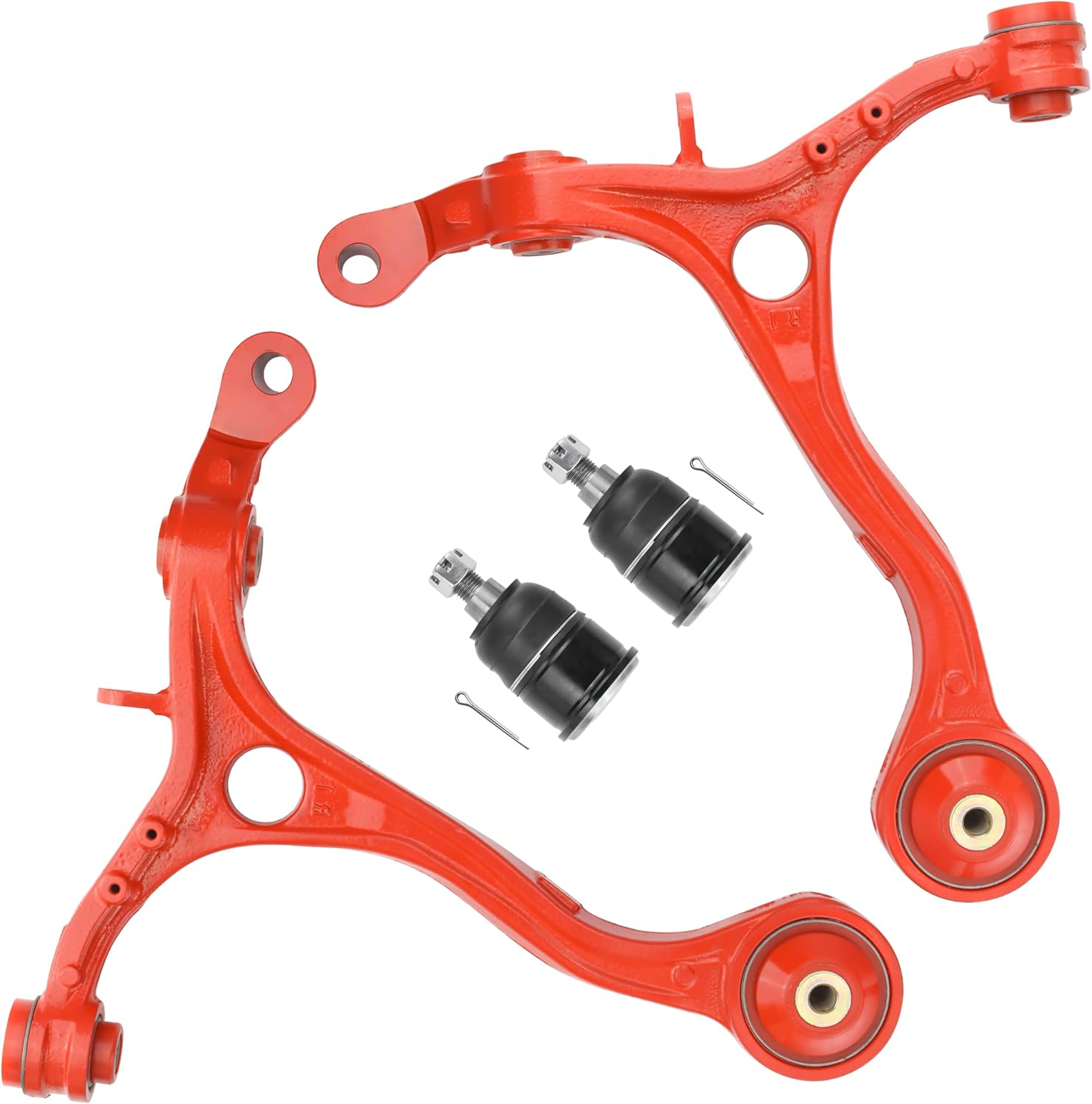
2. SKUCH Front Lower Control Arms with Preinstalled Ball Joints for 2008–2012 Honda Accord / 2009–2014 Acura TSX (4-piece)
| Fit Type | Vehicle Specific Fit |
|---|---|
| Auto Part Position | Front Lower |
| Material Type | Alloy Steel |
| Included Components | 2 lower control arms and 2 front lower ball joints |
This kit replaces both front lower control arms and includes the ball joints already pressed into the assemblies, so installation is simpler and faster than sourcing individual parts. Constructed from alloy steel and finished in a red anti-rust coating, the arms aim to resist corrosion while providing a visual upgrade under the chassis. The polyurethane bushings are firmer than factory rubber, which sharpens steering response and reduces chassis play for a more connected, performance-oriented feel. Preinstalled ball joints and included fasteners make the package near plug-and-play for a competent DIYer or a shop, and customers report improved straight-line stability and reduced clunks after installation. Expect a firmer ride and more road feedback compared with stock rubber components, which benefits handling but may transmit more NVH into the cabin. Some buyers reported bushing movement or squeaks on a small number of units, so double-check torque and seating during installation and follow the included instructions. An alignment after fitting is required to restore correct geometry and tire wear.
Best for: Buyers who prioritize sharper steering and tighter front-end control and want a ready-to-install replacement kit to restore or improve handling on a midlife Accord or TSX.
Less Ideal for: Drivers who prefer the softer, quieter ride of factory rubber bushings or who want an exact factory-feel replacement should consider alternative arms with softer bushings.
- Complete kit includes both lower control arms with preinstalled ball joints and necessary fasteners for faster installation
- Polyurethane bushings provide firmer chassis control and more precise steering feedback than factory rubber
- Alloy steel construction with red anti-rust coating improves corrosion resistance and offers a finished appearance
- Firmer polyurethane bushings increase transmitted road noise and firmness compared with OEM rubber
- A minority of users reported bushing misalignment or squeaking requiring rework after installation
Verdict: If you want a direct-fit replacement that tightens steering and restores front-end precision without pressing ball joints yourself, this all-in-one lower control arm kit delivers.
3. KRGUOD Front Lower Control Arm Kit (2 pcs) for Honda Accord 2003–2007 / Acura TSX 2004–2008

| Fit Type | Vehicle Specific Fit |
|---|---|
| Auto Part Position | Front Lower |
| Manufacturer Part Number | K640289 K640290 |
| Unit Count | 2.0 Count |
This KRGUOD front lower control arm kit includes both left and right arms to replace worn front lower suspension components on compatible Honda Accord and Acura TSX models. It is typically used when ball joints or bushings have degraded, causing wandering steering, uneven tire wear, or a loose feel in the front end. The kit is vehicle-specific and arrives as a matched pair so both sides can be refreshed at once, which helps restore factory steering response and improve driving stability on urban and rough roads. Practical features include direct-fit mounting points and a full pair in one purchase, which simplifies a two-side service. Expect the result to be firmer steering and more predictable handling after installation. Limitations are typical of aftermarket control arms: installation requires basic suspension/mechanical skills or a shop visit, and long-term durability depends on driving conditions and proper installation. There is no detailed materials spec provided, so buyers who need explicit alloy or tensile ratings should verify with the seller before purchase.
Best for: Buyers who prioritize restoring factory handling and steering stability at reasonable cost and want a matched pair to replace both front lower arms in one service.
Less Ideal for: Shoppers seeking documented material specs, performance upgrades, or heavy-duty components for aggressive driving should consider alternatives with verified engineering data.
- Sold as a matched left and right pair for single-order replacement
- Vehicle-specific fit for Honda Accord 2003–2007 and Acura TSX 2004–2008
- Designed to restore steering responsiveness and reduce uneven tire wear
- Includes manufacturer part numbers for cross-referencing fitment
- No material composition or load rating specified in the listing
- Installation requires suspension tools or professional service
Verdict: A practical matched-pair replacement that restores front-end stability and steering feel for 2003–2007 Accord and 2004–2008 TSX owners looking for a direct vehicle-specific fix.
4. PM Auto Front Right Lower Control Arm (fits 2003–2007 Honda Accord)

| Fit Type | Vehicle Specific Fit |
|---|---|
| Auto Part Position | Front Right Lower |
| Auto Part Orientation | Passengers Side |
This PM Auto front right lower control arm is a vehicle-specific replacement designed to restore front suspension geometry and ride quality on 2003–2007 Honda Accords. It installs in place of the factory arm and is commonly used to eliminate clunking noises, steering wander, excessive vibration, and uneven tire wear caused by a worn control arm. The part is constructed with a reinforced structure and rubber bushing to reduce noise and vibration while maintaining handling characteristics similar to a factory part. Buyers report straightforward fitment and quick installation when replacing the original arm. As a value-oriented option, the arm focuses on essential durability rather than premium materials or cosmetic finishes, so long-term environments with heavy corrosion or off-road use may show limitations compared with higher-end replacements. For routine street use and budget repairs it provides a practical way to get the suspension back to factory alignment and feel without a large investment.
Best for: Shoppers looking to repair a worn front lower control arm on a Honda Accord without overspending and who prioritize reliable fit and function over premium finishes.
Less Ideal for: Drivers who need a heavy-duty, corrosion-resistant upgrade for frequent rough-road or off-road use should consider higher-end or specialized suspension components instead.
- Vehicle-specific fit for 2003–2007 Honda Accord ensures correct alignment and bolt locations
- Reinforced structure and rubber bushing reduce vibration and restore handling
- Reported to fit like factory parts, enabling quick installation
- Lower-cost alternative to brand-name control arms for budget repairs
- Not marketed as a premium or corrosion-resistant finish which may limit longevity in harsh environments
Verdict: A cost-conscious, vehicle-specific replacement that restores factory-style suspension performance for 2003–2007 Honda Accords.
5. Aeagle Front Lower Control Arm Assembly Kit for Honda Accord 2003–2007 / Acura TSX 2004–2008

| Fit Type | Vehicle Specific Fit |
|---|---|
| Auto Part Position | Front Lower |
| Material Type | Alloy Steel, Iron |
This Aeagle kit replaces both front lower control arms with ready-to-install assemblies that come pre-greased and include pre-installed bushings to reduce road noise and vibration. It's intended as a direct, vehicle-specific replacement for the specified 2003–2007 Honda Accord and 2004–2008 Acura TSX models. The arms are made from alloy steel and iron with a corrosion-resistant surface coating, which should extend service life under normal driving conditions. In practice the assemblies restore taut steering response and cornering feel compared with worn originals, and the pre-greased joints speed installation and reduce initial break-in noise. Limitations to expect are that this is a like-for-like replacement rather than an upgraded performance arm and installation may require alignment afterward. The package covers both left and right front lower positions but does not include related hardware such as ball joints for other suspension links, so verify your vehicle’s needs before installing.
Best for: Buyers who prioritize dependable, straightforward repairs and want ready-to-install front lower arms that restore factory ride and handling on the specified Accord and TSX model years.
Less Ideal for: Drivers looking for performance-tuned suspension parts, heavy-duty use, or multi-vehicle solutions should consider specialized or reinforced control arms instead.
- Vehicle-specific left and right assemblies for a direct fit on listed Accord and TSX years
- Pre-greased assemblies with pre-installed bushings to cut installation time and reduce NVH
- Alloy steel and iron construction with corrosion-resistant coating for longer service life
- Designed as a factory-style replacement rather than a performance or heavy-duty upgrade
Verdict: Aegle’s pre-greased, vehicle-specific front lower control arm kit is a practical, reliable replacement to restore factory handling on the listed Accord and TSX years.
6. Detroit Axle 10‑Piece Front Suspension Kit (Control Arms, Ball Joints, Sway Bar Links, Tie Rods)

| Fit Type | Vehicle Specific Fit |
|---|---|
| Auto Part Position | Bottom |
| Auto Part Orientation | Front |
This Detroit Axle 10-piece front suspension kit bundles the main front-end components you would replace when refreshing a tired steering and suspension system. It includes two upper control arms with ball joints, two lower control arms, two lower ball joints, two sway bar end links, and two outer tie rods so you can address most common wear items in one job. The parts are built as aftermarket replacements with vehicle-specific fitment and are intended for front-bottom suspension use. In practice the kit simplifies a multi-part repair and most buyers report straightforward installation and improved steering stability and ride quality after fitting. Fit and packaging are generally good, but there are a few reported fitment and tolerance issues with some lower control arm shock mounts that can cause interference on certain applications. That means installers should inspect critical clearances before final torque and be prepared to swap individual pieces if needed. This kit is a solid value for doing a full front-end refresh but expect to spend a little extra time verifying fit during installation on older or modified suspensions.
Best for: Buyers who want to replace all common front suspension wear items at once and prioritize getting a complete, vehicle-specific kit that saves time compared with buying parts separately.
Less Ideal for: Drivers who require factory‑exact replacement tolerances or who prefer OEM-branded parts for warranty peace of mind should consider single-piece factory-quality control arms instead.
- Complete kit covers most front-end wear items so you can replace multiple components in one job
- Vehicle-specific fitment reduces the need for modification on correctly matched model years
- Parts arrive well packaged which helps prevent shipping damage and missing pieces
- Many users report improved steering feel and quieter ride after installation
- Some lower control arms have reported shock-mount clearance issues on a subset of vehicles requiring inspection or replacement
- Quality can vary part-to-part so occasional fitment adjustments or trimming of long fasteners may be necessary
Verdict: Get this kit if you want a single, vehicle-matched package to refresh the entire front suspension and improve steering stability without buying each part separately.
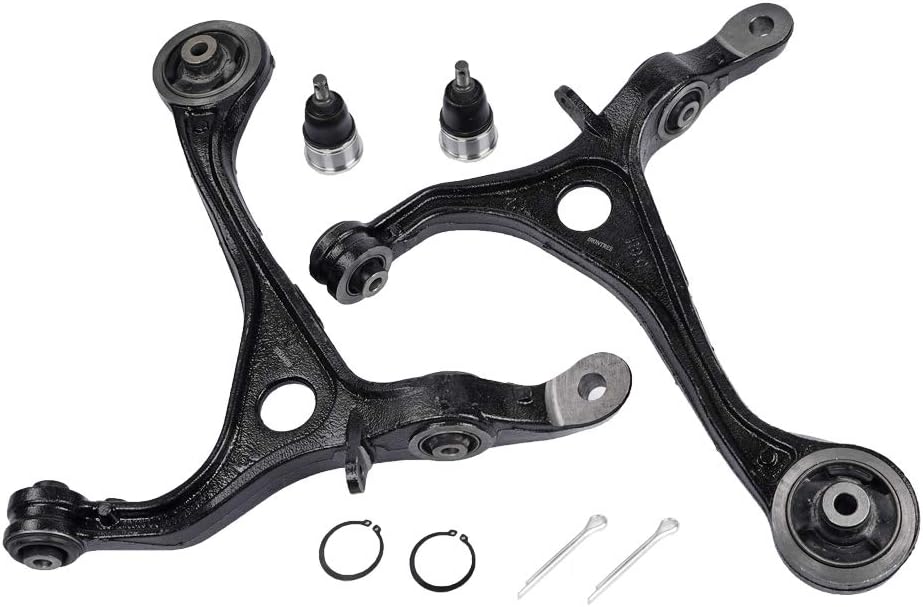
7. IRONTREE Front Suspension Kit — 2 Lower Control Arms with Ball Joints (pair)
| Fit Type | Vehicle Specific Fit |
|---|---|
| Auto Part Position | Front |
| Material | Alloy Steel |
| Manufacturer Part Number | TK640289-TK640290 |
This IRONTREE front suspension kit supplies two lower control arms with pre-assembled ball joints intended as a direct replacement for compatible Honda Accord and Acura TSX models. Designed for front suspension use, the control arms are alloy steel with a corrosion-resistant coating and come greased at the ball joints to reduce initial maintenance. In practice the kit is used to restore steering stability and reduce play or uneven tire wear after original arms wear out. Buyers report good fit and straightforward installation when the old components are removed, and the pre-assembled ball joints eliminate separate pressing steps in many installs. The construction meets factory-style form, fit and function expectations and the included parts are backed by a three-year warranty. Potential limitations include minor dimensional differences in ball-joint head size compared with factory parts that may require different press adapters and a larger nut size than some metric tool sets, which can complicate installation for hobbyists relying only on common sockets.
Best for: A safety-minded buyer wanting a full, factory-style replacement for worn front lower control arms who values correct fitment and reduced installation steps.
Less Ideal for: Do not choose this kit if you prefer exact OEM component dimensions for specialized press tools or if you lack access to a 22 mm socket and basic suspension tools and removal equipment.
- Vehicle-specific fit that replaces both front lower control arms for a complete axle-side refresh
- Pre-assembled, greased ball joints reduce install steps and initial maintenance
- Corrosion-resistant coating and alloy steel construction for longer service life
- Meets factory-style form, fit and function according to the manufacturer
- Ball-joint head diameter differs from some factory parts and may need alternative press adapters
- Included ball joint nut uses a 22 mm size that is larger than some common socket sets
Verdict: A complete, factory-style replacement kit that restores front steering and suspension performance with pre-assembled ball joints for a straightforward swap.
Choosing the Right Honda Accord Front Lower Control Arm: Key Factors to Consider
Fitment and Dimensional Accuracy
Correct fitment is critical because even small dimensional deviations can change front toe and camber, causing uneven tire wear and poor steering feel. Confirm that mounting hole spacing, ball joint taper, and arm length match the Accord's factory specifications. Mismatched arms can force alignment shops to compensate with excess caster or toe adjustments, which reduces suspension life and handling predictability.
Also consider whether the arm ships with all required hardware such as bolts, nuts, or pressed-in bushings. Arms that require pressing in bushings or special tools add labor time and potential for installation errors. For do-it-yourselfers, a direct-fit arm that accepts the factory bushings or ball joint saves time and lowers the risk of improper assembly.
Bushing Design and Durability
Bushings control compliance between the arm and chassis, so their material and design have a direct effect on noise, vibration, and harshness. Rubber bushings provide quieter operation and absorb small impacts, while polyurethane variants trade noise suppression for firmer response and longer life under high loads. For typical Accord daily driving, a high-quality rubber bushing with reinforced construction often balances comfort and longevity.
Inspect whether bushings are bonded or serviceable. Bonded bushings reduce slop but complicate replacement, whereas serviceable pressed-in bushings let you renew the wearing elements without replacing the entire arm. Heat- and oil-resistant compounds will better resist degradation from engine bay heat and road contaminants.
Ball Joint Quality and Serviceability
The ball joint connects the control arm to the steering knuckle and endures steering and suspension loads, so its construction and retention method matter. Look for ball joints with robust housings, proper grease fittings or sealed lubricants, and appropriate stud taper to match the Accord's knuckle. A worn or loose ball joint causes play in the steering and can make the vehicle feel unstable during braking or cornering.
Sealed, pre-greased joints minimize maintenance, but replaceable or greasable joints offer longer service life when maintained. Consider whether the arm allows for independent replacement of the ball joint in case of future wear, which can reduce long-term ownership costs.
Material and Corrosion Resistance
Control arm strength and resistance to road conditions are driven by base material and protective finish. Steel arms are common and offer predictable fatigue life, while cast or forged components can provide higher strength at the same weight. Whatever the material, a durable coating such as e-coating, zinc plating, or powder coat helps prevent rust that leads to structural weakening or seized mounting points.
Pay attention to weld quality and any stress risers around mounting holes. Corrosion protection on both external surfaces and internal cavities extends service life, particularly in regions that use road salt. A well-finished arm reduces the chance of expensive repairs down the road.
Alignment Stability and Road Behavior
A replacement arm must hold alignment settings under normal driving and over time. Arms that flex excessively or have loose bushings lead to changes in toe or camber as loads shift, which shows up as tire wear and imprecise steering. The appropriate stiffness depends on whether you prioritize a compliant ride or sharper steering response.
Consider how the arm affects ride height and steering geometry. Some aftermarket arms alter roll center or ride height subtly; for most Accord owners, sticking close to factory geometry preserves predictable handling. Where firmer control is desired, choose components that provide reduced deflection without introducing excessive vibration into the cabin.
Installation Complexity and Maintenance
Installation difficulty affects total ownership cost and the risk of improper fitment. Direct-replacement arms that reuse factory hardware or include necessary bolts reduce installation time and alignment complications. If pressing bushings or a ball joint is required, factor in whether you have access to the right tools or a shop that will perform the work correctly.
Also evaluate long-term maintenance needs such as greasable joints versus sealed units, availability of replacement bushings, and whether the arm's design lets you service individual components. Easier maintenance translates into lower long-term expenses and fewer unexpected repairs.
Common Symptoms That Point to the Front Lower Control Arm
Understanding the symptoms helps you decide whether the front lower control arm is the likely culprit. Typical indicators include a persistent clunk when going over bumps, wandering or heavy steering, and rapid or uneven tread wear on front tires. You may also notice a persistent vibration through the steering wheel at certain speeds or when braking.
Some symptoms overlap with other suspension components, so correlate noises and handling issues with visual inspections. Check for torn or deteriorated bushings, visible play at the ball joint, and any bends or corrosion on the arm itself. Capturing when the symptom appears, such as only during braking or when turning, helps pinpoint whether the lower control arm assembly needs attention.
- Clunking or knocking at low speeds or over bumps
- Pulling to one side or wandering down the road
- Uneven or accelerated tire wear on the front tires
- Steering vibration at highway speeds
Inspection Checklist Before Replacing the Arm
Performing a few simple checks can prevent unnecessary replacement. Lift the front of the Accord and safely support it, then wiggle the front wheel at 12 and 6 o'clock to check for lateral play which indicates ball joint or wheel bearing issues. Visually inspect the control arm for cracked or squashed bushings, separated bushing material, or rusted mounting points.
Measure ride height and compare both sides for difference. Small alignment pulls can be caused by bent components after impact. If hardware shows signs of elongation or stripped threads, replace mounting bolts during service to ensure secure clamping and consistent alignment.
- Check bushing condition for cracks or separation
- Test for ball joint play with wheel movement
- Look for physical bends or heavy corrosion on the arm
- Compare left and right ride height and wheel alignment visually
DIY Vs Professional Replacement: What to Expect
A competent DIYer with a lift and press can replace a front lower control arm, but be realistic about required tools. Pressing or removing bonded bushings and ball joints usually requires a hydraulic press or specialized puller. If the arm is a direct bolt-on with replaceable components, the job is simpler but still requires torqueing to factory specs and a proper alignment afterward.
Professional installation ensures correct torque values, proper pressing of bushings, and a full alignment to OEM specifications. If you lack the tools or confidence to press bushings or seat a ball joint safely, using a professional shop reduces the risk of installation errors that can affect handling and safety.
- DIY requires press or puller for bonded components
- Bolt-on arms with replaceable bushings are easiest for home mechanics
- Always perform a full alignment after installation
- Replace mounting hardware if it shows corrosion or damage
How the Arm Affects Alignment and Tire Life
The front lower control arm helps set lateral position of the wheel and influences toe and camber under load. An arm that deflects or has worn bushings allows alignment settings to drift as driving forces change, causing uneven tire wear, especially on the inner or outer shoulders. Maintaining correct arm stiffness and bushing condition preserves intended tire contact patch and improves overall tire life.
When installing a new arm, have alignment specs verified and adjusted as needed. Small preloads or imperfect mounting can be corrected during alignment to restore steering center and toe values. Ignoring alignment after replacement often produces the very tire wear and handling symptoms the new arm was intended to fix.
- Worn bushings lead to changing toe under load
- Proper arm stiffness helps maintain tire contact patch
- Alignment after replacement prevents accelerated tread wear
Choosing Between Replaceable and Non-Replaceable Components
Some arms come with pressed-in, non-serviceable bushings and ball joints while others accept modular replacements. Replaceable components tend to be more serviceable and reduce long-term ownership costs, because you can renew only the worn part instead of the entire arm. However, non-replaceable units sometimes offer a lower up-front complexity for installation.
Consider how long you plan to keep the vehicle and whether access to pressing equipment is available. For long-term ownership, a serviceable arm with replacable bushings and a greasable ball joint can be a better investment. For a one-time fix, a sealed assembly that installs quickly might be the more convenient choice.
- Serviceable arms lower long-term maintenance cost
- Sealed assemblies reduce immediate complexity
- Assess ownership horizon when deciding
Still looking for the perfect fit?
Select your Honda Accord configuration to see the most relevant Lower Control Arms recommendations
How We Chose the Best Honda Accord Front Lower Control Arm
We prioritized parts that meet or exceed factory fitment and function for the Honda Accord while balancing real-world durability and ease of installation. Evaluation criteria included material construction and corrosion protection to ensure the control arm withstands road salt and moisture; bushing quality and compatibility with OEM suspension geometry to preserve handling and reduce vibration; ball joint type and preload tolerances to maintain steering precision under load; and dimensional accuracy for reliable alignment without excessive camber or toe adjustments. We also considered serviceability factors such as threaded stud access, replacement bushing availability, and whether the arm supports common alignment specs for the Accord.Excluded from consideration were parts that require extensive vehicle modification, those without clear fitment data for the Accord, and components that omit replaceable wear items such as bushings or ball joints. We gave extra weight to components with demonstrable corrosion-resistant coatings and measured tolerances that align with factory mounting points. The result is a curated list focused on longevity, correct geometry, and straightforward installation for Accord owners.
Our full evaluation process is outlined in our review methodology.
FAQ
What are the most common causes of lower control arm noise on a Honda Accord?
Noise typically stems from worn bushings, a failing ball joint, or loose mounting hardware. Dirt and corrosion can accelerate wear, and impacts from potholes can deform the arm or loosen brackets, which creates clunks or knocks during suspension travel.
How can I tell if the lower control arm bushings need replacement?
Look for visible cracks, splitting, or separation of the bushing material and excessive movement when prying at the arm. You may notice increased vibration, steering wander, or irregular tire wear as clinical signs of bushing failure.
Is it okay to replace only the ball joint instead of the entire front lower control arm?
Often the ball joint can be replaced independently if the arm is designed for a serviceable joint and the arm body and bushings are in good condition. If the arm is corroded, bent, or has degraded bushings, replacing the entire assembly is usually the safer long-term option.
Will a worn front lower control arm affect my Honda Accord's alignment?
Yes. Worn or loose components allow the wheel to shift under load, which changes toe and camber and leads to alignment drift. After replacing an arm, a proper alignment is recommended to restore the correct geometry.
How long do front lower control arm bushings typically last on an Accord?
Bushing life varies with driving conditions but typically lasts many years under normal use. Exposure to road salt, frequent potholes, and heavy loads shortens life. Routine inspections can reveal deterioration before performance is noticeably affected.
Can damaged control arms cause uneven tire wear or steering pull?
Yes. A bent arm or worn bushing changes wheel position and permits movement that results in uneven tire wear and a pull to one side. Addressing the underlying suspension component and completing a correct alignment usually corrects these symptoms.
Final Verdict
When choosing a front lower control arm for a Honda Accord, prioritize correct fitment, bushing quality, and ball joint durability. Those elements determine whether the replacement restores factory steering geometry and prevents recurring alignment issues. Consider serviceability and corrosion protection based on your region and maintenance preferences.Balance long-term maintainability against immediate installation simplicity. If you plan to keep the Accord, favor arms with serviceable components and robust corrosion coatings. Always complete a full alignment after installation to secure handling and tire life; doing so provides the most reliable outcome for steering precision and safety.
Explore More:
- Check out all Honda Accord parts & accessories
- Explore Lower Control Arms Maintenance & Repair Guides
- Explore Suspension & Steering
- Browse all Auto Parts
